

Malamute, kayak, and parka are just some of the words that have found their way into English from the language of indigenous people in northern climes. • In the 1970s, some scientists argued that two quarks should be called truth and beauty. • The many layers of words and worlds we invoke when we describe someone as the apple of my eye. • To have brass on one’s face, frozen statues, good craic, prepone, agathism and agathokakological, and the positive use of I don’t care.
This episode first aired May 26, 2018. It was rebroadcast the weekends of March 28, 2020, and April 29, 2023.
Transcript of “Truth and Beauty (episode #1499)”
You’re listening to A Way with Words, the show about language and how we use it. I’m Grant Barrett.
And I’m Martha Barnette. The other day I was part of a panel discussion at the University of San Diego.
And the topic was language and beauty. And I learned something fascinating in the course of researching my remarks. I went to Merriam-Webster online and I looked up the word beauty and of course you see all the kinds of definitions that you would expect having to do with physical appearance or something graceful and ornamental, that kind of thing.
But the fifth definition, the last definition they had on there, they had simply the word bottom as a definition for beauty.
Bottom.
Do you have any idea what that has to do with?
No.
Some bells are ringing in my head, but I can’t nail them down.
They are.
Is this a term for the people who make barrels?
No.
No.
I don’t know.
It’s not about a human bottom.
No, it’s not about a human bottom. It’s about physics.
Okay.
In the 1970s, physics had predicted the existence of two quarks. Is this coming back to you?
Yes, yes.
Right? The top and bottom quark. They hadn’t discovered them, but they had predicted their existence.
And some of them were calling them T and B for top and bottom.
But there was a movement among some physicists to call those two predicted quarks truth and beauty rather than top and bottom.
And eventually, top and bottom won out.
Yes, I heard those for the very first time in Stephen Hawking’s book, the book that made him a household name.
Oh, is that right?
Yeah, Truth and Beauty.
And I must have been 11 or something when that book came out.
I just thought that was so cool that there in Merriam-Webster, the last definition for beauty is bottom.
And for the record, in terms of science, beauty lasts about one picosecond before decaying.
And a picosecond is a thousandth of a billionth of a second.
So beauty is fleeting.
Yes, it is.
It’s very fleeting.
This show is about words and language and how we use them.
Give us a call, 877-929-9673.
Email words@waywordradio.org or talk to us on Twitter @wayword.
Hello, you have A Way with Words.
Hi, this is Pepper. I’m calling from Philadelphia.
Hi, Pepper. Welcome to the show.
So I was calling with a question about the phrase apple of my eye.
Oh, yes, please.
I’ve heard this phrase used not actually by people in person, actually, but I’ve heard it used like in movies and on cartoons.
And I know what it means.
You know, it means you’re talking very affectionately about something, but I wanted to know where it came from because I couldn’t put anything together with the word apple.
So, yeah, I just wanted to know where that started.
Yeah, the puzzle is why would you think of a spherical object that’s inside your eye.
But what’s really interesting about this expression is that it is super old, Pepper.
It is so old, old, old.
Goes back to, what, the 9th century?
Wow.
King Alfred used it way back then.
Yes, it refers to someone or something that’s very, very valuable, as valuable as your own eyes.
That’s the idea.
But apparently it derives from a misapprehension, a misunderstanding that the black pupil in your eye was a little thing like a little apple.
Like a ball.
Like a black BB or something.
Like a little black BB.
You see it a lot in the King James Version of the Bible.
Shakespeare used it.
You know, you see that idea reflected in a way in French.
The French word for the pupil of your eye is punel, which means little plum.
Oh.
How about that?
Wow.
I had no idea it was so old.
That’s so cool because everyone knows what it means.
-huh.
Yeah, but it’s not something that initially makes any sense, but now it does.
And part of it was kind of a translation choice that was made in early translations of the Bible where it was very clear to the translators that the Latin word pupillam, P-U-P-I-L-L-A-M, could either be translated as the apple or as the pupil.
-huh.
But instead of taking the biological term, they decided to go with the botanical term.
-huh.
Well, the word pupil itself is very interesting because it comes from the Latin for, I think it’s pupilla, something like that.
That means little doll.
Because if you look into somebody’s eyes, you see this little figure.
You.
Yeah, that’s actually yourself.
Oh.
Yeah, years ago, people would say that lovers look babies at each other.
And by that, they meant not let’s make a baby, but they’re looking into the little baby of your eye, which is that little image of yourself reflected back.
That’s amazing.
And the French word for puppet maybe is related.
It’s pupae, right?
Sure.
Yeah.
Interesting.
So how about that?
And, of course, the word pupil also means student.
Right.
But I don’t know if that has any relation.
It does.
It does.
A little one.
A little version of an adult.
Yeah.
There you go.
A little doll.
Oh, wow.
So it’s just like saying you’re as valuable to me as my own eyes.
That’s right.
Pepper, thank you so much.
Oh, well, thank you so much.
Thank you.
Yeah, thanks for calling.
All right, take care.
You guys, too.
Have a great day.
Bye-bye.
All right, bye-bye.
Email words@waywordradio.org.
Do you know the expression to have brass on one’s face?
No.
Can you guess what it might be?
She has a lot of brass on her face.
Is it anything like the other uses of to have brass, to be bold or courageous?
Right, forward, overconfident.
It’s heard mostly in the South Atlantic, North Carolina, South Carolina.
And I’m surprised it’s not heard more widely.
But when you think about it, it’s also related to the idea of brazen.
Brazen comes from the Old English word for brass.
So if you’re brazen, it means you do something despite the odds or you do it despite social convention.
Right, right. It’s as if you have brass on your face.
That’s interesting.
But that little expression is just fossilized in that part of the country. Isn’t that interesting?
Outstanding. 877-929-9673.
Hello, you have A Way with Words.
Good afternoon. This is Aru Panwar.
Hi, Aru. Welcome to the show. What can we do for you?
My question was about a word called prepone, just the opposite of postpone in my mind.
But I have been subject to great ridicule by my colleagues, my girlfriend.
Her name is Erin.
And then there are a couple of my colleagues who are sitting right across me who are laughing at me while I’m talking to you.
Oh, my goodness.
I’m hoping that this is my chance at redemption, and you can tell me that this is a real word that actually means something.
What kind of work do you do where prepone comes up?
Yeah, and where are you?
I’m a head and neck cancer surgeon, so we take care of our patients, and sometimes we have clinic appointments or meetings or surgeries.
And I would say, how about we bring this case forward or bring this meeting forward?
In other words, can we prepone this surgery?
And they look at me like I am speaking an alien language.
And I gather that you are from the subcontinent somewhere.
Yes, I grew up in India.
And when I tried to research this word, it actually says it’s Indian English.
That’s right.
Yeah, primarily prepone, meaning to move to an earlier time, is primarily used in India today.
But what’s really interesting, there’s an older prepone that was widely used in, well, maybe not widely used, used enough to be recorded in the dictionary from at least up until the 1700s, which meant to be to put something before something else.
Like you might prepone a digit in front of another digit, like put the seven in front of the six, prepone the seven in front of the six.
But that kind of faded out.
But the cool thing about prepone and the Indian usage is it’s a perfectly cromulent English word.
It is very morphologically sound.
It follows the standard rules for creating new words in English.
It is used by millions of people.
It is solidly, definitely an English word.
It just isn’t used in the United States very often.
But there’s no accounting for people’s tendency and enjoyment in teasing other people.
Well, I was hoping to be redeemed by my conversation with you, but obviously you’ve given them an excuse to continue ridiculing me now.
Oh, we have? We were trying to legitimize your use and say this is a valid real English word just because them not knowing it is a sign of their lack of their worldliness.
Oh, my God. We’ll see how that comment goes with my colleagues and my girlfriend. We’ll see.
Well, here’s the thing. In terms of clarity, I think it’s really useful because if I say, let’s have the meeting on Wednesday, and then Grant says, no, let’s move the meeting up.
Yeah.
I’m thinking, do you mean Thursday or Tuesday?
Yeah.
If you move the meeting up.
That’s right. Both the expression move a meeting up and move a meeting forward, both have some confusion about which direction the meeting is going.
Yes. I have missed deadlines because of that.
You can find many discussions about this.
If you move the meeting up an hour, I don’t know.
Do you mean move it to 12 or move it to 10?
Yeah, it’s like turning up the air conditioning.
I agree.
Yeah.
So I think prepone is fine.
Obviously, you’re going to have to conform to the workplace.
And if you want them to stop teasing you, I don’t know, go to HR or, I don’t know, get them to use the word.
Persuade them that it’s a really good word and they should start using it.
We will have one hospital in America where everybody’s using the word propone, and that would be amazing.
Maybe I’ll start writing the word in some journal articles and see what my editors have to say.
Perfect.
That’s a good idea.
And you let us know how that goes, all right?
Sounds great.
Take care.
Well, thank you for taking my call, and we all enjoy your show very much, so keep up the good work.
Well, hi to your colleagues.
All right, bye.
Take care.
I think that’s a word that we should adopt because it’s so specific.
And I’m telling you, I’ve had confusion about meetings and deadlines before.
I know what you’re saying, yeah.
It’s comprehensible.
It follows the pattern that we make English words.
It’s got many decades of history behind it, not even counting the older, now-out-of-date meeting.
Right.
Postpone, prepone.
Prepone.
Why not, right?
Makes sense.
And the number of people in this country that come from the subcontinent and speak subcontinental English, why not?
Right.
So give us a phone call and talk about it.
877-9…
Grant laughed at a pun.
Did everybody hear this?
Our conversation about food-related idioms in Spanish, like temblar como un flan,
Which means to tremble like a flan rather than shake like a leaf,
Prompted a tweet from Tijuana, Mexico.
Mario Verber said,
Del plato a la boca se cae la sopa, which means literally from the plate to the mouth, the soup spills.
In other words, don’t let your guard down thinking it’s a done deal.
It ain’t over till it’s over.
Don’t count your chickens before they hatch.
Well, the English equivalent is, there’s an established phrase for that, which is,
There’s many a slip betwixt the cup and the lip.
Oh, see, I always thought that had to do with talking too much while you’re drinking, but this makes more sense.
It is a little bit about, sometimes it is used to refer to gossip, but it’s also meaning, you know, you can’t control what’s happening here.
Just wait till it’s done.
It’s nice that both of those rhyme.
It is, isn’t it, though?
And the interesting thing about that, that one may go back to ancient Greek.
Is that right?
Yeah, there’s a version of it that seems to be almost the same.
Okay, well, yeah, it’s a mistake that people have been making for millennia, right?
Right, right.
We do that as humans, don’t we?
We do.
Our imaginations are so vivid that a thing seems real even when it’s not.
And we’re building upon that fantasy rather than the reality.
That’s right. 877-929-9673.
This show is about language examined through family, history, and culture.
Stay with us.
You’re listening to A Way with Words, the show about language and how we use it.
I’m Martha Barnette.
And I’m Grant Barrett.
And we’re joined by that magical quiz guy, John Chaneski.
Abracadabra, here I am.
You know, people always ask me, where do you get the ideas for your quizzes?
Nobody asked me that, but if they did, I’d tell them everywhere.
The other day I was on the subway and I saw a sign for a popular service
That acts as a go-between for restaurants and hungry people.
It boasted that they de-liver, and I thought, what good is that?
When I’m hungry, I want some liver.
You know, maybe with onions.
I don’t want them to de-liver.
They take the liver I have away.
I’ve already got liver.
Anyway, as you can see, I’m not very smart,
And that makes for an interesting puzzle.
In each of the following cases, I’m annoyed that something has been taken away.
See if you can figure out what’s been deleted, okay?
Okay.
All right.
Hey, how can our team play baseball when someone has quite literally stolen second?
The defense.
De-based.
De-based.
De-based is what I was going for, yes.
Man, I can’t even get to sleep.
Someone broke into our cabin and took our beds, top and bottom.
Debunked.
I’ve been debunked, yes.
Hey, who stole my cologne?
Deodorize.
No.
Descent.
Yes.
Descent.
I’ve been
Descended.
Or descent.
Deodorize.
Is two on the nose.
Right.
Exactly.
Two on the nose.
Oh boy.
I take back
What I said
About how funny
You are
Because you are funny.
Hey.
I had a nice
Pleat in this skirt
And someone took
An iron
And now it’s gone.
A nice pleat
In the skirt.
Someone took
An iron
And now it’s gone.
D.
D.
The planche, the wrinkle.
A nice sharp pleat.
A nice…
Crease.
I’ve been decreased.
I’ve been decreased.
Decreased, yes.
It’s terrible.
It is terrible.
I know.
Hey, you know, I never said I was a celebrity, but until just now, there were people all over the country who knew me and my work, and now nobody knows who I am.
Defamed.
Defamed, yes.
Well, you know, since no one knows me and no one wants to know me, I guess I can get rid of the gate and railing around my house.
The defense.
Defense, yes.
Man, they won’t even leave my car alone.
The area around the wheel of my car is gone.
De-wheeled, de-tired, de—
Weld, de-weld, de—
Defended.
Defendered.
Yes.
Defended or defendered.
Defender.
And finally, as an insult to injury, they took my underwear.
Depanced.
No.
Debriefed.
Yes, I’ve been debriefed.
Thank you for answering that question.
I’m not having a good day.
Okay, I’m out of here, guys.
Yeah, it’s all these negatives.
All right.
I don’t have anything anymore.
Sorry, John.
You’ve been delightful.
Oh, it’s so sweet.
It’s dark in there.
Turn the switch up.
Email us, words, at waywordradio.org.
John, we’ll talk to you again next week.
Talk to you then.
Hello, you have A Way with Words.
Hi, my name is Craig George.
I’m a whale biologist living in Utqiagovic, Alaska, formerly Barrow.
Oh, cool.
And I have lived here 40 years.
And I’ve learned a lot of the names for the animals and the plants and the sea ice terms, those sorts of things.
But I am surprised how many Inuit words, or Inupiaq in this case specifically, are in English.
So my first question is, do you know how many, you’d say broadly Eskimo or Inuit terms or words are in English?
And secondly, why do some words get incorporated into the English language and others not?
These are great questions.
Let me ask you, so the Inupiat words that you were thinking of, what are some of those?
Well, like kayak for the, you know, we say kayak, but kayak is how it’s pronounced here.
Parka, mukluk, igloo.
So you’re talking about words that are very specific to that area and that culture, right?
I mean, I think that’s a lot of the answer right there.
Right, yeah.
So you’re looking at languages in contact.
What is going to cross that barrier between two languages and two cultures?
Right.
You can do a search in the Oxford English Dictionary in the language of origin field in the etymologies.
And so you can put in words like Inuit and Yupik and Tlingit, or however you say that, T-L-I-N-G-I-T, I think is how it’s usually spelled.
And it will tell you, it will come up with some entries, and it’s not that many that are recorded in the Oxford English Dictionary.
I mean, there’s a lot of caveats and footnotes to make to that.
29 for Inuit, 3 for Yupik, and 5 for Tlingit, or Klingit, some people say it.
And so it’s not that many.
Tlingit, yeah.
It’s not that many, but what you can say, one thing is the OED isn’t specializing in these words.
If you look in specific Canadian dictionaries, you will find more because there is more contact there and there’s more everyday use of these terms.
So that’s kind of what happens there.
You have more in vocabulary because you have these specialized professions and you’re immersed in this contact situation and you are part of the community one way or the other.
And so you’re going to learn these words where those of us in the lower 48 who don’t have that contact and only know it through reading or movies just simply aren’t going to have those words at all.
Right?
I see.
Yeah.
But that’s surprising.
So 29 words, though, in the Oxford Dictionary.
Many of them are specialized.
They have to do with the names of peoples, the names they’ve given themselves.
Some of them have to do with very specific clothing items,
Stuff you would only know if you were studying the culture.
There’s one other one that’s probably worth mentioning, Malamute,
Which is also used to describe a group of people and then is later borrowed for the dog,
Which is said to have descended from the animals that those people used,
You know, kind of a variety of husky more or less.
This happens so much in English when we’re talking about very specific kinds of things,
Like a parka or something that you would wear in a certain place,
Or animals, as Grant mentioned.
I mean, I’m thinking about the terms that we’ve adopted into very everyday English,
Like raccoon and opossum.
Both of those come from Native American languages.
By the way, I wanted to talk about PARCA for a minute.
Although it did come into English from the Native languages of Canada and Alaska,
It originally came from the Native people of the Arctic Circle region of Russia.
So it came from those people into Russian and then came into Alaska and Canada
And then came to the Native people there and then into English.
So it’s had a long road that it’s traveled.
Good heavens. Yeah, that’s quite a migration.
Yeah, but what’s nice about that, if you know that history of the word parka, then you can see a little bit of the history of that part of the world.
Yeah, words meander all over the place, just like we are.
In any case, there’s so much more to be said here.
I know that we’re going to get a ton of calls about this from our Alaska listeners and our Canadian listeners.
The final thing I want to say is kind of reinforce what Martha was saying about when we add words into the larger lexus of English, it’s usually because they fill a need.
There’s a gap there.
And one of the things that happened to English, we have to mention the 1922 film Nanook of the North,
Which is where most of the English-speaking world first encountered the culture of the needed peoples up in the cold regions of North America.
And admittedly, it wasn’t really a documentary and it was more fictionalized than true,
But there were things like igloo in there and certain other terms that came out of that film and the hoopla surrounding the huge success of that film.
And doesn’t that mean polar bear?
Yes.
I forgot to mention that term, but I wonder if people know that is the Inuit word for polar bear.
I doubt it.
Now they do.
Now they do.
Craig, thank you so much for calling.
How do you say thank you?
Koyanuk Puk.
I mean, literally, thank you.
The puck at the end means big, so thank you big.
Thanks a lot.
Koyanuk Puk?
Yes, that was good.
All right, take care now.
Thanks for calling.
Call us again sometime, will you?
Love your show.
Thanks.
Thank you.
Thanks so much.
Bye-bye.
Take care.
We want to talk with you about language in your part of the world, wherever you are.
So call us, 877-929-9673, or send us an email.
That address is words@waywordradio.org.
Until this week, I did not know the word agathism.
It comes from the Greek for good, agathos meaning good.
And agathism is the doctrine that all things ultimately tend toward good,
Although the means by which this comes about may be evil or unpleasant or unfortunate.
It’s sort of different from optimism, which holds that everything now is happening for the best.
Agathism is the idea that things will turn out well, but we may have some ups and downs along the way.
Gotcha. What is the saying that I’m thinking of about the arc of history bends toward justice?
It reminds me of that.
Yeah. And it’s also, of course, related to the word agathacological.
Right, which is…
Which is a mixture of good and evil. The caco is bad, the agatho is good.
Agathacological.
Mm—
Hello, you have A Way with Words.
Hello, this is Rebecca Hamilton. I live in Austin, Texas.
Hi, Rebecca. Welcome to the show.
Why do we refer to cold sores and fever blisters using different terms when they’re basically the same thing,
And especially when the different terms seem to be very opposite in description, cold versus fever?
And then secondly, why do we say that we catch a cold versus getting the flu?
Well, it goes back to the idea of the misapprehension that colds always occur in cold weather, that you get a cold from cold, rainy weather and you’re more susceptible then to that kind of illness.
But that’s not true. You can have a cold in the summer, right?
Right. Or in hot weather. As we know, in San Diego in January, it’s winter on the calendar, but not in the streets and you still get those colds and the flu.
Right. And so cold sores are just associated with a cold or sickness, even though they derive from a virus that has nothing to do with colds. It was just a misunderstanding of the biology.
But you can get a cold sore without a fever, yet they’re called fever blisters. They aren’t limited to fevers.
Yeah, as far as I know, the blisters were just associated with the idea of fever for some people just because they’re eruptions that might occur when you have a fever.
Yeah, there’s something else that happens, too.
If cold sores are actually a type of herpes, that can be exacerbated in cold weather because of the dryness and the temperature.
And so they are more likely to erupt or to appear, even though they were already there, just because it’s cold.
Mm-You ask an interesting question about why we call it a cold and the flu. They’re slippery like that. I mean, I think in Britain, they would just say, I’m home with flu, right? The drops out in that case.
But when you talk about a cold, it’s something that’s more kind of garden variety.
It’s not necessarily something that’s come upon a population.
You just pick it up here and there.
Versus the flu, which is a little more specific, I think.
When a flu is going around, people are aware of it and watching for it, right?
And what’s striking about the word influenza is that it comes from the Italian word influenza,
Which means influence.
And this term was popularized in the mid-18th century
When there was an infectious fever raging through Italy,
And people referred to the star’s evil influence
Because that was a tradition to talk about the influence of the stars influencing human affairs.
So it’s got that article in front of the word because it’s a very specific thing that we’re thinking about.
The influence.
Like the one thing is coming to get me.
Yeah.
Well, thank you very much.
You’ve been very helpful.
Thank you, Rebecca.
Take care now.
Thanks, Rebecca.
Bye-bye.
Bye-bye.
Hello, you have A Way with Words.
Oh, hello.
Yes, my name is Nick, Nick Brannon.
I’m English, obviously, by my accent, but I’ve lived in Ireland for 45 years.
Nice.
And I had a meal with some friends here in Williamsburg, where I lived about half a year,
And afterwards observed to them that it was good crack, and they all looked askance at me,
Thinking I was talking about cocaine.
This word crack, spelled C-R-A-I-C, that pronounced crack is common parlance in Ireland.
And I just wondered if you had come across it in the United States.
Well, Nick, first of all, which Williamsburg are you in part of the year?
Williamsburg, Virginia.
Oh, Virginia.
Okay, very good.
And crack, yes, I do know it.
I think it only comes up for most Americans around St. Patrick’s Day, as you might expect.
There’s an interesting story to this word.
It isn’t originally Irish, which will blow the minds of a lot of Irish people because it feels so utterly Irish now.
And it’s often marketed that way and used in advertisements and beer commercials and the like as being an Irish thing for Irish beer.
It first appears as the regular English word crack, C-R-A-C, in the north of England and the northern counties and parts of Scotland.
And then moves over into Ireland where the spelling in this kind of galicized, the C-R-A-I-C.
And it goes from meaning something like talk, conversation, excited chatter, to just basically meaning fun or a good time or mischief even.
And then here we are today where it’s kind of lost its roots in the north of England and the northern counties and feels very Irish and is being re-exported back into English.
So it’s made the full circuit.
No, it’s fascinating.
I assume Irish-American communities in the United States would know about it.
Yeah.
But my friends here, archaeologists like me, didn’t have the faintest notion what I was talking about.
That’s interesting.
Yeah, I would say it always feels like it’s on the cusp of breaking through to be everyday American English slang.
I don’t know if that’ll ever be part of the standard American English vocabulary, but it never quite does it, does it?
It never quite comes through.
Well, it’s partly, I think, because it’s an amazingly elusive word.
It’s a portmanteau word that can almost mean what you want it to mean.
It means great company, to use the French, great ambiance or bon ami.
Quite often involves alcohol, not to excess. You couldn’t have great crack in a sports bar or a disco or something like that.
You know, you’d have to be, you know, do you know what I mean? It needs a certain amount of atmosphere. Honest fun.
Yeah. Does it mean you have more connection with the people?
Well, you wouldn’t be, say, dining out or something with people that you didn’t perhaps know or trust.
If it was going to be confrontational, then you’re heading in the wrong direction. You never get bad crack. It’s only ever a positive, if you know what I mean.
You can meet somebody in the street that you know, and you can say, what’s the crack?
In other words, summarize your life for me in two or three sentences.
What’s the crack?
Or you can, as we did, go out for a nice meal and a quiet drink and came back. This was on St. Patrick’s Day.
I treated them, and when I said that was great crack, they hadn’t the faintest notion. Do you know?
Yeah, but now they do. You taught them.
You had a crack in good time.
Well, yes, but I don’t think you even use it that way.
It’s a good crack or good crack.
Fascinating.
I’ve got to say, that’s great.
And maybe this will be the thing that pushes it over into an everyday word for Americans.
Give us a call sometime, by the way, if you want to talk about archaeological words, because I bet you’ve got a few to share on a future show.
Oh, and Irish words.
Yes, please.
Do you know banjacks?
Yes, banjacks.
I used it this morning.
What?
I did.
I talked about the toaster oven at home being banjax.
Banjax.
But I’m a language guy, so I picked it up from my reading and studying.
Right.
I love that word.
It means something that’s messed up.
It’s banjax, right?
Something bust, you know, or gone foul on you.
Yeah, that’s right.
Yeah, that’s a good one.
All the best.
Bye-bye.
Bye-bye.
Bye-bye.
Call us, 877-929-9673.
Here’s a Hebrew proverb you can probably relate to, or the translation anyway.
Parents teach their children to talk.
Children teach their parents silence.
I don’t know what that means.
Does that mean that you shouldn’t say things you don’t want to hear out of the mouths of your children?
I bet it means that maybe you don’t know as much as you think you knew.
But I’m sure there could be all different kinds of interpretations.
But I really like it.
Parents teach their children to talk.
Children teach their parents silence.
Okay.
I’ll accept that latter reading.
That’s a good one, right?
We all need a little humility.
The parent who seems to know everything quickly doesn’t.
Well, maybe you have a different interpretation.
We’d love to hear about that or any thoughts you have about language.
Call us 877-929-9673.
This show is about language seen through family history and culture.
Stay with us for more.
You’re listening to A Way with Words, the show about language and how we use it.
I’m Grant Barrett.
And I’m Martha Barnette.
Think back to the games that you played as a child outside all afternoon until dusk came and you got called home to supper.
What games were you playing?
A lot of the ones that I played involved running around.
And one of them was called Frozen Statues.
Oh, yeah, yeah.
Did you ever play that?
Swinging Statues is what we called that.
Well, it’s interesting that you say that because I was looking in the Dictionary of American Regional English and there are so many versions of this statue game.
Of course, I grew up with frozen statues, and so I thought that was the canonical term.
Of course, yeah, yeah.
But there are all kinds of them.
Falling statues, slinging statues, squat where you be, statue maker, swinging statues.
Did you play this like we played it?
So you grab another child by the wrist.
You each grab each other’s wrist, and then you stand in the center, and you swing them around you a couple of times, and then you let go.
And however they land, that’s their frozen position.
Yeah, and what is the point of that?
It’s the kids being goofy.
I guess it is.
Remember we had a call years ago about somebody who called that going to Texas?
Do you remember that?
Oh, yeah.
Swimming somebody around like that?
Going to Texas, that’s right, yeah.
Our version of Frozen Statues was actually kind of like freeze tag.
Yeah, freeze tag.
We played that too, but we called it freeze tag.
How long did you freeze?
I think there were a couple different versions.
Usually it fell apart before the game could ever finish.
Right.
Because somebody wasn’t happy standing there while they had to stay frozen.
Because you could punish another child by not unfreezing them.
They had to stand there in a ridiculous position for a long time.
There’s a reference to a game like this in the Dictionary of American Regional English from 1871, and it’s called Game of Statues.
And here’s the description.
Everybody’s a statue excepting the two who enact a showman and a would-be purchaser.
The showman must be the quote-unquote funny one of the family.
He describes the statues, turns them around, gives the prices, regrets that this one’s nose was a little injured in packing, and that one got dirty on the voyage and hasn’t had its face washed yet.
The statues meantime standing perfectly still with immovable faces.
Anyone who moves or laughs is punished by a forfeit.
So they’re out.
That’s called game of statues.
They’re out, and the last one standing becomes, what, the new showman or the new itch?
Yeah, I think I would like to play that as an adult with my friends.
But freeze tag was basically you caught people, you froze them into place.
Yeah.
And then the last person to still be free after you froze them, they were the next it.
Yeah.
But a lot of statues games.
I’d love to hear what our listeners played.
Yeah.
It’s a perfect dovetail of language and folklore, right?
But different names are exactly the same thing.
Right.
And you think yours is the only one.
And then a kid moves in from another town.
They’ve got a new name for Red Rover, Red Rover, St. Martha.
Her mother may I.
Our mother may.
Red light, green light.
Simon says.
Email words@waywordradio.org.
Hello, you have A Way with Words.
Hi, this is Wayne Meyer from Austin College in Sherman, Texas.
Hey there, Wayne. What’s up?
Hi, Wayne.
I have an odd phrase that I just can’t figure out where it comes from.
I’ve heard it lots of times on British TV shows.
I have some British friends who use it occasionally.
Whenever something goes wrong, it’s going against the plan, they say things have gone pear-shaped.
I’ve never thought of a pear as a disastrous fruit, so I’m really wondering where that came from.
I think of pumpkins as disastrous.
Yeah, right.
Yeah, pears are kind of nice, right?
Mm—
So the truth is that it has kind of a grisly origin.
It has to do with pilots in the Falklands War, or the War of Las Malvinas, if you’re in Argentina, and Royal Air Force pilots from Britain would talk about, you know, flying along and then maybe getting shot out of the sky and crashing.
And think of that death spiral and the plane going down and smashing into the ground.
And it goes pear-shaped.
You know, you’ve got a bigger bottom and then it sort of tapers up to the top.
The bigger bottom where it collided with the Earth.
Yeah.
Yeah.
In the shape of a pear.
Wow.
That’s a little grizzly.
Isn’t it?
Yeah.
Yeah, so I’m very interested that it’s your British friends who usually use it, although it’s made its way into pop culture and the U.S.
Politics in the United States and engineering and the military here, it’s very common.
Like it shows up what early 80s and that’s when the Falkland Islands War was and then quickly gets popular across the world in English-speaking countries.
Yeah, it’s kind of this, you know, gallows humor.
Yeah.
Right, yeah.
So it’s all about something that used to have a good shape now being bigger on the bottom because it collided with the earth or it fell down.
Well, thank you very much.
That’s fascinating.
Kind of a surprise, right?
Yeah.
All right.
Thanks, Wayne.
Really appreciate the call.
Thank you very much.
Take care.
Bye-bye.
Bye-bye.
Bye.
On a more positive note, there is a more formal word for pear-shaped, right?
Something that’s pear-shaped is…
Oh, piriform.
Piriform.
And P-Y-R is…
Am I remembering this?
It’s connected to the word that we get pear from?
Yes.
Yes.
It would go back to Latin.
To Latin.
That’s cool.
I love it that we have this modern word.
You can go to the store and buy a pear.
And the word for pear goes back thousands of years through several languages and still kind of is still pear.
Yes.
And in other languages, too.
It’s para in Spanish.
Yeah.
Email words@waywordradio.org.
We were talking a couple of weeks ago about the term bear caught.
Yeah, that means heat stroke or sun stroke.
It’s as if an actual bear came up behind you and knocked you down.
Right, right.
And it was popularized by…
Oh, yeah, the film Cool Hand Luke and the book by Don Pierce.
Right.
Well, we heard from Sondra Taylor Furby in Florida, who said that her late husband Bert actually met Don Pierce, the author of Cool Hand Luke in Florida, at a writer’s conference.
And they talked about the fact that Mr. Pierce had been incarcerated in a Florida prison for a while.
And Sondra writes, my husband later wrote this poem about some time when he worked driving a cement truck in southwest Florida.
Creative writing degrees were not much in demand at the time.
He passed out one day from the heat.
His co-workers, who would have all been local Floridians, called it Hugged by a Bear.
Oh, interesting.
And so her husband, Bert, wrote this poem called Bear Hug, and I’d like to share it with you.
Sure.
Rolling mesh wire off the back of a flatbed in August, southwest Florida Gulf Coast, piles of crushed rock waiting for the mixer.
I’m halfway through the load and there’s no sweat on my forehead.
I’m cold in 100 plus heat.
Waking to a wet, smelly bandana on my head, somebody is holding both my wrists under the water tap.
What the hell happened, I ask.
And the guy says, you just got hugged by the bear.
My eyes feel like they are bleeding.
My ears are buzzing.
The ferocious sun stabs again and again.
Tell me what happened.
I told you, you got a bear hug.
Oh, nice.
How cool is that?
That’s cool. Now I have to go spend several hours figuring out if bear hug is an established term for sunstroke.
It has to be, right?
Right? At least in that community of people.
Yes. I didn’t research it, but I thought the poem was so lovely.
So Sandra and I have been going back and forth about it.
And the poet’s name, what’s his name?
His name is Bert Furby.
That is wonderful.
You know, we talk about language like that on the show all the time.
Regional terms, dialect, slang, and poetry, of course.
Or email words@waywordradio.org.
Hello, you have A Way with Words.
Hello, this is Jane.
I am calling from the central Texas hill country outside Austin.
Oh, nice.
Welcome to the show.
How can we help?
Thank you.
Well, I have a quandary that, as a Southerner, I think I know the answer to, but I was real curious how the rest of the world would view the phrase, how the cow ate the cabbage.
How the cow ate the cabbage.
Yeah, what do you mean by that?
So if I was giving you a little bit of a talking to and setting you straight, I would tell you how the cow ate the cabbage.
And growing up, my mother used to say, I’m going to tell you how the cow ate the cabbage, and you’re not going to like what my answer is.
You’re giving them the hard, straight facts, right?
Well, you know, it’s kind of setting you straight, you know, and kind of putting you in place a little bit.
And it’s a Southernism, and everybody uses it without thought.
You know, it’s just every day.
But I thought, you know, the show coming from the West Coast and all these people calling in.
I wonder what everybody else thinks about how the cow ate the cabbage.
Well, there’s a little bit to say about it.
Are you interested in a little backstory on possibly where it came from?
You bet. You bet.
All right. Just know that the term has been around since at least the 1880s.
And it almost always appears in the rustic dialogue or the speech of farmers.
And often it’s kind of offset.
It almost always means to tell somebody something they don’t want to hear or tell them something kind of unexpected.
There’s a joke about this.
So there’s a lady whose vision isn’t very good.
And she’s got this problem.
There’s a circus in town.
And one of the elephants escapes.
And it gets in her garden.
And it begins uprooting her cabbages with its trunk and eating them.
So she calls the police.
And she said, she says, Sheriff, there’s a cow in my garden pulling up my cabbages with its tail.
Remember, her vision’s not very good.
And he says, well, what’s the cow doing with him?
She says, you wouldn’t believe me if I told you.
And that’s how the cow ate the cabbage.
That’s how the cow ate the cabbage.
And so this anecdote, I’ve found versions of this anecdote going back almost as far as the term itself.
I wouldn’t be surprised if varieties of this story have been being passed around well before the term first appears in print.
So you don’t think it’s unique to a southern vernacular or culture?
It is, actually. I think it’s particularly from Texas and Oklahoma.
At least most of the uses that I’ve seen tend to be from the American South and tend to be from Texas and Oklahoma.
Yeah, the one that I remember was Ann Richards, Governor Ann Richards, back at the Democratic National Convention years ago, said, we’re going to tell them how the cow ate the cabbage or something like that, right?
Well, she’s a favorite of many.
I grew up in Oklahoma, and I’m now a voluntary Texan, so I guess that’s why I hear it every day.
Not a compulsory Texan, right?
You volunteered for it.
We love our Texas listeners.
Well, thank you very much.
We do have a flair.
I’ll say y’all love to talk about the way you talk.
We love getting down there.
Jane, thank you so much for your call.
We really appreciate it.
I appreciate y’all.
Love the show.
Thank you.
Thank you.
Take care now.
Bye-bye.
Bye-bye.
So do cows eat cabbage?
I think they would if they’re given a chance.
I think an elephant would give it a chance.
Yeah.
Is there any notion of it having to do with explaining something in great detail, you know, telling how the cow ate the cabbage?
I think I’ve seen one or two uses of that.
But in general, it’s a thing that you don’t want to hear.
So I guess somebody going into great detail could be a thing that you don’t want to hear.
Make it even worse.
As the hard talk that Jane was talking about, the lecture from a parent or the advice that you don’t want, or somebody setting you straight to the facts. Those are all varieties of how the cow ate the cabbage. Great image. 877-929-9673.
I tripped across a lovely term the other day, sugar weather. Oh, exciting. Is this from Vermont? Could be from Vermont, but particularly Canada. Oh, the time that they tap the maples for the liquid that becomes syrup? Yeah, it’s spring weather characterized by cold nights and warm days. But right, it has to do with when the sap starts running in the trees. Oh, sugar weather. But it’s nice. Is that lovely? Yeah, there should be poems about sugar weather, songs. Talk to us on Twitter, W-A-Y-W-O-R-D.
Hello, you have A Way with Words. Hey, how are y’all doing? This is Jim calling from Bowling Green, Kentucky. Hey, Jim. And I’ve got a question for you concerning the phrase, I don’t care. And I guess the best way to ask the question would be to give an example. Say y’all were coming over to my house and I had a cake, and I asked you if you wanted a piece of cake, you’d say, I don’t care. So then I’d go get you a piece of cake. Or if I went to your house and you had some beer, and you’d say, hey, Jim, do you want a beer? And I’d say, I don’t care. You’d say, hey, what kind do you want? It’s kind of a – it’s affirming. It’s a yes answer.
Around here, a lot of folks, I don’t know that I hear it as much as I used to. And they will answer with, I don’t care, as opposed to yes. And I know that it’s not, I’m figuring it must be somewhat of a regional thing, because I’ll talk to some folks who are from someplace else, and I’ll ask them, you know, do you want to, they’ll ask me if I want a beer, and I’ll say, I don’t care. Then they’ll say, do you want a beer? And I’ll say, I don’t care. And then it turns into an Abbott and Costello skit real quick, you know. And a lot of those things you just use, you don’t know that you use it, you know, until somebody points out that you use it. And confuse somebody. For a rambling question, is that a regional thing, and what’s the source of that?
Yeah, that’s a regional thing. You do find it in Kentucky and little bits of Tennessee and Indiana and Arkansas and Missouri and perhaps a few other places. It’s not all that common, and partly it is because of that misunderstanding that’s so obvious there. I don’t care, meaning I don’t mind if I do, right? Yeah, and that’s kind of what I was wondering. It’s kind of like a short version of I don’t care if y’all do. Yeah, that’s right. That’s what it is. So the verb care here basically means to mind or to object to. Oh. Yeah, and so it’s just a different sense of it. And it’s really related to other uses of care that we use every day. When you might say, somebody says, do you want a beer? And you’re like, I don’t care if I do, which everyone would probably take as a positive. But if you just said the first part, I don’t care, then most people outside of that region of the country would take it as a negative. It’s very interesting.
Gotcha. Now, where does that come from? I mean, is that, you know, like I said, I hear that little small pocket. I don’t know. But the reason that you might have that natural outgrowth from the other care is just because of people who associate with each other a lot. This is how dialects come about. So you do have, if you look at the history of care, meaning to object or to mind or to be bothered by, it’s a real natural progression. And you just get that natural local understanding that kind of is opaque to the outsider. It’s a really standard kind of dialect behavior for when you get this regionalism that just mystifies outsiders.
Another thing to point out about this is that the care is often pronounced kier. I don’t care like that. And that’s a real lovely local way of saying care. It’s the same word. It just sounds differently. You’re not scared either. You’re not scared. Yeah, that’s right. Some of those old timers would say that. He ain’t scared. Almost ending with a T, right? Right, right, right, right. And thanks for bringing it up, Jim, because I’m quite sure we’re going to get some emails from people going, yeah, yeah, that’s what we say in my family. I’ve always wondered. Right, right, right. Awesome. Appreciate it. Take care. I love y’all’s show. I mean, I don’t want to sound like that caller, but I do. I love y’all’s show. And y’all have a good week. Yeah, you too. We really appreciate it. Call us again sometime, all right? Jim, thank you so much. Yes, sir. All right, bye-bye. Thank you, ma’am. Take care. Bye-bye. Bye-bye. Bye.
Call us, 877-929-9673, or send your stories about language to words@waywordradio.org. On our Facebook group, Brett Palmer asks, what do you call a society run by rabbits? Bonocracy? I don’t know. Bonocracy, I like that. I don’t know. Somebody on the group said a bunny garky. Somebody said a keratocracy. Somebody said a hereditary monarchy. But I think my favorite was a what’s-up-docracy. Talk to us on Twitter @wayword. Want more A Way with Words? Listen to years of past episodes at waywordradio.org or find the show on any podcast app or on iTunes. Our toll-free line is always open, so leave us a message at 877-929-9673 and we’ll take a listen. We’d love to get your messages at words@waywordradio.org or hit us up on Twitter @wayword and look for us on Facebook.
This program would not be possible without you. Grant and I are out to change the way we listen and think about language, and you’re making it happen. Thanks also to senior producer Stefanie Levine, director and editor Tim Felten, director Colin Tedeschi, and production assistant Emma Kelman in San Diego. In New York, we thank quiz guy John Chaneski and that master of keeping it real, Paul Ruist at Argo Studios. A Way with Words is an independent production of Wayword, Inc. From the Recording Arts Center at Studio West in San Diego, I’m Martha Barnette. And I’m Grant Barrett. So long. Bye-bye. We’ll see you next time.
Truth and Beauty Quarks
 In the 1970s, physicists predicted the discovery of two quarks called T and B for top and bottom. Some poetically-minded physicists argued that the T and B quarks should instead be called truth and beauty, but the terms top and bottom eventually won out. For the record, beauty lasts about one picosecond before decaying — at least when you’re talking about quarks.
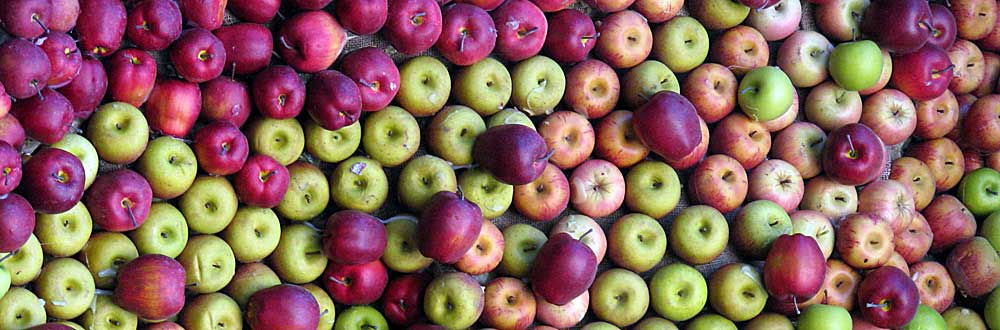
The Apple of Your Eye
Pepper in Philadelphia, Pennsylvania, wonders why something valuable to someone is called the apple of their eye. The expression apple of one’s eye dates back to the ninth century. It comes from misunderstanding the pupil of the eye as a sphere and not an aperture. Similarly, the French word for pupil is prunelle, or little plum. The word pupil itself comes from Latin pupilla, or little doll, because if you look deeply into someone’s eyes, you’ll see a tiny reflection of yourself. For the same reason, the expression to look babies at each other referred to the way lovers look into each others’ eyes, close enough to see themselves.
Brass on Your Face
The expression to have brass on one’s face is used in the South Atlantic region of the United States to describe someone who is bold or overconfident. There’s a similar idea in the word brazen, which derives from an Old English word for brass.
Prepone: Put Before
Aru in Omaha, Nebraska, says friends and colleagues tease him about his use of prepone, usually used to mean “move an appointment to an earlier date or time.” It’s a word commonly used in Indian English, is morphologically sound, and quite useful.
Between the Dish and Mouth Saying in Spanish
Our conversation about Spanish idioms involving food prompted a tweet from Tijuana, Mexico: del plato a la boca, se cae la sopa, or between the dish and the mouth, the soup spills, or don’t count your chickens before they hatch. A similar idea is reflected there’s many a slip betwixt the cup and the lip, an English proverb similar to a saying in ancient Greek.
De- Brain Teaser
Quiz Guy John Chaneski’s brain teaser involves puzzling out clues to words beginning with de-. For example: “Hey, how can our team play baseball when somebody has quite literally stolen second?”
Words in English from Native Languages
Craig, a whale biologist in Alaska, wonders how many words have been adopted into English from such languages as Inuit, Yupik, Tlingit and Inupiaq. Indigenous languages in the far North have contributed mukluk, malamute, kayak, and parka. The word parka took an especially long route into English, coming originally from native peoples in the Russian region of the Arctic Circle. Native American terms also give us some familiar animal names, such as opossum and raccoon.
Agathism
Agathism is the doctrine that all things ultimately tend toward good, even though the means by which that happens may be evil or unpleasant or unfortunate. The word comes from Greek agathos, meaning good, which is also the source of agathokakological, an adjective describing a mixture of good and evil.
Fever Blister vs. Cold Sore
Rebecca in Austin, Texas, wonders why the terms cold sore and fever blister describe pretty much the same thing. Also, why do we say we have a cold, but we have the flu? The word flu comes from the Italian word for influence, influenza, and is a reference to an old belief that a contagious illness was influenced by celestial movements.
Good Craic
Nick, an Englishman who divides his time between Ireland and Virginia, says his American friends were baffled when he described a convivial evening with them as good craic, pronounced just like English crack. The word craic is now associated with the Irish, but it first appeared as crac as a form of crack (as in “a cracking good time”) in Northern England and Scotland, then migrated to Ireland, and its meaning evolved from talk or excited chatter to fun and good times. Another evocative Irish word is banjaxed, which describes something messed up.
An Aphorism
A proverb about what family members learn from each other: “Parents teach their children to talk; children teach their parents silence.”
Swinging Statues
The children’s game of frozen statues putting players in awkward poses, which they must then hold for a while. This outdoor pastime has many variations and goes by many names, including falling statues, swinging statues, squat-where-you-be, statue makers, and game of statues. A similar game of spinning around together and then releasing each other is called going to Texas.
Go Pear-Shaped Origins
Wayne in Sherman, Texas, wonders how the term pear-shaped came to describe something that’s gone badly. The expression seems to have arisen during Falklands War of the early 1980s. If you need a word for pear-shaped, there’s always pyriform, from the Latin word for pear, pirum.
Bear-Caught Poem
Our conversation about the term bear-caught, describing someone with heatstroke, prompted Sondra in Florida to share a poem on the topic written years ago by her late husband, Bert Furbee.
How the Cow Ate the Cabbage
Jane in Austin, Texas, is curious about the expression how the cow ate the cabbage, meaning to give someone a talking-to.
Sugar Weather
Sugar weather refers to a period of time during the spring in Canada marked by warm days and cold nights, when the sap starts running in the trees.
“I Don’t Care” As a Positive
Jim from Bowling Green, Kentucky, says he’s heard some folks in his area use the phrase “I don’t care” when they mean to accept an offer. This affirmative use is somewhat similar to saying “Don’t mind if I do,” meaning “Yes, thank you.”
Carrotocracy
On our Facebook group, Brett asks: “What do you call a society run by rabbits?” A carrotocracy? How about a whatsupdocracy?
This episode is hosted by Martha Barnette and Grant Barrett, and produced by Stefanie Levine.
Photo by Terren in Virginia. Used under a Creative Commons license.
Music Used in the Episode
| Title | Artist | Album | Label |
|---|---|---|---|
| UntitledTune | James Brown | Funky Men | ACD |
| The Popcorn | James Brown | The Popcorn | King Records |
| The Drunk | James Brown | The Drunk 45rpm | Bethlehem Records |
| Zambezi | New Mastersounds | This Is What We Do | One Note |
| Pass The Peas | The JB’s | Pass The Peas | Mojo |
| Hot Pants Road | James Brown | The Singles Vol. 8 1972-1973 | Hip-O Select /Universal |
| To My Brother | The JB’s | Slaughter’s Big Rip-Off | Polydor |
| All I Want (Right Now) | New Mastersounds | This Is What We Do | One Note |
| Lowdown Popcorn | James Brown | 45rpm | King Records |
| Time Is Running Out Fast | James Brown | The Payback | Polydor |
| Blues and Pants | James Brown | Hot Pants | Polydor |
| Volcano Vapes | Sure Fire Soul Ensemble | Out On The Coast | Colemine Records |

