

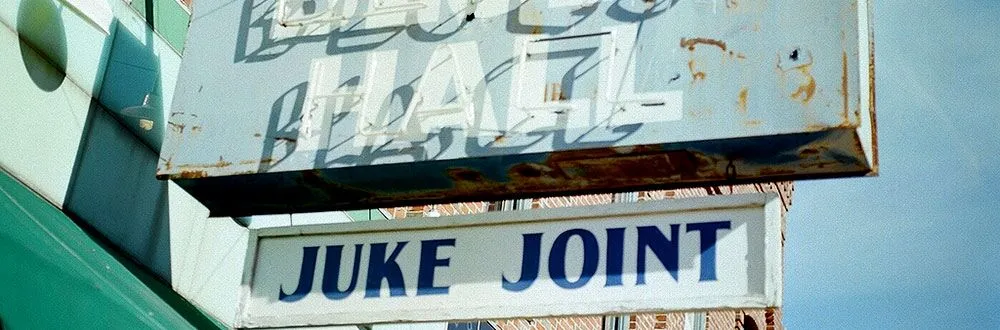
Giving your baby an unusual moniker may seem like a great idea at the time. But what if you have second thoughts? One mother of a newborn had such bad namer’s remorse, she poured out her heart to strangers online. Speaking of mothers and daughters: Laura Ingalls Wilder didn’t write the Little House on the Prairie series alone. She had help from her daughter Rose—who turned out to be quite a demanding editor. And where in the world would you find an upstairs basement? Plus: scat singing, jook joints, makes no nevermind, from hell to breakfast, dog pound vs. animal shelter, and what you’re supposed to do in an upstairs basement.
This episode first aired June 6, 2014. It was rebroadcast the weekend of September 7, 2015.
Transcript of “Upstairs Basement (episode #1399)”
You’re listening to A Way with Words, the show about language and how we use it. I’m Grant Barrett.
And I’m Martha Barnette.
Imagine you’re the mother of a four-week-old baby.
You’ve given your baby a name that you thought was wonderful. It’s pretty and a little bit unusual.
You called her Maeve.
M-A-E-V-E.
Yes, Maeve.
But since then, the reaction from family and friends has been a little bit less than enthusiastic.
They love the baby, but they can’t get past the name.
Right.
And you explain again and again that it’s Maeve, M-A-E-V-E, and it rhymes with wave.
But Grandma accidentally calls her Mav, and you’re constantly trying to explain yourself to the point where now you’re in tears.
You’re actually crying about it, and you’re wondering if you made a mistake and if maybe you should change the baby’s name.
Should you change it? Have you saddled this baby with a name that is just going to be a problem for the rest of the baby’s life?
That’s right. Is the baby going to hate you even more than she does when she’s an adolescent?
I know what you’re talking about.
We found this discussion on the site Ask Metafilter.
And it’s really interesting.
A lot of discussion.
We posted this to our Facebook page and Facebook group as well.
And everybody came out.
Some people said, yeah, that’s a difficult name and you should consider something new.
And other people said, I named my daughter that and she’s wonderful.
Right.
And other people said, my Waterford Crystal has that name.
Which I don’t know if that’s an endorsement or not, but okay.
Something beautiful.
But this woman is suffering from Namer’s regret.
Will she get over it, do you think?
Will she get over it?
I would say that most people said, oh, it’s a beautiful name.
Yeah.
I thought the consensus in all the places that this was discussed was that it was a good name, a little unusual, but plenty of people have it.
And it’s actually rising in frequency.
I wonder how many parents have that experience where they’re thinking, did I make a mistake?
And is it too late to change?
Right.
Now, I’m not a parent.
I know when I took my dog to the veterinary behaviorist, she said, absolutely, you can change a dog’s name.
Anytime.
That it has to do with your tone of voice and everything.
But for a kid, I don’t know.
And there’s another question that came up in all of these discussions.
The baby’s four weeks old.
And a lot of people were wondering if the mother was just kind of having those baby blues.
The first little while with a baby can be an emotional time.
There’s not enough sleep and there’s so much to do.
And you’re still sorting out your feelings and the hormones and all that stuff.
And maybe she should just wait.
There’d be no rush even if she wanted to change the name.
Maybe that’s why she’s crying, right?
Well, we pose this question to you.
Have you named your child something and then regretted it?
And what do you think that the mother of Maeve should do about her name?
Let us know, 877-929-9673, or email us, words@waywordradio.org.
Hi, you have A Way with Words.
Hi, this is Beth. I’m calling from Springfield, New Hampshire.
Hiya, Beth. Welcome to the show. How can we help you?
Well, I’m curious about a word that I grew up with in my family, but I’ve never heard anywhere else.
And the word is potch.
Oh.
P-O-T-C-H.
P-O-T-C-H.
Yeah.
And it’s used in my family to describe the actions of a toddler who’s just getting into everything.
You know, crawling in the cupboards and mucking around in there.
Or pulling the contents of a drawer out faster than you can put them back.
Yeah.
But you can also be a potch.
Oh, really?
I was a pretty good potch.
They made me a T-shirt that said Super Potch.
Super Potch?
Wait, so if you’re a potch, what are you if you’re a potch?
You potch a lot, right?
You’re a potcher.
Yeah.
It’s sort of an endearing term for a little kid who’s just getting into everything.
Who gets potch.
It’s somebody who gets potch.
Well, but I think, Beth, you’re using it as potching around or something like that, right?
Yes, yes.
Wow.
Because here’s what I was thinking when you first brought it up.
There’s a Yiddish word, potch, sometimes spelled putch, but P-O-T-C-H, sometimes P-U-T-C-H,
That comes directly from German.
It means to smack or to hit or to bump or to knock or something like that.
But it’s also got a couple kind of weaker tendrils of meaning that have something to do with make a mess.
And this is what I’m thinking where this comes from.
So you’ve got a toddler running around knocking, hitting, and bumping things and making a mess.
But usually the way it’s used is like, I’m going to give you a pot on your bum if you don’t stop that.
Yeah, on your tuchus.
Yeah, on your tuchus, right?
So that’s really interesting that you guys have your own little variation on that.
I can’t say for certain, but I would bet that they’re related.
Yeah, that’s what I would think.
That’s really interesting.
To make a mess.
And if that’s German, I know we do have some German ancestry.
You know what we’re going to do.
This requires the etymology siren go on, Martha.
And the lights start flashing.
I need to ask everybody listening
If you use the word potch in the way that Beth uses it, right?
To refer to a person who just kind of, what is it,
Potters around and makes messes?
Is that what it is?
Yeah.
Okay, so it’s usually for a kid?
Yeah.
Can an adult be a potch?
I’ve never heard it used that way.
Okay.
But I don’t see why not.
So you’re not a super potch anymore is what you’re telling us.
Right, right.
Okay.
Well, maybe.
Well, maybe.
All right, Beth, we’re going to put the word out.
We’re going to find out what other people use if they use the word potch to refer to a kid who’s making a lot of messes.
All right?
And we will report back on the air in a future episode, okay?
All right.
Great.
Well, thank you so much.
Yeah, sure.
Thanks for calling.
Call again sometime.
All right?
Thanks for calling, Beth.
Okay.
Thank you.
Bye-bye.
Bye-bye.
Potching room.
Yeah, I can just imagine.
I was thinking of my son when he used to shove his pizza into his milk cup and just, like, shove it up and down with a spoon for, you know, ages.
He would just do this potching, literally potching, and it was splashing everywhere.
And then he would eat it.
So gross.
Oh, gosh.
Chip off the old block is what we’re talking about here.
Oh, yeah.
Milk-soaked pizza.
That’s my thing.
We want to hear from you.
Do you use the word potch in that way?
Give us a call, 877-929-9673, or send us your comments and email to words@waywordradio.org.
Grant, you know what the buffalo said when his son went off to college?
Oh, no. Is there a pun in the answer to this?
I don’t know. What did he say?
Bye, son.
Bye, son.
Bye, I’m out of here.
I’ll see you later.
Oh, you’re leaving. Okay.
Hello, you have A Way with Words.
Hi, Martha. This is Emily Goldman.
I’m calling from New York.
New York, New York.
New York, New York.
Where in New York, New York?
Hi, Grant.
What block?
You have to nail it down for me.
Oh, I’m actually in Brooklyn.
Brooklyn where?
I’m in downtown Brooklyn.
Okay, sure, yeah.
What can we help you with today, Emily?
Okay, so my question was about the word scat, as in scat music.
And it came about, I don’t remember how it came about,
But we were talking about why it might be called scat.
And I said, well, I thought maybe it came from scatological, which in my mind was sort of scatological thinking of all over the place and jumping around.
And my husband said, do you mean scatological, like about the study of poop?
And I said, what are you talking about?
And he said, well, that’s the definition that I’ve always known.
And we Googled it and came up with sort of both answers, but it wasn’t really clear.
And so I figured I would come to you guys.
Okay. Interesting.
There’s a bunch of different scat words that are etymologically unrelated.
They just sound the same.
So the scatological and scatology and scat is an animal scat.
That’s what you call the feces that wild creatures leave behind.
Those all come from one set of words having to do with the old Greek words meaning dung.
Yep.
And made their way all the way through the Romance languages and Germanic languages and popped up in English.
And here we have it.
But the scat and scat music probably is just imitative, as they say in dictionaries, which means at the beginning of some of these early scat recordings that we can find, I think some of them go back to 1911, believe it or not, people start out with something that sounds like, gotta do that scat, scat, scat, something like that.
And so it sounds like scat at the beginning.
Now, the joke has been made and the connection has been made many, many times that perhaps that particularly people who didn’t like jazz might suggest that scat has something to do, jazz scat might have something to do with poop scat, but there’s no connection there as far as we know.
There’s no clear connection.
And the earliest citations that we have immediately start suggesting that it comes from the sounds people make and not from anything else.
Interesting.
Yeah.
So, but what about my definition of a thought process?
Does that exist anywhere?
Am I making that up?
Like scattered?
Yeah.
That’s a third etymological path.
Is that a real word?
Scatological meaning something other than related to poo?
Yeah.
No, not as far as I know, unless it’s like a longstanding kind of homonymic joke.
I just don’t know it.
Yeah, I wouldn’t think so.
My mom knew it also.
And then when I did my Google search, somebody asked that exact same question on Twitter.
Oh, really?
Meaning like scatterbrained, yeah.
So that’s, why are you so scatological?
Why don’t you think straight, something like that?
Yeah, I’ve thought of it as the thought connections were scatological.
They didn’t make sense.
Oh, interesting.
I don’t know that one.
Okay, I will suggest that it could easily exist, even though I’ve never heard of it, but I haven’t heard of it.
Yeah, I think that’s a bad joke.
Maybe.
I think it’s a pun.
Well, it’s a joke or a pun.
The other scat, as in to, like, scat, cat, or to scatter, probably are connected to the word shatter, meaning to fall and break into a bunch of pieces or to spread far and wide.
Oh, interesting.
So who would have thought that there was so much to say about scat, right?
I’ve never thought at all.
Emily, though, I got to say that I just dumped a ton of information on you.
I hope some of that helped.
Yeah.
Okay, great.
Absolutely.
I’ll stop using the word.
For now.
Now, I have to ask you, are you a jazz scat singer?
Because that still happens.
No, I’m not.
I could see you in a smoky bar somewhere downtown Brooklyn.
Like one of these speakeasies downstairs in a brownstone with the unmarked door and the red light, you know.
The big, birdie guy letting you in.
Right?
That would be nice.
I like hanging out there once in a while, but I’m not as into jazz.
I’m more of a blues gal.
Oh, okay.
Emily, you’re a delight.
Call us again sometime, all right?
I will.
Thank you so much, guys.
Take care now.
Have a great day.
Bye-bye.
Call us with your language questions, 877-929-9673, or send them an email to words@waywordradio.org.
Brent, I have a word that I think you’re really going to like.
Oh, really?
Sitzfleisch.
Do you know this word?
German sitting flesh.
Is this your rump?
Yes.
Specifically, sitflesh is the flesh.
The derriere.
Right.
But it means metaphorically the ability to endure, perseverance, to sit there long enough on the chair.
You know, sort of like chair glue, that ability to persevere.
Stick-to-itiveness.
Yeah, yeah.
German word, obviously.
Yeah, in German you might say the equivalent of little Fritz doesn’t have much sitzfleisch.
That is, he’s antsy.
Okay, cool.
Sitzfleisch.
S-I-T-Z-F-L-E-I-S-C-H?
Exactly.
Okay, great.
Sitzfleisch.
What cool words have you found?
Let us know.
Email words at raywardradio.org.
Hang in there.
We’ll be right back with more as A Way with Words continues.
You’re listening to A Way with Words.
The show about language and how we use it.
I’m Martha Barnette.
And I’m Grant Barrett.
And on the line is John Chaneski from the mean streets of New York City.
Hello, John.
I’ve been handing out mean quizzes as I walk down the street.
Do you have another one?
Here it comes.
Yeah.
Instead of stealing wallets, you put quizzes in people’s pockets.
Yeah, they love that.
I think they love it.
I know I would like it if someone put a quiz in my pocket.
So let me ask you guys a question.
Speaking of questions, here’s a question.
How is Betsy Ross like tight pants?
Something bust in a stitch?
She has to be sewed into them.
I don’t know.
No.
Betsy Ross is like tight pants because one is a seamstress and the other is seamstress.
Okay.
Seamstress.
So we’re talking about a difference in stress or emphasis on a syllable here to make a different meaning.
And spacing, too, like if you space these letters.
Okay.
That’s the theme of our quiz.
I’ll give you two clues.
Both answers have the same letters, but different spacing or stress.
Here’s some more of these.
How is it like?
Here we go.
Okay.
How is the newest member of a trade guild like a saintly person?
So it’s something like union, apprentice.
One is apprentice and one is journeyman.
Apprentice is closer.
The root of the word is new.
Novice.
Yep.
So one has no vice and one is a novice.
There you go.
Yes.
Very good.
Good one, Grant.
I like it when I can actually hear the gears.
Grinding.
Working, grinding, yeah.
How is a walk in the woods like saying, hello, your highness?
One is high king and one is hiking.
Yes, very good.
High king.
How is a condiment like your pets in the morning?
One is the cat’s up and the other one is ketchup.
Oh, my gosh.
Yes, very good.
Good one.
We have found Grant’s billiwick.
We have.
His specialty, yes.
We found my Achilles heel.
That’s okay.
Bring out the Greek and Latin roots.
You’ll get yours, I’m sure.
We’ll quickly go to the bottom.
How is having a baby like a commissioned sculpture?
It’s a procreate and procreation.
Procreate.
Yeah, procreation versus procreation.
Yes, procreation versus procreation.
Very good.
Nice.
Good, Martha.
Martha got that one.
Good.
How is an appetizer like an impersonator?
Name different kinds of appetizers.
Little hors d’oeuvres.
Canapé.
Oh one can ape and the other one is a canapé.
Yes very good.
See I love the change in pronunciation between the two words.
That’s the clever part right?
That makes it fun.
How is approval like a released prisoner?
Approval like a released prisoner or a prisoner at the end of his sentence.
Condon and a condon.
Oh nice.
Very good.
Lord have mercy these are hard.
How is barbecuing a steak like a life preserver?
Sometimes when I eat a steak it does feel like my life has been saved.
Yeah that’s good.
A sear.
Sear the sides.
No sear.
And then see something.
Your clue is gerund.
Searing and…
Searing versus searing.
Yes, searing and searing.
Martha, you were like 95% there.
Yeah.
Searing.
That was a piece of hallway furniture like an artificially goosed sitcom.
Laugh track?
Hat rack?
I don’t know.
Hot track.
Hat rack and hot track.
Oh, my God.
Hat rack and hot track.
That’s great, Grant.
You did very, very well at these.
Thank you, John, very much.
You’re very welcome.
We’ll talk to you again next week.
See you next week, guys.
Bye-bye.
Bye, John.
And if you want to talk about any aspect of language at all, please call us, 877-929-9673, or send your questions and stories about words to words@waywordradio.org.
Hello, you have A Way with Words.
Hi, this is Erin from Tallahassee, Florida.
Hi, Erin.
Hey, Erin, how you doing?
I have a question about the word pound, as in, like, the animal shelter pound.
I have two dogs, and I adopted both of them from different shelters.
And it occurred to me one day that, you know, some animal shelters are referred to as the pound.
And it sounds, I don’t know, meaner or less humane to me.
But at the same time, you know, animal shelters can be kill shelters.
So that’s not exactly humane.
So I was just wondering where that term, the pound, came from.
Interesting.
Yeah, the term animal shelter itself didn’t take off until the 1970s or so.
Oh, okay.
But, yeah, I remember from my childhood talking about the pound.
But you don’t hear that so much anymore.
I only knew the pound from, like, cartoons.
Oh, really?
Yeah, where the dog catcher was chasing the dogs and their hijinks as a result.
Yeah, yeah.
That’s what I always remember is the, like the, I think it’s, I don’t know, some dog is like lost in the city in the pound.
The dog catcher is going to take the pound.
That’s the vision I have when I hear the word.
Interesting.
Yeah, the word pound goes way, way, way back to the late 1300s, I believe, just as a term for an enclosed space or enclosed area.
And in fact, it’s a linguistic relative of the word pond, which is also sometimes formed when you dam up a river or something.
So you make a round enclosure for the water.
Yeah, like an artificial enclosure like that.
So pound was used for centuries.
And originally it was mostly cattle, right, to stop cattle from straying into your garden or your wheat fields.
Yeah, yeah, your herd animals that are wandering loose, they would be put in a pound, and later that was used for stray dogs and stray cats and that kind of thing.
So it’s a very old word.
So it has nothing to do with the impound lot for animals.
Well, it does in that impound is a verb that was formed from the word pound.
Okay.
You’re putting them in the pound.
The I-M is actually the same etymological root as I-N.
It literally means in the pound.
Yeah, but it goes back to an old word meaning enclosure.
Erin, thank you so much for calling.
Give us a ring some other time too, okay?
Thank you for taking my call.
Take care.
Bye-bye.
Take care. Bye-bye.
I have to ask you this.
Yes.
It’s not related to compound, right?
Oh, now this is strange, right?
This is really strange and really interesting.
The word compound goes all the way back to a Malay term.
Malay, like from Malaysia.
Yeah.
Yeah, they got picked up by the Dutch and the Portuguese back in the 1600s.
And it sounds like the word compound is something like kompong or something like that.
And it found its way into English as compound because it makes sense.
There’s a little bit of overlap semantically.
Yes.
And we confirmed the spelling to look a little like the English word.
Exactly.
But they’re not related themologically.
Right.
If you’re talking about the Kennedy compound up in New England, it derives from Malay.
From an Asian language.
That’s really cool.
Isn’t that wild?
English.
You know, we should do a show about that.
Gosh, let’s do that, Grant.
Let’s see.
Email words@waywordradio.org.
Tweet @wayword.
Find us on Facebook and Twitter.
If you want to listen to the show anytime, try us on iTunes, Stitcher, Swell, and I don’t even know.
All over the place.
Lots of apps have the show for free.
You know, Grant, we were talking earlier about the woman who named her daughter Maeve and then was having second thoughts about it.
Yeah.
And we didn’t talk about our own names.
Oh, nice.
I was not so happy with Martha once I found out that, you know, I looked up in a baby book when I was a kid and saw that it meant ladylike.
And I thought, you know, because it’s a reference to Martha and Mary and Martha was the domestic one in the Bible.
But I didn’t like my name after I read what it meant, ladylike, because, I mean, I was climbing trees and, you know, playing softball and stuff like that.
Then I grew to like it.
And it’s you.
Yeah, it’s me.
At the time, it was really old-fashioned.
It was kind of a musty name.
But I like it.
What about Grant?
Well, I looked it up when I was a kid.
Supposedly, I read that it came from French words meaning great or grand.
It’s like a variation on G-R-A-N-D.
Oh, so that fits.
It could mean fat, though, as well as it could mean great.
Oh, really?
Yeah.
And so it didn’t really bother me very much.
But what I think I need to say is the name confusion still happens today.
People, even listeners, call me Graham.
Oh, yeah.
Or they call me Garrett.
And I don’t mind.
It’s happened my entire life, even though Garrett is a far less common name than Grant.
Oh, Grant Barrett.
Yeah, maybe in their lives they have a Garrett, and that’s the first thing that springs to the keyboard.
But people usually get my name right.
What does that mean?
You’re a unique specimen in the world, Martha.
There’s no one else like you.
Well, I knew that.
There’s only one of me.
Give us a call.
Let’s hear about those name confusions.
We know you’ve got a story.
Email us, words@waywordradio.org.
Or why not start a conversation on Facebook?
Hello, you have A Way with Words.
Hey, young lady, how are you today?
Well, I’m fine, sir.
How are you and who are you and where are you?
My name is Jay and I’m from Florida Home, Florida.
All right.
Well, Jay, it’s good to talk to you.
How can we help?
Well, as a little boy, you know, growing up in northern Florida in a little small community, but the community was small where we had five juke joints, just like the regular juke joints where people go to dance.
And I always wondered why they called it a jook joint.
You know, because jook joint, I looked it up in Webster, and it was a slang term, jook, because there’s no, even though it’s a noun, because it’s a place.
But as time went by, the actual word was jook, J-O-O-G.
And as time went by, they took the G off and made it a K, so it would be easier to say.
And so I did a little bit more looking into it and come to find out that word jug, J-O-O-G, is a West African name.
It means to jump up or move around.
When you put that together with jug, that means, you know, go to a dance hall or whatever.
And so that’s how that word migrated into the American mainstream of a jug join or a jug player or like that.
Or you go juking.
Even they use it in the NFL, like you joke somebody, like you move around to make him miss you.
That’s where that word came from.
Jay, this is great stuff, and I can add to what you’re telling us here.
It’s a really interesting story because we’re pretty sure that the juke comes from—
It’s interesting you say juke instead of juke.
The word comes from one of three West African languages that have similar words in them, but this word appeared first among the Gullah people on the eastern seaboard in South Carolina and Georgia, all up and down there.
And they opened up these gambling halls where you could get ladies of the evening and you could drink a rotgut and you could dance the night away and get in trouble.
And the juke that you mentioned about jumping or moving quickly may be related to this, but it’s probably more likely these West African words meaning something disreputable or disorderly or about misbehavior.
Although there’s an interesting note coming from the Scots language, there’s a word dating back to the 1700s, which sounds very much like this.
It’s J-O-O-K or J-E-U-K, and it means a small shelter where you might hide out from a storm.
And so it’s possible that all of these different meanings of juke came together and kind of reinforced each other and were applied to juke joint or juke joint.
Yeah, I mean, that word now, even though it doesn’t have the K or the EU part to it, you know, it’s part of the American mainstream nowadays.
You know, before, you know, it was pretty much the old, like, when they would call on the titling circuit or something like that, you know.
But now, part of the mainstream, every day now these days, you know.
That’s exactly right.
It shows up, one of the earliest uses of the term juke joint, actually, she just calls it a juke, J-O-O-K, is in Zora Neale Hurston’s work, Jonah’s Gord Vine.
And so we have it from an authoritative source in the African-American community that it was already by the 1930s well-known enough.
Although she feels it’s not well-known enough that she has to include it in a glossary and explain it to her readers, which I found to be very, very interesting.
Yeah.
Jay, thank you for the call.
We really appreciate it.
And call us anytime.
You’ve got something else to bring up.
All right?
Okay.
Thanks a lot.
Thanks for taking my call, you guys.
Take care now.
All right, guys.
Take care.
Bye-bye.
And we’d love to hear your stories about language.
You can call us at 877-929-9673 or send them an email to words@waywordradio.org and find us on Facebook and Twitter.
Grant, remember when we had a call recently about the term husband?
Yes, this is an ex-husband.
Yes, yes. We got some other suggestions for what you can call your ex.
We heard from Yen Fung, who wrote us from Singapore, to suggest the word wife-out, which I kind of like.
A husband can’t be a wife-out without an ex-wife.
So wife-out is one. And then I really loved this one from David Crisp in Billings, Montana.
He said, my own favorite term came from a woman whose name I don’t recall who referred to her ex as her penultimate husband.
Isn’t that great?
For a second there, I thought you were saying that he couldn’t remember his ex-wife’s name.
No, David says, my own wife had been married before she met me and some 35 years into our marriage,
It still gives me considerable comfort to think of her ex as her penultimate husband.
That suggests that he’s the last and final.
Right, right.
The penultimate is the next to last.
I really like that.
Penultimate husband.
That sounds so nice, doesn’t it?
Yes, it does.
It’s nice for the ex and it’s nice for the present husband.
Plus fancy word, so points for that.
Yeah, penultimate.
We’ll take your fancy words for an X, 877-929-9673, or email them to words@waywordradio.org.
Hello, you have A Way with Words.
Hi there, this is Brad Davis calling from Dallas, Texas.
Hello, Brad, welcome to the show.
Hey, what’s up, buddy?
Thank you.
Hey, how are you? I’m excited to be here.
We’re great. How can we help you?
Well, my grandfather, whom I never met, was known for his colorful expressions.
And one of the ones that I had always heard growing up was scattered from hell to breakfast.
So if you might say, oh, I went into Joe’s office and things were scattered from hell to breakfast.
You might also use it to describe somebody’s mental state.
That lady didn’t know what she was talking about.
She was scattered from hell to breakfast.
So I love the saying, but I’m not quite really sure what it means.
I mean, I get the context, but I’d love to know the origins if there are any.
So, Grant, hell to breakfast, either helter-skelter or thoroughly, completely?
Completely, yeah.
From hell to breakfast, like over a wide area, over a long distance, over a long period of time.
So we’re talking about an emphatic kind of slangy statement.
And it’s so colorful, and yet it kind of avoids the trap of using the word hell.
If you’re very careful about your language, for some reason, people kind of get away.
With using hell in that context, whereas they might not use hell as an interjection when they’re angry.
Does that make sense?
Sure.
Some people have speculated it’s related to hell’s kitchen,
Because there is a little used version of that, which is something like almost exactly the same way,
Which is like, I could not believe the mess the kids made of that room.
They had toys scattered all the way to hell’s kitchen, which means from here to hell’s kitchen.
And so when we’re talking about hell to breakfast, we’re talking about from hell,
A very deep, dark, faraway, dangerous place, all the way to where I eat my breakfast in the morning.
So it’s a long way.
Yeah, I’ve also seen from Hell to Harlem.
Hell to Harlem is another one, yep.
That’s all interesting.
You know, it’s funny, and I do occasionally use the phrase myself,
And it always seems to make some heads cock a little bit.
So that’s great to know a little bit more about it.
I hope you keep using it.
I will, and some of the other phrases that he used are quite interesting.
Maybe I’ll be able to call back and discuss those at a later date.
Yeah, sure. We’d love to have it.
Or pop an email over and we’ll take a look at it.
That’s wonderful, Brad. Thank you, sir.
Thank you so much.
Okay, bye-bye.
Take care. Bye-bye.
You know what?
Looking here in the Historical Dictionary of American Slang,
I see from hell to breakfast goes back to 1862.
Oh, wow.
Yeah, long history.
I love that it pops up during the middle of the Civil War, basically.
Oh, of course.
During this period of major American kind of sturm and drung,
Like all this horrible kind of chaos that brought language from the south to the north
And language from the north to the south.
We’d love to hear about the words and phrases that have been passed down through your family.
Give us a call at 877-929-9673 or send it an email to words@waywordradio.org.
We talked on an earlier show about word unit palindromes.
Word unit palindromes.
Right.
So each individual word going one direction goes exactly the same.
As opposed to letter palindromes.
Yes.
And I found a couple of others that I really liked and wanted to share with you.
I think my favorite is Escher drawing hands, drew hands drawing Escher.
Right?
You can picture that one.
It took me a second.
I was like, oh, oh, yeah.
Kind of a double eureka in that one.
Nice.
Yeah, and here’s one about aphrodisiacs.
Desire?
Consuming produce can produce consuming desire.
Yep, yep, yep.
And so true, too.
Isn’t it?
Pass the asparagus.
You know, there’s a word for what you’re thinking about.
Find out in just a minute.
Stay with us.
You’re listening to A Way with Words, the show about language and how we use it.
I’m Grant Barrett.
And I’m Martha Barnette.
I remember as a little girl getting lost for days in the books in the Little House on the Prairie series.
You read those, I know.
Yes, I did.
And I remember checking them out from the library, and the pages were already soft because so many people had checked it out, some of the other kids.
And they were such big books, too.
You remember that?
I felt like it was an accomplishment to read them all.
Right. They were hundreds of pages.
And they depicted life in the Midwestern United States in the late 19th century.
And they were the memories of the author Laura Ingalls Wilder.
But what I didn’t realize until recently, Grant, was that those books were actually the product of a close collaboration between Laura Ingalls Wilder and her daughter, Rose.
Rose Wilder Lane, is it?
I think so.
Yeah.
Her mom stayed in the Midwest, but Rose became this world traveler and she lived in New York City for a while.
And there’s this whole correspondence between them where Rose was editing her mother’s work.
And a lot of the comments I found sort of heavy-handed and overbearing and kind of arrogant sometimes.
She was known, Rose was known as a little bit of a bully, not just around her mother, but other people.
Right. There was one bit of advice that I saw in a letter that she wrote her mom that I thought really made a lot of sense.
She wrote, you must take into account the actual distinction between truth and fact.
It is beyond all human power to tell all the facts.
Your whole lifetime spent at nothing else would not tell all the facts of one morning of your life.
Just any ordinary morning when you get up, dress, get breakfast, and wash the dishes.
Facts are infinite in number.
The truth is a meaning underlying them.
You tell the truth by selecting which facts illustrate it.
What a perfect advice for a beginning writer.
And I could see this because I’ve read a number of manuscripts where people are writing their life story and they want me to look at it.
And for me to tell them what I think about their prospects is getting this published and making a sale.
Or even some of them think that they’re going to get a big movie deal and Spielberg will take it on.
And they make the same mistake, apparently, that Laura Ingalls Wilder made.
And Rose is right on target.
You can’t say, and on that day I was wearing this dress and these shoes and I remember that the mail came.
You can’t list all that.
You have to summarize and bring together the important points into the narrative. yeah
Are you tempted to go back and read The Little House on the Prairie books just to see what you think of it now, knowing what you know about the relationship between Rose and Laura and putting these books together?
You know, I did. I mean, not the whole book, but I went back and read some of those, and they’re better than I remember.
Oh, wow. And in fact, they are books that I would recommend to somebody who’s learning English as a second language. I mean, there’s some very specific language to having to do with life on the prairie and all of that, and very quotidian descriptions, but I think it would be a really good book for somebody who’s just starting out in English.
Well, this is really interesting stuff. We’ll share that letter that Rose wrote to her mother about putting the books together on our website at waywordradio.org. If you’ve got a comment or a question about The Little House on the Prairie books or the writing process in general, we would love to hear about it. 877-929-9673 or email words@waywordradio.org.
Hello, you have A Way with Words. Yes, good afternoon. This is Leo Gomez.
Hi, Leo. From Pennsylvania. From Pennsylvania? Yes, sir. Okay. Well, welcome to the show. What can we help you with?
Yes, thank you. My question is, when I started reading in English, I got across when the some Bibles and some theologians, they mention the Holy Spirit, all right? And some ones, they mention the Holy Ghost. So my question is, there is any difference? There is the same? There’s got to be some kind of difference.
-huh. Very interesting. Good question. That is a question that I have asked myself for a long time, and I didn’t look it up. So is there a difference between the Holy Spirit and the Holy Ghost? And I’ve got to tell you, Leo, I’m across the table here from a woman who grew up in a preacher’s house, so she surely has the answer.
Well, Leo, let me ask you first. May we ask what your first language is? My first language? Oh, it’s Hispanic. Castellano, Spanish. Oh, Castellano. Okay. Because you have different words for that same kind of thing in Spanish, then, don’t you?
Well, actually, no, because we sell the Holy Spirit. Right. Espíritu Santo. We don’t use ghosts. Right. Exactly. Exactly. Yeah, that’s what I mean. You use a different word for ghost, right? Yes. Like phantasma. Yeah, we use phantasma.
And I would say that there’s a similar difference nowadays between ghost and spirit. It used to be that ghost could be used for spirit and that kind of thing. But now we tend to think of ghost as the kind of thing you would find in a haunted house, the spirit of somebody who once lived.
Right, an apparition, something that you can see, right? Yes, except exactly in the context you’re talking about when you talk about the Holy Trinity and the Father and the Son and the Holy Ghost. Exactly, yes. Yeah, but the word spirit today, I think in English, has a much more generic term. You can talk about having school spirit or spirit of camaraderie. You wouldn’t talk about having school ghost or the ghost of camaraderie.
So the Holy Ghost, back in the days that the King James Bible was put together, they weren’t imagining that Jesus Christ, a pale, transparent version of him, was looking over your shoulder, right? They were thinking about kind of the soul of Christ or like the essence of Christ. Right. Ghost and spirit were more similar back then, in other words. Does that make sense, Leo?
Yeah, it does make sense. All right, well. Cheers. Thank you very much for coming in. Ciao, Anne. Take care, Anne. It’s an excellent show. Congratulations.
All right, Jo. Oh, thank you, Leo. It’s a great question. We appreciate it. Bye-bye. Bye-bye. Bye-bye.
Yeah, the Spanish fantasma is like phantom in English. But we have these archaic words. Sometimes they last only kind of ensconced in these phrases like holy ghost, and we sometimes just don’t break them out to say, oh, wait a second, that’s not the Scooby-Doo ghost I was thinking of.
Right. Right, or like you might say, give up the ghost. You know, he died. He gave up the ghost. But it’s a… Oh, but that’s the same ghost as holy ghost, right? It gave up his soul. The soul kind of floated away out of his corporeal form.
Yeah, I suppose. There was a time when ghost and spirit, I think, were more similar in meaning, that they were more interchangeable. And I think that’s what’s going on here. Ghost has got a long pedigree anyway. Very long. Back into the heart of the lost roots of German, right? Yeah, yeah. Geist. Right, like poltergeist, zeitgeist.
Yeah, that kind of thing. Give us a call with your language questions, 877-929-9673, or send them an email to words@waywordradio.org. Hi, you have A Way with Words. Hi, this is Pam Currier. I’m calling from Jeffersonville, Vermont.
Hi, Pam. Jeffersonville. Okay. What’s cooking? Yeah, up north. Well, what I’m calling about is I was listening to your program and was thinking about how the type of words people use change over time in a certain area. Because I moved to Vermont back in 1964, and I moved from the Washington, D.C. region. And at that time, Vermont really hadn’t had a lot of influx of out-of-state people.
And when I started going to school there, I really noticed a lot of terms that I didn’t understand, and I didn’t know where they came from. And I think the one that surprised me the most is in Washington, at my school, if you wanted to go to the bathroom, you went to the laboratory. But up here, they went to the basement. And I could never figure out why kids would get up and ask to go to the basement. There wasn’t one in the building, but they really meant going to the bathroom. There wasn’t one in the building. I mean, there was a bathroom in the building, but there was no basement. There was no actual basement. And the bathroom was on the second floor. People would still ask to go to the basement.
Whoa. So did you spend your first year of school just not going to the bathroom? Well, it took me a while to figure it out. Yeah. Yeah. Yeah. There were a number of things I did that definitely stood out, using different terms for things.
Oh, really? In Washington, the nuns at my school were called Mother. Up here, they were called Sister. Oh, boy. And we could go shopping downtown in Washington, but here, everyone went downstreet. Mm— Oh, interesting. So it just took a while to kind of figure out how to ask for things and how to fit in.
Yeah, you looked like an outsider, right? Absolutely. I even talked differently. They thought I was from England because I had that sort of East Coast accent. Oh, right. That’s so interesting. Little O. So let’s concentrate on the basement thing here. The basement thing is super interesting. It’s not just in Vermont. They do this in Massachusetts and a lot of other states in that part of the country.
Actually, throughout the Northeast, in Vermont, New Hampshire, Maine, Massachusetts, maybe even a little further westward, Connecticut, parts of Connecticut. Not completely, and not everyone, but you will find plenty of people who report as far back as the 50s and the 40s saying they remember this from their schooling days. For some reason, it’s strongly associated with schooling.
And the best guess that we have here is that there’s been some serious semantic shift going on where maybe the basement was originally the place for the bathroom. And because we tend to euphemize the place where we do our business, I mean, almost all the major terms that we have for that room in American English are euphemisms. Right? Almost a bathroom. You’re not actually taking a bath. Restroom? Are you resting in there? There are tons of these. Lavatory is great. Really straightforward. There is a little bit of hand washing going on, so it kind of counts. But it doesn’t describe the whole act and everything that you’re doing there.
So the best that we can guess is there was a semantic shift happening here, and it became generalized such a way that you could have a basement on the second floor. There wasn’t a basement. There was a place that you did your number one and number two. Yeah, it seems to have gone out. I don’t think any kids use that anymore. My kids never heard that in school. So I guess that’s gone by now.
Oh, has it?
Oh, that was a question I wanted to know.
That would be kind of a shame because I love seeing those little remnants of the past.
I love the idea of going upstairs to the basement.
Pam, this term might have been so widespread that it pushed out the other more standard meaning of basement in that part of the country.
There’s a note in the Dictionary of American Regional English that basement, referring to the lower part of a house that is basically below ground level, is far less common in the Northeast.
And it’s possible that this bathroom use of basement meant that people didn’t feel comfortable referring to an actual basement as a basement.
So instead, most of them call it the cellar or the downseller.
Cellar.
Do you use downseller or just cellar?
Just cellar.
Cellar.
But you’ve heard downseller?
Have you heard downseller?
No, actually, I haven’t heard that one.
Interesting.
Fascinating.
There’s a lot of ground other things, but I haven’t heard that one.
Whereas in the rest of the country, the cellar tends to be a room or building that is mostly underground but isn’t connected to the larger house.
Not always.
Oh, really?
Yeah.
Oh, I never heard of that.
The apple cellar or the potato cellar or the vegetable cellar, the fruit cellar, the ice cellar tends not to be attached to the main building.
Fruit cellar, yeah.
Fruit cellar, yeah.
Yeah, root cellar here would be the way they might use it here.
Yeah, but it’s not attached to the house, right?
Might or might not be.
Might or might not be.
Well, this is really fascinating.
Well, it sounds like you’re no worse for the wear, but man, that must have been confusing at first.
Because starting a new school is hard enough as it is.
It is.
Exactly, exactly.
So, well, I really appreciate your help.
I just thought it was an interesting kind of quirk.
Your instincts are good.
You are correct.
Call us another time.
Remember something that you had to learn, all right?
Okay, thanks.
Thanks, Pam.
Take care now.
Bye-bye.
Grant, we were talking earlier in the show about names.
Names.
Giving names to kids and the problems that come up if you give a particular name to a kid.
Remember that call that we had about Todd and Scott?
Oh, it wasn’t just one call.
It was one call that turned into multiple calls and tons of emails and phone calls in return.
It was such a strange thing.
I can’t remember if the guy who called us was named Scott or Todd.
So the whole premise was this.
A lot of people who are named Todd are sometimes mistakenly called Scott and vice versa.
Right.
That is, they have the given name Scott, but people for some reason called him Todd.
Right.
And we threw this out there because we had a caller who said, does this happen to anyone else?
And it turns out it happens to a lot of people.
Oh, my gosh.
A lot of Scotts and a lot of Todds sent us email and gave us voicemail.
Yeah, and we never could figure out why that was, except that they’re short names, short masculine names, and they have that short O in the middle.
So even if you give your kid a name that’s perfectly normal, I would call those fairly common names, right?
Yeah.
There’s still a chance that they’ll be misunderstood.
Yeah.
I’ll never forget when my son was born, and I called my father-in-law from the hospital moments after the event, and I told him the name that we’d picked out, which was Guthrie, G-U-T-H-R-I-E.
Great name.
And he says, I can’t wait to meet little Gunther.
I’m like, no, it’s not Gunther.
He’s like, oh, sorry, Jeffrey.
I’m like, no, it’s not Jeffrey either.
It’s Guthrie.
I’m like, Woody, Woody Guthrie, like that?
So, you know, you can’t win, but every kid’s got a little bit of this problem, no matter how unusual their name.
Like, ask a Mary how often she’s called Marie.
Right?
It happens.
Yeah.
We’d love to hear your name confusion stories, 877-929-9673, or email words@waywordradio.org.
Hi there.
You have A Way with Words.
Hi.
This is Tor Borkstrom from Vermont.
Tor?
Tor.
T-O-R.
Okay.
Welcome.
What’s going on?
Yeah, I listened to your show last week, and I was really intrigued with the vernacular from different areas of the country, you know.
And I was born in New Jersey, and when I was 13 years old, my family moved to rural Northeast Kingdom, Vermont.
And the first day, the next first day, my neighbor came by, and he said a phrase that to this day I have yet to understand, and it’s, make no never mind to me.
And I looked at him, and I was like, what’s that mean?
And Tor, what was he talking about?
You have to understand, we were like 13-year-old kids, and I went from suburbia to a farm with 40 cows.
Why?
And that was in the day when they had rectangular hay bales, and they wanted to play in my barn.
And I was like, why?
And apparently they had built all these little tunnels, you know, by stacking the bales of hay a certain way.
Oh, sure, yeah.
So it’s like, well, do you want to ride bikes? It’s like, it makes no never mind of me.
You’re saying that he didn’t care.
That’s really what I think it means, you know, one way or the other, you know, makes no never mind of me.
But I just, just to put those words together just really doesn’t make much sense to me.
It’s sprinkled throughout the United States, maybe a little more southern than anywhere else.
I’m kind of surprised to hear it in Vermont.
Yeah, I’m very surprised.
But it’s never mind here is kind of behaving like a noun.
So think about it as a hyphenated compound, never hyphen mind like that.
And the best suggestion I’ve seen about the probable origin of this comes from a 1982 article by Jerry Cohen in the Journal of American Speech.
And he wrote about his theory that perhaps this is a speaker’s blending of some other similar phrases.
Like you might say, I don’t pay that no attention.
I don’t mind what he says.
I don’t care about that.
That don’t make me no difference.
That doesn’t make any difference to me.
All these different ways of expressing negation kind of combined where nevermind starts to stand as its own little thing.
Like as a response that you might say to something like, do you want to go through the maze with me?
Do you want to go through the hay maze with me?
Oh, I don’t care.
Do whatever you want.
Nevermind me.
Just do your own thing.
So nevermind starts to get its own identity as a noun rather than mind being a verb there.
That’s so interesting to me.
I mean, I heard it growing up in the South.
And when I think of that expression, my voice goes up an octave and I lose the R.
Oh, really?
That don’t make no nevermind to me.
I mean, and it’s said in a way that’s sort of making fun of oneself.
Oh, really? Okay.
That don’t make no nevermind to me.
It was interesting in this article by Jerry Cohen from 1982, he quizzed a bunch of students from around the country.
He was on a university campus, and some of them reported they use it in anger, but many of them reported humorous uses.
But his was a small sample.
I just know that we’ve heard this from a wide variety of people around the country.
And it’s popped up here and there in movies and books.
And so some people have heard it who don’t actually use it.
So that makes it seem maybe a little more current than it is.
It is still in use, though.
Well, great. Fantastic.
Tor, it’s good to speak with you.
Yes. This was so exciting.
Thank you, Sarah.
Bye-bye.
Bye-bye.
Take care.
Bye-bye.
Call us with your language questions, 877-929-9673, or send your stories about your encounters with words to words@waywordradio.org.
Things have come to a pretty path.
That’s all for today’s broadcast, but don’t wait until next week to chat with us on Facebook and Twitter.
And you can find us on iTunes or SoundCloud.
Check out our website, too, at waywordradio.org, where you’ll find a dictionary, a newsletter, mobile apps, and a discussion forum.
And you can listen to hundreds of past episodes for free.
You can leave us a message anytime at 877-929-9673.
Share your family’s stories about language, or ask us to resolve language disputes at home, work, or in school.
You can email us, too. That address is words@waywordradio.org.
Our senior producer is Stefanie Levine.
The show is directed and edited this week by Tim Felten.
We have production help from James Ramsey.
A Way with Words is independently produced and distributed by Wayword, Inc., a nonprofit supported by listeners and organizations who believe in lifelong learning and better human communication.
This show is coming to you from the Track Recording Center at Studio West in San Diego, California.
Thanks for listening. I’m Martha Barnette.
And I’m Grant Barrett. So long.
Bye-bye.
Tomato and I like tomato, potato, potato, tomato, tomato.
Let’s call the whole thing off.
But oh, if we call the whole thing off, then we must part.
Baby Name Remorse
 Giving your baby an uncommon name may seem like a swell idea. But what if you’re the parent of a newborn and you already have namer’s remorse?
Potching Around
A potch or putch is a slap, as in potch in tuchis. This term for spanking related to German Patsch, meaning “a slap.” A listener in Springfield, New Hampshire, says her family also used the term potching around to describe her mischievous behavior as a toddler.
Musical Scat
Scat singing doesn’t have any relation to scat, as in “excrement.” Musical scat probably derives from the sound of one of the nonsense syllables in such songs.
Sitzfleisch
Sitzfleisch, from German words that literally mean “sit-flesh,” refers to perseverance–the ability, in other words, to sit and endure something for a long period of time.
“How is it Like” Word Quiz
How is Betsy Ross like tight pants? Our Quiz Guy John Chaneski wants to know.
Pound vs. Shelter
The term dog pound sounds a lot more menacing than animal shelter, until you learn that pound simply has to do with the idea of an enclosed space, as does a pond, which is often formed by enclosing a space and filling it with water.
Jook Joint
A jook joint is a roadside establishment where all sorts of drinking, dancing, and gambling may occur. Zora Neale Hurston described them in her 1934 essay “Characteristics of Negro Expression,” and the term probably derives from a West African term for “jumping around.”
Penultimate Husband
We’ve talked before about the term wasband, as in, ex-husband. A caller suggests another good term for that fellow: penultimate husband.
From Hell to Breakfast
The emphatic exclamation “from hell to breakfast” goes back to the Civil War.
Word Unit Palindrome
Here’s a word unit palindrome to drop at a party: Escher drawing hands drew hands drawing Escher.
Rose Wilder Lane
The Little House on the Prairie series was actually a collaboration between Laura Ingalls Wilder and her daughter Rose Wilder Lane, who turns out to have been a bit of a bully.
Ghost vs. Spirit
What is the difference between a ghost and a spirit? English bibles use both Holy Ghost and Holy Spirit, depending on the translation. The modern idea of the Scooby Doo-type ghost came about much later.
New England Basements
In New England, a basement can technically be upstairs, since basement is another word for “bathroom.”
Name Confusion Scott/Todd
Certain baby names come with the perpetual problem of being easily confused, like Todd and Scott.
Makes No Never Mind
“Makes no never mind to me,” meaning “I don’t care,” is part of the long history of the term nevermind.
This episode is hosted by Martha Barnette and Grant Barrett, and produced by Stefanie Levine.
Photo by Steve Snodgrass. Used under a Creative Commons license.
Book Mentioned in the Episode
| Little House on the Prairie by Laura Ingalls Wilder |
Music Used in the Episode
| Title | Artist | Album | Label |
|---|---|---|---|
| The Land of Nod | The New Mastersounds | This Is What We Do | One Note Records |
| Zambezi | The New Mastersounds | This Is What We Do | One Note Records |
| All I Want (Right Now) | The New Mastersounds | This Is What We Do | One Note Records |
| All I Want (Right Now) | The New Mastersounds | This Is What We Do | One Note Records |
| Midnight At The Oasis | Freddie Hubbard | The Roots of Acid Jazz | Sony |
| Ain’t No Telling | The New Mastersounds | This Is What We Do | One Note Records |
| Tin Drum | The New Mastersounds | This Is What We Do | One Note Records |
| You Got It All | The New Mastersounds | This Is What We Do | One Note Records |
| Minx | The New Mastersounds | This Is What We Do | One Note Records |
| Nunya | Tom Scott and The LA Express | The Roots of Acid Jazz | Sony |
| Afternoon at Gigi’s | The New Mastersounds | This Is What We Do | One Note Records |
| Let’s Call The Whole Thing Off | Ella Fitzgerald | Ella Fitzgerald Ella Fitzgerald Sings The George and Ira Gershwin Song Book | Verve |

