

The books we love as children may influence our careers more than we realize. As a child, Martha was fascinated with stories of cracking codes, and Grant loved books with glossaries–not that far from the kind of work they do today. A caller from Michigan credits her long career in medicine to a children’s book called Nurse Nancy. Also, ever traveled to England and ended up incorporating British phrases into your own vocabulary? You’re feeling “the chameleon effect.” And you know when you return to your car and take a moment before leaving to check your phone messages? What do you call that? Plus, a Dial-a-Joke word quiz, baffie slippers, bacon collar, the power of rhyme, and Shakespeare’s First Folio goes on tour. This episode first aired March 20, 2015.
Transcript of “Eat the Grindstone”
You’re listening to A Way with Words, the show about language and how we use it.
I’m Grant Barrett.
And I’m Martha Barnette, and it’s time for another round of Linguistic Would You Rather?
Oh, boy.
You know, the party game where you answer questions like, would you rather have the ability to be invisible or time travel and why?
Oh, wow. Is that you? You’re asking me that or is that just an example?
Well, that’s an example, but now that I mention it, I’m curious.
Time travel. Time travel.
Really?
Unquestionably, yes.
Okay. Why?
Because I want to see things that are unseeable. I want to go places that are ungoable.
Okay, you don’t want to be unseeable. You want to go to the places.
I want to learn. Being invisible is more a tool for mischief for me.
Yeah, I agree with you. Although the invisible was tempting for a little bit.
But the more I thought about it, I mean, wouldn’t it be great to hang out with Cleopatra?
And technically, you could use time travel as a form of being invisible.
Technically, I suppose you could.
Kind of, right? You could just time travel yourself to 10 seconds in the future into the other room, right?
Time travel yourself into a house.
Well, that’s true.
Okay, all right. Maybe that wasn’t a good question, but I have a language.
But what’s the linguistic one?
All right, give it to me.
I have a language question. Would you rather write in a language that’s limited to no punctuation whatsoever in your writing or a language that uses no metaphors and no similes?
Wow. There’s amazing stuff here.
Yeah. So there’s a character in the Guardians of the Galaxy movie and in the comic books named Drax. He doesn’t have metaphors, and it’s really funny in the movie.
Oh, yeah? Somebody says, oh, that went right over his head. He said, it did not go over my head. I just wasn’t tall enough and couldn’t reach it.
So it’s funny to observe, but I wouldn’t want to live in that kind of colorless linguistic realm.
The other one, because tons of people have already shown us in texting and messaging, the punctuation isn’t 100% required.
Yes, I would agree. You can do things with spaces or line breaks that aren’t technically punctuation, but do the same job.
Yeah, just forget the punctuation. And similes, too. I cling fast to my similes.
I was camping recently, and I told somebody, it looked like somebody had splashed a bucket of stars across the sky.
Oh, nice. There’s no way that I could describe that otherwise.
There are many stars in the sky.
Look, I think there are almost two billion.
Well, I think we’re on the same page once again, Grant.
Yeah, but fortunately, we don’t have to make that decision.
That’s true. I can still do my text messages with punctuation.
That’s true. Yay.
We’ve got a question for you. Do you have a question for us? 877-929-9673. Email words@waywordradio.org.
Hello, you have A Way with Words.
Hi, Martha and Grant. My name is Lindsay. I’m calling from San Diego.
Hey, Lindsay. Welcome.
Hi, Lindsay. What’s going on?
Hi, thanks for taking my call. So my question is more cultural, I suppose, and it’s motivated by a couple of years ago I had the opportunity to au pair in Rome, Italy.
Oh, wow. And I was taking care of a couple of boys. They were 8 and 12 at the time.
And I’m not particularly good with kids. I haven’t been around a lot of kids. And so I just, I would kind of habitually try to rhyme with them or I would throw out these kind of silly rhymes that I’m very used to.
So I would say, you know, when we were getting ready to leave, I would say, are you ready, Freddie? And when we play games and I’d, you know, even up the score, I’d say, we’re even Steven. And I’d say, no way, Jose, and maybe baby, and see you later, alligator, and try to get them to do the after a while crocodile.
And they just thought I was crazy. They just did not think it was as charming as I did, obviously. And I’m curious as to is this an English thing? Is it an American thing? Do other cultures have rhyming?
I know you guys have mentioned that we are particularly fond of rhymes in this country, and they tend to stick. And so I was curious as to why that is.
Yeah, it’s playful and fun, right? And I think that as humans, we’re sort of wired for this kind of thing. I mean, there have been studies of pregnant women who read Hop on Pop or The Cat in the Hat, some Dr. Seuss books before the baby is born in the last trimester. And when the babies are born, they end up recognizing the meter and the rhyme. They do this little sucking response to…
Oh, really? I was wondering how you get feedback from a baby that young.
But it’s related to our automatic appreciation for music, which doesn’t have to be taught, right?
Absolutely. And, I mean, it’s the way you learn things. There have been studies that show that if you rhyme, you learn better. Or if you set whatever you’re trying to memorize to music, you learn better. So I think it is a really universal thing.
And, of course, we have all these rhymes in English. But I drive my Spanish-speaking friends crazy when I greet them. I say, que te pasa, calabaza, which means, what’s going on, pumpkin? And I think it’s something that they learn for, you know, when they’re little kids. But in the mouth of an adult, it’s weird.
You know, Lindsay, I had a question. You said you were an au pair who wasn’t good with kids. Isn’t it like a banker who’s not good with money?
Yeah. No, it is. It actually, I was an au pair of sorts. My actual function was just to speak English.
Oh, gotcha. So you’re teaching these kids kind of the stuff they weren’t getting in school.
Right. So kind of just our idioms. And I would use a lot of phrases. And, of course, you know, they don’t translate well. So I’d try to explain them. But just kind of in casual conversation and I guess just trying to be charming and make friends, I’d use these little rhymes. And they just didn’t get them, you know.
Yeah, it’s hard to see idioms through the eyes of a native speaker if you don’t know that language well yourself. English does have some characteristics that other languages don’t automatically share.
Many of the Romance languages, for example, have kind of standard word endings for conjugating verbs and so forth. And so it’s easy to make rhymes in English and the Romance languages. And even many of the Germanic languages, other languages don’t do their word endings the same way, so they don’t depend as heavily on rhyme. They depend more on alliteration or reduplication or even just the meter so that the syllable count feels the same or the emphasis or accent is the same.
And so there’s a lot of different ways that humans seek that kind of almost musical quality in the spoken language, but it doesn’t always manifest the same as it does in English.
Interesting.
Yeah, so, I mean, rhyming, obviously, is a device for learning and remembering. It’s obvious, but then we just have these, like, totally meaningless, like, okie-dokie artichoke. Like, it just seems so weird.
Yeah, there are plenty of these in German, too. Nicht schlecht, Herr Specht. That means not bad, Mr. Woodpecker. I mean, it doesn’t, you know, it’s silly, silly, but the rhyme saves it, right?
Right.
Well, thank you so much. I appreciate it.
Okay.
Yeah, sure. Thanks for calling. Appreciate it, Lindsay.
Bye-bye.
See you later.
All right.
Yeah, bye.
What are your overseas experiences with language? Give us a call, 877-929-9673, or send an email to words@waywordradio.org, or tell us on Twitter under the handle W-A-Y-W-O-R-D.
Hello, you have A Way with Words.
Hi, this is Jared from Richmond, Virginia.
Hey, Jared, welcome to the show. What’s going on?
I had a recent discussion with some coworkers. We were cleaning out our water cooler that got some algae in it, and as we were cleaning it out, yeah, it’s pretty disgusting whether or not you can believe it. So don’t look in it.
Okay. But we were cleaning out the water cooler, and the one coworker, Jesse, suggested we should clean it with vinegar like we would a coffee pot. And my other coworker, Mike, he was kind of confused by this.
And I was like, oh, yeah, that makes sense.
And he was still kind of looking at me weird.
And he said, why wouldn’t you just clean the coffee pot with soap and water?
And I said, oh, I get what you mean.
She’s talking about the insides, the reservoir, the tubes, et cetera.
And he said, do you mean the coffee maker?
And I said, yeah, the coffee pot.
And so we started kind of laughing about it and discussing it.
And so I decided I’d send an email out to everyone in my unit.
And I sent a picture of the appliance, said, what do you call this?
And so we got the responses, and it was about 50-50.
Some people said coffee maker, others said coffee pot,
And was just wondering what is correct or, you know, what is accepted,
And are there regional variations?
I’m pretty sure there’s no regional variation on this.
What’s happening here is a linguistic phenomenon known as synecdoche,
Where this is where a part of something or a material that something is made of
Can stand in for the whole and can just represent the whole thing.
And it’s further confused by the fact that we have a wide variety of coffee-making devices,
And some of them don’t look anything like a pot, but some of them look very much like a pot.
Have you ever seen these big urns that you might make a gallon of coffee for a big conference?
That’s very much a coffee pot and a coffee maker, so both terms perfectly apply there.
But it’s a different kind of pot.
And my question, just to stir the muck a little bit, for those of you who think that the glass vessel is the only thing that’s the coffee pot is,
What part of that says pot to you because it’s made out of glass and pots are not usually made out of glass?
Oh, no.
No, no.
I don’t know if I can say that.
No, that’s not completely true.
There are plenty of small pots, like you might have a honey pot made out of ceramic.
Well, Jared, here’s my question.
You talked about regional differences, but I’m wondering if there’s a generational difference.
Interesting.
Okay.
Do you find that?
The reason I ask is because when I was very young, my parents had a coffee pot,
And it was the kind that you just plug into the wall, and you poured out of that very pot,
And there was a little glass thing on the top, and the coffee would brew,
And you would hear it go, like that.
Oh, the percolators.
Yeah, yeah.
I love the percolators.
I love watching them.
And I thought of that as a coffee pot,
And then I remember when Mr. Coffee was introduced in the early 1970s.
And it was like, oh, my gosh, this whole machine.
And so I think I called it the coffee maker.
And the glass thing was the pot.
Interesting.
Wow.
It was a change in the way that I was looking at coffee.
You know, a better linguistic term for this probably is metonymy,
Which is where you might say something like all hands on deck.
It’s not that your ship is only staffed by wriggling hands.
It’s actually people attach those hands, but you call them hands anyway.
Or boots on the ground in the military, right?
That refers to soldiers, not actual pairs of leather boots running around by themselves.
And so in this case, the coffee pot can do that.
We do this all the time in English.
Wall Street stands for the whole financial industry.
Hollywood.
Hollywood is a neighborhood, but it’s also an industry.
So I think Jared’s question is, which group is right?
Is that your question, Jared?
Well, yeah.
I was just wondering if one is more correct than the other, if one is preferred term.
I think there was some confusion that by using coffee pot when you meant coffee maker introduced confusion into communication.
You know, you’ve listened to the show enough.
I’m ambivalent.
I’m not willing to come down on either side for this.
I think they both work.
What happens in human communication is we constantly are unclear, and in the next breath, we add clarity.
Either we’re asked for it or we realize we need to clarify.
It sounds like that’s what’s happened here,
And you guys have just strung out this search for clarity beyond all reasonable bounds, to be honest.
You have clarity.
You now know what was meant.
You now know what was meant.
There’s nothing more really to gain from this.
And you still have algae in your water cooler.
We still have algae in there.
I would shake my head every time we picked that up.
Put some goldfish in there.
Or snails.
There might be some.
We’re going to go.
Take care, Jared.
Thanks, Jared.
All right.
Thank you both.
Bye-bye.
We welcome your questions.
The workplace arguments are the best, particularly when it means that you’re going to get one over on a boss or a much-hated co-worker.
Let us help you with that.
Yeah.
Email words@waywordradio.org.
I don’t know if this is a real term or not, but I like it.
I’m going to steal it.
Do you know what a bacon collar is?
Bacon collar.
It’s when you forget to put the stays in the collar of your button-up shirt,
And it kind of folds under like frying bacon.
Bacon collar.
C-O-L-L-A-R.
You know, you’re supposed to put the stays in so that they’re pointy and they stick out.
Sure, yeah.
But they always go the wrong way.
They’re like pointing at your earlobes.
I feel like I have bacon cuffs, too.
Bacon cuffs.
That’s good, yeah.
Yeah.
Yeah, and bacon, you know, down at the bottom of my shirt.
That’s why I like you.
You’re all bacon.
Email words@waywordradio.org.
You’re listening to A Way with Words, the show about language and how we use it.
I’m Martha Barnette.
And I’m Grant Barrett.
And hey, who is that handsome fellow?
It’s John Chaneski, our quiz guy.
Hi, John.
Hey, is there a handsome fellow standing behind me?
There’s a mirror in this studio.
Oh, wow.
I see myself.
Hold on a second.
Hi, Grant.
I’m still looking.
What’s up?
John?
I’m back.
What’s up is I have a puzzle for you guys here.
Great.
Please.
Now, you know, the weather hasn’t been very accommodating lately.
It’s been a while since I’ve had the chance to just lie back and relax, for example, in a hammock.
But the letter A gets to do that quite a lot.
For example, back in the day, if you were feeling down, for a small price, you could pick up the phone, call a number, and you’d hear a funny story.
Do you remember what that was called?
Dial of something.
Yeah.
Dial a joke.
Dial a joke.
Okay.
Dial a joke.
So you can see that the A is safely hammocked in between the two other words.
Okay.
It even has two little hyphens there holding it up, right?
Yeah.
So I’m going to give you a bunch of words that have an A in the middle of them between two other words with little hyphens.
With hyphens.
I call this blank-a-blank.
Okay.
Blank-a-blank.
Okay.
Blank-a-blank.
Okay.
Here are some clues.
Maybe because I collect comics, I always thought that this blank-a-blank word was directly related to machine guns,
But it just means any quick succession of knocking, tapping, or cracking sounds.
Rat-a-tat.
Rat-a-tat.
Yes, very good.
Now, a similarly imitative blank-a-blank means with a sound like quick light steps or taps.
Pit-a-pat.
Very good.
Pit-a-pat.
Oh, really?
Pit-a-pat is it.
Yeah.
It always reminds me of cat feet or rain on a roof.
Yeah.
Pit-a-pat.
Okay.
This blank-a-blank word is mostly known as an adjective, but as a noun, it can mean escort
Or date or even counterpart.
Oh, vis-a-vis.
Vis-a-vis, right.
I see this blank-a-blank word frequently at the thrift store.
It comes from a French nonsense phrase for at random or any old way.
Brick-a-brack.
Brick-a-brack, right.
Now, this blank-a-blank word has a distinct nautical source related to one of the five simple machines, the pulley.
The word means crammed with objects or people, and it references a situation when two or more pulleys are too close together.
Choc-a-block.
Choc-a-block.
Yes, choc-a-block.
In nautical parlance, a pulley is known as a block.
Now, here are two that are asymmetrical,
That they don’t have the same number of letters in the first and last words.
The name of this blank-a-blank soup pretty much describes its ingredients.
Cock-a-leaky.
Yes, cock-a-leaky.
Oh, okay, nice.
Cock and leeks.
Chicken and leeks.
Finally, if I’m ever working very late here in the studio,
You know, I don’t have to go all the way back to Brooklyn.
I can just stay here in Manhattan at my nearby second apartment.
I call it my blank a blank, which literally means foot to the ground.
Pied à terre.
My pied à terre, yes.
Anyway, thanks, guys.
Thanks, man.
Bye-bye.
Nice work.
We’ve got a discussion forum on our website at waywordradio.org.
And, you know, we’re all over social media, and you can get the podcast for free just about anywhere.
Hello.
You have A Way with Words.
Hi.
This is Anna calling from Dallas, Texas.
Hey, Anna. Welcome.
Hi, Anna. What’s going on?
I am hoping that you guys will be able to settle a dispute that my fiancé and I have been having since just about the week after we met.
Oh, my.
Do you want a happy marriage? Then hang up now.
Well, actually, we have a bet on this. We haven’t discussed the terms of the bet yet.
Oh, wow.
You need to get that nailed down.
Yeah, I think so. I’m pretty sure I’m going to win, though.
You’re pretty sure you’re going to win?
And Anna, so the marriage is going to go through no matter what, right?
Basically, it’s not dependent on who wins this or not.
This is more of a good nature ribbing.
Okay.
Okay.
And I actually have my fiancé here with me.
So after I tell you my side of the story, if you guys would like, we’ll switch over and she can tell you her side of the story, which, of course, is wrong.
Fantastic.
Let’s see how it goes.
When we first met, it was up in Chagrin Falls, Ohio, and somebody had almost fallen.
And so she was like, oh, that person almost biffed it.
And I’m like, what is biffed it?
And she’s like, it’s when somebody hits something or almost falls or something.
You say biffed it.
And I’m like, that’s not a thing.
No way.
So this has been an ongoing thing.
Okay, and she didn’t have a cold.
She wasn’t saying missed it, but she had a cold and said biffed it.
So how would you spell that?
B-I-F-S-E-D.
Oh, wow.
Okay.
All right.
So somebody bissed it, and how did you take this?
I just looked at her incredulously and was like, that’s not a thing.
And she’s like, it is a thing.
And I’m like, you’re crazy.
All right.
So what’s your fiancé’s name?
Sarah.
All right.
Put Sarah on.
Let’s talk to her.
Hello.
This is Sarah.
Hi, Sarah.
Hey, Sarah.
So you’re going to get a fair hearing, even though she’s tried to stack the deck against you.
I hear.
What’s your take on this?
She’s incredibly confident.
My take is, well, I’ve heard it ever since I was little.
My grandma’s used it.
My aunt’s used it.
And every time we almost trip or every time I hit something else, we use the term biff or biffed it.
Like, oh, she biffed it, just like Anna has told you.
She’s been very – she’s convinced it’s not a thing.
I do actually have my term.
I have what I’m going to make her do if I win.
I’m going to make her use the phrase three times over the next three days.
Oh, my.
I think that’s…
And maybe she could work it into her wedding vows, you know?
I really biffed for her.
Hopefully she won’t have to.
Hopefully neither of us fall.
Well, fall for each other is what I’m thinking.
I biffed for her.
Yeah.
That’s nice.
What do you think?
Does that work?
Yeah.
I think that does.
I’ll take that.
Yes.
Sarah, and how are you spelling this?
I think the way it’s spelled is B-I-F-S.
S as in Sarah?
S as in Frank.
B as in boy, I, F as in Frank, S as in Frank.
Oh.
Because I was swearing.
It sounded like B-I-S-S as in Sarah, Sarah.
Okay.
Oh, no.
This is helpful.
This is helpful.
Absolutely.
It’s making some sense to us.
Yeah.
Because Biff.
It means I win.
Well, maybe.
Maybe.
So you said your grandmother used this.
Yeah, she’s used it a lot.
She’s used it over the years.
And, you know, we played soccer growing up, and we used to fall all the time.
And so that was just kind of the term around the house.
And she biffed it, or she almost biffed it.
-huh.
-huh.
Yeah, well, Biff is a slang term that means to hit or punch.
Right.
That’s what I’m thinking, too.
And I think if you look in slang dictionaries, you’re going to find a variety of biffing things that about hitting the floor would fit perfectly into that, if that makes sense.
You don’t say.
Is that right?
Yeah.
-huh.
I am hearing echoes of the future, I think.
Intimations of the future.
I think you see Anna’s face right now.
It is in the Dictionary of American Regional English, and it says it’s scattered, but especially in the South and South Midlands.
Yeah, and Green’s Dictionary of Slang has an entry as well.
It says it’s U.S. Campus, which means an American college term, and to biff it is to fail an examination or to fall causing embarrassment.
And only dates it as far back as 1989, but I’m sure it’s older than that.
Oh, yeah.
So this is perfectly the definition of the term that you’re using.
To fall causing embarrassment.
That’s exactly what we’re talking about.
That’s exactly it.
So it sounds like dishes for a year, right?
Yeah, you’re going to have a dishwasher or is this manual, the dishwashing in your home?
I think I’m definitely going to, I’m going to claim bragging rights just a little bit.
Just a little bit.
Okay.
And I want her to use the phrase, and that will make me so happy.
I think you should have her say she biffed for you.
Yeah, can we have Anna back for a minute?
She fell really hard.
Can we have Anna back for a minute?
Because then everybody wins.
Everybody gets a ribbon.
Oh, good.
Okay, here’s Anna.
It sounds like I lost.
Anna.
Anna, great news.
She loves you so much.
Yes.
But you were wrong.
Oh, the horror.
Yeah.
Man, so I’m going to have to say this a lot tonight.
Yeah, I know, right?
You biffed it.
It can be your special word, though.
You know, it’s nice to fail early in a relationship for something safe, right?
This seals the bond.
Well, this has been a lot of fun, you all.
Thank you.
We wish you both the best.
Thanks, Anna.
Thanks, Sarah.
Oh, thank you so much.
All right.
Bye-bye.
Bye-bye.
877-929-9673 is the number to call with your linguistic disputes, or find us on Facebook and Twitter.
Good.
Grant, you have cats.
Yeah, two.
Whopper and Bianca.
Whopper and Bianca, that’s right.
Very sweet.
Well, you know what a cat face is?
Yes, on a piece of fruit or a tree where it’s kind of grown in on itself and has weird kind of indentations.
Yes.
How did you know this?
Because there’s an entry for it in my dictionary.
Oh, okay.
And actually all those entries are now on our website.
Okay, that’s okay.
So you can have a cat face tree.
So let’s say you cut off a branch and the bark grows over, kind of gnarls inward and meets in the middle.
And looks kind of like a loaf of bread that’s kind of fluffed up in the oven, something like that.
Yes, that’s a cat face.
Or a tomato that’s not perfectly round.
It’s got a weird kind of indentation.
And it’s not bad.
It’s not rotten.
It just grew oddly.
That’s exactly it.
And there’s one more entry for this in the Dictionary of American Regional English that’s really cool.
What’s that?
It’s chiefly among black speakers.
A wrinkle or pucker left on a garment when ironed improperly.
Oh, nice cat’s face, yeah.
Isn’t that great?
Maya Angelou used that in I Know Why the Caged Bird Sings.
Very evocative.
I had to iron seven start shirts and did not leave a cat’s face anywhere.
Nice.
Isn’t that cool?
Very cool.
Email words@waywordradio.org.
And find us on Twitter under the handle Wayword, W-A-Y-W-O-R-D.
Hello, you have A Way with Words.
Hello, this is Jo Piazza.
I’m calling from Chicago, Illinois.
Oh, welcome to the program.
Hi, Jo.
Thank you.
What’s going on?
Hi.
Yeah, I was listening up in Wisconsin in my old hometown, Boston, Wisconsin, and I heard.
You and I thought, oh, I have to get in with my little old saying that we used to do.
Oh, yeah, let’s hear it.
I don’t chew my cabbage twice.
I don’t chew my cabbage twice?
That’s right.
How many times do you chew your cabbage?
Once. That’s it.
Once.
When do you say that?
And basically, it’s sad when somebody asks you to repeat what you said.
Hey, I don’t chew my cabbage twice.
-huh. So you say it with a certain amount of indignant…
Oh, not too mean.
Just a little bit of facts.
Just matter of fact.
Okay.
Okay.
Okay, I don’t chew my cabbage twice.
I don’t know that one very well.
Well, a lot of people do say it, and I don’t chew my cabbage twice means I’m not going to repeat it, right?
Exactly.
I’ve said it. I’m not going to say it again.
You know, it’s very interesting.
In antiquity, there were a lot of adages about cabbage, and specifically cabbage cooked twice.
Yes.
I did Google up a bit because this got me thinking, hey, where did it come from?
And I didn’t see that. I don’t cook my cabbage twice, I guess.
Yeah, yeah. And with good reason.
In antiquity, they used to serve cabbage at banquets because supposedly it prevented drunkenness.
But when it was cooked a second time, it was supposedly so smelly and awful that it caused nausea.
And so there was a saying that translated as twice cabbage is death.
And in fact, in Juvenal, in one of his satires, he’s saying that nobody pays poets and artists and teachers properly for their work.
And so that to make a living, they have to deal with what he calls crambe repetita, which is twice cooked cabbage.
Oh, my goodness.
And it makes them miserable.
Oh.
So I’m wondering if there’s a connection there.
Fascinating.
It’s possible.
You know, it turns out that in the early 1900s, in a book of Proverbs, there are a couple of Proverbs that are very similar.
A good tale is not the worst for being twice told, is one meaning.
But also, a tale twice told is cabbage twice sold.
And another one, no sweetness in a cabbage twice boiled or in a tale twice told.
Oh, this is so interesting.
So cabbage figures largely from, how far back does juvenile go?
Antiquity, ancient Rome.
That’s amazing.
Thousands of years then.
Yeah.
Amazing.
Well, I may haul it out and surprise my associates here.
But only once.
Just once.
Well, we’re glad to help you.
I hope that helped.
It sure does.
I appreciate it, and it’s fun to hear about it.
Yeah, thank you.
Well, you’re welcome, and please call us again sometime, Jo.
I have no doubt I will.
Thank you.
Bye-bye.
Bye.
Thank you.
Email words@waywordradio.org.
I learned a great proverb the other day from some Texas friends.
What’s that?
It goes, lick by lick, the cow ate the grindstone.
Oh, just little by little?
Yeah.
Isn’t that inspirational?
I mean, of course, why would you want to eat a grindstone?
But, you know, little by little, step by step, brick by brick, drop by drop.
I wonder if it means the salt block.
I wonder if that’s interesting.
I think it’s the grindstone.
Why would they?
Well, I think you’re overanalyzing.
Oh, probably, yes.
Yeah, it’s always a mistake with language.
Just take it as it is.
Yeah, journey of a thousand miles begins with a single lick or something like that.
Yeah.
Or send your comments about language to words@waywordradio.org.
Hello, you have A Way with Words.
Hi, Martha.
This is Joshua from Palo Alto, Pennsylvania.
Hello. From Palo Alto, Pennsylvania.
Yes. We are the anti-tech hub of the world.
I see. Okay. Well, great. Well, we’re glad to talk with you. What’s up, Joshua?
I have a question. I got into a disagreement with my editor.
I work as a blogger, and I have for a number of years. I’ve been writing for 15 years.
And he came back to me with something that I had written in a recent post.
And what I had written was about a company, and we’re quoting, citing their blog.
And I said, in my post, the blog reads, and then entered the quote, the direct words from the blog.
And he said, that’s not right, because blogs can’t read.
Much like how people, especially from where I am, say the newspaper says it’s going to be snowy today.
Oh, my goodness.
The newspaper can’t say anything.
Oh, my goodness.
Which I’ll agree with that.
Well, when he goes to get gas, does he ever say the meter reads $20 or the meter reads 15 gallons?
Or says?
That I don’t know.
The thermometer reads 75.
He’s wrong, basically.
You’re hearing the incredulousness in our voice because he’s wrong.
Every major dictionary of English allows this use of the verb read.
It’s a transitive verb.
I mean, he might just out of pure cussedness decide not to allow it.
But words have more than one meaning, and if you don’t think that they do, it’s on you.
Yeah, Joshua, do you think that he’s tweaking you maybe?
Well, I mean, he could be because we have been working together for a long time, and he’s very overworked.
So I know when I share this with him, and you’re going to be like, oh, I can’t believe you let me do this.
He’s the boss.
Yeah, but that’s not how it works.
I know, and when we talk about it, I’m sure that will come to some sort of, he’ll be right, and I’ll just have to follow along.
By all means, put this in your style guide and make it part of your institutional practice.
But if it’s just a capricious, momentary decision by an editor, that’s the wrong way to go about it.
It needs to be kind of discussed and resolved so that henceforth you can all do it the same way, and that’s totally cool.
I don’t think that’s what we’re driving at, where we don’t want to have everybody using says or saying or anything like that.
I think it’s more of like we’re trying to formalize a style guide.
And what are you going to put instead?
What are you going to put instead?
The newspaper stated or the newspaper, what else do you use?
And I think that stated comes off as a little too formal and almost pretentious.
Yes, it does.
But I would recommend a week’s vacation for him.
That’s what we prescribe for both of you.
Maybe not together.
Paid, of course.
Paid vacation, yes.
Okay, well, that’s official.
And you’re not allowed to do work either while you’re on vacation.
No work at all.
Okay.
Step away from the phone.
You know, if your editor wants to pop us a line and tell us what really gets under his skin, we’d love to see that.
I just really would be interested about what his difficulties were.
Because sometimes the story is they were told by an editor earlier in their career never to do it, and it stuck.
Sometimes it is.
There was a particular heinous piece of editing, and it was just one of many things that bothered them.
They kind of latched onto that, and forever after that’s the thing that is like a hallmark of bad writing for them.
You just never know what an editor’s story is.
That’s true.
And we have a lot of history while we’re getting up there.
So, yeah, I can probably pinpoint a person or two that it could be tied to.
Oh, interesting.
Very good.
Very good.
I want to thank you for your time and your call and sharing this dilemma with us.
All right?
All right.
I appreciate your time, and I love the show.
Thank you.
Take care now.
Thanks for calling.
Bye-bye.
Bye-bye.
Call us with your language questions and disputes from the workplace, 877-929-9673,
Or send them an email to words@waywordradio.org.
I buy tickets to see friends’ bands.
I buy friends’ books.
I buy their art.
I chipped in to help a friend buy a kiln for her new pottery business.
I’ve given to help De La Soul make their next album,
And to Spike Lee to make his next film.
That’s what we do, right?
We support things we like, things we believe in.
If you like this show, if you think of Martha and me as friends,
If you believe in what we’re doing,
Changing the way the world talks and thinks about language,
Please go to waywordradio.org/donate and help make A Way with Words.
We can’t do it without you. Thanks.
You’re listening to A Way with Words, the show about language and how we use it.
I’m Grant Barrett.
And I’m Martha Barnette.
Remember a couple of weeks ago when we had a call from Carol in Washington, D.C.,
Who wanted to ask about the phrase, it’ll be better before you’re married?
Yes, this is something that your parents might say to you when you fall and hurt your knee.
And it’s not really serious and they just think you’re making too much of it.
Exactly.
And I think she had some Irish heritage and it was kind of just chiding, you know, get a grip, basically.
Right.
We heard a lot of responses from people who have used that or a similar phrase,
And I wanted to share a couple of them.
We heard from Katya, who lives in Yekaterinburg, Russia,
And that’s right on the edge of Siberia there.
And she said that the way that she would translate the Russian version of that expression
Is it has enough time to heal before the wedding.
And she shared that with us, and sure enough, I Googled it,
And I found the same kind of locution in a translation of Chekhov’s The Cherry Orchard.
It’ll heal before you’re married.
Oh, good.
Isn’t that cool?
I love that cross-cultural connection there.
Yes, indeed.
And then we heard from Karen Dilla in Vancouver, Canada, who said,
I listened with great interest to the caller whose Irish dad told her,
I like that.
Foot always pronounced foot.
Foot.
She adds,
To me.
Well, we do that.
You do that with some kids.
Some kids can take the joke.
Right.
We do that with my son as well.
We just kind of make the situation sound worse.
You know, he’ll be moaning about falling down or something.
We’re like, oh, call the ambulance.
Get the lawyers.
We’re suing everybody.
My little babies.
And he’ll be like, Papa.
I’m like, well, it wasn’t that serious.
He’s like, no.
Right.
You deflect them, right?
I love that.
Yeah.
If you’ve got a question about something we talked about on the show, you know, we read all of the emails you send us and listen to all the phone calls, 877-929-9673.
Hello.
You have A Way with Words.
Hi.
Hi.
My name is Kiyo, and I’m calling from L.A.
Kiyo.
Hi, Kiyo.
How are you doing?
How are you spelling that?
It’s K-I-O.
Okay.
Kiyo.
Kiyo.
Welcome to the show.
How can we help?
Thanks.
I have lived abroad several times, and I was living in London, and I don’t think I have a very strong Valley Girl accent, but some of my friends there would say, Keo, you keep changing the way we talk, and now we’re saying awesome and totally.
And they were saying that I was changing their accent, which to me was strange because at the same time I felt that my accent was adapting to the kind of colloquially vocab of England.
I started saying, I don’t know.
Stuff is Brill or Naf or that sort of thing?
Yeah.
Instead of saying, give me a call, give us a ring and this and that.
So I thought that was strange.
And another example, my good friends, one, the guy is American and his wife is British, and now they’re living in the U.S., and he still talks like a British person.
I’m like, what are you saying?
Like, he says, like, oh, what would you like for tea, meaning dinner?
And I said, are you from the U.S.?
Meanwhile, his wife is now developing more of an American accent.
So I was wondering, I guess, is there such a thing as like a subconscious accent switch between people who are close to each other?
You have provided sufficient evidence to come to that conclusion, as have many linguists and many other people who study the human social animal.
We have something called the chameleon effect, where we adopt the behaviors, including language, of the people around us.
And it’s not just language.
It’s gestures.
It’s the way we stand.
It’s how fast we move.
It’s all these different things.
They’re not really stuff that you’re taught.
It’s not like your parents yelling at you to sit up straight.
It’s that you realizing, for example, that everyone around you is sitting with their legs crossed,
And you’re more likely to sit with your legs crossed too.
Subconsciously.
Subconsciously.
You’re mirroring.
And all pack animals that have been studied do something of this kind,
Where the group cohesiveness depends upon them behaving a little bit like each other
In order to make it clear that they belong.
And humans do this automatically.
Now, as you noted perfectly, by the way, as you noted, it’s stronger in some people than in others.
And some people have a really natural tendency to adapt subconsciously or unconsciously to whatever’s happening around them, and others don’t.
And it’s a little easier if you’re younger than if you’re older.
It’s really interesting, but what’s weird to me is that people are taking on, for example, my type of speech, whereas my type of speech is already changing than what is natural.
Well, this is going to make you feel good, I think.
I’ve mentioned this in a lot of different ways on the show,
But whether or not we pick up the speech patterns of another person
Depends heavily upon our relationship with them.
If we respect them, if we admire them, if we’re attracted to them,
Or the reverse is true, if they respect us or admire us or find us attractive.
So your British friends probably really liked you a lot.
They think you’re awesome.
And you were an influential person in their lives while you were there.
That’s how you had that effect on them.
It’s pretty cool, right?
Awesome.
Yeah.
Everybody wants to be liked, and it comes out in language.
That’s really neat.
Yeah, it sure is.
Thank you so much.
Now, I feel like I finally have a phrase or an explanation for this, because I feel like it happens a lot, or I see it happening a lot.
It’s true.
That’s cool.
Thank you so much for your call, Kyo.
Thank you guys so much.
I appreciate it.
Take care now.
Bye-bye.
Take care.
You too.
Thank you.
Bye-bye.
Kyo’s in a perfectly good position.
An American from California going to London and immediately finds herself changing and the people around her changing happens to all of us to one degree or another.
Reminds me of that Laurie Anderson song, Language is a Virus.
Make sure it is.
You know, sneeze and infect people around you.
Well, we have the penicillin for the language virus.
Give us a call at 877-929-9673 or email words@waywordradio.org.
Grant, it happened again the other day.
I went to an event with a friend of mine, and we parked in separate cars,
And then we both got in our cars, and I started checking my email on my phone,
And I looked up, and my friend in the car next to me was checking email on her phone,
And we realized that here in car culture, there should be a word for that moment
When you get in the car and you always check back in with your phone.
Right, because you’re going to drive,
And you don’t want to check the phone while you’re driving,
But you don’t want something important to have to wait.
Exactly.
It could be a text message, an email.
Maybe you’ve been offline for an hour or two hours in a movie or something.
And my friend speaks French, and she suggested Le Petit Voyage.
Oh, The Little Voyage. Nice.
Yeah, the little trip before your trip.
Oh, okay.
What do you think?
I think that works, Le Petit Voyage.
I like it.
A little pretentious maybe, but we just call it the little trip.
I’m going to take a little trip.
The little trip.
Kind of sounds like a euphemism for going to the restroom.
Or other things.
Other things, yes.
What would you call that?
Send it to us in email.
The address is words@waywordradio.org.
And you can always call us, 877-929-9673.
Hello, you have A Way with Words.
Hi, this is Callum calling from UC Irvine.
Hi, Callum.
How are you doing?
Hey, Callum.
Well, so my word for you guys is Baffy.
And Baffies are essentially morning slippers, except a very specific kind.
Essentially, they have very rounded features, and they also have a heel for them.
So they’re not just what you might think of as shower slippers.
Okay, and how are you spelling these?
It’s not quite clear, but it’s like B-A-F-F-Y for the singular form.
F-F as in Frank Frank or S-S as in Sarah Sarah?
F as in Frank and two of them.
Okay.
Baffy.
-huh.
Very good.
And so you use this term, and do your friends and family use it as well?
Just my family.
I actually thought everybody used it, but I’ve only heard my family use it.
Specifically, like, my dad’s grandfather, which is the first one who I heard use it.
-huh.
He wouldn’t be from Scotland, would he?
Oh, he is from Scotland.
How do you know?
Oh, just a guess.
Nice.
Interesting.
You got right to the heart of it, Martha.
I did.
So he handed that down to you.
But nobody around you uses it.
No, no, I’ve not heard anyone use it.
So is it like a somewhat common thing in Scotland?
The word bath, yes.
In Scotland, B-A-F-F means a bedroom slipper.
Wow.
Yeah, and a lot of people misunderstand and call them bathies, B-A-T-H-I-E-S.
And they think of them as the slippers that you wear on the way to the bathroom, but they are the shoes that you wear in the morning.
Not shower shoes exactly, but, you know, in between barefoot and fully shod.
Yeah, yeah, those loose slippers.
Well, that’s cool. Thank you guys so much.
Yeah, sure. Our pleasure.
Happy to help.
Is it catching on with your friends, anybody around you picking it up, or does it just sound childish to them?
I think they just think I’m weird, so that’s okay.
Man, stay weird. Like they say in Portland, stay weird.
They say it in a lot of places.
That’s fine, dude.
All right.
Thanks for calling, Colum.
Thank you so much.
Bye-bye.
Bye-bye.
It’s cool, right?
Bath fees.
Picked it up.
Third generation, had no idea that it was Scott’s, and here he is with it.
Yeah.
Right in his everyday use, just wondering why he feels like an outsider.
Exactly.
And one of those terms you grew up using, and you think everybody does.
And then you go away to college, and everybody’s looking at you like you’re just—
Nice.
You have two heads, right?
How many times have we gotten calls where people say that?
Yeah, I feel like I have two heads because you look at me funny.
There’s no one way.
Right. There’s no one lexicon that I mean, find me two people who speak identically and right.
They just don’t exist. Even you now and you a year ago, you’re different.
Yeah. It’s like my skin. Right. You shed every. Yeah. Interesting. And so what do you call those slippers?
Do you call them slippers? I just have slippers. Yeah. I’m going to start calling them baffies because I love that term.
Yeah. Yeah. It does sound like bath. Well, we know you inherited something from your grandparents in the linguistic vein.
Share it with us, 877-929-9673, or email us, words@waywordradio.org.
Hello, you have A Way with Words.
Hi, this is Nancy from Traverse City, Michigan.
Hello, Nancy. How you doing?
Hi, Nancy. Welcome.
Hi, Martha. Hi, Grant. Wonderful.
What’s cooking?
Well, I’m calling in response to a show we heard on our way home from church a couple Sundays ago, where you were discussing names and how a person’s name influences their career choices.
And as I mentioned, my name is Nancy.
When I was in about kindergarten, my parents gave me one of those little golden books, Nurse Nancy.
And it was just wonderful.
I remember taking it for show and tell because it had real Band-Aids inside.
It did?
Yeah.
No kidding.
And Nancy was a young girl in the neighborhood who would take her little red wagon and her medical bag wherever there was emergencies.
Such as skinned knees and that sort of thing.
And she would transport injured neighbors in the little wagon, and you would take those little Band-Aids, and she put the Band-Aid on her little friend’s knee.
And I just thought that was so cool.
And now I’ve been a nurse for more than three decades, and it is one of the huge definers of who I am.
That’s amazing.
And it’s really cute, by the way.
That’s an amazing, sweet story.
What if they’d given you a Nancy Drew book?
Would you be a gumshoe now?
Well, I did read a lot of Nancy Drew and a lot of mysteries.
Didn’t stick like the Nancy Nurse did.
Nancy Nurse, that’s for sure.
Yeah, that’s a great story.
I wonder how many of us, if we think about it, can trace back our lives now to early influential books.
Well, you know, there were all those Martha books about the dog, but fortunately, you know, the Martha Speaks series, but that came out after I was a kid.
Yeah, there were no grants in any of my books until well into the 2000s.
Interesting.
But, you know, I think it’s really interesting to think about books that influenced your career choices when you’re young.
I mean, that a book would have that much power on the rest of your life.
I think you make a great point, Nurse Nancy.
Well, thanks.
I’m thinking about in my own experience, it wasn’t a book.
Well, I read a lot of the Encyclopedia Brown mystery things.
But then the one that really influenced me when I was a kid was by Herbert S. Zim.
He wrote a bunch of books for kids, and one of them was Codes and Secret Writing.
Oh, nice.
Oh, wow.
Yes.
And my friend Ingrid Siegert and I, in fourth and fifth grade, we’d carry around these little notebooks like Secret Agents, and we would make up our own little codes based on the stories in that book.
And, you know, I think about it now.
I mean, I spent years studying ancient Greek, you know, trying to get to the bottom of a code.
And I think it really did influence me.
That whole ciphering and deciphering sort of thing.
Exactly.
I mean, that’s what we do every week.
Did you have a book like that, girl?
I did some of that.
I mean, most of the influence for me came much later.
I had a grandfather who worked as a janitor in a school, and he would often bring home books that they were discarding, and they would be dictionaries and encyclopedias and textbooks.
Oh, lucky.
And I loved the glossaries in those and actually cut them out and compiled them all together.
You did?
And then years later, I became a dictionary editor.
But a lot of dictionary editors have similar stories.
They do.
And there’s nothing unusual about that.
But the love of languages probably came from J.R.R. Tolkien, The Hobbit and the Lord of the Rings and the big appendices.
They’re just loaded with linguistic information, all this stuff he created based loosely upon old English and other forms of ancient speech, runic speech and runic writing.
And just mostly from there, just trying to puzzle out what he was writing.
Wow.
Well, Nancy, I’m betting that we’re going to hear from a lot of other listeners who had similar experiences.
Did you read a book as a kid that influenced the path you took in terms of a career in the rest of your life?
Call us and tell us about it at 877-929-9673 or send it an email to words@waywordradio.org.
Nurse Nancy, we are grateful that you called and shared that story.
Well, thank you.
It’s been a pleasure and an honor to be on your show.
Oh, thank you.
How delightful.
Congratulations on a long career.
Thank you.
All right, bye-bye.
Bye-bye.
Bye-bye.
Shakespeare’s first folio was published in 1623.
It contains 36 plays, and they think that there were probably about 750 of them produced, and there are about 233 of them still in existence, and 82 of them have been at the Folger Shakespeare Library in Washington, D.C.
But thanks to a grant from the National Endowment for the Humanities, they’re going to be touring the country next year for the 400th anniversary of Shakespeare’s death.
So 80-plus copies of the first folio are traveling.
Well, not all 80.
They have to find some that are travel-ready, and they’re going to go to all 50 states, one place in each state, Washington, D.C., and Puerto Rico.
And they’re going to be sort of out in the community in a way that they haven’t been at that library.
Here in San Diego, they’re going to be at the Old Globe Theater.
They’re going to be at a community college in Hawaii.
Oh, okay. Because when you said out in the community, I was thinking they were going to take them to a Padres game, go to the beach, go for a hamburger at Hodad’s.
And supposedly they’re going to be open to Hamlet’s soliloquy, the to be or not to be.
And so that’s pretty exciting that you can go to see one of the original ones.
It made me think of the quote from D.H. Lawrence about Shakespeare.
He wrote, when I read Shakespeare, I am struck with wonder that such trivial people should muse in thunder in such lovely language.
Oh, nice.
Isn’t that true?
I mean, you think about it.
Some of those folks are just so.
Yeah, you wouldn’t give them the time of day.
Right.
But they talk so beautifully.
So anyway, pretty exciting for Shakespeare buffs.
And it is a great quote because if you knew some of those people in your real life, you would have ditched them a long time ago.
Right.
But you speak so beautifully.
You wouldn’t be trapped on a stage with them trying to get away.
Email words@waywordradio.org and find us on Facebook and Twitter.
That’s all for today’s broadcast.
But don’t wait till next week to chat with us.
Find us on Facebook, Twitter, iTunes, or SoundCloud.
Check out our website, too, at waywordradio.org, where you’ll find a dictionary, a newsletter, mobile apps, and a discussion forum.
And you can listen to hundreds of past episodes for free.
You can also leave us a message anytime, day or night, at 877-929-9673.
Share your family’s stories about language.
Or ask us to resolve language disputes at work, home, or in school.
You can also email us.
That address is words@waywordradio.org.
Our senior producer is Stefanie Levine.
The show is directed and edited this week by Tim Felten.
We have production help from James Ramsey and Tamar Wittenberg.
A Way with Words is independently produced and distributed by Wayword, Inc., a nonprofit supported by listeners and organizations who believe in lifelong learning and better human communication.
The show’s coming to you from the Recording Arts Center at Studio West in San Diego, California.
Thanks for listening. I’m Martha Barnette.
And I’m Grant Barrett. Bye-bye.
So long.
I like tomato, potato, potato, tomato, tomato.
Language Without Metaphors
 Would you rather write in a language with no punctuation or without the use of similes or metaphors? Grant and Martha agree that texting has proven our ability to get a point across without periods or commas. On the other hand, sometimes an idea just needs to be expressed with a metaphor.
Primed to Love Rhyme
An American who worked as an au pair in Italy found that children there didn’t seem to react so positively to fun sayings like, “No way, Jose” or “Ready, Freddie?” Yet some research suggests we’re primed to love rhyme.
Coffee Pot vs. Coffee Maker
Office workers in Richmond, Virginia, are having a dispute: Is the appliance that makes the coffee a coffee pot or a coffee maker? This is a classic case of synecdoche, where a single part—like the pot that holds the hot coffee—is used to refer to the whole object.
Bacon Collar
When you forget to put those plastic stays in your collar before you wash a dress shirt, the curled-up result is what some folks call bacon collar.
Blank-a-Blank Game
In honor of the old Dial-a-Joke phone line, Quiz Guy John Chaneski has a game called “Blank-a-Blank,” with clues to different terms that have the letter a sandwiched between two dashes.
Biffed It
If someone has biffed it, they’ve fallen down and embarrassed themselves.
Cat Face
Cat face is a cute way to describe something like a piece of fruit or a tree that’s grown in on itself, giving it a puckered kind of indentation. Particularly in the African-American community, it’s used to denote a wrinkle to be ironed out.
Don’t Chew Cabbage Twice
The saying “I don’t chew my cabbage twice,” means I’m not going to repeat myself. The ancient Romans, by the way, ate cabbage as a protection against hangovers, but detested the smell of twice-cooked cabbage.
The Cow Ate the Grindstone
There’s an old Texan proverb that goes “Lick by lick, the cow ate the grindstone.” In other words, if you’re dogged enough, anything is possible.
The Blog Reads
Even though blogs can’t read and newspapers can’t speak, it’s totally appropriate to write “the blog reads,” or “the newspaper says.”
Heal Before You’re Married
We spoke on a recent show about the joking consolation parents offer to a crying child, “It’ll be better before you’re married.” A podcast listener in Siberia emailed to say that in Russian, a similar saying translates to, “It has enough time to heal before you’re married.” This also shows up in a translation of Anton Chekhov’s The Cherry Orchard.
Chameleon Effect of Language
A listener named Kio from Los Angeles says she spent some time in England, and while her colleagues there claimed that her valley girl slang was rubbing off on them, she herself picked up plenty of English slang. This is a classic linguistic phenomenon called the Chameleon Effect, whereby people adopt the language and customs of those around themselves in order to feel like part of a group.
Le Petit Voyage
What do you call that moment when you get back in the car and before you drive off, you check back in with your phone to see what you missed in the world of email, texting and cyber communication? How about le petit voyage?
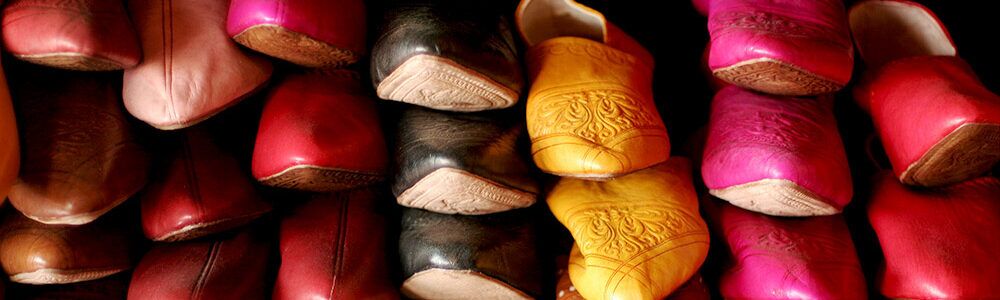
Baffies
Baffies—not bathies—is a Scottish term for the slippers you might wear in the morning to and from the shower, cooking breakfast, or doing just about anything during the transition from barefootedness to having real shoes on.
Books and Career Choices
We got a call from a nurse named Nancy who, what do you know, grew up reading a book called Nurse Nancy. Is there a book you read as a child that influenced your career choices?
Shakespeare’s First Folio
In observance of the 400th anniversary of Shakespeare’s death, copies of his First Folio will be touring all 50 states, plus Puerto Rico, for the public to see. It seems fitting, considering what D.H. Lawrence wrote about the Bard: “When I read Shakespeare I am struck with wonder that such trivial people should muse and thunder in such lovely language.”
This episode is hosted by Martha Barnette and Grant Barrett, and produced by Stefanie Levine.
Photo by David Rosen. Used under a Creative Commons license.
Books Mentioned in the Episode
| Nurse Nancy by Kathryn Jackson |
| The Cherry Orchard by Anton Chekhov |
Music Used in the Episode
| Title | Artist | Album | Label |
|---|---|---|---|
| Rocksteady For Two | Roger Rivas and the Brothers of Reggae | Last Goodbye | Rivas Recordings |
| Try A Little Tenderness | Soul Flutes | CTI | CTI |
| Cut The Cake | Average White Band | Cut The Cake | Atlantic |
| One More Dance | Roger Rivas and the Brothers of Reggae | Last Goodbye | Rivas Recordings |
| Trust in Me | Soul Flutes | Trust in Me | CTI |
| Blue Melody | Roger Rivas and the Brothers of Reggae | Last Goodbye | Rivas Recordings |
| Ace High | Roger Rivas and the Brothers of Reggae | Last Goodbye | Rivas Recordings |
| Let’s Call The Whole Thing Off | Ella Fitzgerald | Ella Fitzgerald Ella Fitzgerald Sings The George and Ira Gershwin Song Book | Verve |
