

It used to be that you called any mixed-breed dog a mutt. But at today’s dog parks, you’re just as likely to run into schnugs, bassadors, and dalmadoodles. Also, if someone has a suntan, you might say he’s brown as a berry. But then, when’s the last time you saw a berry that was brown? The story behind this phrase goes all the way back to Chaucer. And do you want your doctor practicing preventive medicine—or preventative? Plus, at bay, buy the farm, hand-running, all intents and purposes vs. all intensive purposes, silly Bible jokes, and hilariously useless lines from foreign language phrasebooks.
This episode first aired April 25, 2014. It was rebroadcast the weekend of August 17, 2015.
Transcript of “Brown as a Berry (episode #1396)”
You’re listening to A Way with Words, the show about language and how we use it.
I’m Grant Barrett.
And I’m Martha Barnette.
Grant, we’ve been getting a lot of email from listeners lately that contains a lot of words that I didn’t know.
And I’ve grouped some of them together, and I want to see if you can guess what group of words they belong to.
Here are the words.
Three words.
Ambassador.
Schnug.
Got any ideas yet?
How they’re related?
Yeah.
Ambassador.
Or Snug.
And Dalmadoodle.
Oh, these are all dog breeds.
Yes.
Oh, okay.
Snug is a Schnauzer and a Pug.
Bassador is a Basset Hound and a Labrador.
Yep.
And then what’s the last one?
Dalmadoodle.
Dalmatian and a Poodle.
Exactly.
Dalmadoodle.
Okay.
Not to be confused with a Great Danoodle.
Great Danoodle.
Oh, yeah.
Which is a really big dog.
This is a show about words and language and the history of the world,
All wrapped up in the culture that we call English or Spanish or French or Latin or you name it.
Give us a call, 877-929-9673.
Email us, words@waywordradio.org.
Hello, you have A Way with Words.
Hi, this is Stacey from Arskosh, Wisconsin.
Welcome to the show, Stacey.
How can we help you, Stacey?
I actually just have a question about a general, I guess, term of speech that I come across a lot.
And my friend and I were using it, and I got to thinking,
I wonder where that came from or the origination of it.
And the phrase is, keep them at bay.
Keep them at bay.
And what made you think about this?
So I have a newborn.
Oh, congratulations.
And I was speaking with one of my friends.
Thank you very much.
I was speaking with one of my friends about the fact that, you know,
Oftentimes people will try to come up and touch your child
Or touch you while you’re pregnant.
And I said I must have been making awful faces
Because nobody had been doing it and must have been keeping them at bay.
Okay.
That’s what it takes, right? A big scowl to keep the touchers away.
Well, yes, pretty much.
And it’s working for you, it sounds like.
It does.
And then I asked her if she knew where it was from,
And she thought maybe it was a navel expression,
Which found perfectly reasonable to me,
But I didn’t know if that was particularly right.
A navel expression. How would it be a navel expression?
She mentioned that she thought maybe it was to keep them out in the bay, like away from the docks.
Oh, interesting.
Okay.
Yeah, that would seem to make sense.
But that’s not it, right?
But that’s not the answer.
Oh, okay.
The answer has to do with the baying of hounds during a hunt.
You know, there’s that really dramatic moment in a hunt where the prey has run and run and run and run,
And finally it can run no more, and it turns and it faces its attackers.
And all the dogs are there barking and barking and barking.
They’re baying at the animal, the poor hunted animal.
So the baying is the noise that the dogs make.
Yes.
Yeah, like baying at the moon.
So the fox or the deer or whatever is cornered,
Can’t get away and decides to fight it out.
Yeah, turn and face.
Or they’re just frozen there looking.
It’s that moment.
So they’re literally held at bay by the barking of the dogs.
Exactly.
And so I guess if you’re sort of gnashing your teeth at these people
Who are trying to approach your baby.
It’s sort of the same thing.
I guess.
Is that a fairly old expression, or is that a pretty recent thing?
Oh, it’s very old.
1,300s at least.
Yeah.
Yeah, hundreds and hundreds of years.
Yeah, so this goes back to a time when we were a people who hunted in that way
With animals in the woods or the fields and chased down our prey.
Absolutely.
Well, I really appreciate it.
You guys are absolutely my favorite show that I hear on the radio.
I’m really excited to be able to talk to you.
Nice.
Thanks.
Thank you very much, and congratulations on the baby.
Good luck to that, sweet thing.
Thank you very much.
Are you going to play our show for your newborn?
I already do every Sunday at 9.
You do?
Go to sleep.
You do?
Well, tell us your baby’s name.
We won’t get too close, but tell us your baby’s name.
Vivian.
Vivian.
All right.
Good night, Vivian.
Thank you.
Thanks, Stacey.
Bye-bye.
Good night, Stacey.
Bye-bye.
Bye-bye.
If you have a word or phrase on your mind, call us about it, 877-929-9673,
Or send it an email to words@waywordradio.org.
Hello, you have A Way with Words.
Yeah, my name’s Jasper Oliver.
I’m calling from Lynchburg, Virginia.
And thank you so much for taking my call.
I have a question for you guys today.
Lynchburg is right in the heart of Central Virginia.
And my father, who moved here to teach at Sweet Bar College back in the late 50s, he came here from Indiana.
And when I was growing up, he had this expression that he would always use in the summer when I get brown and tan,
And he would say that I was as brown as a berry.
And I’ve only met a handful of people that have ever heard of that expression before,
And most of them are not Native Virginians.
And, you know, growing up in the country, I’ve been around a lot of berries, but I never saw any that were brown.
The only brown berries that I could think of were nanny berries.
And those are the things that are left on the ground after a herd of goats have come through.
So I hope that’s not what he was talking about.
Yeah, I don’t think that’s what he was talking about either.
Nanny berries.
I have a new word for me.
So your question then is, why do we say brown is a berry if berries aren’t brown?
Exactly.
Any theories, any ideas, suggestions, possibilities?
You know, I thought maybe it could have something to do with a very ripe berry.
I know sometimes blackberries can get sort of a brownish hue to them
If they’re really, really ripe or in the sun.
Yeah, before they turn.
Yeah, so that’s why I’m calling the experts.
Well, first, let’s just establish that brown as a berry is extant in every dialect of English around the world.
It is idiomatic and is ensconced kind of permanently, so it’s not particular to Virginia or any one people.
The second thing is it goes back well into the 1300s.
As a matter of fact, Chaucer uses it in a couple of his works.
It talks about a horse being brown as a berry.
And then the third thing is, and this is what is probably the key point, brown didn’t used to mean exactly brown.
Brown a long time ago, and even in some of the languages that are related to English from hundreds and hundreds of years ago, just meant dark.
A deep rich maybe red or a deep rich purple or a deep rich black, but it just meant dark.
So in Chaucer, when he describes a palfrey, which is a kind of horse as being brown as a berry,
He just means it’s a dark colored horse.
And so that phrase from Chaucer, which you’ve got to remember,
Chaucer was widely studied for a long time by all the learned people in the English speaking world everywhere,
Became an idiom in language and it’s maintained its shape and form for hundreds of years,
Even though the meaning of Brown has changed.
Well, that is fascinating.
And it’s wonderful, too, because I loved reading Chaucer back when I was in high school.
So is it in Canterbury Tales?
Do you know some of the works?
Yes, it is.
It’s in the prologue to Canterbury Tales.
Yeah.
And then another one of his books, Cook’s Tale, I believe, is another one of his works.
Well, you have given an answer to a question that I’ve had for all my life.
So thank you so very much.
And now when I use that expression and my son looks at me with, you know, that odd look in his eye, I can explain where it came from.
Exactly.
Father will know best.
There we go.
All right.
Well, thank you all again so much for taking my call.
Our pleasure.
Take care now.
Thanks for calling.
All right.
Bye-bye.
So in Swedish, Brun, B-R-U-N, can meet a dark color, black, red, red-brown.
Yeah, well, you think of ancient Greek and they talk about the wine dark sea.
There we go.
It’s not red. It’s dark.
It’s dark, just meaning that it’s opaque and it has a richness of color.
And it’s not talking about the hue or the tone.
Exactly.
Interesting.
Well, we do solve mysteries, or at least we try to.
You can ask us yours, 877-929-9673, or email the story to words@waywordradio.org.
Hello, you have A Way with Words.
Hi, my name is Tony from upstate New York.
Hi, Tony. How you doing?
Hey, Tony.
I have a supervisor and a friend of mine who uses a phrase, and I think he uses it incorrectly.
And he uses the term for all intensive purposes.
Now, I believe he’s using it wrong. I think it’s intense and purposes.
But my second part of the question is, is it a law term?
For some reason, I believe I heard it in the past uses some sort of law speak.
Is that correct?
Okay.
So he’s saying intensive purposes, I-N-T-E-N-S-I-V-E, P-U-R-P-O-S-E-S.
And you’re saying it should be intense, I-N-T-E-N-T-S, and A-N-D purposes.
Yes, that’s correct.
So for all intents and purposes.
Yep.
And we can tell you that you are absolutely correct.
Ding, ding, ding, ding, ding.
Okay.
So now I have a little credibility when I put him on the spot.
Yeah, the question is, do you put your boss on the spot, though?
Yeah, you might want to keep all these things and ponder them in your heart.
Right, and that’s why I haven’t said anything up to this point.
And I’ve been listening to your show, and I thought this might be a good thing for you guys to help me sort out.
Well, Tony, we can do that.
Actually, you’re right.
It was a legal term.
Originally, the term was for all intense constructions and purposes.
And this was back in 1546 under Henry VIII in England.
And it meant to cover all eventualities.
Right.
So it means no matter what happens, that’s kind of what you’re saying.
Yeah.
And it does have the ring of those kinds of legal terms that are supposed to cover everything,
Like null and void, intents and purposes, that kind of thing.
I mean, you don’t really hear intent that much unless it’s in the context of law with intent to murder.
Intent as a noun is kind of rare in mainstream English.
It’s one of the reasons why people kind of reanalyze this expression when they hear it and think it’s probably intensive,
Which is a far more common word.
But intent or intense as a plural noun just is kind of so rare.
Yeah, it’s a little strange.
It seems unlikely to people.
Yeah.
Now, you had another question in there which we should tease out,
Which is whether or not intensive purposes has become accepted.
And I would argue that there’s nobody who is accepting intensive purposes
Except people who don’t know that they’re saying it incorrectly.
Yep, which I did for years and years and years and years.
Well, one of the things that I wrestle with is he is a friend of mine,
And I think maybe it’s my obligation to let him know he’s using this incorrectly so that he doesn’t go into a formal meeting or engagement somewhere where he uses this.
And, you know, he may not look so appropriate when he uses it.
How do you think he would take that?
I think he would take it pretty well.
Oh, OK.
Because your motives are pure or good anyway.
I don’t know about pure, but they’re good.
Yeah.
I would think saving somebody from embarrassing themselves would be important.
Yeah, I think to do that privately.
We always advise doing that kind of thing privately.
And, you know, you could present it as, here’s this really cool thing.
Did you know this phrase goes all the way back to Henry VIII?
Mm—
All right.
You are my life coach.
And people have been miss saying it as intensive purposes for at least 100 years.
Understood.
Yeah.
So he’s not alone.
That’s the other thing.
Give him a little bit of relief by telling him he’s not the only one doing it incorrectly.
Oh, yeah.
It’s incredibly common.
As I said, I did it for decades.
I will take everything under advisement, and we’ll see how it goes.
Send us an update, Tony. Let us know, all right?
All right. Thanks for your time.
Take care now.
Thanks, Tony. Bye-bye.
Bye-bye.
Bye.
877-929-9673. Email us, words@waywordradio.org.
Airline language has always interested me.
There’s a lingo about the cockpit and the cabin that sometimes doesn’t make it to the passengers.
And a word I came across recently really surprised me because I think I should have heard it before.
And this is the name of the autopilot.
The autopilot’s name is George.
Is it really?
Yeah.
George is always in the cabin.
You put the plane on George.
That means George is the autopilot.
I didn’t know that.
Yeah, then the pilot and the co-pilot can just kind of sit there and do crosswords or whatever it is they do on the airplane.
So, George, who knew?
Keep up the good work, George.
If you’ve got lingo in your trade, I’d like to hear it, 877-929-9673, or email us, words@waywordradio.org.
You’re listening to A Way with Words, the show about language and how we use it.
I’m Martha Barnette.
And I’m Grant Barrett.
And who’s that masked man?
It’s John Chaneski, our quiz guy.
Hello, John.
Zoom, it’s me.
I’m here.
Hello.
It’s good to be here.
I want to say to you, oh, oh, oh, oh, oh, let’s talk about phrases with two or more words
That contain only the vowel oh.
-oh.
-oh.
-oh.
Here we go.
For example, if I said, this is another way of saying podiatrist, you might say,
Foot doctor?
Foot doctor, yes.
Oh, I see.
So not the sound O, but the letter O.
No, right, the letter O.
Okay, very good.
Only the letter O.
Now let’s warm up with some phrases featuring just three O’s, okay?
Okay.
If a comedian works blue, it means that he tells jokes that are described like this.
So to work blue means bad language or coarse language.
Offensive.
Offensive words?
Obscene.
Obscene words.
A two-word phrase, remember, that means a joke that is offensive.
Off color.
Yes, off color.
Oh, okay.
Very good.
So apparently the color in off color is blue.
Off color works blue.
All right.
Okay.
This is a kind of music of the 1950s characterized by close harmonies.
The name is derived from the nonsense syllables sung by backup vocalists.
Doo-wop.
Doo-wop, right.
This is the term for a series of acts at a nightclub.
It describes where the acts take place, unless they’re aerialists.
A series of acts in a nightclub.
Right.
So something floor.
Yeah.
Floor show?
Oh, there we go.
Floor show.
There you go.
Three O’s right there.
Floor show.
Now, here are some four or more O phrases.
It’s another way of saying physical beauty.
Physical beauty.
Yeah.
Four O’s?
Good looking.
Oh, good.
Yeah, well, you put an I in there where it didn’t have to be in there.
Oh, good looker.
No, good looks.
Good looks, yes.
Very good.
Okay, there we go.
So only O’s.
Only O’s.
No other vowels.
Okay.
C.
To me, these two words mean nothing else except macaroni and cheese.
These two words mean nothing else except macaroni and cheese.
Comfort food?
Yes, comfort food.
I was thinking of something in noodles.
Oh.
That doesn’t work.
There’s an E there.
When I think comfort food, it’s just macaroni and cheese.
This is a fleet of military vehicles controlled by a single agency and available for use as needed.
A fleet of military vehicles?
Yes.
Something troops?
No.
Troop mover?
No.
No, if you’re on the base and you need a Jeep.
Something cool.
Motor pool.
Yes, very good.
Motor pool.
Here we go.
Here’s the next one.
Excuse me, sir, but can I interest you in a vacuum cleaner?
How about a Bible?
Can I sell you a set of encyclopedias?
Door to door.
Door to door, right.
These people are typically given cookies and apple juice in exchange for their vital bodily fluids.
Blood donors.
Blood donors.
Blood donors, yes.
Here’s the last one.
A hungan might use this kind of figurine to affect a curse.
It’s bad juju.
Voodoo doll.
Yes, a voodoo doll.
Nicely done.
Thanks, John.
We’ll talk to you next week when you’re going to have another exciting quiz for us, right?
I’ll talk to you then, guys.
All right.
Cheers now.
Thank you, John.
And if you’d like to talk about any aspect of language whatsoever, we would like to talk with you.
So call us 877-929-9673 or send your questions and comments and email to words@waywordradio.org.
Hello, you have A Way with Words.
Hi, Martha.
Hi.
This is Oliver in Chicago.
Hello, Oliver in Chicago.
Welcome to the show.
What’s up?
What can we do for you?
So I have a word that I have heard used in my family for a very long time.
My grandmother uses it, and we’ve never heard anyone else other than her family use it before.
And the word is goppy, which we would spell G-O-P-P-Y.
And it means to describe someone or something that someone has done as foolish.
And it can be used G-O-P as a noun to describe someone as a fool.
Well, you’re not alone.
There are other people that use these, but they spell it differently.
G-A-W-P, G-A-U-P, sometimes with a Y.
And what’s really interesting here, this is all related to not necessarily the person being dumb, but looking dumb.
So your mouth is gaping open.
It is related to the word gape.
So we have a wide variety of spellings of these words, gawp and gawpas and gapey.
Oh, gopping, okay.
Yeah, gopping.
I’ve heard the word gopping before.
Oh, you have?
Yeah, there we go.
So you’re standing there slack-jawed, looking like you just don’t really have any sense at all, you know?
And it’s used as a noun as well?
Yeah, it’s all over.
So there’s all of these various spellings of these words, and they’re all connected to each other,
And they all have something to do with yawning or your mouth standing open.
I learned this first from Mark Twain, who in a couple of his books and stories, he uses the expression gaping and stretching.
He uses gaping.
And by this, he literally means your mouth open, your arms out, like that.
And you just look kind of like you’re just letting the air out.
I don’t know what it is.
Okay.
Is it restricted to a certain period or location?
Pretty widespread.
I would say that all of this is slowly declining.
We do find less use of this again and again.
It tends to be dialectical at this point and a little archaic.
You will find it pop up in literature and fiction here and there,
And occasionally people will use it.
But it’s pretty rare these days.
But all of these words are all related.
I don’t want to get too much into the when and where’s and which came first,
But G-A-W-P is a really common spelling for Gop.
It is directly related to gape, G-A-P-E,
And they all have a variety of meanings.
They mean to look like a simpleton or a fool or an idiot,
Somebody with just standards.
Interesting.
And my grandmother uses it to emphasize the word fool.
So she would say, oh, you gawpy fool.
Nice.
And to emphasize it.
A little more, a little extra thrown in there just to double up on the foolishness.
Yeah, exactly.
And the Octopus Dictionary, there’s an interesting one.
I mentioned this a second ago, gawpus, G-A-W-P-U-S.
And there was a time in the 1800s when this was used to mean a silly person or a fool.
That one never really caught on here in the U.S.,
But it’s interesting to see how much variety there is in this.
Interesting.
Well, my grandmother is English,
So I don’t know if that plays into it at all.
Where was she from?
What part of England?
She’s from London.
Her mother, my great-grandmother,
And her sisters would use it,
And their parents, my great-greats,
Were Russian and Polish Jews living in England.
I was born in England,
So I have this weird dialect of Jewish, English,
East Coast, Midwest dialect, all over the place.
Nice.
I love it.
That’s a nice mix.
An eccentric voice.
Yeah.
Very good.
Yeah.
Oliver, so I’m glad we were able to connect your family word to the larger history of the world.
I appreciate it.
Thank you so much for answering the full question for us.
I really appreciate it.
Thanks, Oliver.
Thanks for calling.
Bye.
Bye-bye.
Well, if you’ve got a word that you think is just yours, but you’re hoping it’s connected to the larger patterns of the world,
This is the place, 877-929-9673, or email words@waywordradio.org.
Hello, you have A Way with Words.
Hello, this is Erin, calling from Fort Worth, Texas.
Welcome to the show.
Hi, Martha. Hi, Grant. It’s so good to get to talk to you.
I listen to you religiously, and I appreciate the fact that you entertain us and educate us every week.
That’s a gift, so thank you.
Oh, gosh. Thank you so much.
Thanks, Erin. How can we help you? What’s on your mind?
Well, I need your help to understand whether a commonly used word is correct or not.
In my field, I’m in the field of public health.
Obviously, prevention is ubiquitous in what we do.
And I’m on the academic side, so I teach and I research.
And I have a question about the word preventive, or rather the alternative word, which is preventative.
Is this word preventative correct?
Because as I understand it, the word is preventive.
In formal writing, you see preventive, and in academic departments,
The title is Preventive, Department of Preventive Medicine.
But in common speech, you hear this word preventative all the time,
And you’re seeing it more and more in writing.
And so is it also like a second correct form of preventive, or is it incorrect?
Wow, you laid out the question very well.
Nicely put. Now, you have an answer to that. What is your opinion?
Now, you’re in a position where you control or grade or judge the writing of other people, right?
That’s correct.
Okay, so what do you think?
Well, when you come up through your own academic training,
You’re trained along this series of do’s and don’ts in your own writing, of course.
And so then you transfer it on to your students.
And I was always trained that the word is preventive.
And I used to work in a research center.
We had a science writer.
And she certainly felt the word was preventive.
And nothing was getting across her desk that was preventative.
So I would explain this to my students that because you see this, this is not necessarily the correct word.
But then I saw so many good students toggle between the words preventive and preventative within a single paper
That I decided to go online.
I just went to an online dictionary, and the word preventative was in there next to preventive.
So then it made me question if my opinion of what was right really is,
Or if it was kind of like this word normalcy, which isn’t really the word,
But it became the word because we use the incorrect word so often.
Does that make sense?
Yeah. There’s a kind of a tangle here.
We use a different word more often.
You have to be careful with that word incorrect
Because the language as a whole doesn’t care one way or the other which word you use.
The language includes them both.
It’s a personal or institutional decision as to whether or not you use a word.
And you’re in an interesting position, Erin, because you represent the institutional voice and the people that you work with.
And so you do have the right to say, please use the word preventive and not the word preventative, even though it’s a real word and all the dictionaries include it.
So you have that right to just make that judgment call and go forth.
But I don’t want to say that if that’s a perfectly valid word to use.
And I don’t want to count it as incorrect.
Yeah, perfect.
So that’s what I want to understand.
Perfectly.
Is this okay?
Let’s talk about that adjective for a second, Martha, perfectly,
Because there are some problems with preventative,
But most of them have to do with the judgments of other speakers of English.
Yeah.
And that’s where you’re getting kind of tangled up here, Erin, right?
If I say preventative, Martha might look at me and go and think,
Maybe even without saying, but think, oh, preventive is the word that he meant.
I wonder about this man’s intelligence, right?
Well, I don’t know about that.
I do know that preventive is far, far, far more common.
Like three to one or four to one, right?
Yeah, depending on, and especially in this country, in Britain, it’s not quite that much of a difference.
Preventative is more common there.
Yeah, yeah.
They mean the same thing.
There’s no contextual difference as far as I know.
Yeah.
But it’s this weird group of words.
I mean, we could get argumentative about it.
Right.
But actually, it’s argumentative, right?
Right.
Or representative.
And we could also make a qualitative or qualitative judgment about it.
Right.
But you’re looking for the authoritative or authoritative voice on this, aren’t you?
Exactly. That’s what I was thinking.
So we’re joking here because this kind of comes up again and again.
We have these two different ways of ending certain words and end with the D or T sound.
And the short answer here is both words are really a part of English.
But there are judgments made against the people who say or write preventative, and your students would be best to avoid it.
Just so that somebody isn’t going to start questioning their intelligence or the content of their message just because they made a simple word choice.
And that’s really what it boils down to.
Do you want to cloud your message and confuse the minds of your readers who will start to doubt you by boldly choosing this word?
Or do you want to choose a word that they will safely never notice except to read it and absorb its meaning?
That is extremely helpful.
That’s exactly what I needed to know.
Great.
Thank you so much.
Glad to help.
Let us know how it turns out.
Give us an update in a little bit, will you?
Yeah.
Will do.
Thanks for your work.
Thanks, Erin.
Thank you very much.
Take care now.
Take care.
Bye-bye.
Bye-bye.
Well, maybe you should go to our Facebook page and talk about preventive and preventative.
Or you can send us an email.
That address is words@waywordradio.org.
Or call us 877-929-9673.
Grant, I love collecting expressions of greeting and leave-taking.
We talked recently about the expression, alight and come in when somebody invites somebody in.
Another one that I found recently that I really like, that seems to be more common in the South, in rural areas, that I think you’ll appreciate is, imagine that you’ve had the family over for a visit from someplace far away.
And, you know, you’ve had a great time, and then you sort of stretch and you say, well, time to put the chairs in the wagon.
So that means it’s time to pack up the furniture as if you stayed a long time and brought your whole household with you?
Yeah, yeah.
Imagine, you know, if back in the day you didn’t have a whole bunch of furniture at your house and all these relatives come in.
They have to bring their chairs with them, right?
And these days it would be lawn chairs or that sort of collapsible chairs, camp chairs, right?
Yeah, exactly.
This is old-fashioned, western, southern?
What is this?
Southern and old-fashioned.
Okay.
Time to put the chairs in the wagon.
I don’t know that one.
If you have an old expression you’d like to talk with us about, call us 877-929-9673 or send them an email to words@waywordradio.org.
Hello, you have A Way with Words.
Hi, my name is Jan Haller.
I’m calling from Taos, New Mexico.
Well, welcome to the show.
What can we help you with?
Well, I had found this term that my mother had used.
My mother’s been writing some stories of her life, and she wrote a story about her in-laws coming to help her when my brother was born.
And she used this term called hand running.
She said over three consecutive weekends, they came hand running to assist the ailing new mother.
And I was really curious about this term because I had never heard her use it before.
But here it was when she was writing these stories.
And when I asked her what it meant, she said, well, right away she said, well, consecutive.
And when I looked it up in the dictionary, that seemed to be true, but I was really curious about where this came from.
So you haven’t heard anybody else use it either?
No.
—
Yeah.
And what do you picture?
Well, the image that comes is almost like a fire brigade of people handing from one hand to another.
That’s the image that comes to me.
Oh, that’s interesting.
Interesting.
So hand running, H-A-N-D, probably a hyphen.
Yeah.
R-U-N-N-I-N-G.
Yeah.
Yeah, this term has been around since at least the early 1800s, and it originated in England, actually.
Oh, that’s interesting because there’s some English blood in the family.
Oh, really? Really? Yeah, it was a dialectal term used around Leeds and Yorkshire.
And it’s interesting because it sort of follows the same migration patterns that people from that area followed in this country.
So you hear this across the South and South Midlands.
So I’m not surprised.
Yeah, by the 1850s, it was well ensconced in American English.
And you’ll still hear it, actually.
It comes up, of course, in fiction, where somebody’s trying to get a flavor of a place and time.
But people still use it, like your mother, they still use it as an everyday expression.
I would say it’s really rare, though, now, right?
Yeah, I don’t hear it that often.
Well, I never heard it when my mother spoke.
I mean, this is the first time just in this writing, so that interested me, too.
Yeah, so it means consecutively, like one thing after another, right?
And I don’t know that we actually know the origin of it.
I picture hands, like, measuring a horse.
You know how you measure a horse with the length of your hands?
I don’t know.
I’ve seen a suggestion that maybe it has to do with poker and a running hand, but I don’t know about that.
Right, where you keep getting good cards one hand after another.
I’ve seen an older theory that it comes from the textile mills.
If you were a particular type of worker, your hands were continuously moving as the cloth was running past and you were doing things.
So you just imagine this giant loom, probably steam-powered or at least diesel-powered or something, and the cloth is continuously running by and your hands are pushing this and pulling that and bumping this and nudging that and pulling a lever, punching a button.
That’s your job, you know, 12 hours a day.
So kind of a continuous motion.
Yeah.
But both of those theories are really speculative, and it’s particularly problematic that either one of them could be true because the early uses aren’t associated with poker or with textiles.
So when we find them in print, usually you’ll find some kind of hint or suggestion of their milieu.
I’m just not seeing that here for this.
It’s just kind of general everyday uses of the expression right from the get-go.
So does that help?
Yeah, it does.
And I’m just interested that it’s from England.
That’s where some of the origin came from.
But I’ll let her know what I found out.
Jan, thanks for calling.
Take care now.
All right, thanks.
Bye-bye.
Bye-bye.
Well, if you have stories to share about language, we’d love to hear them.
877-929-9673 is the number to call, or you can send them an email.
That address is words@waywordradio.org.
Grant, you will recall that I was telling some Bible jokes earlier, which I’m allowed to do as a Southern Baptist preacher’s kid.
We’re all allowed, aren’t we?
Yeah, but I get special dispensation being a preacher’s kid.
A lot of people have been sending us more Bible jokes.
Oh, I know. Our inbox was full of Bible jokes.
For example, did you know that God is a baseball fan?
It says so very early in the Bible.
What?
It talks about in the big inning.
He says he doesn’t like puns, but he secretly does.
It’s the delight. You have this childish delight in your eyes when you tell these puns.
Let us know yours, 877-929-9673.
You’re listening to A Way with Words, the show about language and how we use it.
I’m Grant Barrett.
And I’m Martha Barnette.
If you’ve ever tried to learn a foreign language, then you can probably relate to my experience, especially if you tried to learn it from a book.
Back when I was in eighth grade, I had German class, and I still have seared into my memory some phrases from the book we used, which happened to be a circus-themed book.
So we were learning things in German, like, der Elefant ist auf dem Ball.
The elephant is on top of the ball, and the goat is playing the piano.
All these words that I would…
Yeah, not real-life situations, really, right?
German circuses aren’t really a thing, are they?
Exactly.
I’ve never had a chance to use those with a German speaker.
And when I was a little kid, I was trying to learn Spanish from the Berlitz records that my parents had.
So I was up in my room, little nine-year-old, reading sentences that translated as, please send the valet up to my room.
Because naturally you had a valet.
Well, I’m never going to have a valet.
But you know what?
There’s a word for these kinds of sentences.
Oh, really?
I only found this out recently.
They’re called postillion sentences.
Postillion?
Why?
Postillion.
You know what a postillion is?
No.
Picture a horse-drawn carriage without a driver for it.
The postillion is the guy who rides on a horse next to it and just makes sure that everything’s okay.
Sometimes you’ll see Queen Elizabeth in a horse-drawn carriage without a driver, and there’ll be a guy next to her in a uniform riding along.
P-O-S-T-I-L-I-O-N? Double L, maybe? Or one L?
Sometimes it’s either way.
But the reason that these are called postillion sentences is because there were jokes going around in the early 20th century about phrasebooks that had silly lines in them, like, my postillion has been struck by lightning.
And in fact, if you Google, my postillion has been struck by lightning, you’ll find all these great examples of that.
Oh, there are some classic mess-ups in phrasebooks.
But your comment about German reminds me of something that Mark Twain wrote in one of his letters.
You know, in the 1870s, his family was living in Germany.
They were in Heidelberg, and they were all trying to learn language.
He writes about his daughters being conscientious and going to bed mumbling German phrases to themselves.
Sweet.
And then waking up in the middle of the night and coming to their father and going, father, did I have this correct still?
And he’s got this line where he’s talking about his own problems with learning German, just as you.
And he writes, I scorned that grammar.
And it gratifies me to know that the few sentences I am obliged to utter daily in the course of trade always break all the laws of the German grammar at a sweep.
So they’re all caught up in this need for the day-to-day language, and yet finding German so insurmountable.
Yeah, he wrote that whole essay on the awful German language.
Yeah, you can hear echoes of it in this letter that he wrote to a friend.
Yeah, and actually he talks about a postillion sentence in there.
The bird is waiting in the blacksmith shop on account of the rain.
What?
We’d like to hear your travails, your dramas, your comedies when it came to learning a foreign language.
877-929-9673 or email us words@waywordradio.org.
Hi, you have A Way with Words.
Hi, good morning, Martha and Grant.
This is James calling you from Kailua, Kona in Hawaii.
Aloha and good morning.
Aloha.
How are you doing there?
Pretty good.
Sun’s just coming up.
Still nice and cool.
Nice.
Sounds wonderful.
So I’m a recent listener to your show, and one just popped into my head.
It’s one of those phrases that I think it’s okay to say, but I was actually writing it one day, and my question is about the phrase, a whole nother.
Oh, yeah.
I have a pretty good idea of, you know, what’s going wrong here, but, you know, I usually say it and it feels okay, but I wrote it one day and I was looking at it like, that’s nonsense.
You can’t say that.
What do you guys think?
So a whole nother as opposed to a whole other.
What were you writing?
Yeah, well, I actually wrote out a whole nother and then I was looking at it and I was like, nother, there’s no way that’s correct.
There’s no way that’s okay.
Were you writing a term paper or a letter of complaint to a company?
No, it was probably just something on Facebook or something like that.
Oh, on Facebook. Okay.
Facebook, the big text hole of the era.
Of course.
Yeah, so here we go. This is interesting.
Let’s talk about what’s happening there from a linguistic point of view, and then let’s talk about how it’s received and how we should behave around it.
A whole nother is basically what’s called a meta-analysis, where people hear the word another, and it kind of sounds like the word A, the article A, and then followed by a space, and then followed by the word nether, as if N-O-T-H-E-R were a word.
Now, nether has been a word, but it’s very rare.
It’s very archaic, obsolete.
Nobody uses it except in this expression.
Or I have a footnote, and an expression is like it.
And so this meta-analysis kind of is joking.
Maybe it was intentional.
Maybe it was accidental.
But it’s very catching.
Anytime you get this split, sometimes it sticks around and we keep using it.
And the pat-set phrase becomes idiomatic, a whole nother.
I have a whole nother reason for going out with her because she’s awesome, right?
I had no idea that another at one point, even though it’s archaic, wasn’t actually a word.
I thought I was just corrupting a whole other and another.
Yeah, this is a separate derivation.
And etymologically, this nother here isn’t connected to the other nother.
Oh, okay.
But here’s the interesting thing.
We do say a complete nother.
And we do say a full nother.
And we do say an entire nother.
And so what we’re starting to see here is that there’s kind of a place in between a and nother where we can put a word that approximately means the same thing as whole.
Yeah.
And so what we’ve come up here with a little bit of exploration on this whole concept of this word that was divided.
And almost always when people say a whole nother, it’s a non-serious situation.
You wouldn’t say it to a judge or the queen or the pope or the president or police officer.
Yeah, it’s informal.
That sort of thing.
It’s pretty informal.
And yet there’s a little bit of hilarity that goes with it.
It’s often associated with comedy or sarcasm or irony, that sort of thing.
But I think sometimes you just say it because you don’t even think about it.
Right, right.
It’s become idiomatic.
Yeah.
Yeah, and it’s accepted as idiomatic.
And there’s nothing really fundamentally wrong with it because it’s an idiom.
And idioms kind of exist on their own and should not be broken up into the component parts, as I almost always say.
And this kind of meta-analysis we’ve done for some other things.
The famous examples are apron and adder and newt, where we had the article before a noun, and then we misheard it and divided it the wrong way.
So, for example, apron, kind of the garment you wear in the tool shop or in the kitchen when you’re making something that’s messy.
It used to be napron with an N at the beginning, but people heard an apron instead of a napron.
This happens in English all the time where something that’s transmitted from mouth to ear is misunderstood and reinterpreted in an incorrect way.
So saying one word to write it, you separate it into three different words, a, whole, another, and just N-O-T-H-E-R?
Yeah, I mean, you’re fine with that.
But really, if you catch it in your writing, you could change it, just put a whole other.
Yeah, I think that’s what I would do.
I think I would stop myself like you did.
Or you could say an entire…
I’m not in a situation to write formally basically ever.
Oh, well, that’s good.
All right.
Well, that’s rather eye-opening.
Thank you.
Thanks, James.
Mahalo.
Have a good day, guys.
Bye-bye.
Bye-bye.
Bye-bye.
Bye.
877-929-9673 is the number to call if you want to talk about language or send your questions and comments in email.
That address is words@waywordradio.org.
Hello.
You have A Way with Words.
Hi, this is Eric. I’m calling from North Branch, Minnesota.
Hello, Eric, from North Branch. Welcome.
Welcome to the show. How can we help you?
I lost my wife about a year and a half ago, and thankfully she had an insurance policy, and because of that and Social Security, she is now supporting us better than I ever did as the sole wage earner prior to her getting sick.
And anyway, after she died, I started thinking about my situation and how it’s improved financially.
And I thought about the term of someone, the old saying of somebody bought the farm.
And I got thinking, where did that term come from?
And I could have Googled it, and I thought I’d rather ask you guys and see what you thought about it.
Oh, I’m sorry for your situation, Eric.
Glad to hear that you are not otherwise financially concerned.
It’s good to have that taken care of.
Yeah, bought the farm.
We have a lot of euphemisms for death, and it’s interesting.
Probably in the last year you’ve encountered a lot of different ways that you’ve been talking to people about the way we’re uncomfortable, just to point out, as you just did.
And actually both Martha and I, I think, kind of reacted, just point blank said, I lost my wife.
She died.
Because we have all of these ways that we talk about death indirectly.
Yeah, tiptoe around it.
We tiptoe around it.
And bought the farm is one of the more jocular ways typically that we do it.
You won’t find that in an obituary usually.
Right.
There’s two theories behind this.
One of them is that it came from around World War II, maybe 1940s or 1950s, when there was a lot of experimentation in high-powered jets and airplanes.
And test pilots would sometimes crash on a farm, and then the government would pay a lot of compensation to these farmers.
And in that way, it might be said that the pilot that crashed the plane bought that farm.
However, the problem with this is it sounds a little too perfect.
And actually in the language trades, when we hear a perfect story like that, it’s almost always wrong, which kind of surprises people.
And we also have older versions of this that have nothing to do with planes, like bought the plot or bought the shop or bought the telephone pole.
If you had a car accident and you ran into a telephone pole, you might be said to have bought the telephone pole.
And even older than that, from the UK, there is to buy it.
Like if someone dies, you might say, he bought it.
He bought it in the fields of Flanders.
That means he died there.
And so more than likely bought the farm is just a reinterpretation of these older ones, including bought it.
And it refers to the plot of dirt that we end up in if we’re buried.
We literally buy a plot, a worm farm, so to speak, and that’s where we stay.
So it’s more of that.
Very small farm that’s about six feet by three feet.
Exactly. Six by three and six deep, right?
The reason I thought about it was because I thought, well, if somebody had an insurance policy and they were to die, that insurance policy could pay off the mortgage and that person could literally buy the farm.
Yeah.
I was wondering if that was where it came from.
That has been speculated before.
I’ve seen it in a couple of books of word histories where they have suggested that, particularly in the case of soldiers, when they got the check from the government after a soldier died, it came back to their parents or the spouse who was left behind.
That then that would put them on a financial situation where they could literally buy their house or buy the back 40 or buy the garden plot that they’d always wanted.
But again, the problem with this is the etymological history of the related terms, and it’s a continuous kind of path, is much older than those stories.
So the stories kind of come after the term was already ensconced one way or the other in the English language.
That makes sense to me.
Thank you.
I appreciate it.
Yeah, sure.
No problem.
Give us a call another time.
Let us know how everything’s turning out.
All right?
Actually, everything is turning out pretty good.
It’s as good as it can be.
All right.
Good.
Take care now.
Thank you.
You too.
Bye-bye.
Thanks, Eric.
Bye-bye.
If you’d like to talk about a word or phrase, call us 877-929-9673.
Grant, we’ve talked before on the show about baby moon.
You know that expression.
Right.
That’s when a couple has a new baby and they take time away from all their friends and family to bond with the child and everyone else is kind of excluded.
Well, yes.
Or they take a baby moon right before the baby is born.
They take a trip, you know.
Right, right.
The last hoorah before the child takes over.
The last hoorah.
Exactly.
Well, we got an email from Jenna Schnoor, who is a travel writer.
And she was sharing with us a news release that somebody sent her that was talking about, quote, a growing travel trend referred to as honey tearing, where married couples seek new ways to add meaning to their honeymoons or anniversaries by incorporating local volunteer work.
This publicist is clearly trying to publicize the term honey tearing.
Right. I give that one almost no chance of succeeding.
Let’s strangle it now.
Yeah, that sounds like there’s violence in their relationship.
I know.
But the concept’s okay.
Volunteering in itself is pretty good, right?
Absolutely.
Wait, they volunteer while on their honeymoon.
Or on an anniversary.
On an anniversary.
Okay.
Yeah.
So show their commitment to their…
I mean, I like the idea, but the word, I think, is awful.
Honey tearing.
Yeah, there’s a lot of awful words.
They just don’t last.
The streets are littered with words that have failed.
Let’s hope.
Hello, you have A Way with Words.
Hello, good morning.
This is Iris Chinook from High and Palm, California.
Hi, Iris. Welcome to the show.
Hello, Iris. What can we do for you?
Well, I was recently watching some reruns of the Andy Griffith Show.
Nice.
And he had a phrase on there that I had never heard before, and I’m just kind of wondering what the history of that and what it means.
He said, he was talking to his girlfriend, and he said, you are just a bird in this world.
And he meant it as a compliment?
He meant it as a compliment.
Yeah, the context of it was very flattering.
He was saying, you know, you are just something else.
A bird in this world.
A bird in this world.
That was appointment viewing for our family.
Yeah, yeah.
We always got together.
Oh, yeah, yeah.
Was it like that for you?
Well, it was.
I’m 57, and I remember it from my childhood, and it was so fun to get it on DVD again and watch it kind of back to back and see Ron Howard.
I mean, what did he was? Cutiest one in the world, yeah.
Yeah, it was really a very sweet, kind show.
Yeah, does it still hold up today?
Yeah, yeah, it really does.
I enjoyed it immensely.
My husband and I watched it, and we just had a great time, and it’s just a very sweet-hearted show.
Yeah.
You mentioned that you were watching reruns.
Now, did you know that the fan club for the Andy Griffith Show is called the Andy Griffith Show Rerun Watchers Club?
No, I had no idea.
So if you Google that, Andy Griffith Show Rerun Watchers Club, they have a ton of stuff on their site about the show.
It’s a fun community of people.
But they have particularly called out this phrase in a couple different places as being noteworthy because Andy uses it in more than a few episodes.
There’s an episode where Aunt Bea is made of pie, and she’s kind of fishing for compliments.
And, you know, the line here is, eating doesn’t always speak loud enough, meaning just because somebody eats your food doesn’t mean they like it.
Oh, that’s nice.
So she goes hunting up compliments.
And so she’s kind of like deprecating her own pie, and Andy’s trying to build her up, and she keeps like putting down her pie.
And then he says, well, maybe your apples was too ripe.
And she says, Andy Taylor, that was one of the best apple pies I ever made.
He says, well, I tell you, since it was so bad, maybe we better eat it up and get it out of the way so we’ll make room for another pie.
Aunt B, you’re a bird in this world.
You have to have a little bragging, don’t you?
And that’s the relationship right there, right?
Oh, my gosh.
You are a bird in this world.
And I don’t see this phrase anyplace else except in the Andy Griffith community.
Yeah, I think that the people who wrote for that show coined this phrase or else Andy Griffith himself came up with it.
Oh, really?
Yeah.
We don’t see it in any of our dictionaries, none of the dialect books, a full text search of the newspapers and the books, everything that we have.
It doesn’t come up anywhere except associated with this show.
Yeah, I was hoping that maybe it had something to do with Latin rara avis or awis, as you say in Latin, rare bird.
Meaning an unusual thing.
Yeah, odd duck.
Odd duck, I see.
Odd duck, yeah, yeah.
I was wondering if it just meant, you know, kind of, maybe they just liked the way they were saying the words bird and world.
You know, they liked that aspect of it or something.
Yeah, I think that internal rhyme probably had something to do with it as well.
Well, Iris, I would say that you indeed are a bird in this world.
Oh, thank you.
And thanks for looking it up and trying to hunt it down.
That’s fun.
Thank you so much, Iris.
All right, well, thank you so much.
Take care now.
Take care.
Bye-bye.
Bye-bye.
We hear all kinds of things as we read and watch and listen.
If there’s something that occurs to you, something you want to share or find out more about,
This is the place, 877-929-9673, or email us, words@waywordradio.org.
Things have come to a pretty path.
That’s all for today’s broadcast, but don’t wait till next week to chat with us on Facebook and Twitter,
And you can find us on iTunes or SoundCloud.
Check out our website, too, at waywordradio.org, where you’ll find a dictionary, a newsletter, mobile apps, and a discussion forum.
And you can listen to hundreds of past episodes for free.
You can leave us a message anytime at 877-929-9673.
Share your family’s stories about language, or ask us to resolve language disputes at home, work, or in school.
You can email us, too. That address is words@waywordradio.org.
Our senior producer is Stefanie Levine.
The show is directed and edited this week by Tim Felten.
We have production help from James Ramsey.
A Way with Words is independently produced and distributed by Wayword, Inc.,
A nonprofit supported by listeners and organizations who believe in lifelong learning and better human communication.
This show is coming to you from the Track Recording Center at Studio West in San Diego, California.
Thanks for listening. I’m Martha Barnette.
And I’m Grant Barrett. So long.
Bye-bye.
Tomato and I like tomato. Potato, potato, tomato, tomato. Let’s call the whole thing off.
But oh, if we call the whole thing off, then we must part. And oh, if we ever part,
Then that might break my heart.
So if you like pajamas and I like pajamas,
I’ll wear pajamas and give up pajamas.
For we know we need each other.
Dog Breed Portmanteaus
 Don’t call these dogs mutts: they’re bassadors, schnugs and dalmadoodles.
Keeping At Bay
Keeping something at bay comes from the baying sound that hunting dogs make when they’ve got their prey in a standoff.
Expression from The Canterbury Tales
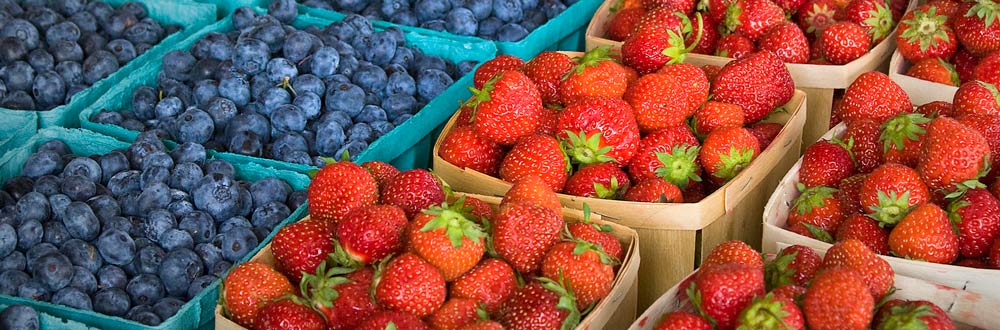
Brown as a berry goes back to Chaucer and the 1300’s, when brown was the new dark purple.
Intensive Purposes
For all intents and purposes, the phrase all intensive purposes is just plain wrong. It’s an example of what linguists call an eggcorn.
Let George Fly The Plane
When aviators speak of George flying the plane, they mean it’s on autopilot.
Phrases with “O” Quiz
Our Quiz Master John Chaneski has a game that’s all about the letter O.
Gawpy
Gawpy is an old term for “foolish,” and refers to the image of a person gaping stupidly.
Preventive vs. Preventative
The term preventive is much more common than preventative, particularly in American English, but it’s just a matter of preference. No need to get argumentative about it.
Put the Chairs in the Wagon
One folksy way to take leave after a visit is to say, It’s time to put the chairs in the wagon.
Hand-Running
If the word consecutively doesn’t feel exciting enough, there’s always hand-running.
The Big Inning
God is a baseball fan, according to one of our listeners. It’s right there in Genesis, where it talks about what happened in the big inning.
Useless Foreign Language Phrases
My postillion has been struck by lightning is one of many lines found in foreign language phrase books that have no real purpose. Mark Twain complained about the same thing in his essay, “The Awful German Language.”
Whole Nother
A whole nother may feel right to say, at least informally, and you will find it in dictionaries, but it’s better to avoid it in formal writing and speech.
Origin of “Buy the Farm”
The idiom buy the farm, meaning to die, could’ve originated from similar phrases, like bought the plot, as in the plot where one is buried.
Honeyteering
Sorry, travel industry PR people: honeyteering, as in “doing volunteer work on your honeymoon,” won’t catch on as a term. At least we hope not.
A Bird in this World
As members of The Andy Griffith Show Rerun Watchers Club know, Andy sometimes shook his head and declared, You’re a bird in this world, meaning that someone was unique or otherwise remarkable. The expression appears to have originated with the show’s writers or perhaps with Griffith himself.
This episode is hosted by Martha Barnette and Grant Barrett, and produced by Stefanie Levine.
Photo by Liz West. Used under a Creative Commons license.
Books Mentioned in the Episode
| The Canterbury Tales by Geoffrey Chaucer |
| “The Awful German Language” by Mark Twain |
Music Used in the Episode
| Title | Artist | Album | Label |
|---|---|---|---|
| Changeline Transmission | DJ Shadow | Endtroducing | Mo Wax |
| You Mess Me Up | The New Mastersounds | Out On The Faultline | One Note |
| Building Steam With A Grain Of Salt | DJ Shadow | Endtroducing | Mo Wax |
| What Does Your Sould Look Like Part 4 | DJ Shadow | Endtroducing | Mo Wax |
| Way Out West | The New Mastersounds | Out On The Faultline | One Note |
| The Number Song | DJ Shadow | Endtroducing | Mo Wax |
| Let’s Call The Whole Thing Off | Ella Fitzgerald | Ella Fitzgerald Sings The George and Ira Gershwin Song Book | Verve |
