

Enough about the Word of the Year. How about the Word of the Decade? Bailout? Google? Martha and Grant discuss some candidates. Also in this episode, does speaking a different language make you feel different emotions? What did Don Draper on Mad Men mean when he called Betty a “Main Line brat”? And why do we talk about “throwing someone under the bus”? This episode first aired December 19, 2009.
Transcript of “Words of the Decade”
You’re listening to A Way with Words. I’m Martha Barnette.
And I’m Grant Barrett.
Martha, when I look back over the last 10 years or so, I can see a lot of new English.
For me, all of this new language, this new English, illustrates the major themes that we’ve been living with.
For example, 10 years ago, did you Google anything?
Maybe you Yahoo’d it or Alta Vista’d it.
I think I dogpiled it.
You dogpiled it.
There we go. And 10 years ago, did you know what a hanging chad was?
I had no idea. I would have guessed it was some kind of fruit or something.
I mean, there were a lot of terms that came out of the big fiasco of the 2000 presidential election.
But I think hanging chad is kind of a great emblem for that whole big mess, don’t you?
Yeah, yeah. That sums it up right there.
And how about this? How about social networking?
Now, that’s a new one. I mean, yeah.
Friendster, Facebook, MySpace.
Well, that stuff really was not on anybody’s radar at the time, or at least nobody.
Most of us didn’t know about Facebook.
It didn’t exist, right?
Right.
And I remember when those nouns started to become verbs and how striking that was at the time.
That’s a true sign that a word has been adopted into the language.
And if it takes 10 years to do it, we can look back retrospectively and say, you know,
Google’s probably going to stick around for a little while longer, right, as a verb?
A verb with a small g.
It’s like the Xerox of our decade.
Yes.
Well, we invite you to submit your words of the decade to us.
Let us know the language that you think characterized the last 10 years.
What is the one word or a few words, the phrase that really encapsulates the feelings, the passions, the emotions,
The trends of politics or technology or even war or culture?
Let us know. Send an email to words@waywordradio.org or send it to us on Twitter at the username Wayword.
Hello, you have A Way with Words.
Hello, this is Carmen calling from Royce City, Texas.
Hi, Carmen.
Hi, Carmen. Welcome to the program.
Oh, thank you.
What can we do for you?
Well, I had a question.
I’ve heard this expression several times.
I understand what it means, but I would like to know what it comes from, what’s the history behind it.
It’s minding your P’s and Q’s.
Minding your P’s and Q’s.
Now, where have you heard that, Carmen?
I’ve heard people mention it, like when somebody was getting out of line or, you know, making, you know, acting, you know, behaving in a way that shouldn’t be right.
You know, they say, hey, mind your P’s and Q’s.
Why P’s and Q’s?
Y, P’s, and Q’s.
Right.
Well, let me ask you something, Carmen.
Is English your first language?
No, it’s not.
And your first language is?
Spanish.
Spanish.
Okay.
Spain Spanish or Latin American Spanish?
No, Spain Spanish.
I’m native of Barcelona, Spain.
Okay.
Yeah, you said it a little bit like Penelope.
That’s why.
Except I think I hear a bit of a Texas accent in there, too.
Have you been in Texas?
I’ve been here for 20 years, so I’m hoping something is bigger.
What a nice combination that is.
Yeah, it’s beautiful.
It’s beautiful.
Well, I was going to say that as far as mind your P’s and Q’s go,
Don’t feel bad because native speakers of English are just as puzzled as you are.
The truth is we don’t know where this expression comes from.
No idea.
400 years on the record and nobody knows.
Right.
Seriously, that’s interesting.
Yeah, and a lot of people think they know the origin.
There have been all kinds of stories floating around,
But not a single one of them has ever turned out to be the definitive etymology.
Some people have talked about back in the days of printing when you used individual little pieces of type to print things,
That printers were told to distinguish between the P’s and the Q’s because those letters look so similar.
But you’d have to wonder for one thing why they weren’t told to distinguish between the P’s and the Q’s and the D’s and the B’s.
Right.
Because they all look alike.
There’s another story about in taverns, the bartender would chalk up P’s and Q’s, meaning pints and quarts,
To keep track of how much the patrons had been drinking.
Who drinks a quart of beer at a time?
Or a quart of gin for that matter?
Be free yourself, Grant.
Okay.
But there have been so many other stories that I won’t even go into.
That it might come from French, and it might come from this, and it might come from that.
Or nautical origins, all this.
Let’s just round them all up and say phooey.
I’m wondering, Carmen, is there something analogous in Spanish?
I mean, I know there’s an expression that means to dot your eyes,
But is there anything like this in Spanish?
Well, I mean, it’s interesting for a non-native speaker.
What I found with the language that is more challenging is not so much speaking it correctly,
For the most part, you know, most people can get away with that,
But it’s the expressions, it’s the slang that really gets you.
I mean, first time I started working, I was working in an office.
Our tables were really close to the entrance.
And one day I came in, and apparently I didn’t close the door all the way,
And somebody looked back and said, are you born in a barn?
And I thought, man, what an odd thing to ask.
You know?
He said, well, no.
Okay?
He said, well, close the door.
And after a whole day, I kept thinking, that was the weirdest exchange of information.
I’ve ever heard of anybody.
So things like that really happen all the time.
There’s some other expressions, even though you understand what they mean,
For somebody that hasn’t heard them all their life, they can be right down gory.
Like, you know, I want to pick your brain.
Or, you know, keep an eye out.
Those, you know, I understand what they mean, but, you know,
The visuals that you get when you’re not, you haven’t grown with those.
So there’s a lot of expressions that are similar,
But the funny thing is when you translate them, they completely,
They look so different from each point of view.
In English, you have that, you know, people get on your nerves when you don’t like them.
In Spanish, if I translate the Spanish translation expression straight into English,
It’s somebody falls on you fat.
It makes no sense to you guys, but it comes to be like the same thing.
They suffocate you when it comes to, you know.
They fall on you fat?
Yes.
What is the Spanish?
Me caen gordos.
You know, now you say that to somebody in Spain, they completely understand right away what you mean.
And I guess, you know, it comes from somebody will sit on your chest like that, you know, suffocate.
You just feel when you get with people that get on your nerves.
Sure, that’s fantastic.
So there’s a lot of that going on.
I’ve got most of them.
You know, people will make same expressions in front of me and I can understand them.
You know, I can even use them myself.
Sometimes I get them a little mixed up.
But that one, that P’s and Q’s, you know, first time I heard it, it’s like, why a P and why a T?
Exactly.
Carmen, we have no idea.
Sorry about that, but I’ve got to tell you,
You are the most entertaining person I’ve talked to in a long time.
Oh, no problem.
And your English is exquisite, so don’t worry about it at all.
Oh, thank you very much.
Well, Carmen, thank you so much for giving us a call today.
Thank you, guys.
Okay, ciao.
Take care of yourself. Bye-bye.
Bye-bye.
Are you a foreign speaker of English?
Is there an idiom that has you stumped?
We’ll help you with it.
Or not.
But we’d love to talk about it.
1-877-929-9673 or send an email to words@waywordradio.org.
Hello, you have A Way with Words.
Hi, my name’s Lisa and I’m from Groton, Connecticut.
Hello, Lisa, welcome.
Hi, Lisa.
Hi.
So I heard a phrase in a movie, or actually two places, a movie and a show, and I was wondering what it meant.
The first place I heard it was in the movie In Her Shoes.
And the character says, I don’t know what to wear to a mainline wedding.
And so the first time I heard it, I didn’t really think much of it.
I just thought it meant, I thought it was perhaps maybe a family name or something like that.
So the second time I heard it was on a TV show.
And it’s my favorite TV show, Mad Men.
And it was in the season finale.
And it’s a pivotal moment in the show.
He’s arguing with his wife, and he calls her a mainline brat.
So then I thought, well, it must mean something entirely different.
So I was wondering if he could help me with that.
Yeah, so in Mad Men, this is a show about the advertising business in New York City in the 1960s.
Who were the characters that were arguing?
Oh, I’m sorry. It was Don Draper, the main character, and his wife, Betty Draper.
And do you know anything about Betty Draper’s background, where she’s supposed to be from?
I can’t remember, like, where she’s supposed to be from, but just that she’s from, like, a wealthy, you know, well-to-do family.
Okay, that’s good information.
And now the movie was In Her Shoes.
I don’t think I know that movie.
What’s the background?
Where is that set?
That one’s set in Philadelphia and slash Florida.
That’s with Toni Collette and Cameron Diaz and their sisters.
Okay, okay.
It’s ringing some bells now.
All right.
So, yeah, this is interesting.
So Mad Men, Don calls Betty a mainline brat.
And it’s not a nice thing to say, right?
No, no.
And she’s from a wealthy background.
So we’ve got just enough information here to figure out exactly what they meant.
It turns out that Main Line, and everyone in Philadelphia is going, yes, yes.
The Main Line is the name of a neighborhood in Philadelphia.
And it runs from Marion to Bryn Mawr to Paoli.
And it’s through which the main line of the Pennsylvania Railroad ran.
It’s a ritzy neighborhood.
It’s she, she, it’s Tony, whatever you want to call it.
And so if a mainline brat goes to a mainline wedding,
It’s one rich, spoiled person going to a very fancy affair.
And so mainline, which is the name of this neighborhood,
Became kind of generic to mean ritzy or fancy or Tony
Or somehow involving money or prestige or elitism.
Oh, okay.
So I guess Betty Draper must be from that neighborhood too.
I can’t remember though.
I can’t remember where she’s from.
They give so much information in that show.
It’s like it’s all coming at you all the time.
Did she go to Bryn Mawr in the show?
Probably.
I can’t remember where she’s from.
That’s interesting.
And I should say, for the record, it has nothing to do with mainlining drugs.
Just in case you were wondering.
It’s not about shooting up.
Yeah, that’s what it says.
That’s the only thing I could find on the Internet.
So, Lisa, you must have an ear for this stuff,
That you picked out this one expression mainline,
Which is kind of bland out of two different shows.
Oh, yeah.
Having a new Philadelphia.
Very good.
I guess I do.
That’s cool.
Well, there’s your answer.
Well, thank you very much.
I’m surprised.
It’s actually a place, so that’s good to know.
Yeah.
Yep.
Cool.
Cool.
Thank you for calling.
Thank you.
Take care.
Bye-bye.
Bye-bye.
Bye-bye.
Well, have you heard something on your favorite TV show that has you scratching your head?
Give us a call, 1-877-929-9673, or email us.
That address is words@waywordradio.org.
Martha, besides the word of the decade, it’s also time to collect nominations for the word of the year for 2009.
And I’ve got a long list of them here, and a couple of these are just kind of leaping out at me as good contenders.
What do you think about Dracula Sneeze?
I love Dracula Sneeze.
I would really like to popularize that one.
Here in California, they’re actually recommending that.
Officials talk about this.
This is instead of putting your hand over your face when you sneeze, you put your arm over your face.
That way you’re not spreading the germs later that land on your hand, right?
And then you say, blah,
Yeah, yeah, because it’s just like the count holding his cape up to his face.
Yeah, I love that.
Kind of hiding on the spot.
One that I particularly like just because it’s kind of ironic, although it’s not really new to this year, is Government Motors.
And this is a nickname for General Motors because it took so much government money during the automotive bailout.
So it’s a joke.
Yeah, it sure is.
Yeah.
And then what do you know about Un-Un-Bium?
Or is it Un-Un-Bium?
Un-Un-Bium?
Is that when you stop taking Ambium?
I don’t know.
It’s different from Un-Untanium.
No, Un-Un-Bium is a newly found element.
They have a list of generic element names.
Oh, really?
So they kind of hold in reserve.
Yeah, so they already know what they’re temporarily going to call the next newly found element, and this is it.
They haven’t come up with a permanent name yet, but the abbreviation is capital U, lowercase u, b, u-u-b.
Really? No kidding.
So they name them like hurricanes, only more esoterically.
If you’ve got a word of the year or a word of the decade candidate, let us know.
We’ll talk about them on a future show.
You can send them to words@waywordradio.org or send them to us on Twitter at the username WayWord, W-A-Y-W-O-R-D.
Coming up, let your word freak flag fly.
Will this week’s word quiz be a breeze?
Stay tuned.
You’re listening to A Way with Words.
I’m Martha Barnette.
And I’m Grant Barrett.
And we’re joined now by our quiz guy, John Chanesky.
Hello, John.
Hi, Grant.
Hi, Martha.
How are you?
What are you up to?
Oh, you know, 6’5″, just about that.
Yeah.
Really?
6’5″?
A big man, are we?
You’re taller than Lincoln.
I’m taller than Lincoln.
It was 6’4″.
That’s correct.
Yeah.
Take off those heels.
What do you have in your puzzle bag?
Well, you know, I just want to tell you guys, you might find this interesting.
Instead of watching CNN, I prefer LNN.
LNN.
That’s the Limerick News Network.
Oh, okay.
Yeah.
Gotcha.
All right.
Yeah, sure.
Their slogan is, if the news is bad, it could be verse.
Oh, man.
No.
Yeah.
Yeah.
Sorry about that.
You know, I’ll give you a limerick about some event that occurred in 2009, and I’ll leave off the last word or two.
You’ve got to come up with the correct rhyme.
How’s that?
Okay.
Okay.
Okay.
Let’s try it.
Let’s see how it goes.
Okay.
Let’s see how it goes.
All right.
Here’s the first.
Now, Obama’s in office and leads, though he’s still hard at work on his deeds.
He’s improved relations with several nations.
Heck, he got a big prize from the…
Swedes.
Swedes is right.
Because he won the Nobel Prize, right?
He did win the Nobel Prize for the Swedes, yes.
So that’s our first.
What did you think?
Yeah, great.
So far so good.
Better to write it with Swedes than Thorberg,
Or whatever his name is, right?
Exactly.
Okay, here’s the next.
NASA really put on a great show.
A new lunar crater did blow.
To the glee of mankind, the rocket did find
That the moon contains much…
Water below.
H2O.
H2O, much better.
I’ll take them both water below, sure.
It was near the poles, I think, that they did find the water.
But H2O is correct, Martha.
One for you.
All right, let’s do another.
Singers, some scandal did spawn, they.
Could stand to be much more withdrawn.
Say, did you happen to see the awards on TV when Taylor was dissed by Rude?
Kanye.
Kanye.
Kanye.
That’s right.
And if I never hear somebody say, I’m going to let you finish, but I just wanted to say one more time.
If I never hear that again, I’ll be happy.
I know.
I know.
I will recommend, though, I’ve been using it as a knock-knock joke.
Knock-knock.
Who’s there?
Kanye West.
Kanye West.
Now, just a second here.
I’m going to let you finish.
I just want to say one thing.
That’s like the interrupting cow.
Exactly.
Exactly.
Okay.
Move on to the next limerick.
Now, you guys know in the NPL we actually have puzzles we call WNFR puzzles.
WNFR, we never finish reading.
They’re puzzles that from the very first line, you can pretty much tell what the answer is going to be.
And I have a feeling this limerick might be one of them.
Here we go.
All right.
Though lots of New Yorkers were laid off.
Coming to you live from WNFR.
WNFR.
Go ahead and finish.
Here we go.
Though lots of New Yorkers were laid off, it really was more of a tradeoff.
If you haven’t got squat, then you surely have not lost your savings to…
Bernie Madoff.
Bernie L. Madoff.
That’s right.
Very good.
This next one’s on a little more positive note.
I think you’ll like it.
While 143 quiver, neither pilot nor co-pilot shiver, Sully did shine.
Flight 1549 landed safe on the cold…
Hudson River.
Hudson River.
Very good.
Very nice.
Here’s the next.
From Canada to Argentina, the talk of the tennis arena was a heated death threat against a ref.
Now I’ll bet that you know that the answer is…
Serena.
Serena’s right.
Very nice.
Thank you.
Hardly serene to be Serena sometimes, I’m sure.
She wasn’t at that point, no.
No, no.
But that was a good get.
Good get.
Okay.
Here’s the last one.
The limericks almost are done.
The year was sure wacky and fun.
Well, maybe not.
It seems that I’ve caught a touch of the…
H1N1.
H1N1, that’s right.
Also known as the Heine flu.
The Heine flu.
That I haven’t heard.
But that’s good.
You guys did fantastic on the limericks.
I’ll tell you what network you can find the limerick news network on.
I’m sure you’re going to want to get on there right away.
Yeah.
Yeah.
Do these run across the bottom of the screen?
Yes, they do.
That would be nice.
Five lines at a time.
That’s good.
Yeah, they were good.
Great stuff, John.
Thank you very much.
It was a lot of fun.
Thanks a lot, John.
Bye.
Well, if you have a question about wordplay or language or grammar or slang or regional dialects or limericks, call us 1-877-929-9673.
That’s 1-877-WAYWORD or send an email to words@waywordradio.org.
Hello, you have A Way with Words.
Hello, my name is Joe St. Marie, and I’m calling from Jericho, Vermont.
And I have a question about a couple dog sledding terms that I use.
Wait, that you use?
That you use?
That I use.
You’re a dog sledder.
Yeah.
I am.
Are you on a dog sled right now?
If you’re not, don’t tell us, okay, because I really want to picture this.
You’re on the dog sled.
You’re talking to us, right?
You dialed us up.
I am.
I’ve dialed you up.
The wind is in your hair.
That’s right.
This is great.
You’re looking at, what, 12 dog butts, right?
Right.
That’s right.
And you thought of us.
Perfect.
Perfect.
Yes.
What kind of dogs, Joe?
Well, I have actually Siberian Huskies.
That’s what I use.
Actually, I have one Border Collie that’s on my team.
So he’s a little bit different.
But, yeah, everybody else looks pretty similar.
This is great.
And so do you do this for sport or to go get the mail or what?
Well, it actually started as a hobby for me about 12 years ago and has now become sort of a part-time job as well.
I take people out on tours and kind of give them the ropes, and I also do educational programs where I go to schools and talk about the history and let the kids play with the dogs and all that sort of thing.
All right.
That’s great.
Okay, so pull over.
Yeah, pull over.
Okay.
And what can we do for you?
Yeah, how can we help?
Well, the words that I’m calling about are what we use to tell the dogs to go right or left.
And they are G and ha.
And respectively, G is right and ha is left.
My theory actually is that it’s about phonetics and that it has to do with, because right and left end with a hard T, that it’s a lot easier for the dogs to distinguish between G, which is like a long E, and the A from HA.
So I’m not sure how that evolution came, but that’s my theory.
Not a bad one at all.
Yeah, that makes a lot of sense.
I have one other question for you.
What do you say when you want them to stop?
Whoa.
Whoa.
Okay, so you have geohawks.
Yep.
But, you know, they won’t stop very willingly.
You actually have to, there is a brake on the sled, so you’re applying some pressure on the brake as well.
So they’re very well trained so they know kind of what’s going on with all those elements.
But whoa is the term that’s given, yeah.
Okay, that’s great.
Well, I think that your theory is as plausible as anything I’ve seen.
I don’t know that we know that much about these terms etymologically, except that I know that G goes back to at least the early 1600s, and there was an earlier form of that, re, which seems to have died out pretty quickly.
But I think you’re right that the dogs don’t care about those final consonants.
And also, it should be said that these terms go back to just work animals.
Yeah, exactly.
Horses and oxen on the farm.
The draft animals, right.
Yeah, exactly, draft animals.
I’ve encountered several equine folks along the way that have said, oh, well, that’s what we use for our horses.
Exactly right.
There was a time, though, that they were by no means universal.
There had been a wide variety of other terms that had been used to mean left, right, and stop.
Yeah.
Right, right.
Yeah, but I think as long as you and the dogs know what it means, then you’re okay, right?
Right, sure.
Didn’t have to have a universal term for that.
Hey, Joe, I forgot to ask you one other question.
I mean, what do you say when you want them to get going?
Do you say mush or giddy up?
Well, I use let’s go or hike.
Hike is another term that’s used.
Interesting.
That’s interesting because they’re all different vowels, right?
E, o, and I.
And vowels can be very elongated.
Right.
Yeah.
Exactly.
I like your theory, Joe.
Grant, do you have a different one?
Thank you.
I think it’s a sound one.
I think we find throughout English, we find that commands are always short, sharp, and easy to understand.
Right.
Well, cool, Joe.
I’ve got to thank you for sharing all your background with us.
I didn’t know this.
All I knew about dog sledding was from Jack London, which I guess I could do worse, right?
Yeah, yeah, absolutely.
Well, I was happy to call.
All right.
Thank you, sir.
Thank you very much.
I hope we helped you some.
Okay, no problem.
Thank you very much.
All right.
Bye-bye.
Bye-bye.
Bye-bye.
Is there an everyday term that you have that you’re mystified about?
Give us a ring, 1-877-929-9673, or send an email to words@waywordradio.org.
Hello, you have A Way with Words.
Hi, this is Beverly calling from Midlopian, Texas.
Hello, Beverly, welcome.
Hi, Beverly.
Hi.
What’s going on?
You can’t believe what?
I found your station by accident.
I drive a truck for a living, and I’ve run into it twice out on the road.
Just because of what I do, I’m not in an area very long, and I lose the reception.
So to have found it twice, I’m such a word nerd.
I just loved it.
Excellent.
A word nerd and a truck driver.
What are you hauling?
Just about everything under the sun, yeah.
-huh.
I drive an 18-wheel truck.
-huh, cool.
Well, glad to help.
What can we do for you today?
Well, years ago, I worked in a retail kind of venue, and well, it was the military’s PX system.
I was the manager at the checkout.
And a woman came through my line, and I rang up all her things.
And then when I was giving her a change back, she said that she wanted a case quarter.
And I thought she wanted like a roll of quarters.
So I was directing her back to the cashier’s area where she could get, you know, change or whatever she wanted.
And she got kind of angry with me that she kept saying, no, I just want a case quarter.
And I said, you know, I’m not really sure what you’re talking about.
And she just kept getting angrier and angrier.
And later on, you know, after she tried to calm down a little bit, I guess, she kind of explained to me what that was.
Have you ever heard that term before?
Case Quarter, and you’re spelling that C-A-S-E Quarter?
That’s what I assumed.
Yeah, I know it from my reading, but it’s not something that my family ever used.
I had never heard it before or since.
I’m from Southern California, from the Huntington Beach area.
She sounded to me like she was from the South, so I thought maybe it was a Southern kind of thing that they thought out.
So what did you hear about it?
I don’t know where I was reading it, perhaps in Faulkner or Zora Neale Hurston or someplace like that, because this term is so closely allied with the South, the two Carolinas, North and South Carolina in particular.
But it’s also popped up in Georgia and Tennessee and Kentucky and here and there.
Well, I was in Arizona at the time.
Oh, were you now?
And the person on the other side of the counter was young or old, black or white?
She seemed to me like she was probably mid-20s at the time.
And she was a black woman, a white woman?
She was a black woman.
Okay, yeah, that’s why I asked, because it’s one of those terms that’s so closely allied with the speech of black Americans, at least in the last few decades.
Although it didn’t start out the way, most of the authorities that you ask about this question will tell you that it probably comes from an older word, caser, C-A-S-E-R, which meant a crown, which is a type of British coin worth about five shillings.
I bet she never knew that.
Yeah, no, probably not.
That’s the way of language.
We often don’t know the roots of the words that we speak every day.
And kaiser in turn probably came from an old Yiddish word, which also meant the same thing, a crown.
And so the idea here is that this word kaiser was shortened to case, and it’s had an interesting life.
For example, have you ever heard of the game Pharaoh, F-A-R-O?
Yeah.
Yeah, it’s a kind of card game.
I don’t know how to play, but I have heard of it.
Yeah, it’s a kind of card game.
In that game, I believe this lingo is still used.
Was as of the 1970s, case money or case dough is the last money that you have to bet. It’s the very last. And also in that game, a case card is the fourth and last of any denomination, for example, of a card that you might draw. For example, if you draw the last ace, that’s the case ace.
And so we have a couple different kind of connecting paths here where this case comes in from money, and you get this idea from gambling where it refers to the very last of something, or the definitive one of it.
In any case, just to clarify here, a case quarter means that you have an actual quarter with Washington on it and not five nickels, right?
That’s what I finally found out from her.
Okay.
So in any case, to summarize it all up, it probably goes back to that old language for a British coin, a caser.
That is so interesting.
So now you know, a case quarter is a whole coin.
I really appreciate that help.
You know, I had known that, but I was going, you know, I have never heard of this before.
And then when I heard this program, that was the first thing that came to my mind.
I’m going to find out what this is all about.
Thank you for giving us a ring and good luck on the road, okay?
Take care of yourself.
Righty.
Thank you.
You have a nice holiday.
Okay.
Bye-bye.
Bye.
Well, do you have a story about a word that you grew up speaking and then you moved to another part of the country and nobody knows what you’re talking about?
Call us and talk about it.
1-877-929-9673 or send an email to words@waywordradio.org.
Hello, you have A Way with Words.
Hi, Grant. I’m Susan Moody, and I’m from the Adirondack Mountains in New York State.
Hi, Susan.
Hi, Susan. Welcome to the program.
Hi. Hi, Martha.
Hiya. What’s going on?
Well, I have a question about an expression that I apparently use.
I hadn’t realized I’d used it until it was pointed out.
It’s look it.
And usually it is used as kind of an instruction or a warning before I’m about to hold forth with some information.
So I was wondering if it might be an influence of Canada, the French Canadians, or possibly an Irish influence because I’m from a family of Irish people.
And you’ve used this all your life, and it was just recently pointed out to you?
Well, you know, I must have been, but I hadn’t even noticed it.
My husband had pointed it out to me, and after he did, I noticed that some family members used it.
And it’s used as an imperative, you know.
It’s like, look it.
I’m going to tell you how it is.
And I’m just wondering if it’s regional.
Your husband didn’t grow up there?
No, my husband is from England.
I see.
And he’s a bit of a nitpicker with a word usage.
-huh.
So what happened the first time you said that to him?
Well, I think it wasn’t the first time that he said something.
It was probably after, you know, a few times he just pointed out that it’s a strange kind of expression.
Bless his heart.
So he bit his tongue for a while.
Yeah.
I guess they might say, see here.
See here.
That’s funny.
I never heard this expression until I was in my 20s.
What about you, Grant?
Oh, yeah, definitely.
Really?
Yeah, I knew it in Missouri.
I remember commenting on it.
I remember it was a way that you could make fun of certain kids who did use it.
Oh, really?
Yeah, look it.
Look it.
Because they’re always saying, look it.
Look it.
Look at this.
Look at that.
You’re like, look it.
No, it’s look.
Yeah, I do tend to associate it more with kids.
And I think of this wonderful Peanuts cartoon.
I don’t know if you ever saw this one.
But Charlie Brown’s little sister keeps saying, look it, look it, look it.
And in the last frame, he says, OK, OK, I am look-iting.
It’s interesting.
The earliest reference I see to it, just looking quickly, is from a 1917 publication that’s talking about look-it used among schoolchildren for look.
And it notes that it’s in northeastern Ohio and apparently recent.
So maybe it’s only been around for a century or so.
My son-in-law, who grew up in Thunder Bay in Canada, said that he heard it when he was growing up.
Oh, really?
Really.
So that’s why I thought maybe the Canadian kind of thing drifted down, because we’re pretty close to the Canadian border.
Right, right.
So, Martha, do you think that it’s a form of look at?
Yes.
That doesn’t really make sense either.
Is it?
Oh, I think so.
Yeah.
Look at this?
Yeah.
So we kind of clipped off the this and just left look at?
So it’s more like look at rather than look at?
Well, I don’t know that we can say for sure, but that makes sense to me.
I feel like it probably arose from the language of children.
And that’s why it’s an imperative kind of a thing.
They want attention and want them to pay attention.
Yeah, look it, look it.
But I would say it’s definitely more northern than southern.
I didn’t hear it my whole life.
Well, look it, Susan, we’re delighted that you called.
Well, thank you.
Thank you so much, Susan.
Take care of yourself.
Thank you.
Bye-bye.
Bye.
Ring-a-ding-dillo. Give us a call with your questions about language.
And we’re waiting for your Words of the Year and Words of the Decade nominations.
You can send them to words@waywordradio.org.
Don’t go away. There’s much more to come right here on A Way with Words.
You’re listening to A Way with Words. I’m Martha Barnette.
And I’m Grant Barrett.
Writer and journalist Olivia Judson has an interesting question.
Does speaking certain languages automatically make us feel certain emotions?
Writing in the New York Times, she explains her thinking.
First, we know that forcing ourselves to smile can actually make us feel happy.
Right, Martha?
Right, right.
So just try it right now.
Draw your lips back into a smile.
Kind of exaggerate it.
You really like put on a fake smile.
Hold it for a few seconds.
Yeah, and you giggle, right?
Yeah.
You do.
You can’t help it.
And part of it is because you’re making a silly face.
But part of it is there’s some influence there.
Your body is influencing your thinking and your brain and your emotions.
And the opposite is also true.
If you put on a frown, try it.
Go ahead.
Scowl.
Stop the smile email?
Yeah, yeah, you can.
Put on the full Scrooge.
Okay.
It’s like, you know, furrow your brow.
Go away, little kids.
Yeah, yeah, yeah.
Get off my lawn.
Oh, now you’re laughing.
No, but if you did it in earnest, if you really tried to make yourself feel sad or grumpy, you could do it by putting on a really just terrible frown.
And then if you hold that long enough, you should feel just basically evil.
Now, her theory is, and this is just a theory, it’s a question she threw out there because she couldn’t find an answer.
Olivia Judson wants to know, since some languages have more sounds that kind of force your face into kind of smiles, right?
Certain vowels will draw the lips back in a way that’s kind of like a smile.
Does that language then mean that you would be happier?
Speaking that language, would it make you feel more up about life?
And the opposite, too.
If there’s a language that has sounds that lend themselves to making kind of, you know, make you kind of make frowny faces, would that language make you feel sad more often?
It’s an interesting question.
Yeah, it is.
It’s a pretty sweeping idea, don’t you think?
I mean, just because you use a lot of umlauts doesn’t mean that you’re screwed.
Well, there we go.
And that’s why she proposes it.
She doesn’t, she’s not trying to say this is the case.
She’s asking the question.
Because we have research, and Malcolm Gladwell has done a great New Yorker piece that kind of summarizes up this research on.
We know that the composition of your face, if you willfully change your face into a smile, you can improve your mood.
And so if I’m making a lot of, like, E sounds, like cheese or me or whatever, does that mean my, you know, my face is kind of smile-like?
Does that mean I’m going to be happier?
I don’t know.
It’s something I’d like to see studied.
Yeah, it’s a really intriguing question.
I know that I don’t speak a whole lot of Brazilian Portuguese, but I think it has to be the sexiest language on the planet because you have all these sounds where you’re puckering up.
It’s like you’re puckering up to kiss.
A language of kissing.
The first word I learned in Portuguese was gustoso, which means delicious.
I mean, it’s just, you know, so you have all that vibrating at the front of your mouth and the puckering.
And I don’t know.
I think you do feel kind of sexy when you’re going to speak.
I think her speculation is interesting.
We’ll link to her article, her blog entry, actually, on the New York Times website, as well as her follow-up and the thousands of comments from people who had something to say on this.
And I’ll also dig up that Malcolm Gladwell article where he just kind of summarizes the research about the influence of one’s emotions when one changes one’s face.
Do you have a language that makes you feel happy when you speak it or one that makes you feel sad?
Is it something that it does to your face?
Is it the connotations of the words you use?
Or maybe it’s the people you speak it with.
Give us a call, 1-877-929-9673, or tell us about it in email to words@waywordradio.org.
Hello, you have A Way with Words.
Hi, this is Emma Stone calling from Indianapolis, Indiana.
Hi, Emma. Welcome to the program.
Hi, Emma.
Hi, thanks.
My question today is, whenever I’m out to eat with my granny, it doesn’t matter who we’re with,
If we’re with my dad or my brothers,
With a whole group, and the waitress or waiter says,
How are you guys doing?
She gets really upset, and she says, take another look,
Or she says she won’t respond to that,
And she is hoping for them to address her in a different way.
And for the past few years, I’ve always had this argument that in Spanish,
If there’s a group of, like, 100 girls, but one guy,
They use the masculine plural form.
And so my argument is that I understand it’s a sexist language, but it’s just what everyone uses.
And so you guys have arguments about this, you and your grandmother?
Yes.
Well, Emma, this is a dilemma.
The difficulty here is this.
Looking to another language for rules of your own language is not necessarily going to get you anywhere good.
No.
So the Spanish argument is interesting, and clearly you’re learned in that area, but it doesn’t really apply here.
But let me suggest, and Martha, I think you know what I’m going to say.
Let us suggest another tact.
The next time it happens, why don’t you say,
Right on, Grandma! You tell them!
Why don’t you just back her play?
Just stick up for her.
Say, excuse me, waitress or waiter, whatever your name is.
Hello, we’re female.
How about you say gentlemen and ladies or you guys and gals or you all?
See what happens.
I bet your grandma will be shocked and pleased that you’re just supporting her.
Emma, what do you think about that?
She’s 82.
She’s 82.
Let her have it.
Let her have the argument and the rant.
Just let her win.
So you don’t think that’s such a good idea?
Well, I always think I’m right.
Yeah.
Well, that’s another thing you could tell her.
You should say, Granny, you know what?
I got my hard head from you.
Oh, that’s kind of nice.
You haven’t changed my mind at all.
I can see your point of view, but you haven’t changed my mind at all.
So two hard-headed ladies here arguing about the same thing.
Let’s just have another dessert.
Yeah, okay.
I like that one better.
Okay, there we go.
And here’s a third option.
Is moving to the south a possibility?
Well, we’re going to visit Alabama this weekend.
Oh, well, maybe you could just look for a place to live there, and then everybody will say, how y’all doing?
And it won’t make a difference.
Yeah.
I mean, when we’re at restaurants, she’ll say that she prefers that over guys.
Oh, does she now?
That’s good.
That’s good.
That’s interesting.
I mean, I understand where she’s coming from.
If it doesn’t matter, then why shouldn’t the waitress come up to a table full of men and address them as you gals, right?
I mean, that’s where she’s coming from.
I understand that.
Well, Emma, good luck.
Let us know how it goes.
Yeah, do send us an email and let us know what your grandmother says when you try one of these other approaches.
Yeah, just shake things up a little bit and see what happens and let us know, okay?
All right. Thank you.
Okay.
Thank you for calling. Take care of yourself, Emma.
You too. Bye-bye.
Well, if you have a dispute in your family, we’d love to hear about it.
If it has to do with language, give us a call, 1-877-929-9673, or send those emails to words@waywordradio.org.
Hello, you have A Way with Words.
Hi, I’m Sean, and I’m from San Diego.
Hello, Sean. Welcome.
Hi, Sean.
Hey, Martha. Hey, Grant.
I’ve recently been noticing that on a lot of reality TV shows,
I hear this phrase, and they always,
It’s like when they confront another one of the players
For having kind of, I don’t, doomed them to failure
In front of the judges.
And the phrase is, I always hear them say,
Why did you throw me under the bus like that?
Is this a reality show involving buses or islands?
No, no.
I watch a lot of Hell’s Kitchen, and it’s used on that show like every time.
Oh, really?
Yeah, and I’ve seen it on a couple other shows.
And I guess my question was, well, there had to have been some sort of origin of that.
And every time I look it up, all it does is just show its different uses,
Which are basically, why’d you screw me over?
And then, I mean, I just don’t see it as a very, like,
Reliable way to do in your company, like your comrade, you know?
There are better ways to make somebody fail.
Yeah, I mean, there’s better ways.
A knife, a gun, poison?
Yeah, it doesn’t seem like the logical means to an end.
And so I figured there must have been some sort of, like, point when it happened.
And I tried looking it up, but I couldn’t find it.
So I guess that’s what I was wondering about.
Yeah, so where did that bus come from, Grant?
It’s a good question.
The strongest theory that I know of, Sean, is that it comes from the world of traveling shows,
Traveling teams, and traveling concerts.
These are people who spend a great deal of time on the bus.
And there’s a saying.
You’ll find it again and again in the memoirs of people who used to do road tours or still do.
They always say, be on the bus or under it.
And so this is like a mantra because if they do a truck stop, you’ve got a set amount of time to use the bathroom and get a snack and get back on the bus or you will be left behind and you will pay your own airfare or taxi fare to catch up with the bus.
It’s constantly a problem.
There’s always some hapless character on these tours.
There’s always somebody who gets left in Des Moines.
Oh, don’t I know it.
I used to be in a band with four other women and those rest stops took forever.
So, and that’s the other thing.
Yeah, a rest stop, you set a time limit and you’re on the bus and the bus goes.
And they don’t wait for anyone except the driver, of course.
The rule is do whatever the driver does, of course.
And so the strongest idea is that it came from the world of sports where this is particularly important.
Because they do a lot more traveling, actually, if you can believe it, than most, say, Broadway shows that are taken out.
Or most big concert kind of band music shows that are taken out.
And through that way, it started to be picked up in the language of sportscasters who, of course, use it on the air and of sports writers who use it in their writing.
And in that way, it got spread to the general population.
And it really caught fire just a few years ago.
I started noticing it everywhere.
And so I did a little dictionary entry for it and provided my research to some other people who in turn wrote about it.
And then, as you mentioned, I still hear it on the occasional television show.
When I watch television, I still hear it in news reports, I still hear it in discussions of politics, and even in personal conversations, people will mention it.
So do you think throw me under the bus is jump the shark? I mean, it seemed like we were hearing it so much in the last couple of years.
Yeah, do I think that throw me under the bus is tired? Yeah, it’s a little tired, but we’ll see if it’s got legs.
It may yet go the distance, Martha.
All these people out there are saying tired legs, puns, I’m sorry.
Yeah, that was pretty fantastic.
I aim to please, buddy.
Sean, we really appreciate your calling.
Oh, great. Thanks. It was enlightening.
Okay, yeah, that’s the best that we can hope for.
Okay, great.
Thanks for catching on the flip-flop. Bye-bye.
Thank you. Bye-bye.
What are you hearing on the television shows today?
Something mystifying? Something weird? Something strange? Some new slang?
Call us about it, 1-877-929-9673, or send an email to words@waywordradio.org.
Hi, you have A Way with Words.
Hi, this is Ryan Schoenberg calling from Dallas, Texas.
Hi, Ryan.
Hi, Ryan. How are you doing?
Great. I’m calling in in regards to a word my grandmother used to use.
The word that she used to use was paddywhacker.
She used to carry around a funny thing in her purse, and that was a washcloth in a little plastic baggie.
With us kids, our hands would inevitably get dirty throughout the day.
And she would often say, show me your paddywhackers.
And we would then extend our hands.
And she would take her washcloth and wipe them.
And so I was just wondering, is there an origin for this word paddywhacker?
You know, I’ve heard it in use with regard to, like, paddywagon or something like that.
But I never heard it used by my grandmother.
And her background is what? She’s American?
She was born in the U.S.
She’s of Irish descent.
She’s from where? Is she from Texas as well?
She’s from Texas as well.
She was born and raised in Houston, Texas.
Okay, okay.
You know, it’s not the most common use of the word paddywhacker, but there are some records and some dictionary entries that show that it has been used to mean hand by other people.
And it’s kind of a complicated and convoluted story that I’m going to simplify for you.
You mentioned paddy wagon, and I think it’s related to paddy wagon.
And just to clarify here, paddy is an offensive term for an Irishman.
So paddy wagon meaning rounding up Irishmen who are in trouble?
Yeah, the wagon that you put.
Yeah, exactly.
You put the Irishmen who are causing fights and brawls and throw them into the wagon and take them down to the tank or the cooler for the night and let them out in the morning.
In any case, Hugh Rawson, in his Wicked Words, he talks about the way that the Irish word patty has been turned into other words.
And he talks about the paddy wagon, but he also mentions that paddywhack was used to mean a stout Irishman or just any Irishman.
And so what we’ve got here is a weird kind of occurrence of whack just suddenly appearing and kind of being attached to paddy.
And I think the theory here that holds the most water is that the Irishmen in the United States who tended to be cops were known for beating the suspects in front of them.
And so if you got hit by one of these cops, it was a literal Patty whack.
And again, it’s the one that holds the most water.
In any case, and he puts it this way, Hugh Rawson says it’s the kind of smacker whack an angry Patty might give you.
But also, in British English, a paddywhack is used to mean a hit or a spank or a strike or even a rage.
Or if you’re in a fierce passion, that is also a paddywhack.
And it’s shortened often to paddy.
And we kind of come full circle here.
And so what we’ve got is a conversion where people who didn’t quite know where paddywhack came from did what’s called a back formation.
Do you know what a back formation is, Ryan?
No, I’ve never heard of that before.
That’s when we take a word and we look at it and we try to break it down into its component parts, but we kind of do it incorrectly.
So people looked at paddywhack and said, that must mean that a paddywhack is a whack by a paddy.
And since you hit with your hand, people assumed that paddy meant hand and not an Irish person.
So for what it’s worth, there you have it.
The idea is it ultimately does go back to being patty and Irishman through this weird convoluted history of all these different forms of patty and pattywack and pattywacker.
When I’ve seen pattywack defined as a hand in reference works, it’s usually for little kids.
Yes, it is often for little kids.
Or a baby.
Yes.
The reference works, however, they’ve oversimplified.
If you look in the historical record, you’ll find plenty of uses of pattywack to mean a hand for any type of person.
Okay.
Later, maybe it became used for children, but I think that you’ll find plenty of uses of it for adults.
Well, I hope that I haven’t confused matters too much, Ryan.
No, not at all. I appreciate it, and I’m glad to have maybe even some new ways to use the word as well.
Thanks so much for giving us a call.
Thank you.
Okay, bye-bye.
Bye-bye.
If you’ve got something Granny always said that you want to find out more about, we’re the people who can help, 1-877-929-9673.
And if you want to submit your words of the decade or words of the year, send them to words@waywordradio.org.
Martha, how’s your driving?
It’s not bad.
Not bad. Do you drive like a Cullen?
Like a what?
A Cullen. C-U-L-L-E-N.
There are bumper stickers making their rounds. This is on my words of the year candidate list.
Drive like a Cullen.
Yeah, to drive like a Cullen is to drive like a bat out of hell, literally.
The Cullen family are the main characters in the Twilight Vampire book series.
Oh, that’s why I didn’t know.
Surely you’ve read them all.
You’ve seen the movies, right?
No, no.
I’m not a teenage girl.
Come on.
Martha, Martha, Martha.
Drive like a Cullen.
To drive like a Cullen.
I drive like a Cullen.
It means you drive very fast.
Like a bat out of hell.
One of my other favorite word of the year candidates.
This is kind of new.
Arnold Schwarzenegger, governor of California.
Goobernator.
The goofinator.
Well, they were auctioning some stuff off earlier this year, and he did a video where he’s like, there’s this gigantic knife, then he’s fingering the edge of this knife.
And so some people were criticizing him for his behavior in these videos because he’s a star besides being the governor, right?
And if he signs this merchandise, it’s going to sell for a lot of money.
So that’s what he did, and they auctioned it off and it benefited the state, so on.
And then he got on, he got kind of up in arms because people were complaining that it wasn’t befitting of a governor to be brandishing a knife in a video.
It’s a gigantic knife, too.
You know, it was like my forearm.
It was big.
And he said he wasn’t an El Stiffo, meaning a colorless character.
And so El Stiffo was one of my Word of the Year candidates.
Yeah, meaning that he wasn’t some, like, cardboard cutout automaton governor.
He was somebody with some life and some color.
And you know what?
The man’s absolutely right.
As far as a governor goes, he’s a grade A performance.
That’s a five-star A++.
He is no girly man.
He is no girly man.
But hey, if it raised money, we can use it, right?
Mm—
And if it’ll raise some more Word of the Year candidates, that’s great, too.
If you’ve got a Word of the Year or a Word of the Decade, and it can be a phrase.
It doesn’t have to be a single word.
It can be a phrase of the year.
Send it along to words@waywordradio.org or give us a ring on the telephone, 1-877-929-9673,
Or send it to Twitter at username Wayword.
Things have come to a bridge.
That’s our show for this week.
If you didn’t get on the air today, you can leave us a message anytime.
That number is 1-877-929-9673.
Or email us. The address is words@waywordradio.org.
Or you can follow us on Twitter at the username Wayword.
Stefanie Levine is our senior producer.
Our technical director is Mark Kirshner.
And our editor is Tim Felten.
We’ve had production help this week from Josette Herdell and Jennifer Powell.
From Studio West in San Diego, I’m Martha Barnette.
And from San Francisco, I’m Grant Barrett.
Thanks to Howard Gelman for engineering our show from the studios of KQED Radio
With assistance from Danny Bringer.
So long.
Bye-bye.
Word of the Decade Candidates
 Enough about the Word of the Year. How about the Word of the Decade? Bailout? Google? Martha and Grant discuss some candidates.
Mind Your P’s and Q’s
Where’d we get the expression “mind your p’s and q’s”? A Barcelona native wants help understanding exactly what it means, and shares a few other English idioms that caught her up short.
Main Line Brat
A die-hard fan of television’s Mad Men is puzzled when Don calls Betty a “Main Line brat.”
Dracula Sneeze
Grant’s been collecting contenders for 2009’s Word of the Year, including Dracula sneeze, Government Motors, and… unumbium?
Events of the Year in Limericks
Quiz Guy John Chaneski sums up the events of 2009 in the form of limericks, all with a blank to be filled. Here’s one:
NASA really put on a great show
A new lunar crater did blow
To the glee of mankind
The rocket did find
That the moon contains much __________.
Gee and Haw
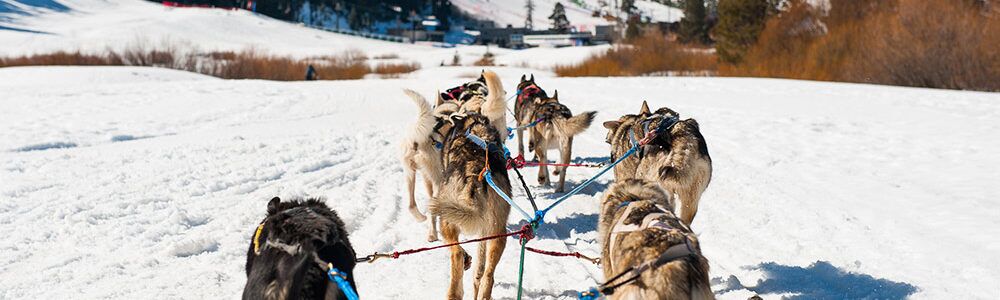
A dogsledder in Vermont wonders why he and his fellow mushers direct their furry packs by shouting gee for “right” and haw for “left.”
A Case Quarter
If you ask a salesclerk for change in the form of a case quarter, what are you asking for?
Lookit!
An upstate New York woman says her British husband makes fun of her for saying lookit!
Language Influencing Emotions
Does speaking a particular language make you feel certain emotions? The hosts talk about a blog post by evolutionary biologist Olivia Judson musing about whether this might be true.
Male and Female Guys
A woman from Indianapolis is trying to convince her grandmother that it’s okay for restaurant servers to refer to both male and female customers as you guys. Grandma says it’s sexist. Our caller maintains it’s fine, drawing an analogy with Spanish, where the masculine pronoun ellos encompasses both sexes.
Thrown Under the Bus
Why do we describe the sudden abandonment of someone as “throwing him under the bus”?
Paddywhacker
A Dallas man says his grandmother used to carry around washcloth a plastic bag in her purse. When he and his siblings would get their hands dirty, she’d say to them, “Show me your paddywackers,” and they’d hold out their hands to be wiped clean. He wonders if she made up the word paddywhacker.
Drive Like a Cullen
Two more expressions that characterized 2009: El Stiffo and “drive like a Cullen.”
This episode is hosted by Martha Barnette and Grant Barrett, and produced by Stefanie Levine.
Photo by John Joh. Used under a Creative Commons license.

