

A clever pun can tickle your brain, while a bad one can make you groan. But what’s the secret sauce that makes for a funny pun? And classics professor Emily Wilson’s bracing new book about translating ancient literature. Plus, Manhattan times three: you can visit Manhattan in New York, but in Indiana you can eat a Manhattan while drinking a Manhattan. Wait—how’s that again?! Plus, granny-grunter, degree confluences, I touch the wall and chew the earth, dishabille, a quiz about Vulcan names, terms for bad handwriting, what’s time to a hog? And if I tell you a duck can pull a train, you just get the harness, and lots more.
This episode first aired November 21, 2026.
Transcript of “Wine-Dark Sea (episode #1692)”
You’re listening to A Way with Words to show about language and how we use it.
I’m Grant Barretts.
And I’m Martha Barnette.
And, Grant, I have a wee quiz for you.
A wee quiz.
Okay.
Fire away.
Okay.
What do these words have in common?
Chisel ball, chiggy wig, granny grunter, slate cutter, and pea monkey.
Wow.
These are all the names of newly found mammals in South America.
You’re right that they are animals, but they’re not…
These are all bird names.
Nope.
Smaller.
Small insects?
These are…
Weevils.
They’re names of wood lice.
You know, what we call rollypolies.
Polies.
Yeah.
Sure.
What arthropods.
Right?
Yeah.
Yeah.
Exactly.
And they are actually part of a list of at least 250 words for Woodlice.
These words have been collected by Warren Maguire, who’s a professor of English language at the University of Edinburgh, and he also directs the University Center for Historical Linguistics there.
And he and his colleagues have put a survey online for people to answer a lot of questions about dialect terms.
And granny Grunter and those others are all terms for wood lice or, you know, what you and I call rolly pulleys.
Yeah.
You know, I’m gonna start introducing myself as granny grunter when we do the show.
You’re listening to A Way with Words.
I’m granny grunter.
And I’m Martha Monkeypee.
Call or text toll-free in The US and Canada, (877-929-9673 Send your languagestufftowords@WeywardRadio.org.
Hello.
You have A Way with Words.
Hi.
This is Courtney Noblesse, and I’m calling from Tucson, Arizona.
Hi, Courtney.
Welcome to the program.
What’s on your mind?
So my grandma used to say a phrase, and it was really a…
You know, it was something when you said when you were happy, we were about to go on an adventure.
It was almost like a rally cry.
And it was tut tut butternut.
And I can spell that if you want.
It’s three separate words.
So…
Yeah.
Fire away.
Ok.
So the first one is t u t, second t u t, and then b u t t e r n u t.
Tut tut tut tut tut tut tut tut.
So I’m imagining your your grandmother are, like, standing up in front of a toupa family waving a flag and marching them forward like a general going to war.
Yes.
That’s exactly the image I want.
Ok.
I know that type.
I’m related to some people like that.
Yes.
She’s getting everybody into the car.
Right?
Everybody in…
Yes.
She…
And she was very much just, you know, like, she was just happy about life, and I just…
I will never forget.
And I say that now too because it’s just…
It’s something that got passed down.
And this year, I wondered’ she passed away two years ago.
So I was like, I wonder why she said that.
And I love you guys.
I listen to you guys all the time, I was like, you know what?
I’m gonna call.
Oh, that’s nice.
And the best thing is, Courtney, not only are we happy have you say that to us, but we can help you.
Yeah.
Courtney, would you believe that she was reciting part of an ad jingle used to sell bread?
Oh my gosh.
No.
That’s awesome.
It’s it’s a part of an ad jingle.
Yeah.
Yeah.
I was…
From 1941 or earlier.
Absolutely.
Yeah.
1941.
Yeah.
Yes.
Yeah.
Mean, they used it for decades.
Right, Martha?
The…
This company?
They did.
Yeah.
Yeah.
The whole slogan was, tut, nothing but butternut bread.
Oh my god.
Yeah.
How about that?
And it was used by the Interstate Bakeries Corporation, which at the time was headquartered in Kansas City.
And No.
Mhmm.
Yes.
Oh, that’s where she was she was from Kansas City, Missouri, she was born in 1938.
She was saying that her whole life.
Yeah.
Probably deck…
She should prob…
We know that it was used on the radio and radio ads.
It appears in newspapers all over the country for years and years.
Yeah.
And the newspaper ads are interesting because they have, like…
Well, let me describe one of’ to you.
So this is from 1941.
It’s an illustration of this stereotypical professor type guy wearing a mortar board and scholastic robes, and he’s got these rounds, you know, kinda nerdy eyeglasses.
And he’s speaking into a microphone, looking down at the stereotypical housewife, like a disembodied head, and telling her about the bread.
It’s kind of like this…
The most condescending thing you’ve ever seen in your life.
Right?
Take it from a man who knows, little lady.
But they used the slogan in the ad.
Oh my gosh.
That just made my whole month.
That is so cool.
Wow.
She’s been seeing that so long.
There’s another layer to this.
Martha isn’t there about and and that particular sound we make when we’re kind of expressing annoyance or disapproval.
Well, the interesting thing is that both of those are just written representations of a sound that goes back at least 500 years and you can find throughout European cultures.
So there’s like this other whole layer there on…
Of of like the history of language in in this this slogan.
That is so beautiful.
Thank you so much.
I’m gonna have to try to see if I can track down that ad.
Yeah.
Sure.
Because I would love to share that with my with my family.
Like, this was a real thing that she says.
Mhmm.
Yeah.
Absolutely.
You can find it in the the Library of Congress has newspaper…
Digitized newspapers.
I’m a 100% sure you can find ads in there that’ll show it.
Or or Courtney, just Google Butternut Bread and Woody Woodpecker because he was another one who said, nothing but Butternut Bread.
Tuck tot.
Well That’s so cool.
Courtney, there you go.
I…
Thank you for sharing your memories, your grandmother.
We’re glad we’re…
We’re just glad we could help.
Oh, and look.
You helped so much more than you know.
Thank you both so much for everything you do, and and thank you for making my whole day.
Alright.
You take care of yourself, Courtney.
You made our day too, Courtney.
Bye-bye.
How sweet.
Thank you, guys.
Bye.
Bye.
Bye-bye.
You’ll make our day if you call us.
Hi.
You have A Way with Words.
Hi.
This is Mary, and I’m calling from Indiana.
Well, welcome to the show, Mary.
What can we do for you today?
So I have a little bit of a story.
I was attending my uncle’s funeral in Minnesota, and the after funeral dinner menu consisted of traditional Thanksgiving meal.
And one of my cousins made an open-faced sandwich of turkey, mashed potatoes, stuffing, and gravy.
And I said, oh, you’ve made a Manhattan, and everyone looked puzzled.
So my overheard this and said, oh, you’d like to share a Manhattan with me?
And she was meaning the cocktail.
And another one said, oh, you’re going to Manhattan?
I wanna go.
So it struck me as funny that in that one instance, we were all thinking that Manhattan meant different things.
Yeah.
That’s fantastic.
I love the…
I love that when you get this weird kind of friction from the different meanings of a word.
So so let’s talk about this.
So where were you, what city or state when you had this encounter?
So I was in Minnesota Ok.
In Mankato.
Ok.
Ok.
And nobody else really seemed to know the Manhattan sandwich you were talking about?
No.
I’ve since learned that they call open faced sandwiches In Minnesota, they call’ commercials.
Yeah.
Parts of Minnesota, they definitely do a hot beef commercial and other similar names.
Yeah.
Mhmm.
And Mary, you said you were from Indiana.
Where in Indiana?
I’m from Indianapolis, Indiana.
Ok.
So more central than that’s that’s all clicking here for us.
Yep.
So there’s a couple interesting things here.
One, we just have to acknowledge how far this word Manhattan has traveled from being the name of a Native American group on the Island Of Manhattan centuries ago to being a place for European settlers and then eventually becoming the name for food and other things that kind of give a taste of a suggestion, a connotation of big city life or fashion or, you know, being with it and trendy.
So that’s kind of what’s happening with his Manhattan names.
But the story of the Manhattan sandwich, think, is probably the most interesting of the items that you mentioned, not least because the Manhattan sandwich is so specific to Central Indiana.
Now, it has popped up here and there in other states, but for the most part, belongs to Central Indiana and has for a long time.
Now, not the kind of food, because putting meat and gravy on toast shows up, you know, in the eighteen seventies, But the name of it as a beef Manhattan or the turkey Manhattan.
And so, let me see if this is how you make yours merry.
So you’ve got slices of bread or toast, perhaps cut into triangles.
You put mashed potatoes, perhaps scooped with an ice cream scoop, a little mountains of them in the middle, maybe right where the toast is cut, and then pour…
Put meat on there, and lots of gravy from that meat over everything.
Correct.
Ok.
And you…
You’re not really a sandwich you eat with your hands.
Right?
This is kind of a knife and fork Yeah.
Otherwise, you’re just gonna get gravy everywhere.
Yeah.
So it’s it’s really interesting.
So it shows up early nineteen hundreds in menus in Wisconsin and New York featured a different Manhattan sandwich, very different.
Fried egg, minced ham and onion.
Something that later became known as a Denver or Western and other places.
But this particular sandwich we’re talking about here with the toast and the mashed potatoes and the meat and the gravy, probably did start in New York City.
And there’s a story that they tell in Indiana about people who worked at a military factory in Indiana going to Manhattan and encountering the sandwich and bringing it back.
They went to Manhattan to learn how to make gunsights.
And then they came back with that new knowledge and this sandwich called it the Manhattan after the place where they learned about it.’
It does look like there are fantastic archives of menus at the New York Public Library.
So we can do some tracking of food items around the country by when they first started to appear in restaurant menus.
But, of course, we can also look at newspaper ads and see what they’re what they’re promoting.
That’s incredible.
I think that that’s amazing.
And I just, again, thought that it was so interesting, you know, for an…
Someone from Indiana to be going to Minnesota and and hearing the three different ways that that can be Yeah.
Yeah.
English.
That can be a determined.
Can you imagine though if you weren’t a native speaker how much more difficult that would be?
Oh my gosh.
Wow.
Well, Mary, thanks for sharing that story.
That’s a great one.
Oh, thank you so much.
I appreciate it.
You take care now.
Bye-bye.
You too.
Bye-bye.
Share your stories about language with us.
In English, we might say, little things add up or many a mikel makes a muckle.
But there’s a wonderful German saying that goes,, which means small livestock also produce manure.
So in other words, tiny piles of poop, you know, add up to what you can fertilize the whole field with.
That’s a small problem set up for one big one.
Exactly.
Exactly.
And mist there means dung or poop.
It’s one of those false friends.
You know?
We love our multilingual audience.
Send us your proverbs in saying some in the languages you know, words at Weyward Radio dot org.
Stay put.
We’ll be right back to untangle the web of English.
You’re listening to A Way with Words, this show about language and how we use it.
I’m Martha Barnette.
And I’m Grant Barrett and coming in like a hurricane.
It’s our weather guy…
No.
Wait.
It’s our quiz guide, John Choineski.
Hi, John.
Oh, wow.
Excuse me.
Shake off all this precipitation that’s all over me.
Yes.
Hi, guys.
How are you?
Good to hear you…
Hear from you again.
It is, by the way, this year, the sixtieth anniversary of the premiere of Star Trek.
I’m a card carrying truckie.
I don’t know about you guys, but I’ve got a quiz here that goes where we’ve never gone before.
Oh, wow.
You like it.
Yeah.
Okay.
Yeah.
Sure.
Good.
Now it’s been noted by some lately that there are a lot of Vulcan names in Star Trek that share a similar construction.
Like mister Spach, they have five letters.
They begin with s, and they end in k, like Sarich, Sibak, and Surak.
Right?
It’s Mhmm.
Makes makes sense.
Yeah.
Now it has caused some to think that maybe any five letter words starting with s and ending in k could be the name of a Vulcan character.
For example, what Vulcan with a Scottish accent must rein in his emotions around his feisty sidekick donkey?
That that, of course, would be the Vulcan they call mister Shrek.
Mister Shrek.
Yes.
Although he’s green on the outside, not the inside.
This is true.
He’s…
But it’s it’s I think he’s green all the way through.
That’s fine.
Let’s boldly go.
Here we go.
Now there are over a thousand people aboard the USS enterprise, including families.
Someone has to deliver babies on that five year mission.
The Vulcan OB-GYN on the ship is mister Stork.
Mister Stork.
Yes.
What are you saying, mister Stork?
Also doctor Spock, but…
Yes.
Or doctor Spock.
Yeah.
Once mister finally gets his PhD or his MD.
Now, sure, phasers can be used to start a fire.
But if you’re on an away mission without your phaser and you’d need to start a fire from scratch, you’ll need the skills of the Vulcan they call mister Spark.
Mister Spark, Martha.
Yes.
Exactly.
Very, very, very narrow specialty he has there.
You can get quite peckish on an away mission, and not all planets have replicators.
If you need a nosh to take the edge off your appetite, check the backpack of the Vulcan they call mister Snack.
Mister Snack.
For some reason, my mind was going to the German word for fat or bacon speck.
Mister speck.
Well, if you want a nice sandwich, like a full a full on, more than a snack, you have a little little sandwich, sir.
Now most Starfleet personnel are hardworking, but you never know when a Lazy Bones will slip through the cracks.
We may have to have a talk with the Vulcan.
They call mister Slack.
Slack.
Mister Slack.
Yeah.
I might also…
We might also have to talk to his cousin, mister Shirk.
Shirk Shirk and Slack.
We don’t want them.
Now, sure, vehicles in the twenty second century nearly drive themselves.
But what if your landing party gets transported to the early twentieth century and you need someone to drive a standard shift automobile, you’d better hope your party includes the Vulcan called mister So standard shift.
Mister Stick?
Oh, yes.
Mister Stick.
He’s he’s the only one on the enterprise who can drive a Stick.
Very good, guys.
I hope you live long and prosper.
Oh, that’s nice.
Thank you so much.
I I love how you snuck in all these references.
It’s very nice.
Well, John, be careful of weather out there.
Use your umbrella where your galash Alright?
My galaches, umbrella, raincoat, everything.
I’ll see you later.
Bye.
Alright.
Bye.
Bye.
Bye.
Well, you can boldly go to your phone to call us to talk about any aspect of language whatsoever.
The number toll free in The US and Canada is (877-929-9673, or email us words@waywordradio.org.
Hello.
You have A Way with Words.
Hi.
This is Pam.
I’m calling from Dallas.
Hi, Pam.
I’m in Dallas.
Welcome to the program.
What’s up?
Thanks.
Well, granted, I’m calling’ I have a little bit of a bone to pick with you.
I wanna know why you’re so anti-pun.
This is a perfect setup.
I’ve waited my whole life for this moment.
Thanks, Pam.
The check is in the mail.
Alright.
I’m ready to fight you.
Here it is.
Whoa.
Here here are my three points, and I’ll be very brief.
One, I think most wannabe punsters are unimaginative.
Two, I think they’re repetitive.
And three, they rarely surprise anyone because it’s something…
Usually, the puns are something that everyone else in the room thought of and decided not to say.
So I’m gonna suggest that you are just opposed to bad puns.
I would argue that most puns are bad.
Oh, ok.
I’m I’m not sure I’m ready to fight you on that, but I’ll but I’ll tell you, this is the reason why I wanted to fight you.
Since I was a small child, this has been a thing we did at the at the dinner table.
My father is now 93.
He has nine grandchildren.
It is expected from the from the time the child can understand what a pun is that we all have conversations with puns, and you can’t.
You’re sort of disallowed Mhmm.
From making those very strained puns where, yes, the ones you’re describing.
Everyone is set high.
I like this.
This is good.
You’re going a good direction.
So give us some examples.
No.
It’s a it’s a it’s a very high bar, and it often comes from something that’s that’s entirely accidental.
So someone will say, he’s running late from lunch.
He’s not gonna be able to make it.
And someone else will say, well, can’t you sandwich it in?
And it will be unintentional, and people then begin to build.
And there’s more leeway allowed.
The younger you are, kind of the less people are gonna judge you.
Mhmm.
But but there’s a fairly high threshold, and it’s…
It is a…
It’s interactive.
Right?
It goes from one person to the next.
And, again, part of the…
It’s an informal game.
I don’t know what you call it.
Nobody actually calls it a game.
But part of the deal is you’re not supposed to strain.
It’s supposed to be natural, fit into the conversation.
And if you’re reaching for those dumb puns, the ones that everyone else has thought of, or the ones where you’re turning the conversation then then then you kind of are dropped out.
I gotta say, I love all this.
Pam, these are the elite pun rules that you’re following here, and this is something you’re right.
Most people don’t do that.
You’d…
Just this idea that the punch should be subtle and clever and maybe pass unnoticed so that when you do finally get it, you go, oh, wow.
Because it slipped by you.
Those are the puns Yeah.
That I live for.
Those are the good ones.
You live for the…
You like the What I’m saying is’ they’re so rare.
They’re, like, one in 10,000.
Oh, I don’t know about that.
Well, but those were the ones that Mark Twain actually made.
Right?
For a man who hated puns, he actually made some really good ones.
Well, yeah.
And let’s let’s bring up William Shakespeare and Jonathan Swift.
I mean, there’s a long tradition of of wonderful punning.
And, Pam, for me, that little mental snap is so satisfying.
You know, when you see the connection between two different things.
I mean, that’s the essence of creativity, isn’t it?
To to bring two different things together, and then they form this whole new thing.
I mean, for me, hearing a really good pun is like seeing all those green Wordle letters finally flip over and jiggle.
You know?
There’s just something Yeah.
Really sweet.
Do you know what I mean, Pam?
Yes.
I do.
It’s like it’s like it’s like I’m old enough to remember what it sounded like when the coin dropped in a pay phone, and it’s that little funk.
Right?
Exactly.
Exactly.
That satisfying Pam, I think you said the right thing in the beginning.
We…
I’m…
I dislike bad puns, but we’re disagreeing about how many bad puns there are, I think.
I’d say it’s missed.
Well…
So…
Well…
And I and I I can’t fight you there because you’re in a position to hear more of them than I do, and I certainly have Martha is relentless.
Went to give back.
Oh, I I…
I’ve heard that too.
I’ve heard that too.
And I…
Look.
They’re they’re always fun, but whether they’re always clever.
And I say this is someone who’s notorious for producing groans and staff meetings.
Mhmm.
But I will also say that they…
The other thing that I think they do is they require a level of attention to language to the way another person is speaking Yes.
To the words that they are choosing.
And in that sense, I think there’s something really healthy about them in terms of making you think through word choices and options.
If you can go fast enough, it requires, like Martha said, a lot of creativity and a real love of language.
Well, put me in that environment’ I don’t think I’ve encountered it yet because it sound every day, my friend.
So…
You work in it every day, my friend.
Pam, I have a book recommendation.
It’s a it’s a book that you can buy for everybody in your family and pass it around.
It’s not necessarily a book of puns.
It’s a book by John Pollock, and it’s called The Pun Also Rises.
And the subtitle is How the Humble Pun Revolutionized Language, Changed History, and Made Word Play more than some antics.
Now I realize that there were two bad puns in in that type of medic.
And he overreaches a little bit in talking about how it’s…
How puns revolutionize language, but it’s still a celebration of the pun that is based on a lot of research.
I’m gonna get this for my dad for his 90 birthday because this this is this is the thing he does with all of us.
And, again, my earliest memories of speaking to my father all involved some very bad pun because I was a child.
But I’m gonna get that for him and get it myself.
Excellent.
I just have to say, I will acknowledge that Jonathan Smith, who who you mentioned in the art of punning, he says punning is a talent which no man affects to despise, but he that is without it.
Meaning, the people who say they hate it still do it.
So I recognize my hypocrisy.
Or they don’t have talent to do it.
Pam, I think you have a well reasoned explanation.
I would have loved to grown up in a family like that where that kind of high level chatter was the the standard operating mode.
That sounds fantastic.
Yeah.
I’d love to come to dinner there.
Well, come on.
Everyone’s…
Everyone pretty much is in Atlanta.
When you’re there, you come on.
My father will make you both groan and surprised.
We’ll be on the porch with the long arms as they say, Pam, do you take care of mine?
Yeah.
Yes.
Don’t come with both arms swinging.
Alright.
Alright.
Bye-bye.
Bye, Pam.
Share your bilingual puns with us.
(877-929-9673 or send them to words@waywordradio.org.
If you have crummy handwriting like I do, you might apologize for it by saying sorry about my chicken scratching.
But in French, there’s a great term for that, and that’s pate de mouches or flies feet or flies legs.
Oh, right.
Yeah.
But it’s kind of also like flies specs as well.
Right?
Flies leg and flies specs.
Yeah.
Yeah.
Flies feet.
Yeah.
Or the idea that, you know, if you’re gonna dip a flies legs into ink and their marks on the page, you’re gonna just be a mess.
And and crabbed handwriting is very tight, very hard to read handwriting because it’s all close together.
Right?
Crabbed.
Yeah.
Yeah.
Ok.
And does that come from crabs, or is that by I don’t know.
Of crant?
Hit us up with your language questions.
Hello.
You have A Way with Words.
Hi.
Hello.
Hi.
Who’s this?
Hi.
This is Steve Vincent calling from Virginia Beach, Virginia.
Hello, Steve.
Welcome to program.
What can we do for you?
Well, I have a dear mother-in-law who’s 95, lives in Holland, Michigan, full-blood Dutch, and she was fond of saying, what’s time to a hog?
And she and her friend, Mr. Frank, would say that.
And I don’t recall if it was in relationship to any particular situation or question, but I never…
And I’ve never heard any of my family from that side have a good explanation of what’s time to a hog.
Yeah.
What’s time to a hog, Steve, is actually the punchline of a joke that appears in a lot of different versions.
And it’s usually some version of a city slicker showing up and trying to tell a farmer how to do his job with some kind of time saving strategy or other, like, all with the goal of fattening up the pigs or the hogs.
Like, for example, one of them goes, a man from the North is traveling through the mountains of West Virginia, and he comes across a guy who’s letting his hogs run loose in a field.
And the city slicker says, isn’t it pretty slow work to fatten them up on grass?
Where I come from, we pin them up and feed them on corn.
It saves so much time.
And the farmer says, yeah.
But what’s time to a hog?
I love it.
That’s perfect.
That…
I know.
Much sense.
Yeah.
I can’t wait to share this with the…
With my wife.
And Tony is getting up there in age, but I appreciate it.
Yeah.
Hopefully, you know, I’ll be able to talk with her and get her response.
But, yeah, that makes…
And I’m kind of a country boy, so that makes Oh, well, there you go.
There there are lots of different versions that that sort of suggest that a hog doesn’t have a schedule or a deadline, you know, doesn’t wear a wristwatch.
Another one goes that a farmer’s feeding pigs in the apple orchard, and a guy is driving by and stops to watch.
And a farmer picks up one pig and lets a pig eat the…
Eat one apple out of the tree, then sets him down and picks up another pig and lets that pig eat an apple out of the tree.
And then the guy says to the farmer, wouldn’t it save time just to knock all the apples down and let all the pigs eat at once?
And the farmer says, whoa.
What’s time to a pig?
So, you know, the…
So you can use this expression to say, what’s the hurry or take your time?
Or sometimes people use what’s time to a hog if somebody’s doddling.
You know, you might say, oh, you’ve been all day.
Right?
What’s time to a hog?
And these…
This is one of what’s known as…
Martha alluded to it earlier.
They’re called clever peasant tales about wise country folk telling it like it is to people who aren’t as smart as they think they are.
I tell you, I’m gonna use it so much more now that I’ve got that background.
I…
I’m tickle.
Excellent.
Thank you so much.
Well, thank you.
You’re no hop, but thanks for spending time with us anyway.
You take care now, Steve.
Alright.
Thank you so much.
Have a great day.
Bye-bye.
Thanks.
Bye-bye.
Bye-bye.
I love it when we hear these little stories out of our callers’ lives, and there’s always a language component there, but sometimes it’s just interesting to hear another world.
So share your world with us, and we’ll talk about the language of it.
It’s toll free in The US and Canada, or you can email words@waywordradio.org.
Hi.
You have A Way with Words.
Hi.
This is Holly.
I’m calling from Madison, Wisconsin.
Our planet, of course, is a sphere, and we humans have divided it up in lines, latitude and longitude.
So there are four points on our planet where the ninety degree line and the forty five degree line meet.
Right?
And so the southern points are deep in the oceans.
The Northwestern point…
Or sorry.
Northeastern point is somewhere in remote China or Mongolia or something.
Mhmm.
And the only accessible 45 by 90 points that you can reach on land is in Marathon County, Wisconsin, which is about two and a half hours north of Madison.
So I visited this point, and they’ve got a nice mark there, and you can go into town and get a little official medallion, which I’m holding in my hand right now.
So this is all very terribly nerdy.
But my question is, is there a word?
I couldn’t find an an actual term for these 45 by 90 points.
So I was wondering if if you, with all of your vast knowledge and resources, could find a word that identifies these four points on our appointment.
I think I’ve got some answers for you.
Alright?
Oh, boy.
Oh, boy.
Oh, boy.
Yeah.
Ok.
Tell me what you think of these.
So first, we’re talking about degree confluences.
This is what it is.
Right?
So Mhmm.
This 45 by 90 where these things meet.
And that’s sometimes what they’re called is 45 by 90 points.
Just as a phrase.
I don’t think we’re ever gonna get one word for this.
But they’re known as quarter hemispheric centers, which is, you know, makes sense when you think about it, they’re the center of quarter hemispheres.
Mhmm.
Yeah.
So those are the three things.
Degree confluences, quarter hemispheric centers, and 45 by 90 points.
I found a word which means, like, feet on the opposite, you know, feet pointing away from each other.
I think it’s a great word.
Yeah.
That’s a great word.
Yeah.
That usually refers when we’re talking about countries to Australia and New Zealand because they’re considered to be on the opposite of the European countries that they’re connected to culturally.
Yeah.
But that doesn’t have anything to do with these these these confluence points.
No.
I’ve I’ve never seen it called that at all.
No.
The…
Another thing they talk about is integer lines.
You probably know this term.
This is where you have…
When you’re doing the latitude and longitude, you have whole numbers.
No decimals, no fractions, no minutes, no seconds, just the whole numbers.
And that’s what these are.
45 Mhmm.
By 90.
That’s where they are.
Yeah.
You know, depending what you’re measuring from.
Integer line.
And I know we’re gonna get all the cartographers and map nerds to come out with more detail, and that’s the delightful thing about this show, Holly, as we have so many people with so much specialist expertise that they’re willing to share.
I hope that helped.
And like I said, stay tuned.
We’ll from our other listeners.
They’ll have other contributions on the subject.
Okay?
I can’t wait.
Thank you so much for taking my question.
Alright.
Be well.
Take care of yourself.
Bye all.
You too.
Thank you.
Bye.
There’s more A Way with Words on the way.
Stay tuned.
You’re listening to A Way with Words, the show about language and how we use it.
I’m Grant Barrett.
And I’m Martha Barnette.
In 2016, South Korean writer Hong Kong won the International Booker Prize for her novel The Vegetarian, and so did Deborah Smith, who translated the novel into English.
The prize money was divided equally between them, but the award wasn’t without controversy.
Some Korean readers and scholars pointed to mistranslations in places where Smith took liberties with the author’s prose.
And they even questioned whether Smith, who had begun learning Korean just a few years before, really knew the language well enough to render the text responsibly.
The novelist rejected the idea that Smith’s translation had fundamentally betrayed the original, and in fact, the two of them went on to collaborate on other books, all of which raises a question that translators have been arguing about for two thousand years.
What exactly makes a good translation?
Is it better to use your own creativity to convey a sense of what the author is saying, or is a word for word translation superior?
Should a translator use perfectly styled English prose, or is it better to try to preserve a bit of the foreignness of the first language?
Well, in a bracing collection of new essays, classicist Emily Wilson tackles these questions and a whole lot more.
Her book is called Crossing the Wine Dark Sea, Journeys Through Ancient Literature.
Wilson is the acclaimed translator of both the Iliad and the Odyssey, and she made headlines earlier this year for a scorching essay about Christopher Nolan’s blockbuster movie.
She called the scriptwriting abysmal.
Well, she’s quite opinionated in this book as well, but the book is a delight to read because she always backs up those strong opinions in lively, interesting ways.
In fact, she invokes everyone from Cicero to Cardi B.
She examines lots of translations showing what works and what doesn’t and how every translation involves compromise.
Her essays involve a lot of other topics as well, like how translations of Sappho have changed over time and why so many tech bros now find a watered down, cherry-picked version of ancient Greek stoicism so appealing.
So it’s this invigorating book that helps you engage with ancient literature in the ancient world without idealizing them.
It’s called Crossing the Wine Dark Sea, Journeys Through Ancient Literature by classicist Emily Wilson.
I absolutely have to read that because I have a problem where I love international literature, not written in English, but I know that the translations are faulty just because what I know about translations and it and it bothers me that I can’t get closer to the author’s original voice and intent and that I have to have this this mediator.
You know?
Right.
It’s just as a as a big reader.
It it it pains me that I can’t know the author like they need to be known.
Right.
We’d love to hear your opinions on translation, whether it’s a favorite translations or one that you don’t really care for very much.
If you just wanna tell us about what’s on your bookshelf or next to the bed that you read before nodding off, call or text toll free from The US and Canada, (877-929-9673, or go to our website where you’ll find a lot of ways to reach us and all of our past episodes at no charge.
Hello.
You have A Way with Words.
Hello.
This is Joe Weinberg in Madison, Wisconsin.
Years ago, many years ago when I was in high school in the sixties, my grandmother, my mother’s mother, lived with us, and she was born in Romania.
There was no record exactly when she was born, but but but in the eighteen hundreds.
So I knew her as an older woman, and she spoke English and read English, but she preferred Yiddish.
And she would frequently tell me stories about growing up in, you know, little little Jewish village in in Romania, and it was always fascinating.
And…
But then she told me a story once about a neighbor of theirs in Chicago.
She and my mother lived in a small apartment.
In the adjacent apartment was a man who…
He was a tailor, and this was during the depression.
So nobody was hiring tailors.
So he was a…
And he had eight children.
I mean, it sounds like a story.
You’d you’d ask him, how how are you?
Every day, they’d see him.
How are you?
And he would shrug dramatically and say, my Yiddish is not great, but.
And I said, oh, and I went and asked my mother what that meant.
And she laughed, and she said, it means I touch the wall, and I chew the earth.
I have since looked up the the phrase in in English.
Mhmm.
And I even asked it to…
I’m lying to translate into German or into…
I’m sorry.
English to Yiddish, but it prints in Hebrew letters, which I don’t read or speak.
Mhmm.
So help.
Oh, this is so interesting.
So the English translation of phrase again is…
I touch the wall and I chew the earth.
You’re right.
That is so nihilistic.
What a response to how are you?
And it’s doubly so,’ cause I think we can help you.
It’s actually a combination of two kind of established Yiddish expressions.
So the first one is this expression, grope or touch a wall.
And it basically means what you think, to blindly feel one’s way along or to more generally to struggle or work without any good result or success.
And may echo a Bible reference, which does appear in the Jewish version of the Bible, in the Book of Isaiah, in the Prophet section, and it goes something like this.
We grope for the wall like the blind, and we grope as if we had no eyes.
We stumble at noonday as in the twilight.
We are in desolate places as dead men.
And so basically, he’s he’s got this this…
He’s just…
He basically saying, you know, I I I don’t know anything.
I’m just making my way in the world blindly.
But the authorization Right.
Right.
Oh my god.
The the the biblical phrase is fascinating.
It really is.
And then the second part, I chew the earth, is more established just kind of an everyday phrase and also exists in German.
It may have actually come into Yiddish from German.
And it can mean be dirt poor or starving, but it can also mean to struggle to the point of humiliation, even just to be dead and in the ground.
And the dead and the ground part is roughly parallel to the English to bite the dust.’
Both of them are just suggesting your mouth is full of dirt because you’re buried.
Right.
So put these together and you get I touch the wall and chew the earth.
And kind of what he’s evoking here, I don’t know if he meant this, but the earthworm.
The earthworm who blindly progresses with no eyes, not knowing what’s beyond the dirt, but progressing all the same.
Oh, this is fascinating.
And by the way, there are other Yiddish expressions, euphemisms for to die.
You know, you’ve got the one about being…
Chewing the earth, but you also have things like stretch out your feet or close an eye.
And then my favorite, is lie in the ground and bake bagels.
Oh my god.
Because, you know, this…
The Yiddish has built in the language this this particular kind of humor, you know, where the difficult subjects are sometimes treated lightly, and the easy subjects are sometimes treated heavily.
Yeah.
Well, that’s…
That explains my my sensibilities is better than my therapist, actually.
Well, call us anytime, Joe.
We don’t charge.
Oh, thank you both very much.
Alright.
You take care of yourself now.
Thanks.
You too.
Bye-bye.
Bye, Joe.
Bye.
Earlier, we were talking about the slogans for butternut bread, like, nothing but butternut bread.
And then the later slogan, bring home the butternut bread, Fred.
And those jingles really have staying power.
I saw a discussion about the latter jingle in a forum online, and somebody said, although I haven’t been able to corroborate this, that there was a whole other jingle associated with it that went, you’re buying ham and pickles and chicken a la king, but now you’re forgetting the most important thing, she said.
Bring home the butternut bread, Fred.
Bring home the butternut bread.
And I haven’t been able to find a recording of that, but I wonder if somebody remembers that whole thing.
It sounds like an outrageous cheer at a football game.
Like the whole end zone when the goal’s being kicked is is cheering that.
I don’t know why.
It just got…
It’s got a rhythm to it.
It does.
You’re buying ham and pickles and chicken on the king.
Yeah.
I would love to know if anybody actually remembers hearing that.
Can find a video or audio file of it so we can actually see it as it was done.
Yeah.
I’ve looked all over.
Can’t Let us know an email words@waywordradio.org.
Hello.
You have A Way with Words.
Hi.
This is Janet from Concord, New Hampshire.
Thank you for taking my call.
We’re glad to have you, Janet.
What’s on your mind?
Well, from the time I was a child back in the nineteen fifties, my mother used a word I’ve never heard anyone else in our family or anywhere else used, and that was the word bichaebial.
My mother was always careful to be appropriately dressed for whatever occasion.
For example, if she was in her pajamas or she was casually dressed for a day at home and we had a surprise opportunity to go out for ice cream or another opportunity or someone called and they were gonna come by, she might say, I’m not ready.
I’m in my dishabile.
And that meant she wasn’t appropriate dress for the occasion, and we all knew that meant is gonna take some time because she was gonna change her clothes before we did whatever the opportunity was.
Mhmm.
Mhmm.
And it’s a fairly efficient word to just say disable to mean all of that.
So I’m looking forward to hearing your wisdom where that word came from and if it was ever widely used.
Yeah.
That’s a lot of good questions there.
And I think your story perfectly nails some aspects of the word.
I’m gonna spell this.
It’s d I s h a b I l l e.
And I think most people can tell by the look of that word that it…
It’s got a French origin.
Martha, how do you pronounce that word?
Well, I will tell you that for the longest time, I pronounce it the way Janet does, Deshabil.
Yeah.
Deshabil.
So that’s, the absolutely most English-sounding thing ever.
Right?
Yes.
Yes.
But later in life, I I ran across the pronunciation and started pronouncing it disabile.
Disabile.
Yeah.
Sometimes Disabile.
That’s So it comes from French.
And, basically, you’ll see it…
The pronunciations vary from very French sounding to very English sounding.
But the French word is actually spelled a little different.
It’s d e with an acute accent, s h a b I l l e, with another e with an acute accent, it sounds something a des habillers, instead of des chabels.
So most of the pronunciations that people use for the word in English speaking world are based on seeing it in print, which ties into how it’s most often used, which is in literary or fashion texts.
It’s not something that’s usually said aloud.
It’s most often…
That’s a showy word that a writer might use to make a point.
And it does mean…
To mean not appropriately dressed, but it also can mean undressed, or in the…
Historically, there was a style of dress called the desavier in the eighteenth century, and involved these kind of flowing garments that you would wear in private.
They contrast it with the very strict like corsetry and layered gowns that you might wear in public.
So, there’s many centuries of kind of changing nuances for this word, but in general, it’s all about not having the right clothes on for the place that you’re in, or having no clothes at all.
Because it can be nearly nude, depending on the context.
That was never my mother.
She was always very appropriately for us.
There’s another layer to this too, which I wanna bring up here, Janet.
And this is this thing that French still has going on after so many centuries of French and English commingling and the two cultures kind of intertwined, that French still has this ability to make the most ordinary things sound provocative or hyphaluten, so to speak, or maybe even sensual.
Because if we say she came downstairs half dressed, it sounds like she’s a slob.
But if we say she came downstairs in, it sounds like she should be sitting for a painting by Manet or something.
Right?
She just sounds fancy, even though it’s the same thing.
Well, yeah, I’m thinking of lingerie.
I mean, it’s your underwear.
Right?
Yeah.
There’s a bunch of those underwear versus lingerie.
Versus your fancy negligee.
Yeah.
Or, yeah, dressing gown versus pingouin.
Right?
They just sound fancier in French, and it’s been happening for many, many centuries.
This idea that French is the classier, more prestige language is something that English just cannot shake, particularly when it comes to fashion and appearance.
Well, thank you so much.
I look forward to your show every week and all the knowledge of our quirky language you so enjoyably share with us.
It’s a great treat, and it’s a great treat to speak with you both.
Aw.
Thank you.
A treat to speak with you, Janet.
Yeah.
Janet, take care of yourself.
Alright.
Thanks for sharing.
Thanks.
Bye-bye.
Bye-bye.
If you wanna talk about language, you can always email us words@waywordradio.org.
Hello.
You have A Way with Words.
Hey.
Good morning.
My name is Chris.
I’m calling from Hilton Head, South Carolina.
Hey, Chris.
We’re glad to have you.
What prompted you to call today?
My father passed away about four years ago, and then my oldest son got married in Birmingham, which is basically where my my dad’s family lived probably for, like, the last a hundred and sixty years.
And as when my kids were little, I used to try to be the kind of storyteller my dad was.
And when I was talking to my son at the wedding, one of the things that my dad used to say kinda stuck in my head.
I never heard anybody else say it, and I kinda wanted to know if anyone else had ever heard someone say it and where it might come from.
And that is my dad, when when he was very confident of something, would use the phrase, if we had any kind of doubt that what he was saying was true, would say, if I tell you a duck and pull a train, you just get the harness ready.
If I tell you a duck can pull a train, you just get the harness ready.
And that Yes.
My word is my bond.
I I…
I’m I’m…
You can believe me.
Trust me.
Yeah.
And it was…
It immediately draw this…
Drew this ridiculous image in your head of, like Mhmm.
You know, daffy dog tied up to this giant locomotive.
Yeah.
And you would just look at him.
Yeah.
It’s definitely in that tradition of American tall tale telling, isn’t it?
Just this idea that things are a little absurd here in the new world and you just better get used to it.
You’ll find this line or lines like it if I tell you a duck pull a train.
You just get the harness ready.
Go back at least a hundred years and the animal changed and the thing it was doing or polling changed, so it could be a rooster or a chicken.
They could pull a freight train or a truck or a plow, But almost always, it’s this whole idea that if I tell you something unbelievable, because I’m so trustworthy, you better just believe it.
Anyway, this line about if I tell you x, you can just do y, has made the rounds since.
And and by the nineteen fifties, it kind of pops up as a pattern used by comedians and emcees and radio DJs, you know, just kind of the thing that they they toss out in between songs and in between acts.
Chris, what a wonderful memory to have of your dad.
It is.
It’s…
It it was something that has stuck with me.
And in a lifetime in the South, he was one of a gun.
But I appreciate the insight.
It it stuck with me.
And now I can tell my kids where my dad got some of his crazy you’re saying.
Yeah.
Definitely.
It’s a good one.
Chris, thank you so much, and you take care of yourself.
Alright?
Thank you.
You guys have a great day.
Alright.
Bye.
Bye bye.
Well, you just get your phone ready and call us.
That’s toll free in The US and Canada.
Away With Word senior producer is Stefanie Levine.
Tim Felten is our engineer and editor, and John Schensky is our quizmaster.
Go to waywordradio.org for all of our past episodes, podcast links, and ways to reach us.
If you have a language, thought, or question, the toll free line is always open in The US and Canada.
WaywardWords is an independent nonprofit production of Wayword Inc.
It’s supported by listeners and organizations who are changing the way the world talks about language.
Although we’re not a part of NPR, we thank NPR stations throughout The United States that carry the show.
And special thanks to our nonprofits volunteer board, Michael Bresslauer, Josh Eckles, Clare Grotting, Merrill Perlman, Bruce Rogow, Rick Seydenworm, and Betty Willis.
Thanks for listening.
I’m Grant Barrett.
And I’m Martha Barnette.
Until next time, goodbye.
So long.
More Than 250 Regional Terms for the Wood Louse
 What do chizzle-ball, chiggy-wig, granny-grunter, slate-cutter, and pea-monkey have in common? They’re all regional names for the same tiny creature commonly known as a wood louse or roly-poly. A team led by University of Edinburgh professor Warren Maguire has collected more than 250 such terms as part of an online survey on dialectal terms.
The Rallying Cry “Tut Tut Butternut!” Comes from an Advertising Slogan
Courtney from Tucson, Arizona, says her late grandmother used the rallying cry Tut tut butternut! when she was happy or about to go on an adventure, and Courtney still says it herself. But what’s the origin of this phrase? Courtney’s grandmother, who was born in Kansas City, Missouri, in 1938, was quoting an advertising slogan from her youth that went Tut, tut, nothing but Butternut Bread. The Interstate Bakeries Corporation, then headquartered in Kansas City, used the line in radio jingles and newspaper ads for decades.
In Central Indiana, a “Manhattan” Is an Open-Faced Turkey Sandwich with Mashed Potatoes and Gravy
For many Hoosiers, a Manhattan is an open-faced sandwich of turkey, mashed potatoes, stuffing, and gravy, eaten with a knife and fork. When Mary from Indianapolis, Indiana, used the term at a funeral dinner in Minnesota, her aunt thought she was referring to a cocktail, while another guest pictured New York City. In parts of Minnesota, similar open-faced sandwiches are called commercials. The sandwich name Manhattan or Turkey Manhattan is specific to central Indiana, and one story goes that workers from a military factory there went to Manhattan to learn gunsights and brought back the sandwich named after the place. Menus from the early 1900s in Wisconsin and New York mention a different Manhattan consisting of fried egg, minced ham, and onion, later known as a Denver or Western.
Many a Mickle Makes a Muckle, or Even Small Cattle Make Manure
The English expression many a mickle makes a muckle means “Little things add up.” A German saying used to convey a similar idea translates as “Small livestock also produce manure,” suggesting that if you get enough tiny piles of poo, you can fertilize a whole field. The German word mist means “dung” or “poo,” one of many linguistic false friends for English speakers.
Vulcan Name Word Quiz: The Five-Letter S–K Pattern
Inspired by the recent 60th anniversary of Star Trek’s premiere, Quiz Guy John Chaneski steps off the transporter pad carrying a puzzle about Vulcan nomenclature. He’s noticed that many Vulcan names follow a pattern: five letters, beginning with S, ending in K, like Sarich, Sibak, and Surak. Maybe there are other Vulcan names lurking in the English language? How about this one: What’s the name of the Vulcan with a Scottish accent who must rein in his emotions around a feisty donkey sidekick?
Good Puns Have Surprising Wordplay Without Strained Setups
Pam from Dallas, Texas, wants to challenge the notion that puns are automatically groan-inducing. In her family, striving for clever puns is a cherished tradition. Her 93-year-old father and nine grandchildren believe the best wordplay is a pleasant surprise that arises naturally rather than from a strained setup. For example, if one of them says, “He’s running late from lunch and won’t make it,” another might pipe up with “Can’t you sandwich it in?” Writer John Pollack penned a paean to puns in his book The Pun Also Rises: How the Humble Pun Revolutionized Language, Changed History, and Made Wordplay More Than Some Antics (Bookshop \| Amazon).
“Pattes de Mouche” and “Crabbed” Describe Hard-to-Read Handwriting
Anglophones may describe their messy handwriting as chicken scratch, but Francophones speak pattes de mouche, which literally means “flies’ feet” or “flies’ legs.” The image here is of dipping a fly’s legs in ink so its marks on the page are tiny and nearly unreadable. Crabbed handwriting is similarly very tight and difficult to read because the letters are all close together.
“What’s Time to a Hog?” Means “What’s the Hurry?”
What’s time to a hog? Steve in Virginia Beach, Virginia, says his 95-year-old Dutch mother-in-law in Holland, Michigan, was fond of asking that question, but Steve never got a good explanation as to its meaning or origin. What’s time to a hog? is the punchline of a joke that comes in several versions, one of many clever peasant tales that feature wise country folk who outsmart visitors from the city. In this case, a city slicker tells a farmer how to fatten hogs faster, and the farmer just shrugs and responds with that question. What’s time to a hog? can also mean “What’s the hurry?” or “Take your time.” Or you can use the phrase to gently chide someone who’s dawdling.
The 45×90 Points, Degree Confluences, and Quarter Hemispheric Centers
Holly of Madison, Wisconsin, notes that there are four unique points on the planet where the 90-degree and 45-degree lines of longitude and latitude meet. She’s visited the most accessible one, located in Wisconsin’s Marathon County. There a geographical marker designates the spot and visitors can pick up an official medallion in nearby Wausau. The two southern points lie deep in the ocean, and the northeastern one is somewhere in remote China. These four spots where a 45-degree latitude line meets a 90-degree longitude line are referred to in several ways, including 45×90 points, degree confluences, and quarter hemispheric centers.
Translations, Screenplays, and Watered-Down Stoicism
What makes a good translation? In 2016, South Korean writer Han Kang won the Man Booker International Prize for The Vegetarian (Bookshop \| Amazon), and translator Deborah Smith shared it, though Korean readers pointed to mistranslations and questioned Smith’s grasp of Korean. Kang defended the translation and continued working with Smith. Classicist Emily Wilson tackles that and other literary debates in Crossing the Wine-Dark Sea: Journeys Through Ancient Literature (Bookshop \| Amazon), drawing on her acclaimed translations of The Odyssey (Bookshop \| Amazon) and The Iliad (Bookshop \| Amazon). She demonstrates what works and what doesn’t in translations of Sappho as social mores change, asks why tech bros love watered-down stoicism, and along the way invokes everyone from Cicero to Cardi B. In fact, Wilson’s no stranger to pop culture, as evidenced by her scorching essay declaring that Christopher Nolan’s blockbuster film suffered from scriptwriting that was, she declared, “abysmal.”
“I Touch the Wall and I Chew the Earth” Combines Two Bleak Expressions
Joe from Madison, Wisconsin, remembers his Romanian-born grandmother recounting the story of a Depression-era neighbor, a tailor with eight children, who answered “How are you?” with a Yiddish phrase that means I touch the wall and I chew the earth. This saying combines two established expressions: touch the wall, which means “to grope blindly and struggle without success,” and chew the earth, which can mean “to be dirt poor, starving, humiliated, or simply dead and buried.” The first likely echoes a passage in the biblical Book of Isaiah about groping for the wall like a blind person. Other Yiddish-inspired euphemisms for dying include stretch out your feet, close an eye, and the darkly comic lie in the ground and bake bagels.
Did the “Butternut Bread” Jingle Include Ham, Pickles, and Chicken a la King?
The Butternut Bread jingle Bring home the Butternut Bread, Fred may have had a longer version. One online forum commenter has claimed it went You’re buying ham and pickles and chicken a la king, but now you’re forgetting the most important thing. Bring home the Butternut Bread, Fred. Bring home the Butternut Bread. No recording of this version has turned up, though. Have you heard it?
French Origin of “Dishabille” for Being Underdressed
Janet from Concord, New Hampshire, remembers her mother in the 1950s using it to indicate she wasn’t appropriately dressed for an unexpected outing or visitor, declaring, I’m not ready—I’m in my dishabille. The word comes from French déshabillé and turns up mostly in literary and fashion texts, where it means “underdressed,” “nearly nude,” or simply “not dressed for the occasion.” In the 18th century, dishabille also denoted a style of flowing garments, as opposed to the stiff corsets and layered public gowns of the time.
If I Tell You a Duck Can Pull a Train, You Just Get the Harness Ready
Chris from Hilton Head, South Carolina, remembers his late father’s phrase for absolute confidence: If I tell you a duck can pull a train, you just get the harness ready. His father used the line whenever family members doubted him, a folksy way of saying, “My word is my bond.” Similar tall-tale expressions go back at least a hundred years, with a rooster or chicken pulling a freight train, truck, or plow. By the 1950s the pattern was familiar to comedians, emcees, and radio DJs.
This episode is hosted by Martha Barnette and Grant Barrett, and produced by Stefanie Levine.
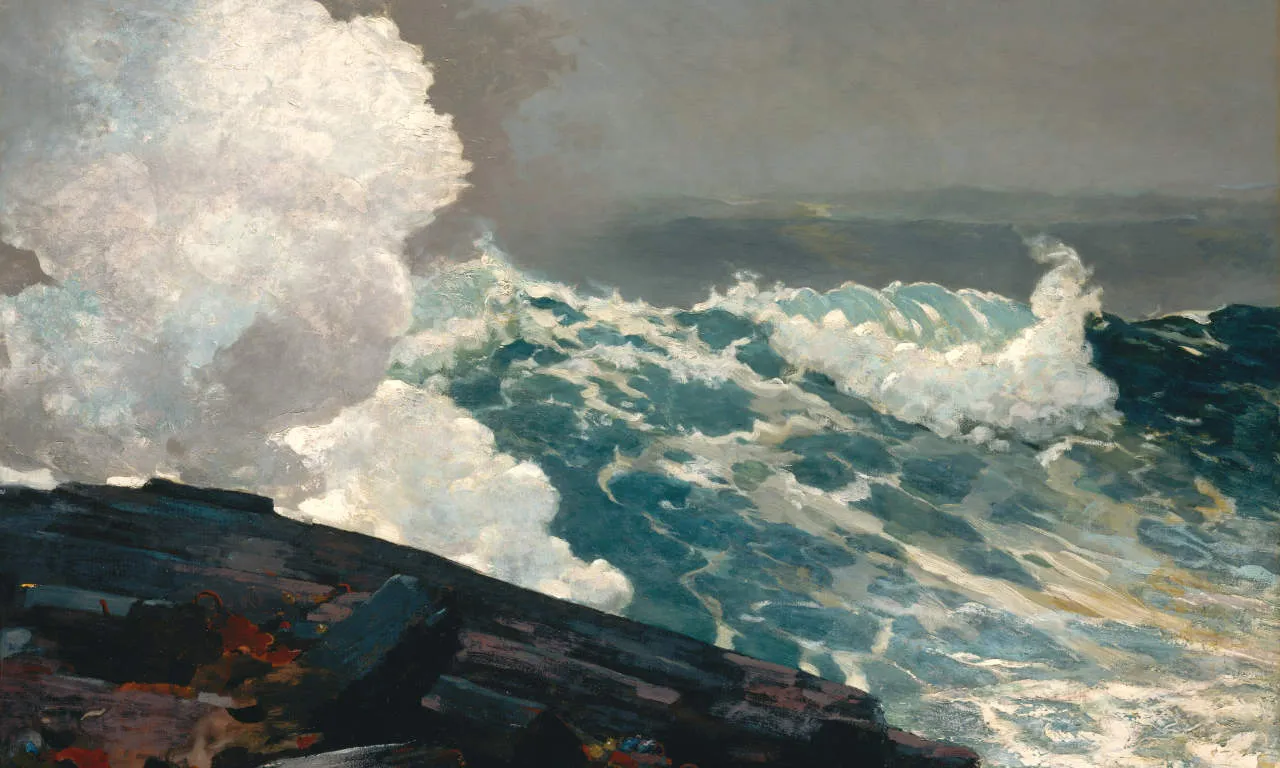
The Met, https://www.metmuseum.org/art/collection/search/11130
Books Mentioned in the Episode
| The Pun Also Rises: How the Humble Pun Revolutionized Language, Changed History, and Made Wordplay More Than Some Antics by John Pollack (Bookshop | Amazon) |
| The Vegetarian by Han Kang (Bookshop | Amazon) |
| Crossing the Wine-Dark Sea: Journeys Through Ancient Literature by Emily Wilson (Bookshop | Amazon) |
| The Odyssey by Homer (Bookshop | Amazon) |
| The Iliad by Homer (Bookshop | Amazon) |
| Book of Isaiah |
Music Used in the Episode
| Title | Artist | Album | Label |
|---|---|---|---|
| Them And Us | Cymande | Second Time Round | Janus Records |
| Skip Step Hiromasa | Suzuki | Skip Step Colgen | Toshiba Records |
| Main Title | Ravi Shankar | Charly | World Pacific Records |
| Twilight Blue | Monica | Espresso na Gogo | Invitation Records |
| Charly Theme | Ravi Shankar | Charly | World Pacific Records |
| Dig My Style | Kazumasa Akiyama | Dig My Style | Flying Dog |
| The Other Side | Sure Fire Soul Ensemble | Step Down | Colemine |

