

For language lovers, it’s like New Year’s, Fourth of July, and the Super Bowl all rolled into one: The brand-new online edition of the Dictionary of American Regional English. Martha and Grant explain what all the fuss is about. Plus, the debate over that meal in a glass container: some call it a hot dish, while others say it’s a casserole. And just when did we start using the terms boyfriend and girlfriend? Also in this episode: painters and artists, vaping, chamber pots, the lucky phrase rabbit, rabbit, and a news quiz in limericks!
This episode first aired January 25, 2014. It was rebroadcast the weekend of June 15, 2015.
Transcript of “How America Talks (episode #1387)”
You’re listening to A Way with Words, the show about language and how we use it.
I’m Grant Barrett.
And I’m Martha Barnette.
Recently in the language world, something happened that might be described as the Super Bowl, the Olympics, the 4th of July, New Year’s, three scoops of ice cream, and a new kitten all rolled into one.
Oh, I know where you’re going.
You know what I’m talking about?
I’m talking about the fact that the magnificent six-volume Dictionary of American Regional English is now available online.
It’s digital and searchable, and it’s awesome.
Oh, it is.
And sound clips.
I know, sound clips.
Check this one out.
The hush puppies, well, that’s like ham and eggs. Eggs go with the ham. Hush puppies go with fish. Hush puppies are made from cornmeal and onions and a little salt, and you can put an egg in them. And after you cook the fish, then you fry them in the deep grease that you fry the fish in.
Grant, that guy sounds just like my father’s people.
I mean, the hairs on the back of my neck stand up when I hear that kind of thing.
And the online version of this dictionary has 4,000 sound clips like that.
4,000?
Yes.
I mean, if you think American English is getting homogenized, I mean, you’re wrong.
Here’s the evidence that it’s not.
Yes.
Yes.
What a rich, rich cultural heritage we have.
Yeah.
It’s an amazing thing.
So they’ve taken the six volumes. They’ve coded everything. They’ve added it in. You can do a full text search. You can go in and type in any word. And if it pops up anywhere in any entry, it’s going to come back. You can search by region or state. This is how they say it in Missouri versus how they say it in New York.
It’s astonishing.
I’m envisioning that actors in Hollywood are going to sound more authentic from here on out.
Absolutely.
Now, it’s not cheap, but you can go and sample it online at the website.
They have 100 entries for free, right?
And you can see headwords for free.
Yeah.
And their website is?
Daredictionary.com.
Great.
And we’re excited about this.
Oh, yeah.
And in a little more serious note, because this is what we do on the show. We take some of what happens in American speech and we try to explain it.
And here is one of our favorite reference works, what I consider to be the second greatest work of dictionary making ever after the Oxford English Dictionary.
Here it is online.
You don’t have to buy the six volumes.
You don’t have to have that paper.
You get full access to it.
I see libraries using it.
I see schools using it.
It’s amazing.
It’s super exciting.
We’re going to talk a lot more about the Dictionary of American Regional English in this show and probably for the rest of our lives.
And if you’ve got a question about regional English or anything having to do with language at all, give us a call, 877-929-9673.
Email us, words@waywordradio.org, or find us on Facebook and Twitter.
Hello, you have A Way with Words.
Hello, this is Rick Hall.
Hi, Rick. Where are you calling from?
Tallahassee, Florida.
Well, welcome to the show. How can we help you?
Well, I’ve got a new word.
Oh, please.
A new word that was invented by my brother Dave Hall.
And many of us have seen this anytime we’re driving around on a rural highway or an interstate section.
It’s called a cop clot.
Cop clot.
What’s a cop clot?
A cop clot.
I’ve got a formal definition for it.
Oh, please.
It’s the cautious reaction of responsible yet fearful vehicle operators motoring along an arterial highway in a compact, same-speed, congested platoon due to the watchful eye of the state highway patrolmen in their midst.
So in plain speak, you slow down when you see a cop.
Exactly.
And the problem is you get into a little cluster of people that are going much slower than they normally go.
Been there, done that.
Totally.
I did it just this morning.
There’s a bunch more terms for this, by the way.
One of my favorite terms, well, there’s one term, police chase, which is pretty common.
Because it looks like everyone’s chasing the police, right?
Because they’re in the front.
All you need is the helicopter, the TV cop drove above, right?
It looks like everyone’s chasing.
But the other one, it’s a name for the car that is causing this, and that’s parade maker.
Parade maker.
Yeah, and so it’s not just the police car that’s slowing everybody down, but there’s that one guy who somehow has managed to block more than one lane, and you can’t get around him, and you’re like, oh, he’s a parade maker, because it just all seems to stream behind them.
And you’re like waving to the kids on the side of the road.
Yeah.
Well, this relates to our highway system as a system of arterials.
Oh, yes.
Oh, oh, oh.
It’s a body relationship.
Perfect.
One part of it, but it’s a clot in the middle of that artery.
That’s nice.
The other part is it’s a little bit of alliteration that it kind of sounds like a horse kind of going along at a slow speed.
Yeah, or somebody with coconuts.
Yeah, it has a lot to recommend it.
You know, I’m Googling this.
I’ve Googled this, and I can see that other people have coined this term, which is nothing to take away from you.
You said it was your brother or your brother-in-law?
Yeah.
There’s nothing to take away from you, but the fact that multiple people have come up with this probably means it’s got a good chance of surviving.
It’s got all those features that you talked about that are all signs of success.
It’s useful.
It’s easy to remember.
It’s easy to say.
We’ve all been there.
Yeah, and it’s fun to be a part of the evolution of the English language.
There we go.
So a cop clot is this cluster of cars that just won’t pass a police officer on the highway.
Exactly.
My brother Dave has another word.
It’s when you have that big thing of iced tea, you know, in the red plastic glass, and it’s a hot summer day, and you want to get the last bit of tea out.
You’ve tilted it up, and it begins to cascade down onto your nose and upper lip.
And that’s called an isolanch.
Isolanch, yes, because it sticks for a fraction of a second at the bottom of the cup, and it all comes down at once.
There’s a tipping point, and then boom, it’s right down on your face.
These are both great words, cop clot, isolanch.
We’re going to spread these out to the world and see how they catch on, all right?
Very good.
Thanks for your call.
We really appreciate it.
Bye-bye, Rick.
Bye-bye now.
We know that you’ve got terms for this crazy stuff that you do.
We all do these things when we drive.
We are car culture, after all.
Tell us about your car culture words, 877-929-9673, or email us, words@waywordradio.org.
I probably should have mentioned this on the show earlier, but I really didn’t think it was going to catch on.
But here we are two years later, and the movie Catfish, which was released in 2010, has made a slang term kind of last.
And to catfish is to present yourself online as something you’re not.
Or, even better, to invent a sweetheart or a lover online and kind of fill out all their social media profiles and pretend that you actually have a real sweetie that’s kind of only visible online.
It’s kind of like the girlfriend, the Canadian girlfriend.
Right.
Anyway, so catfish is being used more and more to mean perpetrating an online scam, particularly where either you’re pretending to be somebody else or you’re pretending you made up a character online who is somehow your lawyer or your girlfriend or somebody that doesn’t really exist.
Yeah, so catfishing and to be catfished, huh?
Yep, exactly.
Okay.
877-929-9673 is the number to call with your language questions, or send them an email to words@waywordradio.org.
Hello, you have A Way with Words.
Hi, my name is Laura from Milwaukee, Wisconsin.
Hi, Laura, welcome.
What can we help you with?
Well, I’m a home care nurse, and I have a client age 82 or so, and she shared a story about the past guys or gentlemen that she, quote, went steady with or was going out with or going with.
And never once did she say ex-boyfriend or past boyfriend.
And I was just curious to know when in the generations,
When we started to use the term boyfriend and girlfriend versus saying like going steady with or went with.
It was really sweet when she was talking about her ex-past loves. And rather than calling them boyfriend, she was saying, you know, when I went study with or went with.
And, yeah, I was just curious to know if you guys knew when the term, like, boyfriend and girlfriend came about versus, like, currently I’m dating somebody. And, you know, sometimes I call him my boyfriend, but he’s also 38, so it feels funny calling him my boyfriend.
And you can’t call him your man friend.
Oh, sometimes we do call each other man friend and lady friend.
Oh, really? Okay.
I like that, my man friend.
So you wouldn’t say that you were going steady with someone or that you’re going with him, meaning that you are a couple.
Right, yeah.
But I don’t hear that phrase used too often now, but I heard it from this sweet old lady who talked about her past relationship.
Well, we know that boyfriend and girlfriend came about roughly 100 years ago, let’s say late 1800s.
Right.
And they kind of start popping up immediately, and they didn’t pop up to refer to preteens. They popped up to refer to partners of any age.
So it’s always been boyfriend and girlfriend have always been kind of like age general. So it could be a 20-year-old or a 30-year-old or a 12-year-old, but that was your boyfriend or your girlfriend.
So there’s never been like a cutoff point there where just because it’s boy doesn’t mean you actually have to be an 11-year-old.
So in any case, we need more data on this.
Really? Right, Martha?
Yeah.
We’d have to find out more from people who are listening to the show and can recall what they said back in the 30s and 40s.
I remember going steady.
Going steady.
Did you go steady when you were in school?
Yes, and it involved ID bracelets.
Oh.
You remember those?
Now, this is the 80s, mind you, but we went with people.
Oh, you went with?
Yeah, it kind of just meant you sat together at lunch.
There was nothing really happening.
But you might give her a ring or your jacket or something.
I don’t even remember.
So you didn’t go around with or you didn’t go out with?
No.
Well, if you went out with, you were older and you had a car and you actually did.
Oh, right.
You went to the show, which is what we call the movie theater.
But you went with otherwise, which kind of meant like that was your default person to go to the dance or to go for a walk with or to go to school activities together.
Okay.
Yeah, I do remember in high school, we did the musical Bye Bye Birdie.
And there’s a song in there.
I don’t know what era that show was, you know, developed.
But that they did say they had that song going steady than Bye Bye Birdie.
So to get to the bottom of this question, it’s really interesting.
So if she’s 80-something, she probably didn’t necessarily have to use girlfriend and boyfriend when she was coming up, when she was dating and had a fella.
But now that’s kind of our default.
And there is a change in perspective here.
We’re talking about kind of almost possession of the other person rather than describing the relationship that you have with them, rather than talking about going with, which means, or going steady with, which is like two people doing stuff together.
You’re talking about, well, I’ve kind of slotted them into this check box here where they’re like, check, girlfriend, check, boyfriend.
Thank you for answering my inquiry.
It’s a thoughtful question, and we appreciate those.
Okay, thanks.
Thanks a lot for calling, Laura.
Take care now.
Bye-bye.
Okay, bye.
But if you can cast your mind back to, oh, well, when you were a kid, what did you say when you were going out with somebody?
Were you going steady? Were you going with? Were you dating? Did you call them boyfriend, girlfriend, fellow, gal, something else?
Let us know. 877-929-9673 or email words@waywordradio.org.
And you can also talk to us on Facebook and Twitter.
Remember on an earlier show, we were talking about the phrase, get out of my bathtub.
Yeah, it’s on a playground. Two people are swinging on the swings and they find themselves in sync.
Exactly.
And we were trying to figure out why they say, get out of my bathtub.
We’re kind of dense.
I see where you’re going.
Because you’re in the sink, but it’s not a bathtub.
But we heard from several listeners who suggested that that might be the etymology of it, right?
Not a bad guess.
Dan Simons from Rangeley, Maine suggested that.
Couldn’t a sink be thought of as a small bathtub?
And Sally Diaz wrote that she thought it was because of the expression in-sync.
And then she wrote, hey, I don’t think it’s any dumber than any other theory.
Good point.
More stories about what we say and how we say it.
Stay tuned.
You’re listening to A Way with Words, the show about language and how we use it.
I’m Martha Barnette.
And I’m Grant Barrett.
And we’re joined on the line by the fabulous John Chaneski.
Hello, John.
Hi, guys. Hi, Grant. Hi, Martha.
You know, guys, it’s that time again to check out news stories from the past few months.
Oh, yes, it is.
Yeah, and find some way to shoehorn them into limericks.
I’ll give you the first four lines and the start of the last line.
You give me the last rhyming word or phrase, okay?
All right.
All right, do our best.
Remember, these are all about things that were in the news in the past few months.
Okay.
Of course, sometimes you can just kind of get it from the first line.
That’s okay. Just wait for the last line.
Here we go.
Letter writing has become quite passé.
Emailing only lasts for a day.
But if that makes you sad, don’t you worry, my lad.
Your tweets have been saved by the…
NSA.
NSA, right.
You know, people say, oh, it’s out there.
No one keeps anything anymore.
No, they keep it all.
No, they got it.
Don’t worry.
It’s great.
We don’t have to back up our computers anymore.
That’s right.
You’re becoming a dinosaur daily-o.
You’ve got claws and your skin is all scaly-o.
Perhaps the solution to your de-evolution is you switched your whole diet to paleo.
Paleo, yes.
Paleo diet.
Let’s try this one.
The president made an admission.
The websites could use a physician.
Obamacare shame one could say could be blamed on the Internet’s pre-existing condition.
Yes.
Very good.
Let’s say some facts.
Very good.
Where’s the website that doesn’t have the problems? Come on.
All right.
House of Cards, Breaking Bad, and that orange is the new black.
It seems my night’s more hinge on the fact I can’t wait a whole week just to sate my episodic TV Jones.
So what’s your…
Your binge?
Yes.
What’s your binge?
Oh, what’s your binge?
What’s your TV binge?
Wow.
The limerick, man.
The limerick.
You’re messing with the structure.
I had to do it.
It was beautiful.
In the middle.
That was beautiful.
Okay, here’s the next one.
Peek-a-boo’s really his thing, and they carry him now in a sling,
But this cute British baby, in a couple years maybe,
Has a pretty good chance to be king.
That’s him.
Here’s one for Prince George.
That’s one for Prince George.
Hey, Georgie.
He’s got some controversial stances on social issues, capitalistic finances.
He sneaks in disguise just to visit poor guys.
Is that priest there behind you?
Pope Francis.
Pope Francis?
Could be.
We don’t know.
I heard he’s sneaking out of the Vatican to visit the poor.
That’s pretty cool.
Okay, here’s the last one.
Boston fans joyously cheered, but lots of folks found it quite weird
That such World Series wins were eclipsed by their chins.
If you’re a Red Sox, you’re sporting a…
Beard.
Beard, yes.
Did you see those guys?
Yeah, sure.
They are amazing.
The power of the beard.
Barbarous.
So those are some of my limericks for things that have recently gone by.
Those were clever.
Thanks, John.
Outstanding.
Thank you very much.
We’ll talk to you again next week, all right?
Talk to you then.
Take care.
And if you want to talk about language, call us, 877-929-9673, or send an email to words@waywordradio.org, and find us on Facebook and Twitter.
Hello, you have A Way with Words.
Hey, Martha, this is Emily.
We’re calling from Boulder, Colorado.
Wee?
Wee, I’m sitting next to my friend T.R. here.
Okay.
What’s on your mind?
I’m from Minnesota and grew up saying hot dish, tater tot hot dish, green bean hot dish, and so on.
My friend T.R., who’s actually really close with my husband, is from Iowa, and they call everything casserole.
And so we’ve had this kind of debate going back and forth for several years now.
I think it’s a pride thing more than which one is appropriate.
So we’ve got hot dish in Minnesota.
We’ve got casserole in Iowa.
Is there any difference at all in the ingredients or the preparation or the serving vessel?
Not necessarily.
So, for example, this usually comes up when I’m making my specialty tater tot hot dish.
But whereas I call it hot dish, he and some of our other friends will call it casserole.
Okay.
So, no, same thing, you know, kind of glass Pyrex dish, a meat, a starch, a can of mushroom soup,
And some frozen vegetables topped with tater tots and baked in the oven.
Sounds really good.
And it doesn’t matter what kind of dish you put it in, but it’s probably like you said a Pyrex dish,
Like a 6×9 or something?
Yeah, yeah, like a 6×9 baking dish.
So it is a dish and it is hot.
It’s a dish and it’s hot.
One word or two?
Hot dish.
One.
One, okay, wow.
All right, so your friend’s sitting there.
We’ve got the casserole advocate nearby.
Yes, he is.
He’s right here.
Let’s talk to the casserole advocate.
Hello, this is the casserole advocate.
Yeah, I’ve got a question.
I’ve put my oven at 350 and I want…
No, never mind.
That’s a different show.
So here’s the question for you.
You’re from Iowa.
You call this a casserole.
The dish that she described, would you call that a casserole?
I would call it a casserole, but, you know, I can understand why she calls it a hot dish,
Because she didn’t sell it.
I would have described a casserole much better and had fresh ingredients.
A little bit more oomph goes into the casserole than the hot dish, apparently.
I see.
So hot dish is for lazy people.
Is that what you’re saying?
Hot dish is for lazy people.
That is perfect.
Casseroles taste better is what you’re saying.
That’s what I’m hearing.
I can summarize it in one sentence.
Hot dish is a word, an adjective, a verb maybe.
A casserole is an experience.
Oh, wow.
Okay, bring in the game.
Did she know that you were bringing your A game?
Because she was very conciliatory.
I have to bring my A game in it.
And frankly, I was going to cook a casserole this morning and be chewing it just to fill my desire behind the casserole.
And that Tuesday morning, I decided against it.
All right. Can she hear us?
Because I wanted to just drop a little science on you, too, all right?
Just kind of round off some edges here.
Here’s what we know.
Hot dish is primarily used in Minnesota, but it does bleed out into Nebraska and the Dakotas and Wisconsin and other nearby states.
It’s usually spelled as one word, and it can refer to the same things that are called casseroles elsewhere, but doesn’t always.
You might call a hot dish a kind of casserole, but not every casserole can be called a hot dish.
Now, I’m saying this knowing full well that if you Google hot dish versus casserole, and I recommend that you do this,
You will find many people arguing at length in exactly the same way that you two are arguing about why a hot dish is not a casserole.
Because they’re very particular and they’re proud of this thing that they grew up with and proud of the language that belongs to them and the food that’s associated with it.
And it’s all really yummy.
I don’t care what you call it.
Serve me up extras.
Anyway.
So that’s what we know about this.
If you want really, really nerdy information on this.
Of course they do.
They called us.
We do.
Yes.
There is a paper that was written by a bunch of North Dakota State University students called Hot Dish or Casserole.
Oh, no.
Hot Dish or Casserole, what is your preference?
It’s from 2012.
It’s not a bad paper.
I recommend that you Google that.
And you’ll get everything that you ever wanted to know, and they figure it out, and they survey a bunch of respondents and kind of get into the etymologies and talk about culture and history and food and, yeah.
Wait, so who won the Smackdown?
There is no winner here because hot dish is a valid term for the dish if you live in Minnesota, outside of Minnesota.
The Minnesotans probably should accommodate the locals because the locals are going to go cock an eyebrow and go, eh, hot dish?
They’re all hot.
But really what we’re talking about here is an idiomatic use of hot dish.
So you’re both good to go.
This is a draw, okay?
Wonderful.
Thank you for your time, Grant and Martha.
It’s our pleasure.
Thanks for calling, Emily.
Take care now.
Bye-bye.
Have a good one.
Bye-bye.
Bye-bye.
We’d love to hear about the gems that you’ve dug up.
Email words@waywordradio.org.
And try us on Facebook and Twitter.
I’m running through my list of words that I’ve been collecting over the last 12 months,
And one of them that keeps popping up for me is bae, B-A-E.
B-A-E? I do not.
It all started and turned into a meme because a woman posted a picture of herself
With a caption called, bae caught me slipping.
And it was supposed to be, it’s a slang way of saying, baby caught me sleeping.
But the problem was, it was obvious from the photo, and I think she knew it,
That she was taking the photo of herself and pretending that someone else was taking it.
Oh.
Right?
And presenting as if her sweetie somehow had caught this sweet picture of her sleeping.
And really, you could see in the mirror that she took it herself.
Okay.
And this started this whole trend of people posting other similar photos, kind of building off of this theme.
Bay caught me this.
Bay caught me that.
And often using this irregular spelling instead of sleeping, spelling it slipping, instead of baby, spelling it bay, that sort of thing.
So anyway, I’m looking at Bay.
What’s interesting, it actually has a life outside of this meme and this kind of pass-along photo thing that people are doing.
It’s a dialectic pronunciation of babe or baby.
So where the latter sounds just kind of drop off, bae.
Yeah, my bae.
Yeah.
All right.
Okay, well, keep an eye on that.
And in the meantime, call us with your language questions, 877-929-9673.
Hello, you have A Way with Words.
Hi, Martha. This is Noam, and I’m calling you from Champaign, Illinois.
I’m a graduate student at the University of Illinois.
Very good.
Welcome to the show. How can we help?
Thank you. Well, my question is as follows.
My sister-in-law, who lives in Israel, is an artist.
And I say she’s an artist because she studied art,
And she has put some of her work in exhibitions,
And she has her own studio.
So by definition, she’s an artist.
The thing is, most of her art is painting.
She paints.
And yet, if you were to call her or one of her colleagues a painter,
They would probably find that somewhat offensive.
And, you know, part of the reason is that, at least in English,
A painter may be an artist who paints,
And they paint maybe other things, like a person who paints houses.
And this was really interesting to me because even though English seems to be such a rich language,
You have a subcategory of an artist, and there’s no unique word to describe them,
Like maybe a sculptor or a photographer.
And so I wondered, you know, is this negative connotation something that really exists outside of my own mind?
And why did it happen that there seems to be one word that describes more than one profession?
It’s not so finely cut in English. It’s true.
You can talk about a portraitist, somebody who paints portraits,
And you can talk about a landscape painter, which is an artist who specializes in painting pictures of landscapes,
Or you could talk about a fine art painter, maybe rarely.
Or a watercolorist.
A watercolorist as well.
But those are all very specific kinds of artists who paint.
And I have seen people who’ve got into this philosophical question of whether or not the term painter is sufficient to cover all the depth required to be an artist who paints.
And I don’t feel qualified to answer that because I’m not an artist.
I’m barely a painter.
I could do your house.
I do masking tape and trim quite well.
Well, and it’s also a problem for people who draw.
You know, what do you call somebody who’s special?
A drawer or a draftsman?
But that sounds like you’re doing blueprints or something.
Indeed.
It is a little bit tricky.
Yeah, it’s a pencilist.
Yeah, it’s interesting what you said, because it seems like you can differentiate yourself by the techniques you use, perhaps, as a painter.
So just like you said, if you use mainly watercolor or whatnot, then maybe that can differentiate you.
I mean, I think it’s funny.
Artists, they want to differentiate themselves very much, I think, find their niche or niche, as we say in America.
And yet, again, even though English is such a rich language, it doesn’t seem like there are many descriptions for people who paint and want to differentiate themselves in that sense.
Well, they’re there, but they’re not nicely tied up in single words or perhaps in a two-word compound.
And there’s no reason to say that English is somehow deficient because it doesn’t have that one simple word for this.
A phrase will do.
A phrase actually communicates it, perhaps not briefly, but it does do the job.
This is a really good question.
I think Martha and I are kind of in agreement.
I see Martha nodding.
We’re going to have to put this out to the listeners and find out if you are an artist who paints, do you call yourself a painter?
Is there something pejorative or dismissive about that?
Is a painter strictly a technician, just somebody who has the tools and the paint and kind of slathers it on?
Or does painter actually cover the conception and ideas and the innovation and the emotion and the passion that goes into making something that could be hung in a museum or put in a home to bring life and vitality to it?
Email words@waywordradio.org.
Noam, thank you very much for your call.
This is a great philosophical language question.
Ta-ra-ra-bah.
Thank you, too.
I’m a very big fan.
All right.
Great.
Take care now.
Bye-bye.
Bye for now.
Thanks.
Grant, you know what it’s like when you read a book review and it’s just absolutely scathing, just awful, horrible?
Well, I found this great quotation from Kurt Vonnegut about how, you know, nobody really needs to do that.
Nobody really needs to write that kind of review.
He wrote, any reviewer who expresses rage and loathing for a novel is preposterous.
He or she is like a person who has put on full armor and attacked a hot fudge sundae.
Exactly.
I mean, right?
Bless their heart.
Yeah, when I worked in music a long time ago, we’d review records.
I was a small-time music reviewer for a couple of small papers in the Midwest.
And we’d always have this conversation because it’s so much fun to go after a bad record.
And yet, there are all these good albums that you probably should spend your time on instead.
Why give any space to the stuff you don’t like when there’s so many other things to be lifted up?
Exactly.
Hello, you have A Way with Words.
Hi.
Hi, who’s this?
This is Dorothy from Wisconsin.
Hi, Dorothy.
Racine, Wisconsin.
Racine?
-huh.
Welcome to the show.
How can we help?
Well, I have a friend who said her mother told her all her life that she, on the first day of the month, before you do anything, the first thing you say is, rabbit, rabbit, bring me good luck.
On the first day of the month?
-huh.
Your mother told you this?
My friend’s mother told me.
Your friend’s mother.
Okay.
Do you do this?
Does it work?
Well, I don’t know.
You haven’t tried it.
Well, I probably did try it one time or another, but how do you know when you’ve got good luck?
Oh, yeah, that’s a good point.
Did you also have to climb out of the bed, over the foot of the bed, on the first day of the month?
Oh, she did not say that.
That might have helped.
Yeah, some places say that you have to climb over the foot of the bed, too.
Oh, well, I’ll be sure to relay that.
Yeah, there’s actually a long tradition of invoking rabbits in one form or another like that, saying rabbit, rabbit first thing when you wake up, or saying white rabbits, or saying white rabbits, white rabbits, white rabbits, which will wake you up better than coffee, I think, trying to say that.
You mean that it was always rabbit?
It’s been lots of different things.
In the U.K., you often hear white rabbit or white rabbits.
And we don’t know why that tradition exists.
I mean, maybe it has to do with the fact that rabbits are associated with good luck, you know, like carrying a rabbit’s foot.
Oh, that’s right.
We always did, didn’t we?
Yes, Franklin Delano Roosevelt did.
Yeah.
I wouldn’t want to do it now.
Right.
Yes, FDR did, and he was said to say rabbit, rabbit.
Oh, really?
Yes.
Oh, really?
Yes.
You do this, Martha.
You know, I try, but I often forget.
But there is a remedy for that, too.
Oh, there is?
Yes.
If you forget to say rabbit, rabbit first thing in the morning, you can say tibber, tibber at night, and that’s supposed to.
Tibber, tibber?
Tibber, tibber.
T-I-B-B-E-R?
T-I-B-B-A-R.
Tibber, tibber.
Oh, backward.
Yes, rabbit.
The word rabbit, backward.
Yes, rabbit spelled backwards.
Oh, very good.
You know, I think I just want an app for my phone, so on the first day of the month, it wakes me up with a rabbit, rabbit, and the job is done.
My phone will have all the good luck then, right?
Not me.
Oh, now that sounds great.
Yeah.
I’ll make my millions that way.
Thank you so much for your call.
We really appreciate it.
Thank you.
I love your program.
Oh, thanks.
Take care.
Bye-bye.
Call us with your language question, 877-929-9673, or send an email to words@waywordradio.org.
You know, I should have mentioned this word on the air at the time it happened, but I’m going to bring it up now.
Okay.
Fatberg.
Fatberg?
Do you remember the fatberg?
Yeah.
No.
This is this 15-ton blob of fat found in the sewers of London.
Oh, oh, oh, oh, oh, right, right, right.
Apparently when people pour their cooking fat down the drain, it solidifies and all the floating matter that’s in the sewers collects there.
It’s the most disgusting thing you’ve probably ever seen.
But I wanted to contribute to the work.
Glad this is radio.
It’s nice to see that the suffix berg is still contributing to the English language.
The fat berg is not something I think we need more of.
No.
But more words doesn’t hurt.
You’re listening to A Way with Words, the show about language and how we use it.
I’m Martha Barnette.
And I’m Grant Barrett.
The Dictionary of American Regional English, also called D.A.R.E., is a work we turn to a lot on the show because it has answers you can’t find anywhere else.
But there’s something happening online that wasn’t happening in the print volume.
The print volume was great.
They’re very good.
Got a lot out of them.
But now you can search everything.
I mean everything.
You can do a full text search.
For example, I typed in the word donut, and now I have in front of me all of the search results for every entry that contains the word donut.
And many of these are words for a kind of donut that belong to particular parts of the country.
Ooh, let’s hear some.
So a fried cake. Do you know fried cake?
A twister, a floater.
Some places a submarine isn’t just a sandwich. It’s also a donut.
No kidding.
Yeah. Sinker, finger, dropkick, dough ball, dough boy, jelly roll. Everyone knows a joke.
But choker hole? What about a fried hole? A fried hole is a donut hole, right?
Never heard that.
Yeah. So they’re all of these different terms and each of these have information associated with them.
Little flags, little data, like where they were collected, who said them, what survey question generated the response.
Because the data that’s here isn’t just drummed up out of nothing.
Field workers were sent out with tape recorders to collect authentic voices, and now some of those authentic voices can be heard online.
The field workers also spent some time digging into other dictionaries, going to primary research, letters and journals and papers, and even going to newspapers and books that have been published, diaries, and drawing out these examples, making entries and putting them in print.
So we have here a document that validates that American English is not growing the same. It’s very different still.
Yeah, and it’s a living document. It is. It’s a dynamic document.
The folks at DARE, the editors at DARE, announced recently that they would begin new fieldwork. They’re going to go out there and start collecting new data for, I guess, the second edition of the dictionary.
Yeah, to compare that with what they collected before. That’s going to be so exciting.
So we hope that you’re excited about this as we are. This is a tool that we think you need to use in order to understand how Americans really speak.
You can find more at daredictionary.com. It is expensive. It’s $150 a year per person, but you’ll probably find that your local library, be it at a university or downtown, will probably start carrying this alongside the other digital reference works.
And another way to get answers to your language questions is to call us, 877-929-9673, or send an email to words@waywordradio.org. And we are all over Facebook and Twitter.
Hello, you have A Way with Words. My name is John. I’m from Dallas.
Hi, John. Welcome to the show. How can we help you?
My wife, Sandy, and I, we have a bone to pick with a phrase we hear all the time. That phrase is not bad.
Let me give you a short perspective. We grew up in the 50s. Everything was optimistic as far as that time period. We’re optimistic as far as people.
I hear it all of the time, or we hear it all of the time, as it relates to a response that you hear, whether it’s out in public, whether it’s buying product, whether it’s on the weather channel, it doesn’t matter. You hear it frequently. And we’re curious as to how this crept into our language, because if something’s not bad, then it must not be good. Or the opposite of that, if it’s not bad, it’s good.
And one of the things I thought about that really puts this into perspective is if a guy goes in and has a vasectomy and the doctor comes out to give him the results, the last thing he wants to hear is the procedure was not bad.
So I’m curious to understand from way with words how this crept into our language. And it just doesn’t fit from the standpoint of a response. And that’s really our question.
Not bad. Not bad. Not a bad question.
I don’t know about creeping in. I mean, this whole notion. It’s moved in and made a home.
Yeah, yeah. And it’s been around for hundreds of years. I mean, the technical term for this is lightetes. It comes from an ancient Greek word that means small or minor.
And it’s used actually a whole lot in Beowulf back in the old days. You know, they would talk about Grendel the monster’s lair and say it was not a pleasant place. That kind of thing.
Right. So it’s a type of understatement? Yes.
Okay. And just one of the kind of rhetorical devices that we have to add color to our speech then. Yeah, understatement for effect.
Okay, right. And so when we’re saying not bad, it’s true that it’s not bad, but it doesn’t automatically mean exactly the opposite, which is great.
Right. Okay. So it’s something above bad, but maybe not perfect or even very good. Does that make sense, John?
Yeah, it does make sense. Our response is we hear it so frequently, and we interpret it as, well, if it’s not bad, then it must not be good, or if it’s not bad, it must be good.
So I was just curious to hear your feet on this. But, John, you’re trying to apply logic to English, which is your first mistake. You apply logic to English and you just make more problems for yourself.
English has got all this idiomatic stuff that happens in it, and you’ve just got to take it at face value. Take it how it’s intended. Don’t try to break it down into its component parts because it’s just not going to work.
It’s kind of like you’ve got an automobile that runs, and then you take it apart to see how it works, and you can’t get it back together, that’s what you’re doing.
That’s a very good analogy. It’s not bad. I really thank you, and we thoroughly enjoy your program.
Oh, it’s our pleasure, and we appreciate your calls. It’s a good one, John. Thank you very much.
Thank you, John. Thank you. Thank you. Bye-bye.
I would like to muddy the waters just a little bit. Oh, please do, Grant.
The British have an expression that we don’t really use here in North America in our English, and that is to say something is not half or not by half.
Not by half. You know, he’s, you might say, oh, yeah, he’s not much of a football player. And I’d be like, not by half, which means he definitely isn’t.
So it’s kind of the opposite of that. Yeah, a little more understatement. Yeah, a little more understatement even still.
But it’s the other way, not understatement toward a value of good, but understatement toward a value of bad.
877-929-9673 or send an email to words@waywordradio.org. Here’s some more fun stuff from the new Digital Dictionary of American Regional English.
Grant, I looked up terms for practical jokes, those things that you do when somebody new comes on board at work. Yeah, the newbie, the greenhorn, right?
Yeah, you might send that person to go out and get some pigeon milk. These are expressions from all over the country. And these are things that don’t exist, right, usually?
Right, right. And so you’re just sort of, I was going to say twerking, you’re sort of tweaking the person who’s just joined the team.
Send them out for a can of striped paint. Send them out for a left-handed fork or a nickel’s worth of dimes or a set of fallopian tubes.
What? This is so much fun. Send them out for a bucket of steam.
Ooh, yeah, that’s a classic. Yeah, that’s good, right? Yeah, what about cut glass sledgehammer? That’s one of my favorites.
Oh, that’s good. I didn’t see that in the dictionary, but that’s good. A bubble buster, a biscuit bush.
Or send them out for bird seed to grow birds. So that’s where they come from. All of that in the Dictionary of American Regional English online.
Call us with your language questions, 877-929-9673, or send them an email to words@waywordradio.org.
Hello, you have A Way with Words. Hello, this is Jack. Where are you calling from, Jack?
Dolores, Colorado. Dolores, Colorado. Well, welcome to the show. How can Martha and I help you?
Hiya, Jack. Hi, Martha. Well, I had a question about a term that I’ve heard most of my life, and that’s the small of the back.
And I don’t remember why I was thinking of the term, but I think it was on a Saturday after listening to your show, and I thought, hey, I know how to find out where that term comes from.
So small of the back. And which part of the back is that? Well, I don’t know if there’s a technical or anatomical designation, but I think of it as the middle center of my lower back.
Like if somebody’s going to put their arm around your waist, they might put it there? Or you might put it around somebody’s waist? Yes, right. Yeah.
So wait, just above the cleft of the bum, right? At the bottom of the bum? Yeah.
Well, if you put it that way, yes, I was going to say the lumbar incurvation. Oh, wow. That’s sexy.
Isn’t that nice? Lumbar incurvation? Yeah, so why do we call it the small of the back? That is kind of weird, isn’t it?
Well, I’m not sure. The only thing I could think of was if small had some kind of a meaning like swale or depression in it, referring to incurvature.
Yeah. Well, that’s pretty close. Yeah. Small used to refer to the slender or the narrow part of something.
And so sometimes people would talk about the small of my arm, which would be like right before your wrist, or the small of your leg, which is right before your ankle.
And the small of the back is the one phrase that really stuck around with us.
It’s been around since the 1600s, 1500s.
So that’s because that’s where your waist is at its narrowest?
Yeah, where your back is.
If you look at somebody in profile, you know, the back is a little bit more narrow there.
And it sounds strange to us because usually we think of small as an adjective, but here it’s a noun.
It’s a noun, exactly.
And there aren’t many ways that small is a noun these days.
So, Jack, does that help?
That does indeed.
Yeah, so it’s not something recent.
And, Jack, I can give you a much more sexy word for that if you’d like.
Sure.
Well, this word is borrowed from French, and Victor Nabokov used it in Lolita.
It’s the term encelure.
Say it again.
It’s spelled E-N-S-E-L-L-U-R-E, encelure.
Nabokov has some cool lines like,
He could see down her sleek encelure.
Ooh, well, hello, hi.
Yeah, so you can use either the small of the back
Or encelure, if you like.
Okay.
I think we’ve just launched a new turn
Into the poetry chapbooks being made all across America.
Jack, thanks so much for your call today.
Well, very good.
Thank you, guys.
Take care now.
Bye-bye.
Bye-bye.
Bye.
I always think of, when I hear a small of the back,
Of that speech that Kevin Costner delivers in Bull Durham about the things that he loves.
Oh.
Including one of them is the small of a woman’s back.
Oh.
I’d forgotten that one.
Yeah, it’s really wonderful.
It’s on YouTube.
It’s got like a million plays.
Go for it.
Okay.
And in the meantime, you can call us with your language questions, 877-929-9673,
Or send them an email to words@waywordradio.org.
Grant, I was digging through the new digital version of the Dictionary of American Regional English,
And I came across a lot of terms for an object that used to be my grandmother’s house that fascinated me.
We didn’t have one in our house, but she had one in her house.
Now, let me see if you can guess what it is.
Okay.
Here are some of the terms for it from around the country.
A Jimmy John, a white owl, a whisper in kettle, a thunder mug, a slop jar.
Is this the, it goes under the bed?
Yes, the gazunda.
The gazunda.
Yeah, yeah, the chamber pot.
The chamber pot.
Whisper in kettle.
Who knew?
Yeah, for a minute I thought maybe it was the can in the refrigerator that keeps the bacon grease.
There should be a word for that.
Did you grow up with that?
I grew up with that.
Yeah, Folgers coffee.
Was that what you had?
It was always a coffee can.
Yeah, just pour it in there.
My mother was grossed out by it, but my father is a country boy, and he’s like, this is how it’s done.
You put the grease in there so you can use it later.
No, there are dozens of terms for chamber pot in this dictionary.
You can just call them up in two seconds.
That’s what I love about this digital version of the dictionary.
And like we said before, there are 100 entries for free on the website, and you can browse the head words.
And there’s tons of background information at daredictionary.com.
Call us with your language questions, 877-929-9673.
Hello, you have A Way with Words.
Hi, this is Amy Rourke in Grapevine, Texas.
Hi, Amy. Welcome to the show.
Thank you.
I have a question for y’all about a word that I learned from my mother,
And I use it from time to time,
And I’ve only ever met one person in the world who knows what this means.
The word is sussie.
I spell it S-U-S-S-I-E, but since I don’t even know if that’s a word,
I don’t know if that’s the way it’s spelled.
But for my mother and I, we’ve always used this word to mean a small gift.
Not necessarily a gift for, say, a birthday or a holiday, but sort of a just-because gift.
So I’m wondering if this is a real word or something that we made up.
And Amy, did you grow up in Texas?
I did.
And did your mother grow up in Texas?
She did.
Okay.
All right.
Yes, you aren’t the only people who use this word.
And the spelling that I see most often is S-I-R-S-E-E, Circe.
Oh, wow.
Yeah, and it’s a small gift, especially one that you give to somebody on the spur of the moment,
Just like you said, you know, a little spontaneous, here’s a little Circe for you.
And the spelling difference is easily explained.
You had a spelling without an R just because in many southern dialects the R disappears in certain words.
Yeah, and it’s much more spoken rather than written,
So you’re going to see lots of different spellings when you do see it spelled.
But Circe or Sussy, like that.
So this is like the equivalent of a lanyap.
I don’t know that it’s exactly a lanyap.
Do you use the word lanyap, Amy?
I do not know that word.
Okay.
That’s usually something that somebody gives from a store.
Oh, I see.
You know, you come into my store and I give you a little pencil with the store’s name on it or a calendar or something like that.
But a Circe is more, I think of it as more between friends.
And the only thing that I can imagine that it might come from, I’ve seen it suggested that it might come from surprise.
Oh, I see.
I have a little Circe, a little surprise for you.
But it’s mainly Southern and not known throughout the United States.
But you will find it pop up in novels now and again.
Somebody who’s just really attentive to their local language, they’ll use it.
So, Amy, I’m curious, what kind of Searsies do you and your mother give to each other or to other people?
Yeah, so this isn’t a car, right?
This is like socks or an exercise?
Oh, no, this might be, you know, you’re standing in line at a grocery store and see your friend’s favorite candy or, you know, something very small, a coffee for your coworker.
Okay, gotcha.
Perfect.
A little Searsie.
I’m glad to know that we didn’t make this up.
No, you didn’t at all.
But you’re free to make words up if you’d like.
Oh, I will get right on that.
This one you share.
Spread those sussies and sussies.
I will.
Make everyone happy.
Amy, thank you so much for your call.
Thanks, Amy.
Thank you.
Bye-bye.
Bye-bye.
Give us a call, 877-929-9673, or email us, words@waywordradio.org.
We want to know your language questions and hear your language stories.
All right, I’ve got out my prognosticator glasses, and I’m prognosticating that the word vape will continue to catch on.
Vape.
Vape.
V-A-P-E.
It means to smoke an electronic cigarette, an e-cigarette.
Oh, yeah, I bet that will.
So these are, they look like cigarettes, and they have, they make steam, I believe, that carries the nicotine into your system, but there’s no tobacco involved.
So you have vape lounges, or you can be, where you can vape, and you can buy vaping gear.
Oh, interesting.
So you have vape being short for vapor.
Huh.
Yeah.
Vape.
V-A-P-E.
So will there be vapors too?
Like V-A-P-E-R-S?
People who vape?
Yes.
Yeah.
It’s a good question.
I don’t know that one yet.
Interesting.
But I just know that they’re vaping.
Okay.
We’ll keep an eye on that.
It still has to get over the hump of being a little kind of, how should I put this, the
Same people who wear Bluetooth earpieces?
Probably vape.
And fedora hats.
Yeah.
And it’ll probably have an etymology made up about it, you know, like an acronym etymology.
Yeah, yeah, yeah.
Ventilating air.
Polluting
Something, I don’t know
Effulgence.
So we’ll come back in about 10 years
And see if I was right.
Alright, so stay tuned.
And in the meantime call us
Or send your questions and email
Things have come to a pretty past.
That’s all for today’s broadcast.
But don’t wait till next week.
You can join us on Facebook, Twitter, iTunes
Or SoundCloud. And check out our website,
You’ll find a dictionary, a newsletter,
Mobile apps, and a discussion forum.
You can also listen to hundreds of past
Episodes free of charge. Leave us a message
Anytime at 877-929-9673.
Share your family’s stories about language
Or ask us to resolve language disputes
At work, home, or school.
You can email us. The address is words
At waywordradio.org.
Our senior producer is Stefanie Levine.
The show is directed this week by Mark Kirchner and edited by Tim Felten.
We have production help from James Ramsey.
A Way with Words is independently produced and distributed by Wayword, Inc., a nonprofit supported by listeners and organizations who believe in lifelong learning and better human communication.
We’re coming to you this week from the Recording Arts Center at Studio West in San Diego, California.
Thanks for listening. I’m Martha Barnette.
And I’m Grant Barrett. Take care.
Sayonara.
Potato, tomato, tomato, let’s call the whole thing off.
But oh, if we call the whole thing off, then we must part.
And oh, if we ever part, then that might break my heart.
Dictionary of American Regional English Online
 Language lovers, rejoice! The Dictionary of American Regional English is now available online. This massive collection of regional words and phrases across the United States requires a subscription, but 100 sample entries, including sound recordings, are available for browsing.
Cop Clot
What do you call it when a cop is on the road so everyone slows down? A Tallahassee, Florida, listener suggests the term cop clot.
To Catfish
There are plenty of fish in the sea, but beware the catfish when trawling online. To catfish, from the 2010 documentary of the same name, has come to mean misrepresenting yourself online or instigating a hoax of a relationship.
Boyfriend and Girlfriend
The terms boyfriend and girlfriend came into common use in the late 1800’s.
Get out of My Bathtub
Why do we say “get out of my bathtub” when we’re in sync on a playground swing with the person next to us? Listeners suggest that maybe it’s because you’re swinging “in sink.”
Quiz Limericks News Challenge
If you’ve kept up with the news these past few months, you’re all set for John Chaneski’s News Limerick Challenge.
Hotdish and Casserole
Is there a difference between a hotdish (or hot dish) and a casserole? Here’s the science: hotdish can refer to the same thing as a casserole, but not every casserole is a hotdish.
Bae
Bae, as in baby, came into vogue via the bae caught me slippin meme-a selfie that’s meant to look as if one’s sweetheart actually snapped the picture.
Painting Artist
Would you call an artist who paints a painter, or does painter only apply to a technician, like one who paints houses?
Vonnegut Quote on Book Reviews
Kurt Vonnegut on scathing book reviews: “Any reviewer who expresses rage and loathing for a novel is preposterous. He or she is like a person who has put on full armor and attacked a hot fudge sundae.”
Rabbit, Rabbit and Tibbar, Tibbar
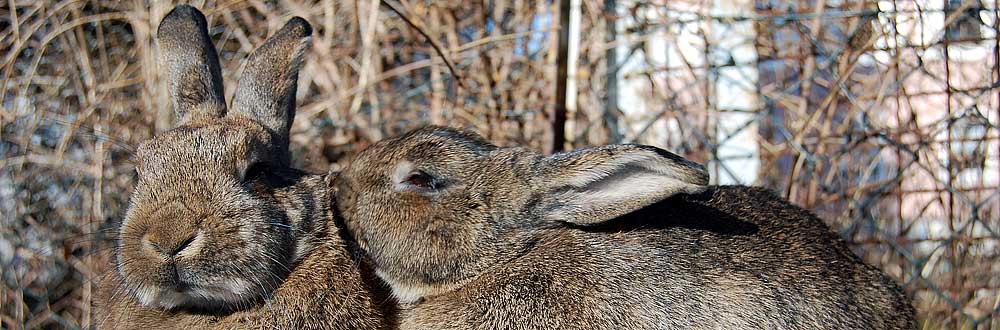
Among some speakers of English, saying rabbit, rabbit before saying anything else on the first morning of the first day of the month supposedly ensures good luck for the next four weeks. Other versions of this superstition include saying white rabbits and just rabbits. If you forget and say something else before you say the magic phrase, you can always reverse your luck by saying tibbar, tibbar (rabbit, rabbit spelled backwards) just before going to bed that night.
Fatberg
Thanks to the fatberg-a 15-ton blob of fat and grease found in a London sewer-the -berg suffix lives on.
Alternatives for Doughnut
The Dictionary of American Regional English offers these alternative words for doughnut: friedcake, twister, floater, sinker, finger, and chokerhole.
Expression “Not Bad”
Not bad-which, like many phrases, sounds cool when you say it with an English accent-is an example of litotes, or an understatement used for effect.
Terms for Practical Jokes
The Dictionary of American Regional English has many terms for practical jokes played on newbies, like sending someone out for a bucket of steam, or for pigeon milk, or for a nickel’s worth of dimes.
Ensellure
The small of the back—the part of one’s lower back where the spine curves in—is so called because it’s the narrowest point. When Vladimir Nabokov wrote about that in English, he borrowed the sexy French word ensellure.
Chamber Pots
White owl, whispering kettle and slop jar are all dialectal terms for the chamber pot, the container kept under the bed before indoor plumbing became common.
Etymology of Sirsee
In the American South, a sirsee, also spelled sursie, sussie, surcy, or circe, is a small, impromptu gift. The term may derive from word surprise.
Vaping
Vape, meaning “to smoke an electronic cigarette,” is among the entries in Grant’s tenth annual Words of the Year List for The New York Times.
This episode is hosted by Martha Barnette and Grant Barrett, and produced by Stefanie Levine.
Photo by Robobobobo. Used under a Creative Commons license.
Book Mentioned in the Episode
| Dictionary of American Regional English by Frederic Gomes Cassidy and Joan Houston Hall |
Music Used in the Episode
| Title | Artist | Album | Label |
|---|---|---|---|
| Hitch Hiker | Jacky Giordano | Organ Plus | L’Illustration Musicale |
| Twilight | Jacky Giordano | Organ Plus | L’Illustration Musicale |
| Curiosity | Jacky Giordano | Organ Plus | L’Illustration Musicale |
| Last Train To Newark | Sugarman Three | Sweet Spot | Unique |
| Hold It | Jacky Giordano | Organ Plus | L’Illustration Musicale |
| Hesitation | Jacky Giordano | Organ Plus | L’Illustration Musicale |
| Riffologic | Jacky Giordano | Organ Plus | L’Illustration Musicale |
| Turtle Walk | Sugarman Three | Sweet Spot | Unique |
| Be Careful | Jacky Giordano | Organ Plus | L’Illustration Musicale |
| Self Confidence | Jacky Giordano | Organ Plus | L’Illustration Musicale |
| May Day | Jacky Giordano | Organ Plus | L’Illustration Musicale |
| Let’s Call The Whole Thing Off | Ella Fitzgerald | Ella Fitzgerald Ella Fitzgerald Sings The George and Ira Gershwin Song Book | Verve |

