

How do languages change and grow? Does every language acquire new words in the same way? Martha and Grant focus on how that process happens in English and Spanish. Plus, the stories behind the Spanish word gringo and the old instruction to elementary school students to sit “Indian style.” The English equivalents of German sayings provide clever ways to think about naps, procrastination, lemons, and more. Also: catawampus, raunchy, awful vs. awesome, man Friday, and no-see-ums. This episode first aired April 2, 2016.
Transcript of “Criss-Cross Applesauce (episode #1443)”
You’re listening to A Way with Words, a show about language and how we use it.
I’m Grant Barrett.
And I’m Martha Barnette.
The other day I was telling a friend about an experience that I had in which I ended up standing there surprised and disappointed and looking kind of forlorn and at a loss.
And she said, “Oh, ordered and not picked up.”
And I said, “What?”
And I was so confused when she said that.
But then we finally realized that she’s a native German speaker.
And that’s a borrowing of a German phrase.
Oh, so it’s like the takeout counter?
Yes.
Oh.
Yes, I was standing there like the pizza that got ordered and then nobody picked me up.
Oh, yeah.
That’s kind of perfect.
I know.
I know.
Oh, that’s a good one.
So I’m totally borrowing that.
Ordered and not picked up for somebody who looks a little lost for words or lost in space.
Yes.
Isn’t that nice?
Yes, it’s very good.
Well, it led me to a treasure trove of other German sayings, so I will share those later in the show.
Yes, please. If you’ve got questions for us, give us a call, 877-929-9673, or email words@waywordradio.org.
Hello, you have A Way with Words.
Hi, this is Chuck from Indianapolis.
Hey, Chuck, welcome.
How are you doing?
Thanks, I’m great. How are you?
All right.
Great. What’s up?
You know, I heard a phrase that I’ve heard before recently here in my office, and the phrase is someone sitting Indian style.
And I’ve heard that a million times since I was a kid.
And the only reason I’m even contacting you guys is because somebody in the office, one of my coworkers, brought up the fact that, wait a minute, is that referring to a Native American Indian or is that referring to a native of the country of India?
And I thought, you know, I’d never really thought of that.
So I thought I would bounce it off of you guys and see what you thought.
Generally, it’s believed to be a reference to Native Americans and the way that they sit.
You will actually find it mentioned in early trader journals, like the French traders that would pass through and the religious folks that would pass through because they sat on the ground or sat on furs and not on chairs at tables.
But I could see how there might be some confusion because that lotus position that you might know from yoga.
I’m coming from India.
Exactly.
Indian culture is similar.
Well, wait a minute.
Maybe this has some licks.
It started as exclusively a North American term, which is one of the ways that we know.
It probably would have come to us through the British had it been a subcontinental Indian term.
Instead there, they use a Turkish style or tailor fashion as in the guy who makes clothes.
Of course.
Yeah.
And not Indian style.
Well, I have a question for you, though.
And I had this conversation with my son, who will be nine soon.
They don’t use the term anymore in the third grade.
No, and that’s the case with my daughters as well in their school.
What do they use in your school?
They say crisscross applesauce.
Yeah, exactly. That’s the same one here in Indianapolis.
My theory is that it’s a nationwide change because to sit Indian style was seen as kind of reductive.
Not necessarily racist, but certainly like…
Yeah, I can see that.
It’d be interesting to kind of pinpoint, okay, well, here’s the administrative change.
We’re going to roll out throughout the country.
And apparently it went pretty well.
Yeah.
Yeah, when I grew up, we used Indian style, but we used it in terms of lining up.
Did you do that?
Oh, into a single file?
Yeah, single file Indian style.
Oh, single file Indian style.
Yeah.
So do you know how your kids line up these days?
I don’t think there’s any cool rhyme like that for lining up, as opposed to just sitting on the floor.
That would be interesting.
It was used for sitting this way. It shows up in rhymes, in street games, in crossing your heart and swearing to die kind of rhymes, you know, like where you’re pledging lifelong friendship.
When they crisscross applesauce and you do the gesture over your heart.
Yeah. And then there’s the crisscross applesauce to give the chills. You guys know this rhyme?
No. Crisscross applesauce.
You do all this touching on their back of a certain way. Crisscross applesauce.
Spiders crawling down your back.
Cool breeze. You blow on their neck. Tight squeeze.
You squeeze their shoulders or their neck. Now you have the chills and like nine times out of ten you actually have the chills when you’re done.
And there’s other variations of the rhyme. So I love the fact that they’ve kind of recalled this old classic children’s rhyme from the depths of folklore and put it to new use.
That’s awesome.
Yeah.
Yeah, it works for me.
All right. Thanks for calling, Chuck.
Thank you.
Take care now.
All right. Bye-bye.
Bye-bye.
Bye.
What do your children use in school for sitting cross-legged on the ground? What do they use for being in line? And do they have any of these rhymes meant to give chills? Let us know. 877-929-9673. Email words@waywordradio.org.
Hello, you have A Way with Words.
Hi, my name is Noah Grace, and my mom always says the word cattywampus, and I wanted to know where it comes from.
That’s a really good question, Noah Grace. Where are you? Where are you calling from?
I live in Yuma, Arizona, and right now I’m at school.
Oh, very nice. Very good. And Noah Grace, how does your mother use it? Can you use it in a sentence for us?
She usually uses it to describe things that are like messed up.
Okay, messed up, like your room is all catawampus?
Yeah.
And you want to know why she uses this word or where it comes from?
Yeah.
Yeah, it’s a funny word, isn’t it?
Yes, it is. It doesn’t seem a little nicer than just saying, “Noah Grace, your room is a mess.” But if she says, “Noah Grace, your room is all catawampus,” does that sound just a little nicer?
Yes, it does.
Yeah, I would think so too.
And do you have any guesses what it might come from?
I’m not very sure.
Okay. Well, you know what? Neither are we. We have some ideas though. We do know that it’s at least 100 years old. And we also know that people spell it like, I don’t know, 20 or 30 different ways.
It’s possible that it comes from some dialect words. That means a form of language spoken in another place or another region from the United Kingdom and the British Isles, where the people who originally settled in this country brought that word in a couple of different forms to this country. And then we kept on using it.
So cater, the first part of it, other people say catty or they have other spellings and pronunciations. It’s C-A-T-E-R in the oldest form means diagonal. And the wampus part can mean wriggly or swirly or looping or something like that. And so we think that it means a diagonal kind of diagonal swirly mess, something like that.
You know, like when a picture on the wall isn’t quite straight and you have to go straighten it up, you would say that that’s catawampus.
Oh, okay.
Yeah, so it means not straight or not right, not correct, not like it’s supposed to be.
Cool.
Yeah, right? It’s pretty cool.
Do you think you might have this word on a spelling test anytime soon?
Probably.
Oh, really? We’re going to give you the best spelling that we know, all right? Here it is. C-A-T-T-Y, like cattywampus, W-A-M-P-U-S, cattywampus.
That’s how my mom says it.
There we go.
That’s good.
Excellent.
All right.
Well, Noah Grace, I want to thank you for calling us today, and good luck with your schoolwork, all right?
Thank you.
All right.
Bye-bye.
Take care.
Bye-bye.
Bye-bye.
Nerd in training.
Yay.
That was a good question, too, right?
It’s an excellent question.
It’s puzzled all of us, right?
When you look at it, she’s right on the target.
Like all these spellings all over the place.
And some of them are very far from cattywampus.
And yet we know there’s a connection.
Yeah.
And it throws a catered corner is related to cattywampus.
Possibly.
Catty corner.
Yeah, diagonal.
Well, if you’re wondering about a word, do what Noah Grace did.
Call us 877-929-9673.
You can also send an email.
The address is words@waywordradio.org.
And you can find us on Facebook and Twitter.
Here’s another borrowing from German that I think is really evocative.
I’m going to start using it.
That’s so sour, it’ll pull the holes in your socks together.
I don’t think I need to elaborate on that one.
That’s pretty sour, right?
So sour, it’ll pull the holes in your socks together.
That’s pretty good.
Call us to talk about language, 877-929-9673, or send your emails to words@waywordradio.org.
Hello, you have A Way with Words.
Hi, this is Tom Sickman calling from San Antonio, Texas.
Hi, Tom.
Hi, Tom. What’s up?
Well, I’ll kind of tell you a little bit about the word that I have in the background.
I’m a world cultures teacher in San Antonio, Texas at a middle school. I teach sixth grade.
In one of my classes here at my school, one of my students, and our population is predominantly Hispanic on the west side of San Antonio.
We were discussing, and he came up with, he asked me a question, Mr. Sickman, what does the word gringo mean?
And I said, well, I’ve heard it before, and I think I know what it means.
What do you think it means?
So we discussed it for a while and decided that it meant somebody who was an Anglo or somebody non-Hispanic.
But later in a discussion with a colleague about the word, she mentioned that she remembered from a college course that it had a very interesting origin.
And that’s what I was calling about, where the word came from.
Yeah, that’s my understanding of it in Spanish, that it means a foreigner, and usually a foreigner who’s English-speaking, but not necessarily.
I’m curious about the origin story that this person had, though. Do you remember it?
The story that she remembered from her college course was that during the colonization of Texas by the American settlers and the war for Texas independence,
There was an incident where a group of Texicans or Americans traveled to Mexico or tried to invade someplace and they were captured.
They were marched to Mexico City for trial. Somewhere on the way, the word gringo came up as part of a song.
And the captors from Mexico heard the song and there was something about the lyrics of the song that started the word gringo.
Tom, I hope I’m hearing skepticism in your voice. I think I am.
Because there is a story about the song Green Grow the Lilacs, and that being misunderstood, but that’s completely false.
It doesn’t come from a song. There’s like four or five versions of the song story, and none of them are accurate.
Yeah, for one thing, the word gringo itself predates the song, so that way you know that that’s not the real story.
The origin of gringo is somewhat in dispute, but I think our best guess, and I’m pretty well persuaded by it, is that it comes from the Spanish word griego, which means Greek.
And sort of in the same way that we might say it’s Greek to me, somebody’s language is unintelligible to me, it’s Greek to me.
It was thought to have been used that way to describe a foreigner.
They sound like somebody from another country.
Interesting.
Yeah.
Yeah.
It’s interesting, too, in ancient Greece, the word barbaros had the same sense of somebody who’s just speaking gibberish, bar, bar, bar.
And we get barbarian from that word.
So the griego was used to describe a variety of non-Spanish-speaking Europeans back in the 1700s, right?
Long before this song came about.
Yeah.
Wow, very interesting.
I’m so, so delighted to have got that straightened out because I couldn’t really find any place that confirmed it.
And so it’s an interesting story, but not true.
So, Tom, now you can take the story back to your students.
Yeah. Thank you for allowing me on your show.
Our pleasure.
Thank you, Tom.
Good luck with the kids.
Thanks. Bye-bye.
Bye-bye.
Email words@waywordradio.org and hit us up on Twitter @wayword.
You’re listening to A Way with Words, the show about language and how we use it.
I’m Grant Barrett.
And I’m Martha Barnette.
And joining us on the line from New York City is our quiz guy, John Chaneski.
Hi, John.
Hey, John.
Hi, Martha.
Hi, Grant.
What is up?
Well, I thought I’d talk today about something.
You guys know about that I collect board games.
Is that right?
You know that?
No, I didn’t know that.
I’m a game guy, a puzzle guy.
I also collect board games.
I have several editions of the classic board game Clue,
Which is known outside of North America as Cluedo.
Always an interesting thing to know.
It comes from the word clue and the word ludo,
Which is the Latin word meaning play.
I play, right.
Now, along with fun gameplay,
Clue has a lot of really wonderful parts to it that I really like.
The characters, the weapons, and all those really cool rooms.
And when you play it, you feel like you’re in a mansion.
So I’ve decided to write a Clue quiz,
But I have one more reason for it,
And I’ll tell you about it after the quiz, okay?
Okay, let’s hear it.
Good.
First, let’s add a few more rooms to the mansion.
I’m going to give you some clues to some murders, tell you who did it, tell you what weapon they used,
But you have to guess where the murder took place.
Now, all of these are rooms in a house, usually a fancy house, but not any of the ones in the board game Clue.
Okay.
Okay?
For example, Miss Scarlet with a lead pipe in the place used for developing photographs.
The dark room?
Yes, Miss Scarlet with a lead pipe in the darkroom.
That’s a good example.
Okay.
Here we go.
Mr. Green with the rope in the area where you leave your boots so the rest of the house stays clean.
The mudroom.
Yes, the mudroom.
Very good.
Mrs. White with the candlestick in the place where you clean the clothes that got dirty in the mudroom.
The laundry?
In the laundry room, yes.
Colonel Mustard with a wrench in the spot where you run if someone dangerous enters the house.
The panic room.
The safe room.
Right.
Panic room or safe room.
Ironic, though, that you’d be killed in the panic room.
This would be the one place you would think you’d be safe.
Professor Plum with the revolver in the place where you store your Chateau Neuf-du-Pape.
It’s 1978.
Nice.
In the wine cellar?
In the wine cellar, yes.
Mrs. White with the candlestick, again, in the spot where you keep your trouble, your sorry, your operation, your clue.
In the game room.
Yes, in the game room.
Now, the reason I wanted to do a quiz about Clue is this.
You both know that sometimes a single word can be very important and influential.
Is that right?
Yes.
Sure.
Well, have you ever noticed that every character in the game of Clue has their own color, scarlet, mustard, green, but they don’t all have their own title?
The men are Mr., Professor, and Colonel, but the women are only Miss, Mrs., and another Mrs.
So I think this is unfair and not representative.
So in that spirit, I’ve created an online petition to ask Hasbro, the maker of Clue, to change the title of Mrs. White to Dr. White.
Ooh, nice.
Yeah.
Bravo.
It’s 2016.
Thank you.
I think it’s about time Mrs. White earned her MD or her PhD, anything other than sharing a title with Mrs. Peacock.
I wholly support it.
It’s a great endeavor.
Thanks, John.
Where would we go to find that petition?
Well, we’ll add it onto the A Way with Words Facebook page.
How’s that?
Outstanding.
That’s a great place for it.
Sounds good.
John, thank you for another lovely quiz.
Thank you, guys.
Thanks, Grant.
Thanks, Martha.
All right, take care now.
Okay, bye, John.
Best to the family.
Thanks, you too.
Bye.
Well, what do you know?
We like to talk about words and language and puzzles and jokes and riddles and all kinds
Of goofy stuff from one end of the language to the other.
Give us a call, 877-929-9673.
Email words@waywordradio.org.
Send us a message on Twitter at WayWord or talk to us on our Facebook group where there are thousands of people just like you talking about language every day.
Hello, you have A Way with Words.
Hello, this is Bridget in Indianapolis.
Hey, Bridget, welcome.
Hello there. What’s up? What can we do for you?
So I have another one of those, my family does it differently from his family question.
Excellent. Bring it.
So it’s regarding the word raunchy.
In my family, raunchy means something that’s vulgar, almost certainly sexual, and not appropriate for the dinner table.
So you might tell a raunchy joke, right? That’s a sexual joke?
Bingo, precisely.
Oh, okay.
In his family, it means under the weather.
So the first time his extremely polite southern grandmother said that his grandfather was still feeling pretty raunchy, I about fell out of my chair.
I just did too.
Okay.
So where are they from?
They’re from North Carolina and Florida.
Huh.
Yeah, I have a hard time with that one.
I don’t know that meaning of raunchy.
I mean, I’m not going to deny that they can use it that way.
Of course they can.
But I’m with you, Bridget.
I don’t know that one.
I didn’t know if there was anything in the etymology or in adjacent uses that would explain it.
So if he’s feeling raunchy, he’s feeling what again?
Eww.
Snotty.
Low energy.
Okay.
Oh, how interesting.
Well, here’s the thing is raunchy has undergone a transformation over its lifespan.
Sling does this all the time.
And earlier uses of raunchy were more about messy or ill-kempt or sloppy, maybe even sordid.
And it’s possible that this is an offshoot of that older meaning, which is just generally about,
I could see how you might feel unkempt if you’re sick or might feel seedy if you’re sick.
But it’s kind of stretching it.
There might have been a long road between that old…
How about not put together, and then in that Victorian way, that turns into sorted and not respectable.
Yeah, maybe.
It could be.
There’s a quick gloss in one of the dictionaries.
They say unpleasant is a possible early meaning of it.
But these are all bland and not very specific kind of negatives about this word.
Yeah, and they’re uses with livestock, too, like a cow with a bad temper.
Right, being raunchy.
Being raunchy or a horse.
Okay, and that certainly wouldn’t apply with a raunchy choke.
No, but I could see that a raunchy horse might be raunchy.
It would have a bad temper because it’s sick.
Yeah, maybe.
Yeah, okay.
So there could be some transfer that’s happening.
This is a really interesting one.
I think, Bridget, we’re going to have to see if the rest of our listeners have had this experience.
Have raunchy grandparents, clearly.
And not the kind bumping and grinding to trombone music.
All right.
Thank you very much.
Yeah.
Thank you for the question.
We’ll see how it turns out, Bridget, all right?
Okay. Have a good one.
Take care.
Thanks. Bye-bye.
If you can help Bridget out, if you’ve heard raunchy used to mean sick, not feeling well, ill,
Give us a call, 877-929-9673.
Send us a message and email to words@waywordradio.org.
Or tell us on the Facebook group, which is really active.
It’s got thousands of people just like you having a conversation about language.
Grant, here’s another translation of a German phrase I really liked.
I have to take a look at myself on the inside.
Do you know what I would be about to do?
Kind of collect your own thoughts?
Or consider your own opinions?
Or just find out, I don’t know, what?
I have to take a nap.
What is it again?
Ich werde mich von innen bekeken.
I have to take a look at myself on the inside.
Close your eyelids.
Yeah.
Okay.
I’m a lot more industrious than I look.
A lot more industrious than I look.
Yeah, because nap sounds lazy, and looking at myself on the inside sounds introspective.
Right.
Hello, you have A Way with Words.
Hi, my name’s Josue Matos.
I’m in Bristol.
Bristol, Connecticut?
Bristol, Maine?
Bristol.
Bristol, Virginia?
Bristol, Florida.
Bristol, Florida.
I gotcha.
Welcome to the show.
So many Bristol.
You said Josue?
Yes, Josue.
Josue, welcome. How can we help?
This question arose from a debate while playing an online video game, Lord of the Rings Online.
And we were talking about how words are acquired.
And basically the guy was saying, you know, all languages, it’s good to adapt new languages simply from use.
And that’s it.
And you just have to use a word enough and it’ll happen.
But the impression he was giving was that all languages acquire new words the same way.
And that it’s a fairly quick thing.
It only takes maybe a few months of using the word over and over again to get enough people to happen.
Now it’s debating the opposite side, not the opposite side,
But that not all languages are that way,
But rather that English is kind of not unique, but it’s an author’s language.
It was kind of almost designed to be inventive,
Whereas other languages like Spanish, it’s a little bit slower.
There’s a protocol, and there’s an academy that kind of decides what official words are.
I guess, I don’t know if you can pull an abstract question out of that,
But do all languages acquire new words the same way?
No, they don’t, but yes, they do.
And I know that’s a ridiculous answer.
I think the yes part of that is all of the same mechanisms are at play in every language,
But the way that the language is transmitted is completely variable.
It’s just accidents of history, accidents of population, accidents of geography.
So the change is going to be really different.
English is a kind of weird case.
There are only a couple other languages that are as much of a mutt as English is.
That gives it some strength.
It also gives it some weaknesses because it is so abundant with all these loan words.
But generally we’re talking about changes in lexicon that happen either through new invention or that happen through close contact with other languages.
We are talking about changes in syntax and structure that happen because of a variety of different fads and trends and maybe changes in the way we learn or the way that we teach.
And also we’re talking about changes in pronunciation that just happen through, again, these same kind of trend lines where one person who has a large community of people who pay attention to them does something and other people imitate it, either on a large or a small scale.
And all of these things happen at varying rates, varying degrees, some a lot, some not at all, on a word-by-word basis or a paragraph-by-paragraph basis and on a language-by-language basis.
I know this sounds like a big, vague, muddled mess, but think about all the people that you know.
We were all born from a mother, but from there, each one of us takes our own path.
And languages and words tend to be the same thing.
We each have a different life with different influences and different destinations and some short, some long.
One thing that, you know, because part of the debate came up because I find English is almost like designed for you to make up words.
You know, if I can’t think of how to describe this thing, I can make up a word.
And the people who speak English with me, most of them will be able to figure out what I’m trying to say based on, like, the mechanics that I use.
When I’m in Spanish, when I do that, I get in trouble all the time.
I don’t have a clue what I’m saying.
What’s right?
I’m trying to use the same mechanic.
Yeah, because I’m trying to use it.
You know, I do this with my wife.
She’s Colombian.
And she laughs at me all the time because I’ll invent a word, basically, using Spanish grammar rules.
I’m trying to think of one and blanking out.
But, yeah, I don’t know.
It doesn’t work the same.
English does have a lot of flexibility.
The morphological possibilities are immense with English, which is part of the thing that makes it difficult for learners.
It does happen in Spanish, though.
I mean, you can certainly put a prefix in front of a word with no problem and nobody would blink an eye at it, right?
What variety of Spanish do you speak, Josue?
I’m Cuban.
Cuban, okay.
My family’s Cuban.
I was born in New York, but I still call myself Cuban.
My wife is Colombian, however.
They have a tendency to be a little bit more formal with their language than Cubans are.
Certainly with their pronunciation.
Yeah.
Oh, yeah, definitely.
Those two varieties of Spanish are very different.
And did you live in New York long enough to pick up some of the New York Spanishisms, some of the weird regionalisms that happen there because of the mix of the Puerto Ricans and the Dominicans?
No, no.
I picked up a lot of the Mexican and Mexican-American things because when I was four, we moved to Texas.
Gotcha.
Yeah, my dad’s a Baptist minister, so we moved around a bit.
Speaking of, you’ve got a nice much Spanish dialect than I bet, right?
Yes, actually I do.
When I start speaking Spanish, no one can identify where I’m from.
That’s awesome.
I’ll get Puerto Rican, I’ll get Venezuelan, I’ll even get Chilean sometimes.
They’ll never think Cuban.
I don’t speak loud enough.
They’ll be confused with Cubans.
But to go back to kind of the underlying question is every language does allow this invention and this kind of change.
But there is a culture of permissiveness around some languages and inside culture.
Like, for example, in academia in the United States, they’re going to be far more restrictive about coining new words than you would find, say, in advertising in the United States.
So it’s very dependent upon your milieu.
And the same for Spanish.
My Colombian Spanish-speaking friends all believe that they speak the best Spanish in all of Latin America.
Right.
Which may or may not be true, but that really controls the way that they’re likely to accept inventiveness, I believe.
Whereas my Puerto Rican friends are really used to just borrowing English words right and left and have no problem with putting a Spanish suffix on an English word and just making it work.
Right.
And see, I always thought it was a thing about Spanish itself that, you know, a lot of times you end up having to borrow English words because you can’t find a Spanish word for it.
Well, the same thing happens in English, though.
I mean, I always said that English is, you know, if all the languages had a party, English was the one that would be going around asking, you know, are you going to eat that? Can I have that last bit of parsley off your plate?
And you make a good point about Spanish having the academy that—
But who listens to the Academy Royale?
Well, it exists.
It exists, yeah.
It exists.
But it’s a weird aberration that’s mostly ignored, just like the French Academy is mostly ignored.
Yeah.
Okay.
Well, Josue, thank you so much for calling.
Well, thank you.
Thank you very much for receiving my call.
It’s been kind of fun.
It’s been really fun.
Thanks, Josue.
All right.
Bye-bye.
Bye-bye.
Bye-bye.
What have you noticed about language?
Let us know.
877-929-9673 or send it an email to words@waywordradio.org.
Hello, you have A Way with Words.
Hi.
Hi, who’s this?
This is Travis Kidd. I’m calling from Bozeman, Montana.
Hi, Travis.
Hey, Travis.
What’s up?
Well, I had a question about a pair of words that has always confused me.
So the two words are awesome and awful.
So awesome tends to be used with a positive connotation, whereas awful is always negative.
Yet they both have their root in the word awe, which I don’t think of as being a negative feeling at all.
Any theories on that?
Well, yeah, I guess I suspect my confusion stems from the common use and sort of overuse of the word awesome.
It’s not really used anymore to inspire the terrifying power of God.
Now it just means cool or that’s good.
Yeah.
Yeah, so I kind of suspect, like, is it the diluted potency that makes it so confusing now?
The diluted potency.
Yeah, it’s definitely, it’s like the cheap liquor behind the bar that’s been watered down so much it’s more water than liquor.
Yeah, right.
Now it’s just used for describing Michael Bay movies.
Yeah, it is a bit confusing, isn’t it?
We can tell you that the word awful is a whole lot older than the word awesome.
The word awful goes back at least a thousand years.
Yeah.
Wow.
And it meant, as you suggested, full of awe, that is commanding awe or commanding respect or reverential fear.
And then it sort of evolved into the sense that we think of it today, the terrible, appalling or causing dread.
And it was hundreds of years later that the word awesome came along, meaning awe-inspiring, but not necessarily with negative connotations like that.
It’s really interesting in the book of Deuteronomy, early translations of the Bible talk about, in a particular verse, it talks about God being mighty and awful.
And then later translations of it often say God being mighty and awesome.
And both today ring weird, right, to the ear.
Yeah, yeah.
Mighty and awesome.
Yeah, some say mighty and terrible.
It kind of, like, the only word pair that I can think that sort of holds true to that is, like, fearsome and fearful.
But that makes sense to me.
Like, fearsome is inspiring fear, and fearful is just being afraid.
Mm-yeah.
But those seem to sort of have the same connotation.
They’re both sort of negative.
Mm—
Whereas awesome and awful are sort of positive versus negative.
So, yeah, that’s kind of where my confusion always lies.
Yeah, and it’s confusing because the sum in awesome means having the quality of, you know, having the quality of awe.
So it sort of depends on what the awe is.
Like toothsome is something that’s delicious.
But these words just kind of diverged and fill different places in the language now.
And at some point they break from their etymological roots.
And we can’t use etymology as a guide.
It’s just a starting point.
It’s not the end point for the meaning of a word.
Well, cool.
I think that definitely clears it up a bit for me, and it’ll be interesting to hear if anyone else had the same confusion.
Oh, I’m sure.
I think people often have that, and we often get complaints about the word awesome these days.
It tends to be overuse, though.
That’s the complaint.
Oh, yeah, yeah.
Watered down, as you said, in the last, what, 30 years?
Yeah, we get complaints about that all the time.
Well, Travis, thanks so much for calling.
Thanks, Travis.
Yeah.
Bye-bye.
Thanks for the answer.
Yeah, sure.
Okay.
Bye-bye.
Bye.
Email words@waywordradio.org.
Talk to us on Twitter @wayword.
You’re listening to A Way with Words, the show about language and how we use it.
I’m Grant Barrett.
And I’m Martha Barnette.
In an earlier episode, we had a call from a Contra dancer who said that there was a controversy in her community over the name of a dance move that was called Gypsy.
And some people felt that it was offensive to the Roma people.
And some people wanted to hang on to it, saw nothing wrong with it.
And we advised them, Grant, to give up the term.
If they could.
Yeah, if they could.
And we got a lot of really interesting response to this.
A lot of people had mixed feelings about that.
We heard from Jared Rossman, who lives in Humboldt County, California, and he wrote, around here, gypsy is a term of admiration.
Gypsy dancing, a gypsy clothes style, and the commercial gypsy cold care tea I’m currently sipping.
All of those are positive connotations.
We also heard from Ed in Indianapolis who reminded us that on Broadway, gypsy is a really positive term.
There’s actually a gypsy robe ceremony that is given at the beginning of each Broadway run for a dancer in the show who’s a real trooper, who embodies the hardworking ethic of dancers who go from show to show, the kind of show must go on person.
I mean, it’s a really, really positive thing.
We also got a phone call from a woman named Ashley, and she said that her parents are Roma and, in fact, spent time in the death camps in Germany.
And she was offering us heartfelt thanks.
She was saying you have no idea how offensive the term gypsy is to people like me.
And I really appreciate your suggesting that, that people don’t use it.
Because, you know, there were tens of thousands, if not hundreds of thousands, of the Roma people who were killed during that time.
And even Brian Garner, the usage expert, says that although some authorities recommend avoiding gypsy in all contexts, that seems unduly strict.
There’s no ready substitute for gypsy moth, for example.
So it’s sort of this mixed bag, right?
I think we were kind of that way in the original call.
I think we were a little uncertain about where to go with this.
And yet knowing that if you have an opportunity to take some sting or stigma out of somebody else’s life, you should try to do that.
And it sounds like those positive situations, perhaps there would be no sting or stigma there.
But I don’t know.
It’s about context, as we always say.
It is totally always about context.
And certainly in the contra dancing, it doesn’t sound like it’s negative at all.
But it does sound like it does refer back to the Roma who almost always say they prefer not to be called gypsies.
Right, right.
And if it is considered a slight, I mean, what do you gain by using it?
Yeah, exactly.
Yeah, that kind of ambivalence towards language is, well, that’s why we have the show.
We discuss these things.
And each person ultimately, despite whatever advice you and I give, decides for themselves.
Well, I guess the bottom line is that we’re at a point in the evolution of this word where it’s changing right under our feet.
And it will be interesting to watch.
Well, we’d love to hear your thoughts about language.
So give us a call, 877-929-9673, or send them an email.
That address is words@waywordradio.org.
Hello, you have A Way with Words.
Hi, this is Suzy Forbes, and I’m calling from Norwich, Connecticut.
Hey, Suzy, welcome.
Hey, how you doing? What’s up?
Hi, Martha. Hi, Grant.
Well, I have a question about some letters that my dad wrote to my mother, who was at that time his fiancée, during World War II.
Ooh, that sounds exciting.
It’s pretty interesting.
I’ve been transcribing these letters because my two cousins have letters from their fathers as well, and so the three brothers apparently sent all these letters to their wives and sweethearts.
And they haven’t come across this usage, and so I’m calling you because this doesn’t make sense to me.
The five times it’s happened so far has been in March of 1944 through November of 1944, and he uses the word hideous, which to me sounds awful, to be an adjective for terrific.
I don’t understand.
I could read you one or two of them.
It says, we’ll play together and really have a hideous time.
Interesting.
And we’ll have a big get-together and really make the night hideous, as we did during the Christmas holidays.
Wow.
Okay, this is interesting.
Yeah.
And so what are you taking away from this?
Are you just taking, do you think this is slang of the age, or he was using a word he didn’t understand?
No, I think this is something, I mean, he’s used it five times.
Yeah.
I don’t think it’s a word he didn’t understand.
He’s very, his letters are very literate, and his writing’s awful, but his usage and his spelling is very good.
And so I think this must have been the slang of the times, but none of my uncles have used it.
So he was stationed on Hawaii during this time, and I’m just wondering if this is something that was used in Hawaii.
I don’t know.
What it sounds amazingly like to me is a lot of really common usage that is about emphasis, about emphasizing something.
And so it’s not really, it’s lost its negative or positive value.
It just says more of the same.
It’s almost adverbial.
And it’s really interesting, too, that you use the word terrific because terrific comes from a root that originally meant terrifying or causing terror.
And now we use it in this emphatic positive way.
So really, I suspect it’s a perfect match for a pattern of other words which used to be negative and then were used to express kind of a force or extra emotion.
Kind of like when an actor does a really great job and they say, oh, he really killed that role.
Yeah.
Crushed it.
He was awfully good, right?
Yeah.
Before he goes out, you say, knock him dead.
And none of these things really are actual literal negatives.
They’re all meant to be positives.
True.
What were your parents’ names?
Nancy.
My mother’s name was Nancy and my father’s name was Mo.
His name was Morris and he always went by Mo.
Okay.
The other thing I’m wondering is if, you know how couples just develop their own language?
I mean, I’m wondering if this is the lingua franca from Planet Nancy and Mo.
Oh, that’s a good one.
I hesitate to say that because they had become engaged the two weeks before he left.
And they had only been friends before that.
Wow.
Until they, as he says, we discovered each other.
No kidding.
Yeah.
I have to say there’s a larger thing at work here that I want to compliment you on, and that is transcribing these letters for the record.
Because in my work as a dictionary editor and somebody who specializes in slang, we’d love to go back to these handwritten letters to find the closest thing that we can get to the vernacular, the way the average person spoke, rather than the way newspaper writers wrote or the way that book authors wrote.
It’s very important to have this stuff.
So if you were making that public in any way, that would be astounding.
The Civil War letters that people go through and transcribe are a delight to look in because of this language stuff.
So it’s possible that if we were to find a larger trove of letters written by military folk who were stationed in Hawaii during World War II, we might find that hideous was indeed a thing.
But it will take a larger body, a larger corpus of letters to figure that out.
Well, Susie, the other thing is that we might hear from listeners who have the same experience with the word hideous.
Sure, you never know.
That would be fantastic if there were others.
Well, let us know if you come across any other cool stuff in the letters.
Oh, I will.
You’re my favorite go-to place for discovering whatever this means.
Oh, thanks, Susie.
Outstanding.
Thank you very much.
Thanks, Grant.
Thanks, Martha.
Bye.
Thanks.
Bye-bye.
Bye-bye.
You know, Grant, before my father died, he gave me a box of the love letters that he and my mother shared.
Oh, that’s nice.
And it includes diary entries from his desk diary the week that he realized that he was falling in love with my mom.
Oh, how nice is that?
And I have them in, you know, a fireproof safe, and I’m sort of going through them, but I sort of don’t want to come to the end.
Right.
Do you know what I mean?
That’s too perfect a thing.
I know.
I know.
But I want to at least scan them and share them with the rest of the family.
That’s to know this essential moment.
I know.
You know what that reminds me of?
My aunt last year gave me a card that my mother had sent to a relative when she was pregnant with me and my brother.
Oh.
Talking about finding out that she was going to have twins.
Oh, gosh.
And it is like the first mention indirectly of me and my brother in my mother’s handwriting.
And it’s like an amazing document.
It’s astonishing.
I’m like, you know, it’s in the envelope with the stamp and the whole thing.
Yeah.
And it’s just a card you would buy in a store, but it’s in her hand.
It’s really nice.
It’s really nice.
Oh, my gosh.
This whole letters connection to language.
Yes.
But it’s not just the language.
It’s the emotion and the history.
The family elements, as we say, right?
Right.
And the handwriting, right?
The handwriting, yeah.
That feels different.
Very evocative.
Incursive, right?
Yeah.
Very evocative.
Yeah.
We’d love to hear the language that you picked up from the letters that your family wrote.
877-929-9673 or email words@waywordradio.org.
Here’s the translation of a German phrase about procrastination that I really like.
In the evening, lazy people get busy.
Isn’t that the truth?
It is, yeah, because you’re thinking about 9 a.m. the next day and all the stuff you have to do.
That’s right.
Those deadlines looming, right?
Flurry of emails.
Although as a writer, you have to stare out the window, I think.
Do you?
Absolutely.
When I have a deadline, my house is really clean.
Anything to avoid the actual work.
That’s right. 877-929-9673.
Hello, you have A Way with Words.
Hi.
Hi, who’s this?
This is Allie from Indianapolis, Indiana.
Hi, Allie. How are you doing?
Pretty good. How are you?
All right.
What’s up?
Well, I had called in about a question I had about something that my boyfriend’s father had said to me.
He was staying with us for a little bit, recuperating from some health problems, and I was talking with him about what he was going to be doing next, and he told me that he was just going to look into somebody who would need a good boy Friday.
I had no idea what that meant.
And when I asked him what it meant, he couldn’t really explain it to me.
I assume it means somebody who needs some help working on stuff around their house or something like that.
But my boyfriend doesn’t know what it meant either.
So that’s my question is what that means or where it comes from.
I’ve never heard it before.
So he was volunteering himself to be somebody’s helper?
He was just talking about it.
He was just saying, well, I think I’ll just go and be somebody’s good boy Friday.
And that’s, I mean, he’s a little bit older.
He really probably couldn’t physically help somebody do stuff.
He was just talking about it, and I didn’t know what it meant.
You know, when you first said that, I was thinking good boy.
I was thinking like a dog or something.
Yeah.
It’s got semantic content.
It’s about parsing, though.
It’s good boy Friday instead of good boy Friday.
Yeah.
Have you ever heard the term man Friday?
No.
Girl Friday?
No.
Okay.
Have you ever read Robinson Crusoe?
I have not.
Okay.
There we go.
There we go.
Okay.
Yeah.
The term Man Friday is a reference to Friday, who was a character in the story Robinson Crusoe by Daniel Defoe back in 1719.
It’s a story of a guy who was stranded on a tropical island for, what, 30 years, Grant?
A long time.
Something like that.
I don’t remember.
Yeah, years and years and years.
And this guy, he saves the life of this indigenous man and then decides to give him the name Friday,
teaches him English, converts him to Christianity, eventually takes him back across the ocean.
And Man Friday came to be a term that meant somebody who was a helper, somebody who—
like your manservant, aide-de-camp, your valet, your Batman, that sort of thing.
Yeah, pretty much your servant.
And then in the 1920s, people started using the term Girl Friday.
You know, I’ll have my girl Friday call your girl Friday, meaning a secretary or somebody who helps you around the office.
Or I might call you an admin assistant today, kind of the all-purpose helper who solves all the…
Right.
Yeah.
Boy Friday, I haven’t heard that much at all.
No, but it’s a logical extension, right?
Yeah.
I wasn’t sure if it was like a regional type of term or, you know, I highly doubt he’s ever read Robinson Crusoe.
Oh, yeah?
Yeah.
It had a life of its own outside the book, so it’d be easy for somebody to pick it up without having read it.
I would say that both Man Friday and Girl Friday are old-fashioned.
Girl Friday definitely being marked as sexist these days, and Man Friday just as plain old, old-fashioned.
How recently was it that he said Boy Friday?
It was probably about a month and a half ago.
Oh, okay. That’s weird.
Well, it’s still sticking around.
How’s that sound, Allie?
It makes a lot of sense.
Yeah, right. Well, our best to all of you.
Thanks for calling, Anna.
Yeah, thank you so much.
Take care.
Bye-bye.
Bye.
877-929-9673, email words@waywordradio.org, and hit us up on Twitter @wayword.
Hi, you have A Way with Words.
Hi, this is Tony calling from McKinney, Texas.
Hello, Tony.
What’s up?
One evening last summer after dinner, we decided to go outside for a walk, get some exercise.
Now, of course, we live close to Dallas, and it’s hot in the summertime.
So we’re working up a pretty good sweat walking around the neighborhood and as people in the south
in the Texas area also probably remember or when they’re out walking sometimes and exercising these
little gnats these bugs that just kind of swarm around your face they’re just a nuisance and we’re
walking perspiring and swatting these bugs away and my wife says Tony these no-see-ums are driving
me crazy. And I just stopped. And I said, what did you say? And she said, these no-see-ums are
driving me nuts. And I had never heard that word before. I just started laughing. I mean, I know
what she’s talking about, the bugs, but I was raised in Memphis, Tennessee. She’s from LaGrange,
Georgia. So we’re from the South. I figure it’s some kind of Southern slang term, but no-see-ums.
I had never heard that word, and I listen to you guys every week, so I thought I’d give you a call and have you tell me where that came from.
How interesting, Tony.
Both of you are from the South.
So, yeah, that was really interesting to meet you.
No-see-em, probably N-O-S-E-E and apostrophe-E-M, the word them kind of abbreviated, right?
Or it could be N-O-S-E-E-Y-U-M, no-see-em.
Oh, no-see-em.
It pops up here and there in the South, but it’s mainly used in the northern part of the United States around the Great Lakes and the Northwest.
Yeah. I mean, I’m not surprised it’s in the South, but the data that I have show that it’s just not that common down there.
It dates back to the 1830s, and it’s usually attributed in early books and journals to the speech of the Native Americans.
And supposedly it’s what they said to describe the small bugs when they were speaking to the Anglophones and the English speakers.
Although it’s got a flavor about it.
Unfortunately, it’s got a flavor of it as like one of those things that was purported to be said by the Native Americans,
but it probably was just a joke on the part of the English speakers.
They probably didn’t actually say it like that.
Who knows?
Wow, that is interesting because I would have thought it was strictly from the South.
No, no.
So in the Dictionary of American Regional English, which is all about regional dialects,
there’s a map and it shows the data that they collected over many decades,
it shows almost all of the spots around the Great Lakes, particularly Wisconsin and Michigan, New York State, New England, all up in there, and then pockets in the Northwest, Oregon, Washington, Northern California.
Well, I can’t wait to tell her that.
She’ll be really interested because she just couldn’t believe that I had never heard of that word being from the South, and I never had heard it before.
Yeah, it’s mostly North American.
I’m probably not going to hear that very often in other English-speaking countries.
What do you call them, Tony?
Yeah, what would you call them?
Would you just call them midges or something else?
Gnats.
Yeah, I’d call them gnats.
Yeah.
Okay, gotcha.
Yeah, little bitty gnats.
Yeah, tiny gnats that just seem to swarm.
And no matter how much you swat, they won’t stay away from you.
Yeah, they just love you.
Boy, is that a metaphor.
Yeah, there you go.
Well, I sure enjoy your show.
I listen every week.
Thank you so much.
Thanks, Tony.
We appreciate it.
Take care.
Bye-bye.
Bye-bye.
Do you want more A Way with Words?
Listen to years of past episodes at waywordradio.org
or find the shows in any podcast app or on iTunes.
The toll-free line is always open, so leave a message for us at 877-929-9673.
We love to get your emails at words@waywordradio.org
or you can hit us up on Twitter @wayword and look for us on Facebook.
This program would not be possible without you.
Grant and I are out to change the way we listen to each other and the way we think about language.
And you’re making it happen.
Thanks also to senior producer Stefanie Levine and director and editor Tim Felten in San Diego.
In New York, we thank production wizard James Ramsey, quiz guy John Chaneski,
and that master of keeping it real, Paul Ruist at Argo Studios.
A Way with Words is an independent production of WayWord, Inc.
From the Recording Arts Center at Studio West in San Diego, I’m Grant Barrett.
And I’m Martha Barnette.
Bye-bye.
So long.
Thank you.
Ordered But Not Picked Up
 If you’re looking forlorn and at a loss, a German speaker might describe you with a phrase that translates as “ordered but not picked up.” It’s as if you’re a forgotten pizza on a restaurant counter.
Indian Style No More
Sitting on the floor Indian style with one’s legs crossed is a reference to Native Americans’ habit of sitting that way, a practice recorded as far back as the journals of French traders. Increasingly, though, the expression is being replaced with the term criss-cross applesauce. In the United Kingdom, this way of sitting is more commonly known as Turkish style or tailor style.
Etymology of Catawampus
A nine-year-old from Yuma, Arizona, wants to know the origin of catawampus. So do etymologists. Catawampus means “askew,” “awry,” or “crooked.” We do know the word has been around for more than a century and is spelled many different ways, such as cattywampus and caddywampus. It may derive from the Scots word wampish, meaning to “wriggle,” “twist,” or “swerve.”
How Sour is It?
How sour is it? If you speak German, you might answer with a phrase that translates as “That’s so sour it will pull the holes in your socks together.”
Origin of Gringo
A sixth-grade teacher in San Antonio, Texas, is skeptical about a story that gringo derives from a song lyric. He’s right. The most likely source of this word is the Spanish word for “Greek,” griego, a term applied to foreigners much the same way that English speakers might say that an unintelligible language is Greek to me. The ancient Greeks, on the other hand, imitated the sound of foreigners with the word barbaroi, the source of our own word barbarian.
Clue Word Quiz
The board game Clue inspired this week’s puzzle from our Quiz Guy John Chaneski. It also inspired him to create an online petition to give Mrs. White a doctor’s degree.
Raunchy
What’s the meaning of the word raunchy? A woman in Indianapolis, Indiana, thinks it means something bawdy or ribald, but to her husband’s family the word can mean “icky” or “unpleasant.” She learned this when one of them mentioned that her husband’s grandfather was feeling raunchy. What they mean was that he had a bad cold. The word raunchy has undergone a transformation over the years, from merely “unkempt” or “sloppy” to “coarse” and “vulgar.”
Look at Myself From the Inside
A German idiom for “I’m going to take a nap” translates as “I have to take a look at myself from the inside.”
Adding New Words
A native of Colombia wants to know: Do different languages add new words in similar ways? He believes that Spanish, for example, is far less open to innovation than English.
Awesome and Awful
Awesome and awful may have the same root, but they’ve evolved opposite meanings. Awful goes back more than a thousand years, when it originally meant “full of awe” and later “causing dread.” Awesome showed up later and fulfills a different semantic role, meaning “fantastic” or “wonderful.”
Gypsy Followup
More listeners weigh in on our earlier discussion about the word gypsy, and whether it’s to be avoided.
Hideous
A listener in Norwich, Connecticut, is going through a trove of love letters her parents sent each other during World War II. In one of them, her father repeatedly used the word hideous in an ironic way to mean “wonderful.” Is that part of the slang of the time?
Lazy People
An astute German phrase about procrastination translates as “In the evening, lazy people get busy.”
Boy Friday
A young woman is puzzled when her boyfriend’s father says he was looking for someone who needs a good boy Friday. It’s most likely a reference to Daniel Defoe’s 1719 novel Robinson Crusoe. The title character spends 30 years on a remote tropical island and eventually saves the life of an islander who becomes his helper. Crusoe decides to call him Friday, since that’s the day of the week when they first encountered each other. Over time, English speakers began using the term man Friday to mean a manservant or valet, and later the term girl Friday came to mean an office assistant or secretary.
No-See-Ums
The term no-see-ums refers to those pesky gnats that come out in the heat and humidity and are so tiny they’re almost invisible. The term goes back at least as far as the 1830s, and is heard particularly in the Northeastern United States.
This episode is hosted by Martha Barnette and Grant Barrett, and produced by Stefanie Levine.
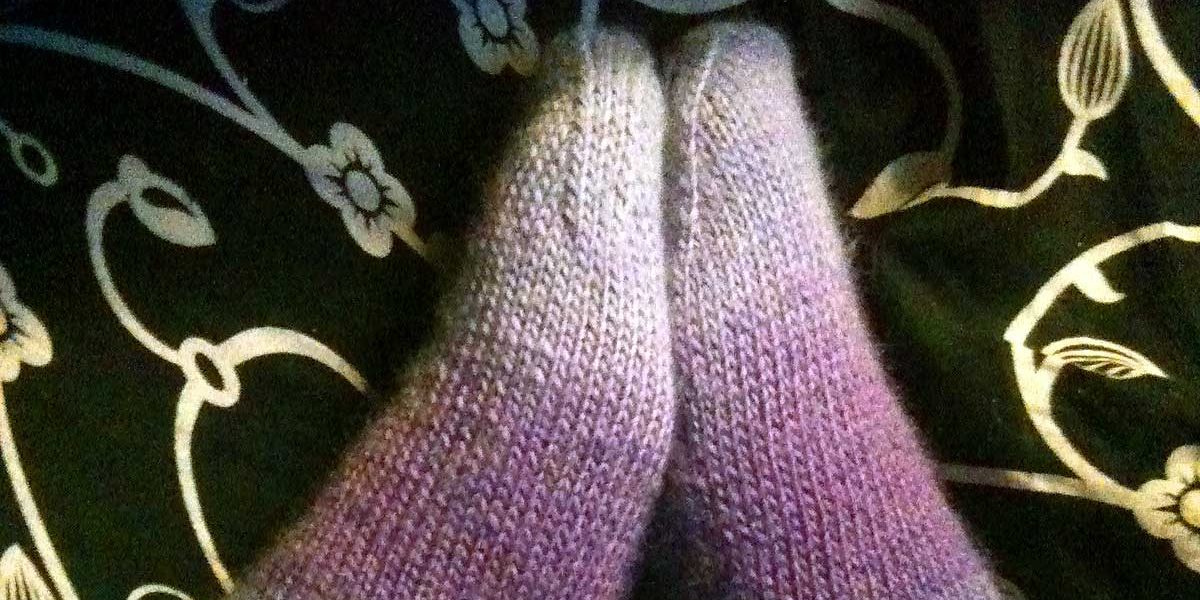
Photo by Heather Kennedy. Used under a Creative Commons license.
Book Mentioned in the Episode
Music Used in the Episode
| Title | Artist | Album | Label |
|---|---|---|---|
| Fanfare Dub | Prince Fatty | Mad Professor meets Prince Fatty in “The Clone Theory” | Evergreen Recordings |
| The Cylinder | Milt Jackson | The Ballad Artistry of Milt Jackson | Atlantic |
| Back Off Dub | Prince Fatty | Mad Professor meets Prince Fatty in “The Clone Theory” | Evergreen Recordings |
| Makin Whoppee | Milt Jackson | The Ballad Artistry of Milt Jackson | Atlantic |
| Torah Dub | Prince Fatty | Mad Professor meets Prince Fatty in “The Clone Theory” | Evergreen Recordings |
| Volcano Vapes | Sure Fire Soul Ensemble | Out On The Coast | Colemine Records |

