

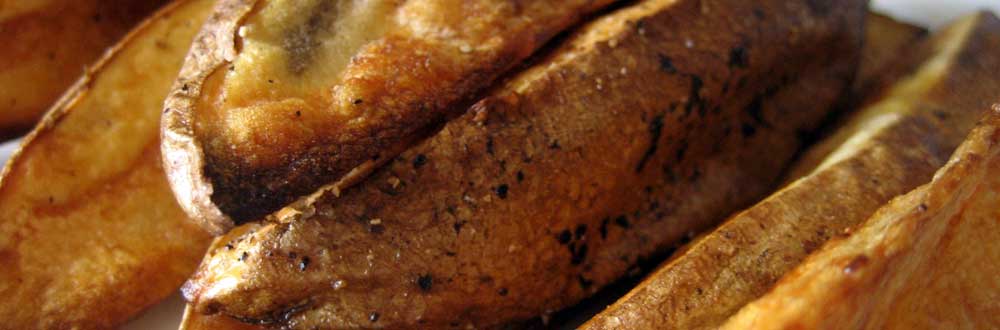
If you’ve eaten crispy chicken, you might also have had jo-jo potatoes. Speaking of chicken, ever wonder why colonel isn’t pronounced KOH-loh-nell? Grant and Martha have the answers to those nagging little questions, like the difference between a turnpike and a highway and the rules on me versus I. Who’s behind eponyms in anatomy and why are doctors phasing them out? Plus, a newsy limerick challenge, dog breed mashups, pallets, a little Spanglish, and enough -ologies to fill a course catalog! This episode first aired December 10, 2011.
Transcript of “A Murmuration of Starlings”
You’re listening to A Way with Words. I’m Martha Barnette.
And I’m Grant Barrett. Martha, how about a quiz?
Bring it on!
All right! I knew you’d be game for this.
Okay.
And it plays to your strengths, and that’s a clue on the answers, okay?
My strengths. Which ones are the…
Your classical training. We all know that theology is the study of God and religion, right?
Right, right. From the Greek for God, yeah.
Okay, but what is aletheology?
Aletheology.
A-L-E-T-H-I-O-L-O-G-Y. Aletheology.
Okay. I’m betting that’s the study of truth from Greek aletheia.
Yeah, very good. Exactly right. The study of truth. It’s the kind of thing that you might do in philosophy.
Okay. I’ve got a couple others. They’re vaguely related. See if you can get these as well.
Okay. These are other ologies?
Other ologies. They’re all ologies. What is naology? N-A-O-L-O-G-Y. Naology.
Oh, I should know that.
Nailogy.
The study of people who say no.
The study of horses.
No.
The study of…
No, no.
Very far.
Cold, cold.
Very far away.
It’s the study of holy buildings, like churches.
Here’s one more.
Okay.
I’m not sure I’m pronouncing this correctly, but it’s hamartiology.
H-A-M-A-R-T-I-O-L-O-G-Y.
I’m all too familiar with that.
That has to do with sin, right?
The study of sin, right?
You’ve got to pull out your St. Augustine for that.
What is the nature of sin?
I’ve got a ton of ologies.
We’ll talk about more of them later in the show.
All right.
That sounds great.
Lexicology, dialectology, whatever your ology, give us a call, 877-929-9673,
Or email us, words@waywordradio.org.
Hello.
You have A Way with Words.
Hello.
This is Trevor Fritz in Juneau, Alaska.
Hi, Trevor.
Hey, Trevor.
What’s up?
Well, you know, I was hoping you guys could tell me a little bit about the etymology of the word jojos.
Jojos?
Yeah, jojos.
You know, it’s the term for fried potato wedges.
You’d see it on your deli menu at, you know, any grocery store.
In Alaska or elsewhere or anywhere?
You know, I haven’t seen it anywhere else.
Having asked other people, I’ve heard, you know, it kind of varies across the Pacific Northwest,
Whether they’re called JoJo’s or just potato wedges.
And, you know, I never really gave it much thought until I’d had a co-worker for a summer job up here.
I’d mentioned I had JoJo’s for lunch and looked at me quite confused.
And after, you know, explaining what JoJo’s were, you know, the girl kindly asked me,
Well, why are they called JoJo’s?
When I came to think of it, I just couldn’t figure out why.
All right.
This is our kind of puzzle.
Yeah.
So how are you spelling this?
You know, I think it’s spelled J-O dash J-O.
I think I have an answer for you, Trevor.
Oh, yeah?
Yeah, what’s that?
Well, it’s based upon the work of two people that I know.
Sam Clements and Barry Poppock have both looked into this word.
Sam frequents the straight dope message board,
And they’re always trying to get to the bottom of people’s claims and truths and fictions.
And Barry Poppock is a fairly well-respected historical etymologist.
He tries to find the origins of words, and he specializes in food words.
And on his website, BarryPoppock.com, Barry has an entry for JoJo’s,
And he’s got this document that I love.
It’s a letter from a fellow from a company called Flavor Crisp.
And this guy, Brad French, claims that JoJo’s came about in the 1960s.
The company that he now works for had a product line of restaurant equipment called Flavor Crisp.
Now, they would fry chicken and fish, and they would do this at fairs.
And in order to clean the oil, this is the part I don’t quite understand.
Apparently, they would just throw potatoes in there to kind of like clean the oil in between bouts of frying chicken and fish.
And they would usually just throw them out.
But one day, supposedly, they accidentally put the potatoes up on the counter where people could sample them.
You know, at the trade fairs where the restaurateurs are coming through and figuring out what equipment they’re going to buy.
Yeah.
You know, to see how the equipment works.
And people started eating them.
And then what they called them, here’s the thing, is what they called them was just junk.
That’s what they called them.
They called them junk potatoes.
And so when somebody came through and said, oh, these are great.
What do you call these?
They’re like, JoJo’s.
I call them JoJo’s.
Now, the story is a little too pat for my taste.
Usually when I find a story that’s kind of like so perfect like that, it’s probably fake.
Right.
But it kind of jives with what we know.
Sam Clements has found mention of JoJo’s in newspapers from the 1960s.
A lot of different places.
It shows up in Minneapolis and Maine.
It shows up in the Northwest.
A lot of people claim it’s a Northwestern term, but I don’t see any.
I never heard it growing up in the South.
Yeah, I don’t see any.
It’s certainly a definitely more northern and not southern term.
But this guy, Brad French from the Flavor Chris Company, he’s got this story in it.
It sounds pretty good to me.
Wait, were the fried potatoes named after him?
Who?
Brad French.
No.
The smaller one.
No, he’s alive now.
So he was not with them in the 1960s, but he works for the company now.
So he said they found out that if you quartered a russet potato, you could cook it with the chicken and they would be done at the same time.
And that was the secret.
So that you cook your side with your entree together and serve them all at once.
So you don’t have this whole delay about one thing getting cool while the other one was still cooking.
I’m salivating over here.
Yeah.
Anyway, it sounds like a really good story to me.
But again, they show up in menus and in newspaper reviews of restaurants starting in the 1960s again and again and again.
Throughout the northern part of the United States.
Again, Maine and Minneapolis and Washington and Utah and Idaho and those kinds of places.
You know, there’s one more thing in this letter from this fellow from this Flavor Crisp company.
He says that the reason that they’re so successful, he believes, is because on the outside they’re textured like a french fry, but on the inside they’re textured like a baked potato.
Yeah, I think that’s what really stands out about them to me.
It’s not a bad theory because you’ve got these competing textures, right?
Oh, that sounds so good.
And spices.
Wait, are there spices?
What spices?
Oh, yeah.
I’m not sure what kind of spices they use here at the deli, but it’s good.
In a couple of the recipe books and cookbooks, you’ll find they describe using paprika or maybe a little chili powder or salt and pepper, that sort of stuff.
Oh, gosh.
That sounds great.
Thanks a lot, Trevor.
Food.
Thanks for tackling that one for me, guys.
Food and words.
We love it.
Thanks for calling, Trevor.
Really appreciate it.
All right.
Well, you guys have a good day.
Bye-bye.
Okay.
Take care.
Bye-bye.
You think they serve JoJo’s at HoJo’s?
They might.
We should find out.
By a guy named Mojo.
And actually, apparently Mojo is another name for these.
Oh, really?
The Shakey’s chain of restaurants serves them and calls them Mojos.
But that’s not nearly as old as the JoJo’s term.
So if you want more, it’s Mo-Mo-Jo’s?
Yeah, exactly.
Or Mo-Jo-Jo’s.
JoJo, I’ll have some more Mojos.
Food and language.
How could it be better?
Grant, I have an ology for you.
Okay.
It’s parasology.
The study of Paris.
The study of peristalsis.
The study of people who walk.
The study of pears.
P-E-A-R-S?
No, actually, this is a terrific example of parasology.
It’s spelled P-E-R-I-S-S-O-L-O-G-Y.
It’s the study of proverbs and sayings?
No, no, no.
Parasology is a superfluity of words, an overabundance of words.
You mean like 54 minutes once a week?
Yeah, I don’t know why I thought of that.
But yeah, it comes from a Greek word that means redundant.
Parasology.
What’s your ology?
877-929-9673 or email words@waywordradio.org.
Hello, you have A Way with Words.
Good morning.
This is Marita calling from La Mesa, California.
Hi, Marita.
How are you doing this morning?
Hi, Marita.
Hi.
I’m doing really well.
What can we help you with?
Well, you know what?
I am an eighth grade teacher, and my students and I are reading the novel Johnny Tremaine.
And they asked why we pronounce the word kernel as if it had an R in it.
And calling you was a lot more fun than looking it up in Google.
Are you sure?
You got that right.
Because, you know, there are cat videos on Google.
Did you see those?
No.
All right. Well, yes. What is the question?
Yes. So why do we pronounce colonel, which is spelled C-O-L-O-N-E-L, with an R sound?
Great question. We get that question a lot. And let me see if I can try to explain it.
Marita, picture an army marching in formation. Okay. They’re all in one long column.
Oh, okay.
Okay. Now, in Italy, the word for that military column was colonna.
And the officer who’s in charge of that column of soldiers, the commander there, is the colonnello.
Okay. He’s the commander of the colonna.
Oh, okay.
Are you with me so far?
Now, the word for this officer at the head of a column of soldiers moved into French,
And there it began to sound more like coronel rather than colonnello.
And you can have your students do this maybe.
Have them pronounce colonel really fast or colonelo really fast ten times.
If you do that colonel, colonel, colonel, it’s the R kind of intrudes in there sometimes.
That would be a good exercise for your eighth graders.
Have them practice that.
And so originally it came into English as coronel from French with that R sound.
And it was spelled a lot of different ways, but C-O-R-O-N-E-L was a standard spelling and a standard pronunciation.
But what happened in the 16th century is that a lot of people in England were doing translations of Italian military manuals,
And they saw the more etymologically correct term colonnello, and so they changed it in writing anyway to C-O-L-O-N-E-L.
So those two terms existed side by side, coronel and then the word with the L, but they were pronounced the same way.
Yeah, this kind of confusion of the R and the L happens again and again in a variety of languages, not only in French and English, but in Italian as well.
And it’s called dissimilation.
It’s because out of all the sounds that our mouths can make in English, the L and the R sounds are actually really difficult.
And so we tend to either leave them out or substitute the L and the R for each other.
It happens to a wide variety of speakers in a wide variety of languages.
Yeah, like the word pilgrim comes from the Latin peregrinus, and it’s that L-R thing again.
Very interesting.
Well, I’ll have a great time sharing this with my students.
Excellent.
Yeah, if you want a little more information about it, just Google linguistic dissimilation,
And you’ll probably come up with some very good resources.
Yeah, or just have them say colonnello ten times really fast.
That works, too.
That sounds more fun.
Thanks, Marita.
Thank you.
Bye-bye.
Take care. Bye-bye.
Bye.
Martha, I did not know that you were a military expert.
I’m not.
I play one on the radio, but I am most certainly not.
877-929-9673, words@waywordradio.org, and find us on Facebook and Twitter.
Grant, remember that show where John Chaneski gave us a quiz about names for mixed breed dogs like Cockapoo?
And Nabberdoodle and things like that.
Yeah, Maltipoo.
We got an email from Judy Hendricks.
She’s in Grayslake, Illinois, and she was telling us about her own dog named Josie.
She’s a half-Shelty, half-Cocker.
That would be a Shocker.
Nice.
And then she added in the email, but I met a Dashboard, a Dachshund Border Collie at the dog park.
So it’s a dachshund border collie.
There’s not something else in there?
Where’s the S-H come from?
Dachshund.
Dachshund border collie.
Oh, I see.
Very good.
Dashboard.
These are a little out of hand.
I know.
Whatever happened to mutt?
Call us with your language questions, 877-929-9673.
Or you can email us, words@waywordradio.org.
Next up, the weekly word quiz and more of your language questions.
Stay with us.
Support for A Way with Words comes from the University of San Diego,
Whose mission since 1949 has been to prepare students for the world as well as to change it.
More about the college and five schools of this independent Catholic university at sandiego.edu.
You’re listening to A Way with Words. I’m Grant Barrett.
And I’m Martha Barnette, and we’re joined now by our quiz guide, John Chaneski.
Hey, John.
Hi, Grant. Hi, Martha. How are you guys?
Hey, buddy. What’s going on?
Well, this is a very simple puzzle, but I wanted to do something cheerful.
Simple quizzes usually cheer you up, Grant. Isn’t that true?
I’m a simpleton. I’m easy to please.
That’s right.
Now, the answers to each of the clues I’m going to give you start with the word happy.
Happy.
Happy.
Okay.
For example, if I said, this phrase might describe someone who managed to successfully erect a tent.
You might answer?
Happy camper.
Happy camper, right. Nice and easy.
Okay, yeah.
Let’s begin.
All right.
Right. This two-word phrase describes a situation in which an unexpectedly good result occurs from what might otherwise be perceived as a mishap.
Happy ending.
No.
No?
That’s no.
Happy chance?
Happy accident.
Right. Happy accident. Happy chance is another version, I guess, but yeah, happy accident.
I like happy accident. Yeah.
Here’s the next.
This is the nickname of Zeriera Hollander, as derived from the title of her best-selling 1971 memoir.
The Happy Hooker.
Happy Hooker is right.
Or perhaps someone who creates rugs and is very glad about that.
Crochet.
I used to do that.
This four-word simile presupposes that bivalves are, by nature, quite cheerful and content.
Happy as a clam.
Happy as a clam.
Very good.
We’re zipping through these.
In this 1996 sports comedy film, Bob Barker beats the crap out of Adam Sandler’s title character.
It’s Happy Madison, is that it?
No, it’s a different one.
That’s a mix of his titles.
I have no idea.
He’s a hockey player turned golfer.
Happy.
I forget the name of it.
Happy.
I don’t remember.
I’ll give you that one.
It’s Happy Gilmore.
Happy Gilmore.
There we go.
Now let’s see how much you know about music.
This is a type of dance music typified by a very fast tempo coupled with solo vocals and sentimental lyrics.
Really?
Yeah.
I don’t know.
Happy chant?
Happy trance?
Happy.
No, but.
Happy drum, happy beat, happy techno, happy jungle.
No.
But I like that you know.
Happy house, happy.
Happy hop.
No, but without the word happy, it’s a word that means very intense, sort of like a gamer.
You might call someone, if someone’s a video gamer and they do it all the time, you say that they’re very this.
Or if they’re a punk rocker, you say, man, that guy’s—
Hard?
Yeah.
Happy hardcore.
That’s it.
Happy hardcore.
Oh, yeah.
I did not know that one.
No idea.
Very good.
Wow.
Happy hardcore.
Let’s move on.
Now, literature.
In the first line of Anna Karenina, Tolstoy said, these were all alike.
But that every unhappy one is unhappy in its own way.
Happy families.
That’s right.
Every happy family is alike, but every unhappy one is unhappy in its own way.
Isn’t that on a Chinese menu too, happy family?
That’s right, yeah.
Ants crawling up a tree and I don’t know.
I don’t remember what it is.
It’s some sort of combo meal.
We used to actually go to a local Chinese place near us that was called happy family.
We loved it.
Here’s the next one.
This one’s a little easier.
Television.
This show inspired several spinoffs, including Laverne and Shirley and Mork and Mindy.
It wasn’t happy nights.
No.
It was happy days.
Happy days.
Happy days is right.
Nice work, guys.
That’s the puzzle.
Thank you very much.
Happy to have you here.
Happy to be here.
I’ll see you next time.
Well, if you’d like to talk about nouns, verbs, slang, punctuation, or words and how we use them, call us.
We’d be happy to hear from you.
Hello, you have A Way with Words.
Hi, Martha. Hi, Grant. This is Angela from Shell Lake, Wisconsin.
Hi, Angela. Welcome to the program.
Well, I’m originally from Texas, and I come from a very large family.
And we were always having sleepovers as kids, cousins coming over.
And whenever one of my cousins would spend the night,
We would make a pallet for them on the floor for them to sleep on.
And the other day I was with a group of friends here in Wisconsin,
And I mentioned that I put a little boy that I was babysitting on a pallet.
To sleep. And they looked at me puzzled and asked what I was talking about. I said, you know, a pallet, you know, when you sleep on the floor with blankets. And none of them knew that definition for the word. They had only heard of shipping pallets, and that’s why they were looking at me puzzled. They thought I was putting the little boy on wooden boards for his nap.
You’ll never get another babysitting gig.
Yeah, really?
Right. Well, that might be a good thing, though. This word was so common for me growing up that I never imagined that someone would not know or use it in this sense. And my husband, who has lived all over the U.S., said he knew what it meant but had not used it himself.
So I was wondering if you could please let me know in what areas this word is used regularly and in the areas that it is not used, what do they say? Because when I asked my friends about it here, they said they just say put blankets on the floor.
Right, yeah.
Yes, definitely not used very much in Wisconsin, is it?
No.
What part of Texas do you come from?
I’m mostly from around the Dallas area.
Okay, very good. I grew up with pallet as well, and I remember it. We had five kids in my family, and when the Barretts came over, you know, and they were going to spend the night, it was always a big to-do because seven total family members, where are you going to find them a place to sleep? And at one of my grandmother’s house, inevitably, I would end up sleeping under the dining room table because it was the only place for me, right? Like in between the chairs.
You wouldn’t be stepped on.
Yeah, and I wouldn’t be stepped on. Well, sometimes there’d be a poker game going on on the table above me. But I would be sleeping on a pallet, which would be blankets, a layer for softness, right? And a pillow if there was a spare one, and then a blanket on top of you.
So, yeah, sure. Pallet’s very familiar. If you look at the map in the Dictionary of American Regional English, you will be pleased to find that this word is mostly common in what the dialectologists call the South Midlands. This basically means Tennessee, Kentucky, and Missouri basically kind of is the northern border, but not very much in the north at all. North of Missouri, not really. North of the Ohio River Valley, not really. Not very much in the west. Certainly very little in the Northeast. So it’s the southern states. That’s the, you know, Texas and Louisiana and Oklahoma and Georgia and so forth.
Well, it’s interesting because my first exposure to it was going to Southern Baptist Church when I was little. And in the book of John, I think it’s the fifth chapter, there’s a famous story about a guy who’s been incapacitated for 38 years. And Jesus says to him very famously, pick up your pallet and walk. And that’s just burned into the memory of a lot of people, I think, in the South in particular. And so this kind of underscores the background of this word. It comes from older French words meaning straw or straw bed. It has to do with literally making a bundle of straw. Sometimes you would twist it a little bit or kind of push it together the way that you might put a deck of cards together so that it kind of interleaves. And so you get something firm and you won’t fall through the straw to the floor. But that’s your palette. That was the old style pallet. And, of course, we don’t really have straw much these days, so we use blankets and quilts and so forth.
So, Angela, you’re not a big weirdo.
Oh, wonderful. I guess it would depend who you ask, though.
No, yeah, pallet’s great. And I think, for me, it definitely brings memories, strong memories of family get-togethers, of that feeling of kind of making do when you’re a kid. It’s always kind of, there’s a novelty.
Yeah, there’s a novelty to it.
Oh, it’s almost like camping in the house. There’s something really pleasant about it.
Yeah, put a blanket over the chairs.
Yeah, building a pallet and having a sleep in a strange place with strange family around you. It was good.
That’s cool. All right. Thanks for calling, Angela.
Well, thank you. You guys have a wonderful day.
You too.
Bye-bye.
Bye-bye.
877-929-9673, words@waywordradio.org, and ask us on Facebook and Twitter.
Hello.
You have A Way with Words.
Hi.
It’s Art from Phoenixville, Pennsylvania.
Okay.
Well, north of Philadelphia.
Yeah, yeah, yeah.
Cool. Welcome to the program.
Thank you. What would you like to talk with us about?
I have recently reawakened the whole I versus me and me and my friends or my friends and I kind of a pet peeve. It came about because of my daughter. It’s a high school senior, and she was talking at the dinner table and said something like, me and my friends are going to the movies on Friday or something like that. And my mother-in-law sitting there says, you should say my friends and I. And, of course, my daughter goes for the eye roll and says, yeah, whatever, and continues on with the story. Meanwhile, I was cringing because I know my mother-in-law is right. But on the other hand, I never really got this rule. And my solution has always been, oh, don’t even bother saying it. Change the whole sentence around to not have that question in your head. On Friday, I’m going to go to the movies with my friends. Something like that.
And so I was trying to get that cleared up, and I also have always been wondering about why do we have all these stupid kinds of rules? Because especially in this case, everybody knows what my daughter meant. There’s no loss of meaning, right? There’s no gain of meaning. It’s just there’s the right way and the wrong way. And why do we need that kind of rule? Now, obviously, there’s lots of rules you do need because the meanings change when you use it the wrong way.
Right. What a big question that is.
How many hours do you have, Art?
Yeah, I know. I was realizing that I opened up this Pandora’s box earlier. Well, let’s talk about a hypothetical situation. Let’s suppose that either one of those could work, right, and that nobody really cared what somebody said. My friends and I are going to the movies. My friends and me are going to the movies. Let’s say that nobody really cared or that you just said that the standard way and the only way is to say, my friends and me are going to the movies and just forget the I, right?
Yeah. The difficulty with this is that we would lose some of the pragmatics of English. And by pragmatics, I mean there are times and places where certain kinds of English works better than it would in other kinds of times and places. So in this particular case, your mother-in-law was telling her that there’s a better way to say it. But what she was talking about was the formal, utmost perfect way to say it. And the young woman was using the very informal way to say it. They are both English. They are both allowed in English. The thing is they’re allowed in different circumstances. And the main key difference between them is the level of formality.
Language works in service of culture. And if, for example, we all spoke informal English and there was no such thing as formal English, we would reinvent it. Because our culture requires that some way, somehow, we express that there’s more deference required, that there is more respect paid, that the occasion is important, that the person that you’re talking with has higher status. We would reinvent it. You know, I think about it in terms of dress. I think about, if you say me and my friends are going to the movie, linguistically, I think you’re wearing a sweatsuit. You know, as opposed to looking a little bit more paquete, as they’d say in Spanish, a little bit more put together.
And you’re right. Of course, it depends on the context. And we all did learn different ways. I mean, I didn’t learn until I was in my 30s or so that you’re not supposed to mention yourself first.
Oh, interesting. I’ve never heard that.
Oh, really?
No.
Yeah, I think you’ll find some older sticklers will say you should never mention yourself first. You should mention your friends.
And it’s just sort of this humanizing deference to other people.
So to go back on this, there’s another thing at play here, too.
Not only would we reinvent these different formal levels of English if they didn’t already exist, but there’s also a time and a place for correcting people.
And maybe it’s okay for the mother-in-law to correct her granddaughter.
Maybe that’s fine.
Right.
I mean, at the dinner table, I mean, you have to have a minimum number of eye rolls by the teenager in every meal, right?
Or else it’s not a meal.
The turkey doesn’t taste as good unless there’s eye rolls to go with it.
It’s like a seasoning.
So I think we’ve gone a little way to answering what is a very convoluted and complicated question.
Your question, if I can restate it, was why do we have this?
Why do we have these different kinds of English?
Do we really need them?
Isn’t it okay just to be informal all the time?
Is that a fair restatement?
Yeah, and who’s the keeper of the rules is kind of mind-boggling.
Because I actually wonder if this is something that, this particular thing is something that is changing.
Because it seems like I hear that usage from younger people much more.
I would say it’s on its way to changing, but I sure wouldn’t teach it at this point.
If you paid me or hired me to help you improve your English, or if someone did, I would always make sure that you knew the difference, that you understood what was happening when you spoke formally and informally.
That’s the key.
Both have to be explained.
Thanks, Art, for calling.
Let us know if this helps around the dinner table.
This is a source of conflict.
All right.
Bye-bye.
Bye, Art.
Thanks.
Call us with your language questions, 877-929-9673, or ask an email, words@waywordradio.org.
I tested you on alethiology earlier and you got it right.
It was the study of truth.
How about this one?
Okay.
Kallology.
K-A-L-L-O-G-Y.
Kallology.
Is it the study of the good, the beautiful?
The beautiful, the study of beauty.
So now we have the study of truth and the study of beauty.
Right, right, right.
Yeah, yeah.
Kalimera in Greek.
Good morning.
Beautiful morning.
Beautiful morning.
Excellent.
Email words@waywordradio.org and find us on social media, Facebook, Twitter, so forth.
Hi, you have A Way with Words.
Hi, my name is Kelsey and I live in Juneau, Alaska.
And my question is, what is the origin of the term turnpike and where in the country is it most commonly used?
Well, what got you to thinking about turnpike there in Juneau?
Do they have them in Juneau?
They do not.
And I was actually discussing it with a friend of mine about, because I actually was born and raised in Alaska, and there’s very little roads here.
And I actually don’t even really know what a turnpike is, or basically I don’t know what the difference between a turnpike and a highway is.
Because here it’s all, you know, all of our highways are either named or, in Juneau specifically, we only have 40 miles of road.
Okay.
Yeah.
We can help with this, Kelsey.
Let’s go back to about the 1700s when the United States was expanding at a rapid pace.
Lots of people were pushing westward and roads were being built.
In the beginning, most of those roads were privately funded.
It wasn’t like today where most roads are public roads.
And so these companies would form and they’d build these roads to connect important commercial centers.
And in order to make the roads attractive, they would make them less bumpy.
They would put down wood planks, perhaps, or do something to remediate the mud, because that was a problem with roads prior to putting down macadam or asphalt, as we would today.
They tended to be a mess most points during the year.
But in order to fund these roads, they had to raise money, and they would charge tolls.
Now, to charge the tolls, they had to have some way to regulate who came on and off of these roads, right?
And so imagine the turnstiles kind of like you would see at an amusement park or even better, the vertical ones that you would see in the subway in New York City.
Maybe that’s not going to mean enough to everybody, but it’s a central pole standing upright and on the pole are arms kind of left and right.
And so to get that turnpike to turn, you got to pay a toll.
Those arms that stick out, they look exactly like the pikes that soldiers would use.
They’re basically kind of like a spear.
They have a sharp end and you poke things with them.
A pike is a long pole with a sharp end that you can stab somebody or something or an animal with it.
And so the pikes literally turn.
They literally turn to give you access to this road.
For the most part, you’ll find turnpikes only in the eastern part of the United States, particularly in the northeast.
Because it wasn’t one of those things that was particularly common elsewhere once other means of making roads became available.
Basically, a lot of these companies went bust because it actually was really hard to keep people off the roads.
And a lot of people just preferred to take the old, muddy, bumpy road that they didn’t have to pay for, which, by the way, came to be called freeways because they were literally free.
You were free to access them and they didn’t cost you anything.
That is cool.
And so turnpikes, you don’t really see that anywhere else but like the Northeast?
It’s almost always in the Northeast, yeah.
As a matter of fact, I don’t know if there are any places west of the Rockies and maybe west of the Mississippi where there’s a turnpike.
I could be wrong.
We’ll find out if that’s the case.
Believe me.
The email will come pouring in within seconds.
One, three, two, one.
There we go.
Hey, Kelsey, thanks for calling.
Oh, thank you.
Thanks for talking to me.
Thanks, Kelsey.
Bye-bye.
Take care.
Have a good one.
Bye-bye.
Call us with your language questions, 877-929-9673.
We will answer them free of charge.
Coming up, anatomy eponymy, the words we use to describe our bodies. Stay tuned.
Support for A Way with Words comes from National University, where flexible online classes let you earn your degree or credential on your schedule. More at nu.edu.
You’re listening to A Way with Words. I’m Grant Barrett.
And I’m Martha Barnette.
If you’ve ever had a youngster with an ear infection, then you know the term eustachian tube.
It’s what we call an eponym, one of those words that come directly from the name of a person.
And that little passageway in your ear, the eustachian tube, is named for Bartolomeo El Stocchio.
He’s the 16th century Italian who supposedly discovered it.
Chances are you know a lot of anatomical eponyms.
Fallopian tubes. They’re named for another 16th century Italian guy, Gabriello Fallopio.
And then there’s your Achilles tendon and your Adam’s apple.
Both of those are epinems because they derive from someone’s name.
But what I didn’t know until recently is that there’s a movement among professionals in the field of anatomy to get rid of epinems altogether.
The idea is, let’s forget the person who inspired the name for this or that body part, and instead let’s replace it with a term that’s purely descriptive.
So, for example, these days, a lot of anatomy students aren’t taught that it’s the eustachian tube.
It’s now the auditory tube.
And those aren’t fallopian tubes anymore.
They’re the uterine tubes.
It’s not your Achilles tendon.
It’s your calcaneal tendon.
And it’s not even your Adam’s apple anymore.
That’s your laryngeal prominence.
And I find this fascinating.
Apparently, these changes are being pushed in part because the newer terms are more specific, and they’re easier to teach to students from all over the world, and they’re more accurate.
I mean, we don’t really know if Eustachio is the guy who discovered those little ear tubes.
He might have just been better at getting publicity for his work.
And I’ve been thinking about all of this because of a conversation Grant and I happen to have with a professor of anatomy and physiology here at San Diego’s Miramar College.
Dr. Kevin Petty told us that in 20 years of teaching, he’s seen undergraduate anatomical texts go from being full of eponyms and then later listing both the eponym and the new term and now not even listing the eponym at all.
And, of course, Grant and I were nerdy enough to get really excited about this conversation, remember?
Yeah.
Because it’s such a great instance of watching language shifting right beneath our feet or right beneath our calcaneal tendons and metatarsals and all that.
I mean, it’s really a fascinating moment, right?
Yeah, it could take decades or even generations to go from one set of terms to another set of terms, right?
Yeah, and I think there’s a certain amount of loss when you lose those historical figures.
The old terms are colorful, and yet I appreciate the fact that you need something more descriptive to communicate to people who might not understand the history of those words.
Let’s face it, fallopian is a little opaque unless you know the history behind it, right?
Yeah, yeah, but I think there’s this whole generation.
Well, there are many generations of people who understand that term, but that’s not going to be the case in the future.
I don’t think that they’ll disappear.
They’ll always remain in the text some way.
They’ll be in a glossary.
There’ll be some kind of cross-reference.
They’ll always be there.
A little footnote, a little asterisk.
Tell us how the language of your profession has changed or is changing.
877-929-9673 or words@waywordradio.org.
Hi, you have A Way with Words.
Hi, this is Anthony.
I’m calling from Salt Lake City, Utah.
Hi, Anthony.
Welcome. Hey, what’s up? I had a question from my younger days when I was in high school. We used to use a bunch of different Spanglish words. Our money was fedia and our cigarettes were frajos, mostly because you could ask your friend if they had a frajo in class and the teacher would have no clue what you were talking about.
And Anthony, where did you grow up? Pueblo, Colorado. Okay. So I moved away from Pueblo, and I moved to Salt Lake City, and every so often one of my friends would ask me for a frajo. So eventually I asked them if they had heard the word said by someone else or if they were just repeating what I said, and I said, no, you’re the only person that we’ve ever heard say frajo.
Interesting.
But we know if we ask you for one, we’ve said the secret word, and you’ll give us one.
And they’ll get one.
Spongers.
So you hang out with a bilingual Mexican-American crowd probably, right? Or at least, if not bilingual, they’ve got some Spanish in their vocabulary.
I don’t think any of them spoke it fluently.
It was just more for fun.
I know that in parts of Colorado, there are still families who’ve been there for hundreds of years, and they’ve passed on some interesting forms of Spanish throughout the decades.
Does that describe you at all?
Well, I think most of the words came from one of our friends’ stepfather, who would just, when he was enjoying himself in the backyard, start to say a bunch of words that we had no clue what they meant until we asked him.
So he’s got a barbecue going and a beer out, and he’s kind of like just feeling his oats and having a great time, and he starts throwing out the slang from his youth?
Right.
This word has been collected numerous times over the decades since the 1950s by people who were studying the language of Mexican-Americans.
So people typically from the north of Mexico who came to the United States for work or to join their families here.
They raised kids here, and the kids speak an interesting, or did speak an interesting mix of English and Spanish.
Not quite Spanglish.
It was just a good vocabulary enrichment, let’s call it.
So English with a heavy dose of some Spanish slang.
And Frejo, or Frajo, F-R-A-J-O, appears again and again on these lists from Texas and California and Colorado and some other places.
It’s one of these words that’s just typical of these young people.
Pachucos, they were sometimes called.
Sometimes referred derogatorily as the zoot suitors in the 50s and the 60s.
Yeah, they dressed really sharp.
Yeah, and it was heavily associated with the fancy car culture and certain kinds of dances and certain kinds of music.
And so this word is very typical of this group.
It even appears in some songs from the 50s and 60s.
I love the word.
Now, where it comes from, this is a bit of speculation, but more than one source suggests that it comes from a Spanish verb, F-A-J-A-R, fajar, which means, among other things, to put a wrapper on or to put a belt on.
Now, in the 50s and 60s, a fajar was just a cigarette, a tobacco cigarette.
But over the decades, it’s migrated slowly.
So if you hear somebody use it today, they probably mean a joint or a marijuana cigarette and not a tobacco cigarette, particularly in California.
And what’s really interesting, so they’re suggesting that fajar, which means to put a wrapper on or to roll up, was transformed suddenly to a new verb, fr.
The r was inserted, f-r-a-j-i-a-r, which means, again, to roll or to wrap up, frajiar, right?
And then that in turn became frajo, which is a thing that was wrapped up.
So one verb turned into another verb, which turned into a noun.
Now if we go back to that original verb, fajar, it’s probably connected with fajida, which is a word that most of us know.
A fajita is a little belt.
It’s something small that’s wrapped around something else.
Well, Anthony, does that help?
It does.
We weren’t ever quite sure whether the old man in the backyard was just making stuff up to toy with our heads or actually using stuff from his childhood.
Mm—
Well, now you have the answer.
Sweet.
Sweet.
Thank you so much.
More than you ever wanted to know.
Thanks for calling, Anthony.
Really appreciate it.
Awesome.
Bye-bye.
Thanks. Bye-bye.
Call us with your language questions, 877-929-9673, or send an email to words@waywordradio.org.
Grant, there’s an amazing new video making the rounds online.
It was filmed by a couple of women who just happened upon a huge flock of starlings in the sky.
Have you seen this?
I think I heard about this.
This video goes on for a couple of minutes, and it’s just mesmerizing.
There’s this huge flock of birds, and it twists and turns and changes shape.
It’s sort of like, I don’t know, nature’s ornithological lava lamp.
Oh, nice.
It’s just fantastic.
And because of that video, I learned a new word.
I learned the English collective noun for starlings.
Which is?
No, I don’t know what that is.
Well, you know, we have an exaltation of larks and a clowder of cats.
A flock of starlings, just for the record, is a murmuration.
Oh.
Isn’t that nice?
That’s nice.
You murmuring over there?
I am murmuring.
It’s from the Latin murmuratio, which means the continuous utterance of low cries, muttering, grumbling.
Isn’t that, it’s so picturesque and sensuous with the sound, a murmuration of starlings.
Well, we’ll link to that video on our website, along with an article in Wired magazine, explaining just how a murmuration of starlings does what it does.
So go to waywordradio.org.
Hello, you have A Way with Words.
Hi, this is Emily from Powell, Wyoming.
Hi, Emily. Welcome to the program.
Hi. A few years ago, I received an email from Miriam Webster’s Word of the Day, and it was basically describing a word that meant a backhanded compliment.
And I quickly deleted the email because I was overwhelmed with my inbox and regretted it almost immediately because I kept hearing instances that kind of was what this word described.
And I wondered what the word was.
And so I was just wondering if maybe you know.
Do you remember at all what it sounded like or what it looked like or anything else about the word?
That’s the only thing I could remember was basically how I thought it was pronounced, which to me looked like it could have been pronounced latatis, but I’m not sure.
And Googling that didn’t really help.
Oh, okay. Well, I think we can help on this one.
And I wouldn’t say it’s exactly a backhanded compliment, but the word that you’re probably thinking about is latatis.
It’s pronounced a bunch of different ways, but it’s spelled L-I-T-O-T-E-S.
Does that sound about right?
Yes, that sounds exactly like what it could be.
All right.
And laetites, it’s not exactly a backhanded compliment, as I said.
It’s sort of a figure of speech that’s a kind of understatement.
Like if I said, oh, how was your trip to the park? And you say, well, not bad.
Instead of saying, oh, it was good, you say, not bad.
Something like that.
Strikes me as particularly British.
Right, right.
Or if somebody’s trying to set you up with somebody on Match.com and they say, but, you know, he’s really not unattractive.
Right, right.
You know, that’s an example of litotes.
And it’s pronounced lots of different ways.
I think you say it differently, don’t you, Grant?
There’s a litotes.
The dictionaries have several different pronunciations.
I don’t know what the split is.
It’s probably whether or not you have classical training like Martha does or not.
Yeah, yeah.
It comes from the Greek word that means plane.
P-L-A-N-E, P-L-A-I-N.
They didn’t have planes back in ancient Greece, Grant.
Well, that’s something horizontal.
Something flat and horizontal.
P-L-A-I-N.
You know, just sort of plain.
Not bad.
Not bad.
Okay.
So that’s the word.
So not bad, huh?
That’s great.
My mom’s been asking me about this for years, ever since I told her there was a word for it.
Oh, really?
Well, one little note about litotes, which is really interesting, it’s one of the classical terms of rhetoric.
So when you encounter it on the Internet, and again, it’s L-I-T-O-T-E-S,
You’re going to find all these other really interesting words around it.
Where people are explaining the classical terms of rhetoric.
And all these different modes that we use when we speak.
To suggest meaning without actually explicitly saying meaning.
So it keeps good company, that word.
That’s very interesting. Thank you.
Oh, sure. Yeah. Thanks for calling, Emily.
Thank you.
All right. Bye-bye.
I’m looking forward to your show.
Thank you.
Thanks, Emily. Bye-bye.
words@waywordradio.org or 877-929-9673.
Okay, Grant, here’s an ology for you.
What is uredinology?
Uredinology.
Can you spell that?
U-R-E-D-I-N-ology.
Uredinology.
Is it about the spectrum of light, perhaps?
No?
Or is it about…
It’s the study of rusts.
Of rusts?
Yeah.
I could see how in engineering you would need to know at what point, you know, what humidity things rust, right?
I guess so, unless it’s the study of rust molds.
No, no, that’s uranology.
Oh, interesting.
Uranology.
There’s so many ologies.
There’s so many ologies.
Call us with your ologies, 877-929-9673.
Email us, words@waywordradio.org.
Hello, you have A Way with Words.
Hello, Grant.
This is Lance in San Diego.
Hi, Lance.
How are you doing?
Hello, Lance.
We’re good.
Welcome to the program.
I have a question for you.
I was just wondering how the words nuts, nutty, and nutcase and the like come to mean people of questionable sanity in addition to the healthy proteins that grow on trees.
So nutty, nutcase, nuts, why do they all mean of questionable sanity?
That’s a really good question.
It’s a great question.
And to get this answer, we have to plumb the depths of history.
There’s kind of a tangled path here for each one of these terms.
Surprisingly, nutty, the adjective, is a little older than the other ones.
But let’s start for a second with nut.
By about the early 1600s, it started to mean something that was easy or pleasing or delightful.
And then just a little bit later, it starts to mean a person who likes a thing that is easy or delightful, right?
And then a little bit later, it starts to mean a person who not only likes something, but is a little obsessed about it and maybe crazy for it.
And then even just a little bit later, nut starts to mean actually someone who is insane or crazy or maybe something a little more muted like eccentric or odd or just weird.
So it goes from something desirable to the desire for it.
Yeah, this is kind of a pretty great case of semantic progression, meaning that the meaning moves slowly along over the decades and centuries.
They’re just subtly shifting from year to year and decade to decade.
Until when you look at the beginning and the end,
They seem so drastically different you can’t even imagine how one became the other.
But again, it’s pretty steady progression from meaning a thing that is delightful or easy
To meaning someone who is not quite all there.
Lance, I get the impression that you’ve been puzzling over this one.
Yeah, I was just talking to somebody the other day,
And it’s like, wait a minute, what am I saying?
I said that somebody was nutty, and I thought, where did that actually come from?
I mean, I’ve heard other people say it, but I was wondering what the origin of it was.
There had to be a reason for it.
Yeah, and there’s another kind of parallel track here, too.
This is for nut, and the nut was used to mean your head, kind of a joke.
Right, use your nut.
Yeah, use your nut.
But you could also be said to be out of your nut, the same way we might say out of your gourd, meaning insane.
And that was by about the 1840s or so.
You could be out of your nut.
And this kind of happened independently.
So you can see that there’s some semantic interweaving there.
Where these two meanings come together.
And probably reinforce each other.
And kind of just do their own thing separately,
But at the same time reinforce the meaning of insane or crazy
Or not quite all there.
Now, of course, we have to acknowledge that calling somebody nuts
As a way of saying that they’re crazy
Isn’t the best way to go about doing that, right?
You want to say insane or if they’re genuinely insane,
But usually nut and nutty and nutcase.
Nutter and, yeah.
Yeah, they’re all meant informally and slangy.
And you wouldn’t use them in the newspaper really, right?
Probably not.
Probably not, or an academic paper.
Right.
Or on the air.
Or maybe I would just say eccentric to be nice.
Yeah, yeah.
Yeah.
Lance, thanks for your question.
You’re very welcome.
Thank you.
All right, bye-bye.
I’ll be with you.
Okay, bye-bye.
Bye-bye.
We’d love to hear from you, 877-929-9673, or send all those emails to words@waywordradio.org.
Got another ology for me, Grant?
I do, as a matter of fact.
All right.
How about zygology?
Z-Y-G-O-L-O-G-Y.
Zygology.
Zygology.
That’s either joining or is it?
Yes.
Very good.
The study of joining and fastening.
I was imagining if you were a carpenter, you would need good zygology, right?
Yes.
Yes.
I see my zygologist once a week.
Oh, your chiropractor?
Is each part of your spine joined to the other correctly?
Something like that.
Yeah.
Yeah.
It’s related to the word zeugma.
You know that figure of speech like she left in a huff in a yellow cab?
Yeah.
It’s from the Greek for yoke.
Very nice.
Email is words@waywordradio.org.
Things have come to a pretty pass.
That’s our show for this week.
You can leave us a message even when we’re not on the air.
Call us, 877-929-9673.
Or email us.
The address is words@waywordradio.org.
And stay in touch with us all week on Facebook and Twitter.
You can listen to all our past shows by downloading them from waywordradio.org,
Or you can get the podcast on iTunes.
Stefanie Levine is our senior producer.
Our technical director and editor is Tim Felten.
Tim also chooses our music.
We’ve had production help this week from Josette Hurdell and James Ramsey.
A Way with Words is independently produced and distributed by WayWord, Inc.,
A nonprofit organization.
The show’s recorded at Studio West in San Diego, California.
Thanks for listening. I’m Grant Barrett.
And I’m Martha Barnette. So long.
До свидания.
Support for A Way with Words comes from National University, where flexible online classes let you earn your degree or credential on your schedule.
More at nu.edu.
Hey there, podcast listeners.
Just want to let you know that although we give you the show free and we give it free to stations,
It does cost something to send these episodes out to hundreds of thousands of listeners across the planet.
Help support our educational mission by going to the website and clicking the donate link.
Ten bucks? A little more?
How about as much as you think it’s worth?
Thanks in any case for helping us keep shop.
Ologies
 What’s your favorite -ology? Perhaps alethiology, the study of truth, from the Greek alethia? Theologians might concern themselves with naology, the study of holy buildings.
Jo-Jo Potatoes
What are jo-jo potatoes? Starting in the 1960s, fried potato wedges took that name in some of the Northern states. Jo-jos were often served in restaurants that also made a type of chicken which requires a special type of deep-fat fryer. Jo-jos are simply unpeeled potato wedges thrown in the fryer, but the name may have derived from the idea of “junk,” because the potato scraps were considered worthless until restaurateurs realized they could be marketed and sold.
Perissology
We’ll keep this short: perissology is the superfluity of words.
Colonel Pronunciation
Why is “colonel” pronounced like “kernel”? The original form comes from Italy, where a colonello was in charge of a column of soldiers. As the word moved from Italian to French, it took on an r sound, but the English translators reverted to the more etymologically correct Italian spelling. That’s why it looks one way but sounds another.
Dog-Breed Blends
What do you get when you mix a shelty and a cocker? A shocker! Or how about a dachshund and a border collie? That’d make it a dashboard. We don’t want to know what you’d call a cross between a pit bull and shih tzu.
Current-Event Limerick Quiz
Hope you’ve been checking the headlines, because our Quiz Guy John Chaneski has a new set of current-event limericks. What’s been “occupied?” How long did the Kardashian marriage last? And who made ambiguous the definition of the word “winning”?
Pallet
A thick blanket or stack of blankets is also called a pallet. The Dictionary of American Regional English says this term is most common in the South Midlands — such states as Tennessee, Kentucky, and Missouri. In the New American Standard Bible (John 5:8) Jesus says to a man who’s been incapacitated for nearly 40 years, “Pick up your pallet and walk.” The term comes from French, where a pallet was a thick, woven mat of hay to lie on.
Me vs. I, Object vs. Subject
The usage of the word me vs. I will always be a point of debate. Grant and Martha contend that language works in the service of culture, and thus, there will always be informal settings where the words me and I are slung around interchangeably. Then again, there will also be classrooms, job interviews and the like, where “my colleague and I completed the project” is the better choice than “me and my colleague completed the project.”
Kalology
Aesthetes might go for kalology, or “the study of beauty.”
Turnpike
What’s the difference between a turnpike and a highway? In the 1700s, privately funded roads were constructed in the Northeast to connect commercial centers, but tolls were charged in order to pay for the wood planks that covered the road; this was well before gravel or pavement came about. A turnpike itself is the bar on a turnstile, much like you’d see in a subway station or an amusement park. One pays the toll then moves through the turnpike. On the other hand, freeways were the dirt roads that didn’t require a toll.
Anatomical Eponyms
Anatomy is full of eponyms — that is, words inspired by the name of a person. For examples, there are the fallopian tubes, the Achilles heel, and the eustachian tubes. But there’s a movement in anatomy to replace eponyms with more scientific, descriptive names. Thus, fallopian tubes are now uterine tubes and eustachian tubes are auditory tubes.
Frajos
The Spanglish term frajo, meaning “cigarette,” evolved over a couple of generations of Mexican-American language. Primarily thanks to pachucos, sometimes known as zoot-suiters, the term developed from the verb fajar, meaning “to wrap up or roll.”
A Murmuration
A flock of starlings is called a murmuration, and a beautiful video of a murmuration of starlings flying about has been described by Martha as “nature’s ornithological lava lamp.”
Litotes
If you’re looking for a clever way to straddle the glass-half-empty line, try using litotes, or understated slights turned positive. For example, the guy you met for a blind date was really not unattractive.
Uredinology
If you’re into fungus among us, you might enjoy uredinology, the study of rust molds.
Nutty Nuts
Why do we refer to people of questionable sanity as nuts, nutty, or nut-cases? In the early 1600s, a nut was considered something “pleasing” or “delightful.” Its meaning then transferred to someone who liked something pleasing, and then someone obsessed with that thing to the point of eccentricity or weirdness.
Zygology
Zygology? That’s the study of joining or fastening.
Photo by little blue hen. Used under a Creative Commons license.
Books Mentioned in the Episode
Music Used in the Episode
| Title | Artist | Album | Label |
|---|---|---|---|
| Knitting | Gary Pacific Orchestra | Movement in Rhythm / Rhythm At Random | Bosworth Music |
| The Game of Death | John Barry | Bruce Lee’s Game Of Death (Original Soundtrack) | Bruce Lee’s Game Of Death (Original Soundtrack) |
| The Rock | Atomic Rooster | The Rock 45rpm | Phillips |
| A Man And A Woman | David McCallum | Music – It’s Happening Now | Capitol Records |
| A Fool In Line | Starbuck | Rock’n Roll Rocket | Private Stock |
| Mellow, Mellow Right On | Lowrell | Mellow, Mellow Right On 45rpm | AVI Records |
| If I Were a Carpenter | David McCallum | Music – It’s Happening Now | Capitol Records |
| Don’t Ask My Neighbors | Ahmad Jamal | Genetic Walk | 20th Century Fox Records |
| Mr. Funky Samba | Banda Black Rio | Maria Fumaqua | Atlantic |
| Shoreline Drive | Sammy Nestico | Dark Orchid | Dark Orchid Jazz |
| Let’s Call The Whole Thing Off | Ella Fitzgerald | Ella Fitzgerald Sings The George and Ira Gerswin Songbook | Verve |


My objection to abandoning anatomical eponyms is that a proper name is the same in any language, whereas the substitution is Anglophone arrogance. I suspect this may have started with the death of King George VI from Buerger’s disease. At the time, this was associated in the popular mind with smoking, as almost all cases were smokers. Suddenly, the corporate media changed from eponym to symptom with thromboangiitis obliterans – possibly under orders from the Tobacco Institute whose members spent considerable money on advertising in those media. The symptomatics are also much longer and frequently unpronounceable on quick reading – part of what a friend of mine called the “witchdoctor syndrome” – that which has no or even negative medical effect, but enhances the status of the doctor in a given situation.
Dog breeds: A feral dog (whatever breed) and coyote cross is called a coydog and they are a major problem to livestock.
Texas has largely escaped the turnpike term because of the extensive use of tollway or toll road. It is interesting that Dallas is somewhat encircled by the LBJ freeway and the more recent President George Bush Tollway.