It’s the art of constructive feedback: If you’re a teacher with a mountain of papers to grade, you may find yourself puzzling over which kinds of notes in the margins work best. Martha and Grant discuss strategies for effective paper-grading. And when your inbox is full of spam and LinkedIn requests, even a bad emailed joke starts to look good. Martha shares one, along with some riddles from Portuguese and Spanish. And that slithering reptile in the garage — is it a garden snake, a gardener snake, or a garter snake? Plus, creek vs. crick, the origins of shank, rhubarb, and ping me, and “the devil is beating his wife.”
This episode first aired October 25, 2013. It was rebroadcast the weekend of January 26, 2015.
Transcript of “Monkey’s Wedding (episode #1379)”
You’re listening to A Way with Words, the show about language and how we use it.
I’m Grant Barrett.
And I’m Martha Barnette.
And Grant, today we’re going to start with a math question.
Can I pass that on to someone else?
No, no, no, no.
All right.
No, humor me here, okay?
Yes, please.
Math question.
Mm—
I have seven oranges in one hand and six oranges in another hand.
What do I have?
Thirteen oranges.
I have really big hands.
Yes, that’s right.
Or really little oranges.
Your hands are kind of manly.
Do you shave the backs?
Thank you.
Thank you.
Vanessa Redgrave and I, we have these big paws.
That’s a really terrible joke, Martha.
I thought you would like it.
It is a good one.
No, it’s a good terrible, right?
That’s right.
That’s right.
Well, I thought you would enjoy that.
You know, good terrible jokes have a place in English, and they have a place in the language that we speak, right?
They do, and they have a place right at the beginning of our show.
And they have a place in our email box, words@waywordradio.org.
Send us your best, worst, good jokes.
Or call us and tell it on the phone, 877-929-9673.
Hello, you have A Way with Words.
Hello, Martha. Hello, Grant.
My name is Almira, and I’m calling from St. Paul, Minnesota.
Hi, Almira. How are you doing?
Welcome to the show.
Well, it’s such an honor to be in your program.
I love your show.
Thank you very much.
Great to have you.
Yeah, we’re glad to have you on the show.
How can we help you, Almira?
I’m from Natal, a city in the northeast of Brazil.
Growing up, we were always used to have interesting expressions, and we had one that when it was rainy and sunny at the same time, we always said, oh, which means rain and sun, the marriage between a fox and a nightingale.
And I thought, you know, could this be done in other languages as well?
Is it a costume for other people to say things like that?
And I thought I would call Martha and Grant and see what’s going on.
Oh, what a great question.
That’s a good one.
Yes, indeed.
Yes, now what does that mean to you?
I mean, I know literally it means the sun is shining and it’s raining, but why do you think?
It means something strange is going on because they’re opposites to each other.
Exactly.
That’s exactly it.
And all over the world, there are all these expressions like this that reflect this kind of bizarre union of unlikely things, because it is that exactly.
If you’re talking about the rain coming down at the same time that the sun is shining and all over the world, you find expressions like, oh, in Korea, I think it’s a fox and a tiger getting married.
I think actually in parts of Brazil, snails get married. Have you ever heard that one?
No, I have not. Brazil is so big that I suspect there would be other expressions.
Yeah, yeah.
Oh, wonderful.
No, I didn’t know other people sent that.
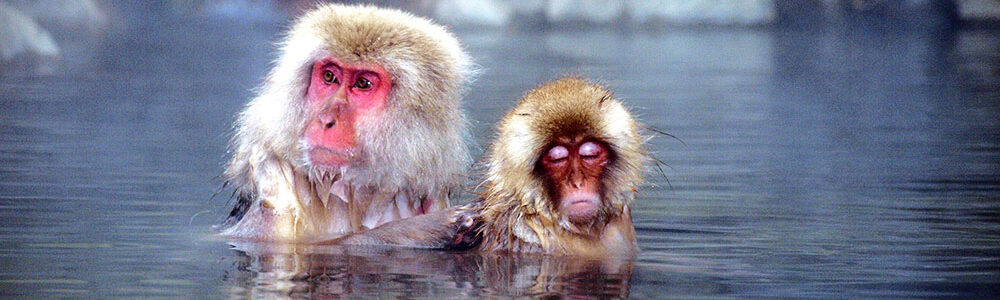
Yes, and in English, often the expression is, it’s a monkey’s wedding, or the monkeys are getting married.
Or the devil’s wedding.
And there’s some very unkind ones about the devil beating his wife.
Yeah, yeah, we get that question all the time.
These variants are pervasive throughout the European cultures, throughout the Asian cultures, everywhere the language has been recorded.
People have noted that this is odd.
Because ordinarily, the fox would eat the nightingale, right?
That’s why it’s weird.
Right.
I would be darned. I didn’t know that.
You know, as you can imagine, sitting right in the tropicals under the equator, this happened practically every day.
And do you get a rainbow afterward?
Most of the time.
But, you know, the thing was it was raining and it was sunny at the same time.
And as we kids, we loved it.
Yeah, yeah. Yeah, it’s gorgeous, isn’t it?
Yes. Well, it’s a pleasure talking with you.
So, listening to your program for so long, and it’s been just wonderful to be here.
Amira, thank you so much for calling.
Thank you. We really appreciate it.
Ciao, ciao.
Ciao. Thank you again.
Bye-bye.
And in a lot of countries, it’s somebody’s giving birth, an animal, a hyena or a fox, or some creature is giving birth, right?
Yeah. You usually get a sense of some kind of folklore behind it.
I mean, like, we often get that question about the devil beating his wife, which is sort of a grisly expression.
There’s one notion that maybe it has to do with the devil being angry that the sun is shining.
Right, that the day might be beautiful instead of terrible like he wants it.
Yes, yes.
And so he’s beating his wife and those are her tears, the rain.
So there are many long lists of these words all over the Internet, and we will try to find some of the best ones and point them out to you, hundreds and hundreds of items on these lists.
Call us with your language questions, 877-929-9673, or send them an email to words@waywordradio.org.
Hello, you have A Way with Words.
Hello, this is Jeff, and I am calling from the south branch of the Aisabo River in Michigan.
Oh, really? On the river itself?
We just got off the river from fly fishing, and we are in our campsite now, eating spam, tomatoes, and corn.
Didn’t catch anything, huh?
We released them. They were huge.
Oh, I see.
You wouldn’t believe it.
Yeah, trophy fish, right?
Long as your arm?
Exactly.
Nice.
Well, Jeff, what would you like to talk with us about?
There’s a phrase that my mother uses, and I used it in a piece of fiction, and my editor circled it and said, what is this?
And the word is punched out.
My mom, if you put a suit coat on, she would look at it and say, well, you can’t wear that. It’s all punched out.
And what I came to figure out what that meant is it sat on the hanger too long, and the shoulders got punched out, I guess, from the weight of being on the hanger.
And I liked the phrase.
I thought it was an interesting phrase to describe a piece of clothing, but apparently my editor didn’t and never had heard of it.
And so I was curious if that has any history beyond my mother.
Whoa. A punched-out shirt or a punched-out coat?
Just punched out clothes.
Yeah, just describing clothes as punched out.
And from what I can get, it doesn’t necessarily mean old as far as more, the way she used it, it seemed more the way it sat on the hanger.
Well, I can certainly picture it.
I think the expression is self-explanatory.
I’m not familiar with any kind of history of it.
It sort of reminds me of the term that’s more common in the African-American community, butt sprung.
Have you heard that one?
I have.
What context does that use?
Yeah, butt-sprung refers to clothing particularly around the hips that is shaped by the wearer.
It still retains the shape of the person who had it on.
So it’s got a bum shape inside that skirt is what you’re saying.
Yeah, it’s altered. The shape is altered.
And then by extension, it means you can get home tired and butt-sprung, or that couch is butt-sprung.
So it’s taking the shape of a derriere.
Yeah.
But the punched out, yeah, I know the look as well, but I don’t know the term.
It’s when you put a too small hanger on a coat, right?
And so the corners of the hanger maybe poke through where they shouldn’t.
Or you can kind of see the shape of the corners.
Yeah, you can see where they’re almost like, I don’t know, like little talons or something coming up on a devil there.
Yeah, devil horns, that’s right.
Instead of the big, fat, rounded corner.
I liked the phrase, and I liked the play of the words, but…
Did your editor keep it?
I like it, too.
The editor insisted that I change it.
Oh, yeah.
I disagree with your editor there.
Was it fiction or nonfiction?
It was fiction.
Oh, well, then fiction probably should have been a little easier to keep it.
I’m surprised that they changed it.
Yeah.
Yeah, it just really felt that nobody would understand it.
Solipsist?
I don’t know.
Like you say, it’s self-explanatory, but again, I don’t know if it automatically makes people think of a hanger to a coat.
But in any case, I just thought it was interesting, and I thought, oh, I guess that phrase is not used maybe very much beyond my family, but I was just curious about if it had any history, if it had appeared anywhere else.
Not that we know of, Jeff, but it works for us.
All right.
Thank you, sir.
All right.
Good luck with the fishing.
Oh, thanks a lot.
You have a great show.
Take care.
Bye-bye.
Bye-bye.
Bye-bye.
Hello, you have A Way with Words.
Howdy.
Howdy, who’s this?
This is James from Dallas, Texas.
Hi, James. Welcome. What can we do for you?
Well, I was watching the 1951 movie with a friend of mine recently called Rhubarb, which is based on H. Allen Smith’s book. It’s about a cat that inherits a baseball team, and hilarity obviously ensues.
Obviously.
And there is a scene in the movie where a reporter has called one of the representatives for the team, and it’s asking why they called the cat rhubarb, which we hadn’t thought of. And the representative offers a few explanations, says it’s a Donnybrook or a dust-up. And then the caretaker of the cat comes on and informs the reporter that a rhubarb is what happens when there’s a sale and two ladies reach for the same dress at the same time.
Yeah, I’ve been there.
And we were just kind of confused as it kind of left us wondering what exactly rhubarb was.
So we’re not talking about the vegetable.
Didn’t think they were.
So we’re talking about a fight then or some kind of argument or some kind of intense staring. What is it exactly? Does it involve a fight? I mean, is this the kind of thing you’ll get thrown out for?
Have you ever been to a sample sale in New York, Grant?
Oh, my gosh. I have been spared.
So it’s funny. You’ve watched the movie, but have you read the book Rhubarb by H. Allen Smith?
No, I have not.
In the book, he explains explicitly where he gets that term rhubarb. So he picked it up from Red Barber. And Red Barber, if you remember, was the famous sportscaster. And then Red Barber says he picked it up from Jerry Schumacher, who was a New York sports writer. And Jerry Schumacher says he picked it up from Tom Meany, who was another New York sports writer. And so the earliest use that anyone has of this term, remembering this term from being used, is the late 1930s.
But Red Barber was magnificently popular, very well known for his language. And so as soon as he said rhubarb to mean kind of a fight where the manager comes up to the mound during a baseball game and kicks the dirt and gets in his face, you know, and gets thrown out. And everybody comes on the field.
Yeah. And you hear Red Barber use the term rhubarb to describe that. Then it’s easy to see how it could get popularized from there on. But he’s generally the popularizer, but not the coiner of the rhubarb. And it’s still today used in baseball, not as often, but does that jive with what you saw in the film?
It seems to.
Yeah? Okay, great. And then do you know Donnybrook? Is that a term that you use?
No. The only one I knew anything about would have been dust up.
Okay.
Donnybrook is, what is it?
There was an affair in a part of Ireland.
Ireland, yeah.
In Donnybrook, Ireland. It was known as a raucous, loud affair. Rough and tumble brawling.
Yeah.
So a Donnybrook is a loud commotion.
Yeah, with a small d.
With a small D, yeah, exactly. Donnybrook.
Yeah, but why rhubarb?
Well, there’s some theories on that. Some people think it’s just kind of a corruption of hubbub, but there’s no real good reason for it. Sports writing is a bit of a mystery. These guys are always working to embellish their language, and they’ll just coin stuff on the spot and see if it sticks.
It sort of sounds like what it is, right?
Yeah, rhubarb, rhubarb.
Does that work for you, James?
That works fine.
Okay, super duper. Thanks for calling.
All right, thank you all very much.
Take care, bye-bye.
All right, bye-bye.
You too, bye.
There is a really good entry for rhubarb in Paul Dixon’s baseball dictionary.
Oh, which is a fantastic dictionary.
Yeah, it’s very good.
Good entry.
Look it up there. The other thing to say about rhubarb, you know, this is what they call the fake crowd noise in movie scenes. When you’ve got people talking who aren’t the focus of the shot. Rhubarb, rhubarb. They may be saying rhubarb. Sometimes they say peanut butter and jelly and other things.
Steamboat.
Yeah, but it’s called rhubarb.
877-929-9673 is the number to call to talk about language. Or send your questions and email to words@waywordradio.org.
I’ve been having a lot of fun with some Spanish riddles lately. Here’s a translation of one of them. I come from singing parents, but I’m not a singer. I have a white body and a yellow heart. What am I?
A white body and a yellow heart. Is it some kind of bird? Flower?
An egg.
Egg.
Right.
There we go. Comes from a bird. Okay. My parents are singers, right?
There we go.
Yeah.
You’re listening to A Way with Words. I’m Martha Barnette.
And I’m Grant Barrett. And we’re joined once again by our quiz guide, John Chaneski.
Hello, John.
Hi, Grant and Martha. How are you guys doing?
Welcome back, buddy. What’s been cooking?
Now, I don’t know if either of you have ever read any of Sue Grafton’s novels. She’s a Louisville girl.
Yeah, occasionally.
Terrific.
Occasionally.
Good.
Yeah, I’m halfway through one right now, but I can’t tell you which one because it forms part of this quiz.
Oh, I see. You may have heard of her Alphabet series, right? Its lead character is private investigator Kinsey Malone. The reason it’s called the Alphabet series is because Grafton’s book titles begin with A is for something, B is for something else, right?
Now, the words that these letters begin are all appropriate to some degree to a mystery novel. For example, the first book is A is for an excuse usually intended to avert blame or punishment. Do you know what A is for?
Alibi.
Yes, A is for alibi. Very good. We’re just going to do a few of these. Let’s see how many we get. I’ll give you the letter. Let’s see if you can guess the book title. Now, if you need a clue, detectives, I will give you the definition of the word, okay?
All right.
Excellent. So your big clue is these are all words relating to mystery.
Okay. B is for?
Burglar?
Yes, B is for burglar, one who commits the act of breaking and entering to commit a felony.
Very nice.
E is for?
Any guesses?
Extortionist.
No, that’s a good guess, though.
Eulogy.
Not eulogy. E is for something that furnishes proof and outward sign.
Evidence.
Yes, evidence.
G is for?
Graft.
It’s a slang term, rather archaic, for a detective.
Gunslinger.
Gumshoe.
Gumshoe.
Gumshoe is right. G is for gumshoe.
H is for?
Holmes.
No.
H is for?
Kinsey can hold her own.
Homicide.
Homicide is right, Grant. Very good, without a clue.
I is for?
Inquiry.
Inquisition.
Inquest.
These are great.
No, not inquest. I is for free from legal guilt or fault.
Innocent.
Innocent is correct.
J is for?
Jurisprudence.
J is for jury.
It has to do with a court, not jury.
J is for judge.
Judgment.
J is for judgment.
K is for?
K is for one who commits the H word.
K is for killer.
Oh, okay.
N is for?
Nolo.
What’s that?
Nolo.
Nolo.
There’s a legal term for you.
Very good.
Very good crossword entry. A loop with a slipknot that binds together the more it is drawn.
Yes, noose.
Very good.
O is for?
Opportunity.
O is for?
Good.
For a person who is lawless.
Outlaw.
Outlaw.
O is for outlaw. Very good.
Q is for?
One that is sought or pursued.
Quarry.
Quarry.
Yes.
R is for?
Think firearms here.
Revolver.
No, it’s not revolver. Think of a glancing rebound.
A ricochet.
Ricochet.
Ricochet.
R is for ricochet.
Okay, only a few more.
U is for?
Under.
Unsolved.
Taker.
Under is a way to go.
Yeah, not unsolved.
Undercover?
No.
This is specific. This is specific to beaches and the sea.
Toe.
Under toe.
U is for under toe, yes.
V is for?
Vengeance.
Vengeance is correct.
Vengeance will be mine.
Yes, it will be his. Give it to him.
That’s right.
Thank you.
Here’s the last one, the 23rd.
W is for?
Unprofitably used, made, or expended.
Wasted.
Yes, wasted.
Just like we’ve wasted this time doing this class.
So nice to waste another 15 minutes with you, John.
Another 15, 20 minutes or so.
Thanks, John.
Really appreciate it.
Thank you, guys.
We’ll see you next week, all right?
See you then.
Bye-bye.
Same time, same bad channel.
Yes.
Thank you, sir.
And if you want to talk language and words with us, the number to call is 877-929-9673.
Send us email to words@waywordradio.org and find us on Facebook and Twitter.
Hello.
You have A Way with Words.
Hi.
This is Bob Reeser.
Hi, Bob.
Welcome.
Where are you calling from?
Tallahassee, Florida at Florida State University.
Well, hello. Welcome to the show.
Thanks.
What can we do for you?
Well, I’m a college professor and associate dean here in the College of Ed.
I’ve been here for about 35 years.
Oh, wow.
I had a question about my critiques of the papers my colleagues and students write.
Oftentimes when I’m looking at these papers, I find myself commenting on the quality of their writing.
So if I think the sentences are well-written and the paragraphs are well-written and the ideas they’re expressing are clearly understood, I’ll write something on the papers like well-written or clearly written.
And I’ve been using those expressions now for many, many years.
And recently I’ve been thinking maybe I should start using some other expressions to express that point of view.
So I went to the thesaurus, and I tried to look up synonyms for the term well-written.
And oftentimes they’re just too specific.
I came up with things like amusing, absorbing, and that just don’t really capture what I’m trying to get at.
You don’t get a lot of amusing and absorbing text.
Well, they might be amusing or absorbing, but that isn’t always the case.
So I’m wondering what thoughts you might have about terms they might use other than well-written or clearly written.
So your goal here is to reinforce good behavior on the part of the writer.
That’s right, if you want to take a behavioral point of view.
Yeah, because you’re trying to improve their writing, whether it’s a colleague or a student or whomever.
That’s what you’re up to, right?
Sure.
It’s not just like saying, I approve of you as a human being.
There’s a comment that I loved getting when I was at university, and this is more like this.
Because it’s super easy to write.
Frankly, let’s admit it.
Student papers in particular are really inconsistent.
They might start out strong and end weakly, or they’ll have a few inspired moments along the way.
But then there’s weak parts that should have been cut or should have never been put down in the first place.
And so you’re going to draw attention to the strong parts of it without spending too much time as a professor who’s got 30 to 60 papers to grade, right?
Well, that’s exactly right.
And one of the problems is, because I’m commenting perhaps on two or three paragraphs that are well written, I’ll indicate using track changes that these paragraphs are well written, and then I find myself ten paragraphs later saying the same thing.
So I like to kind of use different terms to get across that point.
And so you’re talking really more about something that is well-crafted or well-argued rather than just grammatically correct, right?
That’s correct. That’s right.
Now, I might not even agree with the ideas that are stated.
I might even think that they’ve stated something that I disagree with.
But nonetheless, they’ve made the point clearly.
Yeah.
Wow.
Yeah, and I think clarity needs to be recognized because having edited many texts myself, it’s a rare thing.
Well, I often tell my students that it’s more likely that a paper that’s well-written, even if the ideas might not be everyone would agree with, are more likely to be published than something where they’ve really designed a good study.
But it hasn’t been clearly written.
You know, it’s interesting that Grant brought up what meant a lot to him.
I remember a philosophy professor who would just put a checkmark next to things that he liked, or two checkmarks, or two checkmarks and two underlines, you know, underlined twice.
But I’m thinking, I mean, it sounds like you want more of a dialogue with your students.
I don’t know if you have time for that.
Well, you know, a lot of my doctoral classes have been small.
And more recently, I’ve been working primarily with young professors.
I’m now an associate dean for research, and I’m helping them craft their grant proposals and so on.
So I like to give them more feedback than simply saying, you know, well-written or give them a couple check marks.
Right.
Well, I wonder what other professors say.
We could certainly throw it out to our listeners.
But what do you think about more like this?
I think that’s okay if we clearly indicate which paragraph we’re referring to.
Or a line or an arrow or something, right?
Great, and I’ll be looking forward to hearing from other listeners who might have some suggestions, too.
Okay, yeah, we’ll pass them along if we get them, all right?
Or when we get them.
Well, I really enjoy your show.
Thanks very much.
Our pleasure.
Thanks so much.
Thanks, Bob.
Bye.
Bye-bye.
That’s the editor’s dilemma right there in a nutshell, right?
It is.
Yeah, and the professor’s.
I mean, he raises a really interesting question about how you handle your students’ papers.
There was an article in the Chronicle of Higher Education just recently by Ann Curzan, whom we know.
And she was talking about the difficulty of grading papers because sometimes you’re grading grammar and it depends on, I mean, different professors’ understanding of grammar.
And some professors are grading based on their pet peeves when they shouldn’t be.
Right. It’s utterly arbitrary in some cases, right?
Yes.
What you think is standard. Other people are like, whoa, whoa, whoa, whoa, whoa.
Yes. So what is constructive for you to do as a professor, right?
And as close to universal as you can get.
Yeah.
Yeah, so it’s fair across the spectrum of papers you’d be grading.
Right, and certainly you want to grade for typos and failing to proofread, but it gets tricky when you get to points of grammar because some professors know grammar better than other professors.
So how do you do that?
Or if it’s not the point of the class at all, right?
Right.
So that’s the question for you, dear listener.
When you’re grading papers or when your papers are graded, what do you like to put down or what do you like to read?
What encourages you to do better, and what discourages you from making those same old mistakes?
And maybe students can tell us which ones are most constructive for them.
877-929-9673. Email words@waywordradio.org.
Grant another word puzzle for you.
I went to Paris. I went to Egypt.
I’ve been to New York, and I will be going to Rome.
And all this I do by simply sitting in a corner.
Who am I?
Whoa.
Cool, right?
Sitting in a corner.
Yeah.
Sitting in a corner.
Well.
Sitting in the corner of the gallery.
Yeah, yeah.
I don’t know.
What’s the answer?
It’s going to be something clever.
Yeah, it is.
It is.
What?
A stamp on an envelope.
Nice.
Very good.
But you can only use a stamp once.
Well, I forget to say it.
Forwarding.
Postal fraud.
I swear it.
No, that’s a good riddle.
I’m glad you like it.
Send more.
words@waywordradio.org or tell your riddle into the phone, 877-929-9673.
Hello, you have A Way with Words.
Hi, this is Grant.
Yes, this is.
Who am I speaking with?
Hi, this is Peter Love from East Hampton, Connecticut.
All right, welcome.
What can we do for you?
So I was out in the woods with my dog the other day, and I’m very fond of snakes.
And I run into them all the time in Connecticut, which you wouldn’t think of as a pot that is snakes, but we actually have lots of them here.
And I was in the woods and saw a little snake curled up in the sun on the path and was staring at it and thinking that’s a garter snake.
And I just was wondering about the term garter snake and thinking, you know, some people call them garden snakes, some people call them gardener snakes, and was just wondering what was correct and if there was a specific correct name for them and where the name garter snakes came from, if that’s right.
Well, you know what garters are, right?
Yes, I do.
They’re those bands that used to be fashionable for men to wear, holding up stockings. I don’t know if they were ever fashionable, but they were necessary at once. There we go. Unless you wanted your stockings pooled around your ankles.
Right.
These days, most people just know a garter from the little ceremony at weddings, right? But even there, it tends to be decorative. She doesn’t need it.
Yes.
Yes, there we go. But you’re right. The snake was named for its resemblance to that little fashion accessory. Yeah, it wasn’t like the garters that you see in weddings that are covered in frills and bows and things. It was just a strip of elastic or rubber or string or cloth or something.
Yeah, and it had stripes running the length of it, running all around it, just like that snake. So when we talk about the real name of this kind of snake, we’ve got opposing forces here, right? We’ve got the scientific name, which is pretty strict, and then the common name, which is not necessarily the same everywhere.
Yeah, yeah.
Yeah, in fact, I think in Florida, garter snake also refers to the coral snake, which is poisonous.
Right, right.
And you have heard gardener snake and garter snake, as if it’s a snake that’s guarding your body or something. And grass snakes and what else?
Garden snake.
Garden snake, yeah.
Mouse snake, right?
Yeah, yeah.
But the original was garter.
Garter, yeah.
Garter snake.
Well, that’s very interesting. So you do find all of these different terms for the exact same species, exactly the same. It just depends on where you’re from and what tradition you come from.
Thank you, Peter. You’re great fun, sir.
Yeah, happy hiking.
Thank you very much. It’s been great.
Okay.
Thank you.
Take care.
Take care.
Bye-bye.
Email words@waywordradio.org.
Here’s another brain-busting riddle. You ready, Grant?
All right.
Okay, listen up.
What does man love more than life, fear more than death or mortal strife? What the poor have, the rich require, and what contented men desire, what the miser spends and the spendthrift saves, and all men carry to their graves?
Oh, I feel like I’ve heard this one, but I don’t remember the answer.
What does man love more than life, fear more than death, or mortal strife?
I don’t know.
The answer is nothing. Plug in nothing to all of that, and it works.
It works.
Can’t carry nothing to your grave, right?
That’s true.
Hello, you have A Way with Words.
Hi, this is Sherry Hagen, and I am from Menominee, Michigan.
Hi, Sherry.
Welcome.
Hey, what’s up?
Well, I have been listening to your radio show for a while, and I hear about all these family language conflicts, and I had one that I wanted to share with you folks.
Oh, please.
I was born in Clintonville, Wisconsin, but I grew up near Bear Creek, Wisconsin. Now, the creek is spelled C-R-E-E-K, but everyone around that area pronounces it Bear Creek. And then my girlfriend and I met my husband and her brother, ended up, you know, dating, getting married, and they’re from the Minneapolis area. They just didn’t understand why we would pronounce it as Bear Creek and not Bear Creek.
And what did you tell them?
And I’m wondering where that comes from.
What did you tell them?
Well, I tell them that’s the way it’s always been pronounced. And this is a point of dispute.
Is your marriage in trouble?
Oh, not at all. It’s more of a point of dispute between Jack’s brother and his wife than my husband and I, partly because I just don’t get teased very easily. But Jack’s brother Jeff always had a saying that he’d use with my sister-in-law, and my husband could tell you that running joke that he always uses if he’d like.
Oh, really? Is he there?
Sure, put him on.
Oh, yeah, he’s there.
Okay, here’s Jack.
Hello.
Hello, Jack.
So what’s this joke?
The joke is, okay, you say you were born in Bear Creek. Well, I sleep between the sheets. What do you sleep between?
-huh. I see where this is going, and we don’t have to go there.
No, not going to answer that one.
But we get it.
Fill in the blanket home.
It’s a good joke. So you say Bear Creek.
Yes.
And Minneapolis, is that where you’re from?
I was born in Minneapolis. I went through junior high in central Wisconsin, junior high and high school, which is where I met my wife, Sherry.
Okay. Crick is all new to you?
Let’s just say I had heard crick when describing a small, barely noticeable trickle of water running down between the fields near a farm. But as far as something that you would put a name to, you jump across a creek. A creek just feels like it’s going to be a little bigger than just jumping across.
Interesting. Interesting. I’ve never heard that distinction before.
There’s a little bit of history here. You know, coming from where you come from, you probably were just as likely to say crick as the members of your family who do say crick instead of creek. You know, in the northern part of the Midwest and even as far west as the northwest in parts of California, crick is pretty well documented as being one of the pronunciations of C-R-E-E-K.
Now, it’s not that common in the South, which kind of throws people for a loop because they tend to associate these alternative pronunciations with the South. And in the Northeast, they don’t say it almost at all. But where you’re from, both Wisconsin and Minnesota and the surrounding states, it’s a thing. It’s a mappable dialect that we can put a name to, we can put a history to, and we can show that it’s fairly widespread.
Thank you, Jack.
Email words@waywordradio.org.
More of your questions and stories about language.
Stay with us.
You’re listening to A Way with Words, the show about language and how we use it.
I’m Martha Barnette.
And I’m Grant Barrett.
Martha, you remember Jonathan Green?
Sure, the slang guy, right?
Right.
British slang lexicographer Jonathan Green. He’s the guy who compiled this awesome three-volume dictionary called Green’s Dictionary of Slang.
Use it all the time, yeah.
Fantastic work.
Well, what he’s done with this work and the database that it’s based on, he’s exported some data for some very specific categories. And these have to do with words for being drunk, for the act of drinking, for the place that you drink, for the person who pours the drink, all of these different terms.
And he’s exported them and he’s put them on a timeline, separate timelines. So you can actually see them in context through history. And it’s kind of an interesting way to examine these words and kind of start to understand the periods in which, for some reason, English just turned up all these extra bits of slang.
It’s a great perspective on English that you don’t usually get from a dictionary or a thesaurus.
It’s a nice add-on.
So if I were writing a novel set in the 18th century, for example, I could go find fun words, unusual words that people were using?
That’s right. It’s a good starting point for that. If you were doing that, I would probably recommend you use the Oxford Historical Thesaurus to give you even more context, but it’s definitely a place to start.
He’s also working on, and this is something we can’t talk about too much on the air, but you can look on his website.
He’s also going to talk about parts of the body, particular parts of the body and the acts that we do with them.
Okay.
So the intercourse and that sort of thing.
Yeah. And so because he comes from a place of science. It’s not just about giggling at these naughty words. It’s about figuring out why we had these words, sometimes more euphemistic, sometimes literal, at these different parts in English language history.
So if I were having a great time in a pub several hundred years ago, I might use some other words.
There’s a ton of these.
I like the ones in particular for the person who pours the drink or the person who owns the bar or pub where you are served.
Right.
We’d say bartender today.
Yeah, but you might have said Knight of the Spigot or Squire of the Gimlet or Rum Dropper or Jump or Lamber Down, right?
Rum Dropper.
And then what they would pour into the glass would be maybe Snakebite or Pigsy or Old Tiger or Cougar Juice or Howling Modok.
Good stuff, right?
Give me some Cougar Juice.
But there’s a flavor there.
There’s a sense that somebody had a good laugh and it stuck because it was a funny word or it had some flair to it, some special sparkle.
Yeah.
That’s glorious.
Yeah.
So we can find this online.
Sure.
At jonathangreen.co.uk.
Be warned that Jonathan spells his first name Owen instead of A-N.
So jonathongreen.co.uk.
Okie doke.
I can wait to check it out.
And if you want to talk about any aspect of language, you want to share a story about words,
Call us 877-929-9673 or send an email to words@waywordradio.org.
Hello.
You have A Way with Words.
Hi, this is Nadia from Dallas, Texas.
Hi, Nadia. Welcome to the show.
Hey there, what’s up?
Well, I wanted to call because my best friend and I, as people often do during work hours,
We chat online through instant message.
And, you know, we kind of start and stop throughout the day.
And she’ll say, I’ll ping you later.
And I thought, I’ll ping you later.
That’s only a term I think that we use with each other.
But then I was asking around, and people that maybe have technical jobs were saying that they use that term.
And so I was wondering what the origin of the word ping is, and if it had anything to do with ping pong, the arcade game.
You can see why you might think that, right?
Yeah, sure could.
Back and forth.
So she says she’s going to ping you.
It means she’s going to reach out and see if you’re available to chat, something like that.
Yeah, exactly.
But we never say, hey, I’ll pong you later.
I don’t have time to respond, but I’ll respond to you later.
So there’s some history here, and it involves sonar, submarines, TCPIP packets, and instant message, as you’ve just noted.
If you go back in English, maybe 150 years, you will find ping being used as an onomatopoeia.
It’s a word that represents the sounds of metal striking a metal.
Ping!
The ping, usually a sharp high sound, right?
Yeah.
And so it predates ping pong.
It predates ping me later.
It predates all this stuff.
But by the time that sonar became a thing during the middle of, I don’t even know how early it was.
Let’s say sometime after 1900, sonar was a real thing.
And you use sonar underwater by sending out this high-pitched, super-strong signal in the water.
And it hits a target or a rock and bounces back.
And then you can read that and figure out where you are and how to turn, how to navigate and so forth.
And they’ve always called that a ping practically since day one when you do sonar.
And so when IT started developing, when you started getting things like TCP IP packets,
When the internet became real in the late 60s and all of these technologies were developed,
The idea that you send a packet out on the network that reaches a remote device and it says,
Hey, are you there? And the remote device sends another packet back saying, yes, I am.
Send your message. And then they do this back and forth. That became called a ping.
So TCPIP, that thing that I always see when I’m setting up my email or whatever, that means a packet?
Well, that’s the technology under which the packet operates.
So it’s a kind of transmission protocol.
It’s actually two protocols together that work and form the basis of how the Internet works, and most office networks for that matter.
It’s really interesting.
And so later, when you get more advanced communication on top of that Internet, this is, Nadia, where you get your ping from.
Because the people to use these first technologies tend to be the geeks.
The people who knew the underlying hardware and software and network protocols,
And they’re the first ones to use ping, as in ping me later,
Or I’ll ping you when that job order comes in so we can work on it together.
Now, ping pong naughty is a separate thing, but they are connected, interestingly enough,
But they’re connected at the sound level.
The sound of ping pong represents the sound of a ping pong ball on the paddle and then on the table.
Ping pong, ping pong.
And it comes up about, oh, late 1800s.
Ping pong is a term for the sport.
Yeah, it was originally played on a table.
I know you mentioned that the arcade game.
Oh, no, no, not at all.
On the table.
It’s just like the table tennis today, basically.
That’s what we’re talking about.
And so the ping in the name ping pong probably comes from the sound of the ball,
And it is directly related to the verb ping, meaning to make a high, sharp, short sound.
So it’s just a coincidence that they both have to do with, well, technology or computers.
Yes, exactly.
Yeah.
Exactly.
So complicated paths.
Who knew that submarines were involved?
But they are.
Nadia, are you in the technical field or close to it?
I am, actually.
That’s funny because both me and my friend are both in different industries, but both in technical fields.
So we must have picked it up somewhere.
Yeah.
I mean, it’s interesting that it left you guys, Grant, the computer geeks.
Yes.
And migrated over to the rest of us.
You know, Nadia, it’s actually the point where peeing is kind of considered old-school jargon
Or old-school slang, depending on your perspective,
Because I think it goes back 20 or 30 years in the IT fields as being used,
And it’s kind of the term that almost marks you as being a eunuch’s beard, as they call them.
So there you go, Nadia. That’s the short history.
Thanks for your pong on that.
My pong? Now, wait a minute.
We talked about Pong recently on the show being, you know, sort of a musky body odor.
Oh, yeah.
Related to pungent, right?
Right.
Thanks, Nadia.
I really appreciate the call.
Well, thanks so much.
Love your show.
Yeah, thank you very much.
Thanks, Nadia.
Take care.
Bye-bye.
Okay.
Bye-bye.
Language is a miracle.
Call and talk with us about it.
Call at 877-929-9673.
Grant, I have another riddle for you.
Okay.
There is a word in the English language in which the first two letters signify a male,
The first three letters signify a female, the first four signify a great man,
And the whole word signifies a great woman.
Wow.
What is the word?
Dunno.
What is it?
A heroine.
The word is heroine.
Heroine.
H-E-R-O-I-N-E.
Yes. First two letters are he, then her, then hero, and then heroin.
Nice. That’s a very good one.
Yeah, that’s a tough one, right?
That is a tough one.
We await your riddles. Try us. See if you can stump us.
877-929-9673 or email words@waywordradio.org.
Hi, you have A Way with Words.
Hi, my name is Julie.
Hi, Julie. Where are you calling from?
Pasadena.
How can we help you, Julie?
Well, a few months ago, I was at a family reunion, and I was enjoying listening to my 20-something-year-old daughters and nieces talking.
I love to listen to the young people talk.
That makes me sound like an old fogey, but anyway.
I know the feeling.
And the expression that I get a big kick out of is, I know, right?
And I stopped them, and I said, I love that expression.
It conveys so much.
It has to do with, you know, I hear what you’re saying.
I understand.
Do you understand what I’m saying?
And I started wondering how that works in conversation.
And then just this last weekend, I noticed it is, at least in a different part of the country, it’s truncated.
Now it’s just right with that uplift.
Not like the ums and the errs, the discourse particles that you talked about some time ago.
It seems to fill the same need as other words that we’ve used in the past, like, you know, and for sure.
Correct.
But it’s in the form of a question, right?
It seems to be.
Like, you know is.
You know is often in the form of, like, you know?
You know.
You know, -huh.
Yeah, but it’s the other person saying it.
It’s like you say something and then the other person says, right?
Right.
But by right, they mean you’re right.
I agree with you.
Yes, yes.
We are on the same page.
It’s a little more than that.
It’s not just that it’s a mirroring of the other person’s feelings or what they’ve said.
It’s agreeing with them and it’s throwing the conversation back to them so that you are not taking control of the discourse.
I mean, you’re doing the other speaker a favor by agreeing, affirming what they’re saying, and then letting them, you know, keep the speaking position.
Usually.
Sometimes you go off into how you know, right?
Okay.
Yeah.
But it’s weird because if you picture it, it ends with a question mark, but it’s a statement.
It is. It seems to be more exclamatory.
Yeah, I don’t know how long it’s been around, but I will tell you that I’ve only noticed it in the last year and more among younger folks.
Exactly.
Rather than older.
As I said to my cousins, I really think it’s a lot like…
You had a show on American Sign Language a while ago.
And there’s a sign which means really or honestly, certainly.
And I think the same sign would be used for this expression of being in agreement or emphasis.
Wait, so the ASL sign doesn’t cast doubt?
Because this, I know, right, doesn’t cast doubt.
It’s total agreement.
Exactly.
It doesn’t cast doubt.
Okay.
It’s agreement and emphasis.
Okay.
Well, it’s been around long enough that there are entries on Urban Dictionary.
There are Facebook groups that have come out against it.
Apparently, this is something that raises ire.
It’s a thing.
I don’t understand why it raises ire.
I do know that some people are afraid of the new.
Perhaps that’s it.
It holds a firm lexical position of affirming something that’s been said.
And we have a lot of those things in conversation and in dialogue where we let the other person know that we heard them.
We might let them know that we agree with them.
We do, huh, yeah, right, really, oh, we’ve got all these things that we say.
Indeed.
We have to indicate that we’re paying attention to the speaker.
If you want more information about this, this has been discussed in a couple of places online.
Look on Language Log.
These great linguists, these friends that we know,
They really just get into the meat of this and have a lot of commentary from a variety of sources.
And there was a pretty good discussion on AskMetaFilter.com,
Which is a great place where people ask questions and the community at large answers.
Just can find more perspectives on this, including the Carpers,
But also the people who say, like, I say it and I think it’s useful.
Julie, thanks so much for your call.
Oh, you’re welcome.
All right.
Thank you very much.
Take care now.
Bye, Julie.
Bye-bye.
877-929-9673 or send your emails to words@waywordradio.org.
Here’s another riddle.
It was sent to us by listener Tom Weber, and it was originally in Portuguese, but it translates this way.
Why is it that the bull climbs the hill?
Dunno.
Because it can’t go underneath.
All right.
It’s true, right?
It’s like the chicken crossing the road, right?
Yeah, I’ve heard variants of that in English, yeah.
Oh, have you really?
In kids’ riddle books, yeah.
Oh, okay.
Yeah, it usually involves an elephant or some other, obviously, big creature.
Yeah, even bigger than a boy.
Going over the hill.
A variety of things, yeah.
Okay.
Kids’ riddles are just as good as adult ones.
words@waywordradio.org or 877-929-9673.
And, you know, we’re on Facebook,
And anytime somebody posts a riddle on Facebook or a puzzle or a joke, there’s usually a really long discussion and lots more of the same.
So try us there, too.
Hello, you have A Way with Words.
Hi, I’m so excited to be on the air.
My name is Amber.
I’m calling from Berlin, New Hampshire.
And I work in a prison.
And one word that I am really curious where it came from is the word shank, like to mean like a homemade weapon.
I had heard shiv before, but shank is more like a newer term that everybody’s using.
I don’t hear shiv very often.
Shank and shiv are the same thing?
People talk about them like they’re the same thing.
For those of us who have never been to prison, can you tell us what a shank or a shiv is?
Usually it’s some kind of a homemade weapon that people make, you know, a sharpened out toothbrush or a piece of wood or some kind of a rod or something that’s sharp on one end.
So you probably know shank as it’s related to the part of a horse’s leg, right?
Yeah, exactly.
Like the first place I heard from it probably is just like a beef shank.
Okay, yeah.
So over time, shank has meant different parts of a leg,
But generally we know shank now to be from the knee to the ankle.
There are a wide variety of terms related to that,
But that is a particularly interesting bone on an animal
Because it is long, it is straight, and it is strong
And has been used since prehistoric times to create weapons
And to create tools for digging, for carving,
For doing a variety of different tool-related tasks.
Oh, then that follows real easy then.
Yeah, it’s totally easy.
And so you’ll even see a little bit of a schuomorphic representation today in bone-handled knives,
Which actually are, you can actually split the top of a shank bone and insert an arrowhead or a piece of glass
Or a bit of obsidian or some other sharp object in there, wrap it around with sinew or twine or sisal or something like that.
And you’ve got a great weapon if you’re out in the woods, I mean, over the millennia, you know, to do what needs to be done.
Kill a rabbit or carve off a piece of hide or whatever.
So it’s always been a homemade weapon.
Shank is a term for the bone,
Has linked itself to a wide variety of things
That resemble the shape of a shank
Or are related to the shank in its use
Or have just even a vague relationship
To some of the things that the shank is used for.
That’s very interesting.
Thank you so much for looking into that.
Yeah, no problem.
As someone who studies slang,
The world of prison slang is incredibly interesting.
To me. And so I love hearing from you, Amber, and I hope that you’ll come back to us again in the future and tell us some more of what you’re learning there, all right? Well, definitely.
Thank you so much. Yeah, take care now. Okay. Thanks, Amber. Bye-bye.
If you’ve got some special jargon in the field in which you work, give us a call,
877-929-9673. Email us as long as you’d like, words@waywordradio.org,
Or find us on Facebook and Twitter.
Grant, I have an aphorism that I thought you would like.
The good thing about lending someone your time machine is that you basically get it back immediately.
Words of wisdom right here on A Way with Words.
Yep. 877-929-9673. Email words@waywordradio.org.
Things have come to a pretty pass.
That’s all for today’s broadcast, but don’t wait until next week to chat with us.
Join us on Facebook, Twitter, iTunes, or SoundCloud.
Check out our website, too, waywordradio.org, where you’ll find a dictionary, a newsletter, a language blog, mobile apps, and a discussion forum.
And you can listen to hundreds of episodes of past shows for free.
And you can leave us a message anytime at 877-929-9673.
Share your family’s stories about language or ask us to resolve disputes at work, home, or in school.
You can email us, too. That address is words@waywordradio.org.
Our production staff includes Stefanie Levine, Tim Felten, and James Ramsey.
A Way with Words is independently produced and distributed by Wayword, Inc.,
A nonprofit supported by listeners and organizations who believe in lifelong learning and better human communication.
The show is recorded at Studio West in San Diego, California.
Thanks for listening. I’m Martha Barnette.
And I’m Grant Barrett. Adios.
Ciao.
And I like tomato, potato, potato, tomato, tomato.
Let’s call the whole thing off.
But oh, if we call the whole thing off.
Big Hands, Bad Joke
 If you have seven oranges in one hand and six in the other, what have you got? “Really big hands”–and a really bad joke.
It’s a Monkey’s Wedding
When it’s raining and sunny at the same time, Brazilians say there’s a marriage between a fox and a nightingale, and South Africans say it’s a monkey’s wedding. Those images are far happier than an American phrase for the same meteorological phenomenon, “the devil is beating his wife.” In each case, the common thread seems to be that it’s a supernatural occurrence.
Butt-Sprung
When a jacket’s been on the hanger too long, the shoulders get punched out, meaning they become distended. The same principle is behind the term butt-sprung, which describes a skirt that’s distended by the wearer, and now applies to anything that’s worn out.
Baseball Rhubarb
The sportscaster Red Barber popularized the term rhubarb, meaning a scuffle on the baseball mound. It has now expanded to various kinds of arguments.
“A” is for Amusing Word Game
Attention Sue Grafton fans: A is for Amusing might be a good title for this week’s puzzle from Quiz Guy John Chaneski.
Student Writing Feedback
A Florida State University professor is tired of writing the same comments over and over on student papers. He wonders about the most effective written feedback, and specifically, whether there’s a better way to say a paragraph is particularly well-written or clearly written.
Sitting in a Corner Riddle
I went to Paris, I went to Egypt, I’ve been to New York, and I will be going to Rome. I do this by sitting in a corner. Who am I?
Garter Snakes
Is that serpent in the garage a garter snake, a garden snake, a gardener snake, or a mouse snake? All are apt names for the same snake, but the original is garter snake, which takes its name from the sartorial accessory.
What All Men Carry Riddle
A riddle in rhyme: What does a man love more than life /Fear more than death or mortal strife / What the poor have, the rich require /And what contented men desire / What the miser spends and the spendthrift saves/ And all men carry to their graves?
Creek vs. Crick
In the Northern Midwest, creek is often pronounced crick.
Green’s Dictionary of Slang Online
Slang lovers, rejoice! Parts of Green’s Dictionary of Slang are being posted online, including an impressive timeline tracking slang involving alcohol.
Ping
Ping, as in ping me, meaning “contact me,” comes from the onomatopoeic ping we get from technology such as sonar.
Male and Female Riddle
There’s a word where the first two letters signify a male, the first three signify a female, the first four signify a great man, and the whole word means a great woman. Do you know it?
I Know, Right?!
“I know, right?!” is a friendly way to acknowledge that you understand someone.
Portuguese Riddle
A riddle translated from Portuguese: Why is it that the bull climbs the hill?
Shank Weapon
A prison employee wants to know about the term shank, that name for sharp weapons made with toothbrushes and pieces of metal. It derives from shank in the sense of the type of animal bone historically used in weapon making.
Lending Your Time Machine
The good thing about lending someone your time machine? You pretty much get it back immediately. “I know, right?!”
This episode is hosted by Martha Barnette and Grant Barrett, and produced by Stefanie Levine.
Photo by Chi Tranter. Used under a Creative Commons license.
Book Mentioned in the Episode
| Green’s Dictionary of Slang by Jonathon Green |
Music Used in the Episode
| Title | Artist | Album | Label |
|---|---|---|---|
| Shemp Time | Robert Walter’s 20th Congress | Money Shot | Fog City Records |
| Oxygene (Part III) | Jean-Michel Jarre | Oxygene | Polydor |
| Black Hole | Shawn Lee | Synthesizers In Space | ESL Music |
| Instant Lawn | Robert Walter’s 20th Congress | Money Shot | Fog City Records |
| Aj’s Mood | Shawn Lee | Synthesizers In Space | ESL Music |
| Oxygene (Part IV) | Jean-Michel Jarre | Oxygene | Polydor |
| Head Up | Shawn Lee | Synthesizers In Space | ESL Music |
| Lowrider’s In Space | Shawn Lee | Synthesizers In Space | ESL Music |
| Jupiter’s Jam | Shawn Lee | Synthesizers In Space | ESL Music |
| Let’s Call The Whole Thing Off | Ella Fitzgerald | Ella Fitzgerald Ella Fitzgerald Sings The George and Ira Gershwin Song Book | Verve |