Kathleen from Ithaca, New York, remembers her mother saying Go fry ice! meaning βBug off!β Itβs probably a minced oath replacing a phrase that exhorts the hearer to go do something else that starts with F. The earliest known recorded use of Go fry...
Susan in Traverse City, Michigan, wonders if thereβs a single English word that denotes the relationship between two mothers-in-law, two fathers-in-law, or a mother-in-law and father-in-law. Co-mother seems too vague, and the psychologistsβ terms...
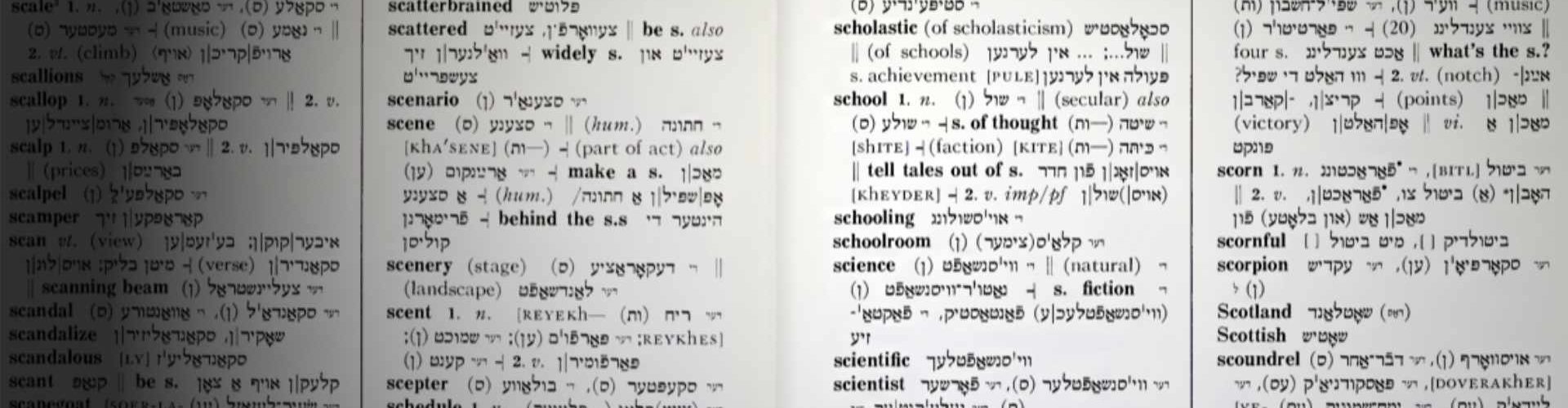
The Omnificent English Dictionary in Limerick Form, also known as OEDILF, includes a limerick by Sheila B. Blume that illustrates the use of the Yiddish word farblunget. This is part of a complete episode. Transcript of βFarblonjet Limerickβ We were...
Elliott, from Cape Cod, Massachusetts, asks about the Yiddish word variously spelled farblonjet, farblunget, and other ways. It means lost, befuddled, or confused and may derive from a Polish term meaning to go astray. This is part of a complete...
A woman in Reno, Nevada, wonders about the expression, βWhat am I, chopped liver?β Chopped liver is a traditional Jewish dish thatβs always a side item, never the main course. Speaking of traditional Jewish foods, the term schmaltzy, meaning overly...
The Yiddish phrase Hak mir nisht keyn tshaynik and its variants have been used to tell someone to stop babbling or making noise. Literally, it means βdonβt knock me a teakettle.β This is part of a complete episode. Transcript of βKnock Me A...


