

Today’s most popular dog names are Max and Bella. In the Middle Ages, though, dogs would answer to names like Amiable. Or Nosewise. Or even … Clench. ? Is the term redneck derogatory? Some folks proudly claim that name. They say it’s high time they were redneckcognized. ? Also, the origin of the phrase rule of thumb, whistling Dixie, the eephus pitch, terms for flabby underarms, and craptastic substitutes for swear words, like sacapuntas!
This episode first aired March 16, 2013. It was rebroadcast September 16, 2013, and September 1, 2014.
Transcript of “Whistling Dixie”
You’re listening to A Way with Words, the show about language and how we use it. I’m Grant Barrett.
And I’m Martha Barnette. Not long ago, Grant, you and I were asked to participate in that spelling bee for adults.
It was a fundraiser for Literacy Council, and we did really well.
And they raised a ton of money.
They raised a ton of money, but, you know, competing in a spelling bee as an adult is at least as intense as you do it when you’re in elementary school, isn’t it?
Are you still galled?
Let’s just say that neither you nor I will ever misspell the name of that inkblot test again.
Rorschach.
Rorschach.
They got it wrong.
We put an H where there wasn’t an H.
We did.
R-O-R-S-C-H-A-C-H.
And not that I’ve been festering or thinking too much about this, but I did Google the hell out of it.
Of course you did.
And I found that on the German Wikipedia site, the spelling that we gave is listed as a common misspelling, even among Germans.
Well, so Germans get it wrong.
Yeah.
So I feel pretty good.
Yeah, that was painful though, wasn’t it?
It was painful.
Especially since we thought it was right.
But we learned other things.
We did.
We learned other words that we may never use again.
But there’s one that I’d like to popularize.
Oh, please.
And that’s homologate.
Do you remember that?
Homologate.
I do remember that, yeah.
Spell it.
H-O-M-O-L-O-G-A-T-E.
Very good.
Homologate.
And it means?
I don’t remember.
Right.
Why would you remember?
It means to sanction or to allow or to approve or confirm officially.
So I’m thinking that to make that next election cycle bearable, maybe we could get candidates to say at the end of their political ads things like, I’m John Smith and I homologated this message.
What do you think?
Sounds naughty, actually.
Sort of.
Well, all the better.
It’s like masticating every meal.
Really?
We’d love to hear your language questions, your thoughts about words.
You can call us 877-929-9673 or send them an email to words@waywordradio.org.
Hello, you have A Way with Words.
Yes, hello.
Hi, who’s this?
This is Nora. I’m in Madison, Wisconsin.
Hi, Nora. Welcome to the show.
Hi, Nora.
What’s cooking?
Hi, thank you.
What’s up?
Well, a few weeks ago, a fellow dog walker and I were discussing various things,
And I mentioned, I don’t know why, but I mentioned that I did not like the way my triceps were looking,
And therefore, I was beginning to do a little weightlifting at home.
And she immediately smiled and said, oh, you’re talking about your high Bettys.
This was an indirect thing.
She has a friend who heard someone in a booth while she was trying on clothes,
Exclaiming, oh, I can’t wear this.
It shows my high Bettys.
And so she figured out that the woman was referring to the slabby part of the underarm.
So, any idea of the origin of this?
Or was it just made up by this?
I bet he’s.
Yes, lots of ideas.
Oh, boy, this is a good one.
This is a really good one.
Oh, my gosh.
And there’s a bunch of terms for this.
Oh, my gosh, are there a bunch of terms?
Of course there are.
They’ve also been called the High Hellens.
Yes, yes, I’ve heard High Hellens.
After a certain age, the underarm, even on men.
Even on men, it’s a little flabby.
Yes, yes.
And then my English stepmother added to that,
When my son was just visiting her, that they were sometimes referred to as bingo wings.
Yes, or bat wings.
Yep, I read bingo wings.
So you know those.
Yeah, yeah.
But men, you know, men in their 50s tend not to wear sleeveless garments.
So you don’t really see their flabby triceps.
But women may wear sleeveless garments, dresses, or what have you, right?
Right, right.
And so it’s more visible.
Yeah.
But the joke supposedly is that it’s from you seeing your friend Betty or Helen across the way
And raising your arm to wave hello, and that tricep goes blah-blah-blah-blah-blah.
That is right. That is right.
You’re like, hi, Betty!
So it’s your hi, Betty’s.
How long ago it was coined? You don’t know?
Well, I’ve seen it. The High Helens version, it’s exactly the same term, only with a different name.
I found it in 2004 in Joy Fielding’s novel Lost.
So we know it at least goes back about nine years.
Okay.
But it’s probably older.
There are some citations on Urban Dictionary for what it’s worth for high betties from 2007.
And I wouldn’t be surprised if this is one of those terms that has lingered in the dressing rooms of America for decades. Yeah. And the bingo wings are, I’ve heard them called bingo arms or,
You know, if you’re playing bingo, then your hand is going over those cards. Right, right.
Really fast. And, you know. Your triceps are flapping, about ready to take off. Yeah, yeah,
Yeah, another one that I’ve heard that I just love is Flying Squirrel.
Oh, no.
Yeah, yeah, yeah, because, yeah, I see the image.
Yeah, that might be the, I might switch to Flying Squirrel.
I like Flying Squirrel.
And I think High Betty is because you have to explain the backstory to really get it.
Yeah.
I think that’s a good one.
Yeah.
Or High Helens.
Yeah, reasons for sleeves.
Nora, thank you so much for calling about this.
This is a fun one.
And you know what?
I bet we’re going to get a dozen more terms in email and phone.
Absolutely.
I’m looking forward to them.
All right.
Take care, now.
Thank you much.
Bye-bye.
What do you call the flabby flesh on your arms?
You know, the triceps that used to be so firm and buff but now kind of flap in the breeze?
Yeah.
I have friends who call it armagello or arm waddles.
Oh, no.
Email words@waywordradio.org.
Grant, we keep getting emails from listeners who are telling us terms for tourists in their towns.
Yes.
You know, like tour-ons being sort of a negative term for tourists who come to your town and spend their money and then leave.
Tour-on being a combination of tourist and moron.
Yes.
We got one that I hadn’t seen before.
This one’s from David Flannery, and he lives in the Florida Panhandle, and he says there tourists are called, wait for it, it’s great, sand dollars.
Sand dollars.
Sand dollars.
Isn’t that great?
Why?
Because they come and enjoy the sand on the beach and they spend lots of dollars.
Okay.
Straightforward.
And they pick up sand dollars.
Sure.
Okay.
I love that.
I like that.
Yeah.
And it’s not pejorative like the others are.
I mean, he does kind of see them as money bags, but not that insulting.
Income.
Income coming in.
We like that.
Hello.
You have A Way with Words.
Yes, sir.
Is this Grant?
This is Grant.
Who am I speaking with?
You’re speaking with Richard Ramirez from Fort Worth, Texas.
Welcome to the show, Richard.
Well, I grew up in North Texas, actually, in the country more than anything else.
I always heard a word most of my life.
They mentioned redneck.
They called some people redneck.
And I always wondered where he came from.
And being an avid reader, I was reading a Stephen King novel the other day, or a book,
Called Back of Bones.
And he was describing a scene in Maine from the 1900s, and that word popped up again.
So I was wondering, is it a northern thing, or is it across the pond where he came from?
Because he was describing some Irish people, what they did.
And he called them redneck.
Redneck, R-E-D-N-E-C-K, right?
Yes, sir.
There’s a big culture of it.
I’ve been called one, too, but I’ve got a brown neck.
Do you take it as an insult?
No, never.
Do you take it for pride?
Some people do take it that way.
They say that I sound redneck because of my accent.
Richard, how would you define a redneck?
Somebody that works in the country, a farmer, a small town, that type of person that works outdoors.
Because we hear the term a lot, farmer’s tan, too.
Mm-farmer’s tan.
And I have what you call a farmer’s town.
I grew up farming in a small town.
I was raised by grandparents.
They had a cash lease on land.
So since I was a toddler, I was driving tractors and doing everything that you know of.
But one day I was passing through.
I have a daughter that was going to college in College Station, Texas, which is Texas A&M is where she was going.
And there’s a lot of people from that class of people that I just mentioned.
And I stopped at this place, this organization that’s worldwide, and I greeted this gentleman.
And the first word out of his mouth was, said, you’re a redneck.
Did you punch him?
It had to be the way I found it, I guess.
-huh.
Richard, did you punch him?
No.
No.
I mean, we just, it doesn’t bother me.
I don’t take insults from anybody, or it doesn’t bother me what people say.
Yeah, well, I think, yeah, for a lot of people, a redneck is a point of pride now.
Mm—
Yes, yes.
It’s a term that’s been reclaimed, like so many terms that have actually started out as negative.
But I think your hunch about the redneck coming from one’s neck getting red when one works in the sun,
Like a farmer’s tan, is the most likely etymology.
This term goes back at least to the 1830s and probably older,
And it arises in the Carolinas and then soon spreads to the rest of the country
And is, as we talked about, often taken as a point of pride, though.
It’s got to come from somebody you know and love, not somebody who you think of as a stranger or an enemy.
Yeah, it depends on the context.
Oh, yes, because they think it’s kind of derogatory.
You’re putting them down.
Right, exactly.
And I don’t think of it that way.
I’m proud of who I am, where I came from.
Well, you sound pretty great to us.
I do.
Yeah, you sound just fine.
Richard, thank you so much for your call.
Really appreciate it.
Listen, y’all have a fabulous week.
All right, we will now.
Thanks, Richard.
Bye-bye.
Bye-bye.
But I think more and more people are claiming redneck as a point of pride.
Oh, yeah, there’s no doubt.
There’s songs, there’s movies, there’s books, bumper stickers.
I’ve seen it on T-shirts and bandanas and belt buckles.
And now we have from Here Comes Honey Boo Boo, we have redneck-ignize.
Y’all better redneck-ignize.
Yeah, I’ve got a family that considers itself proudly redneck.
Yeah, yeah, yeah.
And what it is, there’s an underlying notion that you are authentic.
Yeah.
There’s nothing fake about you and what you do.
Right.
And then you treat people fairly like you want to be treated.
Exactly.
It kind of comes back down to these basic notions of human civility.
As you know, that is why I like the Honey Boo Boo show so much.
I get so much flack for that, but it’s really true.
I think, you know, I mean, there’s such a stereotype about rednecks being prejudiced,
But I think there’s a lot of prejudice against rednecks, and that comes out in the reactions.
Works both ways for sure, right?
Yeah.
It might be classist or elitist prejudice, but it’s still prejudice.
Yeah.
What do y’all think?
I was looking in old texts on Google Books again and found a collection of English proverbs from the 1850s.
And I’ve got a couple for you.
They’re in old language, but I think the sentiment is clear here.
Try the pair of these.
Novelty always appears handsome, and new dishes baguette new appetites.
Oh, wow.
I like the second one especially.
New dishes baguette new appetites.
So I’m thinking in the modern day, we see this.
You’ve got a phone.
It works perfectly.
There’s nothing wrong with it.
And yet the new model comes out, and you go buy it, even though it is exactly the same stuff.
It’s a little shinier.
It’s new.
It’s up to date.
And we have this fascination with the shiny and the new, don’t we?
Right.
Novelty.
So we get the concept.
It’s just the language of expressing these ideas is archaic to us, or at least old-fashioned, right?
Yeah.
Yeah, especially like the dishes.
We don’t really think about that.
No, and baguette.
We don’t use baguette much anymore except that we’re in Bible study class.
It’s sort of like hunger is the best spice, right?
Yeah.
If you’ve got a proverb to share, 877-929-9673 or email words@waywordradio.org.
More Lexitude as A Way with Words continues.
You’re listening to A Way with Words.
I’m Martha Barnette.
And I’m Grant Barrett.
And we’re joined now by our quiz guide, John Chaneski.
Hello, John.
Hi, Grant.
Hi, Martha.
I’m back.
Hi, welcome back.
What’s going on in New York City?
Today’s quiz for you guys is rather straightforward as quizzes go.
I’m going to quiz you on a certain subset of words and see what you know.
Now, you might know a lot.
You might not.
But the subject of the quiz is fandoms.
Fandoms.
Like being a fan of something.
That’s right.
If you are a fan of something, anything, there is a massive group of people just like you out there, and they have a name for themselves.
Now, among the most well-known examples is the term for fans of the Star Trek TV and movie franchise, and they are known as, of course, Trekkers.
Trekkers.
Trekkers or Trekkies, either one.
I’ll give you some clues.
You just tell me some answers.
Now, one caveat.
You must admit if you identify as one of these fans.
I am a Trekkie, by the way.
I have a Star Trek wallet in my pocket.
Okay?
Okay.
All right.
Here we go.
Fans of the British sci-fi series Doctor Who call themselves what?
Whovians.
Whovians is correct.
Very good.
I identify as a Whovian, just so you know.
How familiar are you with the book movie series The Hunger Games?
That’s my question.
A little bit, yeah.
A little bit.
Okay.
What term from the book do Hunger Games fans call themselves?
Rumblings?
No, it’s the name of the bird, right?
Not the bird, no.
It’s not Mockingjays?
No.
I’ll give you a hint.
It’s Webster’s definition is,
Something given or contributed voluntarily as due or deserved,
Especially a gift or service showing respect, gratitude, or affection.
Tributes?
Yes, tributes.
Because each region sends tributes to the main city to fight.
That’s right, and the fans call themselves tributes.
I like Hunger Games, but I’m not a tribute.
Perhaps the oldest known obsessive fans,
This group tends to refer to the object of their affection
As a historical figure rather than a fictional character?
Holmesians.
That’s right, Holmesians.
Oh, yeah.
I’d also accept Sherlockians.
Oh, yeah.
The Baker Street Irregulars.
The Baker Street Irregulars is an invitation-only literary society
As a subset of the Holmesians, but yeah, that’s good knowing.
Coined by the artist herself,
What is the preferred term for fans of the singer known as Lady Gaga?
Monsters.
Yeah, her little monsters.
Almost.
Little monsters, right?
Little monsters.
This is correct.
Very good.
It’s like a hand gesture they do, right?
Yeah, yeah.
That’s right.
Fans of the erstwhile paranormal television show The X-Files are known as what?
I have no idea.
Now, I didn’t think you would, so I’ll give you a hint.
This is your hint.
They are known as X-Files, but how is that different from the name of the show?
Spelled with a P-H?
It’s spelled with a P-H.
Exactly.
Very good.
Not all of these are TV shows or movies.
Besides train spotters, what is the term for someone who is obsessed with railroads and trains?
Oh.
Twitchers?
No.
That’s the birdie.
Oh.
I have a feeling this is in the back of Martha’s head.
It is.
It’s right back there.
Oh, Foamers.
Foamers.
Very good.
What three-movie sci-fi franchise has a fan base known as Backies?
Star Wars.
Back to the Future.
Oh.
Back to the Future is correct.
Yes.
I was thinking Chewbacca.
I don’t know.
That’s very good.
If I’m not mistaken, if you’re a fan of Star Wars, you are a Jedi.
Oh, right.
That’s just the way that works.
Right.
Yeah.
Very good.
Just a few more.
If you’re a ringer, you’re a fan of what book series?
Lord of the Rings.
Lord of the Rings.
Very good.
Here’s one more.
Many fans are diehard, but fans of what book and movie series are Twihards?
Oh, Twilight.
Twilight is correct.
Of course, they fall into the subcategories of Team Jacob and Team Edward, of course.
You guys did terrifically wonderful on your—what are the A Way with Words fans?
I was going to ask.
What are they called?
That’s your project for this week.
We need a fandom name for A Way with Words.
You might have to ask them.
Well, if you’ve got a fandom name for A Way with Words, give us a call, 877-929-9673.
John, thank you very much for a wonderful quiz.
Thanks, Grant. Thanks, Martha.
And if you’ve got questions about language or books or literature or poetry or anything at all,
Send us an email to words@waywordradio.org.
Hello, you have A Way with Words.
Good morning.
Good morning. Who is this?
This is Jim Strain. I’m calling from La Mesa, California.
Hi, Jim.
Welcome to the show.
Thank you so much.
What can we help you with?
Well, this is a question from my wife, Diana, actually.
She says that she’s wondered for years about a word that was used in her family.
She thought you guys might know it.
The word is ephos.
And she spells it E-P-H-U-S, but she says that’s her best guess.
And she says it would be like when a dog gets up on the couch and he’s not allowed to, but he makes himself very quiet and inconspicuous, and he can ephus his way onto the couch.
Nice. Ephus is a verb.
So he’s sneaking in there.
Yeah.
Yeah.
I know dogs that do that.
Yeah, of course. You know, the little head on your lap and all that. Yeah.
Well, there is an EFAS pitch in baseball that’s really sneaky.
I had heard of that one, yes.
You had.
Yeah, that’s usually spelled E-E-P-H-U-S.
And that’s a high pitch that goes way up.
It looks like a child throw through it, you know?
Yeah, yeah.
It’s an overhand throw, but it goes about 25 feet in the air, and then it drops suddenly in the strike zone.
And it’s a really risky pitch for pitchers.
I mean, batters hate it because it goes like two-thirds as fast as most balls.
And so sometimes they miss it completely.
But other times it goes into the stands.
But it’s a stunt pitch, right?
Yeah, you can see videos of this online.
They’re pretty funny.
There was a famous guy, what was his name, Rip Sewell, who was with the Pittsburgh Pirates, who made that famous in the 1940s in the All-Star Games.
I’ve heard people talk about it, but I don’t think I’ve ever seen it yet.
Oh, yeah, yeah.
You should go online.
Actually, we can link to a video on our website about that.
Oh, that would be great.
And a little older than that, there’s an ephys that was used for a time to mean insider information, inside dope.
The lowdown.
The lowdown.
The connection there, again, is that it’s something sneaky, something not quite above board that’s not on the up and up.
Well, that kind of sounds related.
Yeah, it likely is.
Yeah, it does, doesn’t it?
You know, slang tends to fluctuate like that with its meanings.
But I wonder where your wife and her family learned that word.
Well, Diana got it from her mom, and her mom said she got it from her husband, who was Di’s dad, and he was from Kansas.
But she said she never heard it used that way outside of her family.
And were they big baseball fans?
Not particularly, no.
But it’s one of those things that, you know, I’ve heard, you know, Di and I have been married for so long, I’ve heard it for years, and I don’t think I ever heard it before her, but I don’t know if I did or not.
I don’t know, Grant, have you heard ephusing used as a verb like that?
I have not.
I never have, no.
Not for that.
But I like it.
It’s perfect for dogs.
He’s ephusing his way onto the couch and you’re not looking.
Yeah, ephusing stuff off the table.
That’s my experience with dogs.
There was one more variant, ephus office, who also meant inside dope back in the day.
Yeah, yeah.
We’re probably talking 40s or 50s, as far back as we can trace it.
So popularized by baseball, and maybe it has to do with that little extra ephus that you put on a pitch or something.
I’ve seen that, you know, the little extra whatever, you know.
Not quite the English, the little extra American that you put on the ball, right?
Yeah.
Well, thanks for calling.
Well, thank you so much.
You’ve been very helpful.
Take care.
Bye-bye.
Bye-bye.
Yeah, that EFIS pitch is also known as a blooper ball or a parachute or a balloon ball or a rainbow pitch.
So it just goes straight up, and it comes almost straight down right on top of the plate.
Yeah.
And you can’t do your normal gauging of speed and distance, right?
Yeah, yeah.
You hear these big guys, and they’re at the plate.
They’re whiffing it.
Yeah.
Completely. So we will link to video of that online. It’s pretty funny. 877-929-9673.
Grant, I saw my first frunk the other day.
Frunk?
A frunk.
Can you say that on the air?
Oh, gosh, I hope so.
What is it?
It’s, well, a friend of mine just bought a Tesla, you know, one of those new electric cars.
And the trunk is in the front.
Oh, so like a VW.
Yeah, yeah, yeah.
It’s big and roomy.
And Tesla is trying to popularize the term frunk.
Frunk.
The front trunk.
Very good.
And a Tesla.
How’s it drive?
Have you tried it?
It’s a beautiful car.
I haven’t been in it yet.
Eleanor, let me drive it.
Hello.
You have A Way with Words.
Hello.
Hi, who’s this?
This is Linda Oestreich from La Mesa.
Hi, Linda. Welcome to the program.
Hi, Linda.
Well, I do a little teaching on the side at UCSD Extension, and my students brought up something that I went out and Googled, and then I couldn’t find one answer, and that was the origin of the phrase, a rule of thumb.
Aha. Okay. What did they heard?
Well, the two very different places were one, which is the one I thought it was, was it had something to do with carpenters and measuring and approximately an inch from your thumb joint to the tip.
I also found some stuff that talked about the width of your thumb for carpenters, but then the one that really made us talk was the fact that there was actually supposedly some old trial data that talks about men were not able to beat their wives with a stick any wider or thicker than their thumb.
I could not really find a definitive answer online, and I thought, well, the best thing to do is go to Martha and Grant and see what they say.
So your question really has two parts, and one of the parts is about the etymology of the rule of thumb itself.
When you talk about a rule of thumb, what you’re talking about is a practical measure sort of based on experience, an informal guideline, that kind of thing, right?
Correct.
As a rule of thumb.
And as far as we know, there was never actually a law on the books passed in English law that said that.
But there have been legal opinions where judges have mentioned things like there was a judge in the 1780s who wrote a legal opinion saying that that was a good idea to let a man beat a wife as long as his stick was less than a thumb in width.
And that may have reflected an idea floating around at the time.
But the expression of rule of thumb had been in use at least 100 years before that.
In exactly the kind of way you’re talking about, as a unit of measure when you’re building something, carpenter, measuring cloth.
Literally putting your thumb up against something as a guide.
Yeah.
And was it from the joint to the tip, or was it the width across?
Because I did find both of those as well when I did my Googling.
Oh, that’s an interesting question.
Maybe either way, right?
Yeah, maybe either way.
I think it’s the joint to the tip, though.
That’s what I had always thought until, like I said, this just recently came up.
And I found it interesting because we had started the discussion in a completely different place.
And this is a discussion board, you know, so you don’t have quite the interaction as you do in a face-to-face class.
But even so, it was nice to get off track and onto something kind of fun.
This is one of those folk etymologies that won’t die, though.
The rule of thumb doesn’t come from a law.
There never was a law.
There were some judicial decisions, but there was never a law.
Yeah, I mean, the fact is that the courts haven’t always been friends of victims of domestic violence.
There was the Joyner versus Joyner case in 1862, which is really worth reading.
It’s a divorce case, and the judicial ruling there was that there are circumstances under which a husband may strike his wife with a horse whip or may strike her several times with a switch so hard as to leave marks on her person.
But that’s not enough for grounds for divorce.
But the rule of thumb expression, the idiom, existed long before that.
There’s no sourcing there to the rules.
Yeah, no cause and effect there in terms of the etymology.
But unfortunately, this is one of the things that won’t die.
And every time you use rule of thumb, you are at risk of somebody leaping out and saying, you’re sexist, but they’re wrong.
Exactly.
Exactly.
They’re wrong.
Well, good.
I’m glad to hear that.
I’ll go back to what I had remembered and learned from many years ago myself.
And, you know, like I said, this new thing, it really was new for me.
And as the instructor, you know, I’m supposed to know everything.
Yeah, well, definitely worth discussing.
I mean, domestic violence.
Yeah, or at least have better contacts like Martha and Grant as the instructor, right?
Absolutely.
I will be sharing this.
Okey-doke.
Okay.
Well, thank you so much, Linda.
You’re very welcome.
Thank you.
Bye-bye.
Hello, you have A Way with Words.
Hello, this is Jerry from San Diego.
Hey, Jerry, welcome.
Hi, Jerry, welcome to the show.
Thank you very much.
Yeah, sure, what’s up?
Well, I have this quick question for you.
So a friend of mine and I, we work as food servers at a restaurant here in San Diego, and I witnessed something the other day that just really was profound and encouraged me to contact you guys.
So as food servers, the only refuge you have if the customers frustrate you or somewhere in the parking lot or somewhere back in the kitchen where you can just kind of mumble things under your breath or just kind of release any sort of tension.
So the other day my co-worker was in the back, and she just yelled out really loud, Sacca Punta!
And I thought, oh, my God, because it sounds like a really bad word.
And I told her, I said, what are you doing? The customers might hear you.
She’s like, I don’t care. I don’t care if they hear me. It’s not a bad word anyway.
And I said, well, what do you mean? That sounds terrible.
And she said, oh, well, sacapunta means pencil sharpener in Spanish.
So I was just wondering if you guys ever experienced anything like that where, you know, someone would need a real release to let out some tension where the word may sound really bad or naughty, but it really isn’t.
Yeah.
Well, I’ve never heard anybody yell pencil sharpener.
Me neither.
Although that’s an idea.
But it sounds naughty.
Yeah, it does.
It’s a good one.
Yeah.
Sac a puntas.
I’m not one of those people who shies away from four-letter words off the air.
No.
But I know plenty of people who do, and they need that release, and they’ll say things like, puppies.
Yeah.
Oh, really?
Yeah.
Or, my elbow. Things like that.
Fiddlesticks.
Fiddlesticks.
Yeah, fairly common, innocuous stuff where you still have the force and energy of a curse word without the actual cursing.
Yes.
Jerry, is your coworker a native Spanish speaker?
No, but one of the cooks had told her, who was Spanish-speaking, I told her that years ago.
She’s been in the business for a while.
So she kind of saves that one for when she really needs a release.
It’s great.
Yeah.
I don’t know that it’s used that widely in Spanish, but in parts of Mexico, yeah, you do hear.
Sacapuntas.
Oh, that’s an interjection?
Yeah.
Oh, interesting.
Yeah, yeah, yeah.
In Baja and Sinaloa, for sure.
Oh, I love it.
Yeah.
Nice.
Yeah.
And the phrase sacapunta means, you know, literally to sharpen a pencil, but it also means to, if somebody says something to you, you find whatever is bad about it.
Like they’re saying something to you and you take it bad when it’s not really.
I see.
Take it as criticism.
Take it the wrong way.
Oh, interesting.
That’s really cool.
But we have a ton of words in English that are either euphemisms of more straight up kind of obscene or taboo words.
Yeah.
And there’s a culture of inventing new pseudo curse words just because you want something safe to say.
You kind of train yourself to say the safe thing so that the wrong thing doesn’t come out at the wrong time.
And that’s a great example of it.
Yeah.
Jerry, there’s a great book that I recommend on this. This is called The Craptastic Guide to Pseudo-Swearing by Michelle Witte.
I believe W-I-T-T-E.
Oh, okay.
Yeah, The Craptastic Guide to Pseudo-Swearing.
And it’s just filled with this kind of thing, all kinds of euphemistic terms and expressions that people have come up with so they don’t actually have to say the real word.
Well, that’s great.
I’ll pass it along to my friend.
I’ll probably have to get it to her for Christmas or her birthday or something.
Yeah, all kinds of options in there, the kinds of things.
And I understand the refuge in the kitchen. I totally get that.
Yeah, I was going to say.
I think my wife, when she needs escape, she just goes to the bathroom and locks the door.
Well, now she has something to say in there, too, right? Sacrebringos.
Thanks, Jerry.
All right.
Thank you, guys.
Take care.
Bye-bye.
Bye-bye.
All right.
Bye.
She also has in her book, Michelle Witte, in her book, The Crabtastic Guide to Pseudo-Swearing, the top 10 pseudo-swears.
Oh, let’s hear them.
Or some of them.
I think we can say these all on the air.
Yeah.
So starting at 10 on down is darn, flip, dang, shoot, gosh, fudge, heck, crap, freak, and sugar.
That sounds like almost my entire vocabulary of swearing.
Oh, sugar.
Wow.
I was browsing a glossary of horse-related terms.
You know how it is when you dive into the language of a hobby or profession or another universe?
Oh, do I ever. Love it.
There’s a bunch of stuff here that really caught my eye, but I wanted to share one of them with you.
Okay.
The term daisy cutting, and it’s described as the low action or walk or trot, like you might see in a thoroughbred or an Arabian.
And so there’s a particular way that their hooves go that is like they’re cutting the daisies as they walk.
Yeah.
And it reminds me of the daisy cutter explosive.
Oh, and in baseball as well.
So there are numerous daisy cutters and always about something happening in a cutting or explosive or sharp way low to the ground, right?
Right.
So a daisy cutter explosive is something that fires out shrapnel at a low angle and the baseball is a low hit.
Yeah, it’s like a grounder.
Like a grounder, yeah.
So interesting.
The daisy cutter comes in these three different realms and yet the term makes perfect sense.
Horses too.
Horses too.
I didn’t know that.
877-929-9673 or send an email to words@waywordradio.org.
More of your questions about language.
Stay tuned.
You’re listening to A Way with Words, the show about language and how we use it.
I’m Grant Barrett.
And I’m Martha Barnette.
One of the many joys of adopting a dog is coming up with a name for the animal.
And I have a list, Grant, of the top 10 puppy names for 2012.
This is from the VetStreet.com website.
See if you notice anything about them.
For female dogs, we have Bella, Daisy, Lucy, Molly, and Lola.
And for male dogs, the top ones are Max, Buddy, Charlie, Rocky, and Cooper.
Anything strike you about all those names?
Not really.
No.
What are you after?
I’m after the fact that they’re all human names.
Oh, of course.
You know, when I was young, I had a couple of dogs growing up, and one was named Traveler and one was named Tuffy.
But as an adult, I named them Alice and Lloyd and Lucy and Lily and Juan.
And I don’t know if that says anything about our relationship with doggies or not.
They were increasingly a part of the family, not merely an animal.
Yeah, actually, William Sapphire did an informal survey of his readers and found that same thing back in the 1980s.
I wonder if that says something about us.
So cats aren’t fluffy anymore. They’re Lily and Lola.
Well, it’s interesting.
Cats are a little bit more inscrutable because among the top ten names for cats are Kitty, Tiger, Tigger, and Smokey.
Okay.
I mean, maybe I’m making too much of that.
But the reason I was thinking about this is I was reading a book called Medieval Pets.
It’s by Kathleen Walker-Michael, who’s a historian at the University of York in England.
And she talks about people who owned pets in the Middle Ages.
It was mostly women, mostly clerics, and then later scholars often had small dogs.
And I was fascinated by some of the names that she includes in this book for dogs in the Middle Ages.
And here’s some examples.
Amiable.
Can you imagine going out into the street and saying, amiable?
Amiable.
Amiable.
And there’s also Trinket and Nosewise.
Oh, I like Trinket.
You like Trinket?
Yeah.
Trinket’s good, right?
For a little malty poo or something.
Yeah, a little teacup dog, sure.
Yeah, Trinket.
And how about Nosewise and Smellfest?
Smellfest.
That’s when you go to the food court at the mall.
You have a Smellfest.
Oh, my gosh.
Or just a dog sticking his head out the window, right?
Smellfest.
There we go.
Well, I guess they didn’t have cars back then.
Sticking his head out of the wagon.
And here are two dog names from the Middle Ages.
They must be male dogs.
Because they’re clench and hold fast.
Oh, so they’ve got these strong jaws.
Maybe they’re fighting dogs.
Oh, that’s what you were thinking.
Some kind of terrier.
Oh, I was thinking about grabbing your leg.
Yeah, there we go.
Security dogs, then.
But I think we only have a pet problem if we start naming them after ourselves.
So if I had a dog and I named it Grant Jr., then we really have a problem.
That would be a big problem.
People are like, I thought you were talking about your son.
I’m like, well, he’s like a son.
That’s actually an interesting idea, Grant Jr.
877-929-9673. Email words@waywordradio.org. And we are all over Facebook and Twitter.
Hello, you have A Way with Words.
Hello, Martha and Grant. This is Randy Cole from Dallas, Texas.
Hi, Randy.
Hey, Randy. What’s up?
Well, I have a two-word question.
This is about two words that I heard when I was growing up in eastern Colorado.
And I heard them from someone who broadcast the play-by-play on the local radio station.
He would broadcast the Friday night football games.
And when a team was not doing well, he would say something like, they’re going to have to show some real spizzeringdom and huckledee buck if they’re going to win this game.
And so my two words are spizzeringdom and huckledee buck.
Spizzeringdom and huckledee buck.
What do you take that to mean?
Well, I think I know what they mean, because the context is pretty good, and I looked them up.
I’m more curious, probably, about their origin and where they came from.
And spizorinctum seems to mean fire or passion, and maybe even nerve, as in kind of a Gentile version of chutzpah.
And Huckledee Buck means grit and determination and just getting the job done.
Interesting, yeah.
We actually have a bunch of citations for Spitzerinkton on our website in our dictionary because I spent some time collecting a wide variety of spellings for this term going back to the 1840s.
And a lot of different spellings, and they almost always mean, as you say, vim or vigor or energy or oomph or just spirit.
Sometimes you’ll find it as the name of a ladies’ club or the school yearbook or the high school newspaper.
Sometimes it appears in sports context, just as it did when you heard it.
It’s really interesting.
We don’t know the origin of Spitzerrington, but the speculation that I’ve seen that I really like is that it’s false Latin.
That was going to be my guess.
Sort of from that same era.
Yeah, it sounds vaguely naughty but isn’t.
Let’s just get that out of the way.
But it probably means, I’m sorry, it’s probably meant to replicate the look and feel and sound in the mouth, the mouthfeel of a Latin word.
Yeah, except for that is in there, but I think that gives it fizz or bubbly.
Yeah, it sounds like pizzazz.
Yeah, yeah, yeah.
And now Hucklebuck is another case, which it’s really great that you bring this to our attention.
It is a term that has been widely used for probably more than 100 years, and its meaning is hard to pin down because the context isn’t always clear.
It can mean energy, like the energy or force that you put into something like they went into a game with a lot of Huckleberry Buck and they pulled out a win.
But it can also mean commotion or craziness.
He came home from work and his house was all in a Huckleberry Buck because his daughters had three of their friends over, you know.
So it can mean that as well.
But what I love about Huckleberry Buck is that it’s not in any dictionary that I can find under no spelling that I’ve checked.
And this is really interesting that a word can exist in English for more than 100 years and yet be unrecorded in any of the dictionaries.
I mean, I have hundreds of dictionaries.
The best works that I checked, it’s not in them.
So crazy to me.
So Spitzerings, who was the guy that used this?
They both sound incredibly old-fashioned to me.
Well, he was not an old person.
And he was perhaps in his 40s, and he owned the local radio station, which I actually worked as a teenage disc jockey for on weekends.
I was going to say, that sounds like a radio voice to me.
And I’m not sure whether he originated.
I think I remember my English teacher using it humorously, and people around town would use it because everybody listened to the games.
And it spread widely, and people would use it sort of with a smile on their face.
One of the more common spellings of spizorinctum, if you want to look it up on our website, is S-P-I-Z-E-R-I-N-C-T-U-M.
Sometimes it’s a double Z, S-P-I-Z-E-R-I-N-C-T-U-M.
And you’ll find a bunch of citations for this, a bunch of different terms.
It’s really, really interesting how far back it goes, to the 1840s at least.
Long, long history.
Huckleberry Buck, I’ve got to do an entry for that, Martha.
Do it.
We should not let words not go unrecorded in the dictionary, right?
Especially that one.
Huckleberry Buck.
Yeah.
We’ll wait to see it in the new dictionary.
All right.
Thank you so much for your call, Randy.
Thanks, Randy.
Thanks very much.
I really enjoy your show.
Learn a lot.
And you guys really do good work.
Oh, thank you.
Thank you very much.
Thanks so much, Randy.
Bye-bye.
Bye-bye.
Call us 877-929-9673.
Hi, you have A Way with Words.
Hello.
Hi, Martha.
Hi, Grant.
How are you?
Hey, man.
What’s up?
Doing well. Who’s this?
Hi, this is Todd calling from Dallas, Texas. How are you?
Doing well. Welcome to the show.
Thank you so much.
How can we help you?
My question kind of stems from, I was re-watching a favorite movie of mine, Clue, and in it, one of the characters says the line, you ain’t just whistling Dixie.
And I realized that I’ve sort of appropriated that and used it from time to time, but I have no idea what the origin or history of that is.
How do they use it in the movie?
What’s happening in the movie when this comes up?
I believe it was Miss Scarlet.
And it’s like, you know, if you’ve seen the movie, there’s all sorts of chaos going on with all the bodies.
And there’s like a guy who knocked on the door, and he’s talking about the end of days and everything.
And she says, well, you just ain’t with Flynn Dixie.
Kind of like, you’re not kidding, or that’s an understatement.
Exactly.
It’s often used in the negative that way to mean you’re telling the truth or you said something that’s extremely true.
Yes, exactly, exactly.
And it just kind of got me thinking that I actually have no idea what the origin of it is.
And when I tried looking it up, all I really came up with was people discussing kind of what it means and some song lyrics.
So I thought I’d ask you guys.
Well, that’s the start of the information about Whistling Dixie because there is the song that was probably all the way down south in the land of cotton.
That one?
Yes.
The General Lee, the Dixon hazard, the sound of the car horn, that song.
That’s the one that we’re talking about.
And so it’s really interesting.
We don’t find the expression whistling Dixie to mean speaking the truth or speaking plainly about something until the 1940s, which is well after the American Civil War.
Oh, wow.
So it’s not contemporary with the song.
The song itself actually predates the South being called Dixie.
And actually calling the South Dixie comes from the song.
It pops up in the stages in New York City in blackface and minstrel shows in the 1850s.
It’s an incredibly catchy song.
I know just that little snippet that I just sang is now going to have hundreds of thousands of people whistling and humming that song to themselves all day long.
You have my toe tapping.
Yeah.
It is a catchy tune.
I mean, it might nearly be the perfect catchy tune.
And so what you find if you look in newspapers and plays and reviews of stage shows ever since the 1850s, this song was a mainstay in the repertoire of performers of all sorts.
You found it in vaudeville shows.
It was worked into patriotic kind of presentations during the Civil War on both sides.
Sometimes the lyrics were changed.
It pops up again and again as the thing that you might teach a child to do.
And whistling comes in.
People would teach their birds to whistle.
They would teach their children to whistle.
Oh, wow.
They would talk about a woman, maybe she shouldn’t whistle because women whistling Dixie was somehow kind of not a good thing.
But it’s a very catchy song.
It’s very happy.
It’s jaunty.
It’s got a kind of devil-may-care attitude about it.
And the song lyrics themselves, depending on which version you use, tend to be about somebody looking far away for something that they want and can’t have and wistful about a thing that seems desirable and better than whatever is in front of them now.
And so we have all of these kind of combining together to say if you’re Whistling Dixie, you are acting in an attitude as if you have not a care in the world.
And whatever’s happening is perfectly all right by you.
And off you go, Whistling Dixie, into the sunset.
And here we are today with Whistling Dixie, meaning that you speak plainly about the truth.
Oh, wow.
Okay, that’s really cool.
There might be a logical leap in there that’s hard to make, but it seems natural to me.
Yeah, yeah.
Originally, the song was a person in blackface being nostalgic about time on the plantation, right?
A freed slave.
It changed pretty quickly, though.
But there are many, many different versions of the lyrics running around up there.
Yeah, it’s a jaunty song.
A jaunty song.
But what surprises most people, Taj, is the fact that the song is where Dixie as a term for the South comes from.
I had no idea.
I thought it was the other way around.
So that’s really cool.
It’s a jaunty song, but some people do find it offensive.
Yeah, definitely, because it does come from a menstrual past.
It does come from a black-faced history.
It did come from this false representation of slaves as preferring the plantation.
Today, there’s a lot of baggage with it.
And if you sing this song, some people are going to assume that you are hinting at your coded intentions without speaking plainly about.
Exactly.
Yeah, Jesse Helms did that.
Yeah, by using the lyrics, you’re suggesting you’re kind of giving a dog whistle to your friends and family to say, I’m with you.
I can’t say plainly what I really think about this, but I’m just telling you that I liked the way things were.
You’re dog whistling, Dixie.
Yeah.
Okay.
So lots of history there.
Definitely, which that’s really cool.
I really appreciate all the information.
So that just adds a lot more to that little phrase there for me.
Well, we’re delighted that you called, Taj.
Thank you.
No problem.
Thanks so much.
Bye-bye.
All right.
Bye-bye.
Bye-bye.
If a word has you puzzled, call us 877-929-9673.
We heard from Vera Algoet, who lives in Salt Spring Island, British Columbia.
And she shared a phrase that I am going to adopt myself that she learned when she was living in Arkansas.
When people decided to invite her over to supper, they’d say,
We’ll knock a tater in the head or something.
Come on over. We’ll knock a tater in the head or something.
Isn’t that a great way to describe making dinner?
Yeah, that’s kind of a reduced form of killing the fatted calf.
And vegetarian. I love it.
877-929-9673. Email words@waywordradio.org.
And we are all over social media.
Hello. You have A Way with Words.
Hi, Martha. Hi, Grant. This is Deanna calling from Dundee, Quebec, Canada.
Hi.
Hi there. What’s up?
Not much.
Welcome to the show.
Thank you.
How can we help you, Deanna?
Okay, so I have to give you a little bit of background to this story before I can ask my question.
Okay.
So my husband is originally from Slovakia, and he moved to Canada, into Quebec, when he was a child,
And as such learned French, when he learned English when he was a teenager.
So English is his third language.
When we bought our first house together, it was, I guess the best way to describe it is a fixer-upper.
And it needed a lot of work and a lot of cleaning as it had sat vacant for several years.
So when we were first getting everything ready, we were cleaning the kitchen
And having a really tough time removing some grime from the walls and the cupboards in order to paint them.
We tried a couple different cleaning products, all different stuff.
Nothing was working very well.
So finally he kind of gave up and just left it to me.
So a couple hours later, he came back, and I had gotten most of it clean.
And he said, well, what did you use to get it clean?
And I said, oh, well, elbow grease.
So he looks at me for just a second and pauses and says, well, where do you buy that?
I wish.
Yeah, exactly.
So after I laughed at him for a second, I explained to him that it was a euphemism that meant hard work.
But he replied that that doesn’t make sense, as so many things in English don’t.
And honestly, once I thought about it, I realized it really doesn’t.
So how did elbow grease come to mean hard work?
No, that’s a really good question.
You have some theories there?
Not really.
I kind of understand how you would grease an elbow of a pipe or a fitting to make it move,
But I still can’t really figure out how that would mean hard work.
Huh, I hadn’t even thought of that one.
Usually elbow grease just refers to sweat.
When you work very hard, you sweat.
And the first citation that I can find for it is from a book of Proverbs from 1670,
Where they say to smell of elbow grease, meaning to smell of sweat.
You have been working hard and you are covered in this product of your exertions.
And so elbow grease is a euphemism, not a euphemism, I guess is an idiom referring to hard work.
Is just kind of 400 years on.
Here we are with the phrase still at play.
Yeah, working with your hands, moving those arms.
Yeah.
I would have never made that connection.
Yeah, it’s just sweat.
Sometimes it’s been a little more abstracted from that,
And people kind of forget that it refers to sweat,
And it becomes a little more figurative
Or a little more separated from the actual hard labor.
Like you might talk about a government putting in elbow grease to solve a problem,
Meaning collectively they’re working on it, they’re not physically working on it.
Yeah, I would have thought the grease was more metaphorical, not perspiration per se.
In the beginning, at least, it usually came back to real hard work.
You might talk about polishing furniture or the servants polishing the silver.
With elbow grease.
Using elbow grease.
Okay, so no animals were harmed in the production of this product.
Except for the human animal, yes.
Sore joints, a little gout.
Well, thank you so much.
All right, well, thank you for calling me.
Yeah, thanks. Best of luck.
Thank you.
Bye-bye.
Bye-bye.
We’ll share some pages from this proverb dictionary on the website.
It’s pretty cool.
They did real page scans.
And so you can actually see the old-fashioned S’s
And all that kind of thing and the annotations in the side.
Oh, I’d like to hear more, yeah.
Call us with your language question, 877-929-9673.
Things have come to a pretty pass.
That’s the end of this week’s show.
For more A Way with Words, including hundreds of episodes,
A blog, a newsletter, a dictionary, mobile apps, and conversations with other listeners,
Go to waywordradio.org.
Our phone line is open 24 hours a day, 877-929-9673.
Emails great to words@waywordradio.org.
We’re also on iTunes, Facebook, Twitter, SoundCloud, and Google+.
Our production staff includes Stefanie Levine, Tim Felten, James Ramsey, and Josette Herdell.
A Way with Words is produced and distributed by Wayword, Inc., a nonprofit supported by caring listeners and sponsors.
Just as we do, they believe in lifelong learning, better human communication, and the value of a thing well said or well written.
The show is recorded at Studio West in San Diego, California.
I’m Grant Barrett.
And I’m Martha Barnette.
So long.
Bye-bye.
Let’s call the whole thing off.
You like potato and I like potato.
You like tomato and I like tomato.
Potato, potato, tomato, tomato.
Let’s call the whole thing off.
But oh, if we call the whole thing off, then we must part.
Adult Spelling Bee
 Grant and Martha recently served as expert spellers at the San Diego Council on Literacy’s annual adult spelling bee, but don’t let the age group or philanthropic mission fool you-spelling bees are always i-n-t-e-n-s-e. The word Rorschach shall forever haunt them, but they also took away a new favorite — homologate, meaning to sanction or officially approve. As in, “I’m Joe Candidate, and I homologate this message.”
Flabby Underarms
There comes a time in life where waving hello means showing off some flabby underarm, but we have some slang to make “flabby underarm” sound a little less icky. A hi Betty takes its name from the idea of someone waving hi to a friend named Betty. They’re also known as hi Helens, bingo wings, bat wings, and flying squirrels.
Even More Tourist Nicknames
A while back we asked listeners what they call tourists in their neck of the woods, and we’ve heard back about tourons, which combines tourist and morons, and in the Florida panhandle, folks from out of town are known as sand dollars for bringing along their pocketbooks.
“Redneck” Origins
Where does the term redneck come from, and is it derogatory? It goes back at least to the 1830s where it pops up in the Carolinas to refer to a farmer that works in the sun. Over time, people like listener Richard Ramirez of Fort Worth, Texas, have taken it as a term of pride, denoting their authenticity and work ethic. The reality series Here Comes Honey Boo Boo has furthered the cause with her call to redneckognize! As always, whether such a term is offensive depends on who’s saying it, and to whom.
Old English Proverbs
Grant dug up an old book of English proverbs, with gems like “Novelty always appears handsome,” and “New dishes beget new appetites.” Perhaps you can consider those before lining up for that new iPhone.
Fandom Quiz
Our Puzzle Master John Chaneski has a quiz for all the fans out there — as in fans of Star Trek, or The X-Files, or trains. Come to think of it, what would you call a fan of A Way with Words?
Eephus, Ephus
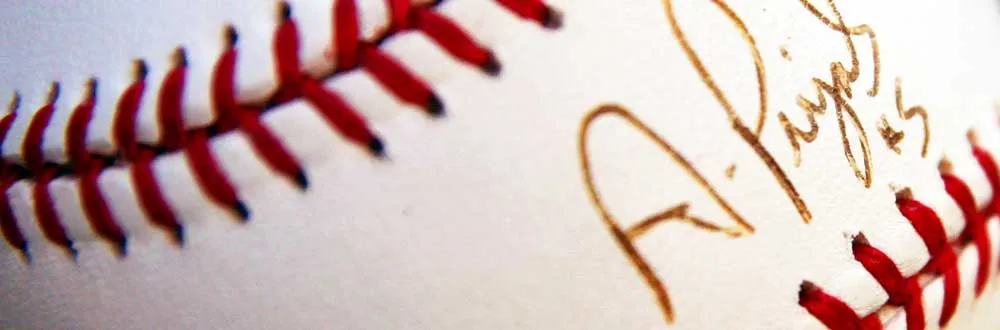
Baseball fans know the eeuphus pitch-that arcing lob made famous by Rip Sewell in the 1946 All-Star Game. Before that, the word eephus referred to insider information. Jim Strain in La Mesa, California, even uses it as a verb, as in, “That dog’s not allowed on the couch, but he’ll eephus his way on somehow.”
Frunk
Do you have junk in your frunk? As in, the front trunk, found on cars like a zippy Tesla.
Rule of Thumb Origin
Where does rule of thumb come from? The idiom referring to a practical measure based on experience was never actually a law, though it does pop up in legal opinions suggesting that it’d be okay to let a man beat his wife if the stick was less than a thumb in width.
Sacapuntas and Mock Obscenity
If you need to release some tension but don’t want to curse, try shouting “sacapuntas!” This Spanish word for “pencil sharpener” falls into a colorful line of curses that aren’t actually curses. For plenty of others, turn to Michelle Witte’s book The Craptastic Guide to Pseudo-Swearing.
Daisy-Cutting
The term daisy-cutting, which refers to the low-action trot of Arabian and Thoroughbred horses, is reminiscent of the low grounder in baseball known as a daisy cutter and even the daisy cutter explosive, which shoots low-flying shrapnel.
Top Pet Names
According to vetstreet.com, the top ten female puppy names from 2012 include Bella, Daisy, Lucy, Molly, and Lola. Notice anything odd? They’re all human names! Gone are the days of pets named Fluffy and Pooch. In are the days of human children named after fruits and vegetables. In the Middle Ages, though, you might run into dogs that answer to Amiable, Trinket, Nosewise, Holdfast, and Clench. For more about pet ownership back then, check out historian Kathleen Walker Meikle’s book Medieval Pets.
Spizzerinctum
Do you have spizerinctum (or spizzerinctum) and huckledebuck? These terms for passion and energy, respectively, are fun examples of false Latin, meaning they replicate the look and mouthfeel of Latin words but aren’t actually Latin. Huckledebuck, which can also mean commotion or craziness, has been in use for over one hundred years but still hasn’t been given an entry in any mainstream dictionaries.
“Whistling Dixie” Origin
You ain’t just whistling Dixie, and that’s the truth! Whistling Dixie, which refers to a studied carelessness, comes from the song that originated in minstrel shows and from which the South takes its nickname. But if you say someone ain’t just whistling Dixie, it means they’re not kidding around.
Knock a Tater in the Head
Come on over for dinner, we’ll knock a tater in the head or something! This lovely form of a dinner invite came to us from Vera, a listener in British Columbia who heard it while living in Arkansas.
Elbow Grease
Elbow grease isn’t a product you can buy at the hardware store. If a task demands elbow grease, that just means whatever you’re doing requires hard work that might result in sweat.
This episode is hosted by Martha Barnette and Grant Barrett, and produced by Stefanie Levine.
Photo by Josh Samson. Used under a Creative Commons license.
Books Mentioned in the Episode
| The Craptastic Guide to Pseudo-Swearing by Michelle Witte |
| A Hand-Book of Proverbs by Henry George Bohn and John Ray |
| Medieval Pets by Kathleen Walker Meikle |
Music Used in the Episode
| Title | Artist | Album | Label |
|---|---|---|---|
| Sham Time | Willie Bobo | A New Dimension | Verve |
| Spanish Grease | Willie Bobo | Spanish Grease | Verve |
| Mission Creep | The New Mastersounds | Out On The Faultline | One Note |
| Last Train To Newark | Sugarman Three | Sweet Spot | Unique |
| Joao | Cal Tjader | Soul Sauce | Verve |
| On The Border | The New Mastersounds | Breaks From The Border | Tallest Man Records |
| Soul Sauce | Cal Tjader | Soul Sauce | Verve |
| Turtle Walk | Sugarman Three | Sweet Spot | Unique |
| Sehorn’s Farm | The Meters | The Meters | Josie Records |
| Let’s Call The Whole Thing Off | Ella Fitzgerald | Ella Fitzgerald Sings The George and Ira Gershwin Song Book | Verve |
