

Is it time to replace the expression “the mentally ill”? Some argue the term unfairly stigmatizes a broad range of people. Also, the winter sport of… skitching, which involves snowy roads, leather shoes — and car bumpers. Needless to say, don’t try this at home. And: We’ve all used the phrase “put on your shoes and socks.” But when you think about it, socks should come first, shouldn’t they? The reason we use this phrase has more to do with your tongue than your feet. Plus, epizootics, the big cheese, horse kickles, nimrods, who vs. that, and a handful of Turkish proverbs.
This episode first aired July 12, 2014.
Transcript of “The Big Cheese (episode #1389)”
You’re listening to A Way with Words, the show about language and how we use it.
I’m Grant Barrett.
And I’m Martha Barnette.
Grant, I have a question for you about biology.
Okay.
Why don’t monkeys like to play poker in the jungle?
I don’t know. Why?
Too many cheetahs.
Terrible!
That’s funny.
Right. You’ve never seen a monkey playing poker in the jungle, right?
That could be the reason.
And never on velvet paintings either.
That’s right. Come to think of it on Black Velvet.
But that was sent to us by Michael Sutherland in Traverse City, Michigan.
He says he has five kids, and that’s their favorite joke ever.
We’d like to hear your favorite joke ever, 877-929-9673, or email it to us, words@waywordradio.org.
Hello, you have A Way with Words.
Hi, Grant.
Hi, Martha.
Hi, who’s this?
Hi.
This is Sue.
I’m calling from Wilder, Vermont.
What’s on your mind, Sue?
Well, my question has to do with an expression I think many people are familiar with.
And the most memorable instance for me of hearing the phrase was when my family and my husband’s family were having a barbecue at my parents’ house the night before our wedding in 1977.
And my husband’s 92-year-old Italian grandfather was there.
And he had found a comfortable place to sit in the den, and he seemed to be taking everything in.
He was pretty quiet until he spotted my dad.
They hadn’t been formally introduced yet.
My dad was passing through the room, and my husband’s grandfather, Carlo, he exclaimed, “So, you the big of cheese, eh?”
That was so amusing to my family.
We never thought of my dad that way.
And my dad is now almost 90.
God bless him.
And we still refer to him as the big cheese on occasion.
From that moment.
Not the big cheese.
Right.
From that moment, he was the big cheese.
Nice.
So it’s one of those expressions I’ve taken for granted, and I’d love to know something about its origin.
Yeah.
It doesn’t really have to do with cheese.
Oh, I wish it did.
Yeah, we’re not 100% sure, but we have a pretty strong guess about this term.
And there are a couple of different stories that combine here.
As early as the early 18th century, if you really liked something in England, you might say that it was the thing or it’s the real thing.
And as it happens, in Urdu and Persian, the word for thing is cheese.
That’s spelled C-H-I-Z.
And it may be that in the mid-19th century, British soldiers came back from India with this term cheese, meaning thing, and just sort of jokingly substituted it.
And so they would say it’s the cheese or it’s the real cheese rather than it’s the real thing.
Meanwhile, in this country, for years, people were using a lot of different terms for the top guy, the top dog.
They were using terms like, you know, big shot, big fish, big dog, even big bug and big potato.
Big wheel, big noise.
Yeah, big wheel.
I hadn’t thought about that one.
Yeah, big noise.
And somewhere along the way, those got combined into the big cheese.
And so now you can be the big cheese.
I imagine a great wheel of cheese with eyes and arms and legs.
Vermont is known for its cheese, among other things.
This would have been mozzarella, though, right?
Well, I never would have figured that one out.
Thank you so much for having me on the show to ask that question and for having such an entertaining, informative program.
We really enjoy it very much.
Well, it’s our pleasure. Thank you so much.
It’s the big cheese.
And please give our regards to the big cheese, okay?
Okay, I sure will.
Thank you so much.
Thanks for calling.
Bye-bye.
Bye-bye.
I also always imagine Mayor McCheese, only instead of a hamburger for the head, it’s a giant cheese wheel.
He’s standing up there pontificating, and I only want to bite.
The wheel of cheese.
I do like cheese.
Do you?
Do you know what kind of cheese is made backwards?
No.
Edam cheese.
E-D-A-M.
Nice.
Oh, I got a million of them.
Call us, and we’ll tell you some more.
877-929-9673, or send your questions about language to words@waywordradio.org.
Hello, you have A Way with Words.
Hello, this is Spence Steno in Heartland, Wisconsin.
Hello, Spence.
We’re Martha and Grant today.
We’re great. Thank you. Thanks for calling.
What’s going on, Spence?
In my youth, there was an event that I used to participate in with the other neighborhood kids in Chicago.
The snow there, when it came, often got packed down and very icy on the streets.
Because they didn’t plow and salt anywhere like they do today, sometimes the occasional sand throw.
But what we would do is we’d hide in between the cars or snow banks, and when a car came down the street going nice and slow, we’d jump out behind it and grab onto the bumper and be pulled by the car down the street and tumble off somewhere, and hopefully that we didn’t have your mouth on the exhaust or a car following you.
Otherwise, it was pretty much fun.
Oh, my gosh.
Yeah, sounds great.
Sounds dangerous.
Yeah, it’s under the category of don’t tell my children about this.
But the way that it happened, you know, we just called it what we’ve referred to it as sketching.
Now, I’ve heard it called skeething, which is I have no idea.
But over the years, I’ve referred this to a number of people.
And nobody has really heard of doing it behind cars.
But I’ve heard of other people saying these days that, oh, yeah, they do it with skateboards or snowboards or hang on to vehicles going by.
I just, I’m surprised I can’t find any great history about sketching anywhere and wonder if this is a colloquialism of Chicago or might there be any other distance in history behind it.
That’s a good question.
I have a few things to tell you about it, but let me ask you a question first.
How long ago was your youth?
That was in the 50s.
The 50s.
So you’re sure that you were using the term in the 50s?
Oh, yes.
Oh, wow.
Okay, great.
Because I’ve got to tell you, the interesting thing about this term, it doesn’t show up in print until the 90s.
Wow.
The first use that we find in 1991 comes out of New York City, and it refers to somebody hitchhiking along on roller skates.
And they claim that the origin of the term skitching is skeet hitching, whereas I know that Wikipedia and other sources claim that the origin is ski hitching.
It’s possible that ski hitching and skate hitching both contributed to the word skitching or that they were independently derived.
So if you Google this carefully and actually look at newspapers and books, you will find plenty of people who know skitching as you know it.
It’s specifically a winter sport, something you don’t tell your parents about.
Or your kids.
And it’s dangerous.
You’ll find newspaper reports of people dying from it.
Yeah.
We used to have, you know, as kids, again, the modern clothing didn’t exist.
So you had your leather shoes and you had these big hunky galoshes with the snaps on them.
Well, those were worthless for sketching.
You wanted to use those nice, smooth leather shoes.
Yeah, the leather soles.
Yeah.
That got you a better glide.
Another reason not to tell mother that you’re wearing your Sunday shoes in the snow.
Well, exactly.
There would be a warm adventure from pups when he got home if he heard about that.
Warm adventure, indeed.
You’ve been out in the cold. It’s not so bad.
Yeah, yeah. Your opinion.
So that’s the most that we know about sketching.
But it is widespread.
You’ll find plenty of people still know the word and still do it.
It’s fun for a lot of folks.
But you’re right. Lots of folks just only know it.
You get on your skateboard, you duck down behind the car, and you hold onto the bumper so they can’t see you in their mirrors.
Right. Don’t try this at home, right?
Spence, I want to thank you for giving us a call and sharing your stories.
Really appreciate it.
Pleasure chatting with you all.
Take care now.
Bye, Spence.
Bye-bye.
What are your sports? What do you call them?
What’s the language you use that you don’t think other people have heard of?
Give us a call, 877-929-9673.
Email words@waywordradio.org.
I came across a wonderful collection of Turkish proverbs about language.
To set up this first one, you have to know what a zirna is.
A musical instrument in Turkey that sounds sort of like a bagpipe.
Okay, a zirna.
But here’s this Turkish proverb about language.
To one who understands, a mosquito is a loot. To one who does not understand, a drum and zirna are little. In other words, a good listener needs only half a word.
I love that.
Nice.
Beautiful, right?
Yeah, beautiful.
Yeah.
You want to hear one more?
Yes, please.
A knife wound heals, but a tongue wound festers.
Oh, wow.
That’s perfect.
Isn’t that good?
A knife wound heals, but a tongue wound festers. It’s so true.
Yes.
Share your thoughts with us, 877-929-9673. Email words@waywordradio.org. Find us on Facebook and Twitter. And you can hear the show on SoundCloud, iTunes, and a whole bunch of other places.
Hello, you have A Way with Words.
Good afternoon.
This is Norm Herman, North Carolina.
Hi, Norm.
Where in North Carolina?
In a small town, not even a town called Etowah. It’s near Asheville.
Oh, sure.
Out west.
Oh, my gosh.
You’re from the Smokies. I’m so jealous. Nice place for hiking.
Oh, my gosh.
Tell me about it.
What’s on your mind?
I don’t know if the change is with me or if the change is with our culture. I’m seeing a lot of usage of that in reference to action by people. Like, oh, Johnny is the boy that fell down the hill instead of Johnny is a boy who fell down the hill. And I don’t know if this is more acceptable or it’s always been acceptable or what? What’s going on?
Well, Norm, it sounds like something about that bothers you. What bothers you about it?
I think, and I’ve thought about this a little bit now, I think it’s like a dehumanization. You know, it’s like when people refer to a baby as it, you know? And what about animals? Do you feel the same way about animals? This is the dog who?
I think it depends on your emotional attachment to the animal.
Yep, yep.
Okay.
I agree with that.
I agree with you generally about the dehumanization of it. I don’t think it’s something that should be stamped out of the speech and writing of other people. And I know that many of the style guides actually don’t express a particularly strong preference for who when talking about people. As some of them specifically say, it doesn’t matter. Both of these pronouns work just fine. I agree with you that if you have the choice to say who about another human being, you should do it instead of using that. It’s just a subtler, more friendly, warmer, humanistic approach. Just one little attribute of your writing can affect the whole cast of it as being less clinical, less academic.
Yeah, and why not use it?
Yeah.
Okay.
But both of these have long been used each way, and the grammar doesn’t require who. Custom doesn’t require who. And style may at various institutions require who, but it’s usually left up to the institution or the writer themselves. I do like your distinction about animals now that I think about it. I’m thinking this is the dog who went on the hike with me, but that’s the snake that bit me. You can invert that and say that also applies to people, though. If you’re talking about, if you’re pointing at somebody in the distance that you don’t know, that’s Sue who won the race. You know who. You know Sue. But if you say that’s Sue that lost the race, then you are separating yourself from Sue and kind of indicating that you don’t know her or have familiarity. And you might start to see this and pay a little more attention and see if you can determine that there is a difference between that and who, the distance and the knowledge of the person that you’re talking about.
Okay.
But thanks for noticing, Norm. And if you’re in a position to teach others, you could express your preference in a gentle way and let them know, you know, who would work better here? Why don’t you try who? And in that way, you can affect language change.
Thanks for calling.
Thank you.
All right.
Take care.
Bye-bye.
You do notice those things, and after you notice something in print, it just keeps coming up, and you’ve got to scratch that itch, and you call our show.
Yeah.
877-929-9673. Email words@waywordradio.org. You’re listening to A Way with Words, the show about language and how we use it.
I’m Grant Barrett.
And I’m Martha Barnette.
And joining us now from New York City is John Chaneski, our quiz guy.
Hiya, John.
Hi, Martha.
Hi, Grant.
Hi, buddy.
What’s up?
Let’s use some language like you guys are always talking about using language. Let’s use some language.
There’s an idea.
Why not?
What you got?
I have an idea. Let’s play pretend. Let’s pretend that every single promise of the 1960s came true, and all of us are hippies, man. It’s the age of Aquarius and all of that?
Yeah, yeah, man.
It’s the age of Aquarius. That means that the 80s or the me decade wouldn’t have happened because, hey, man, it’s not about me. It’s about we.
Right.
Right on, man.
Yeah.
All right.
For example, if I said, hey, man, don’t bogart that non-vegetarian cafeteria lunch staple, you’d say, yeah, man, it’s not meatloaf, it’s wheat loaf.
Oh, wheat.
Me to we, okay.
From me to we.
Here’s another example. If I said, hey, man, there’s enough room for a whole commune on this strip of land between the two sides of the highway, you’d say, it’s not a meatian, it’s a wheatian.
It’s a wheatian, dude.
Okay, all right.
Very nice.
Here we go.
Hey, man, don’t just wander all around all over the place by yourself. Include the whole commune in your circuitous journey. Don’t meander, weander.
Weander.
It’s more inclusive that way, dude.
All right.
Right.
Hey, man, tell your pet cat he shouldn’t be so self-centered, man. He shouldn’t meow, he should weow.
Weow.
Meow.
Hey, man, you got to understand how money works, man. Wealth, the production and consumption of goods and services. You can make sure that stuff benefits the whole world, man. It should be the economy, not the economy.
Yeah, dude, I’m with you.
I’m with you.
Hey, man, when one of us gets sick, all of us get sick, especially with a contagious disease that gives you spots. Not the measles, but the weasels.
Weasels, too.
Okay, the weasels. That’s the last one, dudes.
That was great.
You guys are just fantastic.
You’re groovy.
You’re totally groovy.
This was far out. I’m having a hard time keeping a straight face, people.
Thanks, John.
It was groovy.
Thanks, Grant.
Thanks, Martha.
All right.
Bye-bye.
Whether it’s from the 60s, 70s, 80s, 90s, 2000s, or the 2010s, give us a call about words and language, 877-929-9673, or email us, words@waywordradio.org.
Hello.
You have A Way with Words.
Hi.
Hi.
Who’s this?
Hi.
This is Kathy.
Hi, Kathy.
Welcome to the show.
Thank you.
What can we help you with?
Well, I’m an eighth grade teacher, and I was teaching some essay writing, and we were researching Ernest Shackleton. And one of Ernest Shackleton’s ships was named the Nimrod. So one of my kids says to me, why would they call a ship Nimrod when that’s a word we use to make somebody sound stupid? And I have never been so completely taken aback in 20 years of being an English teacher. So another student, and this is what really threw me, says, oh, I know, I know. Nimrod was a hunter. And when Bugs Bunny used to call Elmer Fudd Nimrod, nobody knew he was calling him a hunter. The kids thought he was calling him stupid. I was completely floored. So I can’t seem to find this anywhere. And I thought of you and thought, well, maybe you all could answer that for us.
Oh, very good.
Very good.
It sounds like you’ve got some bright kids there.
Yeah, I do. I was completely taken aback. It was great. Great conversation, but I didn’t have the answer.
Yeah, Nimrod is a figure in the Bible. He’s the grandson of Noah in Genesis. And he’s described…
A great-grandson.
I’m sorry, is he great?
Yeah, a great-grandson.
Grandson of Ham?
Son of Cush.
Son of Cush.
Yeah.
Okay.
Okay.
Anyway, okay. But that’s a long way to Bugs Bunny.
Yeah.
Oh, there’s an interesting story there along the way. I think one of your kids nailed it. It came pretty close, right?
Yeah.
But somehow between Nimrod being described in the Bible as a mighty hunter, it became this word for sort of an idiot or a lame brain.
How?
And it seems to have been popularized by the Looney Tunes cartoons.
I’ve seen cartoons where Daffy Duck calls Elmer Fudd a Nimrod.
Oh, it’s a Daffy Duck.
Okay.
Well, and Bugs Bunny calls Yosemite Sam.
I watch cartoons in pursuit of knowledge.
And they do it not necessarily as a hunter, just sort of as a sort of, you know.
So Elmer’s not wearing his hat and carrying his gun at the time.
He is.
He is, okay.
So it’s a reference that the audience wouldn’t have gotten necessarily unless they had biblical training.
Yeah, which they would have more probably maybe than they do now.
But still, if there was enough influence to make the term stick to mean dimwit.
Yeah.
Well, how did it make that leap?
That’s a great question.
Because you’re saying it made that leap before the cartoon.
Yeah, in the Oxford English Dictionary, there’s one example that the editors there have gathered of Nimrod meaning dummy from the 1930s, which is before any of these cartoons were broadcast.
And so we’re not quite sure.
It’s kind of one of those really nice etymological puzzles.
Did I stump you?
I’m amazed.
Yeah, sure.
Because my kid stumped me.
I would say that Nimrod has stumped the people who’ve tried to figure this out.
Everybody who’s looked into it has come up with the same answer,
Which is we don’t know why Nimrod changed in the 1930s,
But we do know that the Looney Tunes cartoons had a lot to do with popularizing the idea that Nimrod meant dummy.
Okay.
I could see if you’re talking to fellow hunters and you could be sarcastic,
You know, saying, oh, you Nimrod or something like that.
Yeah, maybe.
Maybe.
And that’s probably where Shackleton got the name for his ship, Nimrod the Hunter.
Right. He wasn’t thinking of a dummy.
Yeah.
He was definitely not there.
Definitely not.
Okay.
Well, thank you so much.
I really appreciate that.
Thank you for the call, and keep teaching those bright kids.
That’s a good job you’re doing there.
All right.
Thanks so much.
Good to talk to you both.
Bye-bye.
Bye-bye.
Call us with your language questions, 877-929-9673,
Or send them an email to words@waywordradio.org,
And we are all over Facebook and Twitter.
Hello, you have A Way with Words.
Hi, Grant and Martha.
This is Blake in Indianapolis, Indiana.
How are you today?
Hi, Blake.
We’re doing well.
How are you doing? Nice to talk to you.
I’m well. Hey, I’m calling today because I’ve got a question about a weird word I’ve come across recently.
Okay.
And I’ll give you a little context. Recently, I took up cigar smoking kind of as a very casual hobby on special occasions and vacations and those kinds of things.
Okay.
My wife likes to say that I have an obsessive personality, but I like to just say that I have an insatiable thirst for knowledge.
So even though I don’t smoke a lot of cigars, I’ve done a lot of research and kind of try to get an idea about the culture and how they’re made and kind of what goes into the whole process.
And so in my reading about that, I keep coming across a word, and the word is herf.
It’s spelled H-E-R-F.
And I’ve seen it in a couple different contexts.
Primarily, I see it used as a noun to describe like a meeting where people would get together and smoke cigars and enjoy them together.
But I also see it used as a verb to describe the act of smoking a cigar.
So, for instance, if you are at a hearf, you could ask another friend there what they were hearfing on, for example.
And so I wondered if you could share any insight as to maybe where that term came from.
It sounds like what I did the first time I tried a cigar.
Oh, yeah.
That’s funny because when I think about that word, it brings to mind the act that your mouth makes when you use the muscles to pull the smoke into your mouth.
Because you’re not inhaling the smoke.
You’re kind of pulling it through the cigar like a straw.
If you kind of picture the motion that your lips and cheeks would make, it kind of reminds me of the noise that you say when you say hearf.
Kind of that kind of motion.
That’s always come to mind when I think the word.
But I wonder if that might have anything to do with the true origins of the word.
I think you’re on to something.
Your thoughts are in line with what has been covered by Barry Popik, P-O-P-I-K.
Barry Popik is a researcher who has a great little website at BarryPopik.com
Where he looks into word origins, and basically anything that he finds, he digs around.
And for this particular term, HERF, H-E-R-F,
He found an old posting from 1996 in the Usenet discussion forums.
You can still, I believe, find it on Google.
And this person who goes by the name of Prince of Sceves described herfing a cigar and didn’t really even explain it.
But later when people said, well, what do you mean by herfing?
He says, oh, well, I first heard this term in 1982 from a blue blood person, just somebody kind of well-to-do,
Who used it to refer to the way your face contorts when you try to inhale on a hand-rolled cigar or cigarette.
Because if you pack it too tightly, you’re like, whoo, just like Martha did.
So your face makes these weird kind of derpy, herpy, you know, expressions.
Oh, I was coughing it out.
Oh, you were coughing it up.
And so this is the first use that we know in print from 1996.
We kind of have to take this person’s word for the stuff that they’re telling us about 1982.
But we, you know, we’re just going to assume that their motives are pure.
And this term came out of Texas in 1982, traveled to this online discussion forum in the mid-90s where people were talking about cigars.
And then not a year or two later, this group of cigar smokers in the Usenet discussion group, I believe it’s alt.cigars, had a get-together in Texas to get-together to smoke cigars.
And they called it a herf.
They all came together to herf at this herf.
Wow.
Yeah.
That’s so interesting how that word has evolved from kind of, like you said, the motion that your face makes to then describe a social gathering.
That’s such a cool etymology.
It’s a natural thing.
We noun verbs all the time and verb nouns and words go back and forth across different parts of speech.
So it’s not altogether that unusual.
But like I said, we have to take this person’s word for it.
There were two other theories I think might be worth sharing.
One is that there was a term during the Vietnam War which meant to pack a lot of gear.
If you were in the military, you would hearf a lot of gear, kind of like humping it, and you might be under strain.
You’ve got 80 to 150 pounds of gear on your back or whatever, and you’re like really showing the strain.
Also, we have to acknowledge that there’s the word huff, which means to inhale.
And so it’s possible that hearf is influenced by huff.
You might huff a chemical if you want to get high illicitly.
You might huff, you could even just huff a cigar smoke or marijuana smoke for that matter.
But this is completely common in the cigar smoking world, it sounds like.
Yeah, in the United States.
Outside the United States, it’s virtually unheard of.
Okay.
Oh, wow, okay.
I’d never heard of it.
So there you go, Blake.
That’s the history.
If you want to find out more about this research that we’re talking about, go to barrypopic.com.
That’s P-O-P-I-K.
And you can just look for H-E-R-F on his site, and you’ll uncover all the details that he’s managed to uncover.
Excellent.
Well, thank you so much for your time, Grant and Martha.
It was a pleasure to be on your show.
Yeah, thanks for calling.
Really appreciate it.
Take care.
Great to talk with you.
Bye-bye.
You too.
Bye now.
Grant, I didn’t want to leave anybody with the impression that I actually smoke cigars.
Everybody tries stuff like that once, right?
Yeah.
But I don’t.
I’m actually a misocapnist.
Misocapnist?
Yes.
So miso, the root probably means against or…
Like misogyny.
Misogyny, right.
And the capnos, I don’t know what that is.
Capnos in Greek is smoke.
So a misocapnist, M-I-S-O-C-A-P-N-I-S-T, is somebody who doesn’t like smoke.
Oh, you dislike smoke.
Very good.
All right.
Learn a new word, misocapnist.
Yes.
Well, whether you’re a cigar smoker or misocapnist, give us a call, 877-929-9673, or send an email to words@waywordradio.org.
Grant, a guy posted a question on the Facebook page of one of my friends. He said, I’m looking for a word that means attracted to shiny objects. I think it may be Latin. I also think it may be scientific, although none of my biologist friends could help me. It’s said of certain birds and rodents. Do you have any idea what that word is? I’m looking for it. No. I can’t find it. So we’re thinking of crows that gather little shiny things and magpies and pack rats. Yes, yes. Interesting. No, this is a good puzzle. I like this. Yes. I was looking all over and trying to come up with Latin words that might fit that. The best that I can find for attracted to shiny objects is not really that, but neophilic. Neophilic, attracted to the new. Exactly. That’s as close as I can find. But I know we have lots of scientists who listen, and so I was hoping that they could let us know if there’s some other word for being attracted to shiny objects. But I’ll tell you one great byproduct of my search is that I came across the word chyloproclitic. Chyloproclitic. Don’t know. I don’t know what the chylo part is. Okay. Well, it’s from Greek. It’s C-H-E-I-L-O-P-R-O-C-L-I-T-I-C. Chyloproclitic. And it means erotically attracted to a person’s lips. Oh, wow. Oh, hello. So that was worth it. Chyloproclitic from the Greek. Put some lip gloss on there. You’ve got the term. Yeah, the chylo from Greek for lips. And proclitic means to lean forward. Oh, I see. It’s not very romantic, though. You’re not going to see that in a Hallmark card. A Hallmark card for nerds, yes, you would. There we go. There’s a product line for us. 877-929-9673. Email words@waywordradio.org.
Hello, you have A Way with Words. Oh, good morning. This is Doyle. I’m calling from Eureka, California. Is this Grant? It is indeed. Hello, Doyle. Welcome to the show. Thank you very much. Martha, are you there? I am right here. Good morning, Martha. Good morning, Doyle. What can we help you with? Okay. Here’s the question that came up a couple of weeks ago. I’m a small manufacturer. I make this product called the candle heater, which sits on a steel stand. And in order for the stand to not abrade a surface, we plastic coat it. We dip the little feet in plastic coat so it has something that won’t scratch like a nice table or something. And we double dip it because we just think that that’s better than just one dipping. So the first time we dip it, we put on just maybe like a quarter of an inch of plastic coat, and we let that dry, and we call that putting on the socks. And then after a day, we come back, and then we dip it further, like maybe an inch, inch and a half, you know, to get a nice foot-looking or shoe-looking thing to it, and we call that putting on the shoes. So one of the comments that we have, you know, in the manufacturing process is, well, you know, who’s going to put on the socks and shoes on the stands today? And then the discussion came up, well, why do we say socks and shoes? We say socks and shoes because that’s what we’re doing, but in everyday language we talk about putting on our shoes and socks, not our socks and shoes. So I decided that the reason that we say shoes and socks is because shoes were invented before socks were invented. But the other guy that I work with, there’s actually three other guys, he says, no, the reason we say shoes and socks is because it’s easier to say shoes. There may be something to your friend’s theory. I’m thinking that there’s a lot of things that we say that are, you know, not necessarily easy to say that we say. Yeah, there are a lot of things, but the tongue seeks the easiest path. There’s a passage in Steven Pinker’s book, The Language Instinct, where he talks exactly about this idea. That when we have compounds or we have reduplicated phrases, we’ll say like dilly-dally or flip-flop, the vowel that comes first tends to be the vowel for which the tongue is high and in the front. And then the vowels that tend to come second in the compound are the ones where they’re low and in the back. Oh, interesting. Yeah. So shoes and socks. Shoes and socks. And you can do this with some other ones that are also illogical, like lock and load. Now, I’ve seen a lot of discussion online that lock and load, actually, for some guns might be correct, but most people understand it to be incorrect. You load it, and then you lock in the chamber. I don’t like this. I’m going to lose 50 cents on this. This is not good. This is how you make friends. Be in their debt a little bit, and they’ll love you for life. I’m still, like, shoes came first. Yeah, they did. They did indeed, but language tends not to work that way very often. You do have things where there are retronyms. For example, now we have an electric guitar where previously we only had a guitar. This is because the progression from the acoustic to the electric meant we needed new terms. And we had to then rename the old object to the acoustic guitar where it didn’t ever need to be called an acoustic guitar before. But usually language doesn’t work that way. The point of origin of a term is tied to the invention, but it doesn’t appear that way embedded in compounds or set expressions or idiomatic phrases like that. Well, I know you guys are the research experts on this, but when I get some free time in my life, I’m going to dig on this. If you can prove us wrong, that’d be great. We’re happy to accept new evidence at all times. You betcha. Talk to you later. Take care now. Bye-bye. All right. Bye-bye.
Grant, we got through that whole call without saying the words hysteron proteron. Oh, what did you say? That’s naughty, right? No, it’s not naughty. It’s a figure of speech in rhetoric when the logical elements are reversed. Right. So the thing that you ordinarily expect to come first actually is last. So this is where we get shoes and socks is an example of Historon Proteron. Indeed. Or born and bred. The breeding comes before the borning, right? Exactly. Interesting. And it comes from Greek words that mean the latter put in place of the former, which also reminds me of the word preposterous. Right. Because you have pre, which means before, and post, which means after, embedded right in the word. Right. Everything’s bas-ackwards. Bas-ackwards. That’s preposterous. So we have the formal term for it, Historon Proteron, and the informal term for it, Bass-ackwards. Exactly. Very good. Well, and preposterous, too. Preposterous somewhere in the middle. If something about language has come up at work, give us a call, 877-929-9673. More stories about what we say and why. Stay tuned. You’re listening to A Way with Words, the show about language and how we use it. I’m Grant Barrett. And I’m Martha Barnette. Not long ago, the New York Times ran a headline that said, when the right to bear arms includes the mentally ill. And that and some other headlines recently prompted an online essay from journalist Carrie Goldberg. And she was urging that we drop the term the mentally ill. And she had a couple of reasons for this, one of which was that the use of the, in this case, creates a sense of other and separateness and stigma. Because you wouldn’t talk about discrimination against the African-Americans or respect for the gays or equal pay for the women. And another argument that she brought up was the idea that the term mental itself is a problem because so often there are physical components to mental illness. If you’re talking about depression or bipolar disorder or schizophrenia, you know, there’s chemistry that goes along with how you feel. And we posted this article to our Facebook page. And my gosh, the reactions we got ran the gamut from this term has made me cringe for years to I’m sick to death of political correctness. Yeah, I can see another problem with it being that mental illness is a spectrum of problems. You can have mild depression, which is completely invisible to the outside. And then you can have these other mental illnesses, which are utterly visible to the whole entire world.
And it’s difficult to lump all those people together with all these different problems.
Exactly.
Maybe you take medication for anxiety or, you know, phobia is a diagnostic term. If you have a phobia about public speaking, are you mentally ill? Are you mentally ill? It’s a really good question.
Another thing that occurred to me is we, when we talk about, we don’t talk about the disabled or we’re not supposed to, you talk about people with disabilities.
Exactly.
And it’s exactly the same parallel, I believe. You are taught when you work with these groups that it is people with disabilities because they are whole people who have something extra.
But there’s another thing here, too. It occurs to me that describing them by this affliction not only paints with a broad brush, but it’s like saying the acne-ed, you know, the acne-ed of America, need clear-as-el.
Right, the cancer-ed.
Yeah, the cancer-ed of America. It’s a strange way to lump them together and to mark them with this one particular color.
Yeah.
On the other hand, we don’t flinch at saying the elderly.
We don’t.
And maybe that’s a change that will happen. Who knows?
I want to respond, though, to the complaints of excessive political correctness. This is a term that I believe is code for I want to do what I want and don’t want to have to take your feelings into account. When people complain about excessive political correctness, it tends to be that the world isn’t going their way.
I don’t know that such a thing is actually a problem. I can relate to the idea of, you know, sometimes you really feel like you’re walking on eggshells.
And, yes. And don’t you need to sometimes?
Well, that’s a really good question. The consideration for other people.
But then it’s hard to know where to step.
True.
I mean, like… Life is difficult.
Yes, we make mistakes.
Yes, yes.
It’s not always going to be easy, and it’s not always going to go our way.
Well, exactly.
Pity the poor headline writer. How would you have solved this problem?
Oh, but I’ve known headline writers that should be imprisoned. This isn’t even their worst offense.
Well, what would you say is an alternative to when the right to bear arms includes the mentally ill? Would it be the psychiatrically impaired?
I don’t know.
You know, there’s another element to this that I think is worth discussing. And we’re kind of musing aloud here and not really coming up with firm answers. And we welcome your responses.
But the movement towards believing in the concept of neurodiversity is important when we’re thinking about this. This idea that conditions that in the past we saw as abnormal, we’re now starting to think of them as a different kind of normal.
And for example, people with Asperger’s syndrome might be seen as not a problem to be fixed, that they simply exist as they are. And they’re just outnumbered by other people who don’t have Asperger’s.
And we can take this concept of neurodiversity and start to think about, well, what happens if you start to treat people who have mental illnesses as perfectly ordinary, except for this one little thing in which you help them if they need it?
You know, it’s an interesting idea.
That’s a really good point. We welcome your thoughts on this. We don’t have all the answers. This is a conversation still happening on our Facebook page. Join us there to talk more about this with us and other listeners, or send us an email to words@waywordradio.org.
Hello, you have A Way with Words.
Hi, this is Peter Smith from San Diego.
Hiya, Peter. Welcome to the show.
Hey there, what’s up? How can we help?
Hey, my question is about the word whatnot. My sister uses this word, and the way that she uses it is like a filler, or, you know, she’ll say something like, I went to the store and I had to get some stuff and whatnot. It doesn’t have any meaning for me.
Yeah.
And it’s a weird construction. How old is your sister?
She is 49.
49.
Oh, wow. I was expecting her to be much younger. Does she hang around with a lot of young people?
She has kids.
Are they in their teens, perhaps?
Yes.
Okay. Very good. Good, good, good. This is a little more conforming to my theory here about whatnot. You are not the first person to ask us about whatnot. We have numerous emails and numerous phone calls over the last, well, since 2007. People have asked us about what they believe to be a sudden resurgence in the use of this term.
And you can look in the databases like the corpora and Google Engrams, and you can see that whatnot kind of bottomed out in the 1980s in terms of usage, at least in print, and then started rising again and continues to rise in usage.
And there’s another thing happening here. In order to kind of track it more recently, say the last 10 years or so, you can search in Twitter and Urban Dictionary and a few other places and start to see people reacting against what they perceive to be the overuse of whatnot.
Like you.
Yeah.
So you’ll see them peeving about it or complaining that somebody just, that the word is empty and meaningless. All of these people reporting to us that they’re overhearing whatnot and the database is showing that there’s a resurgence in the term in print and the rise of peeving.
The thing is that when I see people complaining about a word, I don’t really care much that they’re upset about the word. I try to dissuade them. But what I care about is their peeving about it means that something is actually happening there.
And so I think you’re on to something, Peter. She’s probably caught this word from her children. It does tend to be heavily skewed towards young women.
Interesting.
Yeah, I don’t know how it came about that it was resurgent. I don’t know if it was in a book or a movie or influential television show. I don’t know.
But more with young women, did you say?
Yeah, a little more with young women, yeah.
Huh. As far as I can tell, this stuff is really hard to track. One interesting thing is I was searching Twitter to find people’s reactions to the use of whatnot and to see people commenting on whatnot as a word rather than just using it.
I came across this great tweet from Twitter user Amy Hoy. She wrote in October of 2010, she said, you can’t sound like a badass if you use the word whatnot. It’s granny panties for your vocabulary.
I love that.
That’s great.
That’s great. And I think Amy Hoy nailed it. Because it’s an old-fashioned sounding word. It’s weird to me to hear like a vivacious, well-educated 22-year-old young woman who is like completely in charge of her life throw out this word that sounds like it should be from an 1890 Victorian novel. You know? It’s crazy to me.
Right, right.
It’s bloomers. Does that sum up your feelings about it, Peter?
I think Granny Patties is totally what it is.
Yes, indeed. Thank you, Grant. I think you nailed it.
Well, glad we could help, Peter. So, yes, your instincts are correct, and it’s resurgent. I don’t think that you’re going to have any luck in getting her not to say it. She’ll grow weary of saying it after a while, and whatnot will fade back into history as it did once before.
Hopefully sooner than later.
All right, thanks.
Thank you.
All right, sure.
Bye-bye.
We’re happy to talk with you about language and so forth and so on. Call us 877-929-9673 or send your questions and email to words@waywordradio.org.
Hello, you have A Way with Words.
Hey, this is Paul Lane.
Hi, Paul. Welcome to the show. How can we help?
I used to teach chemistry in college, and I used to use an analogy for chemistry because people really, really struggled with it. That chemistry is kind of a language. You have to spend a lot of time learning all the building blocks, like the letters and the words and the way that the grammar works together to understand it.
And I used to just use that analogy to help people understand how much time they needed to spend studying. But then it kind of became how I learned chemistry. So what do you mean is thinking about this as a kind of a system with an internal logic was a really beneficial way of getting people into the field.
Yeah, yeah.
I mean, like it has its own rules. It has its own building blocks.
And you can’t really understand even what a chemistry problem is asking.
I mean, sometimes you’d read a problem to somebody and they’d say, what the heck is this thing trying to get me to do?
And you have to spend a lot of time with the subject to understand how to maybe put the pieces together to answer a question.
So organic chemistry, I think, is the best example, especially because it has its own nomenclature.
But you have to understand how electrons work together, how energy works together, before you can understand how one molecule would bond to another.
But then when you understand that, you have to learn a bunch of reactions.
And once you’ve had all these building blocks together, someone can say, hey, I’ll give you these chemicals, and I want you to build this chemical over here.
How do you put that together?
Can we think of chemistry as a language, I guess, is my question.
Oh, wow.
That’s a bold question.
Yeah, you mentioned the grammar of chemistry.
The grammar.
I’m turning that one over in my head right now.
I mean, figuratively, sure.
But literally, that’s the question.
I mean, figuratively, lots of things can be a language.
We can talk about the language of love, right?
We can talk about the language of business.
That is the back and forth, all the different components that make a business relationship work or a romantic relationship work.
But yet it’s not really a language.
It’s not necessarily exclusively spoken and written, right?
Except with chemistry, you’ve got not just nomenclature.
You’ve got a notation system, as you point out, is utterly, utterly impenetrable without somebody introducing you to it.
I mean, you can’t really.
If I go look at a foreign language that’s written in the Latin script, if I go look at Romanian, which I don’t know any Romanian, I could probably puzzle out, you know, one to two percent of the words because they’re similar to words I already know.
Right.
But chemistry, if you’ve never been introduced to it, you’re just not going to do that, right?
That’s true.
Right, right.
I wouldn’t call it a language.
I think that’s the position that I’ll take, Paul.
I wouldn’t call chemistry a language, but I would argue that what you’re describing is, and here’s why, because it uses language in order to operate.
A language isn’t composed of other languages.
A language is itself, right?
Chemistry is composed of equal parts math, the language that you’re using, English, French, Latin, what have you.
And it’s composed of symbols, some of it where that behave like language and they have meaning, but they don’t actually operate in a semantic way.
I mean, they operate in a semantic way, but not a syntactic way.
So that’s my case.
It’s interesting.
I really struggled with chemistry when I was in high school and thinking about it in terms of a language.
I really wish I’d had conversational chemistry.
Oh, wow.
What a nice idea.
Yeah.
But definitely vocabulary really helps in chemistry.
That’d be kind of like more like philosophy, wouldn’t it?
Conversational chemistry.
I like that.
I like that.
I like that.
Wow.
Yeah.
When you think about learning a language, you know, humor is like the ultimate, or at least as far as I understand it, of language.
When you can understand language to that subtlety.
And there’s a certain subtlety, like when I talk with a professor or somebody I’m working with on research, there’s a certain subtlety to which we communicate with each other and kind of understand what we’re saying.
That’s the same as like if someone was very sarcastic.
And it’s hard to pick up sarcasm, especially if you’re just learning the language.
But there’s something really special to that.
Well, Paul, we have lots of chemists and other kinds of scientists who listen to us, and I’m sure we’ll hear from them.
So we’ll continue the conversation. All right?
Great. Well, thank you so much.
Yeah, sure. Thanks.
Thanks a lot.
All right. Bye.
Call us chemists and other scientists.
Here’s a Turkish proverb that’s full of wisdom.
Do not roll up your trousers before reaching the stream.
Okay.
It’s sort of like don’t count your chickens, right?
A little bit, yeah, don’t over plan too.
That’s, yeah.
Yeah, I’m thinking it’s, you know, don’t think you’re going to get there until you get there.
In software programming, they have a kind of lesson that you learn early on, or some people do, which is don’t pre-optimize or don’t over-optimize before you’re ready.
And that sounds a little bit like that.
What does that mean?
Well, it’s easy to worry too much about the details before you even have working code.
Oh, yeah, yeah, yeah.
So people will like, they’ll start commenting their code and make sure the indents are correct.
And making sure the file names are correct, but the code doesn’t even work yet.
So they’re wasting all this time on appearances when the code itself needs some help just to get operated.
Okay.
That’s sort of like bike shedding.
We talked about that one before.
Yeah, a little bit.
Yeah, bike shedding.
This is when you concentrate on the color of the bike shed, but you don’t worry very much about where the nuclear plant is going to go.
Email words@waywordradio.org.
Hello.
You have A Way with Words.
Hi.
My name is Ken, and I’m calling from Fort Worth, Texas.
Hi, Ken.
Welcome to the show.
Hey, it’s good. I’m a big fan of your show. I’m glad to be on.
Thank you very much.
That’s great. How can we help you?
I’ve got kind of a crazy thing.
I grew up in North Carolina, and my father would say a certain thing to me, and my grandparents on my mother’s side would also say a similar thing.
I don’t know if they heard it from each other or if, but they’re from different parts of North Carolina.
I don’t know if it’s a Carolina thing. I wanted to run it by you.
If I was feeling under the weather, I would say, you know, I’m not feeling too good today.
And one of them would say something like, well, I hope you don’t have the epizootics.
And if I said, well, what is that?
Then they would say, well, it’s kind of like the horse kickles, only you don’t break out.
But they would vary it.
So sometimes they might say, well, I hope it’s not the horse kickles.
And I would say, what’s that?
And they said, well, it’s kind of like the epizootics, only you break out.
So it was kind of this common thing with the epizootics and the horse kickles.
-huh.
And then what happened?
Well, maybe it was unique to our family or something, but I don’t know.
It’s kind of a joke.
But even to this day, I can be talking to my father on the phone and mention that my kid’s a little under the weather or something, and he’ll say, well, man, I sure hope it’s not the horse kickles.
Okay, so they’re kind of teasing you, right?
Yeah, but I wondered if it actually was any such a thing or where that expression might have come from.
Ken, I think, this is my guess about this.
In the Dictionary of American Regional English, there is one citation for something called the horse kick, and that’s the stomach ache you get before diarrhea.
And it’s, you know, as if a horse kicked you in the stomach.
Oh, well, that kind of makes sense.
Yeah, and so I would guess that horse kickles is just a variant of that.
Could be, yeah.
I’ve never heard of horse kickles, but epizootic we know something about, right?
Yeah, we do.
We do.
Yeah, that was actually a term that was used for a disease of livestock, a temporary disease that afflicts animals in the same way that an epidemic afflicts people.
Oh, so the zoo part comes from animal.
Right, from the Greek word for animal.
And dim comes from the Greek word for people.
Yeah.
Yeah, so it actually was, you know, a more formal word, but then people took it and ran with it.
So after a while, lepozutic and a lot of different spellings and pronunciations started just to mean any vague disease that you couldn’t name, right?
Right, some kind of malady.
And I think as your family did, it was sort of something that you might tease somebody to, you know, say maybe you don’t feel so bad.
Oh, you don’t have the horse kickles of lepozutic.
They just thought you were a malingerer, right?
That you just do it in school?
Well, you know, it’ll be good now if next time they say that.
I’ll say, you know where that word actually comes from.
There we go.
Yeah, yeah.
I know if somebody knew, it would be you guys.
Well, it sounds like the kind of word that, you know, you say to a kid for the first time and their eyes get really big.
Yeah.
Because they think they’re going to die.
Or at least break out.
Yeah, so it goes back well into the 1800s, Epizudic does.
Horse Kickles, that sounds like a family innovation, so hang on to that one, teach that to your kids.
Yeah, I will be passing that along.
I probably already have, actually.
All right.
Thanks for calling, Ken.
Really appreciate it.
Thanks so much for taking my call.
All right.
Bye-bye.
All right.
Bye-bye.
877-929-9673 or email us words@waywordradio.org.
Things have come to a pretty path.
That’s all for today’s broadcast, but don’t wait until next week to chat with us on Facebook and Twitter.
And you can find us on iTunes or SoundCloud.
Check out our website, too, at waywordradio.org, where you’ll find a dictionary, a newsletter, mobile apps, and a discussion forum.
And you can listen to hundreds of past episodes for free.
You can leave us a message anytime at 877-929-9673.
Share your family’s stories about language, or ask us to resolve language disputes at home, work, or in school.
You can email us, too. That address is words@waywordradio.org.
Our senior producer is Stefanie Levine.
The show is directed and edited this week by Tim Felten.
We have production help from James Ramsey.
A Way with Words is independently produced and distributed by Wayword, Inc., a nonprofit supported by listeners and organizations who believe in lifelong learning and better human communication.
This show is coming to you from the Track Recording Center at Studio West in San Diego, California.
Thanks for listening. I’m Martha Barnette.
And I’m Grant Barrett. So long.
Bye-bye.
Too Many Cheetahs
 A father of five shared with us his kids’ favorite joke. (Yes, it’s terribly corny.)
The Big Chiz
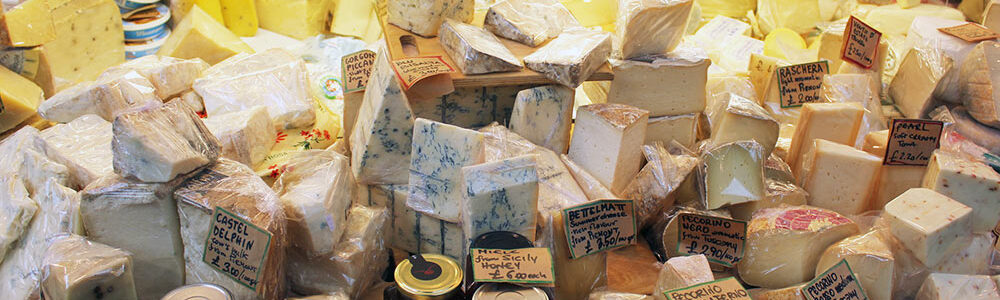
Calling a hotshot the big cheese comes from the word chiz, which in both Persian and Urdu means “thing.”
Skitching
Don’t try this at home, but the winter pastime of grabbing a car’s rear bumper and getting dragged along an icy road is called skitching.
Turkish Proverb for Listening
A Turkish proverb about listening and paying attention: To one who understands, a mosquito is a lute. To one who does not understand, a drum and zurna are little.
That vs. Who
Is it okay to say the person that did it, or should you say the person who did it? Both are fine, although who is probably preferable in that it acknowledges that person’s humanity.
Word Quiz: Not Me, But We
Our groovy Quiz Guy John Chaneski has a quiz about the language of the 1960’s, updated for the Me Generation.
Nimrod
How did Nimrod, the name of a mighty hunter and a great grandson of Noah, come to mean a lamebrain idiot?
Herfing
Smoking cigars is sometimes known as herfing, and a herf is a lively gathering of like-minded puffers.
Attracted To Shiny Objects
A caller thinks he once heard a word that means “attracted to shiny objects.” The best we can do is neophilia.
Shoes and Socks
Put on your shoes and socks. Born and bred. Lock and load. The reason these phrases are illogically ordered probably stems from the way one forms vowels in the mouth. If you think too hard about these terms, they start to look preposterous, the etymology of which, as it happens, has to do with putting things in the wrong order.
Replacing the Term “Mentally Ill”
Some people argue that the phrase the mentally ill should be scrapped, because it’s stigmatizing and fails to take neurodiversity into account.
Social Media Whatnot
The word whatnot has seen a resurgence in the last few years, especially on Twitter and whatnot.
Chemistry is a Language
With all its specialized notation and rules and means of expressing ideas, is it correct to say that chemistry is a language?
Turkish Proverb for Anticipation
A Turkish proverb about overly optimistic anticipation: Do not roll up your trousers before reaching the stream.
Epizootic
The epizootic is a type of imaginary ailment. You’d know it if you saw it—it’s like the horse kickles, but you don’t break out.
This episode is hosted by Martha Barnette and Grant Barrett, and produced by Stefanie Levine.
Photo by Paul Wilkinson. Used under a Creative Commons license.
Music Used in the Episode
| Title | Artist | Album | Label |
|---|---|---|---|
| Don’t Hate, Congratulate | Robert Walter | Super Heavy Organ | Magna Carta Records |
| 911 Beat | Timmy Timeless | 35th and Adams | Timeless Takeover |
| Cabrillo | Robert Walter | Super Heavy Organ | Magna Carta Records |
| Hardware | Robert Walter | Super Heavy Organ | Magna Carta Records |
| Tom vs. Galt | Timmy Timeless | 35th and Adams | Timeless Takeover |
| 34 Small | Robert Walter | Super Heavy Organ | Magna Carta Records |
| Let’s Call The Whole Thing Off | Ella Fitzgerald | Ella Fitzgerald Sings The George and Ira Gershwin Song Book | Verve |

