If an older man and woman spend lots of time together, going to family gatherings and the like, but they’re NOT dating, what do you call their relationship? Best friends? Dear friends? Or . . . something else? And a marathon runner who’s crossed 31 states on foot talks about the odd phrases people use when giving directions. Plus, handegg, victuals and vittles, nernees and farsees, take a decision vs. make a decision, and the growing popularity of text tattoos.
This episode first aired December 6, 2013. It was rebroadcast the weekend of May 25, 2015.
Transcript of “Not Quite a Boyfriend (episode #1384)”
You’re listening to A Way with Words, a show about language and how we use it. I’m Grant Barrett.
And I’m Martha Barnette.
I was in the grocery line the other day, and up ahead of me was a woman who had a sizable tattoo on her shoulder.
And so I was leaning forward and trying to get a better look at it because it wasn’t an image.
I’m looking around and I’m seeing more and more people wearing tattoos that have text rather than images.
And it’s got me wondering, why would you choose text rather than an image?
And if you were going to choose text, I mean, I’m not going to get a tattoo, but if I were to do that, what would I say?
Right.
It’s a good question.
Some people choose biblical verses.
Some people choose bits of songs that they love.
Some people choose misspellings.
Those are my favorite ones.
Bad translations.
Yeah, that’s a nonstop source of amusement is the people who write things like better than you, T-H-E-N.
I’m like, okay, that’s a great tattoo, I guess.
Right, right. Or something from a foreign language that is a bad translation.
Do you think you would regret text less over time than you would an image?
I don’t know. You know, I actually started asking people.
I was at the farmer’s market this weekend and there was a woman selling almonds and she had this tattoo on her bicep that said live and let live.
And so I said, why the text? And she said, I do it to remind myself of that motto.
You know, I sleep with my arm here and it’s the first thing I see when I wake up.
And she said that the other reason that she really likes it is because it’s in her own handwriting.
I mean, she has really good handwriting.
Oh, I see.
But she said that that made it more personal.
I mean, some people put quotes from their grandfather.
So is it kind of like a message from yourself from the past?
I mean, is this like a letter that you forwarded from your own youth, kind of the wisdom that you need to remember as you get older?
Is that what this is?
Maybe it could be, although, gosh, I’d hate to have my thoughts from my 20s on my arm now.
And I have to say that some of the text I’ve seen is rather sappy, but maybe it does the job for them.
Maybe it motivates them if that’s what they’re in it for.
Yeah.
Some of it, though, isn’t about motivation.
It’s just somebody showing that they’re a badass, right?
Yeah, or they’re sophisticated and literary.
On their arm.
Yeah, they have a passage from Moby Dick or something on their—I mean, I actually saw a picture of somebody.
Oh, really?
Yeah, who had a little line from Moby Dick.
We’ve talked about my favorite text tattoo of all time.
Do you remember this?
Oh, no, I don’t.
Steve Klein-Edler, who is an editor at American Heritage, has the international phonetic alphabet tattooed on his shoulder.
Well, you’re a slang lexicographer.
What should we?
No, it’s so passing, though.
I’d have to get it all lasered out every five years, right?
Exactly.
That’s the thing.
Yeah, yeah.
With slang, I didn’t think about that.
But, I mean, that’s for me.
I’m not sure what words I could commit to unless they were something like carpe diem.
You have no tattoos.
I have no tattoos and no plans to get any.
But if you were going to get one, is there something you could commit to?
I’m not the guy to ask, but I think we’ve got listeners who could probably answer that question.
Let’s find out.
If you’ve got a text tattoo or you’re thinking of getting one, what did you choose and why did you choose it and where did you put it?
Email words@waywordradio.org.
Hello, you have A Way with Words.
This is Melissa.
I’m calling from the Milwaukee area.
Melissa.
Hello, Melissa in Milwaukee.
Welcome to the show.
Oh, thank you so much.
Hey, I have an interesting thing.
Well, maybe you guys probably have heard of everything by now, but I was speaking with a co-worker one day, and she put a note on our refrigerator at work, and it said, Vittles, welcome for everyone.
And then later that day she went, how come no one’s gotten into any of the vittles?
And I said, well, no one knows what they are.
To me, fiddles are like boiled snake and gopher jerky or something.
Or skittles with vitamins or something.
Yeah, exactly.
And when I asked her, she had just said, oh, it’s just snacks, a whole bunch of different snacks.
And I said, I’ve never heard of that term ever, ever before.
And we kind of got to talking about it.
And part of us thought maybe it was because she said that it was, she’s part of a black family, that she said that that’s where she got it.
But she’s also from a military family.
So it could have been, you know, like going around to all these different places.
And Melissa, how did she spell it?
Well, I want to say V-I-T-T-L-E-S, but, you know, we’re from the Midwest.
So it’s pretty much pronounced with a D.
So it could be V-I-T-T-L-E-S.
So what was it?
This was like candy or homemade desserts or something?
It was just a bunch of different types.
I think there was like a pasta salad in there.
There was some different just food to have.
I love it when people bring food to work.
Yeah, that’s why it’s important to understand language.
To me, Vittles is kind of marked as rural or Western.
I think of it as being like the old prospector, you know?
Yeah, I think of the Beverly Hillbillies.
Here we go.
Jed, come get you Vittles.
I’m sure she’ll love it, but that’s what you’re comparing her to.
But it is widespread across the United States, and you can go back and tell her this is such an old word.
It’s old, old, old, old, old, like 700 years old.
No way.
Yeah, and it’s related to Latin words that have to do with nourishment, like vitamin and vital and vitality, those kinds of things.
Well, that’s so cool.
The other thing is the spelling.
Yeah.
We’ve done a couple things with the spelling, right?
There’s a couple things that have happened over the years with this word.
Yeah.
I mean, Vittles goes back to Latin victualis, which means of nourishment.
So it has that C in it.
And for years it was spelled that way, like victual is what it looked like.
Well, it was borrowed into the French without the C.
Correct.
And we got it from the French without the C.
Right.
And then when people started paying more attention to Latin, they’re like, oh, we need to put the C back in.
But we still don’t pronounce it with the C, right?
Correct.
Is it spelled with the C?
It is.
V-I-C-T-U-A-L-S is like the formal spelling of the word, but you still say vittles.
Oh.
But it can be any kind of food.
Yes.
Any kind of nourishment.
Well, I think I like plates of beans or like…
Yeah, cooked food.
Cooked food for sure.
Rather than candy bars.
It’s a meal more than a snack.
Yeah.
Oh.
Yeah, but you can spell it either way.
So when the office-wide email goes out, there are vittles in the kitchen.
You’re going to be in the know, and you’re going to know to get there first before all the good stuff is gone, right?
There’s going to be a stampede.
Absolutely.
The best of the best.
I know how that works in an office, right?
Somebody sends out the email, cupcakes in the kitchen.
No, there aren’t.
We have like a text-based system that I tell the girl at the desk next to mine.
I’m like, I just saw donuts walk by.
See on the lookout.
Yeah, and after the client meetings, right?
Everybody’s like, do you need this room?
No, just waiting for the food.
Yeah, thank you so much for answering that for us.
I’m sure she’ll be interested to know.
Thanks for calling, Melissa.
Call us again sometime, all right?
All right, thank you.
Take care now.
Bye-bye.
Bye-bye.
Email words@waywordradio.org.
Post your questions on Facebook and Twitter, and we’ll try to get right back to you.
Hello, you have A Way with Words.
Hi, this is Steve calling from Fort Worth.
Hi, Steve.
Hey there, what’s up?
Well, I’ve heard on your show various times you talking about mixed marriages, so to speak,
Or mixed couples where language issues cause a bit of a problem.
And I have a question regarding the term pass by and what it really means.
And I have to put it into context here.
Because to me, I grew up in Australia, so to me to pass by something means to physically drive straight past it.
Whereas I was in a relationship with a lady in Canada, and to her, pass-by meant to physically go to a place.
Oh, so she would pass by the store and pick up a few things.
Yes, that’s right, exactly.
And how this all came out was because she wanted to buy a particular little coffee table, and it was supposedly at this furniture store.
And I really wasn’t keen on the whole idea, and so we went back and forth for a while.
Eventually, I said, okay, okay, I’ll call in tomorrow night on the way home from work.
And what I meant when I said I’ll call in meant was I will physically go there.
She thought that I was saying I will telephone them to see if they have it.
And she said, no, I don’t want you to call in.
I want you to pass by.
And I said, well, what’s the point of passing by?
I’ll call in.
Because I thought she was saying drive past the store and don’t go there.
Anyway, this went on for about 15 minutes.
And eventually we found out we were saying the same thing.
And then to add insult to injury, she said to me, speak of the English.
As if I couldn’t even speak my own language.
Anyway, have you ever heard of this issue before?
You know, it’s an interesting category of all the different ways that we say to go to a place.
Yeah.
And there’s more than just the two, right?
Sure.
There’s a ton of these.
Drop by is another one.
I was going to say, yeah.
We have.
So you said we call in, and you can either call in or call in at or call in on.
You can call at.
You can call by a place.
You can drop by a place.
You can drop by at a place.
You can drop in, pass by, stop by.
Stop by or stop in.
Come past is another one.
I think, is that in the American South that they say come past?
Come past, I don’t know.
To visit, that’s definitely the American South.
I’ve had somebody say to me, fall over.
Why don’t you fall over on Tuesday?
And I thought, well, why would I want to fall over?
Yeah, fall over to my house.
Call on, come round, come over.
That’s kind of what you say when you’re speaking to somebody and you want them to arrive, right?
Yeah.
To go by.
There’s one.
I grew up with this in the Midwest.
You go by the store.
And it literally means that you go to the store, you park, you get out, you buy some stuff, get back in your car and come home.
It doesn’t mean that you drive by and wave.
Yeah.
And that’s what she thought you were saying.
I’m just thinking about some of those that you’ve just mentioned.
I’m thinking I would have been confused by a lot of those.
Yeah.
And they’re very context sensitive.
But it sounds like you guys hit the perfect storm of context blindness, I guess.
Because these phrasal verbs are kind of opaque to outsiders.
They’re very idiomatic, and they require a long history of understanding in order to completely get them.
Did this relationship last?
Well, no, it didn’t, surprisingly enough.
Maybe communication was the problem.
But actually, one of the things I realized is where I grew up, we talk in metaphors a lot.
And I think that’s confusing to other people.
And I hadn’t realized how much confusion I was causing.
Like someone said, were you busy today?
I was flat out like a lizard drinking.
Nice.
And to me, it makes perfect sense.
But to other people, it can be really confusing.
So I always was thinking, oh, this person doesn’t understand me.
But I didn’t stop to think I’m probably talking in a very difficult to understand way.
Oh, no, no, no.
It’s very good.
I think of Australian English like the part of The Wizard of Oz where the movie goes from black and white to color.
So this is when Dorothy comes out of the house and sees Munchkinland for the first time.
You’re like, wow!
The land of Oz.
Literally.
Exactly.
Thanks so much for calling and sharing these stories.
I love your show.
English she is a mess.
What you guys do.
Yeah, sure.
Thanks for listening.
Thanks for calling.
We really appreciate it.
Thank you, Steve.
Thank you very much.
Take care now.
Okay.
Ciao.
Bye-bye.
Yeah, well, Steve described it as sort of, what, a mixed relationship, a mixed marriage?
Yeah, a mixed linguistic marriage.
Yes, yes.
We’d like to hear more stories about that.
You can call us at 877-929-9673 or send it an email to words@waywordradio.org.
The writer Jamie Attenberg mentioned a word on Facebook that I don’t think I’ve ever heard before.
She was in Toronto and she heard the word keener used.
Keener, like somebody crying out?
No, no.
Somebody who is keen on something.
Somebody who’s really interested.
She’s the author of the book The Middlesteins.
And so she’s been doing a book tour and encountering language, as you do when you travel from place to place.
And I never heard keener, but there it is recorded in several dictionaries as a Canadianism for someone who is really enthusiastic or very keen on something.
A fan of it, more or less.
Okay, keener.
Keener, yeah.
Sort of like the train enthusiasts are called, what are they called?
Foamers.
Foamers.
Foamers, that it is.
Keeners and foamers.
Email words@waywordradio.org.
Lexically challenged?
We can help.
Stay with us.
You’re listening to A Way with Words, the show about language and how we use it.
I’m Grant Barrett.
And I’m Martha Barnette.
And joining us on the line is John Chaneski from New York City.
John, hello.
Hi, Martha.
Hi, Grant.
Here I am.
What’s up, buddy?
You got a puzzle?
Got something for us?
I love going to bookstores because you can just get lost and stumble upon all sorts of stuff.
But if you go to Amazon, though, everything is massively well-organized, maybe a little too organized.
All the books are categorized in 35 different catch-all departments.
Nevertheless, most departments do double duty.
For example, the books iRobot by Isaac Asimov and A Game of Thrones by George R.R. Martin aren’t in science fiction or fantasy, but the combined department, science fiction and fantasy.
All right?
Okay.
I’ll give you two books.
You tell me the single double-titled Amazon department you’ll find them in.
And I’ll try to give you a book that would exemplify each half of the department.
And in the spirit of duality, I’ll let you have a total of two guesses between the two of you.
So make them count, okay?
I see.
Okay.
Here we go.
Here’s the first category.
The books are Inside Scientology by Janet Reitman and Zen and the Art of Motorcycle Maintenance by Robert Persig.
Self-help?
Well, I don’t know.
Self-help improvement?
I don’t know.
Self-improvement?
No, remember, it’s a double category.
So it’s something and something.
There’s ampersand in every one of these.
So inside Scientology and Zen and the Art of Motorcycle Maintenance.
Self-help and religion.
I don’t know.
Religion is one of them.
Religion and spirituality.
Yes, religion and spirituality.
Very good.
Okay.
Now we’ll be rolling now.
Here’s the next one.
Hack Attacks Revealed by John Chirillo and Kindle Fire Owner’s Manual by Steve Weber.
Computers and technology?
Yes, perfectly.
Computers and technology is right.
You can tell which part of Amazon I spend more time on.
There you go.
The Happiest Baby on the Block by Harvey Karp and Men Are from Mars, Women Are from Venus by John Gray.
Parenting?
And?
And?
Family.
Relationships?
Yes, Parenting and Relationships. Very good.
Visible Learning for Teachers by John Hattie and Robert’s Rules of Order, newly revised by the editors.
Education and reference?
Yes, perfect. Education and reference. Well done.
Barron’s AP Biology, fourth edition by Deborah Goldberg and The Joy of X by Stephen Strogatz.
Science.
And?
And do I have X?
Mathematics?
Yes, science and math.
Very good.
All right.
Ball Four by Jim Boughton and The Warbler Guide by Tom Stevenson and Scott Whittle.
Sports and hobbies?
Sports and?
Outdoors.
Sports and outdoors.
Yes, very good.
Finally, The Catcher in the Rye by J.D. Salinger and The Perks of Being a Wallflower by Stephen Chbosky.
Oh, Young Adult.
That’s the second one.
Blank and young adult.
Kids and young adults?
Children and young adults?
Stuff you get assigned in high school?
Go a little older.
Older than young adults?
Adults and young adults.
Go in between.
Teens and young adults.
Teens, yes.
Teens and young adults.
Oh, man.
Well done.
All right, John, thanks.
I hope everything is going well for you in New York City.
Give our love to the family, all right?
Terrific.
Will do.
Thank you.
You too.
If you have something to share, a story to tell about language,
You can call us at 877-929-9673
Or send an email to words@waywordradio.org
And find us on our Facebook page.
Hello, you have A Way with Words.
Hi, Grant. Hi, Martha.
This is Andrea calling from Renton, Washington.
Hi.
Hi, Andrea. How are you doing?
The question I have is,
I’m trying to figure out what to call this friend my mom has.
So my dad died a few years ago,
And then my grandma couldn’t live alone anymore.
She went to live with my grandma,
And joined a singles group and met this guy.
She had free tickets to a concert one night,
Just asked anybody in the group who wants to go.
This guy said yes, he liked the music.
They started hanging out, and started hanging out all the time.
Are you dating? No, we’re not dating.
They dated for a while, decided it wasn’t going to work out,
But he still talks to her every day, sees her every day,
Buys her nice jewelry, they go on trips,
But it’s completely platonic.
So when I say he’s coming to a family event,
I say, you know, my sister and her husband and kids are coming,
My mom and her not-boyfriend.
I call them her not-boyfriend.
Her not-boyfriend.
And I’m wondering if there is a turnout in the culture for this,
Because I’ve known people who have this kind of relationship.
They’re older, maybe they talk to each other every day,
But they’re not dating, they never become amorous.
Although it could, but they just, that’s a choice they’re making not to do.
Neither one of them is dating anyone else.
Nope.
And this is by mutual consent, that they’re not a couple?
Right. Well, sometimes they argue about who broke up with whom.
I see.
But good naturedly.
It sounds suspiciously like the man has been put in the friend zone to me.
Well, but they both, I know I’ve probed this, like, so why are you not dating?
And, you know, I mean, they both have really good reasons for not dating, but they really like each other.
Friend zoner.
He’s a friend zoney.
I don’t know what else.
Zoney for short?
No.
Well, let’s just assume.
He also isn’t, it sounds pretty clear that he also doesn’t want more at this point, if ever.
Okay.
But they’re best friends.
Okay. Well, there you go.
How about that?
Why not best friend?
My grandmother had a relationship like this with a man who lived a few hundred yards away.
They were the only people who lived year-round at this place.
And she adamantly refused that he was their boyfriend yet.
They’d go on walks together.
They’d go fishing together.
They’d have dinner together.
Right.
And I just think maybe friend, my mom’s friend, and let other people sort it out.
You’re not obligated to be the encyclopedia of that relationship.
That’s true.
You could get coy with this.
We’ve talked about this term on the show before, but they could call each other biffles, which is short for BFFL, best friends for life.
My mom’s biffle.
Oh, that wouldn’t require any explanation.
Well, that’s my point.
Just go completely to the other extreme and be as opaque as possible, and people can just, like, not know.
Right?
You’re not obligated to explain this relationship to other people.
Well, you know what?
I bet our listeners are going to want to weigh in on this.
That’ll be fun.
So keep listening.
Okay, Andrea, it’s a great question.
Okay. Thank you for your time.
Okay. Give our regards to your mom and her…
Paramore. Not paramore.
Her not-boyfriend.
Her dear friend. I like that.
Her un-boyfriend.
Try that.
Thanks, Andrea.
All right. Thank you.
Bye-bye.
Take care.
Bye.
If you’ve got a relationship like this in your family or your life,
We’d love to know how you refer to that person.
Email words@waywordradio.org.
And find us on Facebook and Twitter and SoundCloud and Stitcher and iTunes
And a whole bunch of other places.
Hello, you have A Way with Words.
Hi, this is Daniel Vaughn in Dallas, Texas.
Hi, Daniel. Welcome to the show.
What can we help you with?
Well, you know, I write a lot about barbecue.
I have a question about the word barbecue as in B-B-Q.
It’s not really a true acronym or abbreviation or even an initialism.
When you see it in print, people just read it as barbecue, not B-B-Q,
Like barbecue being spelled out.
So what word category does it belong in, and do you have any idea when it started to show up in our language?
Why do you dismiss it as an abbreviation?
Well, I guess my one question is if the word barbecue spelled with a Q came before BBQ being used in language.
Yeah, I think barbecue with a Q-U-E was…
Yeah, it was earlier than the BBQ as a way of saying barbecue.
Right.
It is an abbreviation.
BBQ is a kind of sophisticated form of clipping.
Clipping is when you take parts of a word and you combine them together.
Usually it’s a compound that is forming a single word,
Like physical education is clipped to form phys ed,
Or poli-sci comes from political science and that sort of thing.
It is unusual that we reduce it down to three letters,
And also unusual that the Q successfully replicates the last syllable of the word,
Whereas the first B doesn’t and the second B does.
So it’s kind of a mixed kind of abbreviation here.
But it is really exactly an abbreviation.
Abbreviation is a broad category of a sort of word that we can reduce in size or length
To better suit our tongues or fast speech.
And do you have any idea when BBQ started entering our language
Rather than just spelling out the word barbecue?
Yeah, it started showing up in the 1930s, probably in the West.
It seems to come from the retail business, from restaurants and signage and that sort of stuff, menus.
It’s not the kind of thing that probably popped up in the everyday writing of normal folk.
So you can imagine the same way that you’re more likely to see drive-through, THRU, at a restaurant or open all night in ITE.
It’s that kind of shorthand that retail enterprises tend to do in order to fit a lot of content into a small amount of space.
Yeah, well, that makes sense.
The first time I’d seen it was showing up in newspaper advertisements.
So it makes sense to shorten it to give yourself a little less room required for the word.
So you’re in Texas writing about barbecue.
That’s like your beat?
Yes, yeah.
I’m the barbecue editor for Texas Monthly Magazine.
So I drive around the state eating barbecue and I write about it.
So this is like being the poet laureate, right?
This is an exalted position, right?
It is an exalted position.
It is also one that comes with a lot of complaints from other folks,
Just because I’m one opinion, and there are certainly many on the passionate subject.
Oh, I bet.
We know all about the gotcha gang, as William Sapphire used to call them.
But let me ask you, I know there are a lot of different kinds of barbecue around the country.
I know there are disputes about what is grilling and what is actually barbecue.
What is the essential Texas barbecue?
I mean, in your mind, if you’re having a Texas barbecue, what does this look like?
Well, it’s really going to be Central Texas Barbecue, which is the most popular and I think the most identified with Texas.
And that’s going to be meat that is smoked indirectly and smoked rather than grilled.
Smoked indirectly, usually over a long period of time.
And it’s going to be brisket.
Brisket is what’s primarily served all over the state.
It’s what we identify with Texas Barbecue.
And in Central Texas, it’s going to be sliced in front of you.
You’re going to purchase it by the pound rather than as a plate.
And it’s going to be served unadorned on some butcher paper.
So there’s no tomato sauce, no vinegar sauce?
Yeah, I was going to say, what’s on it?
Is there a marinade?
You know, most of the places these days have gone to serve in a sauce alongside the meat.
But unlike other states, usually the meat isn’t served with sauce poured over top of it.
And there are even a few places around the state, like Kreitz Market, that doesn’t have sauce served at all.
And as far as the preparation of the meat, there usually isn’t a marinade of any sort.
It’s usually a dry rub.
Usually a base of salt and pepper, and then go with cayenne or maybe add some garlic and paprika from there.
But especially in central Texas, it usually stays pretty simple as a dry rub just applied before the meat goes on the smoker.
Boy, I’ve got to tell you, I know some people in North Carolina that probably get in fistfights over this.
Well, we’re talking about definitions of barbecue.
Yeah, they feel like, you know, our beef brisket down here is just fine.
Just don’t call it barbecue.
Yeah, there you go.
Yeah, the only thing they have in common is that there’s meat involved and fire.
That’s right.
Two Texans, three opinions.
Well, Daniel, there you go.
BBQ is a complicated form of clipping, which is a type of abbreviation.
And it’s an odd one, but it fits into the morphology of English.
Okay.
Excellent.
Take care now.
Appreciate your help.
Bye-bye.
Bye-bye.
Bye.
It’s funny how often language and food intersect, and this is the place that they should intersect.
877-929-9673. Email words@waywordradio.org.
We are still hearing about our conversation about what parents say to children when they’re standing between the parent and the TV.
Oh, yeah. Tons of those.
In fact, it brought out of the woodwork my brother.
Were you the one? Were you the one standing in front of the television?
Oh, I hadn’t thought of it. Yeah, actually, there are photographs of me doing that.
Now that I think about it. But no, my brother Wayne wrote me from North Carolina to tell us what our Aunt Mazo used to say.
Aunt Mazo.
Aunt Mazo, she’s back.
I feel like I know her.
I know, right? Because you know her language.
Wayne wrote me to say, when we got between Mazo and her TV, she would yell,
I can’t see through your bay winder.
So almost all of these have to do with the kid not being as transparent as they think they are.
Exactly.
And your baywinder is sort of your gut.
And Marvin Wayne tweeted us from Mexico and said there that if somebody’s blocking the view,
They say the equivalent of donkey meat is not transparent.
Donkey meat is not transparent.
Very good.
La carne de burro no transparenta.
Well, there’s no end to it.
What do they say in your house when somebody’s blocking the view?
877-929-9673. Email words@waywordradio.org.
Hello, you have A Way with Words.
Hi, this is Jennifer calling from Baltimore. How are you?
Hi, Jennifer. I’m doing well. Welcome to the show.
What can we do for you?
Well, I’m a tutor of adult learners of English as a second language.
So what I do with them is I read articles with them and we discuss our comprehension.
Recently a term came up that I had some trouble explaining to one of my students.
And the term is less than as a way of describing someone’s status or worth.
And it’s just less than without any following adjective or noun. So it’s not saying that
This person is less than someone else or they’re less than awesome, but it’s just simply less than.
I actually have the sentence here from the article, if you’d like to hear it.
Yes, please.
Well, first of all, I’ll give you a bit of a background.
The article has to do with how much attention women should give to dressing fashionably at work.
And the sentence goes, you can’t just neglect your looks because that will be held against you.
On the other hand, to be a fashionable woman, like Yahoo CEO Marissa Mayer,
Means taking the chance that you’re going to be dismissed as less than.
Missed as less than.
You understand the meaning, right?
Yes.
So I take the meaning to be that they have kind of a lower value in the office place than men in the context of this article.
And it’s just one of those things where I always want to complete the sentence and say, well, you’re feeling less than what exactly?
Right.
One of my favorite things to do when I come across something new like this is go straight to Twitter and search.
It’s the greatest database of casual speech that I know of right now.
And I can come up with a ton.
I’m looking at a ton of uses of this over the last few years.
And they’re all really consistent with this.
And what I love about them is that the further back I go, and I bet this holds true in news articles and journal articles,
The more likely less than in this particular case is going to appear inside quotation marks.
And this demonstrates to me that relatively recently this started being used and people are marking this particular odd usage of less than as somehow different from the normal use of less than.
So there’s one example, treating human beings as, quote, less than, unquote, because of who they are is in fact a hateful action.
This is from a tweet.
And it’s really interesting to me because when we see this as linguists or when I see it as a lexicographer, we know, aha, this word is transforming or this phrase is transforming.
So you’ve caught something here that is currently in the process of forming where less than doesn’t in some cases require the comparison because what comes after is understood.
So many of these uses are about the way men treat women.
And so in almost all cases, it’s about less than a man or less than equal.
So there’s a kind of understood less than any kind of less than.
So they don’t specify the kind of less than because they’re meaning less than in any way that you can imagine.
And are you two seeing it hyphenated? Is that how you saw it, Jennifer?
Yes. Yes, it is hyphenated.
Oh, I’ve seen it hyphenated in a couple, but many of them are not hyphenated.
I find it really interesting that you say that this is coming up recently, that it’s something that’s in the process of being developed, because I myself have only noticed this phrase in the past few years.
Every word that we know was new to us once, so don’t be surprised at that.
What I want to know is, how did you explain this? Have you tried it yet? Did you give it a shot?
When I tried to explain it, I simply said that the person described in this article is feeling inadequate.
So that less than would be a way of saying inadequate.
Yeah, that’s a good synonym for it.
Okay. Yeah. Less than equal.
There’s almost an unspoken equal in there, right? Less than equal.
But you’ve got a good ear.
I imagine that being in the trenches, teaching people who don’t speak English as a second language,
Brings a lot of your own English kind of to the fore.
Like, whoa, I don’t know why I say this thing I always say.
It certainly does, yes.
Yeah, there’s a great Latin proverb that goes,
Qui dosit discit, which is, he who teaches learns, or in your case, she.
It’s a great quote.
Thank you very much for calling, Jennifer.
I hope we’ve helped, all right?
Oh, yes, you’ve helped a lot, and it was a pleasure.
All right, take care.
Now, good luck with your teaching.
Thank you.
Bye-bye.
Bye-bye.
Bring us your language questions, 877-929-9673,
Or send them an email to words@waywordradio.org,
And we are all over Facebook and Twitter.
More stories about what we say and how we say it.
Stay tuned.
You’re listening to A Way with Words, the show about language and how we use it.
I’m Grant Barrett.
And I’m Martha Barnette.
If you’ve spent any time at all around theaters, then you’re familiar with some of the language of actors,
Like hit your marks, meaning stand where you’re supposed to, and break a leg, meaning good luck.
But what isn’t so obvious is the language of the people working behind the scenes,
Behind the scenes literally, to make it all happen.
And there’s a stagecraft listserv whose members were asked to contribute some of the terms that they use
When they’re working on productions.
And Grant, taken together, they really give you a taste of what it must be like to be building a stage set and moving scenery around during a performance and taking it down.
And it looks like some of that language varies from theater to theater, and it tells you what’s important to them.
For example, yo-yo, slipstick, and guesser.
Yo-yo, slipstick, I have no idea.
None?
No, slipstick, is this something, I don’t know, I have no idea.
A tape measure.
Oh, these are all the same thing?
Yeah, yeah, how about that?
Yo-yo, slipstick, and what?
And guesser.
Guesser, okay.
Yeah, guess how long that is.
And lots of words for cordless screwdrivers like zimmer and wazzer and zeter, which makes sense, right?
They’re all onomatopoeic, right?
Yeah, they all have Z in them.
And they use language like lateral maintenance, which is like percussive maintenance.
Oh, kick it, bump it.
Yeah, kick it, bump it, hit it on the side like that.
At least one person uses the expression crash tinkle tinkle moment.
That’s the moment at which a usually expensive piece of equipment meets an irresistible force or immovable object.
Oh, no, right.
You can just hear that, right?
Yeah, it goes from being really expensive to worthless.
And another one I like that at least one theater uses is Nerny.
And that’s spelled N-E-R-N-E-E or N-E-R-N-E-Y.
And the definition is an unknown but important appearing piece of metal or plastic.
You don’t know the source, and you don’t know what it is or what it’s used for or where it’s from,
But you do know that if you toss it out, it will turn out to be a little used but essential gadget
From a critically important piece of equipment.
If you keep it around, it will turn out to be utterly non-essential
And will clutter the shop for all eternity.
I have cabinets full of Nernies. I have lots of them.
I don’t even have those strands of lights anymore, but I have the replacement bulbs.
Yeah, exactly. I got a drawer full of Nernies.
Oh, Nernie. That one’s going in the lexicon.
Nerdy.
It’s essential when you don’t have it, and it’s unessential when you have it.
Yeah.
They talk about Iwo Jima-ing a piece of scenery.
Oh, so lifting it up with ropes and people underneath, Iwo Jima-ing it.
Yeah.
Great stuff, right?
Yeah.
It makes a lot of sense.
I love this language.
And, of course, that’s a creative enterprise, so they’re probably going to have just a little better class of slang than other folk, right?
Yes.
Yeah.
What do they say in your business?
What’s the behind-the-scenes lingo that the rest of us don’t get to hear?
Try us out.
Email words@waywordradio.org.
Hello, you have A Way with Words.
Hello, this is Brian Stark calling from Tucson, Arizona.
Hi, Brian, welcome.
How are you doing?
Good, how are you guys?
Great, what can we help you with?
Well, I have an unusual pastime that has led to a very interesting question, I think.
I like to run across entire states, so I go for like a 500-mile run every once in a while.
What?
So, you’re forest gumping it, is what you’re saying.
Yeah, I am gumping it.
Yeah, I’ve been gumping it for 31 states now.
I’m trying to cross all of them.
Wait, so you go east to west?
Because, like, when you get to California, the north-south, that’s kind of a run.
Yeah.
I’ve thought about that, believe me.
And, yeah, I try to take a scenic route.
So wherever there’s existing trails, that’s what I go for.
I try to stay off the interstates.
And so I’m a back roads trail kind of guy.
And doing that has led to me getting lost pretty much every day of doing this for the last 20 years.
And so when I get lost, the first thing I do is ask the local…
Are you calling from a payphone right now, lost, needing help and directions?
I may as well be.
But I ask people, you know, how do I get on to the next note I have in the urban legend of where the trail is supposed to be?
And people give me such a variety of instructions that I’ve noticed a regional flair with the way people give directions.
And that has led me to wonder what causes people to have a regional difference in the way they give directions.
And I’ll give you a couple examples.
In West Virginia, people told me, well, you want to go up about six Farsis.
And I asked, well, what’s that?
They said, well, you go as far as you can see, and then you go again.
And I’m guessing those people don’t travel much at night.
Or not very far at night.
So you contrast that with something I experienced while running across Michigan just last month.
And in Michigan, people often would say things like, oh, you want to take that one.
That’s good road up there.
Good road.
That’s good road.
What does that mean?
And I don’t know how that’s different from any other road.
Road is kind of a mass noun as an uncountable noun.
Like you talk about water or sheep, right?
Just like good road or good bread, good money, right?
Yeah.
That’s good money.
That’s good road.
I love it.
Instead of a good road.
Maybe it means the shoulder or the type of traffic.
But everyone nods in agreement when someone says that in a group.
And they go, yeah, that’s good road.
Oh, that’s good road.
Well, clearly you’re alive and speaking, so you ultimately get where you’re going.
But do you have to stop like a half mile later and straighten it out with somebody else?
Yeah, and this is where technology has gotten interesting because now I carry a smartphone
And I can look up on Google Maps and even Google Earth exactly where I am.
But the maps are wrong so often that I actually have to stop a car to get a second opinion from the phone.
And the map will say one thing, and this happened just last month,
And it said you can go straight to the next town, but there was actually a gravel pit in the way.
So I had to ask directions on how to get around the gravel pit.
Yeah, and did you bring your climbing gear?
Exactly right.
What leads to all this?
Yeah, what led to all this?
Why are you doing this?
Really, what is driving you?
You know, I think I enjoy meeting people and seeing new things.
And traveling on foot, I run these things.
It gives me a perspective.
Maybe that’s part of the answer is that I like seeing that difference,
And I don’t want everything to be the same.
But it just drives that curiosity of what causes one group of people to call something good road
Another group to go by Farsi.
It’s funny.
Your situation is so specific and rare,
And yet it’s such a pertinent question
To language overall.
The first thing I want to say, though,
Is you should work for Google
Because if you’re finding
All these map mistakes,
Dude, you could get a job.
Seriously.
You need to get one of those
Head-mounted GoPros
And the whole GPS thing built in.
Forget the cars.
Forget the Google cars.
They could sponsor you.
Google runners.
Yeah.
Right?
So the way regionalism is developed
Is actually really interesting.
The first thing is heritage.
So this is where did the people come from and how alike each other are they?
So if everybody is from a particular part of Ireland and they all move to a same, because this is what happens.
Like when people came in the 1800s and went over from other parts of the world, they settled with people like themselves.
And a lot of times they basically recreated their home county or their hometown.
And so they all came with the same kind of language influence.
And they all probably learned English in the same way.
And they all influence each other with these ordinary channels of influence.
You’ve probably heard us talk about this before.
You speak like the people you respect.
And you speak like the people who you’re most often around, right?
So this is family, religious leaders, school leaders, political leaders, that sort of thing.
So that’s kind of all wrapped up in heritage.
But the other thing that happens, and this is,
I don’t know how this is going to shake out in the coming 100 or 200 years in American history,
But we’ve had large parts of America that have been relatively insular.
And so the second factor is geography.
Is there a river in the way? Are there mountains in the way?
Gravel pits.
Is there a reason that’s cultural that you don’t go to another place and therefore do not encounter their type of language?
For example, the utterly arbitrary geopolitical borders that separate Canada and the United States actually do separate to a degree the language.
Because if you’re in Canada, you are not very likely to go to the United States and therefore unlikely, even though they might even just be a few miles away, to encounter their variety of English.
And so you’ll get an increasing separation, increasing forking of the language, even just a few miles apart.
The greatest example of this geographic boundary that creates regionalisms in the United States is the Ohio River and the Ohio River Valley, where we can see, even to this day, old settlement patterns, some of them 150 or 200 years old, kind of are reflected in the language that we can record from people who are north of the river and people who are south of the river.
It’s a really strong difference that can be mapped.
You didn’t know the geography of the country.
But you saw the dialect maps, you could draw a line exactly where the river is because you could see it.
Let me ask you, as a man who’s done so many states, you said 31 states?
Yes.
You run across 31 states. Do you have a website? Go ahead and mention it on the air and maybe people can check it out.
Absolutely. I’m statesrunner.com.
S-T-A-T-E-S-R-U-N-N-E-R.com, statesrunner.com.
Well, I got to say, this was a great question, Brian. I love what you’re doing.
Please keep us up to date on your travels, all right?
You bet. Thanks so much, guys.
Take care now.
Bye-bye.
Take care.
Bye now.
We love talking to you.
We want to hear your stories.
What are you up to?
Email words@waywordradio.org.
Find us on Facebook and Twitter and SoundCloud and iTunes.
We’re still getting emails about our conversation about Occupado, the thing you say when you’re in the bathroom and somebody’s knocking on the door.
We heard from Brian L. Smith, who lives in Taiwan.
He’s lived there for 20 years, and he says that in Taiwan, if someone knocks on the stall door, the correct response is to knock back.
That would scare me.
Are you done out there? I need to come out.
But if you’re going to Taiwan, now you know.
We’re full of useful information here on A Way with Words.
You can call us and get some, 877-929-9673, or send your questions in email to words@waywordradio.org.
Hello, you have A Way with Words.
Hi, this is Valerie calling from Haverford, Pennsylvania.
Hi, Valerie. Welcome to the show.
Thank you.
I have a question, and it’s kind of a finer point, but I’m wondering why sometimes decisions are taken and why sometimes they’re made.
Because for me, it feels natural to say I made a decision to do something.
But once in a while, I see or hear construction along the lines of, like, for example, the decision was taken at the highest level.
And I did a little bit of internet search that suggested there might be a British-American divide.
But since I read that, I’ve heard both usages in both contexts.
So I’m wondering if you can explain what the difference is.
That’s a good point.
So your internet Googling showed you that taken is more British and made is more American?
Yeah, that’s what it seemed to suggest.
But you also, did you notice any other kind of difference between the two?
It seems like taken is more often used passively, but that could just be a selective observation.
It’s a little bit more removed?
Well, saying the decision was taken at the highest level, whereas I might more often hear I made a decision or so-and-so made a decision.
Yeah, yeah, very good point.
Yeah, your Googling served you well because it is far more common to hear taken in British English rather than American English.
Make a decision is far, far more common, and so is decision maker versus decision taker.
We refer to those words in that context as light verbs, make and take in that kind of situation.
Did you come across that?
No, I didn’t see that.
Yeah, it’s, as you said, sort of a subtle distinction.
In this context, the words don’t really add that much meaning.
Make a decision is a little bit different than saying, I decided, isn’t it?
You know, if your boss says, I made a decision to fire the entire staff, that’s a little bit different than saying, I decided to fire the entire staff.
Don’t you think?
Yeah.
Yeah.
And I’m thinking.
It’s a little bit different.
Exactly.
Yeah.
It’s very subtle.
And I think the fact that those are both light verbs, make and take in those situations, may be why they’re two different ways of saying it.
Yeah.
It’s a choice.
English is so filled with synonyms for things, and usually we force the two approximate synonyms even further apart.
In this case, it sounds like, Martha, we’ve got a little bit of one is a little more removed, one feels a little more personal, one is a little more formal, one is a little more informal.
And in that way, we make the decision as we’re writing and speaking.
Yeah, yeah.
I think in the language of diplomacy and that kind of thing, you might hear take more than make.
Yeah, I don’t know that when the UN meets that anyone ever makes a decision.
I think they only take decisions.
Well, thank you for helping me out.
Yeah, sure. Thanks for calling. Much appreciated.
Okay. Bye-bye.
Have a good day.
Okay. Bye-bye.
If you’ve got an ear like Valerie’s, give us a call, 877-929-9673, and tell us what you’ve noticed about making a decision on one word or the other.
You can also email us, words@waywordradio.org.
Hello. You have A Way with Words.
Hello. This is Joyce. I’m calling from Azel, Texas.
Hi, Joyce, from Azel, Texas?
Yes, that’s near Fort Worth.
Okay. All right.
Welcome to the show, Joyce.
How can we help you today?
Well, I was raised pretty much with a grandmother, and she had sayings for everything.
But this one used to just tickle me to death.
She would say, that just beats a goose-a-goblin.
And she’d say it so fast that I didn’t really realize what she was saying.
She was saying, that beats a goose-a-goblin.
But she would say, that just beats a goose-a-goblin.
And I just wonder where something like that came from, if she made it up, or if it was something that she had heard when she was a child.
Okay, so she would say that in what kind of situation?
Oh, if anything awed her or something that she couldn’t get it to go like she wanted to, or that just beats a goose a goblet, or she would be surprised, well, that just beats a goose a goblet.
You know, it was sort of feraled into any kind of occasion.
Mm—
Okay.
I’ve never heard that one.
I’ve heard things like, don’t that be doll?
Oh, yes.
A lot of our people said that also.
We have a lot of sayings.
Yeah, there are a number of these similar expressions besides a goose, a goblin.
And the A in front of the goblin is actually part of the expression.
You can use an A prefix in front of a verb to intensify and indicate that it’s more frantic or ongoing or more excited than just plain old goblin.
But there’s a goose-a-peckin as a variant, or pig-a-peckin, a cat-dancing.
Don’t that beat a cat-dancing?
The bugs-a-fightin’, you ever heard that one?
Don’t that beat the bugs-a-fightin’?
No, I don’t think I ever heard of that one.
The hen-a-flying, the hen-a-peckin’, the hen-a-rootin’.
And don’t that beat the Dutch goes back to the 1700s.
You know, instead of saying, well, heck or something, you know, a lot of bywords weren’t allowed in our house.
Yeah, so that’s a great euphemism, right?
Yeah, yeah, that’s right.
Yeah, I wonder if she said…
You’ve never heard that particular one before.
I’m looking here, you can look around in the various book archives, and it shows up in a lot of books that are set in the Old West, like cowboy fiction.
But it’s not that common.
It really isn’t.
It exists.
So it didn’t only belong to your grandmother, but it’s got some history.
What I don’t understand is why a goose a goblin is a remarkable thing.
Because it’s like a turkey honking.
Gooses don’t gobble.
Gooses don’t gobble.
I see.
That’s why a pig a pecking.
Oh, it’s clicking for me.
A pig a pecking or a cat dancing.
These are all things that we don’t expect.
There we go.
Well, I’m glad we taught you something today.
I know.
You know, and I lived on a farm when I was a boy.
I should know better.
We had no geese.
Joyce, that’s fantastic.
Thank you so much.
Well, as I said, I got a million of them.
Okay.
Thanks for calling, Joyce.
Well, thank y’all.
Take care.
Okay.
Bye-bye.
Bye-bye.
Bye-bye.
What did your grandmother say?
Give us a call.
We’ll try to sort it out.
Email words@waywordradio.org.
I don’t follow sports very well, but I like a new word I heard.
Apparently, in the English-speaking world that isn’t North America, they sometimes jokingly call American football hand-egg.
Hand-egg.
Yeah, it’s a joke because they have their own football, which is our soccer, and they don’t like calling our football football because it’s very unlike their sport.
So they jokingly call it hand-egg.
Hand-egg because of the shape.
That’s right.
You hold it in your hand, it doesn’t involve your foot, and it doesn’t look like a ball, it looks like an egg.
It’s a hand egg.
I like that.
Hand egg.
American hand egg.
The NHL.
No, that won’t work.
The N-H-E-L.
Yeah, there we go.
The National Hand Egg League.
Email words@waywordradio.org.
Things have come to a pretty path.
That’s all for today’s broadcast, but don’t wait till next week.
You can join us on Facebook, Twitter, iTunes, or SoundCloud.
And check out our website, waywordradio.org.
You’ll find a dictionary, a newsletter, mobile apps, and a discussion forum.
You can also listen to hundreds of past episodes free of charge.
Leave us a message anytime at 877-929-9673.
Share your family’s stories about language, or ask us to resolve language disputes at work, home, or school.
You can email us. The address is words@waywordradio.org.
Our senior producer is Stefanie Levine.
The show is directed this week by Mark Kirchner and edited by Tim Felten.
We have production help from James Ramsey.
A Way with Words is independently produced and distributed by Wayword, Inc., a nonprofit supported by listeners and organizations who believe in lifelong learning and better human communication.
We’re coming to you this week from the Recording Arts Center at Studio West in San Diego, California.
Thanks for listening. I’m Martha Barnette.
And I’m Grant Barrett. Take care.
Sayonara.
You like tomato and I like tomato.
Potato, potato, tomato, tomato.
Let’s call the whole thing off.
But oh, if we call the whole thing off, then we must part.
And oh, if we ever part, then that might break my heart.
So if you like pajamas and I…
Text Tattoos
 When it comes to tattoos, passages of text are an increasingly popular alternative to images.
Victuals and Vittles
The word victuals is pronounced like “vittles” and refers to cooked foods and shares a Latin root with vitamin and vitality. Sometimes it’s spelled vittles, a form often associated with more informal or rustic speech.
Passing By
If you pass by a place, does that mean you go into it? Or do you go past it? An Australian caller and his American ex-girlfriend disagreed. In parts of the English-speaking world, the phrase pass by is one in a long list of synonyms for “visit,” along with drop by, come round, and go by.
Keener
While in Canada, Jami Attenberg, author of The Middlesteins, encountered the term keener, meaning “enthusiast.”
Book Categories Puzzle
Our Quiz Guy John Chaneski sorts out the hosts with a puzzle about book categories on Amazon.com.
Friends Who are Not Dating
When an older man and woman spend lots of time together, going to family gatherings and the like, but they’re not dating, what do you call that relationship? Best friends? Dear friends?
BBQ Abbreviation
Texas Monthly barbecue editor Daniel Vaughn has been mulling how to classify the term BBQ, since the “Q” reflects sound, not an initial. It’s a type of abbreviation called clipping. BBQ goes back to restaurant signs and menus from the 1930’s where space was at a premium.
Drinking Muddy Water
What do you say when someone stands between you and the television? Some people say, “Were you drinking muddy water?” Another option: “I can’t see through your bay window!”
“Less-Than”
The term less-than, often written in quotation marks, is an increasingly common way to denote status inequality, especially when it comes to gender.
Nernees
Oh, the agony of nernees, those little pieces of plastic or metal that seem to have no purpose. Only until you throw them out will you realize how essential they were! This slang term is sometimes used among those who work in technical theater.
Farsees
Brian Stark, who calls himself the States Runner, has crossed 31 states on foot. He phones from Arizona to discuss the funny ways people in different regions give directions when he’s lost. A West Virginian once told him his destination was six farsees away, meaning “go as far as you can see, then go as far as you can see from there, and do that a total of six times.”
Knocking in the Restroom
A listener in Taiwan reports that if someone knocks when you’re in public restroom there, the customary response is to knock back!
Taking and Making Decisions
Do you take a decision or make a decision? Generally, Americans make decisions, while the British may do either. Take and make in this situation are what are known as light verbs, meaning they don’t add much to the sentence, since you could just as easily use the word decided.
Goose a-Gobblin’
Joyce, in Azle, Texas, say her grandmother used to exclaim, “That just beats a goose a-gobblin’!” whenever something awed or frustrated her.
Handegg
Outside the United States, American football is sometimes jokingly called handegg–a reference to the shape of the ball and the fact that it’s carried in the hands.
This episode is hosted by Martha Barnette and Grant Barrett, and produced by Stefanie Levine.
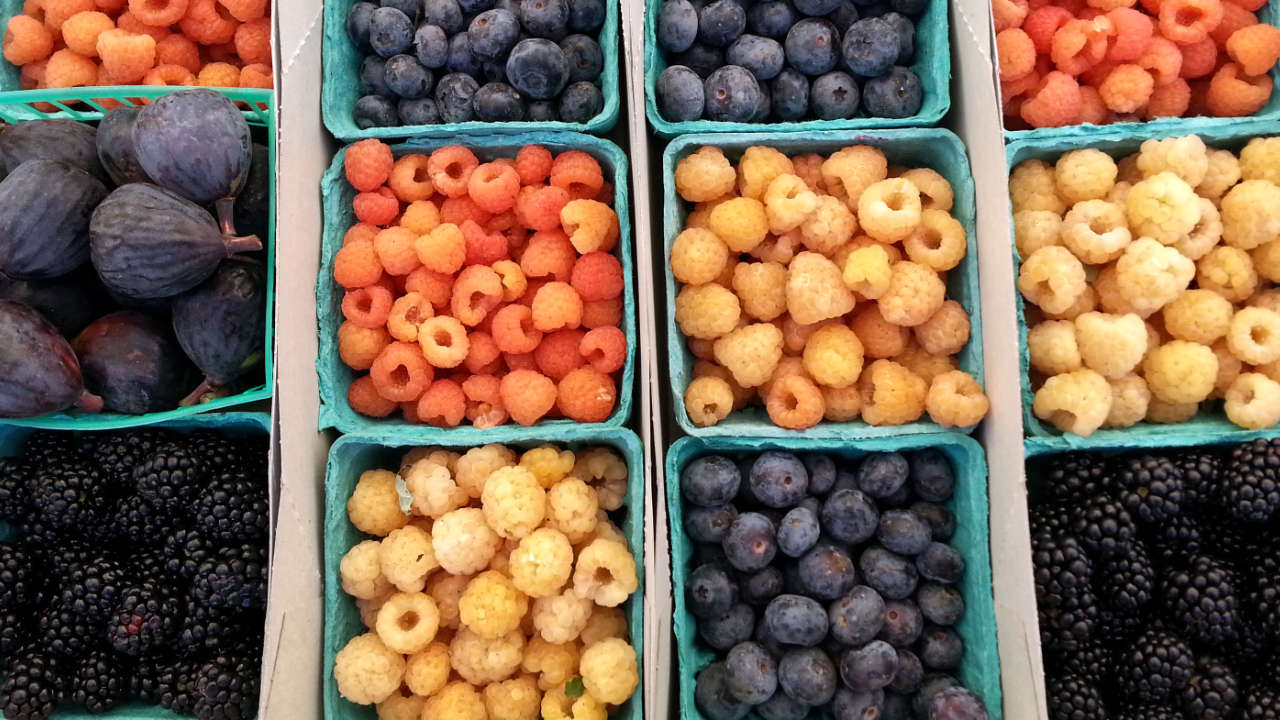
Photo by Carl Mueller. Used under a Creative Commons license.
Book Mentioned in the Episode
| The Middlesteins by Jami Attenberg |
Music Used in the Episode
| Title | Artist | Album | Label |
|---|---|---|---|
| Underground Agent | Perry Music Library | Moods For Drama | Perry Music Library |
| Russian Disco | RKM Library | Beat Action | RKM Library |
| 911 Beat | Timeless Timmy | 35th and Adams | Timeless Takeover |
| Moody Feeling | RKM Library | Beat Action | RKM Library |
| Soul Melody | RKM Library | Beat Action | RKM Library |
| Tom Vs. Galt | Timeless Timmy | 35th and Adams | Timeless Takeover |
| At This Very Moment | RKM Library | Beat Action | RKM Library |
| Funky Mood | RKM Library | Beat Action | RKM Library |
| Let’s Call The Whole Thing Off | Ella Fitzgerald | Ella Fitzgerald Ella Fitzgerald Sings The George and Ira Gershwin Song Book | Verve |