

This week on A Way with Words: Restaurant jargon, military slang, and modern Greek turns of phrase. • Some restaurants now advertise that they sell “clean” sandwiches. But that doesn’t mean they’re condiment-free or the lettuce got an extra rinse. In the food industry, the word “clean” is taking on a whole new meaning. • A Marine veteran wonders about a phrase he heard often while serving in Vietnam: give me a huss, meaning “give me a hand.” • Surprising idioms used in Greece. For example, what does a Greek person mean if he tells you “I ate a door”?
This episode first aired April 1, 2017. It was rebroadcast the weekends of October 2, 2017, and May 6, 2019.
Transcript of “Gone to Seed (episode #1469)”
You’re listening to A Way with Words, the show about language and how we use it.
I’m Grant Barrett.
And I’m Martha Barnette.
In English, if we want to tell somebody to be alert, pay close attention, we might say keep your eyes peeled.
But they have a great expression in Greece that they use that translates as your eyes 14.
Your eyes 14?
Yeah, tamachisos dekatesera.
What does that mean?
Which I love.
It’s just like, I guess, more than two eyes.
So like spider eyes.
Something like that.
Yeah, you know, the Greek mythical character Argus had 100 eyes all over his body.
But Tomachisas Dekatesera.
And you can hear the 14 in Dekatesera.
Yeah, Dekatesera.
I was going to point that out.
Oh, you are?
Very good.
That’s cool.
Well, I dug into some modern Greek slang, and I really am enjoying it.
For example, can you guess what the expression that literally translates as I ate a door means?
I ate a door.
This is what you’d say after a big meal?
Or in English, we say you have a burrito baby or something like that, right?
No, if you eat a door, you’re being rejected.
I ate a door, like a door slamming in your face.
They closed the door on you.
Yeah.
Yeah.
And let me share one more with you that I really like that involves eating.
This is if you’ve been looking all over for somebody for a long time.
You say, which means I ate the world to find you.
I heard the word Cosmo in there.
You did.
Yes.
I ate the world to find you.
Exactly.
Or I ate the universe to find you.
Oh, that’s nice.
If you’ve been looking for somebody or something for a long time, I ate the world to find you.
Isn’t that gorgeous?
That’s gorgeous.
You’re right.
You did hear the word Cosmo in there.
That’s the same Cosmo I’m thinking of, right?
Cosmos.
It means the world.
Yeah.
Cosmos.
Yeah.
Cool.
Greek slang.
I’m going to share some more Greek slang later in the show.
Well, the only Greek I learned when I was in Greece many years ago was good morning.
I think it’s still, it’s kalimera.
Kalimera.
Which is, the kale in there is related to words like calligraphy, beautiful.
And hemera in Greek is related to our word ephemeral, which is existing but for a day.
Oh, that’s nice.
Isn’t that cool?
Kalimera.
Email words@waywordradio.org.
Hello, you have A Way with Words.
Hi, Martha.
This is Kate calling from New York City.
Hi, Kate.
Welcome to the show.
So I was listening to your show a while ago with my husband, and it was the episode where you talked about how it gets really fuzzy, the difference between this week and next week.
Oh, yeah.
And we were talking about that.
And we started thinking about last week as a result.
And we were thinking about yesterday.
And why don’t we say yesterweek, right?
We say yesterday and yesteryear, but what about yesterweek and yestermonth?
We were wondering about that.
Okay.
Yeah, solid question.
Those are really good ideas.
That would be really helpful, yesterweek.
I think so, too.
But he does say that.
Would we run into the same problem with yesterweek?
Do you mean actually last week or the week before?
No, I would think it would be last week.
Okay.
But we say, yeah, it’s weird, isn’t it, that we say last night but not last day?
We say yesterday.
And we say last week, but not yesterweek.
But it hasn’t always been like that, right?
No, it hasn’t.
There have been lots of different versions of words that start with yester, but they tend to be a lot older, much, much older, like hundreds of years older.
And I guess it’s a good example of the kind of almost Darwinian process that language goes through, where you have lots of different competing terms for this and that, and some of them fall out.
So really what we’re left with is yesterday and what, yesteryear.
Those are pretty much the only two that are widely used, right?
You might run across things like yester evening in a poem, but we just wouldn’t use it.
I used to be an actress a million years ago, and in middle school, we did Pippin.
And there’s a great line that the grandmother says in Pippin.
She’s talking about how she’s so old.
And she describes, she says, when your best days are yester, the rest are twice as beer.
Which I always thought was kind of cute and funny and descriptive because I knew it meant in the past.
When your best days are yester, the rest are twice as dear.
That’s very good.
Very interesting.
Yeah, yester is an old adjective that just means of or belonging to yesterday.
But gosh, that’s a great example of it.
There is a British use of yesterday that I like very much, which is where you say, you could say yesterday week, right?
Or you could say yesterday a week.
So it means a week ago yesterday.
A week ago yesterday.
You can also do it with days of the week.
So Tuesday week.
It can be Tuesday week we’re going to the store or Tuesday week we went to the store.
Yeah, but that’s confusing, right?
Tuesday week.
No, you just pick Tuesday and move.
Well, I’ve heard that in the South, Tuesday week.
We’re going to do that Tuesday week for sure.
Yeah, but what do you think about yester month?
I mean, I would like to bring it back.
I feel like it has a place, but I also like to make up words.
Why not?
So you have an alternative then to yester-whatever?
No.
Wah.
No, okay.
Kate, thank you so much for your call.
Really appreciate it.
Thank you, guys.
Bye.
Thanks, Kate.
Bye-bye.
Bye.
Yesteryear.
We say yesteryear.
We do.
But even then, that’s kind of old-fashioned, right?
Well, it’s a more general term, don’t you think?
The great hits of yesteryear.
Yeah, yeah.
There was an old-time radio show I used to listen to.
Okay.
The announcer always said, they’re the thrilling tales of yesteryear.
There you go.
But that’s different from the year that preceded this one, right?
I mean, it’s easier just to say last year, I guess.
It’s like another era is what it means, really, than like last year.
Yeah.
Really, the one that’s familiar is yesterday.
Yesterday, that’s it.
And even I noticed in the etymological notes in the dictionaries, they talk about we’re one of the few languages that uses it that way.
Because yester in many other languages or the forms that are like yester are used simply alone to name yesterday without tacking on the word day.
Right, without the day.
So you could, in other languages, say yes to everyone, no.
Do you mean 24 hours ago?
Yeah, that’s a good point.
Huh.
What’s the word that’s been on your mind lately?
Give us a call about it, 877-929-9673, or send us an email.
The address is words@waywordradio.org.
Hello, you have A Way with Words.
Hi, my name is Jan.
I’m calling from Madison, Wisconsin.
What can we do for you, Jan?
Well, when I was a little girl, I can remember my grandfather using this statement often, and I never understood what it meant.
He used to say something was ignorance gone to seed.
I don’t think I’ve ever heard anybody else say that in my lifetime.
And I was just curious if that’s something people say or if that was just his special little thing.
Ignorance gone to seed.
What did you understand that he meant by that?
Nothing until I was much older.
But something was really stupid.
So something stupid happened and he would just say, oh, that’s ignorance gone to seed?
Yeah, usually about somebody that had done something.
Right. So I have a theory on this.
Now, gone to seed is an expression that exists in English, and a lot of people say that.
And it means that something has kind of moved beyond the point of cultivation.
Like if a yard goes to seed, it means you’ve stopped mowing it and all the grass has gone to seed and you’ve got these tall stems with seeds on them.
And, you know, it’s the whole thing is a mess.
There’s no trimming.
There’s no clean edges, nothing like that.
And if you’re talking a person or a business or anything else that’s gone to seed, it’s kind of the same idea.
The maintenance work just simply has not been done.
However, ignorance gone to seed is really interesting because it makes it sound like, boy, then not only have they bloomed and fruited, but they’ve gone to seed.
Like they are in the full flower of ignorance.
Everything has happened.
That plant is robust.
That’s what I took it to mean when I finally was able to figure something out.
Yeah, a very vigorous kind of ignorance, I would imagine.
Like the dandelion plant that gets away from you, you know?
I think it’s great now, though.
Fibrous stems and these brittle leaves are crazy.
Yeah, ignorance gone wild.
Ignorance gone wild.
It’s a good one.
Jan, I recommend keeping that one.
That’s a good one to hang on to.
Yeah.
Ignorance gone to sea.
I like it.
Thank you so much for your call.
Really appreciate it.
Okay.
Thank you.
Take care now.
Bye.
Call us to talk about language.
The number is 877-929-9673, or you can send an email to words@waywordradio.org.
Another bit of Greek slang translates as he pretends to be a duck.
Can you imagine what that is?
He pretends to be a duck?
Is it somebody who never stops talking?
No.
Or quacking?
No, it’s somebody who pretends that they don’t know about something, that they’re unaware, almost like a duck sticking his bill into his feathers or something.
Oh, I see.
Almost the head in the sand.
Yeah, exactly.
He pretends to be a duck.
I had no idea that they were embezzling all that money, but you want to come to my third house?
Right.
You’re a duck.
Hello, you have A Way with Words.
Hi, how’s it going?
My name is Dan.
I’m calling from San Diego, California.
Hi, Dan.
Things are outstanding here.
Welcome to the show.
The other day, my girlfriend and I were listening to your show, and we just had this random question come to our minds, kind of thought of the word nightmare.
Where does it come from?
Kind of what does the term nightmare mean?
Because you have daydreams, but then you have nightmares, and it’s kind of different from like a night terror or a night scare.
And I just kind of didn’t know what the term, I guess, mare meant from nightmare.
You think maybe it has something to do with horses?
I mean, that’s kind of what immediately comes to mind, but I’m not sure if that’s really—I know the connection between like a dream and a horse.
I wasn’t sure where that came from.
Yes. Well, Dan, your skepticism is well placed because it doesn’t have to do with horses.
Right.
There’s a long tradition in folklore of imaginary demons or goblins coming and just sitting on your chest while you’re sleeping.
And the German term for that kind of goblin is mar, M-A-H-R.
And we get the word nightmare from Nachtmar.
That is a goblin that comes and sits on your chest during the night.
Interesting.
Oh, wow.
And you see this again and again.
For example, in Spanish, the word for nightmare is pesadilla, which is related to peso.
It has to do with weight, a small weight on your chest.
And so it’s kind of this creepy notion that something comes and just weighs down on your chest and causes all kinds of terrors.
There’s also the Latin word incubus that means the same thing.
It’s related to incubate.
No, that’s outstanding stuff.
Not a horse at all.
But that connection has been made so often that I have seen many, many, many books and illustrations that have beautiful, you know, dark horses running in the night and trampling your dreams.
But there are also gorgeous paintings of mares, Mars, you know, that just beautiful old romantic era paintings of these demons that come and sit on your chest.
It’s really worth looking up.
Dan, thank you so much for your call.
All right.
Thank you very much.
Take care now.
Bye-bye.
All right.
Bye-bye.
Bye.
Email words@waywordradio.org or hit us up on Twitter @wayword.
Another great bit of Greek slang is feniparchi, which literally means it doesn’t exist.
But you would use that expression to describe something that’s really fantastic, like, oh, my God, Lady Gaga’s performance at the Super Bowl.
It doesn’t exist.
Oh, it’s so good. It could be. It’s only impossible.
Yeah. Yeah.
Yeah, it’s out of this world, you know?
There’s nothing like it.
But I love that idea of saying that something’s great by saying it doesn’t exist.
It’s kind of like when you say something is unbelievable, right?
Yeah, yeah.
And you’re like, it’s there and it’s real, but you still call it unbelievable even though you can’t believe it.
Exactly.
You’re listening to A Way with Words, the show about language and how we use it.
I’m Martha Barnette.
And I’m Grant Barrett.
And we’re joined by our quiz guy, direct from New York, John Chaneski.
Hi, John.
Hey, Grant. Hey, Martha. It’s great to be back.
What is up?
It’s time to take off, you hosers.
Remember that a takeoff is what we call when I remove the first letter of a word, making another word.
Okay.
Got it?
Yeah.
I’ll give you a sentence that clues both words.
For example, I might say, I’d like to try that ice cream, but you didn’t give me enough.
Now, the answer would be an ample sample.
Now, they don’t necessarily make a phrase like that.
I just need you to give me both words.
And often the words will rhyme, but not all the time.
Okay.
All right, here we go.
Let’s try.
I’m taking a course at school to learn how to be a proper Irish girl.
Class lass?
Yes, class and lass.
Let’s try this one.
I’m on a plane and spreading the idea of alternative facts all over the country.
Flying lying.
Yes, flying lying.
I’ve got a report due very soon, so I’m running down to the office supply store to pick up my copies.
Gosh, racing, acing, jogging.
Pages?
Pages, no.
Paper, aper, caper.
Arben.
Sprinting, printing.
Yes, printing, printing.
Very good.
I’ve found a book with very large pages, but it just seems to be a miscellaneous collection of things.
That is class.
I’m thinking about hodgepodge, but that’s not right.
Folio, oleo.
Yes, folio, oleo.
Nicely done.
Speaking of reading material, the latest edition of my favorite magazine uses a kind of paper that’s so thin you can almost see through it.
Onion skin.
Issue tissue.
Yes, very good.
Back in the day, you would be put to death for rustling cattle, but those laws have all been amended.
Hanged and changed?
Yes, hanged and changed.
Very nice pronunciation change, yeah.
When I interview someone for a position at my company, I insist on a letter of recommendation, but that’s just how I like to do it.
My reference preference.
Ooh, nice.
Yes, very nicely done.
As I climbed the ladder and rolled into my berth, my boyfriend headed to the dining car for a late meal.
Mounted.
Climb the ladder.
Rose.
Upper.
What do you call that?
Upper Supper.
Upper Supper, yes.
Way to go.
Very nicely done, you guys.
Very good on the takeoffs.
Oh, is it all?
Well, that’s it for now.
That was a good dozen.
I think it was more chances to shine.
I appreciate that.
But I’m going to take off myself right now.
I’ll see you later.
Thanks, John.
I really appreciate it.
Bye, guys.
Bye.
This is a show where we goof around with language, so call us about any aspect of it, 877-929-9673, or you can send your thoughts and email to words@waywordradio.org.
Hello, you have A Way with Words.
Hi, this is Mike Cook calling from Omaha, Nebraska.
Hi, Mike.
Welcome to the show.
How can we help?
Back in 1966-67, I was in the Marine Corps serving in Vietnam, and there are a lot of words and phrases that are unique to the Marine Corps.
Probably most of them that can be used in polite conversation.
But the one that I was interested in, when I got to Vietnam, there was a phrase that all the Marines were using was, give me a huss.
I believe you’d probably spell it H-U-S-S.
And it was basically, it just meant give me a hand or help me with something.
And I don’t know if that was unique to the Marine Corps or unique to Vietnam or just that time period.
Because when I came back to the world and started my civilian life, I worked with a lot of other veterans that some were Vietnam veterans and some weren’t from different branches of the service, and they had no idea what give me a huss was.
Oh, interesting.
That’s cool.
Have you ever heard it as cut me a huss?
I’ve heard it all kinds of ways.
I was just huss, you know, cut me a huss, yeah.
There’s a really strong theory on this in the book called
Marines and helicopters, 1962-1973.
It’s by William Fales, published in 1995.
And he’s got this particular section on the HUS, H-U-S-S.
Right.
But what he explains here is that the HUS comes from the nickname for a Sikorsky helicopter.
Oh, really?
Yeah.
There was a model.
I’m going to just summarize this.
You can look up the book, Marines and Helicopters, published in 1995, William Fales.
There was a model of the helicopter that was launched in 1962 called the HUS, also known as the -34D.
And the models changed over the years and the model numbers changed over the years.
But that first name, the HUS, stuck.
And so the idea was that you would call for a HUS when you needed some help.
Because apparently these helicopters, even though they were kind of difficult to operate, they were very reliable.
They didn’t break down and need new parts and repairs as often as the other machines.
And so if you were stuck in a tight place or you just needed something drop shipped or what have you, you would call for a HUS.
And that meant the helicopter.
And later the term became generic.
And he writes in here, using the old designation, which never did lose its popularity among Marines,
And which was much easier to say over a radio, much easier to say than like the longer, you know, initials and numbers.
He would broadcast, give me a HUS.
That word HUS has been incorporated in the vocabulary of Marines to indicate something good, something beneficial, a favor, or a special set of circumstances that are pleasurable.
He says it takes its place right there along with gung-ho and other words that we’ve gotten from the Marines.
Well, that’s interesting.
I know we referred to Huey helicopters.
Yeah.
And then slicks were another type of a helicopter that we had.
Chinooks, all kinds of different helicopters.
I never put those two together to be the meaning of the word us.
But it would be a welcome sight, right?
Oh.
Yeah.
Anything that had a lot of guns on it was a welcome sight.
Yeah.
Yeah.
Well, I appreciate your time.
Yeah, our pleasure.
Mike, I appreciate your calling.
I just learned a new word.
I appreciate it.
Well, I’ll give you another one, Semper Fi.
Semper Fi.
Semper Fi.
You bet.
Take care.
Keep the faith.
Thank you very much.
Bye-bye.
Bye-bye.
Bye.
Email words@waywordradio.org.
Or talk to us on Twitter @wayword.
I was on the phone the other day with a producer of a podcast for Gimlet Media,
And she told me that one of the things that bothers her about language,
And we don’t do peeves very often anymore,
But is that some people believe that the word belligerent means drunk.
What?
Yeah.
Not angry or ready to fight or very aggressive, but just drunk.
And sure enough, if you look on Urban Dictionary,
That source of all that is wrong and good in the world,
If such thing is going to be true,
You’ll find that there are people arguing about belligerent not meaning drunk.
I will find plenty of examples, if you want me to, of people thinking it only means drunk.
Is that right?
Yeah, and it looks like it’s a misanalysis when somebody is drunk.
You might often say that they were a belligerent drunk or they were belligerent drunk, right?
And people misunderstood belligerent to mean drunk.
Oh, that’s really fascinating.
It’s the younger set, and I don’t know if it will stick,
But it’s certainly some evidence that people believe it to be true, that belligerent only means drunk.
Well, I just learned something. I mean, yeah, the younger set who’s not studying Latin and would know that belligerent is related to Latin bellum like antebellum before the Civil War.
Oh, so it means prone to war.
Yeah, yeah.
That’s cool. Tell us about the language misunderstandings in your life on Twitter @wayword.
Hello, you have A Way with Words.
Hi, this is Robin Taylor from Carmel, Indiana.
Hi, Robin. Welcome to the show.
How can we help?
The word that I was writing to you about is the word Kimball.
My family background is from the South, like Tennessee and Mississippi, and our ethnicity is black, African American.
And my family has used this word, I heard my parents use this word to describe a man’s, it’s never a woman’s kind of strut.
With a Kimball, or if someone is Kimbling, or if he Kimbled across the street,
There’s a lean of the torso slightly to the side,
And one arm is casually thrown forwards and brought backwards, almost like a swim stroke.
The stride has a cadence with perhaps one leg slightly bending in step with some kind of attitude.
And I see examples of these strides in the cool dudes of the 70s,
Personally, I see Kimbling in the gates of Denzel Washington or our wonderful former President Barack Obama,
Although theirs is less exaggerated than Kimball, to which my family referred.
So my husband is white, and he’s fascinated with this use of the word and asks all of our friends,
Have they heard of this term used, too, sometimes to my embarrassment.
But I was wondering, have you two ever heard any comment or have any comment on the use of this word for him and maybe to educate me?
Kimble. So we’re talking about K-I-M-B-L-E, something like that?
Yes. Or Kimbling?
Kimbling?
Yes.
And your husband is white and you’re black?
Yes.
Wow, I know the walk. I’ve seen those 1970s movies. I totally have.
And as a matter of fact, I think you’re right.
I think people like Barack Obama and Denzel Washington have it.
Samuel Jackson has it, right?
Chris Rock in his stage comedy shows that he does, he has it.
And he does it as part of his show.
But I know the walk.
I can’t do it myself.
But it’s always for a man, too.
I’ve never heard them refer to a woman doing it.
It’s always been a male thing.
Do you know any other terms for this?
No, not really.
Okay.
I have a ton of slang dictionaries at home.
And I have some that specialize in African-American language, all right, or Black English or African-American vernacular English, whatever the term that they wanted to call it.
I’ve looked in Clarence Major’s book.
I looked in Janita Smitherman’s book.
I’ve looked in a variety of amateur slang dictionaries that people put together.
I’ve looked in the standard slang works.
I’ve looked in Green’s Dictionary of Slang.
I’ve looked in the Historical Dictionary of American Slang.
I checked the Oxford English Dictionary, the Dictionary of American Regional English.
I looked at Urban Dictionary.
I have looked high in the look.
I have something like 80 gigabytes worth of data on my computer that I searched that I’ve been saving for the last 15 or 20 years.
I have a library of hundreds of books.
I have never seen this word Kimbo.
I haven’t.
But I do have one possible suggestion.
And it shows up in a couple of dictionaries related to the language of the Caribbean.
And in these books, there’s a form of the word akimbo, A-K-I-M-B-O.
So if you stand akimbo, it’s when you’re like hands on your hips.
There are a couple shortened version, clipped versions of that word, which is just kimbo, K-I-M-B-O, that appear in the dictionaries.
Now, it doesn’t exactly refer to walking, but it means to put your hands, to remove your hands from your hips.
And that’s the closest that I come.
So it is about your hands.
It is about your hips.
It is kind of about the way that you’re standing.
And it is Kimbo, which sounds kind of like Kimbo.
So my question for you, is there any Caribbean heritage in your family?
Anybody from Barbados?
Anybody from Jamaica or Guyana?
Not to my knowledge.
Okay.
No.
Darn.
So Kimbo meaning to have your hands on your hips and then take them off while you’re walking?
Well, in the Caribbean uses, it’s just Kimbo.
This is what it says.
With your arms, a Kimbo, don’t put your hand on your Kimbo when you’re talking to me.
So your Kimbo is your hips or your hands on your hips.
Alternately, it’s also to remove your hands, to take your hands out of your Kimbo is to remove your hands from your hips.
So it’s not exactly the same.
It’s about the body.
It sounds kind of like that’s the best I can do.
And I would give that like a one out of a hundred chance of being the right term.
Wow.
This sounds like a real mystery.
Robin, do you have any other ideas about it?
I don’t.
And it’s just something that, you know, as a child, and even today, my mother says, yeah, Kimball.
Kimball, it means, and she described it, you know, the walk.
And like you and I are thinking about these other famous people that we see strut like this, like a strut or swagger, you know.
I mean, you’re walking with confidence, but you’re also really cool.
But I did think about the use of the word akimbo.
I really did.
So that’s resonating.
What we’ve got to do here, Robin, is we have a large audience,
And we’re going to ask people if they know the word kimble or something like that
That means to walk with that particular kind of swagger.
A black man walking with that particular kind of swagger that’s similar to the word kimble
Or exactly the word kimble.
And if we get that, then we will all be delighted and we will share it with you, all right?
We will all be delighted, yes.
We will indeed.
I like them.
You know, I like giving people answers.
You know, I really do, Robin.
I think Martha loves it as well.
But boy, I love a mystery too.
Yeah.
This is a good one.
We’ll let you know if we come up with anything, all right?
Thank you.
We love the show.
Oh, yay.
Thank you.
Bye-bye.
Thanks a lot, Robin.
Bye-bye.
Bye.
All right.
You got to help Robin out.
Or email words@waywordradio.org.
Or tell us about it on Twitter @wayword.
I just learned the term second acting.
Do you know what second acting is?
Is that when you have a whole new career in the middle of your life?
You completely finish one industry and start something brand new?
No, this is something you used to be able to do in the theaters in New York in particular.
I think it’s when you used to buy one ticket and see multiple shows in a row.
No.
No?
No, but it has to do with getting into a show in the second act.
Oh, I see.
You get in for half price or something to fill available seats?
Well, no, you just sneak in.
You find a copy of the playbill at intermission.
You find a copy of the playbill and you walk in with a confident air like, oh, I know where I’m sitting.
And just find an empty seat.
Yeah.
That’s awesome.
Apparently second acting isn’t done that much anymore in this security conscious age.
Yeah.
But that used to be called second acting.
Oh, I thought for sure it was the theaters with multiple showings.
When I was in New York in the early 90s, there was a theater in Grand Street in Chinatown where you could go and buy one ticket and basically sit there all day.
And they would alternate American films and Hong Kong films, just one right after the other.
And there was air conditioning.
And so if you didn’t have air conditioning for like a few bucks, you could watch some really terrible American movie followed by some really terrible Hong Kong movie.
But you were cool.
Okay.
There was no heat.
Yeah.
Did you do that?
I did, yeah.
Theater’s long since gone.
Oh, my gosh.
I saw so many Hong Kong movies that way.
That’s a lot of popcorn.
Hello, you have A Way with Words.
Hi there.
My name is Jake Danan.
I’m calling from Door County, Wisconsin.
Hi, Jake.
How are you doing?
Welcome to the show.
What’s up?
I’m good.
I was listening to the radio a little while ago, about two weeks ago, and they were talking
About the attorney general and attorneys general.
And I realized that they, you know, obviously they put the S for the pluralization on the
Word attorney.
But then a few minutes later, they abbreviated it and they were talking about AGs.
So they moved the S to the end of the G.
And I thought that was a little bit strange.
I was wondering if you had any insight into why we do that.
Attorney General is one of those words that can be pluralized either as Attorney Generals or Attorneys General.
And you’ll see style guides usually permit you to do either one.
But when we make an initialism or an acronym out of a word,
We pluralize the end of the initialism or the end of the acronym.
Now, that said, I know there’s a big argument in the baseball community
That’s been going on for a very long time about runs batted in versus RBIs.
R’s B’s.
I’ve heard somebody say, which is ridiculous.
It’s RBIs.
But AGs is 100% correct.
There’s nothing wrong with it.
We pluralized the final form and not based upon what it was descended from.
I’ve only ever heard attorneys general.
So the attorney getting pluralization.
Why is that commonplace?
It’s just a stylistic choice that has been made
Before people really thought about it very much.
So attorney generals, some people think of general as the noun, but actually general is an adjective describing the noun attorney.
And so that widespread misunderstanding that people pluralize generals and you get, it becomes habit and then thus a possibility in the style guides.
Sure.
Okay.
Yeah, that’s it.
That helps.
Cool.
Jake, thank you so much for your call.
Really appreciate it.
Thank you.
Take care.
Bye, Jake.
Bye-bye.
Just while we’re talking about it, other words that pluralize the same way, commanders-in-chief, sons-in-law, sisters-in-law, courts-martial, right?
But do you say spoonsful or do you say spoonfuls?
Oh, boy.
Three spoonfuls.
Spoonfuls.
Not spoonsful?
Three spoonsful.
Yeah, you can do either one.
You can do either one?
Yeah, you can do either one.
Phew.
Okay.
But when people say spoonsful, then they tend to make it two words and spell full with two L’s.
Yeah, I can see that.
Which is interesting.
Spoonsful with a hyphen, maybe.
Yeah, two spoonfuls of sugar.
Yeah, yeah.
Why we say what we say.
Stick around for more of A Way with Words.
You’re listening to A Way with Words, the show about language and how we use it.
I’m Grant Barrett.
And I’m Martha Barnette.
In a sandwich shop the other day, I saw a menu that made me do a double take.
Right at the top in great big letters, it said, clean sandwiches.
What does that mean?
That’s what I was thinking.
And what have I been eating everywhere else?
I know, right?
Did they finally start washing the lettuce?
I don’t get it.
I kind of like the slugs in my lettuce, but okay.
A little extra protein, right?
Yeah, I couldn’t figure it out.
I mean, it really made me think.
And I was thinking, well, maybe a clean sandwich is a sandwich that doesn’t have mayo or mustard.
Sure, I could see that, right?
It’s kind of like jargon that we weren’t aware of about food prep.
Right, but it’s different jargon.
Is it the name of the family that owns the place, the Cleans?
Mr. Clean?
Mr. Clean.
No, no, clean is now a buzzword in the food industry.
And clean refers to food that has no flavors, colors, or sweeteners, or preservatives that are artificial.
This actually is being used more and more.
There’s a magazine called Clean Eating.
And I swear that this menu said clean sandwiches.
And you’re just supposed to know.
If you’re one of their people, then you know what you’re getting.
Yeah.
Okay.
And I read a whole article about how this is proliferating.
And it seems to me that, you know, remember the discussion that we’ve had about what’s natural, what food is natural?
I would expect that eventually this word is going to get so diluted.
We’re going to have to wonder what clean really means.
Yeah.
I mean, ordering clean pizza.
I washed the knife.
Right.
Right.
But all these companies now are lining up to produce clean food.
I mean, in a few years, we’re going to be able to eat clean Pop-Tarts.
Kellogg’s has lined up to make clean food.
Okay.
Yeah.
So keep an eye out for the word clean.
Isn’t that weird?
It is weird.
You know, it’s not as weird as the sub sandwich shop that’s near San Diego State University
Where all the food is named after marijuana varieties.
Oh, really?
So you can get a kush and, yeah, it’s crazy and things are dank.
You can get a clean kush now, right?
You can get a clean kush, I guess, right?
A clean Colombian kush?
I don’t have any idea.
But keep an ear out and an eye out.
Okay, clean food.
Yeah.
That sounds like a good idea.
Not sure I’m 100% behind the jargon, but…
Yeah, I don’t know.
I think it’s like the word green or clean energy.
I mean, we’ve had clean energy for a while, but…
It’s funny how much we talk about on this show, you and me and our callers, where we just happen to see something and it sparks a language question.
That’s the stuff we love to talk about.
If you’ve got something that you saw that just sparked a language question, let us know.
We’ll hash it out, 877-929-9673.
Or send the whole thing an email to words@waywordradio.org.
Grant, do you know what a Beijing bikini is?
Yes, but I can’t say it on the air.
This is a thing that you see in Beijing when it’s really, really hot.
I’ve seen several articles about this.
It’s guys who roll up their shirts and expose their bellies.
Usually a belly.
To cool off.
Yeah.
Sure.
Yeah, it’s called the Beijing bikini.
That’s cool.
Yeah, where’d you find that?
It’s cooling.
Cooling.
Well, there was a piece in the New York Times, and then from there I just started looking all over the Internet, and there are all kinds of pictures and videos of the Beijing bikini.
That’s cool.
Hello, welcome to A Way with Words.
Hi, how are you? This is Scott Eppelman.
Hi, Scott, how are you doing?
Great.
What can we help you with?
I have a question about a term which I heard last summer.
It’s a term for the mayfly.
I own a small share of some family property on Lake Pepin, which is the Mississippi River near Stockholm, Wisconsin.
And my family and I vacationed there during the summer of 2015.
And while we were there, there was a mayfly hatch, which is quite an amazing thing to be part of.
They’re in the air, clouds of them.
It’s really quite amazing.
They actually show up on local radar, and they appear as rain would.
Wow.
And my relatives, we spent some time with some cousins who were there, referred to the mayfly using a term I had never heard before or since, and it’s scapelage.
And I was wondering if you had any history on that.
And speaking to my cousins, they suspect that there could be a Native American connection.
My great-grandpa Olaf was on pretty good terms with some local Indians there who were Chippewa.
And so that’s the best we can come up with.
But I’m wondering if you have any hard information.
Well, that’s a very good guess.
And that’s the guess, anyway, in the Dictionary of American Regional English for this term.
Usually you see it as scobalotch, S-C-O-B-O-L-O-T-C-H, or scoplotch with a K.
And yeah, it’s a term for the mayfly that’s particular to that part of the country.
And it may come from a Native American term, but we don’t know for sure.
In Wisconsin as well, there’s the term green bay fly.
Maybe it’s because they’re so remarkable.
They have lots and lots of different names.
Yeah, I think I counted 30 different names for them.
Yeah.
In Ohio, they’re known as Canadian soldiers.
I know that.
But this particular term, skoplotch or skabalotch, is only in Wisconsin and Minnesota, right?
Mm—
Wow.
Very interesting.
So that’s really the best we can do.
Perhaps it comes from a Native American term.
We don’t have another explanation for it.
Right.
It makes sense to me.
But the odd sound of it is very non-English and doesn’t conform to German words or any Scandinavian words that we can find.
Mm—
And if it did come from a Native American term, it would be like a lot of other animal words in English, like moose and raccoon and skunk and possum.
Cool, Scott?
Yeah, thank you so much.
Thank you.
Thanks for calling.
Really appreciate it.
Okay, take care.
Bye-bye.
One of the earliest uses of this term that I can find is from 1903, and I thought our military audience would appreciate this particular mention.
Now, remember, a scoplatch is a mayfly, and this is a very tiny fly, and this is from the St. Paul Globe in 1903.
Sergeant Thomas Jefferson O’Leary, engineer company on a surveying detail, this morning discovered a scoplatch on the infantry flag at a distance of three miles.
He was immediately detailed to remove the obstruction to the colors.
Right.
So the idea is that the sergeant is so particular about keeping the flags pristine that even a mayfly that he sees at a distance of three miles must be removed.
Oh, my goodness.
That’s wonderful.
I learned this week that a flet is sort of the same thing as a dray.
A flet, F-L-E-T, and a dray, D-R-A-Y.
Flet is used in the Tolkien books to refer to a kind of treehouse-like structure, you know, like a platform up a tree.
Yep, yep, yep.
And then a dray, I only know drayhorse.
What is dray in this context?
D-R-A-Y or D-R-E-Y, particularly in Britain, is a squirrel’s nest.
But you’re right.
Flet is another term for a squirrel’s nest.
A squirrel’s nest.
Okay, that would explain the Tolkien.
He does that all the time.
His words always have some kind of root in the Nordic languages or the Anglo-Saxon languages, the Germanic languages.
Yeah, exactly.
Send us your thoughts about language to words@waywordradio.org.
Hi, you have A Way with Words.
Hi, this is Emma. I’m calling from New Orleans.
Hi, Emma. Welcome to the show. What’s up?
So the other day, a friend and I were kind of discussing and singing a song at work.
I came home and I was listening to it by myself, and I noticed this very subtle use of xylophone, and I wanted to text her about it.
So when I went to write the word subtle, I started to type S-U-T-T-L-E.
And then autocorrect kicked in, and then, of course, put the right spelling, S-U-B-T-L-E.
And it made me think, oh, yeah, subtle has a B in it, which I always thought was a really funny word to have a silent letter, because you could say that the B is very subtle in a way.
But then I was also telling my mom the same story, and she said, yeah, I guess I would have spelled it S-U-B-T-L-E, which I found interesting.
I guess I say subtle when she says more subtle.
But it got me thinking about the word. Why does it have this silent B?
What are its origins? And if other languages speak it, do they say the B?
Oh, this is really good because there’s something curious that happened to English.
Just the history of subtle is important. We got it from the French, and the French spelled it S-O-T-I-L at the time we borrowed it, and it has the same meaning.
And they got it from Latin, wherein in Latin, it was spelled with a B, S-U-B-T-I-L-I-S, and with generally the same meaning.
However, there was this period in, how should we put this, English language arts, where all of the finest minds decided that Latin was the best language, and any word that we had in English, which we knew to be derived from Latin, should look a little more like the Latin word that it came from.
So they inserted the B in subtle.
It’s called remodeling.
They remodeled the word by putting the B back in it.
And we didn’t do it just with subtle.
We did it with doubt, D-O-U-B-T, and we did it with debt, D-E-B-T.
And there were some other words as well that we’ve done this.
Now, sometimes we add letters in just because it’s a quirk of a pronunciation that we want the sound there, even if it’s not there originally, like putting the B in thimble, which didn’t originally have the B.
But in this case of these three words, we just said, oh, yeah, Latin. We’ve got to go back to that original form and make it look more like the Latin word.
How interesting.
And it always seems to be a B that sneaks in there, all those words that you said.
When they pronounced it in Latin, when you were speaking Latin, would they say it with the B, or was that always silent?
I have a Latin expert here in the studio with me, Martha.
Yes, indeed.
In fact, the word goes back to a couple of different words.
The Latin word suptilis, it has to do with a web and sort of fine, fine, fine material.
Possibly related to the word text, TXT, right?
And some other words.
Subtilla.
Subtilla, yeah.
How interesting.
Well, I love that explanation.
It’s just art then, isn’t it?
Yeah.
It’s art.
It’s really, we hung a bee on the wall of the room, and we don’t really use it, but it looks nice.
I like what you’ve done with the place.
Yeah, I just put the bee off.
I’m glad you like that.
But don’t say it, yeah.
We don’t talk about that.
Well, thank you guys so much.
Emma, thank you.
Appreciate it.
Bye-bye.
Of course.
Bye.
Bye.
Latin is not a perfect language.
No.
It’s not, I don’t think objectively or subjectively can be proven to be better than English.
Is any language.
Well, the question is, they always, for years, how many years did they try to make English, you know, like the myth, the language myth about not breaking up the infinitive verbs, right?
To boldly go, right?
Right, right.
Or not ending a sentence with a preposition.
These are things you can’t do in Latin.
And so people decided you shouldn’t do them in English.
And that’s ridiculous.
Yes.
They’ve never been accurate or true.
It’s just these weird myths passed along.
Yes, I’ve seen it described as trying to fit the swollen foot of English into the two tight shoes of Latin grammar.
That’s great. That’s perfect.
Ouch.
We were talking earlier about mayflies.
There are so many words for mayfly.
Wayfly, ciscofly, drakefly, dun, eelfly, fishfly, flying clipper, greenfly, julyfly, junebug, junefly, lakefly.
It goes on and on.
Junebug, even though we already have a different junebug.
Exactly.
That happens all the time where two different species will have the same common name.
Yes.
Same with plants.
And why?
It’s because they’re phenomenal, right?
They all hatch at once.
I saw on planet Earth the same thing happens in a lake in Africa.
And they spiral.
They do these murmurations of insects, like these columns of insects, right?
Yeah.
As they’re born, they mate, and they die, and the fish have a frenzy.
In the space of a day, right?
In the space, yeah.
Or something like that.
A short amount of time.
Really quickly.
We’d love to hear your thoughts about any aspect of language.
You can call us at 877-929-9673 or send an email to words@waywordradio.org.
Hello.
You have A Way with Words.
Hey, this is Wendell Holloway in Dallas.
Hi, Wendell. How are you doing?
Great. How are you?
All right.
What’s going on, Wendell?
Well, so I’m new to your program.
I started listening several months ago, and it got me thinking about this word that my friend Dan and I have been using for probably 20 years when we talk about money.
And I’m wondering, did we make this up, or is this a real word?
So the word is spondukage, and we actually spell it the way it sounds, spondukage.
And I’m just trying to figure out, gosh, did we make that up?
And if we did, maybe we need to do something with that.
Or is this a word that’s been floating around and we just sort of grabbed it years and years ago and used it?
Spondukage? So you would spell that S-P-O-N-D-U-C-A something?
Well, in our emails and texts, we use a K, but maybe we made up the spelling. I don’t know.
Spondukage, D-U-K-A-G-E, maybe at the end?
That’s right, yeah.
And Wendell, how would you use it in a sentence?
So it really started, I think, when we were over at the Stoneleaf thinking about having a beer, and Dan or I would say, hey, do you have any spondukage today? Let’s go get a beer.
And we had money, but we just sort of threw that term in there, you know, as a way to get the conversation started about going and meeting and having a beer.
Well, it sounds an awful lot like spondulix, which is a fairly well-known word for money.
Maybe you all read Huckleberry Finn. Mark Twain used it in that book.
To mean money.
Oh, yeah. That was a few years ago. Yeah, okay.
-huh. Yeah. Usually you see it as spondulix or spondules or sponduli.
Yeah, it has been around since at least the mid-19th century, 1840s or so.
And we don’t know the origin of it for sure, although there’s a theory that I really like.
Oh, me too. This is a great theory, right?
The Greek one?
Yes, the Greek one.
Yes. This is really cool, Wendell.
In ancient Greek, the word spondulos means vertebra.
And there are references in the past to a stack of coins resembling a spine.
Some people think that it arose in college slang in the mid-19th century.
And I could just see, you know, these college guys who are struggling with ancient Greek and stacking their coins on the table, calling them spondulux.
Yeah, it’s cool that we have the written evidence that at least a couple of times somebody made that connection.
Spondulux means spine, coins stacked look like a spine.
Therefore, generically, all money could be a spondylase.
Oh, that’s really interesting. Yeah. Great.
How cool is that?
Maybe we took our subconscious from reading Mark Twain years and years ago and converted it over beers.
I don’t know. I have to think more about that.
A lot of conversion occurs over beers.
But it was beyond Twain.
Twain was definitely, it was a word of his era for sure.
And it was widespread enough that it pops up in older fiction.
And even now, people kind of unconsciously use it without quite realizing the history of the term or how many years it’s been around.
Oh, that’s awesome.
Yeah.
Yeah, so now you have something to talk about.
Yeah, that’s really great.
And now we can add spondukage to the wide variety of spellings and pronunciations for this term.
Well, next time you’re in Dallas, we’ll have a beer and we’ll explore all of that and more.
Okay, if you’re bringing the spondukage, we’re there.
Okay.
Thanks, Wendell.
For the first round.
Okay, for the first round.
Okay, thanks, Wendell.
Bye-bye.
Bye-bye.
Email words@waywordradio.org.
In Spanish, if you want to say somebody is really rich, you can say, tiene más lana que un borrego, which translates as…
More wool than a lamb.
Exactly, yes.
And wool is, lana in Spanish is slang for cash.
Oh, slang for cash, yeah.
Yeah, more wool than a lamb.
The reason I knew the word borrego is because there’s a restaurant called El Borrego on El Cajon Boulevard in San Diego, which has the best burrito.
It’s a lamb burrito.
It is so good.
And as I recall, it’s got sheep or lambs on the outside.
I don’t remember that.
I’m only like narrowly focused on this burrito that’s going to arrive.
And I’m just driving past thinking, oh.
Want more A Way with Words?
Listen to years of past episodes at waywordradio.org or find the show in any podcast app or on iTunes.
Our toll-free line is always open, so leave us a message at 877-929-9673 and we’ll take a listen.
We’d love to get your messages at words@waywordradio.org or hit us up on Twitter @wayword and look for us on Facebook.
This program would not be possible without you.
Grant and I are out to change the way we listen and think about language, and you’re making it happen.
Thanks also to senior producer Stefanie Levine, director and editor Tim Felten, director Colin Tedeschi, and production assistant Emma Kelman in San Diego.
In New York, we thank quiz guide John Chaneski and that master of keeping it real, Paul Ruist at Argo Studios.
A Way with Words is an independent production of Wayword, Inc.
From the Recording Arts Center at Studio West in San Diego, I’m Martha Barnette.
And I’m Grant Barrett.
So long.
Bye-bye.
Greek Expressions
 In English, the expression keep your eyes peeled means “pay close attention” or “be on the lookout.” In modern Greek, the equivalent is ta matia sou dekatessera, literally, “your eyes fourteen.” In Greece today, if you’ve been rejected you might say so with a phrase that translates as “I ate a door.” If you’ve been looking for someone for a very long time, you might say efaga ton kosmo na se vro, the equivalent of “I ate the world to find you.”
Yesterweek
A listener in New York City asks: Why do we say yesterday but not yesterweek?
Ignorance Gone to Seed
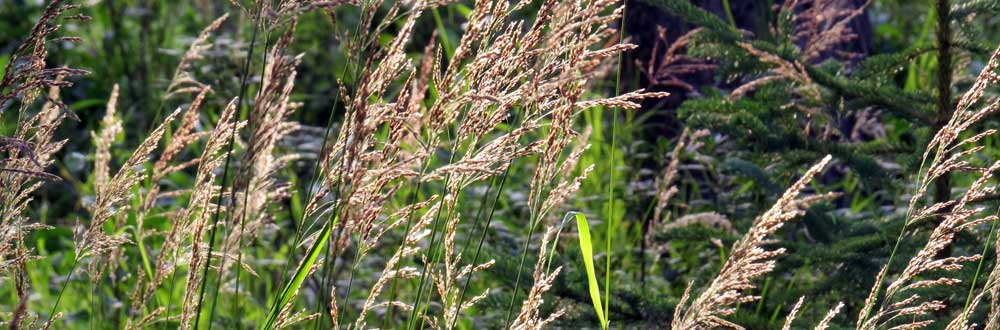
The phrase ignorance gone to seed invokes an agricultural metaphor. Picture a field that is so far gone it’s no longer flowering and is now beyond the point of further cultivation.
Pretend to be a Duck, in Greek
If someone feigns ignorance, a Greek might describe him with an expression that translates as “he pretends to be a duck.”
Mare in Nightmare
Unless you’re having a bad dream about equine creatures, a nightmare doesn’t have anything to do with horses. The mare in nightmare comes from an old word that means “goblin.”
It Doesn’t Exist, a Greek Phrase
In modern Greek, if you want to say something is “fantastic,” “out of this world,” or otherwise “terrific,” you can say den iparchei!, which literally means “It doesn’t exist!”
Two-Word Rhyme Quiz
Quiz Guy John Chaneski’s challenge requires removing an initial letter from one word to form a two-word rhyme. For example, what two rhyming words are suggested by the clue “I’d like to try that ice cream, but you didn’t give me enough”?
Huss in Military Slang
A Marine Corps veteran in Omaha, Nebraska, is puzzled by a phrase he often heard during his service in Vietnam: give me a huss, meaning “give me a hand” or “help me.” One strong theory for its origin involves a type of helicopter known as the Huss, described in the book Marines and Helicopters 1962-1973 by William Fails.
Belligerent Doesn’t Mean Drunk
Some people, particularly younger folks, are adamant that the term belligerent means “drunk.” It’s a misanalysis of the word, perhaps associating being intoxicated with being ready to fight. Instead, belligerent derives from the Latin word bellum, meaning “war,” also found in bellicose, and the term applied to that period before a war, particularly the U.S. Civil war, antebellum.
Kimble, A Masterful Walk
A woman in Carmel, Indiana, wonders about the use of the verb kimble to mean a certain kind of “strutting.” Kimbling is that proud, confident way of walking you might associate with Barack Obama or Denzel Washington. Green’s Dictionary of Slang has brief entries for the word, but its origin is unclear.
Second-Acting
Second-acting, the once-common practice of sneaking in to see the second act of a Broadway show for free by mixing in with paying patrons outside at intermission, largely ended as theaters began tightening their security and fewer people step outside for a cigarette.
Attorney General Plural
What is the plural of attorney general? Attorneys general or attorney generals?
Clean Food Buzzword
The word clean, as in clean food, has taken on a whole new life as a buzzword describing food free of artificial ingredients, preservatives, or added color. A restaurant chain now boasts clean sandwiches, and the topic is now covered by the magazine Clean Eating.
Scobolotch
Scobolotch is a term used in Wisconsin for the mayfly that may derived from a Native American language. Variants include scobblotcher and skoplotch. This short-lived insect goes by many other names, including Green Bay fly and Canadian soldier.
Flet and Dray
The words flet and dray (or drey,) refer to types of squirrel’s nests.
Why Don’t We Pronounce the B in “Subtle”?
Why don’t we pronounce the letter b in the word subtle? The word derives ultimately from Latin subtilis, meaning “fine, delicate,” and was adopted into Middle English from Old French as sotil. The b was later added back in so that the spelling reflected the word’s original Latin roots but the pronunciation continued to lack the b sound.
Names for the Mayfly
The mayfly, that insect whose time is up in a mere 24 hours or so, goes by many other names, including bay fly, cisco fly, drake fly, dun, eel fly, fish fly, flying clipper, green fly, July fly, June bug, June fly, and more.
Spondulix
Spondulix, also spelled spondulicks and spondolux, is a slang term for money. Mark Twain used it in Huckleberry Finn, although it had been around for a while before that. The word may derive from the Greek word spondylos, meaning “vertebra” or “spine,” suggesting the similarity between a column of those round bones and of a stack of coins.
More Wool than a Lamb
The Spanish phrase tiene mas lana que un borrego means someone is quite wealthy. Literally, the phrase means “he has more wool than a lamb.”
This episode is hosted by Martha Barnette and Grant Barrett, and produced by Stefanie Levine.
Photo by Luke Jones. Used under a Creative Commons license.
Books Mentioned in the Episode
Music Used in the Episode
| Title | Artist | Album | Label |
|---|---|---|---|
| Addis Black Widow | Mulatu Astatke & The Heliocentrics | Inspiration Information | Strut |
| Cha Cha | Mulatu Astatke & The Heliocentrics | Inspiration Information | Strut |
| The Moil | Galactic | Ruckus | Sanctuary Records |
| Open Soul | Tomorrow’s People | Open Soul | Stage Productions |
| Blue Nile | Mulatu Astatke & The Heliocentrics | Inspiration Information | Strut |
| Everything | Smoke | Everything | MPS Records |
| Mercamon | Galactic | Ruckus | Sanctuary Records |
| Outlier | Bonobo | Migration | Ninja Tune |
| Live From The Tigre Lounge | Mulatu Astatke & The Heliocentrics | Inspiration Information 3 | Strut |
| Dewel | Mulatu Astatke & The Heliocentrics | Inspiration Information | Strut |
| Mulatu | Mulatu Astatke | Mulatu of Ethiopia | Worthy Records |
| Volcano Vapes | Sure Fire Soul Ensemble | Out On The Coast | Colemine Records |

