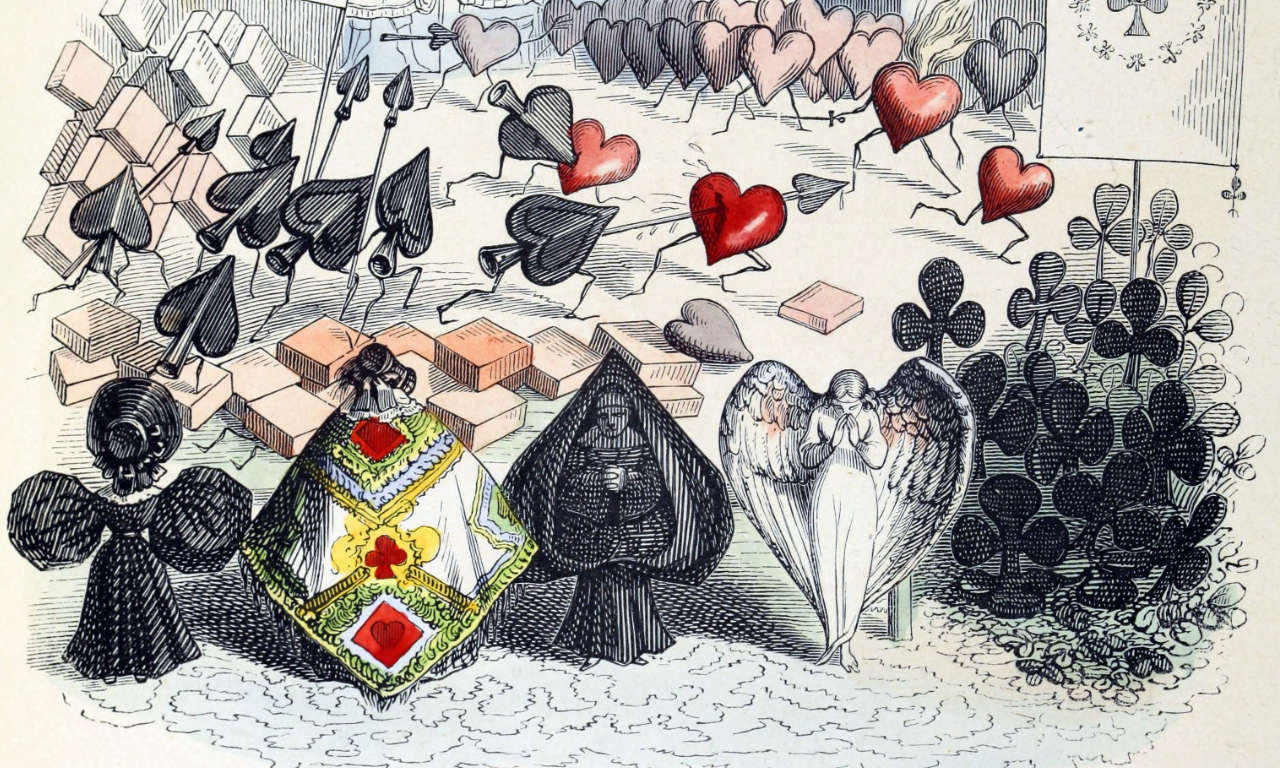
Has the age of email led to an outbreak of exclamation marks? Do women use them more than men? Also, is there a word for the odd feeling when you listen to a radio personality for years, then discover that they look nothing like your mental picture of them? And what’s the origin of the verb bogart?
This episode first aired June 6, 2009.
Transcript of “Bogarting Bangers”
Support for A Way with Words comes from Mozi Online Backup.
Mozi protects your valuable computer files against data loss from hard drive crash, viruses, theft, and other disasters.
Visit mozy.com.
You’re listening to A Way with Words.
I’m Grant Barrett.
And I’m Martha Barnette.
Think about all the written communications you read and write every day, all those emails, all those text messages.
Am I the only one who thinks it’s led to an outbreak of exclamation marks?
Actually, I know I’m not, because there was a long essay recently in the Guardian newspaper in which columnist Stuart Jeffries argues that the exclamation mark is enjoying a renaissance.
And, Grant, I think it’s true, don’t you?
Yes, really?
-huh.
I’m excited.
I always wonder, how do you read that stuff, Martha, when you see an exclamation mark?
If you read it aloud, what does it do to your voice?
Because I have a hard time forcing that kind of enthusiasm.
I know you do.
No, but it seems to be what the exclamation marks are calling for.
I’m supposed to sound really excited when I read whatever they have to say.
Well, it’s funny that you have that reaction to it, because one of the things it says in the article is that women in email tend to use exclamation marks a lot more than men.
But you know what?
I have to admit, and maybe you’ve seen this in my emails to you, Grant, I mean, I’m a little embarrassed at how often I use exclamation marks, but it just seems to make more sense to me in email.
We’ve talked on this program before about linguistic restitution, which is when you add something to written text in order to kind of make up for the fact that nuance is lost in print that might otherwise be obvious when you’re speaking aloud.
You’re paying back this written content with an exclamation mark so that you can let somebody know, for example, that you’re kind of joking or that you have something else on your mind, that you’re being lighthearted.
So if I said, “Give it back to me, period,” you might think, “He’s really upset about me borrowing the book and not returning it.”
If I said, “Give it back to me, exclamation mark,” well, you might automatically assume maybe that I’m being a little more lighthearted about it.
Yeah, I think I’d hear a little lilt in your voice.
Yeah, you would know that I probably was joking because the exclamation mark is generally a positive mark, right?
Yeah, but I wonder if the medium of email in particular draws exclamation marks out of people.
I mean, I have actually begun to just write emails the way I feel them and then go back through them and start picking out the exclamation marks like a typographical lint.
I mean, it’s kind of embarrassing.
Aren’t you depriving yourself of some of your natural character, though?
Well, your recipients aren’t really getting the real you.
That could be.
Well, if you’ve got something to tell us about the overuse of exclamation marks or any other punctuation for that matter, by all means pop it into an excited email to words@waywordradio.org or give us a telephone call at 1-877-929-9673 or just stand on the rooftop and shout.
Hello, you have A Way with Words.
Hi, thanks for taking my call.
This is Dean Collins, calling from Hartford.
Hi, Dean.
Hi, Dean from Hartford, Connecticut.
Hello, Dean.
Yes.
Welcome.
What’s on your mind?
I was wondering if you could tell me the origin of the word “bogart” as it’s used in like hogging things, like, you know, don’t bogart that drink.
Let me have a sip.
Oh, drink is what they’re not bogarting?
Yeah, well, that could be something.
Actually, where it works sometimes it’s used even about like time in a meeting.
Sorry to bogart all the time in this meeting.
Oh, really?
What kind of work is it?
Insurance?
Yeah, insurance, a good guess, yes.
Right.
Hartford, you know.
Hartford, right.
That’s not all they do in Hartford, but quite a few.
No, that’s true, but a lot of big business there is insurance.
You’ve probably heard this term for a long time, though, right, since college days?
Oh, yeah.
Oh, yeah.
Grant, what are you getting at?
And back then it was definitely a different connotation.
Oh, we can talk about it.
We’re all adults here.
We don’t have to giggle a little bit.
You’re talking about don’t bogart that joint, right?
That’s right.
Well, that was the song, right?
Yeah, yeah, yeah.
Your question is, bogart, how did that come about?
And you probably guessed that it’s connected to the actor, right?
Well, Humphrey Bogart, yeah, I guess, although I couldn’t imagine how.
Yeah, it is, it is.
And you know, the original meaning of to bogart, the verb meant to, it was to bully or to intimidate, as in to bogart your way into a club, you know, kind of bully the bouncer into letting you into a club that you otherwise might refuse your entrance to, right?
And it dates to about the 1950s.
But then a little later, by the late 1960s, the meaning of to bogart had changed just enough that it meant to hog something or kind of like, you know, strong arm something, in which you like, you assume total control over especially a joint.
And as a matter of fact, most people heard this term for the first time in the movie Easy Rider, in which one character says to another, don’t bogart that joint, pass it over to me.
Huh, okay.
So, I mean, that was a, if I remember correctly, Martha, you may remember better than I do, that was a huge film at the time, right?
Oh, yeah, it was huge.
Did you see it, Dean?
Peter Fonda, right?
I’ve seen parts of it on cable, but I’ve never watched the whole thing.
And that was 1969 that that movie came out.
So, from there, it still lingers.
It’s funny about to bogart, it actually continuously shows up on lists of slang collected at college campuses, even today in the 2000s.
And many of the young people in college today believe it’s contemporary to their peer group, that somebody, you know, one town away came up with it, or that it’s something that’s relatively new or novel.
And they are shocked to find that in some cases, it’s older than their parents.
So, Grant, why bogart as opposed to Gable or Mathau?
There’s something, bogart was, he was tough.
There’s something about his face and his voice, right?
He had a force of personality and a character that really just said, “Look, you really want to do what I’m asking you to do,” right?
That was what was in his eyes and then like the way he cocked his head and his intonation.
He was a great actor.
And so, when they gave him these bad guy roles or even the good guy roles where he went a little sour before the end of the film, he somehow turned rotten, he’s incredibly persuasive.
Just go watch those old bogart films.
The man has got some force, he’s got power, and even when he’s sitting there smoking a cigarette, doing nothing, it’ll make you do what he wants you to do.
You’re going to look where he wants you to look, you’re going to think what he wants you to think, and through his acting, you’re going to feel what he wants you to feel.
So, I could totally see how this term might come about because of great acting.
Is it still used in that bullying and serenading sense at all?
Not really, no.
That’s pretty much gone.
Although, as you noted, the fact that it’s used to mean “don’t hog anything” means it’s kind of stepped out of really slangy English that has to do with drugs and young people, and now you’ll find it in the workplace and you’ll hear it on the radio and it’ll pop up in movies, and it’s something that’s kind of lost it.
It’s still slangy, but it’s lost kind of the counterculture connotations that it had.
But Dean, thank you for calling.
I hope we helped.
Thank you very much, and I won’t bogart any more of the airtime.
Thanks, Dean.
Bye-bye.
“Don’t bogart that joint” was by Little Feet, and it was used in the movie Easy Rider.
It was on the soundtrack.
So that explains something that’s kind of circular, right?
Yeah, right.
Well, if you’re curious about a word, give us a call.
The number is 1-877-9299673, or you can e-mail us, words@waywordradio.org.
Hello, you have A Way with Words.
Hi, this is Lisa from Palo Alto, California.
Well, hello, Lisa.
Welcome to the program.
Thank you.
What do we do for you?
Well, I have been thinking, I’ve been talking to friends about this issue, and I finally decided that I think we need to coin a new word for, I don’t want to call it a phenomenon, let’s just call it the feeling that you get when you’ve been listening to someone on the radio for a long time, and then you accidentally, I say accidentally because I try not to see pictures of these people, see a picture of them, and it’s nothing like you imagined.
Yeah, they’re not pretty, are they?
Well, no, it’s not necessarily even that.
That’s not it.
It’s not necessarily even that.
It’s just that they don’t look at all like you imagined in the theater of your mind.
Yeah, yeah.
Oh, I get that completely.
They have to say sometimes I’m joking that they’re not pretty.
When I first saw Melissa Block from NPR the first time, I said, “What a lovely woman.”
I was amazed because I just thought she was going to be an ordinary person like the rest of us, but actually she’s very appealing in every way, and now when I hear her, I’m more interested in what she has to say.
Right, and that other MB too.
You had the same experience with that other MB, right, Grant?
Yeah, I don’t know who you’re talking about.
So who Lisa?
Who are we talking about here?
Well, there have been a couple, but the most recent one I think has been Ira Glass from This American Life.
I’ve been listening to him for years, and he’s aged a little bit, but his voice hasn’t really aged at all.
I’m going to tell him you said that.
He sounds a little bit like a 17-year-old, and I don’t know, for some reason I’ve always envisioned him as — I mean, I knew he wasn’t 17, but I’ve always envisioned him as sort of a scruffy, kind of a hippie guy with kind of a shaggy, shaggy hair and a t-shirt that says something clever.
Now that’s Grant.
No, I wear work shirts, not a t-shirt.
So Lisa, I agree with you.
I think we have to have a word for this.
-oh.
You got suggestions, Lisa?
No, that’s why I’m calling you.
I needed a lexicographer for this.
That’s you, Grant.
Oh, cool.
Radio Freude.
I don’t know what you’d call it.
Radio Freude.
I’m afraid of my radio.
Well, I was struck by the fact that you said that it sounds like you go out of your way not to see pictures of these people.
I actually do, especially if I’ve been listening to them and really like them and been listening for a while.
I’ve found that it’s just sort of — it’s as if you’ve read a novel, and then they make it into a movie, and you don’t agree with the casting.
That’s a great analogy.
And then once you see the movie, if you go back and reread the book, the movie characters stomp all over your imagery from the book.
Exactly.
Well, if you’re talking specifically about radio hosts, the word that I’ve just made up for myself and used that way is hostbusters.
It’s a hostbuster experience.
That’s good.
Because it just blows your image all to smithereens.
But Lisa, the reverse is true.
Radio people who take calls from the public, like Martha and I, we find sometimes that we have an impression of our callers, and then maybe we’ll see their personal website, and we’ll go, “What? No.”
Particularly if they call us and say, “My main job is an English teacher,” and we go to their website, and we find out that they walk on the high wire and breathe fire.
And some people, they do stuff like that.
So a picture of them in tights performing them on stage somewhere.
What should we call the experience of finding out that your favorite radio personalities don’t look like what you imagined?
If you’ve got some suggestions for us, give us a call, 1-877-929-9673, or send an email to words@waywordradio.org.
Hey Lisa, thanks for calling.
Thank you.
All right.
Bye-bye.
Thank you, Lisa.
Bye-bye.
Well, if you’ve got a question about language, linguistics, grammar, punctuation, spelling, what to say, what not to say, the rules, and so forth, give us a call, 1-877-929-9673.
That’s 1-877-WAYWORD.
Or you can try us on our discussion forum at waywordradio.org/discussion.
Grant, we were talking earlier about exclamation marks, and I guess part of the reason I’m self-conscious about using them is that so many writers have advised against them.
Get a load of these.
Elmore Leonard said of exclamation marks, “You are allowed no more than two or three per 100,000 words of prose.”
And F. Scott Fitzgerald said, “Cut out all those exclamation marks. An exclamation mark is like laughing at your own jokes.”
Oh, I so agree with that.
I think there’s a place for exclamation marks in, say, emails or handwritten notes, but in literature, they should be very scarce.
Okay, we can agree on that.
If you’ve got an opinion on punctuation, let us know how you feel about the semicolon, the exclamation mark, the M dash, 1-877-929-9673, or send an email, properly punctuated or not, to words@waywordradio.org.
You’re listening to A Way with Words.
I’m Martha Barnette.
And I’m Grant Barrett, and holy moly, I can’t believe it.
Look at this.
It’s John Chonesky and Greg Pliska, both quiz guys.
Oh my gosh.
You’re seeing double.
It’s true.
John is doing the robot, and Greg is breaking.
You’re hearing double.
Popping and locking.
It’s amazing.
If the two of you are here, you must have something planned.
No, you know what?
We thought we’d stop by and annoy you with yet another game from my book, Super Party Games.
Remember that thing I did the whole time?
You’re deprecating there, but it’s a nice book.
It’s a good book.
It actually works, right?
People all over have told me what a great book it is.
Super Party Games.
It holds up all the other books on my shelf really well.
I went to a funeral the other day.
Amazing with your work.
Everybody at a funeral loves.
The mixer is especially good for a funeral.
We’re going to play a version of a party game called Chain Reaction.
Now, it’s very simple.
Two of us will have a list of items, people, places, events, things, and they will have to get a third person to guess those items.
Now, the two clue givers will describe the item, but they’ll do it one word at a time.
For example, if the answer is balloon, Greg and I might say, “This object contains air and is found at a birthday party.”
Got it?
Got it.
Oh, understand?
Your great uncle who talks too much.
That guy, right?
That’s hot air.
Now, be aware there are two challenges to this.
First, the two clue givers, who are going to be me and Greg, we have no idea what each other will say.
So if we are cluing balloon and I say Macy’s, Greg has to figure that I’m going for- Thanksgiving.
Day.
Parade.
Or otherwise hilarity will ensue, and it very well might at this point.
We don’t want that to happen, no.
Wait, yeah, no.
The second challenge is that the clue must be in the form of a valid sentence.
You can’t just spew out words like air- Latex.
Inflate.
Helium.
Right, nothing like that, okay?
What a party that must have been, though.
Right.
Cheap.
My invite got lost in the mail.
Now, we’ll take a minute.
We’ll see how many we can get in a minute.
So you two are first going to quiz Martha, and then the two of you are going to quiz me, right?
Yes, exactly.
Okay, Martha, you’re on your own, and we’ll see how it goes.
All right.
Are we ready?
Yes.
And let’s go.
This- Cartoon- Character- Has- Casper the friendly ghost.
A- Dog.
Charlie Brown.
And- A- Helmet.
Scooby-Doo’s dad.
A- A dog and a helmet.
A- Sergeant.
New sentence.
This- Cartoon- Character- Is- A- Army.
Guy.
Beetle Bailey.
That’s it.
There we go.
Here’s the next one.
You start.
This- Plane.
Is- Where.
The- President.
Flies.
Air Force One.
Right, very good.
This- Web.
Tool.
Can.
Be.
Used.
To.
Find.
Many.
Google.
Things.
Yes.
Here’s the next.
This- Part.
Of.
A- Newspaper.
Is.
Where.
Classified ads.
Editorials.
Okay, and there’s the one minute.
I think we should give her the answer.
We were looking for Op-Ed page.
Editorials.
Editorials includes two letters from the correct answer.
That’s good enough.
Anything is correct.
How many did she get?
Ten percent is fine.
How many did I get?
How many did she get?
Four?
Four.
Four.
All right.
Now we’ll give to Grant.
I’ll begin.
Ready.
Set.
Go.
This form of intercourse is conversation.
Talk.
Shatter.
Speaking.
Not.
Sex.
Missionary.
Dangerous.
And.
Includes.
The.
Condom.
And.
And.
Safe sex.
Yes.
There you go.
Okay.
This is the temperature at which this is a famous painting which depicts Scream.
Mona Lisa.
Lady.
Yes.
Very good.
Next.
This phrase is what you say when someone sneezes.
Bless you.
‘Cause it’s untight.
Very good.
Yeah.
Next one.
This is is a bunch.
Oh!
You’re eating up my tongue!
Sorry, it’s a bunch.
It’s a bunch.
Grapes.
Crates.
Brady’s.
This is a bunch.
Bunch of letters.
What’s everyone always say?
It’s a word?
Can’t say a word.
Tickets.
It was passwords.
I was thinking of the game show.
I thought you were gonna go, “This is a game show.”
That’s the problem right there.
He’s thinking of the game show.
I’m thinking of getting onto my bank account online.
Alright, well how’d we do there?
How’d I do?
You got one, two, three, four.
Four?
Well, Martha, how about we gang up and we’ll go two on two.
These two take on both of us on a couple, alright?
I like it.
Sure.
So you can both get answers.
We’ll see how- I bet between the two of us so we can knock down, say, seven.
What do you think?
I think so.
I’ll start.
Ready, set, go.
Here we go.
Ready?
One, two, three, go.
These devices are worn on your teeth to.
Braces.
Yes, braces.
Braces.
Out.
The.
Bids.
At.
Auctioneer.
Very good.
I think we have to go to the word auction.
Okay.
These tiles are Scrabble used in a game where you lay.
Scrabble?
No.
Dots.
No.
Next.
To.
Dominoes.
Dominoes is right.
Next.
Big leaf.
Big leaf.
Big leaf.
Yes, next.
This guy asks for change on the panhandler.
Yes, next.
This.
Place.
Is.
Where.
You.
Find.
Animals.
Zoo.
Zoo.
Or.
Menagerie.
Or the.
Person.
Who takes care of them.
Right.
Sorry, it was a farmhouse.
Greg keeps animals in his farmhouse.
That’s the problem.
Well, you know, in some places they keep, you know, cows and chickens in the lower level, or chickens in the lower level, and the family lives upstairs, right?
There we go.
That was one, two, three, four, five.
Not bad.
Well, we did do better as a team, Martha, than we did individually.
That’s true.
We did.
I think it’s fair just to point out that it’s also the strength of the clewers that allows you guys.
Like, if you only got three, it would be our fault.
I wasn’t going to say anything, but no.
No, that’s brilliant.
This is an immense fund.
Yeah, this is great.
We’re just going to stay here for the rest of the show, if you don’t mind.
This would be a good car game.
I could see listeners playing this on the way to their holidays, right, because you just whisper the word to your partner and make the person up front guess it.
Right, right.
Gentlemen, it’s been fun, and thank you so much for coming.
It’s very nice to be here.
As always, we’re both entertained and educated.
Thank you, Martha.
Thank you.
If you’ve got a question about language, linguistics, grammar, punctuation, spelling, you name it, give us a call, 1-877-929-9673, or email us at words@waywordradio.org.
Hi, you have A Way with Words.
Hi, my name is Rachel, and I’m calling from Baraboo, Wisconsin.
Well, hello, Rachel.
Welcome to the show.
Baraboo, Wisconsin.
Yeah.
If we came to Baraboo, what would you show us?
Well, there’s a Circus World Museum here that’s pretty popular.
It’s where the Ringling Brothers, I think, made their winter camp.
Oh, their winter camp?
So I think that’s Baraboo’s claim to fame.
It’s about an hour north of Madison.
Wait a minute, the Ringling Brothers spent the winters there and the summers in Florida?
I believe so, yeah.
What’s wrong with this picture?
Okay.
All right.
Well, welcome to the show, Rachel.
What can we do for you?
Thank you.
Well, I was curious about the word Davenport.
My grandmother always called her couch a Davenport, and I wondered where that came from and if there’s a difference between the two things and just what its origins were.
And what do you call it?
Do you still call it a Davenport?
A couch.
A couch, okay.
No, I just call it a couch.
Do you sofa?
No, not too often.
I think my family does.
But my grandmother came from Oklahoma, Enid, Oklahoma, and she was born there just as it had become a state in 1907.
So I didn’t know if it was sort of a southern thing or I know nothing about the word and I recall asking her and I think she said, “Well, this is just what I’ve always called it.”
Well, that would fit the timeframe because, Rachel, there was a furniture company in Massachusetts around that time that made Davenports and it was the A.H. Davenport Furniture Company.
Oh.
So it seems to be a trade name and sort of like Frigidaire and Fridge, it went on to become just a regular term.
But was it called couch at the same time or sofa during that same era and it was just this person’s make?
Well, you know, I think couch and sofa became popular a little bit later.
You know, if you look at dialect maps, you see Davenport sort of all across the top half of the United States.
It’s really not quite as southern as you might expect, but it’s pretty well distributed geographically.
But what’s weird is that I think in terms of chronological time, I think it’s distributed a little bit differently.
I don’t hear it that much anymore.
Yeah.
I heard one other person use it in the past, I don’t know, six months or something.
And then when I was listening to your program, I thought, “I’m calling. I’m going to find out.”
All right.
Thank you so much.
Good talking with you.
Bye-bye.
Thank you.
You too.
Bye-bye.
Well, if you’ve got a question about something your grandma used to say, let us know.
We’ll also tackle things related to linguistics and language and grammar and spelling and punctuation, you name it.
Give us a call, 1-877-WAYWORD.
That’s 1-877-929-9673.
Or send an email to words@waywordradio.org.
Hello.
You have A Way with Words.
Hi.
This is Barry Samsula from Plano, Texas.
I have a question for you.
I work at a radio station in Dallas.
It’s a classical radio station.
And I keep hearing the word gala quite frequently.
And it kind of bothers me a little bit because I think it should be pronounced gala.
And I was wondering if you could clarify it for me.
-huh.
You mean like a festive occasion?
Yes.
Yes.
I hear gala.
I hear gala.
I hear gala.
And I’m just not sure which one is correct and would like to know for sure before I stick my foot in my mouth.
-huh.
So you’re inclined to call it gala?
I grew up in Nebraska.
And as far as I know, that’s the only pronunciation I’ve ever heard up there.
But now that I’ve moved down to Texas, I hear gala quite frequently.
-huh.
Well, you know what?
This is one of those frustrating words because there are so many different ways that you can pronounce it correctly.
You’ll find most dictionaries will report that there are two different pronunciations and you’ve said both of them, gala and gala.
I think you’re safe with gala.
I think that’s probably the one that’s slightly more common as well and certainly the one that comes with no stigma attached.
Well, I have to admit, I went online to the Merriam-Webster’s online dictionary and they actually listed all three pronunciations, but the first listing was gala.
Yeah, it’s interesting that you mention that because you’ll find gala as the first pronunciation listed in most of the major North American dictionaries.
But you know what?
I think a lot of people don’t realize that just because it’s the first pronunciation listed, it doesn’t mean that that’s the most common.
Really?
No, it doesn’t.
As long as the pronunciation is given in a dictionary, it means that it’s okay to use it.
Okay.
So any of them will serve you.
I think gala is just fine.
I think gala is fine, but I think gala actually is going to be just a little more traditional.
Well, I really appreciate that.
Thank you very much.
Sure.
All right, Barry.
Thanks for calling.
Thanks for calling, Barry.
Good luck.
If you’ve got a job that requires some kind of linguistic knowledge and you need some help with that, give us a call at 1-877-929-9673.
Doesn’t every job require linguistic knowledge?
I think it does.
It does.
You have to read and write and speak.
Or email us at words@waywordradio.org.
On the issue of the academic journal American Speech, John Considine has done some legwork and proposes a new origin for the word “blotto,” as in he started drinking at five and was blotto by dinnertime.
Really?
Blotto, B-L-T-T-O.
You probably know this term, right, Martha?
Sure.
Not — you know what I mean.
It’s on my driver’s license.
If she’s blotto, take her home.
This is her address.
No, but we have many words for “drunk” in English, and this is just one of them.
Right, and I know them from dictionaries, yes.
This one dates from about the World War I or so, maybe a little earlier.
There are a lot of different theories about blotto, but he thinks he’s got new information.
Considine says that he thinks it comes from a company named Blotto Freres.
That’s Blotto Brothers.
It’s a French company that made a three-wheeled delivery vehicle that was known to be dangerous and erratic.
And so in this very interesting article just loaded with historical detail, he supposes that people used the name of this company to refer to acting erratically when you’re drunk, so by transfer.
And the thing is, I won’t go into the detail, but it’s not the first time that a vehicle’s manufacturer has lent its name to some other kind of slang word.
Don’t tell me.
Let me guess.
Oh, I’m going to have to read it.
It’s in the spring 2009 issue of the Journal American Speech, and we will, of course, post a link to it online.
All right.
In the meantime, you can always call us, 1-877-929-9673, to discuss language, or send us an email, words@waywordradio.org.
Hello, you have A Way with Words.
Hello.
This is Joyce Fleming, and I’m calling to ask if you all have heard this slang expression, “rattle your dags,” and it’s spelled R-A-T-T-L-E, and then “your,” and then “dags,” D-A-G-S.
Rattle my dags?
No, rattle your dags.
Rattle your dags.
Where would I hear this?
D-A-G-S.
Is this something you’d say on a farm, in the city, at work?
Where would I hear this?
Anywhere.
Anywhere?
And would I say it to an enemy or a friend?
To anybody.
Huh?
And Joyce, where are you?
I’m in Fort Worth, Texas, and actually I live in North Richland Hills, which is a suburb of Fort Worth.
Oh, okay.
Okay, so is this an expression that comes from North Texas, or would I expect to hear this?
No, no, it didn’t come from North Texas.
Do you want me to tell you where it came from?
Where did you pick this up?
From my husband.
He’s deceased now, but he was from New Zealand.
He lived in New Zealand all of his life, and he came over here when he was 68 and took a bus tour of the United States, and I met him on the tour and got married.
That’s a nice story.
And we were married 27 years, and he died at 95.
Oh, that’s a good long haul.
-huh.
The first time he said it to me, I didn’t have any clue what he was talking about, but it sounded funny to me, so I questioned him, and he told me the origination of it.
When was that?
What happened when he said that to you?
Well, he meant for me to hurry up.
In other words, “rattle your dags” means to hurry.
Well, now, Joyce, did he give you any idea about- Yeah, well, he explained it to me, and I’ll explain it to you if you want me to, if you can’t figure it out.
Oh, sure.
I thought it was cute when I found out what had came about, when sheep sometimes, if they’re not shaved around their little bottom, when they poo, it gets on the dags around, you know, the wool, well, they call them “dags,” the A-G-S, and it hardens in the sun, and so when they run, it rattles, you know, because they’ll have more than one, and it’ll rattle, and they clink together, and so the fact that they’re running, they say, “Rattle your dags,” when they want you to, a person wants you to hurry and get somewhere, that’s what they say.
So sheep, if we can use a colloquial expression, have dingleberries on their hind ends, and they become so hard, and when they run, it sounds like gravel clanking.
Right, that’s exactly right.
Yeah, I’m looking here, and I’m seeing in a variety of dictionaries that it’s also used in Australia, it’s more common in New Zealand, and interestingly enough, the term has kind of gone from referring to dingleberries, which is probably not a very nice thing to call somebody to- No, they call them “dags.”
Dags, that’s right.
Yeah, I like dags better.
Short for “daglocks,” kind of like dreadlocks, but it can also mean an eccentric person, or someone who’s a character, or someone who has a good sense of humor.
So the slang term has kind of taken all these different roads, and it’s popped up with different meanings here and there.
Well, see, I’ve never heard of the other meanings, that’s the only one I ever knew.
“Rattle your dags, Martha, we’re going out!”
This has been a fantastic call, thank you so much for giving us a ring.
You’re welcome.
All right, bye-bye.
If you have a question about language, give us a call, 1-877-9299-673, or you can always send an email to us, that address is words@waywordradio.org.
Support for A Way with Words comes from National Geographic Books, publisher of I’m Not Hanging Noodles From Your Ears, a collection of intriguing idioms from around the world by Jack Bala.
Learn more at shopng.com/noodles.
You’re listening to A Way with Words, I’m Grant Barrett.
And I’m Martha Barnette.
I just finished a book that’s a fantastic treat for language lovers.
It’s called Dreaming in Hindi by Katherine Russell Rich.
A few years ago, she was a magazine editor in New York, but then her life, as she writes, buckled out from under her.
She survived a grueling battle with breast cancer, she lost her job, she ended a romantic relationship, and with her world falling apart, she writes, “I no longer had language to describe my own life, so I decided to borrow someone else’s.”
She became obsessed with Hindi, so obsessed that she went to India to study it for a whole year, and her book is one of the best descriptions I’ve seen of trying to learn a language in mid-life, of watching that new world form word by word.
In Hindi, you drink a cigarette.
Night doesn’t fall, it spreads.
People don’t sunbathe, they eat the sun.
And acquiring a second language, Rich says, is like being rattled into new sight.
And as she’s stumbling about in this new vocabulary, in this new grammar, she absorbs a whole other culture in fits and starts.
Now, this is a book that reads like a novel.
She hangs out with royalty in palaces, she volunteers at a school for the deaf, and she ends up singing in Hindi in this wacky version of American Idol there.
And along the way, Rich becomes fascinated with the academic field known as Second Language Acquisition, or SLA.
And in the book, she interweaves interviews that she did subsequently with linguists and neuroscientists about the workings of language in the brain.
And Grant, she talks about things like how languages compete for space in the cortex of people who are bilingual.
It’s fascinating stuff.
Yeah, it’s very interesting.
It reminds me of an article that I read recently in, I guess it’s livemint.com, which is some kind of project associated with the Wall Street Journal.
And there’s a fellow there, and I’m sorry, I’m going to mispronounce this name, but it’s M-U-K-U-L-K-E-S-A-V-A-N, who wrote a long story about himself and his father and the languages that they spoke, and he’s Indian.
And the title of the article, of course, is very charming as well, “Do Anglophones Paddle in the Shallows?”
And what he was talking about was whether or not Anglophone Indians really were completely Indian.
Did they need Hindi or one of the other many Indian languages in order to feel truly Indian?
His father, for example, spoke six or seven languages and described himself as someone who spoke English in half a dozen languages, meaning that he didn’t speak English very well, but he spoke with all the inflections of all the other languages he spoke.
It’s just really interesting.
This fellow, Kasavan, I don’t know, but this fellow writes, “Hindi shrank from being his first language to being his worst subject, a subject taught with near ghoulish badness by a gaggle of women with large, hooped earrings and Punjabi accents.”
Reading this and thinking about what you had to say about this, what sounds like a remarkable book, it occurs to me that both sides of this equation, both the person learning English, who is born speaking Hindi or other Indian languages, and the reverse, somebody born speaking English and who learns Hindi, they both have something to learn from each other, but there’s something to be lost as well, right?
Right.
And he talks at the end of that article about what language do you cry out in when you stub your toe at night is probably still that native language.
But so many of those writers end up writing in English for a larger audience.
Right, right.
It’s a part of their financial responsibilities to themselves, right, because more people are going to read it if it’s written in English.
And certainly it will reach the shores of the UK and the United States, where perhaps the article will allow career advancement that might not otherwise be possible.
Right.
Well, it’s fascinating stuff.
We’ll link to both of those things on our website, the article that Grant mentioned and information about that book, Dreaming in Hindi, by Katherine Russell Rich.
Hello, you have A Way with Words.
Hi, this is Darrell from Seattle.
Well, hi, Darrell, welcome to the program.
Thanks.
What can we do for you?
Well, I heard somebody talking about wanting to have different job responsibilities because they didn’t want to become pigeonholed.
And, well, I know what that means.
But it just struck me as a weird sounding phrase.
And I was wondering where in the world that comes from, because pigeons don’t have holes in them, and you wouldn’t put a pigeon in a hole.
So I thought I would call you.
So no theories of your own about this, huh?
Not really.
It just seems so strange.
I just couldn’t come up with anything.
What kind of desk do you sit at, Darrell?
Just a regular old cube.
Does it have any kinds of slots or drawers or slats or shelves or anything on top of it?
Oh, yeah, I’ve got shelves and drawers.
Little cubbyhole kinds of things to put your Post-Its and that kind of thing?
Do you have anything that’s open in the front and about the size of a business envelope that you can put things in?
Not specifically that size.
You see where I’m headed, Martha, right?
I do.
And I have one more question for you.
Have you ever hung out with pigeons?
Well, no, but I see them on the edges of buildings.
Well, Darrell, here’s the answer.
People who raise pigeons put them in these compartments that are kind of like what Grant is describing, open in the front and little rows of little holes that the pigeons make their little nests in.
That word, meaning a place where you keep pigeons, has been around since the 16th century, I think, and then things that were modeled after that.
Like when I was in high school for a couple of summers, I worked in a seminary post office and we had what looked like pigeon holes.
It was a structure where you sorted all the mail.
It had all these little compartments and you would just put the letters in there.
Well, it’s modeled after where people used to keep pigeons.
Wow.
So that’s where the classifying kind of meaning comes from then.
Yes.
That’s interesting.
So the people who raised domestic pigeons, they gave them little shelters that looked like the holes and cliffs that pigeons might otherwise live in, right?
Right.
Well said.
And so those are shaped roughly like the shape of the boxes on the top of a desk.
I’m thinking, my father has a desk like this.
It’s got a roll top kind of thing and on the sides are three or four stacked little shelves that are about as deep as a letter, open in the front, no lid or drawer or any kind of cupboard happening there.
And those are pigeon holes because they look the same.
That’s it.
Right.
And you use them for sorting and one thing goes in one place and one thing goes in the other place.
And so if you’re pigeon holed, you’re going to go into that one place and no place else.
Right.
You’ve got the hole for the bills to be paid and the bills paid and the bills never to pay, right?
Right.
And hopefully the bills will fly away like pigeons.
Yeah.
Yeah.
Yeah.
And they tend to crap on you like pigeons do.
I was going to say.
Yeah.
I was going to say.
Well, does that make sense?
Yeah.
Oh, that makes perfect sense.
It’s not so strange anymore.
Yay.
That’s what we’re here for.
Thank you for calling in, Daryl.
All right.
Thank you.
All right.
Bye-bye.
Bye.
Bye.
Did you hear something and you’re not quite sure where it comes from?
Give us a call.
The number is 1-877-929-9673 or send us an email to words@waywordradio.org.
And you can find past episodes and more about our show on our website at waywordradio.org/discussion.
Hello.
You have A Way with Words.
Hi.
This is Helen from San Diego.
Hello, Helen.
Welcome.
Hi, Helen.
Well, I have a question.
I was wondering, I have a theory for the term, where the term golden parachute came from.
And I was wondering if I could run it by you.
Sure.
And by golden parachute, you mean what?
Well, the large severance packages that executives give themselves when they get fired.
So that they’re guaranteed not to fail.
Right.
Guaranteed not to fail.
Right.
Well, what’s your theory, Helen?
Well, I was just, I was thinking about the crash in ’29 and how my parents had told me that people jumped off of buildings or they walked out of their, you know, high story windows, because they were so devastated.
And, you know, that’s a tragedy by itself.
But I was thinking, would the term parachute have come from there?
Because somebody said, “Well, what are you going to do if it fails?”
I said, “Well, I have a parachute and it’s made of gold.”
So, I don’t know if that makes any sense.
Well, it’s not a bad theory.
It doesn’t really explain the term, though, unfortunately, Helen.
Oh.
Well, and I think I remember reading that those stories of people jumping out of windows were kind of apocryphal, right?
Is that true?
I think I read something about those being an urban legend.
I’d have to look it up.
I wonder if it happened more than once.
I don’t know.
I thought there were a lot of them and I thought it was so sad, you know, that their lives weren’t built on more than that or that they were so shortsighted.
So, I don’t know if it’s true or not.
Yeah, it seems to me…
And I mentioned to a friend and they said, “You should ask A Way with Words.”
They were right.
Well, let’s take a look at this.
So, golden parachute means that somebody can be fired.
And according to the contract that they have with their company, and they’re a senior executive of some sort, maybe even the head of the whole company, the CEO or president, if they’re fired, they still get paid a big chunk of money, right?
Right.
So, if they’re employed, they get a big paycheck.
If they’re fired, they get a big check.
Right?
So, either way, they win.
And that’s what they mean by golden parachute, which is you’re leaving under very desirable conditions.
By golden, we don’t mean that it’s heavy and it’s made out of a heavy gold.
We mean that it’s glittery and golden and lovely and everything is rich and it’s got money everywhere and it’s a good positive thing.
So, the earliest origin that I know of for this term, and I’m 100% sure this has popularized the term and I’m pretty sure that this is where the term originated, was the 1973 book, “What Color Is Your Parachute?”
And it was by Richard Bowles.
Richard Nelson Bowles, that’s B-O-L-L-E-S.
And in the book, he talks about all the different ways as a business person that you can ensure that if something should happen to the company you’re leading that you don’t come out with nothing, you know?
He talks about negotiating your contract, negotiating with your potential employer, negotiating while you’re employed, just making sure that it’s a win-win for you.
To take another piece of business jargon, it’s a win-win all the way down the line.
So, we don’t really see the term golden parachute show up much before the ’70s?
No, we don’t.
As a matter of fact, I have not found any instances of it before 1973 in Bowles’ book.
However, since then, we do find, and maybe you know some of these, Helen, some other terms which kind of pattern on golden parachute.
Have you ever heard of the golden handshake?
No.
No.
Well, the golden handshake is very similar.
This is where somebody is encouraged to retire and as an encouragement, they’re offered all kinds of departure gifts, not quite severance because they’re not fired but they’re encouraged to go under their own power rather than to be fired.
And there are things like golden handcuffs.
These are the benefits that you might get for working for a company, excellent bonuses and benefits that keep you at the job even though you would otherwise leave.
And a golden hello, maybe you know that one.
This is a term I think they use in baseball as well.
It’s a signing bonus.
Aha.
The one I’ve seen is golden bungee.
Right.
That one’s a little rarer but that means that you’re let go, you get a severance package and as part of the deal, you are somehow still affiliated with the company and you still get like a regular consultant’s fee.
Right.
You kind of went and kind of came back which is where the bungee reference comes in.
Exactly.
I love that, golden bungee.
Thank you very much.
You’re welcome.
Glad to talk about it.
Okay, Helen.
Bye-bye.
Bye.
Thank you.
Bye-bye.
All right.
If a phrase has caught your ear and you’re curious about it, give us a call. 1-877-929-9673 or send an email to words@waywordradio.org.
Hello.
You have A Way with Words.
Hi.
My name is Phillip.
I’m from Fort Worth area.
Hi, Phillip.
Welcome to the show.
Thank you.
What’s on your mind?
I have a strong feeling about what I’m perceiving as a “them and us” attitude that’s becoming more prevalent in society.
Frequently, I hear in my daily routine of what I feel are derogatory comments from the news media.
For an example, this morning at 7:30, I heard Ms. Carol Van Dam of Public Radio presenting something about the President of the United States say, “Mr. Obama.”
And this is not the first time.
It bothers me because when I was a child and I attended public schools, I distinctly remember that my teachers insisted that, when appropriate, that we utilize titles when referring to anybody.
I think that a form of title generally denotes a scope of authority.
It provides a way to professionally identify activity or academic accomplishments so that specifically, designation becomes as much of an integral part of an individual’s identity as the proper name themselves.
So, when we address the President, we’re not only talking about the President, President Obama, but we’re also respecting the title, the Office of the Presidency.
So, I believe that the media could provide a directional moral compass and set an achievable standard by modifying or going back to our basic roots of utilizing proper titles.
Well, Philip, you’re talking about the media and you’re talking about what we called, when I worked in newspapers, the second reference.
Is that right?
Like, you talk about President Obama and then later down in the story, you talk about Mr. Obama?
Well, I hear the use of Mr. Obama or Mr. Kennedy as opposed to President Obama.
I believe that any time we are referring to an individual who refers to the President or the presidency, it should be a title bestowed upon that person, and that is based on a lifetime achievement.
There’s an article from 1891 that appeared in a newspaper that’s no longer published called “The Washington Star,” and in this, they’re addressing advice to the public on what to call the President.
And people were calling him “Dear General.”
They were calling him “Excellency.”
They were calling him “Your Honor.”
People did not know how to address the President, so they were calling him all sorts of things.
“Dear General.”
“Dear General.”
But it’s really interesting.
There was also, this might interest you, there was an article by Judith Martin in “The Washington Post” in January of this year, right at the time of the inauguration.
And Judith Martin, as you may know, goes under the name of Ms. Manners, and she had questions from readers saying, “Look, what is the deal with this?
Why don’t people always call him President Obama or always call him Mr. President?
Why do they sometimes call him Mr. Obama, or for that matter, with his predecessor?
Why did they call him Mr. Bush?”
And she has some really interesting things to say, and one of them is this story.
It’s a bit of an old story, but when George Washington was first elected President, as our first President, he wanted to be called “his high and mightiness.”
Oh, my goodness.
But the people around him said, “Look, you know, we got rid of, we threw one yoke off.
We threw off the monarchy, and we don’t want another person who thinks that they’re all that,” to use modern speak.
So, let’s just call you the President, as if you were the President of a large corporation.
And I’ve always had a — this is a personal opinion of mine, and I can’t back it up except with emotion and feeling — I’ve always had the impression that the office of the presidency was no better than the man, or no worse than the man holding it.
Does that make sense?
And it’s not the offices that’s due the respect.
It’s the individual, and that individual must earn that respect.
It’s clear that you put a lot of thought into these questions, and I think this is more than I can answer.
I’m certain our other listeners have questions about this, and we’d love to take your comments about this on our discussion forum at waywordradio.org/discussion.
I’m not sure that we’re all — we’ve caught up with you yet, though, because it sounds like something you’ve been mulling over for quite a while.
I’m very passionate about respect, especially for our government and our leaders.
Yes.
Well, thank you so much for calling.
We’re really glad to have you broach this subject.
I don’t think we’ve ever talked about this before, have we, Martha?
No, I don’t think so, no.
And I appreciate you taking the time out of your day to explain exactly what’s in your heart.
Thank you very much.
I appreciate your time and another opinion.
Thank you, Philip.
Bye-bye.
We welcome your thoughts on this subject.
We’ll open up a discussion on the forums at waywordradio.org/discussion, and of course, you can always call us at 1-877-929-9673 or email us at words@waywordradio.org.
That’s our show for this week.
Support for our program comes from MOSI Online Backup.
Got data?
Visit mozy.com.
If you didn’t get on the air today, you can leave us a message at any time.
The number is 1-877-929-9673 or email your questions to words@waywordradio.org.
Or join the conversation right now on our discussion forum.
You’ll find that at waywordradio.org/discussion.
Stefanie Levine is our senior producer.
Our technical director and editor is Tim Felten.
Tim also engineered our theme music.
Kurt Konan produced it.
We’ve had production help this week from Michael Bagdasian and Josette Hurdell.
From the Argo Network in New York City, I’m Grant Barrett.
And from Studio West in San Diego, I’m Martha Barnette.
Ta-ta.
Ciao luego.
Thank you for listening to the program today.
I want to tell you though, before we go, that A Way with Words is independently produced and distributed.
That means we depend on you to help us pay for the cost of producing the show.
Consider making a contribution to help keep this program strong.
Just go to waywordradio.org/donate.
Thanks. blank_audio
Bangs in your Inbox
 Writing in the Guardian, Stuart Jeffries contends that our email boxes are being infested with exclamation marks, known as bangs or bangers (without mash) to some people. Jacob Rubin also wrote on the subject a couple of years ago in Slate.
Bogart
If you tell a buddy, “Don’t bogart that joint,” you’re telling him not to hog the marijuana cigarette. Ahem. We know phrase was popularized in the film Easy Rider (performed by The Fraternity of Man) but does it have anything to do with Humphrey Bogart?
Radiofreude
You know that odd feeling when you’ve listened to a radio personality for years, but when you finally meet them, they look nothing like you’d imagined? Is there a word for that weird disconnect? Radiofreude, maybe?
Author Thoughts on Exclamation Marks
Martha shares what F. Scott Fitzgerald and Elmore Leonard had to say about exclamation marks. Short version: Neither is a fan.
Chain Reaction Word Game
Quiz Guys John Chaneski and Greg Pliska lead a couple of rounds of “Chain Reaction,” a word game that’s great for parties and long car rides. Two players try to make a third one guess the word that the other two are thinking of. The trick is that they have to give alternating one-word clues to build a sentence. Hilarity ensues. Hillary sues.
Davenports
Why do some people refer to a couch or a sofa as a davenport?
Pronouncing Gala
How should you pronounce the word gala?
Blotto
Grant reports some etymological news: A recent article in the journal American Speech suggests a new source for the term that means “drunk,” blotto.
Rattle Your Dags
If you’re in New Zealand and are told to “rattle your dags,” you’d better get a move on. Literally, though, the expression has to do with sheep butts.
Dreaming in Hindi
Martha reviews the new book, Dreaming in Hindi by Katherine Russell Rich, a memoir about setting out to learn a second language in mid-life. Rich spent a year in India to learn Hindi, and became so fascinated with the process that she went on to interview experts about the mechanics of second-language acquisition and how it affects the brain. Publisher’s Weekly has an interview with Rich. Grant discusses an article about what happens to the mother tongue voice when first-language speakers of indigenous languages in India learn English and then spend years focused on speaking and writing in their adopted tongue.
Pigeonhole
How did the word pigeonhole come to mean “classify” or “categorize”?
Golden Parachutes
An employee who gets a great termination package is said to leave the company with a golden parachute. Where’d that term come from?
President Honorifics
A caller is adamant honorifics should be used to address the President of the United States, as in “President Obama,” never “Mr. Obama.” He thinks it’s disrespectful and divisive when news organizations use “Mr.”
This episode is hosted by Martha Barnette and Grant Barrett, and produced by Stefanie Levine.
Photo by M M. Used under a Creative Commons license.
Book Mentioned in the Episode
| Dreaming in Hindi by Katherine Russell Rich |