Bavarian Chalet. Mushroom Basket. Moose Point. Who in the heck comes up with the names of paints, anyway? Martha and Grant ponder that mystery. They also explain why those annoying emails go by the name spam. And Grant explains the difference between being “adorbs” and “bobo.” This episode first aired October 24, 2009.
Transcript of “Zig-Zag and Shilly-Shally”
Hey, podcast listener. Even though you’re hearing this recorded show, you can still call us whenever you want.
1-877-929-9673. Our voicemail will take your call. Later, we’ll listen to it just as we listen to all of them.
And then there’s always a chance that we’ll decide to have you on the show to ask your question or share your story.
On with the show.
Support for A Way with Words comes from National University, where flexible online classes let you earn your degree or credential on your schedule.
Learn more at nu.edu.
You’re listening to A Way with Words.
I’m Grant Barrett.
And I’m Martha Barnette.
I’m thinking of painting the bedroom.
And I have a bunch of paint chips here, but I can’t decide which color to use.
Do you think I should use Bavarian Chalet?
I’m sorry?
Mushroom Basket, Moose Point, or Kryptonite?
Which one?
Are these comic books?
What are you describing here?
These sound like…
These are the colors of the paint chips.
Where are you buying your paint, honey?
That’s what I’m saying.
I mean, I’m exhausted just reading these names.
I’m giving up on the project.
I’m not going to walk into a room that’s painted kryptonite.
You’re not?
I’ll lose all my powers.
Would you walk into Mushroom Basket?
I mean, who…
I don’t know.
Does it have rock walls and flagstone floor?
This sounds like something that kind of dim with candles stuck in sconces out to the side.
No, that’s what I have already.
But I want to change the look.
Every time I look at these paint chips, it wears me out.
And then I start thinking, who the heck gets paid probably lots of money to come up with these names?
And how do they do it?
And why?
Great job.
Great job.
Good for them.
Somebody’s got the best job in the world.
I mean, it’s not me.
I have the second best job in the world.
But that must be a really great job.
Oh, that color’s Western Reserve.
But you know what it reminds me of?
Lipsticks are the same way.
They are.
I walk by a Sephora on the way to the office every day, and I’m telling you, crazy stuff they have in there.
I have no interest in this stuff otherwise except for the names.
It’s just crazy.
Well, I should hope so.
Listen to this.
These are real lipstick names.
Apocalypse, Oil Slick.
Apocalypse.
I like that.
Oil Slick.
Love Child, Sellout, Trainwreck, Buzzkill.
Who are they pitching this stuff to?
I know who they’re pitching it to.
You.
The anti-Barbie set.
You know, these girls who didn’t want to be the princess, didn’t want to have the fairy costume with the little wings.
They wanted to be dark and mysterious and women of power, kind of a mix of Betty Boop and Elvira, right?
Well, for the record, I’m wearing Neutrogena Groove.
Oh, are you?
Yeah.
I make Capri today.
Well, if you want to talk about words or color names or pronunciation or regional dialects or slang, call us 1-877-929-9673.
That’s 1-877-W-A-Y-W-O-R-D.
Or send an email to words@waywordradio.org.
Hi, you have A Way with Words.
Yes, hi.
This is Michelle McCaffrey calling from Colchester, Vermont.
Well, hello, Michelle.
How are you doing?
Hi, Michelle.
I’m doing fine, thanks.
Yeah, I have been interested for the last several months in all of these kinds of expressions in English that we have, like clip-clop and boogie-woogie and fuddy-duddy and shilly-shally and zigzag, those kinds of words, and kind of wondering where they all come from and what are they called.
Wow, that’s a tall order there.
Yeah.
I’ll take one of everything off the menu, please.
Okay.
Hoity-toity, fuzzy-wuzzy.
What else?
Walkie-talkie, itsy-bitsy, mumbo-jumbo, hanky-panky?
They go on and on.
Yeah.
So do you lie awake and think about these things?
Well, sometimes I do.
Only the hinky-pinky one.
Well, I’m interested in languages anyway, and I’m also a librarian, so I do kind of stay awake thinking about these things.
Cool.
Well, yeah, they’re called reduplications.
Reduplications.
Yes.
Okay.
Why aren’t they just duplications?
The answer is that we got it from the Romans.
It’s their fault.
But sometimes duplicate doesn’t mean to make more than one.
It just means to do something twice.
So you’re doing a sound twice.
Okay.
That makes sense.
As far as I know, they’re the result of playfulness.
I mean, sometimes you get changes in the first consonant sound, like helter-skelter or what else?
Willy-nilly.
Help me out here, you guys.
Yeah, yeah, yeah.
You’re on it.
You’re on it, yeah.
Okay, I’m on it.
And then sometimes it’s a vowel alteration, right?
Like you said, zigzag and what else?
Sing song and knick-knack.
That kind of thing.
I’ve also seen them described as rhyming jingles.
Rhyming jingles.
Yeah, which I kind of like.
But reduplication, I guess, is the technical term for it.
I’d never heard of that before.
And Grant, I think it’s just the result of playfulness, right?
Yeah, that’s exactly right.
We love to play with language.
We like to hear different things come off our mouths.
Do you have any children in your life, Michelle?
Anybody under the age of, say, three?
No, I don’t.
Because I think it comes natural to the brain.
My son does this.
Just he’ll hear something and have to keep saying it over and over.
His first word like that, which I think I’ve talked about on the show before, was baboon.
Baboon.
Oh, yeah.
He just couldn’t stop saying it, and it’s the same with reduplication.
Rhymes and alliteration, which both feature in reduplications, are at the core, at the very core of playing with language.
Hey, Michelle, I’ve got a couple of obscure ones for you.
Okay.
You ready for some obscure reduplications?
I am.
Havette, what’s the difference between a horny-dorny and a marley-scarley?
Whoa.
Are they animals?
Yes.
How did you know?
I don’t know.
It just sounded like they might be.
Man.
But I don’t know anything about them.
I’m impressed.
A horny-dorny, is that a lizard of some kind?
No.
A horny-dorny is a snail and a marley-scarley is a caterpillar.
Oh, really?
Yes.
Yes.
And the word for caterpillar poop, by the way, is frass.
F-R-A-S-S.
I don’t know.
Thank you.
It’s frisk-frass.
I don’t know.
Lucy-goosy.
Anyway, Michelle, you see what you started?
Yes, I do.
My list is getting longer daily.
Well, thank you for calling this friff-raff and listening to our clap-trap.
We’re glad to help you out.
Thank you so much.
Hope we weren’t too wishy-washy.
No.
Not really namby-pamby.
All right.
Bye-bye, Michelle.
Thank you.
Bye.
Take care.
Bye.
Well, break out of your hustle and bustle and your hurly-burly and your hula-baloo and give us a call about something related to language or words or writing or literature or anything at all.
1-877-929-9673 or words@waywordradio.org.
Hi, you have A Way with Words.
Hi there. This is Gwen Goodner from San Diego.
Hi, Gwen.
Well, hello, Gwen. Welcome to the program.
Thanks.
Well, I had a question about the term naked as a needle.
It’s something I’ve used for a number of years.
It wasn’t a family term.
I’m fairly sure I picked it up from a book I’d read in high school.
They were letting you read about naked needles in high school?
Well, they were letting us read about King Arthur in high school.
You pulled a needle out of the stone?
My partner thinks it’s a hilarious term and just hates it.
Every time I say it, he says, why do you say that?
And nobody ever, that’s not a real term.
And I’m like, yeah, I think it is.
So we kind of have a little bet going.
Oh.
And my recollection of it is that I picked it up from Sir Thomas Mallory’s Le Morte d’Artour.
-huh.
And that it was in the context of Sir Gawain came through the forest where he found a damazel naked as a needle.
You know, something like that.
So I thought you guys would be the experts and know the answer on this.
And now why does your partner think it’s so funny?
I don’t know.
It’s just one of those things he’s like, nobody ever says that.
He thinks it’s just obscure and strange.
The inverse of that is interesting to me.
Why should you want to speak like everyone else?
Exactly, exactly.
Right.
My thought exactly.
Yeah, and jaybirds are boring, right?
Naked as a needle is great.
Who knows what a naked jaybird is anyway?
And it’s very descriptive.
I mean, it really makes sense, to me at least.
Yeah, I mean, I don’t hear it in common parlance, but yes, it is really old.
It goes back to at least the 14th century.
Well, that would make sense with Mallory.
Right.
And it’s widely used in literature.
I mean, it’s definitely something that you’re going to find in print more than you’re going to hear spoken aloud.
But it’s out there.
It’s in the wild.
People use it in a wide variety of contexts.
It almost always means very naked.
I don’t know if very naked is kind of like kind of pregnant.
Right.
But it’s out there.
Nothing but the radio on, yeah.
Yeah, and it’s tons of historical texts use this variant because, as you might expect, a book that’s as old as La Morto Arthur is, you know, it’s been read by many millions of people since.
So there’s a chance for all of them to pick up that phrase and use it themselves.
Yeah, Glenn, I think we should revive it.
Yeah, I love it.
Take it and go with it.
Well, I’m going to own it now.
Own it. Own it. Now, when’s the next time you’re going to use it?
Oh, I’m not sure. I guess next time I’m naked as a needle.
That’s not now, is it?
No.
Oh.
Okay.
You didn’t ask if that was true for us.
But anyway.
But it’s not naughty.
It just simply refers to closelessness, right?
Right.
Yeah.
No, I don’t think it’s an emotional state.
What?
No.
My brain was naked as a needle.
No, I think it could be.
She left me and stripped my brain bare.
But a needle is naked just simply because it’s a slick, shiny piece of metal, and except for the eye, there’s nothing on it, right?
Right.
Use it in good health, Gwen.
Oh, well, I certainly shall.
And I should show a little appreciation for the English teacher who introduced me to the book.
Okay, how about a shout-out?
Miss Mary Guadagnola.
She’s no longer with us, but she was one of those great English teachers who had the audacity to have an entire semester of Shakespeare literature.
Did I say Shakespeare? I meant Arthur.
Arthur.
And it was called In Search of Arthur, and we read everything from Sir Gawain and the Green Knight up to Once and Future King.
It was a magnificent class.
Oh, how cool, Gwen.
Yeah, a lot of learning occurred during that.
That is so cool.
So she must have had a real passion for it, huh?
Yeah, she really did.
She really was an amazing woman.
Yeah, and what’s her name?
Mary Guadagnola.
Guadagnola.
Yeah.
Very nicely spoken, sir.
Yeah.
Thanks a lot for calling, Gwen.
Well, thank you.
Okay, take care.
Bye-bye.
Bye-bye.
If you’ve got a tribute to an English teacher who did you right when you were in school, give us a call about that.
Or if you’ve got a question about language, slang, punctuation, grammar, words, and weirdness, and riddles and things, give us a call, 1-877-929-9673.
Or send an email to words@waywordradio.org.
Thank you, Mrs. Ash.
Martha, I know we had a talk about this before, but there are some other lipstick names that I want to share with you.
You and your lipsticks.
Look, listen, listen.
I don’t like puns.
I don’t have a need for lipstick.
My wife doesn’t wear makeup.
I’m just saying.
This stuff is interesting.
Somebody, Melanin of Troy.
Melanin of Troy.
Melanin of Troy.
And two, based on the word mauve.
Mauve is mauve.
I say mauve.
Do you say mauve?
I say mauve.
Mauve.
Two, based on the word M-A-U-V-E.
Mauving to Manitoba.
Mauvelous memories.
Terrible stuff.
And here, don’t Socrates me.
Oh, please.
And this one I don’t even get at all.
Down to my last penny.
What are you buying then?
You’re buying like beeswax with a little bit of pencil shavings in it, right?
It’s the cheapest thing on the counter.
You’re broke.
You’re like, I’ll just take that one for a nickel.
It’s not like something that’s copper colored or something?
I mean, I’ve had a little more experience with this stuff than you.
I bet it is.
Yeah, I bet it’s got some kind of like super duper shine to it, right?
Well, you know what? Maybe they should try using the paint chip names for the lipstick names.
I mean, what about Discovery or Rain Tree?
What in the heck?
Wagon Wheel.
Wagon Wheel.
Do you put that on your lips or do you put that on your wall?
That’s a punishment, right?
Don’t you strap somebody to a wagon wheel as a form of punishment?
I’m not putting that on my wall, but I assume it’s some kind of southwestern color, right?
I think it’s sort of a brown, sort of a chocolate brown wall.
Yeah, that’s the thing is they all kind of boil down to just like brown.
Yeah.
White.
I’ll take the brown.
Well, tell us your favorite lipstick or paint chip name.
You can call us at 1-877-929-9673 or send an email to words@waywordradio.org.
Stay tuned for a semantic smackdown that’s coming up here on A Way with Words.
You’re listening to A Way with Words. I’m Martha Barnette.
And I’m Grant Barrett, and joining us now is our quiz guy, John Chaneski.
Hello, John.
What’s up, buddy?
Hey, John.
Thanks, Grant.
Hi, Martha.
Everything’s great.
We’re getting all excited.
Max is starting kindergarten in a week, so we’re all gearing up for that.
Can’t believe it.
I’ve met Max.
He’s a bright kid.
Thank you.
Imagine that.
I don’t know who you adopted him from.
Who’s his real dad?
Shh.
Don’t tell anybody.
But listen, I got a quiz for you guys today that could be kind of challenging, I think.
Oh, good.
Okay, good.
Yeah, I like those.
Even if I get them all wrong, they’re more fun.
That’s right.
Good, good.
It’s based on a strange little puzzle called a flat, F-L-A-T, a flat.
Okay.
Now, flats are short verses that contain wordplay, and the verse itself clues the answers to that wordplay.
In a deletion flat, you take one of the words and remove a letter from somewhere in the middle, and you get another word in the verse.
Okay?
Here’s an example.
He’s seven feet tall and big as a tank, the meanest marine that you’ve ever blank.
Had to think?
No.
No.
No, you’ll take one of the words I gave you already and delete one of the letters and you’ll get what goes in the blank.
Scene.
Scene.
Take the V.
Right.
The meanest marine that you’ve ever seen.
Oh, okay.
Take out the V from the word seven and you get the answer seen.
So, yes, the answers will not rhyme with the verse.
Instead, I’ve made the place word that is holding the place of the answer.
I’ve made that rhyme with the verse.
Okay?
Here we go.
Here’s the first one.
My sister is a Leo.
My brother is a Cancer.
But the Zodiac is something with which I do not answer.
Bother.
Bother is right.
My sister is a Leo.
My brother is a cancer, but the zodiac is something with which I do not bother.
Good.
Okay.
Here’s the next one.
In court, the lawyer would talk a lot.
At home, he was quiet and often what?
Kurt.
Take the O out of her.
Kurt.
Take out the O from court and you get Kurt.
What are you doing, Grant?
Are you writing down the words?
Well, in both cases, yeah, I am.
But in both cases, the word appeared early in the verse, so I just got to it.
Yeah.
Okay.
All right, give us another one here.
Here’s another.
I’m going to catch up with Grant.
The reception was excellent, the groom sighed with bliss.
But the bride was beside herself.
We ran out of this.
With bliss.
We ran out of wit.
Somebody’s running out of wit.
I don’t know why.
Wow, these are tough.
You want to remove a letter from a word in the second half of the verse.
The reception was excellent, the groom sighed with bliss.
But the bride was beside herself.
We ran out of this.
Brie!
Brie!
We ran out of brie!
Oh, God.
For heaven’s sake.
Beside herself, she ran out of brie.
For heaven’s sake.
Who eats brie at a wedding?
Well.
You may not kiss the brie.
I needed the bride.
Okay.
All right.
All right.
Let’s do another one.
Twirling some string will amuse your pet cat.
Don’t try it with hornets.
You’ll find that they…
That.
Sorry, twirling?
Twirling some string will amuse your pet cat.
Right.
Don’t try it with hornets.
The sting.
Sting.
String and sting.
Very good.
A little easier, yeah.
Okay, now we’re getting the hang of it.
Good, yeah.
Here we go.
I’m head over heels for my senior prom dress.
It’s as light as a feather, a gift from my…
Guess.
Father.
My father.
Father, right.
Feather to father.
Feather to father.
That’s good.
Okay, here’s the last.
Oh.
Sorry.
He put a silver ring on her finger just to make restitution, bought her a delicate brooch made of gold.
Much solution?
Much finer?
Finer is right.
Finger to finer.
Finger to finer.
Delete the G.
You guys did just great.
That was wonderful.
Tricky, John.
They were, yeah.
Those were some toughies, though.
All right.
Thank you, John.
We’ll see you next time.
See you then.
If you want to talk about language, call us, 1-877-929-9673.
Or send an email to words@waywordradio.org.
Hello.
You have A Way with Words.
Hello.
This is Margaret.
I’m calling from Toledo, Ohio.
Hi, Margaret.
Welcome.
Hi, Margaret.
How are you doing?
How are you?
Doing well.
What’s up?
Well, I’m an Episcopal priest.
And I spend a lot of time writing sermons.
And something that I’ve noticed in my writing, I think, is probably not grammatically very correct.
I use the dash a lot.
For me, it works in terms of oral delivery.
I think to space out my thoughts, but also because I write with an eye for the oral delivery rather than the written text.
I repeat phrases, say things twice in different words.
Kind of what you do when you’re speaking out loud.
When I go then to take that text and put it into print,
Because we put our sermons on our website,
Or sometimes somebody will want a copy of it,
It looks like a mess.
Too many dashes all over the place.
So my question is, at what point do I have to give up the dash and just do a star new sentence, do a semicolon?
The semicolon, you know, it joins the thoughts too closely together for my eye when I’m preaching.
But when it comes to the written word, what are the limitations?
Wow, what a great question.
What a great question.
Margaret, are your parishioners complaining about all the dashes?
They never see them.
Oh, they don’t?
No, they work for me in terms of delivery.
By the time I clean it up and put it where they see the text, it’s very neat.
A lot of semicolons, a lot of periods, you know, no dash in sight.
Okay, so by the time you get your sermons on the web, they don’t look like Emily Dickinson.
Right.
Okay.
Right.
And so you’re wondering if you can just go ahead and leave those dashes in there if it matters?
To what extent I could, because to me it looks more alive.
Yeah, and you could save yourself some work, right?
Well, and I’d like to have something in the written result,
I’d like to have something that looks a little more like it was once spoken out loud.
A little more animated.
Yeah, because they are different creatures, aren’t they?
The spoken language and the written language.
I do know, Martha, you’re the same as me.
I think that you liberally use punctuation and spaces in order to indicate when you should pause or when you should emphasize something or when you should allow the person on the other end, if you’re doing a dialogue or a script, to take their turn, right?
Oh, yeah, yeah.
I’m busted.
Marga, my emails are just full of dashes.
I mean, it’s ridiculous.
And I know exactly what you’re talking about, too, in terms of sermons, because I grew up listening to a lot of sermons.
And you do.
You kind of repeat yourself, and then you turn the phrase a little bit differently into a little bit differently.
And it does, I’m sure, look really different on the page.
And I think that you guys have both keyed in on something really interesting about the spoken word.
I know when I got into radio, coming to it from print journalism, I was shocked at what the copy looked like that I was supposed to read.
It looked so different from what I expected to be reading.
And I tell you what, Margaret, you listen sometime to somebody like Robert Siegel on All Things Considered reading an essay and just count the number of words in his sentences.
It’s amazing.
Those are T-90 sentences that he writes.
And if you saw it on the page, you would just think that’s not only bizarre, but it’s just not going to fly.
It doesn’t even look like prose.
It looks weightless even.
It almost looks contentless when you see it in print.
I think you’re doing the right thing, Margaret, when you’re cleaning it up because I suspect that the liveliness that you’re getting from that punctuation when you read aloud isn’t going to be there in print for somebody who didn’t write that script themselves, who didn’t write that sermon.
Good point.
So, Margaret, one of your questions here then is how do I convey this on the page, right?
How do I do the things that my voice was giving weight to and my intonation and my nodding to different people in the congregation?
And I would say that for one thing, we usually would advise never to use more than two dashes in a sentence.
I don’t think a sentence can bear the weight of two.
And I would just break them up into separate sentences.
I think if you allow yourself the two dashes, then you can work around that and just start a new sentence.
Well, that’s helpful.
You’ve reassured me because I think you’ve explained what I knew,
But I had not really put into words that I’m doing a work of translation.
You are.
Including from one kind of language to another when I clean it up on Monday.
Yeah, beautifully said.
Okay.
Well, I’m glad that helps.
Well, that’s really helpful.
Thank you, and I’m so glad to have discovered your show.
Oh, yay.
Thank you for calling, Margaret.
We’re glad to be of help.
Okay.
Thank you.
Take care.
Bye-bye.
Bye-bye.
Bye.
Well, make no mistake, we’d love to hear from you.
The number’s 1-877-929-9673, or send those emails to words@waywordradio.org.
Hello, you have A Way with Words.
Hi, this is Bob calling from Cedar Rapids.
Hello, Bob.
Cedar Rapids, Iowa, huh?
That’s correct.
How are you?
Doing fine.
What’s going on there?
Well, I had a question about the phrase First Annual.
I was working on a project, and everyone kind of got in a big argument about when to use that.
We were working on putting together an event, and it was the first time it had ever happened.
And the debate was whether to use First Annual or is it just the event?
Because doesn’t it have to happen first to be called First Annual?
First Annual.
And which side of the controversy did you come down on?
I thought that it would have to be the second event.
So the following year it could be called the first annual because it hadn’t happened.
It would have to happen first.
Okay, so what did you want to call it then the first year?
Just the name of the event.
I see.
I’m looking at Brian Garner’s book, Modern American Usage,
And, I mean, we have a lot of admiration for his work, but I disagree with him.
He says this phrase expresses a promoter’s wish, not a fact.
An event that is held or occurs once a year is an annual event, but its first occurrence is not annual because it didn’t happen the previous year.
So he sides with you, but I think I would be yelling at both of you.
I mean, what’s wrong with expressing the wish?
That’s right.
I agree with you, Martha, completely on this one.
Yeah.
Okay, so it’s you and me against him and Brian, right?
I’m just going to say that first annual is an expression of will, of desire.
Optimistic, we’re going to have another one of these.
We’re going to do this one so well and it’s going to be so successful that we’re going to have number two.
So this one is indeed the first annual.
Because if you do have the second one, actually the second one is the second annual, even if you didn’t call the first one the first annual.
Because the first one then automatically retroactively becomes annual.
I see where you’re coming from.
You see where he’s coming from, Bob?
Yes, I do.
And I mean, what the world needs now is hope, sweet hope, right?
I mean, what’s wrong with first annual?
I mean, Bob, you do have grammatical firepower on your side, I have to say, but I just, I don’t know.
Well, the other thing about this is there’s no misunderstanding.
If you say first annual, people still understand this is the first of the event, the first time this event has happened.
Yeah.
First of its kind, right?
Yep.
So you might, I mean, what else are you going to say to indicate that it’s brand new and it’s the first?
The first ever, the first, I don’t know.
Yeah, that’s a good point.
And I’m glad, well, I guess it’s still not really cleared up, but I mean, since we’ve had the event, every time I see it, I’m like, oh, is that the correct way? Is it not?
All right. So you’ve got doubt. You’re not 100% sure that you did the wrong thing or the right thing, right?
Yep.
Right. The strict usage is first annual is going to get you in some jeopardy in formal documents, but most of the world doesn’t care about it.
And some people like me and Martha will think that you are being optimistic if you use it.
That’s right, Bob.
Technically, you’re right, and we’re just bubble-headed optimists, I guess.
I don’t know.
We’re bubble-headed.
Speak for myself.
Speak for yourself.
All right.
And you know to bubble-head anyway.
Well, Bob, it’s a great question.
I appreciate your calling.
A little frothy, maybe.
You bet.
Thank you.
Thank you, Bob.
All right.
Bye-bye.
Bye-bye.
Bye-bye.
Well, if you’ve got something that’s befuddling, we want to help you unfuddle it.
Give us a call, 1-877-929-9673.
That’s 1-877-WAYWORD.
Or send us an email to words@waywordradio.org.
We heard from Vicki in Madison, Wisconsin, who wrote,
My daughter and I disagree about the likely etymology of spam.
I suggest that the current usage, meaning unsolicited and unwanted email, is an extension of the earlier reference to the undesirable processed meat product.
And I’ll certainly agree with the undesirable part.
She doesn’t find this explanation persuasive.
Who’s right?
Well, you’re wrong.
First of all, because spam is wonderful.
It tastes great.
It means spiced ham, right?
And I don’t know what spices they put in there.
Pork shoulder and ham.
What part of the poor animals.
But, whoa.
Okay.
So we disagree there.
I’ve never been one of those people who quotes movies at length or television shows.
And I don’t think you’re one of those people either.
No.
But we both know that Monty Python is one of those shows.
That people know the entire movies and all of the episodes and can quote them back the same way that in other generations people used to quote Shakespeare to each other, right?
Something like that.
Now it’s the Big Lebowski and Monty Python, and that’s what people quote to each other.
In any case, there’s a really funny sketch.
I mean, it’s just incredibly funny because it’s so absurd.
It’s almost like they had a set and they had some costumes and then they just improv’d something to happen with this particular set and these particular costumes.
So a more or less normal couple are trying to order food in a small diner.
The woman doesn’t want any spam, but all of the dishes have spam in them, sometimes to a ridiculous degree.
I mean, it gets to the point where the man says, well, what have you got?
And the waitress replies, well, there’s egg and bacon, egg, sausage, and bacon, egg, bacon, and spam, egg, bacon, sausage, and spam, spam, bacon, sausage, and spam, spam, bacon, and spam, spam, egg, spam, spam, bacon, and spam, spam, sausage, spam, spam, bacon, and spam, spam, spam, spam, spam, bacon, spam, tomato, and spam.
And these are the options.
Everything’s got spam.
It’s like spam is both the entree, the main dish, the condiment.
It’s even your drink, you know.
Everything’s got spam in it.
But that’s not exactly where the spam comes from.
Meanwhile, there’s a bunch of Vikings eating in this cafe.
This is what I’m saying about these costumes lying around.
Really, they just like, I don’t know if they were high or just like really inspired, you know.
Church went really well that day.
I don’t know.
There’s a bunch of Vikings who are sitting in the cafe.
They’re chanting the word spam.
Every time they hear the word spam, they go, spam, spam, spam, spam, spam.
So this foreigner comes in with some garbled English about spam in his lower intestine.
Don’t even ask me. I have no idea what that means.
The whole thing is this big mess of non sequiturs, all of them related to spam.
Even the show’s credits, because this is like the last skit for that particular episode of the Monty Python show.
Even the show’s credits, which ran right after the skit, have the word spam interspersed throughout with people’s titles and people’s names and stuff.
And it’s just funny.
And so here’s where we get this whole idea that the spam that you get in your email box, it’s unwanted, it’s pervasive, it pops up in places it shouldn’t.
That’s the whole idea here.
It’s just this idea that this word spam just is filled just throughout this skit in a ridiculous way.
It’s inappropriate.
It’s not related to anything else that’s happening there.
And this is what spam is about.
And it’s particularly significant if you can remember that the earliest spam was like showing up in discussion groups online that were about particular topics where somebody would – you’d be talking about an operating system like, I don’t know, a coding or some kind of program or something technical or Star Trek.
And then somebody would pop up and say, do you need a green card lottery ticket?
Do you want to sign up here to get your green card?
Completely off topic, not related to these things.
And so the idea of this unrelated topic being introduced into something is directly related to this skit.
It is 100% for certain the origin of the word spam when we mean something online that’s undesirable.
I’ve never got anything without spam in it.
Well, spam, egg, sausage, and spam has not got much spam in it.
I don’t want any spam.
Why can’t you have egg, bacon, spam, and sausage?
That’s got spam in it.
Not as much as spam, egg, sausage, and spam.
Look, could I have egg, bacon, spam, and sausage without the spam?
What do you mean?
I don’t like spams!
Oh, my gosh.
Was there ever a more perfect word?
You know, and it’s great.
And the thing is, Hormel, who actually has spam trademark, and it’s their product, they’ve been so great about it.
I really think they handled it exactly right.
In a world of lawsuits and cease and desist letters, Hormel did the right thing.
They said, yeah, we get it.
Our product’s kind of cheesy and people make fun of it.
And people, you know, in the U.K., they remember spam being like the things that Americans shipped over by the truckload that they ate too much of.
And so they were sick of spam.
And that’s actually ultimately the origin of the idea of this spam in the skit.
There’s this cultural memory in the United Kingdom of those really rough post-war years where there wasn’t much on the plate but spam, you know, or whatever you grew in the garden.
So Hormel has done the right thing and just allowed this to continue because they realized that there’s nothing they can do about it and there’s some fun to be had.
Well, if you’ve got a question about some modern bit of slang that’s got you befuddled, I think we can help you.
Give us a call, 1-877-929-9673, or send an email to words@waywordradio.org.
A Way with Words is sponsored in part by iUniverse, supported self-publishing.
Is there a book in you?
Information available at 1-800-AUTHORS or online at iUniverse.com.
You’re listening to A Way with Words. I’m Martha Barnette.
And I’m Grant Barrett.
I’m looking here, Martha, at a list of campus slang from the University of North Carolina, Chapel Hill.
Connie Ebley, who is an English professor there and a colleague of mine, has studied slang for decades, and she collects slang from her students.
And this stuff is great.
There’s no better way to get right to the heart of what is currently being used among young people than to do this.
You just ask them to put it down on paper.
And there’s some really interesting stuff here.
I think one thing worth pointing out is the abbreviations that they’re using.
And maybe you’ve heard some of these, like whatevs instead of whatever.
Okay.
But there’s more than that.
For example, adorbs instead of adorable or ox instead of awkward.
You know, somebody says the wrong thing at the wrong time, you’re like, oh, ox.
I like that.
Or inappropriate instead of inappropriate.
Anyway, it’s just really fun to read this stuff and find out what is happening.
Of course, a lot of this stuff has to do with sex and alcohol.
Some of it has to do with relationships.
Some of it has to do with schoolwork.
Just the usual things that concern college students, right?
Right.
And then there are two other words besides that, I guess, huh?
No, there’s a few like this.
Listen to this.
I’d never heard this before.
I don’t know how much residence it’s going to have.
But Bobo apparently means of low quality or workmanship.
That bicycle is Bobo.
Bobo.
It’s junk.
What in the world?
I’ve never heard of that.
I don’t know.
If you’ve heard of that, let me know.
Email me at words@waywordradio.org.
I want to know if you’ve used that word amongst your peer group, Bobo, to mean low-quality workmanship.
In any case, this is fun stuff.
Unfortunately, it’s not something I can share online, but maybe we’ll put a few terms up and go from there.
Cool.
Well, if you have a story about a weird word you’ve heard, tell us.
That’s 1-877-W-A-Y-W-O-R-D.
Or send an email to words@waywordradio.org.
Hi, you have A Way with Words.
Hello, this is Ginny from San Diego.
Hello, Ginny, welcome.
Hi, Ginny, welcome to the program.
Thanks.
What you got on your mind?
Well, I was wondering about the origin of the word gringo.
Gringo. Now, what got you to thinking about that here in San Diego?
Well, a few of my friends and I were talking, and I just came up in conversation,
And we all had different ideas, and we couldn’t agree, and I started looking things up,
But it still seems to be kind of a mystery.
It’s a bit of a puzzle. What did you come across?
Well, I came across that gringo is from the Greek.
It also means he is a Greek,
Or it could be a pronunciation of a Greek word meaning foreigner.
Then gringo from Mexico, as in green go,
And referring to the U.S. Army wearing green jackets
And the Mexicans wanting to get rid of them.
So they didn’t say anda verde.
No, they didn’t.
It doesn’t make sense.
So I think we can pitch the army theory, right?
I think maybe that’s out.
Yeah.
Gringo is sometimes pejorative and sometimes not.
It depends on the country.
Sort of, you’re not from around here, aren’t you?
And it’s like, we don’t like you on the one hand.
On the other hand, it’s okay.
He or she’s a foreigner.
Don’t worry about him.
One more was that the Mexican cowboys would hear U.S. Cowboys singing around the campfire,
Green Grow the Violets, and the rest of that folk song.
And then the Mexican cowboys would refer to the U.S. Cowboys as gringos.
I like that story. I wish it were true.
I like that story, but…
Yeah, it’s not true.
I couldn’t find anything.
But I don’t think I heard you suggest what we believe to be the true origin of gringo.
Oh, what would that be?
Yeah, there was a medieval Latin proverb that referred to things to a language that sounded unintelligible.
And it went, gricum est, non potes legi, which means it’s Greek, it can’t be read.
And Shakespeare picked up on that and used the phrase, it was Greek to me.
And that one makes sense to me.
There is a Spanish descendant of this proverb that’s hablar en griego, which is literally to talk in Greek.
And that was used to describe people who couldn’t speak Spanish or couldn’t speak Spanish in the same way that natives did.
And this makes the most sense to me.
I know that in ancient Greece, the word barbaros meant somebody who was a foreigner.
And supposedly the origin of that was that their language just sort of sounded like barbar.
And we get the word barbarian from barbaros.
And so to me that has the feel of the explanation that works best.
That’s right.
So in Castilian Spanish, griego can mean an unintelligible language.
And there are other senses for it as well.
So you could see how to say that somebody was a griego or a Greek might mean that they were somebody speaking an unintelligible language.
And I think also when we see the fracturing of the meanings of the word gringo throughout the Spanish-speaking world, we begin to understand that they couldn’t have all possibly independently derived it.
They probably come from original source.
We go back to the original Castilian Spanish, and we see right away that griego was used in a particular way, and gringo is used in a particular way.
So I know that when I was in Venezuela, gringo was just absolutely the standard word for some white person from the north.
In any case, so yeah, it comes from this Spanish word griego, we believe, that became transformed into gringo.
You can even hear how similar they are.
And it’s rather uncolorful and not all that exciting, but it’s probably the most accurate origin story.
If you have access to an American Heritage Dictionary, they have a pretty good word history for it.
And if you read it, it just comes up at the end and you’re like, yep, that makes a lot of sense.
They just kind of like really pin the story down in such a way that it all makes perfect logical sense.
Yeah, and you can find that online.
Right, that’s right.
That’s great. I will do that.
Okay.
Thanks for calling, Jenny.
Well, thank you so very much.
Bye-bye.
Call us at 1-877-929-9673 or send those emails to words@waywordradio.org.
Hello, you have A Way with Words.
Hi, this is Sean Marson here.
Hi, Sean. Where are you calling from?
I’m calling from Milwaukee, Wisconsin.
Well, welcome to the program. What can we do for you?
Hi, I’m a private investigator, and in my reports I have to pretty much describe what I documented when I was out in the field.
And I usually use semicolons following the word however.
And I was wondering what the proper use of semicolons typically is.
Following the word however, did you say?
Yes, it’ll be the individual did some jumping jacks, comma, however, semicolon, was later observed limping into the doctor’s office.
Oh, it’s insurance fraud.
So easy to catch them out when they do jumping jacks down the street in plain view of your car.
Or is it an unmarked white fan that you use?
No, it kind of varies.
I don’t want to give away my surveillance.
Oh, okay.
Just in case there’s any listeners out there.
Is Sean your real name?
Yeah, it is.
Well, Sean, you’ve got two pieces of punctuation there, and they need to do a little dance.
And the semicolon needs to dance to the front of the line ahead of however,
And the comma needs to do a dance and go right to the end of the line after however.
Okay, so did you say the semicolon is prior to however?
That’s right. The semicolon should proceed however.
Okay.
And Martha, this is a matter of connecting two related ideas with the semicolon,
Who’s kind of got some mysterious functions, doesn’t it?
Well, yeah.
Yeah, that’s why it’s under surveillance, right?
I’m going to make another suggestion here,
And this is because I think as a writer,
I don’t know if you want to call it codependent or what,
But I always want to make things easier on the reader,
And that’s my secret strategy because it’s selfish
Because it makes the reader understand me better with less effort.
I would suggest taking out the however altogether and saying something like, although the individual was observed performing push-ups in his front yard, he later limped into the doctor’s office or something.
I don’t know.
To me, however is sometimes kind of a wishy-washy word.
What do you think, Grant?
There’s always room for wishy-washiness in writing because so many things aren’t clear.
Although is kind of the same story.
But you’re setting up an opposition here.
That’s what although and however do.
So what you’re doing is you’re pushing the opposition to the front of the whole idea.
By leading off with it, then you avoid any kind of trouble with the semicolon at all.
Okay.
Although the investigator saw him doing push-ups in his yard with one hand, comma,
He later went to the doctor and claimed that his wrists were still hurting him or whatever.
Right.
So the comma is there.
You avoid the semicolon, although he’s doing the work of however at the front of the whole sentence.
Okay.
So then I guess a follow-up to that is when and where do you use a semicolon?
And what is its purpose?
I was under the understanding of kind of combining almost two sentences into one.
And that’s, I mean, two thoughts.
The main purpose is to keep grammarians employed.
It’s a troublemaker, really.
Right, right.
You don’t want a semicolon shortage.
No, you’re right.
You’re right.
They unite closely connected sentences, and often they do signal some kind of contrast, like you’re saying.
I’ve heard semicolons described as kind of a weightier pause than a comma.
I’m not a Pisces semicolon.
I’m a Scorpio.
You know, when the comma isn’t quite strong enough, you just want a slightly stronger stop than a comma.
So, yeah, that makes sense.
Thank you very much.
That will definitely help clean up my reports a little bit.
Super duper.
Thanks for calling, Sean.
Thank you, and have a great day.
Well, call us and talk to us about how you use writing in your work.
The number is 1-877-929-9673 or send an email to words@waywordradio.org.
Hello, you have A Way with Words.
Hi, this is Maureen from North Park in San Diego.
Well, hello, Maureen.
Hi there.
Welcome to the program. What can we do for you?
I have a question about the difference between the word between and among.
If I’m saying, for example, well, we had a discussion and between us, we came to the conclusion that blah, blah, blah.
Can I say between when I’m referring to more than two people or two things?
Yes.
Okay.
I was corrected about this.
At least I think I know what you’re thinking, Maureen.
You’re thinking about what we were taught growing up, that between has to do with two people or two things.
Only two people or two things, and otherwise use the word among.
Right.
But to me, between sounds right when I’m saying, well, between you and me and so-and-so.
In the gatepost, yeah.
Right.
Yeah.
And you’ve hit exactly upon the point that I was going to make, which is that we were taught that.
But there are times when you just really have to let your instinct predominate in this case.
And I realize that makes the rule less than clear.
But say, for example, you were talking to a friend and you said, wow, turn on your radio because there’s a great conversation going on right now between Maureen and Grant and Martha.
You wouldn’t say among there, would you?
A Hmong would sound wrong to me in that context.
That’s right.
Yeah, it’s a little hyper-corrected, I think.
So usually that between applying to two people makes sense, but sometimes you just have to go with your instinct.
Yeah, Merriam-Webster has a really good example of how following that rule about between two strictly, actually on behalf of a Hmong, using a Hmong for all circumstances that aren’t between two things, can fall astray.
And they say, a worthy book that nevertheless falls among many stools.
You know, you kind of can ruin the idiom.
It’s between two stools, right?
Right, yeah.
I mean, to straddle a fence or to try to hold two points of view at the same time.
So sometimes go with your instinct, what sounds right.
English is all the rules.
Here’s the thing that needs to be said about English over and over again on this program.
The rules that we talk about that English has, we know them because we looked at what English is and said, oh, these are the behaviors that it has.
It’s not a created language or a crafted language.
We didn’t come up with a list of rules and say, let’s make the language conform to these list of rules.
You see what I’m saying?
We observed the language, divined that it had some general rules, and then we put them in print.
But all of these rules have exceptions, and the listeners’ and the speakers’ instincts rule the day with English.
What sounds right is almost always right.
That’s good to hear.
Thanks so much.
You answered my question.
Super duper.
Thanks for calling.
Okay, bye.
Okay, bye-bye.
And Martha’s like holding her breath because she’s going to argue with everything I just said.
No, no, no, no.
I’m not.
I’m not.
Grammar is our friend.
But I tell you, you know, you mentioned the Merriam-Webster Guide to Usage.
And there’s another part of that same entry that I just love, which you may recall.
They quote a usage manual, an old usage manual from 1906.
And it makes this prescription.
It says in the case of among and between, it says among may apply to any number and between applies to two only.
But then they list a couple more entries from that same usage manual where they’re talking about the words bring, carry, and fetch.
And it says discriminate carefully between these words.
Right, right.
They break their own rules.
And here’s the thing.
When we talk about what sounds right is usually right being the best, I’m talking about your own writing, your own speaking.
Right?
That’s the thing, the rule here.
And when you decide to write a guide for other people, then the rules change and your own instincts don’t work for other people.
They work only for you.
So that’s where we run into problems with these self-appointed, big-headed people.
You mean like us?
Whatever.
If you’ve got a question about grammar, give us a call, 1-877-929-9673.
That’s 1-877-WAYWORD.
Or send an email to words@waywordradio.org.
Hi, you have A Way with Words.
Hello, this is Tim Yale from Indianapolis, Indiana.
Hello, Tim.
Welcome to the program, Tim. Glad to have you.
Thank you.
The reason I contacted the show was to find out about an expression my mother used frequently, and she would observe someone who was quite busy and refer to them being as busy as a cranberry merchant.
-huh.
As busy as a cranberry merchant.
Right.
So she’s just talking about somebody who’s working really hard or somebody who’s not working at all?
No, no.
It was a positive sign.
She would notice someone who was particularly busy, and that’s how she described it.
Did she ever explain it to you?
She never.
No, she never did.
Here’s something for you.
This is from the Boston Cooking School magazine of 1907.
And in here, they specifically tried to describe where the term comes from.
And I think this gives us an idea.
It says, they talk about the harvest season.
It says, this is the season when on clear still nights, as busy as a cranberry merchant comes to have a meaning.
For the owner of a field must hustle around and get all the little squares between the irrigating ditches flooded a foot and a half deep before he can go to bed.
Meaning this is the time of year when things can freeze.
And so in order to stop the freezing, they flood.
And I know that doesn’t make sense, but actually water will often stop things from freezing if it’s not very cold.
It can be the difference between a couple of degrees so that you can, you’ll protect your crops because if they freeze, then they’re ruined because they’ll start rotting almost immediately after they thaw.
And you’ll find again in the 1950s, there’s a bit in the Chicago Tribune where they talk about this.
Cranberry Merchant does all of his work all at once because he wants the berries to stay on the vine as long as possible before the first freeze.
So when he thinks the freeze is coming and that’s up to his own discretion, he’s got to haul ass, if you’ll pardon the expression, to get out there and bring it all in.
So there’s two things that he has to do at a moment’s notice.
He’s got to flood the bog, right?
And he’s got to harvest so that those berries are absolutely perfect.
And he’s got a short window to do it in.
Yeah, it’s a weird way that they harvest, right?
They have to flood the bog because the cranberries kind of float, and that makes it easier to get to, right?
I think Wisconsin, we have lots of Wisconsin listeners, and it’s the biggest crop there in Wisconsin.
Really?
I did not know that.
I always think, like most people of Massachusetts.
Yeah, I think of Maine, but I think it’s Wisconsin’s biggest crop.
And so maybe a lot of busy Wisconsinites can tell us about that expression.
Well, it’s been very interesting, and I appreciate your edification.
Oh, super.
Glad to help.
Thanks a lot, Tim.
Providing it.
Thank you.
Bye-bye.
Bye-bye.
Bye.
Well, if there’s a phrase that has you flummoxed, call us 1-877-929-9673 or email us.
The address is words@waywordradio.org.
That’s our show for this week.
If you didn’t get a chance to talk with us today, you can leave us a message even when we’re not on the air.
Call 1-877-929-9673 or email us.
The address is words@waywordradio.org.
You can stay in touch with us all week on our discussion forums or at facebook.com slash waywordradio.
Stefanie Levine is our senior producer.
Our technical director and editor is Tim Felten.
We’ve had production help this week from Josette Hurdell and Jennifer Powell.
A Way with Words is independently produced and distributed by Wayword, Inc., a nonprofit organization.
The show is recorded at Studio West in San Diego, California.
Thanks for tuning in. I’m Martha Barnette.
And I’m Grant Barrett. Adios.
Bye.
You say neither, and I say neither.
Either, either, neither, neither.
Let’s call the whole thing on.
You like potato, and I like patata.
Support for A Way with Words comes from National University, where flexible online classes let you earn your degree or credential on your schedule.
Learn more at nu.edu.
Hi, it’s Martha.
Did you know that A Way with Words is independently produced by a small nonprofit?
To keep bringing you the show, we need your help.
We welcome your contributions of any size.
Go to waywordradio.org, click on membership.
Your donations do add up and they make this program possible.
Thanks.
Wacky Names for Colors
 Bavarian Chalet. Mushroom Basket. Moose Point. Who in the heck comes up with the names of paint, anyway? Must be the same people who get paid to give names like Love Child, Sellout, and Apocalypse to shades of lipstick. Martha and Grant discuss wacky color names.
Rhyming Jingles
Hurly-burly, helter-skelter, zigzag, shilly-shally— the hosts dish out some claptrap about words like these, otherwise known as reduplications or rhyming jingles.
Naked as a Needle
If someone’s naked as a needle, just how naked are they? Why “needle”?
Creative Lipstick Shades
Grant and Martha discuss more goofy names for lipstick. Mauvelous Memories, anyone?
Deletion Flat Word Game
Quiz Guy John Chaneski’s latest puzzle requires players to guess the last word in a two-line verse. For example: “He’s seven feet tall and big as a tank, The meanest Marine that you’ve ever BLANK.” (Stumped? Take a letter out of “seven.”)
Best Practice with Dashes
An Episcopal priest in Toledo worries that her sermons are cluttered with dashes. This works just fine when she’s preaching, but when the same text appears on her church’s website, it looks like a messy tangle of words and punctuation. The hosts discuss the differences between text written for oral delivery, and text written to be read silently.
Email Spam
Why is that annoying stuff in your email box called spam? Grant has the answer. Here’s the Monty Python skit that inspired it.
The First First Annual
Can a first-time event ever be called “The First Annual” Such-and-Such? Members of a Cedar Rapids group planning a social mixer disagree.
Adorbs vs. Bobo
Is that snazzy new car adorbs or bobo? Grant talks about adorbs, bobo, and a few other slang terms collected by Professor Connie Eble of the University of North Carolina-Chapel Hill.
Etymology of Gringo
Theories about how Latin Americans came to use the term gringo as a disparaging word for foreigners. We can easily rule out the one about the song “Green Grow the Lilacs,” but what about the rest?
Punctuating “However”
An insurance fraud investigator in Milwaukee wonders if he’s correct to use a semicolon immediately after the word “however.” Grant suggests that the word and the punctuation mark should do a do-si-do.
Between vs. Among
Many of us learned the rule about using the preposition between when talking about two items, but among when talking about more than two. In reality, though, the rule is a little more complicated.
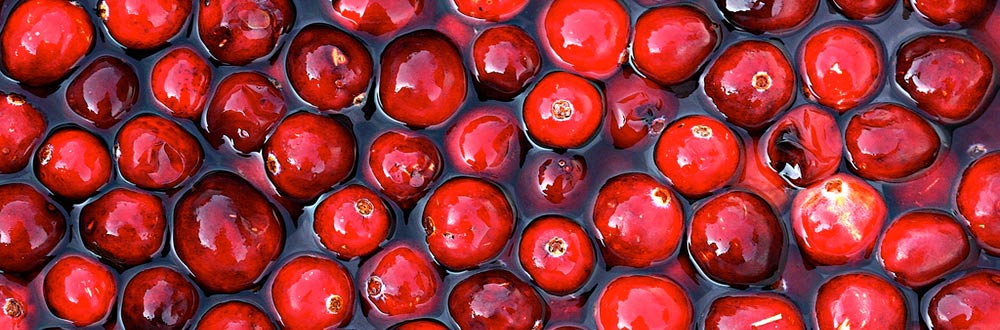
Busier than a Cranberry Merchant
Someone who’s extremely busy may be said to be “busier than a cranberry merchant.” What is it that keeps cranberry merchants so busy, anyway?
This episode is hosted by Martha Barnette and Grant Barrett, and produced by Stefanie Levine.
Photo by Liz West. Used under a Creative Commons license.