

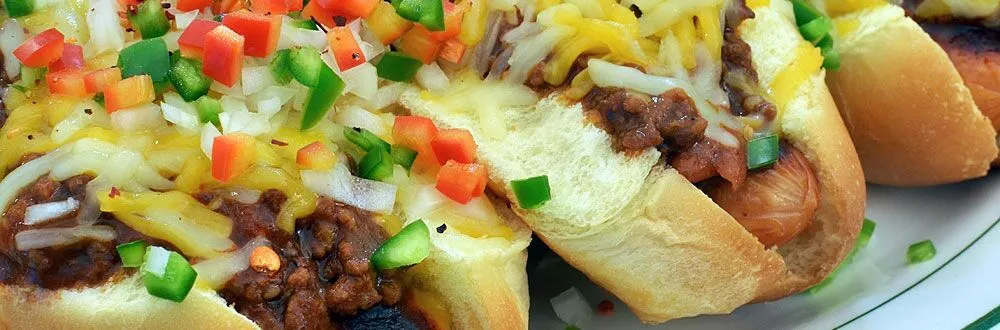
Why do we call a frankfurter a hot dog? It seems an unsettling 19th-century rumor is to blame. Also, if someone quits something abruptly, why do we say they quit cold turkey? This term’s roots may lie in the history of boxing. Plus, a transgender listener with nieces and nephews is looking for a gender-neutral term for the sibling of one’s parent. Finally, the words barber and doctor don’t necessarily mean what you think. They can both be weather words, referring to very different types of wind.
This episode first aired May 27, 2017.
Transcript of “Hot Dog, Cold Turkey”
You’re listening to A Way with Words, a show about language and how we use it.
I’m Grant Barrett.
And I’m Martha Barnette.
Grant, I have a short list here of some words in a particular category, and I wondered if you could guess what the category is.
Okay.
All right.
Three terms.
Brickfielder, Simoom, and Snoweater.
Let’s see where your mind goes.
Brickfielder, Simoom, and Snoweater.
Mm—
Good question.
And the middle one doesn’t sound like English to me.
Correct.
I don’t know what it is.
Snow eater.
What’s a snow eater?
I don’t know.
Terms used by Canadians in Inuit country.
I don’t know.
That’s not a bad guess.
You always say that.
I know.
Even when I’m completely wrong.
What is it?
Okay.
Well, let me give you a hint.
A snow eater is also a Chinook.
Oh, types of salmon.
Types of fish.
Oh, well, it could be.
A type of wind.
Types of winds, exactly.
Oh, that’s great.
Isn’t that cool?
Like a boob.
Yes, yes, exactly.
The richos.
That’s right.
And your ear was very good about simoom, which comes from Arabic, which it has to do with a dry, hot, suffocating wind that goes across the African and Asiatic deserts.
That’s cool.
And so the first one?
The first one is brick fielder.
That’s a wind from the desert of southern Australia.
And it has to do with the way the wind comes over sand hills, which are also referred to as brick field.
Okay, and then the snow eater is?
The snow eater is like a Chinook wind, which comes down in the Rocky Mountains.
And it’s called snow eater because it can happen after an intense cold spell and just raise the temperature really fast.
Interesting.
So the new front comes in and the wind is the symptom of that.
Yeah, it’s pretty fascinating how many different terms there are out there for different types of winds.
Because they do all different kinds of things and have all these different characteristics.
I’m going to share some words for cold winds later on in the show.
All right. Well, we’re waiting for your calls.
We talk about all aspects of language, 877-929-9673.
Email us, words@waywordradio.org, or talk to us on Twitter @wayword.
Hello. You have A Way with Words.
Hello. This is Jerry Yang calling from Merced, California.
Hey, Jerry. Welcome to the show.
Hi, Jerry. What’s up?
What I really want to know is who actually invented the word hot dog, because I had a very bad experience about 30 years ago because I didn’t know much English.
Anyway, to make a long story short, I was helping this gentleman at our church, stacking some chairs, and it took us pretty much the whole morning.
And I was about maybe 14 back then.
And then just before we finished stacking those chairs, he said, Jerry, when we’re done here, would you like to go with me and go get a hot dog?
And at the time, I took it as a literal meaning, and I thought he was insulting me.
You know, being Asian and from Southeast Asia, I was saying to myself, man, I just helped this guy stacking all these chairs, and now he’s insulting me.
If I would go and eat dog, you know, and so I was very puzzled.
I was disappointed, but I just decided to go with them.
And later, I, you know, we went to this hot dog stand and, you know, bought the hot dogs.
And it was actually pretty good.
I went home that night and spoke to my cousin who came to America first.
And I realized that the, you know, the Frankfurter was not made from dog meat.
So I was actually very embarrassed.
So my question is how in the word hot dog became a word, an English word.
How did hot dog come into the English language?
Dude, I have to say, you had me on tenterhooks.
I did not know how that story was going to turn out.
I’m so glad that it turned out nice.
And I’m so glad that it wasn’t really an insult.
Well, thank you.
So you guys have any answers at all?
I do.
I have tons of answers.
How long do you have?
No, I’ll give you the short version.
And the short version is that there used to be a kind of sausage known as the Frankfurter.
There still is a Frankfurter.
But when Frankfurters were new in the United States, people who made them were often accused of using animal meat that wasn’t cow or pig.
And they did sometimes actually use animals scavenged off the street, including dogs and cats.
And so for years, this joke, you can find it in tons of newspapers and particularly in college newspapers.
For some reason, you’ll find jokes and riddles and dog roll and insults and things talking about going to have a dog.
And they meant a sausage that was made from dog meat and they meant it as a joke.
But the joke kind of stuck. So by the early 1880s, that particular kind of sausage started to be served hot and it became literally a hot dog.
Even though by that time there were more regulations about meat and there were more regulations about what goes into our food and food prep and so forth and so forth, the name really literally stuck.
And here we are in 20-whatever teen using that word to refer to this mixed meat sausage.
Wow.
I just learned something new.
And trust me, I have six kids.
My kids love hot dogs.
They’re not made out of dogs now.
They’re made out of whatever’s on the package.
Turkey, chicken, pork, whatever.
Yeah.
But no, as early as the 1830s, you’ll find jokes written.
Here’s one.
The 1836 in a Massachusetts newspaper, a guy is arguing with a sausage vendor, and the guy says, I don’t know nothing special about them sassages.
They may be good sassages.
I don’t say they ain’t good sassages.
All I do say is that wherever some ever you see them kind of sassages, you don’t see no dogs.
That’s 1836.
So he’s insinuating there are no dogs in the area because they’re all in the sassages.
So the reputation kind of stuck with this particular kind of meat for a really long time.
Wow.
Yeah.
Crazy, right?
Yeah.
And as I recall, the Coney Island Chamber of Commerce tried to get people to stop using that term.
Call them Coney dogs.
Yeah.
And still in part of the country.
Not dogs.
I forget what they wanted to call them.
Yeah.
Conies or something like that.
Some places they call them Coney Islands or something else.
Okay.
Okay.
They tried to make people change, but you can’t do that.
You can’t put language back into the bottle.
No, that’s like putting toothpaste back into two.
Yeah, exactly.
So, Jerry, what a great question.
Well, thank you so much, and thank you for having me on the show.
Jerry, you’re a delight and so happy to have you on the show.
Hey, thank you so much.
God bless.
You too.
Cheers.
Bye, Jerry.
Bye-bye.
There’s two things to add to this.
One, because I want to head off the phone calls and emails about it.
Tad Dorgan, the cartoonist, did not coin the word hot dog.
The word was already in use, the phrase, the two-word phrase was already in use decades, decades before he was even a cartoonist.
Right, but he did draw a picture of a dog that looked like a Datsun.
Yeah, but that was for a bicycle race or something in 1906, long after it was already being used.
He was just riding the wave that was already in motion long before he came along.
The other thing is I want to share this tiny bit of dog roll from 1895.
Are you saying dog roll on purpose?
No, I am not, but you can take it that way.
From the Yale Record, which is a student newspaper at Yale University, and it is,
Tis dog’s delight to bark and bite, thus does the adage run.
But I delight to bite the dog when placed inside a bun.
So 1895.
But again, people were talking about dog meat in the 1830s.
Nervous laughter.
Yeah, with nervous laughter.
But they were eating it anyway.
And then 1880s, we see the term kind of firmly established in English.
We’ve come a long way. Now we have tofu dogs.
Call us with your language question, 877-929-9673.
Hello, you have A Way with Words.
Hey, this is Michael Winters from the Dallas-Fort Worth area. How are y’all?
Hi, Michael.
Doing well.
What’s up?
This question came to mind, and I thought you two would be the perfect people to ask.
When you have a married couple and they both have the title doctor, what’s the correct way to introduce them to somebody? Is it doctor and doctor so-and-so or what? How does that work? What’s the correct way? Are they medical doctors? Not necessarily. Just if, you know, maybe one’s a PhD doctor, one’s a medical doctor, something like that. That’s interesting. Have you had occasion to run into this question in real life? I haven’t, but I know a lot of friends that are doctors and some are medical and some are PhDs. And so I know if it’s one’s a doctor and one isn’t, then it would be doctor and Mrs. Or doctor and Mr. So-and-so. But I didn’t know if there was a distinction between both doctors. And now that you say it, if one’s more of an educational PhD doctor versus a medical. If you know that they want to be called the doctor, that changes things. Like I know a lot of people who have doctorates, non-medical doctorates, who don’t want to be called doctor. And if they’re called doctorates, only in very formal academic settings.
Yeah, I was going to say my dad had a couple of doctorates in theology and philosophy. And my mom had a doctorate in education. And so they refer to themselves as a paradox. Wah, wah, wah. Now you see where she gets it. Oh, that’s funny. Yeah. So, I mean, sometimes, I mean, if they were introducing themselves, well, they wouldn’t really say that, though. I can remember each of them talking on the phone to people, you know, introducing themselves. And it was pretty rare that either of them would say this is Dr. Barnette calling. But let’s imagine there’s a new head of the university and a couple has been invited and they’re being introduced around. And let’s say it’s Dr. Juanita Smith and Dr. Juan Smith, right? The normal way to introduce them is to literally use their full names in that way with the title.
I’d like you to meet Dr. Juanita Smith. You’re kind of gesturing to her. And Dr. Juan Smith, and you’re gesturing to him, right? And that covers everything. It covers the fact that you now know that they have the same last name. You’ve got their first names. You’ve got their title. It’s kind of good and taken care of. But it really depends on the context. It does. Most of the academics I know wouldn’t even bother with that because they just assume that everybody in their position has a doctorate.
Yeah, and occasionally I will get people calling me Dr. Barrett. I’m not Dr. Barrett at all. I’m not Dr. Barnette. No, I’ve had that happen at linguistic conferences. I’m like, no, don’t settle me with that. So if they’re both medical doctors, though, you would just sort of say Dr. Jeanette Johnson and her husband, Dr. Frank Jones? That would work. That would be more appropriate. That’s right, yeah. And in doing that way, you give them their separate identities. My wife and I run into this because she kept her maiden name, as they say. And so anytime we are introduced, it’s her full name and then my full name because just Mr. And Mrs. Barrett just doesn’t cover the bases. And Dr. And Dr. Smith doesn’t cover the bases either.
Okay. Well, that kind of answers my question. And now that I know, I’ll probably run into that situation. It’s just kind of the same time my life works. So, yeah, I appreciate your time, and I listen to you every week. Love it. Well, let us know if you run into that situation and how it turns out. Yeah, it’s a big morass. Everyone left angry. No, I don’t know. I sure will. I appreciate it very much. Thank you, Michael. Take care. All right, thank you. Bye. Bye-bye.
877-929-9673. Email words@waywordradio.org. People keep sending us German jokes, and I like this one. It translates as, the pessimist says it can’t get any worse. The optimist says, yes, it can. Outstanding. That’s a really good one. I know. I know. 877-929-9673, or send your queries about language in email to words@waywordradio.org. This is a show about language examined through family history and culture. Stay with us.
You’re listening to A Way with Words, the show about language and how we use it. I’m Grant Barrett. And I’m Martha Barnette. And joining us now on the line is our quiz guy, John Chaneski. Hey, John. Hey, Martha. Hey, Grant. Hey, bud. What’s up? I don’t know if you guys know, I have a BFA in drama from NYU. What? Okay. Yes, that’s my degree. So, yeah. So I know a little bit about Broadway. Okay. And I think the same.
Okay. Now, you’ve got to be very careful when you work on Broadway. You know, you’ve seen those marquees with all the lights. You know, they’re really up high. And if you put up the wrong letter, boom, you’re doing a different show. Ha. For instance, you change just one letter on a marquee, and the next thing you know, you’re working on a show about a former lady sharpshooter who now works at McDonald’s. That’s right. It’s Annie Get Your Bun. Bun, yeah. Now you have to work on that show.
So let’s use this quiz as a little cautionary lesson. I’ll describe a show, which is a famous musical with just the first letter of one word changed. You tell me the title of the terrible new musical, okay? Okay. Ready. Let’s hear it. Here we go. A fancy professor makes a bet that he can change a lowly shampoo girl into the top stylist at a salon. My Hair Lady. My Hair Lady. I would watch that one, by the way. I would watch all of these. Sure.
In this DC Comics theatrical universe musical, Batman must solve perplexing conundrums as he spends a night chasing one of his most quizzical foes high above the streets of Gotham City. Well, quizzical is a Riddler or the Joker. Yeah. Think of a musical. Oh, famous musical. Riddler on the Roof. That’s the one. Riddler on the Roof. Oh, oh, oh, oh. Riddle me this, bad man.
This musical is pretty much unchanged. It’s about an up-and-coming actress gaining fame while her famous lover self-destructs, though not from alcohol. He’s just really, really tired. A star is boar. No, he’s really tired. He’s really tired, so it’s faint. A star is worn? Yes, a star is worn. A star is worn. He’s just so tired.
Disney will probably pick up this anthropomorphic adaptation of Romeo and Juliet that features star-crossed birds that belong to rival flocks. Oh, my goodness. So, West Side Story becomes… Rival Birds. Now if I change the last… Nest side story? Yes, nest side story. Now if I change the last letter, it could be west side stork, but it’s not going to be that. I can tell you that much. That’s the sequel. One stork against the three. Stork, west side.
This is the simple story of a dog who learns to play the piano, write some songs, and win a Grammy. In Austria. The hound of music. The hound of music. The hound of music. Perhaps it’s the sequel to Cats. I don’t know. Being an orphan on the streets is tough. In this musical, a chipper young waif gets a pointy piece of wood in his heel, and that’s pretty much all there is. Sliver Twist? Sliver. Sliver is right.
Well, now, see, Oliver Twist was the book. Or Sliver Twist was the book. Sliver. But Sliver, with an exclamation point, that is the musical. Very well done. At various towns along the Mississippi River, the people are tired of gambling and fancy spectacles. They just want some good down-home cooking, and the titular paddle wheeler provides it. It’s not showboat. I was going to say. Well, isn’t it? Hello, Dolly. Isn’t it showboat? No, it is. Yeah.
Can we change one letter? Huh. Chowboat. Chowboat is right. Very good. I’ll see you guys at the theater. Congratulations. Sounds great. Oh, John, that was great. Thanks, buddy. Really appreciate it. Take care now. Take care. The show’s about words and language, but a whole lot more, culture, family, history, that all comes into it. If you’ve got a question related to anything having to do with any of that, give us a call, 877-929-9673.
Email words@waywordradio.org. Or send us a message on Twitter @wayword. Hello. Welcome to Way With Words. Hi. My name is Sarah, and I’m from Council Bluffs, Iowa. Hello, Sarah. Welcome to the show. What’s up? Hi, thank you. My grandmother has a saying. I’ve heard this all of my life, and she said she got it from her grandmother.
This dates back quite a ways as her grandmother was a young bride during the Civil War.
Whenever her hairdo is messed up, either she needs a perm or it’s been really windy, she would say that her hair looks like a hoo-rah’s nest.
And she can’t tell me what that means. She never thought to ask her grandmother before she passed away.
And no one in our family has any idea what she’s talking about.
Looked like a hoorah’s nest.
Yes.
And that doesn’t sound very complimentary, right?
No, it does not.
Yeah.
And so where were your relatives from?
During the Civil War, they lived here in the Council Bluffs, Iowa, and down to Manhattan, Kansas.
And prior to the Civil War, they resided from Pennsylvania.
Oh.
Legend of the Pennsylvania Dutch.
Okay.
Very interesting.
Yeah, we’ve seen variations of this, like hurrah’s nest, H-U-R-R-A-H, hurrah’s nest or hurrah’s nest.
And it’s mainly sort of down the eastern seaboard, New Jersey, Maryland, D.C., North Carolina, Georgia, and Florida.
And we don’t really know what a hurrah is.
I would guess it would be some kind of bird, right?
But, I mean, did you have an image of anything in your head when they said this?
Pretty much pictured a bird’s nest on top of her head.
Sometimes when she was desperately needing a perm, her hair is pretty wiry.
It kind of resembled a nest.
Yeah.
Well, that’s great.
Well, it has a long tradition.
I mean, it goes back a couple hundred years.
Yeah, I found it as early as 1817.
There you go.
There you go.
And actually, Henry Wadsworth Longfellow actually used it in his journals when he was talking about a queer-looking Dutchman with a head like a hoora’s nest.
And he had it in quotes.
So we are guessing that it’s earlier than his journals.
Yeah, usually when people call the word out with quotes, it means that they recognize it as an exceptional term.
Well, that’ll please my grandmother if she’s been quoting Longfellow.
Yeah.
Well, yeah, he used it in 1829 in his journals that were published by his brother after he died.
Okay, well, that would be about the time my great-great-grandmother would have been a young woman, so that makes sense.
Yeah, and you can use it for things besides hair.
I mean, you know, if you have a teenager with a room.
Or even a situation can be a hoorah’s nest.
Right, right, just a jumble of things.
Oh, okay.
We just don’t know who the hoorah was or is.
No, mythological bird maybe, something out of –
Because a lot of the early uses of this are seafarers, right?
Yeah, right.
There’s one particular definition given in some dictionaries which says something about a tangle of debris blocking a path or something like that.
Right, or like ropes on the deck, something like that.
A hoorah’s nest.
Oh, okay.
Yeah.
Huh.
Well, that’s really interesting. Thank you.
Our pleasure. Thanks for calling, Sarah.
Bye.
Hoorah! Give us a call, 877-929-9673.
Hi, you have A Way with Words.
Hi, my name is Dylan. I’m calling from San Diego, California.
Hi, Dylan.
And I have a question that I’ve been asked a lot lately,
And it’s regarding to, I am transgender and gender nonconforming,
And a lot of my friends who are having kids right now keep asking me what they should be referring to me as
Because they want to either use a term like aunt or uncle,
But they’re looking for a gender-neutral term for aunt or uncle,
And I was wondering if you have a response or something I can tell them.
What a good question.
Good question.
Do you have a preference?
I prefer something gender-neutral because I am gender nonconforming.
I go by they, them, theirs pronouns, and I don’t really know what to tell them,
Which is why I’m reaching out to you guys.
I figure you might know.
Yeah, there have been a bunch of proposed terms.
None of them, unfortunately, have caught on, though.
Just like the gender-neutral pronouns, there have been so many proposed,
And, I mean, hundreds have been proposed over the centuries,
And the only set that really has stuck is they, them, their, and so forth.
It’s gender neutral, so a plural pronoun now used as a singular.
The best one that I’ve seen is in a journal article written by Neville Goodman.
He’s a British fellow, British Journal of General Practice.
And he proposes pibblings because you take the P from parent and the ibling from some other proposed familial relationship terms that have been kind of getting some popularity, which is the term for nieces and nephews.
I don’t know if you ever heard nibblings or neflings or neiflings.
Okay.
So he’s proposing pibbling.
So that’s a t?
P as in pocket or Paul.
Paul or Paulie.
So pibbling.
That sounds really cute.
It is, yeah.
But then would a kid say my pibbling Dylan?
Maybe.
That was my next proposal is can you just simply get them.
You know how sometimes kids will come up with a cutesy name for grandma that sticks?
Maybe the kids need to come up with a name for you.
Maybe it’ll be different for every family.
Yeah, that’s kind of what I was leaning towards because growing up, I couldn’t bring out like grandma or grandpa.
So I went with papa and nanny, which I don’t know where I came up with that.
And I know a lot of gender neutral parents who are having their kids call them baba and stuff like that.
But that’s more of like a parent endearment term.
So when it comes to like aunt or uncle, I was kind of…
Yeah, and baba is used…
I don’t know what to say.
Baba means father in some languages too, which adds more confusion to it.
Yeah.
I would love to throw this out to our listeners and see,
Because I’m sure that other people have been facing the same question.
Yeah, we’ll find out if other people have a gender neutral term
For somebody who doesn’t want to be called aunt or uncle,
But they still want the kind of relationship, the familial title of it.
The other thing I would refer to you, Dylan, is there’s a Tumblr called Gender Queries, Q-U-E-E-R-I-E-S.
And they asked the question on there for gender neutral terms for aunt and uncle.
And they have, looks like about 10 different sets of possible terms to use with some notes about, you know, maybe they mean something in another language.
But look for that.
So Gender Queries Tumblr and look for aunt and uncle and you’ll probably find it.
All right.
Well, thank you so much.
I really appreciate you having me on.
Yeah.
Thanks for calling.
Thank you.
Bye-bye.
All right.
Take care.
So some of these terms don’t really work.
Let’s hear it.
Like uncle, which is a blend of the two words.
-huh.
Some say just a cousin.
I don’t like that.
Tee-tee, which is too close to a word for a woman’s breast.
Zee-tee, which means penis in French.
And nene, b-b, auntie.
I don’t know.
It’s tough because I want a word that goes before Dylan, you know, and is an affectionate word.
And I’ve loved for many years the word Neiflings for nieces and nephews, the collective.
And I’m wondering if Neif would be a word for the—
Oh, interesting. Neif.
Yeah. Neif Dillon.
Neif Dillon.
Kind of sounds like Neve or some other female names.
Yeah.
It’s a hard one.
If you know of a good word that’s being used in your community or in your family for someone who doesn’t want to be called aunt or uncle but has that status as sibling to the parent,
Let us know, 877-929-9673.
We got a call from Quinn in Wyoming who was asking about the term thesaurus.
And it was one of those cases of knowing just enough to be dangerous.
He was saying, well, you know, the word theos in Greek means God
And sauros means lizard, like brontosaurus or dinosaur, you know, which is a frightening lizard.
So isn’t a thesaurus a god lizard?
I, for one, welcome our new overlords, they say.
Yeah.
All hail the thesaurus.
So I was just going to say to Quinn that it looks like it might come from Greek and Latin words that mean god lizard,
But actually a thesaurus in Latin is a treasury.
And in antiquity, you would see temples, and then they might have a thesaurus next to them that literally held treasure.
It’s sort of like one of my favorite words in the English language anthology, which literally means a gathering of flowers.
So a thesaurus and an anthology are both collections of really cool things.
And in French and Spanish, their words for treasure look a lot more like the word thesaurus.
Tesoro.
Yeah, than you might think in English.
Yeah, exactly.
Hi, you have A Way with Words.
Hello, how are you doing today?
My name is Eric Guns from Pittsburgh, Pennsylvania.
What’s going on, Eric?
Hey, I have a question for you regarding the plural use of some nouns.
I was driving down the road the other day with my son, and he’s a pretty smart kid.
He’s only six years old, but he knows a lot.
And he said, hey, Dad, how come when you say some words in the singular form, they’re one word,
But if you say it in a plural form, it changes into another word.
I was like, well, I really don’t know what you’re talking about.
He said, what about the word, if we’ve seen a mouse in the yard, we call it a mouse.
But if there was more than one, we would call them mice.
And then he went on to tell me about goose and geese.
And then he even mentioned his tooth.
If his tooth falls out, he says tooth.
But if more than one tooth fell out, he’d call them teeth.
So I went and did a little research, and I noticed, well, it looks like whenever you
You have a noun, typically you add S or ES to make a plural.
Why those words?
You know, why did you physically change the actual word?
I have no clue.
That’s a smart kid you got there, Eric.
That’s a smart kid.
He’s very observant.
Yeah, yeah, he is pretty smart.
Actually, he’s kind of questioning where I went wrong in life sometimes
Because I don’t know some of the things he knows already.
Yeah, just keep feeding him the right books and the right entertainment,
And he’ll grow.
Sounds like a nerd in training.
Yeah.
Well, Eric, the answer to this is really interesting.
When you come across those words that have these irregular plurals,
You are looking at some of the oldest parts of the English language.
You are seeing the dusty bones of English.
Let’s take, for example, the word goose and geese, just as one example.
There was an older form of English that, like Germanic languages,
To make a plural, you didn’t add an S on the end.
Instead, you changed that main central vowel.
And other words have behaved the same way.
He picked up on tooth and teeth and foot and feet and mouse and mice.
And so when English became modern, there’s no one day or one organization that makes everything modern.
Each word becomes modern on its own or it’s dropped from the language or it isn’t changed at all.
And these are remnants of words that weren’t changed to adopt the new plural style of adding an S to make them plural.
There were other changes that did happen, pronunciation changes, for example.
For geese, for example, might have pronounced something like giza at one point in English, but we don’t keep that.
We did modernize pronunciation, but we didn’t modernize the pluralization by adding an S.
So they’re kind of leftovers from the past.
They’re leftovers, yeah.
They’re artifacts.
Yeah, they’re artifacts of an older English.
That’s very interesting.
I had envisioned like there was some committee somewhere in Washington, D.C.
And some big office somewhere.
And they all sat around and said, hey, let’s figure out the proper way to say certain words.
Because, you know, certain words, when you look at it, we’re like, that doesn’t make any sense.
How are you getting that word out of it, let alone changing the name of it?
You know, it’s kind of interesting how it works.
And some words like house, we did modernize it fully.
We don’t use the old plural of house anymore.
We say houses.
But house is another one of those old, old words that could have stayed and could have kept its old plural form.
Yeah, there’s no committee in D.C. or London or Oxford or any place like that.
Each word changes on its own as the different dialects and variations in the language rise to prestige or fall away from prestige.
Yeah, and there are a couple of other examples of plurals that aren’t formed with S, like children and oxen, because in Old English you would add an EN to make a plural.
That’s interesting. That’s great. Sounds good.
Well, hey, I thank you guys very much for answering my questions,
And I’ll definitely relay the information over to him
And maybe do a little research on the subject myself
And do a little learning exercise with him.
Yeah, say hi to your son. What’s his name?
Tell him we said hi.
His name is Eric as well.
Oh, Eric. Tell little Eric we said hi and good luck.
Yeah, that’s how good I am with the English language.
I had to keep it simple.
All right. Bye-bye.
All right. Hi to Eric.
Thank you.
Take care now.
All right. Bye-bye.
We were talking earlier about names for hot winds,
And it turns out that there are some really great names for cold winds as well,
Or cool winds like doctor.
Have you heard the word doctor used in terms of wind?
How does that come about as a name for a cool wind?
It’s the kind of wind that supposedly brings good health.
Oh, interesting.
Yeah, like a cape doctor on the South African coast,
Or a freemantle doctor, which is a cooling sea breeze in Western Australia,
Often made note of during hot summertime cricket matches.
Interesting. The doctor wind.
Yeah.
And there’s another one, the barber, barber wind,
Which is just generally applied to wind that is so cold that it’s cutting.
I thought it was so strong it took your toupee off.
Some people say it freezes on contact with objects and would take your beard off and your hair, as you say.
Support for A Way with Words comes from Jack and Caroline Raymond,
Proud sponsors of Wayword, Inc., the nonprofit that produces and distributes this program.
You’re listening to A Way with Words, the show about language and how we use it.
I’m Grant Barrett.
And I’m Martha Barnette.
The magpie is a really striking-looking bird.
It’s got black feathers, and it’s got a patch of white on either side,
And then it’s got these other feathers that are sort of this iridescent blue-green or bronze-green.
It has an exceptionally long tail.
And, you know, magpies are known for going around and picking up lots of things or turning things over to find things to eat.
And they seem pretty indiscriminate in the way that they eat.
And the Latin word for magpie, pica, gives us the English word pica, which is the term for, as you know, eating things that aren’t normal foodstuffs.
Like a lot of times pregnant women crave mud or dirt.
Right, right.
They eat clay or soap, something like that.
But anyway, I’ve been thinking about magpies a lot because of a poem I read by Jessica Goodfellow.
She’s a poet who was an artist-in-residence at Denali National Park in Alaska.
The National Park Service has an artist-in-residence program.
That’s cool.
Yeah, yeah, where a poet will go and stay in a national park for a while and write poetry about it.
And she wrote this poem about a magpie that I absolutely loved and wanted to share with you.
The magpie drags my gaze around, a teeter-totter of blue and black, a wink of stark white epaulette,
Crazed glass wings, a sheen of green, a swaggering wand of opal tail.
Then with a shake of lacquered beak and a fling of fingery wings, is gone.
And you have to see this poem, too, because is gone is way over on the other side.
And it just, I think it’s a poem that should be taught in high schools.
It sounds exactly like a magpie.
Doesn’t it?
Yeah.
Yeah.
Yeah.
And just like an imagist poem, you know, sort of a William Carlos Williams type of thing.
I also loved the crazed glass wings because, you know, crazed glass is that kind of glass that’s all crackly.
It’s meant to be, right?
Yeah.
Yeah.
Yeah.
And the word craze is also used in dentistry when you’re talking about enamel that’s cracked on your teeth.
That’s crazed.
And it’s related to our word crazy.
It has to do with the idea of shattering, cracking.
Something that’s not whole anymore.
Yeah.
These fissures.
And the poem again?
It’s called The Magpie.
It’s by Jessica Goodfellow, and you can find it if you just Google those words.
Okay.
877-929-9673, or send everything you want to know about language to us.
An email to words@waywordradio.org, or talk to us on Twitter @wayword.
Hello.
You have A Way with Words.
Hi.
This is Sally.
Welcome, Sally.
Where are you calling us from?
Portage, Wisconsin.
Sally, what’s on your mind?
What can we help with?
18 years ago, I was in massage school, and we had a teacher who had immigrated to the States from Central Europe.
And one day, he made a comment about, I don’t get this, this cold turkey, what do you mean?
And none of us could tell him why.
And so that’s always been a mystery to me.
Where did the phrase cold turkey come from?
And cold turkey meaning what exactly?
As I understand it, like, oh, that person quit smoking cold turkey.
It’s like a person quits what they see as a not good habit,
And they’re doing it without, I guess, without any help,
Like, you know, for smoking, like they’re not doing it with a smoking patch or something like that.
Right.
They just suddenly do it.
Yeah.
Without preparation.
Without preparation, right.
Right, or any kind of assistance.
They go cold turkey without a warm-up.
All right, hold on.
I’m not going to go very far with this, actually.
What’s really interesting about cold turkey, it’s got a history going back to about the 1890s,
And when it first comes up, it’s almost exclusively used in boxing.
It’s talking about a fighter quitting a match, cold turkey,
Or somebody bad-mouthing somebody else and just, like, stopping the argument, cold turkey.
And it’s not until the early part of the 1900s that we start to see it being used among people who are trying to quit alcohol or drug use.
And over the years, the use of cold turkey to refer to quitting drugs has become more prominent.
But there are still many uses of where we might say, I quit something cold turkey that has nothing whatsoever to do with drugs.
And you said something that’s exactly right.
It has to do with quitting something that you see is bad for yourself.
Like you can quit a relationship, cold turkey, or you can quit a job, cold turkey,
Or you can just change your mind and say, on the highway, go in a different direction, cold turkey.
And you can find zillions of examples of this.
But the first uses that we know suggest that it came up as boxing slang, which is pretty interesting.
Yeah, that is interesting.
So why turkey and why cold?
Well, there’s two things happening.
We often talk about doing something cold, and it does mean without preparation or warm-up or any kind of.
And that’s the use of cold is probably what’s happening here.
But the turkey is where we run into some difficulty here.
A couple of theories have been proposed that have to do with actual turkey, like the bird,
That suggests that when you quit drugs, cold turkey, that you get goosebumps and they resemble the skin of a plucked turkey.
However, that’s probably not true because, as I said, the dates don’t work out.
The drug uses come much after the term.
More likely, turkey just refers to a derogatory name for somebody where he’s a turkey, meaning he’s a fool or a loser or somebody who makes bad choices or a chump, that sort of thing.
So more than likely, the boxing milieu, the boxing environment suggests to me most of all that cold turkey means he quit like a chump.
He quit like a loser.
He quit like somebody who didn’t have the guts or the courage to carry it out.
And so then over time, the meaning transition.
And again, most people today think of it having to go with drugs.
But you’ll still find people talking about, like, yeah, I stopped wearing stretch pants, cold turkey, or something like that.
Sally, what do you think?
Very strange.
Right?
Yeah, slang is weird.
You never know what you’re going to get with slang.
It’s like a box of chocolates, as they say.
All right, that’s the best that I can give you.
Okay, well, thank you.
Our pleasure.
Thanks for calling.
Really appreciate it.
Okay.
Bye-bye, Sally.
Bye now.
So 1898 is the first use that I found in boxing.
Yeah.
1898.
I will corner him, and he will either have to go through with the match or quit cold turkey.
Right?
Yeah, that does sound chumpy.
So the turkey is a coward, not willing to withstand the—
A loser.
A loser, yeah.
Yeah, a flop like a turkey in theater, right?
Yeah, there we go.
Somebody with a glass jaw bailing out of a match because they know they can’t hack it.
Yeah.
Right?
Great slang from boxing, right?
Boxing is good.
Yeah, glass jaw, cauliflower ear.
It’s not just slang we talk about on the show, and it’s not just word origins.
Give us a call if you’ve got anything related to language.
We do jokes and riddles, a dispute you had at work, 877-929-9673.
Email words@waywordradio.org.
Hi, you have A Way with Words.
Good afternoon.
My name is Catherine from Port Washington, Wisconsin, and I have a question about a dictionary.
Oh, well.
Yes, I’m raising my hand.
We have a dictionary editor right here who can probably give you whatever answer you require.
Catherine, how can I help?
Well, I’ve owned my grandmother’s four-and-a-half-inch dictionary since 1975.
And I don’t like to discard it because I listen to both of you talk about how many dictionaries should be kept because of the unabridged aspect of it.
So this one is a Newt Webster New 20th Century Unabridged Dictionary Copyright 1952,
But the previous copyright is 1904.
And like I said, it’s four and a half inches thick.
Is this something that I need to keep?
Do you have it on a dictionary stand, or where do you keep it?
It used to be on a podium, but I just have it on a shelf in the closet at the moment.
That’s a really good question.
So a 1952 copyright date on that.
It’s not considered a particularly good dictionary, but it’s interesting to have and can add some texture to your reading.
It might have slightly different definitions.
But what’s really interesting is it doesn’t contain some important words.
How often do you look up things in the dictionary?
Oh, I look up things in the dictionary all the time.
I prefer to use the dictionary rather than the Internet or the computer.
And so when you say the Internet, you wouldn’t go, for example, to Merriam-Webster.com or American Heritage or Oxford?
No, not particularly.
I usually reach for the dictionary, but that’s probably force of habit.
Yeah, I get that.
The problem, and I own many, many dictionaries, not that one, but I own many, many dictionaries,
Including some unabridged that I will, hopefully they’ll bury with me because they’re so useful.
But I should say the problem with this is it’s not going to have a ton of language,
And it’s missing the word internet.
You probably don’t need to look that up.
It’s missing the modern word computer.
It probably has the definition of computer, meaning a clerk who compiles, who adds up numbers rather than the machine computer.
It’s talking about the person computer.
It’s missing a huge number of scientific terms that reflect the developments that have happened in every field of science since the 1950s.
Oh, I’m sure that.
I’m sure that’s true.
It is an unabridged edition, though.
Yeah, but even unabridged dictionaries that only have a small percentage of all the English that there is,
Do you find that it doesn’t have words that you’re looking up?
Sometimes, yes.
And I have a couple other dictionaries on my shelf, and I’ll refer to them, and I will find them in there.
Okay, good.
Are your other dictionaries newer?
Yes, they’re newer.
Okay, well, that’s good news.
I would say if you were just depending upon the 1952 dictionary, that you would definitely need something more current.
The one that I usually recommend for completeness sake is the American Heritage Dictionary.
It’s not quite unabridged, but they’ve done an exquisite job of including words that you are likely to look up.
By that I mean they’ve left out a lot of archaisms and obsolete terms that would just take up space and very few people would ever look up.
They’ve also taken out the stunty words, the words that you look up just because they’re funny words to look up, but you don’t actually read them in your day-to-day literature.
And it has some illustrations.
It’s got a lot of illustrations.
Photos.
It’s printed on a nice material.
But if failing in that, Merriam-Webster is currently preparing a new edition of their unabridged.
I don’t know if it’s going to make it on paper, but if you want to hold off for a little bit, a couple years, I would keep my eyes out for that as well.
Oh, I will. That’s a great idea.
But don’t, if the dictionary that I have, would they have taken some words out of this dictionary, say, if they were passé, or what do you think?
Yes, yes. Every new edition of dictionaries probably takes out words in order to make space for new terms to include.
And I think that’s the only reason I saved it.
Yeah, plus it’s hard to let go of them.
It is.
It truly is.
I know. I still regret it. I had a whole set of the Scottish National Dictionary, and between one of my moves, I sold it.
I still regret it. 13 volumes.
Well, it’s got a beautiful cover, and it’s just not like books you find today.
Like I said, it stood on my grandmother’s podium, and she would actually every day she would close the dictionary and just with her eyes closed open the book dictionary and point her finger at a word and use that word for the day.
That’s nice.
That’s lovely.
I’ve sort of taken that on myself at times during these years.
Oh, that’s great.
Well, Catherine, thank you for asking this question about dictionaries.
Always happy to talk about dictionaries. It does sound like you’re kind of covered with those other dictionaries, but if you are looking for another unabridged, try the American Heritage, wait for the next edition of the Merriam-Webster’s, and you might even find that the double volume shorter Oxford English Dictionary will cover a lot of bases, although it’s not very American. I think it’s a little light on slang overall.
Well, thank you. Thank you very much for your interpretation.
Yeah, sure. Our pleasure. Thanks for calling, Catherine.
All right. Bye-bye.
Bye-bye. There should be a word for how you feel after you give away a dictionary.
Oh, right.
You kind of have regrets.
It’s like giving away kittens from a litter.
Right?
It’s the same feeling.
Yeah, yeah.
It’s kind of like there’s a place at the table.
And you call them and say, can you send me pictures of my dictionary?
Right.
I want to see it being used.
Email us, words@waywordradio.org.
Grant, what do you call the cloth cover for a pillow?
Oh, you mean the pillowcase?
Pillow slip?
Thank you.
There’s two, and there’s others, but there’s only two I know.
Yeah, yeah.
Well, and there’s also pillow beer or pillow bear, which is a really old word for that.
Interesting.
Yeah, it doesn’t have to do with bears.
I wasn’t thinking about, what’s the fancy outer covering?
So you have the pillow, and then the pillowcase, and then the thing that goes around that matches the bedspread.
What is that?
Yeah, some people call that a sham.
A sham.
A pillow sham.
Okay.
But the reason I bring that up is because I was at a dinner recently, and somebody was laughing about the term pillow slip, which I hadn’t heard in forever.
She was saying, oh, no, it’s pillowcase, pillowcase.
And it took me back to my childhood hearing my mother talk about pillow slips.
And so I went and looked it up, and it turns out that there are a lot more people who say pillowcase rather than pillow slip.
But pillow slip just—
Pilla.
Pilla.
Pilla slip.
Yeah.
I hear you’re Kentucky.
I am.
It’s interesting.
Now, there’s no regionality to those terms?
Not really.
If you look in the Dictionary of American Regional English, which has a big map of all these things, there are a lot more pillowcases than pillow slips, but it’s pretty widely distributed across the country, both of them.
Interesting.
Pillowcase, pillow slip.
I did not know that there was any argument about that.
We had one over dinner.
It was a lot of fun.
Oh, fun argument.
Not the serious kind.
Right.
Hit us up on Twitter, W-A-Y-W-O-R-D.
Hello, you have A Way with Words.
Hi, this is Michelle, and I’m calling from Evansville, Indiana.
How are you, Grant?
Excellent, Michelle.
It’s very nice to talk to you.
Hi, Michelle.
I know exactly where you’re from, down there in the boot.
The toe.
Oh, yes.
Yes, ma’am.
Yeah.
Well, welcome to the show.
What can we do?
I’ve always heard the phrase from, like, my grandmother and other people, if I was any better, I’d be twins whenever you’re asked, how are you doing?
And so I’ve kind of adopted it myself.
And, oh, if I was any better, I’d be twins.
And I say it all the time.
I have no idea what it really means.
And so I just thought maybe you guys could help.
You must be pretty good.
Usually, yes.
If I were any better, I’d be twins.
Yeah.
If I was any better, I’d be twins.
Right.
Yeah, do you say was or were?
If I was any better, I would be twins.
Yeah, that’s the way I usually see phrases like that.
You know, it’s very casual, right?
You’re not going to throw the subjunctive into that kind of jokey remark, right?
No, no, no.
No.
Yeah, but basically it’s, you know, if I were any better, I’d be twice as good, right?
There’s so much of me, there’s enough to go around.
Right.
Well, see, I’ve heard that too, but I thought surely there has to be another meaning or, you know, some other place that it came from.
No, it’s pretty basic.
You’re doing the good work of two people, basically.
Yeah.
I’ve also heard versions like, if I was any better, I’d be you.
You know, there are lots of clever little responses like that.
If I was any better, there’d be two of me as a variation.
Yeah.
If I were any better, I’d be dangerous is my favorite one.
Or if I was any better, vitamins would be taking me.
I think I’m going to start using the I’d be dangerous.
That one’s fantastic.
I found one use that’s similar.
It’s not quite the same thing from 1904.
If I hadn’t been an only child, there’d be two of me.
And just fancy all the fun me too could have with that other of me.
I’ll take that.
Thank you.
That’s goofy, right?
That’s all we got, Michelle.
Yeah, it’s just pretty silly.
Okay, well, thank you for finally settling that because my husband and I, we’ve been round and round, and that’s the conclusion that we came to, and so I get to tell him that I was kind of right.
Hawkins the razor on all that, right?
The simple answer is usually the right one.
That is correct, and I know he’s got a couple questions, too.
We talk about it from time to time, and so I’m sure that one of these days he’ll probably call in.
Tell him to do it.
Yeah.
Thank you very much for calling.
Thank you so much.
Bye.
Bye, Michelle.
All right.
Bye-bye.
This is a show where sometimes we talk about language and we just kind of goof off.
I mean, there are a lot of…
What?
No, we’re serious.
This is serious business.
I do love all those responses.
Yeah, you do.
Like, you know, I’m finer than frog’s hair or I’m finer than frog’s hair split.
Yeah.
Or I’m fuzzy as a peach.
Fuzzy as a peach.
Yeah.
I met somebody from New Zealand the other day who taught me a Maori word that she grew up with.
And it’s kapai.
Do you know this?
No, I don’t know that one.
K-A-P-A-I.
Kapai.
It means good or fine.
And how do you use it?
Just as like an assertion when somebody else is talking?
Or I feel kapai?
Or kapai.
Just good.
That’s great.
Oh, I see.
Kapai.
That’s wonderful.
Goodbye.
Yeah.
Want more A Way with Words?
Listen to years of past episodes at waywordradio.org or find the show on any podcast app or on iTunes.
Our toll-free line is always open, so leave us a message at 877-929-9673 and we’ll take a listen.
We’d love to get your messages at words@waywordradio.org or hit us up on Twitter @wayword and look for us on Facebook.
This program would not be possible without you.
Grant and I are out to change the way we listen and think about language, and you’re making it happen.
Thanks also to senior producer Stefanie Levine, director and editor Tim Felten, director Colin Tedeschi, and production assistant Emma Kelman in San Diego.
In New York, we thank quiz guide John Chaneski and that master of keeping it real, Paul Ruist at Argo Studios.
A Way with Words is an independent production of Wayword, Inc.
From the Recording Arts Center at Studio West in San Diego, I’m Martha Barnette.
And I’m Grant Ferrett.
So long.
Bye-bye.
Support for A Way with Words comes from Lizanne, Fokion, and Chloe Potamianos Homem, proud sponsors of Wayword, Inc., the nonprofit that produces and distributes this program.
Names of the Wind
 Brickfielder, simoom, and haboob are types of winds. Others include snow eater and chinook.
Why We Call Them “Hot Dogs”
Why do we call a frankfurter a hot dog? In the 19th century, hot dog was a jocular reference to rumors that these sausages were stuffed with dog meat.
Addressing or Introducing Married Doctors
Say you’re introducing someone to a married heterosexual couple, and both members of the couple are physicians. What titles should you use? “This is Dr. and Dr. Jones”? Dr. and Mrs.? What if one holds Ph.D.? What if both hold doctorates?
Opitmists vs. Pessimists
Here’s a humorous take on how optimists differ from pessimists.
Broadway Letter Swap
Quiz Guy John Chaneski has been swapping out letters on Broadway marquees to create the names of entirely new theatrical productions. For example, what Broadway play might you be watching if it’s about a famous woman who leaves her career as a sharpshooter for a job at McDonald’s?
Hurrah’s Nest
The grandmother of a woman in Council Bluffs, Iowa, says tousled hair looks like a hoorah’s nest. Also spelled hurrah’s nest or hooraw’s nest, this means “an untidy mess” or “a commotion.” Its origin is uncertain. In 1829, Henry Wadsworth Longfellow described someone as having a head like a hurra’s nest. The term’s origin is obscure, although it might have to do with the nest of an imaginary creature.
Gender Neutral Term for Aunt and Uncle?
A transgender and gender-nonconforming listener wonders if there’s a gender-neutral term for “aunt” or “uncle.” Some people have suggested pibling, meaning the “sibling of one’s parent.” Others have proposed baba, titi, bibi, zizi, unty or untie, or simply cousin. In the same way that kids often come up with a pet name for their grandparents, perhaps nieces and nephews (or nieflings, as they’re sometimes collectively called) will come up with their own term. The tumblr Gender Queeries has more suggestions for all kinds of gender-neutral words denoting kinship.
Origin of the Word “Thesaurus”
A thesaurus, a collection of synonyms, derives its name from the Latin word thesaurus, or literally, “treasury.”
Strange English Plurals Leftover From a Bygone Age
A San Antonio, Texas, man says his six-year-old son wonders: If the plural of house is houses, why is the plural of mouse mice? And why is the plural of tooth teeth? These plurals are vestiges of a time when the middle vowel sound in some nouns changed to form the plural. Other old plural forms are reflected in such words as children and oxen.
Doctor Good Wind
A cool wind or a wind that brings good health is sometimes called a doctor, such as the Fremantle Doctor of Western Australia. A barber wind is a harsh wind so cold and wet it can freeze a person’s hair and beard.
Mountain-Inspired Poetry by Jessica Goodfellow
Jessica Goodfellow spent several weeks as an artist-in-residence at Denali National Park and Preserve in Alaska while finishing her latest book, Whiteout. The poems in this collection explore the stark natural beauty of that mountain, which drew her uncle there for a climb that turned out to be deadly. Martha shares one of those poems, “The Magpie.”
Cold Turkey Origins
When you quit something abruptly, you’re said to quit cold turkey. This expression’s origin is unknown although its earliest recording uses are from 19th-century boxing.
Discarding and Replacing Dictionaries
A listener in Port Washington, Wisconsin, asks: When is it appropriate to get rid of an old edition of a dictionary?
Names for the Bed Linen That Holds A Pillow
The cloth case for a pillow is variously known as a pillowcase, a pillow slip, or a pillow cover.
If I Were Any Better I’d…
An Evansville, Indiana, listener says she responds to the question “how are you?” with a phrase she adopted from her grandmother: “If I was any better, I’d be twins.” There are several versions along these lines: “If I was any better, I’d be you.” “If I was any better, there’d be two of me.” “If I were any better, I’d be dangerous.” “If I were any better, vitamins would be taking me.” In all of these jokey responses, the meaning is straightforward. It’s simply that the speaker is doing very well indeed.
Kapai
Kapai is a Maori term used in New Zealand meaning “good.”
This episode is hosted by Martha Barnette and Grant Barrett, and produced by Stefanie Levine.
Photo by jeffreyww. Used under a Creative Commons license.
Books Mentioned in the Episode
Music Used in the Episode
| Title | Artist | Album | Label |
|---|---|---|---|
| Bowlegs | Funk Inc | Funk Inc | Prestige |
| Kool Is Back | Funk Inc | Funk Inc | Prestige |
| Ain’t She Sweet | Roger Rivas and The Brothers of Reggae | Last Goodbye | Rivas Recordings |
| Sister Janie | Funk Inc | Funk Inc | Prestige |
| The Hill Where The Lord Hides | Funk Inc | Superfunk | Prestige |
| Ace-High | Roger Rivas and The Brothers of Reggae | Last Goodbye | Rivas Recordings |
| The Better Half | Funk Inc | Chicken Lickin’ | Prestige |
| Hang Up Your Hang Ups | Herbie Hancock | Man-Child | Columbia |
| Volcano Vapes | Sure Fire Soul Ensemble | Out On The Coast | Colemine Records |

For gender-neutral terms for Aunt and Uncle … It occurs to me that in some languages they have the same root word for both, and just change the ending of the word. For instance, Spanish has tía and tío, while Italian has zia and zio. The gender-neutral root could be tí or zi. Perhaps other languages have a similar approach.