

If someone urges you to spill the tea, they probably don’t want you tipping over a hot beverage. Originally, the tea here was the letter T, as in “truth.” To spill the T means to “pass along truthful information.” Plus, we’re serving up some delicious Italian idioms involving food. The Italian phrase that literally translates “eat the soup or jump out the window” means “take it or leave it,” and a phrase that translates as “we don’t fry with water around here” means “we don’t do things halfway.” Also: a takeoff word quiz, why carbonated beverages go by various names, including soda, coke, and pop; fill your boots, bangorrhea, cotton to, howdy; milkshake, frappe, velvet, frost, and cabinet; push-ups, press-ups and lagartijas; the Spanish origin of the word alligator, don’t break my plate or saw off my bench, FOMO after death, and much more.
This episode first aired March 23, 2019. It was rebroadcast the weekend of November 25, 2023.
Transcript of “Spill the Tea (episode #1521)”
You’re listening to A Way with Words, the show about language and how we use it.
I’m Grant Barrett.
And I’m Martha Barnette.
If you’re in the United States, your fitness routine may include push-ups, where you get on the floor and you’ve got your palms flat on the floor and you push yourself up, right?
In Britain, it goes by a different name. They’re press-ups. Same idea, right?
But my new favorite word is the Spanish term for push-ups. It’s lagartija, which means little lizard. Isn’t that cute?
Oh, right. So you’re like a lizard. They do the push-ups, right?
Yeah. Is this the way that they cool their body or something?
Well, I think they’re not really sure why lizards do that. It may be some kind of mating behavior or just sort of marking your territory.
Yeah. But you’ve seen little lizards do this, right?
Yeah, absolutely. They’re doing little push-ups.
So those are lagartijas. And there’s something else really cool about that, which is that that means little bitty lizard in Spanish.
But the original form, lagarto, in Spanish means lizard. And that also is part of a familiar English word, the name for those large animals in Florida that look like giant lizards.
El lagarto.
Lounge lizards?
I think of guys with slick back hair and plugs.
No, el lagarto de Indies became alligator of the Indies. How cool is that?
I did not know that. Very interesting.
How do you spell the word for push-ups?
In Spanish, it’s L-A-G-A-R-T-I-J-A, lagartija.
Lagartija.
Very good.
How cool is that, right?
That’s very cool.
You know, we’ve got a lot of bilingual or multilingual listeners, and you listeners, you know these things about these special connections to English and etymology, and you’ve got some words that you treasure from the other language.
We want to hear it. Tell us those treasured words from other languages, 877-929-9673, or email words@waywordradio.org, and you can talk to us on Twitter @wayword.
Hello, you have A Way with Words.
Hi, my name’s Debra Guidry, and I’m from San Antonio, Texas.
Hi, Debra. Welcome.
What can we do for you?
Well, I was just curious. I’m an eighth grade English teacher in San Antonio.
And, you know, it’s a very unique environment because it’s been a part of Mexico. It’s been part of Texas, the country, part of Texas, the state.
It’s part of the Deep South. It’s part of the Southwest. It’s kind of a little bit of everything over here.
And there’s a phrase that my eighth graders have been using this year that I’d never heard before. And it’s spill the tea.
Spill the tea.
Yeah, spill the tea. Kind of like how when I was younger, I would have said spill the beans. It’s for gossip.
It’s for gossip.
And so I was just curious where this idea came from because I had never heard it before.
What are the kids like who are using it? Is it all the kids or a particular group of kids or do they all share something different from the others?
Well, I work at a school that’s predominantly Latino. And so a very, very strong Mexican influence, Latino influence.
And so that’s what they share in common, but it’s pretty much being used all over the campus.
Okay, that conforms. You know, it’s bigger than your school and it’s bigger than San Antonio.
To talk about the T is pretty widespread now. And it’s had this rise since the early 1990s when it first kind of appears in print.
And television shows like RuPaul’s Drag Race have done a lot to bring some slang to the forefront.
And this T, T-E-A is how it’s often spelled, is one of those. And it’s got a cool story.
When people talk about spilling the tea, they’ve kind of gone back to this word and added this image of drinking tea and kind of gossiping over, let’s say, cucumber sandwiches and your pinkies out and the whole thing, right?
Well, yeah, and that’s kind of why I was thinking it was Southern because, you know, we’ve got Sun Tea down here. We do Sweet Tea.
I mean, they even have a James Avery charm bracelet that is a little mason jar of tea that you can put on a charm bracelet.
However, the thing is, this tea doesn’t stand for tea. It actually comes from the letter T.
It originally had nothing at all to do with the drink, and it stood for truth.
And actually, in the very first use that I know from Prince in 1991, there’s somebody who says anecdotes told by gay black men.
And he says, these gay kids carry on. They give you a dance and great tea. And in brackets, it says gossip.
And so you’ll find again and again in the early days, nobody made the joke or the pun or the play on words of tea, meaning the thing you drink.
It was just tea standing for truth.
However, some people don’t know that. And they only think of it as tea and gossip.
And that’s fine. But it isn’t where it comes from.
That is so neat. Thank you so much for that.
One of the most obvious places that people might have first encountered this was in 1994, in the book Midnight in the Garden of Good and Evil.
It’s used in there as well. And I don’t know if it appeared in the movie as well, but that book was so popular.
I wouldn’t be surprised if that’s the source of it kind of getting its first legs and really starting entering into the mainstream because it came from gay black culture first.
Interesting. Thank you so much.
Well, Deborah, thank you for your service as an eighth grade English teacher.
Yeah, we appreciate teachers. You’re some of our favorite people.
My mother was one.
Yeah.
Well, you know, you can only work with them if they amuse you.
Well, it goes both ways, Teach, you know.
Yeah.
It’s hard to learn if you’re not amused, right?
That’s right.
All right.
Take care and good luck.
Thanks for your call.
Bye-bye.
Thank you.
Bye-bye.
All righty.
Bye-bye.
I love puzzling out the origins of slang, but so often it’s hard.
It’s nice to get this little bit of arc of history of tea standing for truth, not tea standing for the drink that you imbibe.
Right.
Hello, you have A Way with Words.
Hi, is this Grant?
Yeah, this is Grant. Who am I talking with?
Hi, this is Jonathan Brownlee calling from Dallas, Texas. How are you?
Hey, Jonathan. Welcome to the show. What’s up?
Thank you so much. I’m calling from Dallas, Texas, but I’m originally from Canada.
And I spent a lot of time on the East Coast on an island called Prince Edward Island, which is very maritime-y, if that’s actually a word.
And there’s just some wonderful colloquialisms that come out of that area.
And one of them is a term called fill your boots.
And so when they say it, they’re sort of talking like, hey, boy, how you doing there?
Hey, if you could give me like a little bit of that, you know, just fill your boots with whatever you like.
So it’s very much of an Irish, you know, almost mid-Atlantic accent when they say it.
And so I was always curious what fill your boots might mean.
So this is just when greeting people, are we talking about a dining situation or something else?
Is this just a kind of a bit of politeness you throw about?
Yeah, sometimes I think it means, hey, do whatever you like, or it’s used in several different ways.
Sometimes it is almost like a thank you. Other times it’s kind of a help yourself or, you know, get as much as you can kind of thing.
But I was curious where that might have come from.
Yeah, it’s been around for at least a couple hundred years.
And fill your boots is this expression that sort of means to, at least in my sense of it, to embrace something with gusto, just to go for it.
And Grant was mentioning a mealtime situation.
I think of it as just like drinking till all of you is filled up, including your boots.
Yeah, exactly.
That’s the metaphor and the image that I’ve seen in the older text where this is people elaborate on the expression.
Although often it’s just mentioned as if everyone’s supposed to know what it means.
Right.
And it’s that kind of phrase that sort of lends itself to lots of fanciful explanations, too.
I’ve seen lots and lots of attempts to explain it.
But I think the idea is just saturating yourself.
I just want to head off all the people who want to tell us the Lord Nelson story that the Lord Nelson story is not true.
But there are variants of this, too, like get your ears back, right, which kind of suggests – did you know this one, Jonathan, get your ears back?
Didn’t you do that on the show at one point?
We may have.
So it’s about the animal at the chough, right?
Oh.
The dog at feeding time with the ears back to kind of be more streamlined to go for the food.
Oh, yeah.
Different from getting your ears lowered, which is getting a haircut.
Yeah, different from getting your ears lowered.
But there’s longer forms like dig in and fill your boots or eat up and fill your boots or muck in and fill your boots.
It is, by the way, usually marked in the dictionaries, which between the three of us and anyone else who’s listening, I think have done a pretty poor job on this term.
I think, for example, the Oxford English Dictionary marks it as British.
Some other dictionaries mark it as specifically Western Canadian.
Here you are talking about it as Eastern Canadian.
Yet I know that I’ve seen plenty of evidence that it’s used in the American South.
So there’s clearly a lot more work to be done on this term.
So it’s all over the place.
Jonathan, thank you so much for your call.
I hope we helped a little bit.
We rounded that out for you, right?
Yeah.
Well, you certainly filled my boots.
All right.
Take care.
Good luck.
Thanks for calling.
Bye-bye.
Bye.
Bye-bye.
Hi, you have A Way with Words.
Hi, yeah, this is Craig Sundberg from Helena, Montana,
And I was calling about my question of pop,
Because that was a popular term used in the Buton, Anaconda, Montana area when I grew up.
Pop meaning what?
For like a soda, you know, for somebody who wanted a Coke, we’d say, you know, you have a pop.
Right, so P-O-P, pop. And where do you live now?
I live in Helena. I’m from Buton, Anaconda area,
Which is pretty much where I’d always heard it grow up.
It’s a pretty straightforward story on pop.
It goes back to when people first started carbonating their beverages,
Which is actually probably older than you might think, a couple hundred years at least.
There’s a really nice citation for it in one of the dictionaries that talks about
When you push open the lid to a carbonated drink, it makes a popping noise.
It’s literally about the sound it makes when the cork comes out of the bottle.
Oh, wow.
That makes sense, right?
That’s too simple.
It makes perfect sense.
Yeah, absolutely.
And so we’ve just used it ever since.
Hi.
It’s more of a common term than I know because I live all over the western United States,
And I just never really heard it much before other than that area.
Oh, yeah.
No, there are whole big parts of the country that use pop to refer to carbonated beverages.
As a matter of fact, this is one of the most discussed dialect terms in American English.
And if you Google soda pop map, you will come up with a lot of really great maps that show
You where people use these terms. Oh, interesting. That’s pretty cool. Craig, thank you for your call.
Really appreciate it. Thank you. I appreciate the time. Have a good day. All right. Take care. Bye.
So just pop goes the top or pop goes the cork, right? Yeah. You know, he didn’t ask about soda,
But soda is one we’re talking about for just a second. Sure. Soda actually was the name for a
Couple of different plants, the kinds of salt warts that grow on beaches where there’s sand.
And when they burn, they create a kind of ash known as soda ash that helps you create things
Like glass. So you’re on the beach where there’s a ton of silica anyway, right? And so the term,
It’s directly related to baking soda. That soda is related to the word sodium. And so these are
All complicated and together, but we call it soda because of the early combinations of chemicals
That you might drink sometimes would have baking soda in them in order to create that bulliness.
Yep. And of course, those of us from the South call it Coke, no matter what.
So in Louisville, you called it Coke?
Oh, absolutely.
I wasn’t sure if it went that far north.
Oh, yeah.
Yeah.
People would, you know, the waitress would come up to the table and say, what do you want?
And I’d say a Coke.
And she’d say, what kind?
And I’d say grape.
A grape Coke, of course.
Sure, naturally.
More about what we say and why we say it.
Stay tuned.
Thank you.
You’re listening to A Way with Words, the show about language and how we use it.
I’m Martha Barnette.
And I’m Grant Barrett, and we are joined by our giant quiz guy, John Janeski.
Hi, Grant.
Hi, Martha.
Hello there.
How are you doing?
You’re like 6’5″, right?
6’5 is me.
That’s true.
I mention all the time Abraham Lincoln was only 6’4″.
Here’s the quiz for today.
It’s called F takeoffs.
Now, we’ve done takeoffs before.
That’s where we take off the first letter of a word to get another word.
And this time we’re going to make two words by taking the letter F from the start of a word.
Only F now.
For example, if I said I ordered some lumberjack tools by sending some scanned printed orders over a phone line,
That would clue both axes and faxes.
Yes, you got it.
So that’s how all of these are going to go.
Each clue will clue two words.
Here we go.
I usually get what I want through either bribery or compliments, especially the second one.
Bribery or compliments.
Flatter and ladder.
Flatter and ladder.
Yes, very good.
Her flower garden grew so luxuriously that my face soon became red and hot.
Flushed and lushed.
Yes, very good.
I’ll be appearing in a new play based on a true event.
Fact and act?
Yes, fact and act.
His health is not good, and as a result, his classwork is suffering.
Fail and ail.
Failing and ailing, yes, very good.
The two of us tussled over the briefcase, but it turned out to have nothing inside it.
Fought and ought?
Yes, fought and ought. Nice.
If you think it was intense fear that made me run, then you are absolutely correct.
Fright and right.
Fright and right.
In fact, I ran away so quickly I knocked over a lamp.
Flight and…
Yes.
Light and flight.
Yes, flight and light.
Finally, she was so attractive.
I invited her up to my place to see my art print made by a process of coating a glass plate with a protective layer,
Drawing on it with a needle and covering it with acid to corrode the parts of the needle that’s exposed.
If you know what I mean.
Fetching and etching.
Fetching and etching.
She was so fetching you took her up to see your etchings.
I thought you were going to say pox and ox, you know, like the Picasso and ox.
Sure, that would be very nice.
I wish I owned the Picasso ox.
That would be wonderful.
You guys did fantastic.
Way to go.
John, thank you, and we’ll talk to you next week.
Talk to you then.
Take care.
Bye.
And we want to talk with you about language, so call us.
Or send an email to words@waywordradio.org.
And you can find us on Twitter at WayWord.
Hi there.
You have A Way with Words.
Hello.
This is Kyle from Uless, Texas.
Hi, Kyle.
Welcome.
I have a question about a phrase.
My wife, a few weeks ago, showed me a posting on her social media account that had been put up by someone.
And one of the comments underneath the posting was made by a third person,
And the third person said, I don’t cotton to this.
And she showed it to me, and she said, what does that mean?
And I looked at it, and I thought, well, you know, I guess in context,
It would mean that the person doesn’t agree with it or they don’t like it
Or something like that.
But I really didn’t know, I really didn’t have a good answer for it because I had not heard that phrase before.
So I thought I would call the show and find out what you guys think.
It goes back to when textile manufacture was far more an everyday part of people’s lives.
When many people worked in the business, so they raised the materials that would become textiles.
And you might make your own clothes, or at least the clothes were being made around you by other people.
And there’s a thing that you do with some fabrics, which is to raise a nap on it, nap.
And this means to rough it up so that it’s fuzzy, basically.
And it kind of looks like the fuzzy side of Velcro.
And what you do when you raise a nap is it allows you to marry two fabrics together.
So you can marry wool and cotton or different pieces of cotton or different things.
And so that you can create one unit out of them and then make whatever it is that you’re making, clothes or a backpack or a sail or a cover for your connoisseur.
Throw the wagon or whatever. And so to raise a nap then, what happens is around 1700 or so,
It starts to pop up since cotton was something that people worked with, where you could say it
Cottoned up or it cottoned to or it cottoned on or it cottoned in to mean that the two fabrics
Worked together well. They stuck to each other and became a single piece. And so as often happens
In English, the literal became the metaphorical, and pretty soon we started to be able to talk
About to cotton up to someone, which meant to suck up or grow used to them or to grow
To like them, or to cotton to, and to not cotton on to something and talk about agreement
Or disagreement and that sort of thing, and that’s where we are today.
So it goes back to textiles, really, and literally to cotton itself and the way that fabrics
Were put together.
Oh, that’s interesting.
You know what?
I had never thought of it that way, but after hearing your explanation of it, it makes a lot of sense.
Yeah, it’s funny, right?
Something that was so important in our Western culture, actually around the world,
Now is a thing that we don’t participate in.
We don’t participate much usually, most of us, to the degree that our grandparents or great-grandparents did
In making of clothing or making of things out of fabric.
Yeah, I think that that hands-on understanding of the process of the way things work
Actually contributed a lot to the way people think.
And, yeah, based on that, that makes a lot of sense.
I really appreciate you guys.
Yeah, it not only contributes to the way we think,
But it gives us useful metaphors for non-literal parts of our lives, right?
Yeah.
Which is why we have, like, farming terms throughout the language,
Even though most of us don’t farm anymore.
Right, right.
That’s a tough road to hoe, you know?
Like you having to put up with him is a tough road to hoe.
What?
Now then.
Thank you, Kyle.
Kyle, there’s going to be aftermath to this, aftermath being an agricultural term that means after the mowing.
So thanks a lot, Kyle.
And thank you for tuning into our broadcast, which is also an agricultural term.
We appreciate it.
That’s right.
If I think of anything else, I’ll be sure to give you guys a call so you can have some more fodder to throw at each other.
Absolutely.
Please do, Kyle.
Take care of yourself.
Thanks, Kyle.
Thanks.
Appreciate y’all.
Thank you.
Take care.
Bye-bye.
Bye-bye.
It’s everywhere.
The things that we used to be as a culture are embedded in the language.
I love it.
Hello.
Welcome to A Way with Words.
This is Wendy Lemlin from San Diego.
Hi, Wendy.
Welcome to the show.
Hello, Wendy.
What can we do for you?
Hi.
So I have a question about regional terms for soda fountain treats.
I was recently in Rhode Island, and I was in a shop that had an old-fashioned soda fountain.
And one of their offerings was chocolate or vanilla cabinets.
Now, I grew up in Massachusetts, 20 miles from where that shop was, and I had never heard of a cabinet.
So I asked my friend, and he just looked at me like I was crazy, and he said, well, it’s a milkshake.
And I have never, ever heard of a cabinet as milkshake.
And I’ve asked many of my New England friends, and none of them had either, except for people in Rhode Island.
So, is there any other place other than Rhode Island that they call a milkshake a cabinet, and why?
I tried to look it up, and the only explanation that I was able to find was,
Because it’s made in a blender, and a blender is kept in a cabinet, they call it a cabinet.
But with that reasoning, why wouldn’t they call a skirt a closet?
Well, English doesn’t make sense, as we’ve said many times.
But you’re right, it’s pretty much localized to Rhode Island.
There are parts of southeastern Massachusetts that might use the term cabinet for a milkshake.
And I believe it’s a milkshake with ice cream in it.
If you don’t have ice cream.
So a frat.
Yeah, some people call it a frat.
Some people call it a velvet.
But I believe that a cabinet has ice cream in it,
But it’s pretty much confined to Rhode Island.
And it’s something of a, how should I put this, a tourist, not tourist, that’s not fair.
It’s something of a chamber of commerce term is what I usually call them.
It’s a term that they all know that they use,
And they delight that they have something that’s their own.
And it’s a very Rhode Island thing that shows up in all the tour books and the guide books
And the kind of thing that any profile of what to do in Rhode Island is bound to mention it eventually.
Yeah, I have to admit that the one time I was in Newport, Rhode Island, I went into a drugstore and they had a fountain there and it said cabinets on the wall.
And I just I had to get one, even though I wasn’t really in the mood for a milkshake, just just to confirm that it was really true.
You really call this a cabinet.
Yeah. So we don’t all speak the same English.
I mean, you’ve kind of found a perfect example of regionalisms.
We are not unified in our language.
There is no one American English.
There’s no one English.
It never has been just one English.
There’s always been more than one.
Yeah, and especially with tasty drinks.
If you grow up calling it one thing, you’re ready to arm wrestle somebody who calls it something else.
It sounds like Wendy’s ready to arm wrestle.
And sometimes those milkshakes with the ice cream in them are called frosts.
All right, be right back.
Yeah, by any other name, right?
Wendy, thank you for your call.
Hopefully we helped you some.
Thank you so much.
You did.
All right, take care now.
Take care, Wendy.
Thanks.
Bye.
Bye-bye.
We know you want to talk with us about language, and we want to talk with you.
So call us 877-929-9673 or send those emails to words@waywordradio.org.
F. Scott Fitzgerald’s final heartthrob, Sheila Graham, wrote a book about their relationship in 1958 called Beloved Infidel.
And in it, she writes about his distaste for exclamation marks.
He said, according to her, cut out all these exclamation points.
An exclamation point is like laughing at your own joke.
It’s so true.
Isn’t that true?
It’s a thing to avoid, right?
It is.
And, you know, there’s a word for this that’s floating around.
Bangaria.
Do you know this word?
Bang-a-rea.
This is when you use too many exclamation marks?
Yes.
Yes.
Bang is printer slang for—
An exclamation mark.
Yeah.
And rea means to run, right?
It means to flow.
Yeah.
Yeah.
So bang-a-rea is using too many exclamation points.
It reminds me of when Conan O’Brien was new on his nightly show, and he would do a weird
Intake of breath after all of his gags, and it just did not work.
He’d go, no, Conan, stop it.
That worked in the writer’s room, but it doesn’t work out here.
Yeah, it’s the same thing, right?
Yeah.
Hello, you have A Way with Words.
Howdy.
This is Derek from Omaha, Nebraska.
Hi, Derek.
Welcome to the show.
What’s up?
I was hoping you guys could kind of settle a bet between me and my wife, where in high school, I kind of made a conscious decision to start saying howdy more often instead of hello.
And it kind of stuck with me for the last, oh, 15 years or so.
And she thinks it sounds uncultured and hillbilly-ish or redneck-ish.
And I keep telling her it’s a contraction of how do you do.
So it’s actually fancier than hello.
Wow.
Why did you decide to start saying howdy?
I don’t know.
I guess I was a teenager.
Differentiate myself a little bit from everybody else.
Just stand out a little bit.
I don’t know.
What does she say?
It’s stuck.
What does she say when she meets new people?
Hi, hello.
Just the standard.
Okay.
And Derek, what’s riding on this? You said you had a bet.
Pride, I guess.
Pride.
Okay, just pride.
And Derek, would you use the word howdy in every single context if you had to go before a judge?
No, no.
You walk into a store or somewhere and somebody says hello and howdy and move on.
Or meet somebody, shake their hand, a firm handshake and howdy.
People tend to remember you a little bit better.
It feels warm and friendly to me.
Howdy.
I’m not surprised.
And there’s a reason for that, Martha.
And I’m hesitant to say that either of you is wrong.
I want to get at this from a different angle, if you’ll give me just a second.
There was a real nice academic paper written, published in 2012, by Lauren Hall, Liu, and Nola Stevens, and it was in the Journal of English Linguistics.
And they talk about something that they label country talk.
And this is a type of speech that is what linguists call enregistered.
That’s a fancy word that means when you hear it, you know that it belongs to a certain group of people who have certain other characteristics.
And in this particular case, howdy is one of the words that they picked out as being the set of language that we associate with ruralness,
You know, being from out in the country, and possibly with southerness, particularly people who aren’t from the South.
Although howdy is widely used in Texas and the American Southwest and parts of the South.
And so what your wife may be hearing is this sense that she’s an outsider to this kind of country talk,
And she associates it with these stereotypes of bumpkinness and rusticness and backwoodsness and redneckness.
And whether those are true or not are up for the two of you to debate.
But I would say that that’s what she’s hearing.
And so what she’s hearing is nobody, except that they put it on as an affectation,
In the big cities of this country would say howdy is an everyday greeting.
Usually, right? It is associated with farming and agriculture and rural life and those kinds
Of things, right, generally? I would say, yeah.
I mean, I think I picked it up from watching John Wayne movies with my folks when I was little.
Sure, yes.
That’s a great example because he uses it with such panache.
There’s this way that he delivers that single word that says a whole lot about who his character is and what his character is up to and what you can expect
From him in terms of trouble, right?
I see.
I guess what I’m saying here is you’re totally fine using howdy if it’s natural.
It sounds like it’s something that you decided to say,
But I wouldn’t be surprised if…
Do you come from rural parts of Nebraska?
Yeah, I’m from a Nebraska farm family.
Yeah, it’s probably a natural part of your environment.
And as Martha said, it feels warm and comforting to her because she’s from the South as well.
And she’s from environments where howdy might be the word that you use between close friends or close family.
and And parts of this country, howdy, is utterly ordinary.
And it’s not marked at all as the thing that strangers say or the thing that only country folks say.
No, that makes a lot of sense.
And like you said, I mean, I’ve got friends that are on both coasts and traveled and meet them.
And when I meet their friends and, you know, they say hello and I unconsciously grab the bill in my cap, say howdy, and move on.
Sometimes they giggle and skitter or just look at me or they remember me in conversation or the next time they see me as that guy, which for somebody with my type of personality is fun for me.
So maybe that’s part of the reason it stuck.
I want to touch on something you mentioned there is that sometimes when you say howdy, people kind of laugh or giggle or grin.
And this paper reports that a lot of the people who report, who do use howdy and think of it as being part of country talk, that they do laugh or giggle or think of it as a joking thing to say.
It’s definitely informal.
It’s definitely casual.
It is not something that you would, you didn’t say howdy judge or howdy officer, right?
No.
If you’re in a serious situation, you’re going to use a more elevated language.
Yeah, it’s kind of like clothing.
It’s a little more casual than wearing a tux.
Yeah, it’s not quite sweatpants.
Maybe it’s jeans.
But stylish jeans.
Yeah, it’s a good pair of wranglers maybe, right?
Yeah.
Well, Derek, thank you for your call.
I hope this helps some.
If you would like me to send you a link to that paper, just let me know and I’ll send it to you and your wife and you guys can discuss the academic point of view on howdy.
I will.
All right.
Bye-bye.
There’s a folk saying in the South that goes,
Don’t break my plate or saw off my bench just yet.
And that’s if somebody’s leaving for a while.
You know, they’re leaving home maybe to go off to college or something.
You say, don’t break my plate or saw off my bench just yet.
Oh, so you might, if they had their own one plate that they used for every meal,
You break it as kind of a final gesture of so long.
Yeah, it reminds me of the expression, someone hung up his spoon.
You know, when somebody’s died, they’ve hung up their spoon.
So if you want people to keep your room like it was or whatever,
You can say it poetically with don’t break my plate.
That reminds me a little bit, and maybe I’ve talked about it on the show before,
Of a saying that I encountered years ago translated from one of the Chinese dialects.
And it translates, I think it was on a T-shirt,
Translates as, I fool around, I break my rice bowl, I am nothing.
Ooh.
Ooh.
Because it’s about that basic sustenance that you have to provide to yourself.
The rice bowl being the metaphor for living and staying alive and thriving.
That’s really powerful.
It’s different in tone than what you were saying,
But the breaking of dishes reminded me of it.
I like it. I like it.
Well, we would love to hear your sayings and expressions.
The weird stuff, the odd stuff, the strange stuff.
The stuff you only heard once but you still think about.
877-929-9673 or email words@waywordradio.org.
You’re listening to A Way with Words, the show about language and how we use it.
I’m Grant Barrett.
And I’m Martha Barnette.
One of the most memorable meals I ever had in my life was in the little town of Bassano del Grappa outside of Venice, Italy.
And it was high season for asparagus there.
You know, they have this wonderful asparagus there in northern Italy.
And everybody was really excited.
I was there with an Italian family.
And so they brought out the first course.
And I don’t remember if it was soup or salad, but there was asparagus in it.
It was fantastic.
And then they brought out the next course, which also had asparagus in it.
And then they brought out the third course, which also was asparagus-based, and the fourth course and the fifth course.
And by the sixth course, I was kind of looking at it like, what?
And the woman next to me said, what? You don’t like asparagy?
And I said, well, yes, I do.
And then the seventh course came and the eighth course.
There were nine courses of asparagus.
That’s great. You were disparaging the asparagus?
And I was reminded of that when I came across a treasure trove of idioms in Italian involving food.
And I wanted to share some of them with you.
One of them is non si friggie mica con l’acqua, which means literally we don’t fry with water around here.
It means metaphorically take us seriously.
You know, we don’t do things by halves.
We go all the way whenever we do anything.
I like that.
We don’t fry with water around here.
There’s another one that translates as it’s like cabbage as a mid-afternoon snack.
And what that means is it has nothing to do with it.
It’s off topic.
Whatever you’re talking about doesn’t match what we’re talking about.
Cabbage is a mid-afternoon snack.
And I like this one that means to be like parsley.
If you’re describing something as being like parsley, it means it’s everywhere.
I guess parsley is everywhere in Italian cooking.
And then I like this one that translates as eat the soup or jump out the window, which means you have no choice.
You have to do one or the other.
Right, right, right, right.
Poop or get off the pot, right?
Something like that.
Yeah.
And instead of saying don’t count your chickens before they’re hatched, they use a phrase that translates as don’t eat the egg in the hen’s body.
Oh, wow.
That’s a vision.
Right?
That’s really vivid.
This is wonderful stuff, Martha.
Yeah, one more I’ll share with you.
Esere alla fruta, which means to have reached the fruit.
And that means we’ve reached the end.
Oh, the end of the whole, finally, how do you mix asparagus and fruit?
I guess maybe we had fruit for the last week.
I think there was asparagus ice cream.
You know, the Germans, I understand, are just as fevered about asparagus when it’s in season.
Oh, yeah.
I think this is a Europe-wide thing.
It’s a big deal.
It really is. I wish I’d been a little bit more prepared, but it was wonderful.
You are reminding me of my favorite meal ever, which happens to be in Europe as well.
It was one of the islands in Stockholm, and it was August, and it was a greenhouse, and we ate on the grass.
Oh.
Pitypana, and just some basic Swedish fare, nothing fancy, and the company was good, and the food was good, and the wine was good, and the sun was perfect, and it was a great day.
Memorable meals.
Yeah.
We’d love to hear your food words.
I know a couple of these that Martha said sounded like something that could be from the American South or something in the Northeast, or maybe they say it in the mountains, or it’s an Alaskan expression.
I know you’ve got these.
Share them with us, 877-929-9673.
Or tell us the whole story in email to words@waywordradio.org.
Hello.
Welcome to A Way with Words.
Hi.
This is Denise.
Hi, Denise.
Welcome to the show.
Where are you calling from?
I’m calling from Panama City, Florida.
Welcome.
What can we do for you?
I’m trying to find a word.
I had seen a word a few months ago, and it came up in a conversation,
And I couldn’t remember it.
There’s probably a word for that.
It was related to a fear of death, but it was a little bit different.
I was calling my cousin to give my condolences for her recent death of her mother,
My wonderful Aunt Evelyn.
And we got into a long conversation about death, and I mentioned this word I had found,
And we tried to find it again.
And it’s the fear of not knowing what happens in the world after you die.
So it’s not so much the fear of what you yourself are, what you’re going to experience with death,
But kind of, I guess, your unfinished business
And not knowing what happens to, you know, the rest of the story.
And kind of hard to define, but I understand when I read about it the first time,
It said it’s a universal experience for humans,
And it even made me think about Greek mythology.
You had to drink from the river of forgetfulness before you passed on to death.
So you wouldn’t miss the world you were leaving behind.
So do you know what that word is?
Wow.
That’s a great concept.
Yeah, that’s deep.
If there is a word for that, I do want to know it.
Well, when someone wonderful dies, you think deep thoughts.
Wow.
Right, you do, right?
There’s a chance for you to re-examine your own beliefs, right?
Re-examine your own expectations for the afterlife.
Yeah.
Yeah, and you have me reaching for all kinds of Greek and Latin roots.
At first I thought you were going to talk about the fear of death,
Which is thanatophobia.
Yeah, and there’s a lot about that.
And, you know, this was just something I encountered, and I wish I could figure out where I had read it.
But it was one of those light bulbs coming on.
I’m like, oh, my gosh, I totally understand what they’re talking about there.
And I think it’s really cool that there’s a word for that.
And then, of course, I probably forgot the word.
Wow.
I want to say FOMO, but that’s too.
Fear of missing out.
FOMO is an acronym for fear of missing out, but that’s a little too…
Fear of missing out? Well, yeah, kind of.
Right? That’s too informal.
We want something a little more prestigious or staid.
Yeah, and what an interesting concept of realizing that you’re going to miss the rest of the story.
I’m making up words in my head like extra mundane, you know, from the Latin word for world, mundus.
Yeah.
Extra mundane, but it’s not really that.
And it’s not really thanatophobia, which we just discussed and is related to words like euthanasia.
Yeah.
Agnostophobia? Not knowing?
Oh.
Fear of not knowing?
Fear of not knowing.
Wow.
Surely this has been coined, and I think that Denise probably…
I swear there’s a word, y’all.
I swear.
And it’s not agnostophobia, because I would remember that.
Right.
Okay.
So it’s something…
But it’s along those lines.
There’s another word that means fear of bridges, which is sometimes figuratively used to mean the fear of crossing over.
So, gephyrophobia, or gephyrophobia, G-E-P-H-Y-R-O-phobia.
But that’s not really right either, because it’s still about what’s on the other side of…
It’s on the other side and not knowing, yeah, what’s happening.
Denise, you know, we have incredibly well-read listeners, and they will come up with this.
Surely someone has this answer, right?
Okay.
And when we find it, we will let you know, all right?
All right. Well, I’m looking forward to it.
Take care. Thanks for calling.
Yeah, thanks for the question.
Bye-bye.
All right. Bye-bye.
Do you know the word for the fear of missing what’s going to happen in the world after you leave it?
Give us a call, 877-929-9673, or email words@waywordradio.org,
Or talk to us on Twitter @wayword.
Hello, you have A Way with Words.
Hey, this is John calling from Northeast Tennessee.
How are y’all?
We’re doing great, John.
Doing well.
What’s going on, John?
I work in orthopedics down here in Tennessee.
We often ask our patients to qualify their injury.
And more often than not, most of our patients will say,
Of the evening, my ankle will swell,
Or of the morning, my pain is the worst.
And I just find it so interesting that they use that of in that context.
I was just curious where that came from.
I kind of counted it as Southern Appalachianism.
Yeah, it’s a little bigger than that.
Are you from that area, John?
I am.
Okay.
All right.
But you didn’t grow up saying it?
I did not grow up saying that.
And so is it more older patients who use that locution?
Yeah, older patients, I would say.
And we see patients from Kentucky, Virginia, and Tennessee.
And I would, I’m not sure, but I would wager that most of them are from the Virginia or Kentucky area.
-huh, -huh.
And so when they’re saying something like of a morning, like I take my coffee of a morning on the back porch or something like that,
Are they talking about a habitual action, something that happens every day?
Yeah, and in the context of orthopedics.
So they’ll describe their swelling in their ankle of the morning.
So, yeah, it would be every day during their injury recovery.
If you hear something in my voice, it’s me melting a little bit because this is a southernism.
The south and south midlands of this country has places where people say that.
And often it’s older folks who say it.
But it’s a very old expression that goes back at least a couple hundred years and may reflect the construction of Old English.
Oh, I like that.
I want to puzzle something out here.
You’re saying, John, that they’re saying of the evening, but Martha is talking about of an evening.
Am I hearing you correctly?
Yeah, I hear them say of the morning or of the evening.
Oh, with a the.
They don’t say of an evening or of a morning.
It’s always the.
Okay, interesting because that one isn’t well testified in the dialect resources that I have.
Usually it’s always listed, I mean almost always listed as of an evening. It doesn’t matter very much, but it’s interesting to see that it’s kind of gone one step beyond in the hundreds of years it’s been around.
Yeah, that’s very interesting. I thought you were saying of a morning or of an evening.
Well, we like to throw the on all kinds of things, like we’ll say the Walmart or the Facebook. Is it in line with that?
No, it’s different. But the definite article does tend to want to take a place on something that’s important.
Okay. Well, cool, John. Thanks for sharing that.
Yeah, I think that this is one of those things that will constantly persist but never be hugely popular.
Okay. I like it. I enjoy it when they say it. I always smile when I hear it.
I do, too. It’s popular with you and me, for sure. Perfect.
All right. Thanks for calling. Bye. All right. Bye-bye.
Call us with your question about language. 877-929-9673.
Here’s a word you didn’t know you need, and I found it in the Scots National Dictionary. It’s duffifee. D-U-F-F-I-F-I-E. And it means to lay down a bottle on its side for some time after its contents have been poured out, that it may be completely drained of the few drops remaining in it.
As in, I’ll do fiffy the bottle. Wow, that’s a desperate need for whatever was in that bottle. Isn’t that something?
Yeah, that’s an 1825 citation from a dialect dictionary. I do fiffy things in the kitchen all the time. You’re cooking, you’re in the middle of it, four burners going, vegetables are cut up. You’re like, oh, no, there might not be enough of the oil.
Right. I need more of that. You hope that you can get another tablespoon out of that.
Yeah. And I was doing that with the honey today before I made my tea. You know, just turn it upside down and just wait for that last drop. Do fiffy. Do fiffy.
877-929-9673. Hello. Welcome to A Way with Words.
Hello. My name is Sherilyn, and I’m calling from Indianapolis, Indiana. Hello, Sherilyn. Welcome to the show. Glad to have you. What’s up?
I am calling about a phrase that my grandfather used to use. And it was a phrase that he used when a little kid would maybe be a little bit too antsy or a little bit too jumpy or couldn’t sit still. And the phrase was, do you got a Hummel? And I have never heard anyone else use this phrase.
My grandfather used it. My great grandfather used it, I’ve been told. And it basically is a way of saying, you know, who put a quarter in you, or, you know, do you got ants in your pants, or a saying like that. But I don’t know if it’s particular to my family or, you know, kind of where this came from.
So your family was from Germany originally. That’s right. How far back?
That’s right. Great-grandma and great-grandpa were born here, but their families came from Germany and settled in south-central Wisconsin. -huh. And he said Hummel?
That’s what it sounded like. No, he never wrote it out. But what I have been imagining is that it’s spelled H-U-M-M-E-L. -huh. -huh.
And I know that that’s a German surname, but I don’t, like, beyond that, none of us really know. Well, in German, a Hummel is a bumblebee, so it’s really more like the ants in your pants idea. You’ll say to a little kid who’s squirming in German, you’ll say, hast du Hummel im Hintern? Which means, do you have bumblebees in your behind?
Oh, my goodness. That’s what he was, that may have been what he was saying. It just kind of became sort of anglicized as he was saying it.
Yeah, yeah. Hummel and Hintern, which is like, you know, hinterlands, the land behind the coast. Yeah. Your hind end. Do you have bumblebees in your hind end? Is what he was asking.
Yeah, well, and I know a little bit of German. Okay. And at the time that they came over, there were so many millions of dialects of German that I don’t know exactly what dialect they spoke. But I’ve heard it humble, but if it was cool, that makes a lot more sense.
Yeah, right. And did he ever call you a dsapelphilip? I don’t remember that phrase, no, or that word.
Okay, because in 1845, a German psychiatrist wrote a book about kids that misbehaved. And there was a kid in there who had bumblebees in his behind, and his name was Philip. And there’s a whole story about fidgety Philip and the bad things that he does. So the word zappel Philip means sort of the same thing. You’re a little zappel Philip.
Yeah, yeah. Well, and it was always said, at least by the time that I was a kid, my mom and aunt have told me that it wasn’t always said in a really kind and silly way. Sometimes it was as a, you know, sit down and be quiet. But by the time that I was a kid, it was always something that he would say and then just laugh. You know, so, you know, and it would amuse him to no end. So that’s kind of why I wanted to know what it meant.
Oh, yeah, it’s really adorable. Sherilyn, thank you so much for your call. We really appreciate it. Wonderful. Thank you so much, guys.
Okay. Take care. Bye-bye.
I love how this word for bumblebee in German connects to something that has happened in English where some people have called bumblebees, with a B, humblebees with an H. And it’s an echo of that Germanic root, right? The connection there where they’re kind of combining this one word for B and the other word for B and mixing them up to get humblebee.
Yeah, I like humblebee. 877-929-9673. Email words@waywordradio.org. Or talk to us on Twitter @wayword.
If you have an aversion to human company or a love of solitude, there is a word for that. It’s apanthropy. A panthropy. How does that break down etymologically?
The anthropy is, you know, people, right? Like philanthropy is love of humankind. And apo from Greek means away from. So epanthropy is when you’ve just had a little too much of the relatives in the house and you need to take a walk or something.
Yes, yeah. I’m sorry the door locked by itself. I don’t know how to unlock it. Plus, I have a case of epanthropy. How long have you been in there?
I’m reading a magazine. I really had to go. 877-929-9673.
Thanks to senior producer Stefanie Levine, director Colin Tedeschi, editor Tim Felten, and production assistant Tamar Wittenberg. You can send us a message, subscribe to the podcast, get the newsletter, or catch up on hundreds of past episodes at waywordradio.org.
Our toll-free line is always open in the U.S. And Canada, 877-929-9673. Or send us your thoughts to words@waywordradio.org.
A Way with Words is an independent production of Wayword, Inc., a nonprofit supported by listeners and organizations who are changing the way the world talks about language.
We’re coming to you from the Recording Arts Center at Studio West in San Diego, California. Thanks for listening. I’m Grant Barrett. And I’m Martha Barnette. Until next time, goodbye. Bye. You
Push Ups, Press Ups, and Lagartijas
 In British English, the exercise known as push-ups in the United States goes by the name press-ups. The Spanish term is lagartijas, a lagartija being a small lizard that sometimes moves in a similar way. The English word alligator comes from the related Spanish term el lagarto, or “the lizard.”
Spill the T vs. Spill the Tea
Debra, who teaches eighth graders in San Antonio, Texas, says some of them use the expression spill the tea meaning “spill the beans” or “share gossip.” The earliest version of this phrase, which appears in print in the early 1990s, was spill the T, in which the letter T stands for truth. The phrase was popularized by the TV show RuPaul’s Drag Race, and a similar use of T for truth appears in John Berendt’s 1994 bestseller Midnight in the Garden of Good and Evil.
Fill Your Boots
Jonathan, who lives in Dallas, Texas, is originally from Prince Edward Island, Canada, where he often heard the phrase fill your boots, an injunction that means “help yourself.” Variants include dig in and fill your boots, eat up and fill your boots, and muck in and fill your boots.
Soda Pop Name Origin
Craig from Helena, Montana, wonders about the etymology of pop as a term for a carbonated beverage. Depending on which part of the country you’re from, you might also call this drink a soda or a coke.
Takeoffs Word Game
Quiz Guy John Chaneski proffers a puzzle he calls “F-Takeoffs,” which involves removing the initial letter F from a word to get an entirely different word. For example, if John orders some lumberjack tools by sending some scanned, printed orders over a phone line, what two words apply?
To Cotton on to Something
Kyle from Euless, Texas, wonders about the phrase I don’t cotton to this meaning “I don’t agree with this.” It originated in the textile industry, where cotton is prepared to adhere to another fabric. In the same way, some agricultural terms have given rise to useful metaphors in English; the expressions tough row to hoe, aftermath, and broadcast all originated in the language of farming.
Drink a Cabinet
Wendy from San Diego, California, is curious about the soda fountain treat known in Rhode Island and parts of Massachusetts as a cabinet. Elsewhere it’s called a milk shake, frappe, velvet, or frost.
Bangorrhea
In her 1958 memoir Beloved Infidel, F. Scott Fitzgerald’s lover Sheilah Graham recalls the famous author’s distaste for exclamation points, the use of which he compared to “laughing at your own joke.” Some have proposed that such overuse of exclamation marks be called bangorrhea, bang being an old printer’s term for that punctuation mark, and -rrhea being a stem that comes from a Greek word meaning “to flow.”
Is “Howdy” an Uncouth Greeting?
Years ago, Derek from Omaha, Nebraska, adopted the greeting howdy, but his wife says it sounds too uncultured. In a 2012 paper in the Journal of English Linguistics by Lauren Hall Lew and Nola Stephens describe howdy as a term that is enregistered as rural and Southern — in other words, seen by outsiders as country talk, and therefore supposedly unsophisticated.
Don’t Break My Plate or Saw off My Bench
Don’t break my plate or saw off my bench just yet is a colorful way of saying I’ll be back. It’s somewhat like the phrase he hung up his spoon, referring to someone who has died.
Italian Food Idioms
The Italian phrase Non si frigge mica con l’acqua literally translates as “We don’t fry with water around here,” and means that the speaker doesn’t do things halfway. Quite a few other Italian idioms involve food. One translates as “to be like cabbage as an afternoon snack” — in other words, to be out of place. An Italian idiom that means “to be like parsley” suggests that something is ubiquitous. Another translates as “eat soup or jump out the window,” and is the equivalent of urging someone to take it or leave it, and yet another translates as “don’t eat the egg in the hen’s body” and is similar to the advice in English about not counting your chickens before they hatch.
Fear of Missing What Happens after We Die
Denise in Panama City, Florida, is trying to recall a word for the fear of not knowing what happens in the world after one dies. It’s a more elevated term than FOMO, the fear of missing out. A poetic alternative is gephyrophobia, a fear of crossing bridges. The fear of death itself is thanatophobia, from the Greek root thanatos, which also gives us euthanasia.
To Do Something of the Morning
John says that many of the older patients in his Northeast Tennessee orthopedics clinic will refer to habitual activity as occurring of the morning or of the evening. The vastly more common versions of these phrases in the South and South Midlands of the United States are of a morning and of an evening.
Duffifie
The verb duffifie is defined in the Scots National Dictionary as “to lay down a bottle on its side for some time, after its contents have been poured out, that it may be completely drained of the few drops remaining in it.”
To Have a Hummel
Sherilyn in Indianapolis, Indiana, says when she was rambunctious as a child, her grandfather, who is of German descent, would ask if she had a hummel. In German, the word Hummel means bee, and a fidgety youngster might be asked Hast Du Hummeln im Hintern? meaning “Do you have bumblebees in your behind?” The German word Hintern, meaning “behind,” is related to the English words hind and hinterland. In Germany, such a child is also called a Zappelphilipp, from an 1845 poem about a boy who couldn’t sit still.
Apanthropy
If you have an aversion to human company and a love of solitude, you have apanthropy, from Greek words that mean “away from humans.”
This episode is hosted by Martha Barnette and Grant Barrett, and produced by Stefanie Levine.
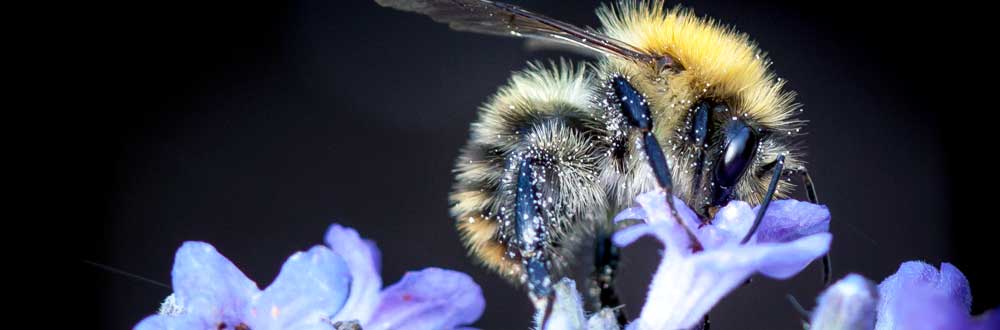
Photo by MattX27. Used under a Creative Commons license.
Books Mentioned in the Episode
| Midnight in the Garden of Good and Evil by John Berendt |
| Beloved Infidel by Sheilah Graham |
| Scots National Dictionary |
Music Used in the Episode
| Title | Artist | Album | Label |
|---|---|---|---|
| Love The Life You Live | Melvin Sparks | Akilah! | Prestige |
| Dove | Cymande | Cymande | Janus |
| Got To Be There | Ramsey Lewis | Upendo Ni Pamoja | CBS |
| Slippin Into Darkness | Ramsey Lewis | Upendo Ni Pamoja | CBS |
| Dove (con’t) | Cymande | Cymande | Janus |
| People Make The World Go Round | Ramsey Lewis | Upendo Ni Pamoja | CBS |
| All Wrapped Up | Melvin Sparks | Akilah! | Prestige |
| Volcano Vapes | Sure Fire Soul Ensemble | Out On The Coast | Colemine Records |

