


If there’s a logophile on your gift list, you have lots of choices, including a new trivia game for language-lovers and a murder mystery for the word-obsessed. Plus, if someone calls you a schmoozer, should you be flattered or insulted? And if you’re on a road trip, there’s one place you definitely don’t want to get stuck, and that’s out where God lost his galoshes! Also, go around the Wrekin, kibitz, chemin des écoliers, grob, gundeck, a gift-giving game, allegro vs. lento in linguistics, bread and skip, send to Coventry, why a car might be called a whip, and lots more.
This episode first aired December 13, 2025.
Transcript of “Potatoes and Point (episode #1671)”
You’re listening to A Way with Words, the show about language and how we use it.
I’m Grant Barrett.
And I’m Martha Barnette.
And today we have book recommendations and more for the word lovers on your gift list.
One book I want to recommend is a new murder mystery by British etymologist Susie Dent.
It’s called Guilty by Definition, and it takes place in Oxford, England.
And it involves a lexicographer named Martha, who’s working on a dictionary that sounds an awful lot like the Oxford English Dictionary.
Now, Susie Dent writes from experience because she’s worked there as a lexicographer herself, and she has lots of fun describing the lives of dictionary editors who go, as she puts it, truffling after old words, unwrapping new ones.
Now, as you might guess, Martha and her fellow dictionary editors soon find themselves doing a different kind of sleuthing, that is trying to unravel a murder mystery that’s gone unsolved for years.
Now, this book is an enjoyable romp, and it includes a lot of words that you might not have come across before, like the word conjable.
Do you know this word, Grant? Conjable?
Conjable. Does that mean work together towards a goal?
Well, it has to do with doing something together.
It was a verb that was used in the 17th and 18th century, meaning to eat, drink, and talk, or as Susie Dent puts it, to have a good natter with someone over a bite to eat.
A natter. That’s one of my favorite words for a conversation.
Well, join us for a natter. It’s toll-free.
Call or text 877-929-9673 or email words@waywordradio.org.
Or find lots more ways to reach us on our website at waywordradio.org.
Hello, you have A Way with Words.
Hi, this is Mona from Riverview, Florida.
Well, we’re glad to have you on the show. What’s up?
I would like to talk about the word schmooze or schmoozing or schmoozer.
So I’m Jewish and I come from New York originally.
And when I was growing up, my family used the word schmooze.
And the way that I interpreted it was you go to a party, you go to a gathering with people and you talk to them.
And it’s not like you’re trying to get anything.
You’re just like working the crowd.
And as an adult now, a much older adult, I love to schmooze.
I love to like walk into a crowd of people, especially if I know them, and just, you know, start talking.
So last summer, we vacationed up in Upper Michigan.
And I was at a gathering of women and this one particular friend who I think is very outgoing and gregarious and friendly.
I said to her, you’re such a schmoozer.
And she looked at me and she said, excuse me?
I said, you’re a schmoozer.
You’re like, you know, you’re always like friendly and talking.
And all of a sudden, everybody in this small group, like, stopped talking and looked at us.
And another person said, you know, you’re insulting her.
And I said, I’m not insulting her.
I’m telling her that I appreciate her friendliness.
And so this other woman got out her phone and Googled the meaning of schmooze or schmoozer.
And she came up with mine, but she also came up with some other meanings.
And it never occurred to me that it could have a negative connotation.
So I listened to your show.
I love the show.
And I thought, this is a great way to find out what people think.
Wow, what a dilemma.
You encountered one of the classic snafus, that a word has more than one meaning.
And you only knew about one of them.
Sounds like a real difficult situation, Mona.
Yes.
Well, the friend is still my friend.
Okay, good.
That’s good.
I do not call her a schmoozer, but I do have to say, other friends, especially Jewish friends, they’re like, yeah, we’re just schmoozing.
Come on, let’s schmooze.
It’s like, it’s not a big deal.
So maybe it’s a cultural thing.
It’s complicated because that word schmooze was borrowed from Yiddish, as you probably know, probably more than once.
And in the first original meaning, it did mean to chat or to gossip.
And so it really is just about having conversation, just shooting the breeze with people.
But this second sense, which shows up in English almost immediately, so we’re talking 1880s forward for both meanings, is coexistent.
This one where a schmoozer is somebody who wants something.
Maybe a politician is a schmoozer.
A salesperson is a schmoozer.
And it’s the schmoozer word in particular, the noun form of somebody who schmoozes that really has this dichotomy.
The verb’s a little safer.
You know, we’re just schmoozing means, you know, we’re just chattering or having a light conversation.
That one is a little less clear cut with the two meanings.
But that noun of a person who schmoozes, you know, a flatterer isn’t always a person you want to talk to.
So I definitely learned my lesson and I realized I have to be more cautious.
And you’re right.
You are right.
So thank you for that.
No, but you came to us with this perfect dilemma.
And I think we’ll be talking about this another time because it’s just a great explanation of words almost always have more than one meaning.
And it’s the context that matters.
But you were in a friendly environment talking about a schmoozer and the context wasn’t completely clear.
Yeah, well, you’re schmoozing with us.
Yeah.
And, Mona, the other word that I’m thinking of in this context is the word kibitz.
You know, we were just kibitzing.
Because that’s sometimes negative and sometimes not.
Exactly.
Yeah, it can mean to speak informally, just to chat, but it can also mean to look on and give unwanted advice.
You know, like you’re watching somebody playing a card game and you’re sticking your nose into their business.
But it has those two meanings as well.
That’s interesting to me as well, because I think of kibitzing as you’re just teasing or fooling with someone.
It’s not like it has no name.
It’s like you’re kibitzing.
You’re a kibitzer.
You’re a joker.
You’re a comedian.
You’re just having fun like kibitz.
Yeah.
So that’s interesting.
And I wonder if in my family, which, you know, they’re pretty much all gone, my parents and aunts and uncles, like what they would have said about it.
Yeah, that would be good to know.
Well, I know we have lots of listeners who have Yiddish speaking heritage somewhere in their line.
So I have no doubt, Simona, that we’ll hear from them about how they use these two words.
Perfect.
Great.
Thank you.
Thank you so much for sharing your story with us and you take care now.
Okay.
Thank you.
Bye-bye.
Bye.
We would love to have you call and schmooze with us, 877-929-9673.
Hello, you have A Way with Words.
Hi, this is Terry, and I’m from Fruit Cove, Florida.
Hi, Terry.
Welcome to the program.
What’s up?
So whenever I was younger, learning how to drive, I was very directionally challenged, and I would get lost very easily.
And so if we had an appointment to get to or we had an event to get to, I would eventually get there, but I was usually about 20 to 30 minutes late.
And my grandmother would ask, you know, what took you so long?
And I’d say, oh, well, I got lost and I had to go this way and then that way.
And she’d go, well, you got here.
You just went around your elbow to get to your thumb.
And I’ve always wondered where that came from, going around your elbow to get to your thumb.
Oh, it’s a good one.
It’s got some color to it, right?
Right.
So, Terry, are you the kind of person who is late even when she’s not lost?
You’re on Terry time?
No, no.
I’m usually on time.
And I’m better now because, of course, we all have phones and you can use your GPS on your phones to get there.
I have the directions now.
But no.
And if it was a place that I was familiar with, I was always on time.
It was just if we had to be someplace that I wasn’t familiar with.
And I would get lost every time.
Although my husband will tell you that I get lost going out of my driveway.
Oh, that’s just mean.
But going around your elbow to get to your thumb.
Yeah, it’s a great expression.
I mean, it’s a much more colorful way of saying, oh, you took a long, unnecessary detour, right?
Or you overly complicated a simple task.
That’s another thing that it’s applied to.
There are lots of different versions of this, like go around your elbow to get to your ear or go around your elbow to get to your nose.
And those are cleaned up versions of more earthy anatomical detours.
You know, you can talk about going around other body parts to get to your elbow.
And that’s been around for a while, but it’s just a great way of making fun of yourself or someone else, right?
Right.
Well, is it demographically a saying or is it just a saying that it’s pretty much anywhere?
It’s particularly common in the U.S. South.
So you being from Jacksonville kind of falls right in line with that.
And I’m not sure how long it’s been around, Grant, maybe.
No, not that long.
It’s 100 years or so.
But like Martha says, it’s not knowing your butt from your elbow is related.
Different word for butt.
And of course, we have a lot of ways to talk about taking the long way around.
One we’ve mentioned several times in the show is all the way around Robin Hood’s barn.
And in the UK, you might hear a goal around the Recon, which is this big hill in Shropshire, northwest of Birmingham in the UK.
Yeah, or just go around the houses.
Yeah, go around the houses.
You know what they say in French, though, Terry?
This is my favorite one.
They say that you took the schoolchildren’s path.
The chemin des écoliers.
So school children walking home will take the longest route, won’t they?
Because they don’t want to go home.
Well, they’re easily distracted.
That too.
Yeah, absolutely.
And in the Germans, they say you go from behind through the chest into the eye.
Whoa.
Oh, wow.
Wow.
Okay.
That one sounds anatomically impossible.
Yeah.
Well, that’s interesting, though, because my grandmother, she always had little sayings and everything, you know, but that was just one that always stuck with me.
And I said it one day to my children and they were like, what?
You know, so I’m like, OK.
That’s a parent goal is to befuddle the children.
When you’ve done that, the day is marked as successful.
Exactly.
If you think of any more of those, Terry, give us a call, OK?
I sure will.
And thank you so much.
Yeah, sure.
Take care.
Bye bye.
Take care.
Bye bye.
Danish and Swedish and Norwegian, they say something like, go over the stream for the water.
But we know that you’ve got your phone right there, so you can call us toll-free, 877-929-9673.
Is the texting number as well, or go to our website at waywordradio.org to find lots of ways to reach us and all of our old episodes.
One of the odd words that I picked up from Susie Dent’s murder mystery, Guilty by Definition, is the word grob, G-R-O-B. Any idea what grob means? It’s a verb.
Grob. I don’t know. I’m thinking about the dirty piles of snow in the winter. I took the grob out of my path as I walked to the station.
That’s good. I like that.
I don’t know. What is it? What is a grob?
Well, grob is a 17th century word that’s now obsolete, but originally it meant to search by a sense of feeling as with the hand in a dark place.
Oh, grobbing about. So notions of grabbing or gripping in there maybe.
Yeah, yeah. And you might grob about in your purse for your car keys or your pockets.
Oh, yeah. Grobbing about. Grub about. You know, you grub about looking for food in the forest floor.
Well, that’s, yeah, that’s true too.
You can find all of our past episodes and all of our social media handles on our website at waywordradio.org.
You’re listening to A Way with Words, the show about language and how we use it.
I’m Martha Barnette.
I’m Grant Barrett.
And marching in the door in his seven-league boots, it’s our quiz guy, John Chaneski.
Hi, John.
Hello, everybody.
Please make way.
I take large steps.
You know, right now I’m in the middle of buying presents for people.
And when I’m searching for a gift for a friend or family member, I really like to get them something that means something special to that person.
And of course, nothing is more special to someone than their own name.
Now, I’m not talking about monogrammed items.
I’m talking about getting an almanac for Al or some patchouli for Pat.
I’ll describe some items I found and you tell me to whom I should gift them.
What do you think?
Okay.
Yeah, I think I get this.
Giving is good.
Give.
All right, here we go.
My nephew fancies himself quite the pool shark, but his felt on the old thing he’s got is getting worn.
I should shell out some big bucks for a new one.
Straight to the hard ones.
Yeah.
So the felt on…
His billiard table?
Yes, my nephew Bill.
There we go.
Bill is going to get a billiard table.
I didn’t know if they called him Snooki.
Not when anybody else is around but yeah in private we call him snoopy is it too obvious that I just stopped by tim hortons on my way to my brother’s house and picked up a dozen glaze and a dozen boston cream is his last name joe no but his first name is don do you win oh that donut?
It works.
They’re twins.
Doug and Don are both twins.
So two spellings of donut get two names.
Very good.
Oh, Doug.
A dozen for Doug and a dozen for Don.
Sure.
Now, my auntie is a tea connoisseur and a Russophile to boot.
So I traveled to Moscow to get her an expensive teapot.
You got her a Samovar because her name is Sam.
My auntie Sam, my auntie Samantha.
We’ve got our samovar.
Now, my grandson isn’t doing all that supernatural stuff.
He’s the only one I got an experience for.
I rented a medium to contact him to the spirit world.
Wow.
Oh, his name is Sean.
It was a seance.
Yes, his name is Sean.
I got him a seance.
Maybe he went by Claire.
Yeah, Claire Foy.
There we go.
That’s pretty good.
My butler got a present from my butler.
He’s always late.
I don’t even know why I keep him around.
Maybe he’ll be more punctual when I’ve given him his Boxing Day gift.
His Boxing Day gift.
Your butler.
And a watch.
More general than a watch.
Is his name Tim?
Is it Time Piece?
Yes, I got Tim a Time Piece.
Hopefully he’ll show up.
I was thinking that he had a criminal past and you got him a scarf.
His name is Scarf.
Scarf Ace.
I know Scarf will keep him more punctual, but yeah, maybe, whatever, sure.
And then I have to have him wrap all the other presents.
So, you know, yeah, I want my butler to get here right away.
John, thanks so much.
Watch where you step with those seven-league boots.
Boom, boom, boom, boom.
Here I go.
Bye-bye.
Take care now.
Good night.
Well, we would love to have your presence on the show.
So you can always give us a call at 877-929-9673 or send us an email.
The address is words@waywordradio.org.
And no matter where you are in the world, you can find ways to reach us.
Just go to waywordradio.org/contact.
Hi there.
You have A Way with Words.
Hi, this is Peter.
I’m calling from the Catskill Mountains in Barryville, New York.
In my log cabin, the wood stove is blazing, and I have 53 acres of forest here, and I’m sitting here looking out at the deer.
Oh, that sounds lovely.
Well, what’s on your mind today, Peter?
Well, I joined the Navy when I was 17, back in 1967.
And I learned a whole new language.
And some of the words I could even talk about on radio.
But the one word was gundek, not the noun gundek, which is, I know, you know, from 18th and 19th century ships, but the word to gundek.
And to me, it meant that you were kind of glossing over things, that you were, if you had a report, you didn’t actually check out everything in the report.
You just kind of checked them off.
And that was gun decking.
So that’s the word I’m interested in.
And so, Peter, what did you do in the Navy?
Did you do something where you had to write a lot of reports?
No, I was a bosun mate.
And the way things work in the Navy is that you pick a particular occupation, something you want to do, and you strike for that.
And you have to take a test.
You take two tests.
One’s a written test to show that you know how these things work.
And there is called practical factors.
And you would have to demonstrate not tying and all sorts of other things.
So that was the report to fill out.
So you would have someone watch you do these things, allegedly, and then they would check it off and say that you know how to do it.
But sometimes people would just say, oh, yeah, you know how to do that, don’t you?
So that was gun decking.
So the other person isn’t being rigorous.
So maybe they’re just copying an old report or simply checking yes because they want to be done.
Or maybe it’s just too much work for the time allotted, so they’ve got to, you know, just shortcut it.
All of the above.
All of the above, yeah.
Yeah, this is a really interesting term. And as you mentioned, gun deck, of course, is a part of some older ships where the guns are. And there’s a couple different stories about why we might use gun deck as a verb, meaning to make up or falsify or fudge records or reports.
One of them is that there was a habit, of course, of taking soundings and measurements in order to navigate on deck, but then not doing the math until you got below.
And so there was a certain amount of relying on memory once you got below, approximating what your measurements were when you were on the deck.
And then there’s another one, which is the Gunduck apparently was a place where you could hide out and shirk your duties.
So we don’t know which of these is the true origin of Gunduck, but both of these stories make the rounds.
Even now, in the navies around the world, because it’s not just an American term.
It’s also used in Australia and the UK and elsewhere.
But there’s been a couple different people try to get to the bottom of it and nothing really conclusive was found.
But the fact remains that even now, gun decking is a thing.
And a lot of times it has to do with the people upstairs making really unreasonable demands on the time of the people downstairs.
So your CEOs want you to do all of these reports that there simply aren’t enough hours in the day.
Imagine that.
Yeah.
So you have to kind of just do a version of the last report without actually double checking everything.
There’s a story that makes the rounds about a guy who worked on a submarine.
And he was supposed to do these reports where he tests the equipment, but the whole submarine had to be shut down.
And this is what happened multiple times a day.
And he’s like, there’s no way I can have everyone not do their duties while I run this report for an hour several times a day.
So he would have to fake it.
He’d have to gun deck it.
That’s interesting.
I guess research will continue on this matter.
There’s one other term. Years ago on your show, someone inquired about the term boondocks.
Oh, yeah.
And in the Navy, there’s actually a term called boondockers.
And those are the shoes, at least they were when I went in, these kind of low-cut boots that you were issued to do work.
So there’s another term for the Navy.
Yeah, I knew that one. My father used that one.
He had spent a couple of years in the Army, and it was synonymous in our family with clodhoppers,
Kind of these sturdy farm boots that you might wear that would protect your feet if you dropped equipment.
Oh, okay.
Well, there you go.
Well, Peter, thank you so much for calling and sharing your memories of your service.
Take care of yourself out there.
Don’t get too rustic.
I’ve gone total rustic, man.
We may join you.
Good enough.
You’re most welcome to come.
All right.
Okay.
Bye-bye.
Thanks.
Bye.
877-929-9673 or send your stories about language to words@waywordradio.org.
Hello, you have A Way with Words.
Hello, this is Wanda Gruver from Omaha, Nebraska.
I was watching a movie with one of my favorites.
Can I say the actor’s name?
Please do, yeah.
Kether Sutherland.
Oh, yeah.
And I had my CC on because sometimes, you know, I needed to hear more clearly.
I’m 71 years old.
I don’t have a hearing problem per se, but I think my hearing is changing.
So I have caption on.
And when he was telling a co-star to come here, the caption showed C apostrophe M-E-R-E.
And I went, huh?
Because I’m looking at it.
And I thought, oh, actually, yeah, come here is what I really hear for the most part.
So that raised my curiosity, like, okay, I called my daughter and I mentioned it.
And she’s like, I said, I never really hear come here.
And she says, well, no, I hear come here all the time.
I said, oh, where?
She goes, when you say come here.
And she agreed that Khmer is what we actually say or hear.
And after that is when I called in to ask the question because I’m thinking, okay, that’s coming from something that means something, but what? I don’t know.
All right. You’ve zeroed in on something important here, which is what we write is kind of an illusion when we write our language out.
What we say is another thing, and these two languages kind of exist side by side.
And the written form is an approximation of what we say.
It’s an idealized form where we seek to be regular and perfect so that we understand each other,
Because if we wrote out what we say phonetically, a lot of what we say would look like come here,
C, apostrophe, M, E, R, E, instead of come here.
And, of course, linguists have words for this, as they always do.
The brief form, the Camere, C apostrophe M-E-R-E, is known as an allegro form.
So if you know music or have studied music, in music, allegro means lively or brisk.
So allegro forms are quick representations of the speech.
And then the articulated one, for example, as you were saying, like you might say to your child when they’re not listening, come here.
That is the lento form, L-E-N-T-O.
That means it’s slower.
We carefully enunciate, maybe even exaggerate our pronunciation just so we’re clearly understood.
So there’s more to it.
There always is.
Yeah, with language.
And the other thing that’s happened specifically with Come Here is in English, especially American English, we don’t always pronounce the H when it’s at the beginning of a word.
So, for example, if I want to tell you to give a woman a book, I would say give it to her.
And that H is gone.
Or give it to a man, I would say give it to him.
And the H is gone.
It’s the same thing.
So what happens is those two words come in here, they allied.
And although it’s far more common in a language like French, you will find it in English.
So come here becomes one sound.
Come here.
Is it language-based?
Like, is there a cultural place where this happens or is it, what drives this?
It’s universal.
Every language I’ve ever studied or know anything about does some form of this.
All of them.
Because it’s absolutely, it’s universal.
People just, they speak quickly.
They move, flow through language.
There even are whole arguments, books, even classes taught about whether or not words exist.
And where if they do, we’re going to divide them because the word divisions are somewhat artificial.
I sent something to Martha just this week showing ancient Greek where they did not put spaces between what we would call words because it all really does truly flow when we speak.
So it is a valid interest as a point.
Yeah, absolutely. 100%.
Yeah, for sure.
And Wanda, I just want to give you my blessing for using captions.
I do that all the time.
And I recently read an article that said that something like 60% of Gen Z viewers also use captions.
I think it’s the way of the future.
You guys are amazing.
And I think this is really important because, you know, language is the key to understanding in my mind.
That’s right.
That’s right.
You take care now.
Great talking with you.
Thank you guys so much.
Bye-bye.
Okay, bye.
Bye-bye.
Well, Grant, I think you would agree that there are no silly questions when it comes to language.
There aren’t indeed, and there’s a place you can get them answered.
There sure is. 877-929-9673.
Hello, you have A Way with Words.
Hello, this is Sarah Jane Litcher from Tucson, Arizona, and I am so excited to be on your wonderful show that I enjoy so much.
Sarah Jane, welcome to the show. We are so excited to have you as well. What’s on your mind?
Well, when I was a child, and I’m 83 now, so that was a while back, instead of saying when somebody got stuck out in the snow or the mud out in the boonies, which is what I used to say, my mother would say that they got lost or stuck out where God lost his galoshes.
And I’ve always wondered where that phrase came from, and I’m hoping you can help me. Where God lost his galoshes, and so you knew this was the back of beyond in the middle of nowhere.
Absolutely. Yep. That’s great. Yeah.
Or we would say, how long is it going to take till we get to the cottage? I don’t know. It’s out where God lost his galoshes somewhere. It’ll be a while.
I’m just imagining God in some brightly colored galoshes, colored with like birds and fish or something, splashing in puddles with his rainbow umbrella or whatever.
Anyways, I think it’s a very cute turn of phrase. And my mother used to say it, and she probably got it from her granddaddy whose family came from England originally.
Okay, yeah. Well, yeah, I completely agree, Sarah Jane. I mean, I love the word galoshes. It’s something to me that sounds like what it is.
You know, I think of those sort of thin gray things that you would put over your shoes, you know, rubbery and flapping and galoshes. I just love that word, first of all.
So thank you for sharing that expression. But yeah, the term where God lost his galoshes, as Grant suggested, means a place that’s very remote, just extremely far away.
And there are so many wonderful variations of this expression, these comical variations and elaborations, all of which have to do with biblical figures who somehow lost something in this faraway place.
So where God lost his galoshes is a great example. I’ve also seen where God left his overshoes. And people say things like, out where Jesus lost his sandals or where Moses left his sandals.
And then you start going around the world and seeing all these other great expressions. There’s one in Brazil that translates as where Judas lost his boots.
And also in Spain, they’re really creative. They talk about where Jesus lost his cap or where Jesus lost his sandals, where he lost his underwear.
And one of my favorites is donde Cristo perdió el mechero, which means where Christ lost his lighter.
Oh, yes. You know, I mean, it’s just, you know. Because you’re always losing a lighter if you’re the kind of person who needs a lighter.
Yeah, I’m just picturing him looking around, you know, a cigarette in one hand. I don’t know what this is about Spanish speakers, but they really went to town on these far away expressions.
My favorite Spanish one is donde da la vuelta el aire, which means where the air turns, suggesting that there’s no other place to go. So it has to turn around and come back the same way.
Right. Unless you have to run up against the wall at the end of the world.
Yeah. So there are lots of different versions of this one, but I do love where God lost his galoshes. It’s just such a… I hope he finds them.
They’re at the lost and found down at the middle school. The heavenly lost and found.
Well, galoshes, to me, are a little bit onomatopoetic.
Exactly. You can almost feel them squish.
Yeah, it’s like scallop and splash together.
Yep. Well, anyway, thank you so much for having me on. I’m just delighted. And my family, who are a whole bunch of word freaks, are going to have a wonderful time listening.
Well, it sounds like a source of good calls. Have them call us sometime.
Okay, thank you. And you take care now, Sarah Jane.
All righty. Bye-bye.
Bye-bye.
No matter where you live, if you live where the wind turns back around or someplace else, there are lots of ways to reach us.
You can go to our website, waywordradio.org, slash contact, and find them all.
Stay tuned for more from A Way with Words.
You’re listening to A Way with Words, the show about language and how we use it.
I’m Martha Barnette.
And I’m Grant Barrett.
And, Martha, I’ve got a question for you. This is a trivia question. Which is not an expression or instruction found on sheet music?
Is it furioso, larghetto, con brio, or al dente?
Well, I know a lot of musicians will appreciate al dente after they perform because that has to do with food rather than music.
Yeah, it means to the teeth. It’s a way of cooking pasta just right.
Let me ask you another one.
Okay.
Which of the following is real? Aerodynamic lug nuts, hammer grease, brick benders, or bush hammers?
Gosh, I have no idea. I’m going to guess brick benders.
I have no idea. Three of those are things that you send the newbie at the job site for. Send them on a fool’s errand.
And the one that is real is bush hammers, which are a masonry tool for texturizing stone and concrete.
And both of these questions come from a board game called The League of the Lexicon.
And the premise is asking questions about language of people who know a lot about language.
The makers, Two Brothers Games, have packed the box with thousands of questions.
And they’re written in part by people with real experience who spend their lives poking at language.
So lexicographers and linguists with a real expertise have contributed.
And so you might have a card that asks for the origin of a familiar phrase.
Another card might present you with a strange definition or an archaic word and have you puzzle it out.
Or the card might test your usage or spelling.
And so you get etymology, meanings, oddities, and general word lore.
And so this very attractive game is filled with oversized cards, 2,000 cards in the base set.
And there are three expansion packs.
And these expansion packs include slang, global language, and then a junior edition.
There is a game with a structure and rules and stuff and dice and the whole thing where you build card sets.
But in my house, we love to ransack games for their trivia.
And so we just yank the cards out of the box and ask them each other.
Because my wife, who is an editor, linguist, and lexicographer, and I are really competitive with this sort of thing.
So the other thing that was in the box of this review copy I was sent is a book based on the League of the Lexicon board game.
This book by Joshua Blackburn is called The Language Lover’s Lexipedia, an A to Z of Linguistic Curiosities.
And like the game, it’s got tons of facts and trivia and information like limericks and long words, the history of the alphabet letters, strange punctuation, just tons of things.
That book is The Language Lover’s Lexipedia by Joshua Blackburn, and the game is The League of the Lexicon.
So if you like A Way with Words, you’ll probably love this game.
It’s for those who get a kick out of the odd corners of language, Martha.
Well, that would be us.
We’ll have more information about the game and the book on our website, waywordradio.org.
And in the meantime, you can always call us, 877-929-9673.
Hello, you have A Way with Words.
Hello, this is Gary. I’m calling from Felton, Delaware.
I’ve heard you talk about different things, experiences, and this is one that I had with my grandmother years ago when I was a young parent growing up.
And I was just kind of telling her, you know, it’s so difficult feeding the family and all this other kind of stuff.
And she came up with a story that she told me that her family did.
And she says sometimes at dinnertime, they would sit down around the table, and they’d always all be seated at the table, and one of them would say, pass the potatoes.
And then they’d point, and they’d say, and the turkey.
And of course, there was no turkey.
And then the next person passed the potatoes, and they would point and say, the roast beef.
And they would pass the potatoes, and of course, there was no roast beef.
But the meal became Potatoes and Point because all they had, all they could afford to buy was potatoes.
And that was a meal that they gave a name to, Potatoes and Point, for the dinner tonight.
That is a great version of that story because this story, believe it or not, Gary, some version of this has been going around since the 1790s.
Oh, okay. I didn’t hear that.
Is your family of Irish heritage, perhaps?
Well, her maiden name is Riley.
And yeah, they came over on the boat.
Her parents did.
Now, they came over in the 1800s.
I mean, my grandmother’s long been past.
So, yeah.
Yeah.
It’s called Potatoes and Point.
And it’s existed particularly in Irish storytelling.
Maybe sometimes, the way I should phrase this is there’s been an argument for a couple hundred years about whether or not this was just a joke or people actually did it.
And it is literally versions of what you’re talking about.
You have a make-believe meal.
So you only have potatoes to eat, and you either mention things that don’t exist, or you have the things, but they’re saved.
So, like, you might touch your potato to the cheese, but not eat the cheese.
Or wave your potato at the salt cellar, but not have salt.
And variations include bread and point, or bread and pull it, or bread and think.
And bread and skip.
All of these are about having only the first thing mentioned and not the second, if the second is.
So all of the different things.
Okay, that’s great.
It’s tangled here politically and historically as well with the culture of Ireland being under the thumb of the English.
So almost all of the earliest mentions for a very long time have some form of political content to them.
They’re about the hungry people of Ireland.
And, of course, the famine happened by the 1840s.
But even prior to that, in the decades before that, the earliest use that I know in an Irish newspaper,
An Irish newspaper that was actually shut down later by the British for being too partisan,
The Northern Star in Belfast, the quote is,
Behold, two-thirds of you countrymen, miserable, oppressed, and naked, literally feeding on potatoes and point.
P-O-I-N-T, point.
Wow. Gary, did you have any idea that this was any more widespread than your family?
No, I had no idea. I didn’t have a clue. This is a story she simply told me.
And I actually told my sister about it. And she says, I never heard that story.
It was just me talking to her, I guess.
There are other theories about what that point is doing there, but most sources and authorities agree that it is literally about pointing your food or pointing at a thing that you can’t have or won’t have.
Can’t have.
Okay, great.
Sometimes it’s literally, like you said, pointing at the air and the thing doesn’t even exist.
That’s how she explained it to me, yeah.
Well, great.
I’m glad to hear about that.
It’s a real thing.
It is indeed.
Well, Gary, thanks so much for calling.
Okay.
Well, thank you for taking my call.
All right.
Take care now.
Bye-bye.
Bye-bye.
Well, those conversations around the family dinner table often lead to interesting discussions about language,
And we’d love for you to bring yours to us, 877-929-9673.
Hello.
You have A Way with Words.
Hi.
This is Amy.
I am calling from Bozeman, Montana.
Bozeman, Montana.
Welcome to the show.
Happy to have you, Amy.
What’s up?
Thank you.
Well, I had a question about a word that was used with some frequency in my family growing up,
And I’ve never heard anyone else use this word or in this context.
There are five daughters in our family, so it was a pretty rowdy family, especially on a road trip.
And that’s when this word would mostly come up.
When we were making noise in the back seat,
One of my parents would say,
Coventry, which meant stop talking, be quiet.
And of course, then it would initiate poking and elbows and whatever.
And then the addition would be, and fold your hands.
Yeah.
So that was always the thing, Coventry and fold your hands.
And I don’t know anybody who’s ever used that word.
I don’t even know if it is really a word.
I had to say country or, you know, a city.
So, Amy, just to recap here, your parents apparently were saints because they had five girls?
Yes.
Okay.
And when you were allowed, they would say Coventry, like the city in England?
Exactly.
And we all knew what it meant.
I mean, we knew it meant to be quiet.
C-O-V-E-N-T-R-Y.
That’s how I would spell it, but it was never spelled.
-huh. How interesting.
Amy, I have to ask if, besides being saints, were your parents history buffs
Or have a special fascination with the history of Britain?
No. They were both scientists, actually.
Interesting. And what was their origin, their ethnic origin?
Actually, both of them were half Irish, half French.
-huh. Boy, that’s really interesting.
Were they like recently Irish or distantly Irish?
No, not. Yeah. Even their parents were not immigrants.
So, although could have been French Canadian immigrants.
I see where you’re going with this, Martha, but we’re not hitting gold here.
Yeah, we’re not hitting gold.
But we can tell you that there is an expression to send to Coventry.
And that means either to ignore or to ostracize.
And Coventry, as Grant suggested, it’s a city in central England.
And one possible explanation for this expression, send to Coventry, meaning to ostracize, has to do with the English Civil War in the 17th century.
Coventry was the place where captured royalist soldiers were sent to be held as prisoners.
And then by the 18th century, to send to Coventry was thought of as this kind of informal punishment among army officers.
So if an officer behaved badly, but not badly enough for a court-martial, his fellow officers would be told to socially isolate him.
And nobody was allowed to talk to him unless they were talking about official duties or they risked the same punishment.
And later, if the offender made amends or endured his punishment, then the group would welcome him back.
And they would joke that he had just returned from a trip to Coventry, you know, like those prisoners in the English Civil War.
So that may have to do with the idea of silencing kids by saying Coventry, you know, you’re going to be in big trouble.
That makes sense to me.
Does it?
Not far.
It certainly was a form of punishment of sorts, although we didn’t particularly take it that way.
We, you know, would laugh and, you know, behave to the extent.
And keep poking, even though you were folding your hands.
And poking with elbows instead of fingers, yeah.
Right.
Well, I have three sisters.
I’m imagining worse than that.
I’m imagining headlocks and biting, the whole thing.
No geese.
No geese, yeah.
But there’s that whole thing how family language develops.
And often family language comes from the slimmest of circumstances, the most unusual of moments.
And sometimes it’s just a tale that you’ve been told that immediately catches your fancy.
You know, it could have just come to them from a colleague or just one never knows unless you talk to them.
I know. And I can’t do that anymore, which is sad.
Oh, yeah. Yeah. But you have those memories.
We do. And we still use, you know, the sisters will still joke about that. So I don’t know if
Any of my sisters who do have kids use it on their kids, but. Well, Coventry is not what we want from
You, Amy. We’re so happy that you shared your memories and your story with us. Thank you.
Thank you for sharing with us. Really appreciate it. Thank you. I enjoy your program and appreciate
You. Take care of yourself. Appreciate your answer to my question. All right. Yeah. Bye-bye. Bye-bye.
Bye-bye. Well, obviously we have to throw this out to everyone who’s listening. If you use Coventry
Or know of it being used in that way to silence or quiet children or loud people,
Let us know.
The toll-free number is 877-929-9673.
It’s always on.
You can text it or call it.
And if that’s not enough, there are a dozen ways to reach us on our website at waywordradio.org.
Hi there. You have A Way with Words.
Hi. My name is Mariah Morris, and I’m calling from Kingsland, Georgia.
Hi, Mariah.
Kingsland, Georgia.
Yay. I’m so excited to be talking to you.
Yay.
Thank you.
Back at you.
What’s up?
So I was talking with my son about your program because I listen to it always and kind of explaining to him how cool it is that you guys dive deep into the meaning of words and where they come from.
And I was explaining to him that in one of the songs that we listen to by Big Sean, he calls the car a whip.
And I was like, so, you know, if you wanted to know why do we call a car a whip, then you could call them and ask them.
And he said, so why do we call a car a whip?
And I was like, oh, I don’t know.
I’ll have to call them and ask them.
So that’s what I did.
Yeah, can you believe that that slang term is like 30 years old or so now?
It’s calling a car a whip.
It feels like I just learned that, but it’s been decades.
It shows up in the lyrics of Heavy D and the Boyds from the 1980s.
I got a whip so people look when I cruise up the block.
Oh, my.
Yeah, so it’s got legs on it.
It’s got a history when it feels so fresh to me.
It shows you what I know.
Well, you know, when you have kids in the house, you learn terms that you know what they mean, but you have no idea where they came from, and you just pray that it’s not something horrible.
Yeah.
You sure do.
Yeah, I think the term really kind of caught the national attention.
There was a short-lived, long expression called Ghost Ride the Whip that appeared in the mid-2000s from the Bay Area.
And this is a stunt where you put your car kind of in idle or neutral or first gear and you open the doors and you play music and you get out of your car while the car is still rolling and you dance and make moves and do all kinds of crazy stuff.
That’s called ghostwriting the whip.
And the whip is the car.
And there’s two stories that compete about why a car is called whip.
And they could both be wrong.
But one of them is that since a whip was the tool used when we used horses for locomotion, you might use a whip to encourage the horse to go faster.
The steering wheel is kind of the equivalent or the parallel item on an automobile.
And I don’t know if I’d buy that, but maybe because it’s not really, you know, the steering wheel is not really, it’s the motor.
But the other thing, Mercedes-Benz logo was said to resemble a whip.
I don’t think it does to me.
But Mercedes-Benz being an idealized form of a car, you know, something.
And if you had a Mercedes, you were doing pretty well.
It’s a nice automobile.
It’s got a fishy smell to it.
I don’t know if I buy that one.
The logo doesn’t look like a whip to me.
But either one of those stories, take them or leave them.
But we do know that there have been so many terms about automobiles since the automobile became important to American culture.
So I’m not surprised that each generation comes up with their own, except my son’s generation, because they don’t drive.
They just depend on other people.
Everything is an Uber now.
Yeah, exactly.
So, yeah, we spent years telling him not to get in the car with strangers, and now we tell him to go on the Internet and call up a stranger to come pick him up, right?
Right, exactly.
Or to be that stranger.
Right. No kidding. Yes. Always got that side hustle going.
So, well, I appreciate that. And I do remember it being popular, you know, in other songs.
But I just wasn’t sure if there was some kind of background story that we had missed.
But it definitely makes sense if you’re whipping around the corner is what I always kind of thought.
See, that makes a lot more sense to me that a car goes whip fast.
We use a whip as a metaphor for speed. And that makes a lot more sense to me.
I appreciate the help with that, and I look forward to listening to you guys on the air.
Yeah, thanks, Mariah.
Take care.
Drive carefully.
All right.
Thank you.
I appreciate it.
Bye.
Bye-bye.
Bye.
Well, whip out your phone and call us, 877-929-9673.
You can also send a text or an email, words@waywordradio.org.
A Way with Words senior producer is Stefanie Levine.
Tim Felten is our engineer and editor, and John Chaneski is our quiz master.
Go to waywordradio.org for all of our past episodes, podcast links, and ways to reach us.
If you have a language, thought, or question, the toll-free line is always open in the U.S. and Canada, 1-877-929-9673.
A Wayword Words is an independent nonprofit production of Wayword, Inc.
It’s supported by listeners and organizations who are changing the way the world talks about language.
Although we’re not a part of NPR, we thank NPR stations throughout the United States that carry the show.
And special thanks to our nonprofits volunteer board.
Michael Breslauer, Josh Eckels, Clare Grotting, Merrill Perlman, Bruce Rogow, Rick Seidenwurm, and Betty Willis.
Thanks for listening. I’m Grant Barrett.
And I’m Martha Barnette. Until next time, goodbye.
So long.
Thank you.
Conjobble the Potboiler
 Susie Dent’s murder mystery Guilty by Definition (Bookshop|Amazon) follows a lexicographer in Oxford who becomes a sleuth of a different kind, seeking the culprit in a long-unsolved killing. A lexicographer herself, Dent includes lots of obscure and obsolete words, such as conjobble, a verb that in the 17th century meant “to eat, drink, and talk.”
Is Schmoozer Derogatory?
Mona from Riverview, Florida, grew up understanding that the word schmooze, which comes from Yiddish, meant simply “to mingle and chat” at parties, but when she fondly referred to her friend as a schmoozer, the friend was insulted, assuming that a schmoozer was a smarmy flatterer. Schmooze has more than one meaning, much like the word kibitz, also derived from Yiddish, which can mean either “to offer unwanted advice, but also simply “to chat.”
Go Around Your Elbow To Get To Your…
A listener remembers her grandmother’s colorful comment when someone arrived late after getting lost: You went around your elbow to get to your thumb. Lots of similar sayings in English suggest roundabout routes or overcomplicated tasks, including going around your elbow to reach your nose or ear, and other body parts, and going all the way around Robin Hood’s barn. In the UK, you may hear the same idea expressed with going around the Wrekin, a large hill in Shropshire, or going around the houses. The French convey a similar idea with chemin des écoliers, or “the schoolchildren’s path.” A German expression translates as “go from behind through the chest into the eye,” and a similar phrase among Swedes, Danes, and Norwegians roughly translates as “go over a stream for water.”
Grobbing for Groats
Susie Dent’s murder mystery Guilty by Definition (Bookshop|Amazon) includes the word grob, an obsolete word meaning to search in the dark earch by the sense of touch, as when feeling around in one’s pocket for change. (A groat is a medieval British silver coin worth four pence.)
A Barn for Barnette, a Bar for Barrett, and Quiz for You
Quiz Guy John Chaneski is buying super-personalized presents for his friends and family, all based on each recipient’s first name. For example, John purchased an almanac for Al and some patchouli for his friend Pat. Your job is to guess what gifts he has in mind for the rest of the people on his list. For example, what person and gift fit the following observation? “My nephew fancies himself quite the pool shark, but the felt on the old thing he’s got is getting worn. I should shell out some big bucks for a new one.”
Gundecking, the Fabricating of Data and Paperwork
A Navy vet recalls learning the slang term gundeck, meaning “to sign off on checks or reports without fully completing them.” A possible origin involves a ship’s gun deck, either as a place where sailors hid to avoid duties or where navigational math was done later from memory instead of on the spot. Gundecking refers to rushed or fabricated paperwork when one’s workload exceeds the time available.
Allegro and Lento Forms of Language
C’mere—the quick, reduced version of Come here—is an example of what linguists call an allegro form, a sped-up, casual pronunciation or spelling created through phonetic reduction. The lento form, in contrast, is the longer version. In musical notation, allegro refers to “fast” and lento refers to “slow.”
Out Where God Lost His Galoshes
Sarah Jane in Tucson, Arizona, recalls hearing the phrase out where God lost his galoshes for any far-flung, hard-to-reach place. Similar phrases include where God left his overshoes, where Jesus lost his sandals, where Jesus lost his cap, where Moses left his sandals. Brazilians use a similar phrase that translates as “where Judas lost his boots.” Spaniards have a host of similar expressions, including donde Cristo perdió el mechero, or “where Christ lost his lighter,” and the picturesque phrase donde da la vuelta el aire, “where the air turns around.”
The League of the Lexicon: You’re a Member Whether You Know It or Not
League of the Lexicon is a wide-ranging trivia game for language lovers with thousands of questions on all matters linguistic. Creator Joshua Blackburn has also compiled a treasure trove of linguistic delights in a companion volume called The Language-Lover’s Lexipedia (Bookshop|Amazon).
Origin of Potatoes and Point, When You Fail to Afford the Food So You Fantasize the Flavor
The phrase potatoes and point involves a family tradition from times of scarcity when eaters would point to an imaginary food and ask for it to be passed when there was clearly no such food to be had. Irish sources trace potatoes and point to the late 18th and 19th centuries. Related forms include bread and point, bread and think, or bread and skip, all referring to meals where imagination supplied what was lacking on the plate.
Send to Coventry
The British expression send to Coventry means “to ostracize,” and likely derives from the time of the English Civil War, when the town of Coventry served as a holding site for captured Royalist soldiers. By the 18th century, the phrase also came to apply to informal military punishment in which an officer’s peers would be ordered to ignore him for a prescribed time.
Why is a Car Called a “Whip”?
Maria from Kingsland, Georgia, asks why a car is sometimes called a whip. The origin of this slang term isn’t clear, although it may have arisen from the notion of a steering wheel as a successor to the horse-driver’s whip or refer to a vehicle whipping around a corner at high speed.
This episode is hosted by Martha Barnette and Grant Barrett, and produced by Stefanie Levine.
Books Mentioned in the Episode
| Guilty by Definition by Susie Dent (Bookshop|Amazon) |
| The Language-Lover’s Lexipedia by Joshua Blackburn (Bookshop|Amazon) |
Music Used in the Episode
| Title | Artist | Album | Label |
|---|---|---|---|
| Out In The Country | The Meters | Fire On The Bayou | Reprise Records |
| I Can Dig It | Booker T and The MGs | Doin’ Our Thing | Stax |
| Expressway (To Your Heart) | Booker T and The MGs | Doin’ Our Thing | Stax |
| The Other Side | Sure Fire Soul Ensemble | Step Down | Colemine Records |
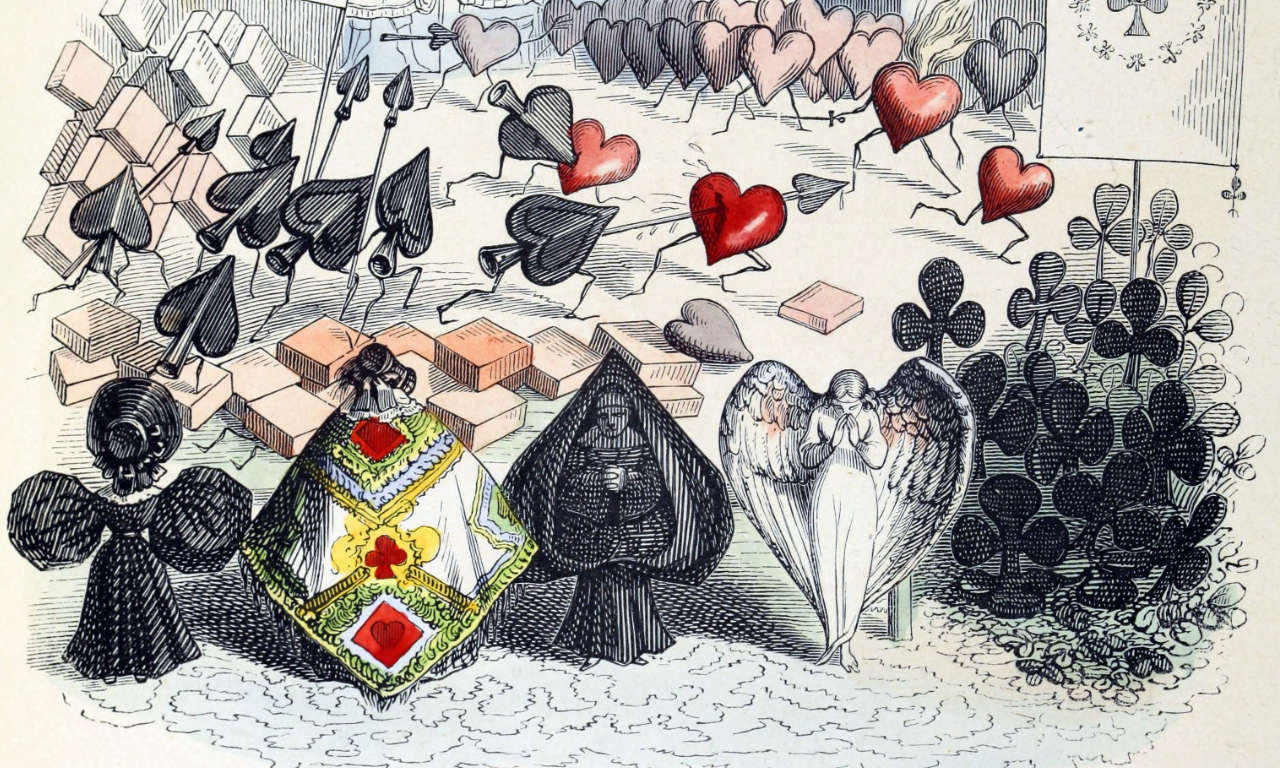

“going around …” My mother, a northern New Englander (gone these five years now, at age 96), often talked about “traipsing all over God’s kitchen.” I use this phrase often myself.