

Who was that masked man? Was it the Barefoot Bandit, the Mummy Bandit, or perhaps the Botox Bandit? Or maybe it was the Bad-Breath Bandit? The hosts discuss the wacky names that law enforcement officers give to suspects. Also, what’s a pickle button? Why do we say “be there or be square”? And what does the word seditty mean in the African-American community? This episode first aired May 8, 2010.
Transcript of “Hit the Pickle Button”
Support for A Way with Words comes from National University, where flexible online classes let you earn your degree or credential on your schedule.
Learn more at nu.edu.
You’re listening to A Way with Words. I’m Martha Barnette.
And I’m Grant Barrett. A story in the San Diego Union-Tribune caught my eye. It was about the Ho-Hum Bandit. Did you see that, Martha?
Ho-Hum Bandit.
The ho-hum bandit.
The FBI called him that because his demeanor is considered plain and unassuming.
They don’t know his name, so of course they need a shorthand, right?
Something memorable?
The feds in particular are partial to putting bandit in there somewhere.
They come up with a lot of other names for these guys and these gals.
Most of the names have something to do with appearance or behavior.
But, you know, some of these guys get off a lot easier than others.
Yeah.
You want to hear some of these?
Sure.
Yeah, now this is the police and the feds who come up with this rather than the media.
Right.
It’s not the media usually.
It’s the feds, the police.
Because, look, they’ve got this guy.
They probably have him on film.
He’s been robbing a bank, right?
They have a face but no name.
So they need some way, some shorthand to identify this guy.
And that way when they talk to the press, they say, yeah, we’ve caught the ho-hum bandit.
Right?
Okay.
So one thing that really interested me when I got to digging in this was that there are a lot of these guys and gals that go by the same name.
There are a lot of Botox bandits, for example.
A lot of women, yeah, who’ve gotten some kind of cosmetic surgery and then skedaddled.
They refused to pay.
They got it under an assumed name or they faked the credit report or whatever it was.
One of the weirdest ones that I heard, just because it doesn’t even roll off the tongue or even sound that memorable, was the average at best bandit.
What?
Yeah, how disappointed that guy must be, right?
C plus.
That’s no good.
And then there’s a guy in Michigan, they called him the Bad Breath Bandit.
That was his distinctive characteristic, right?
Look, if you’re robbing banks, take a mint.
Something else, right?
And there’s tons of ordinary ones like Barefoot Bandit and Fedora Bandit and the Mummy Bandit.
This guy went in all bandaged up.
I mean, it’s one way to hide your face.
Well, that explains the Fedora Bandit too, right?
He wears this big hat so there’s a shadow over his face and it’s harder to make out who he is on the cameras.
Anyway, this stuff is really fun.
Notice, though, that none of these guys are called genius.
Right.
Stupid crook tricks.
Stupid crook names.
Have you heard a good one along these lines lately?
Let us know and call us if you’d like to talk about anything related to words and language.
That number again is 877-W-A-Y-W-O-R-D, or send all your emails to words@waywordradio.org.
Hello, you have A Way with Words.
Hi, this is Lorraine. I’m calling from Benita, California.
Hello, Lorraine. Welcome.
Hi, Lorraine.
Hi, thank you.
I had a question in regard to the phrase, be there or be square.
It came up during a yoga class that my friends and I were at.
And everyone said, I wonder what the derivation of that phrase might be.
Very interesting. You hear it a lot then, do you?
Yes, I do.
I’m picturing you going from a downward dog to what’s that pose where you look kind of square?
Upward dog, downward dog, and we’ve got all the dogs.
Square dog, right?
Okay, so you’re talking about this in yoga class.
It came up because someone said, oh, we need to come to a specific class next week.
And it was mentioned, be there or be square.
Okay.
But this is something you’ve heard your whole life.
Oh, I’ve heard my whole life, but I never stopped to really analyze it.
My thought might be it dates back to the hippie beatnik time when square seemed to be a phrase that was used a lot, but that’s just a guess on my part.
But you are the expert, so I figured you would have the answer.
Oh, right. I forgot. We’re the experts.
Oh, wait. When are they arriving?
Yeah, but you could use square like that or you could even do it wordlessly, right?
Yeah, just make a square with your fingers, right?
Exactly. Yeah, true.
I’ll tell you, Lorraine, I might have something new for you.
And when I say new, I mean this is something that nobody’s written about before, ever.
Okay, I’m listening.
Did you ever live in Los Angeles?
No, only San Diego.
Okay, only San Diego.
Okay.
There was a fellow by the name of Art LeBeau.
And for all I know, Art LeBeau is still around.
It’s L-A-B-O-E, Art LeBeau.
Okay.
And there’s an article from 1975 that talks about this guy.
Apparently, he used to throw these huge disco-style dances at a place called the El Monte Legion Stadium.
This is in the late 1950s and the early 1960s.
Okay.
And so Art would just plaster all of Los Angeles with these radio ads to get the kids to come out to dance at his dances.
I mean, this story talks about thousands of people showing up at a place that was only supposed to hold, like, 1,500.
And then thousands more being lined up around the street to try to get in.
He just knew how to sell his show, and he had all the greatest music.
I see.
Just good stuff.
So this is the El Monte Legion Stadium.
The place has long since gone.
In these radio ads that he broadcast all around Los Angeles, he had this standard pat phrase that was so common that people used to kind of recite this.
You know how it is when you see a television ad repeatedly?
You start saying it.
There’s an app for that or whatever it is, right?
You start saying their catchphrase.
Well, let me read you what his radio ads used to say.
I don’t know what they sounded like, but I’m going to pretend, all right?
All right.
El Monte Legion Stadium, Saturday night.
El Monte Legion Stadium, Saturday night.
You’ll see ex-girlfriends and ex-boyfriends and meet and make new friends.
El Monte Legion Stadium, Saturday night.
Be there or be square.
No capris or jeans, please.
Very good.
What was the last thing?
No capris or jeans?
Yeah.
No capris or jeans, please.
You know, you’ve got to have some standards.
And so he would just plaster the airwaves in Los Angeles.
And so fast forward a little bit.
And so before you know it, this is kind of a catchphrase.
And I’m not saying that he coined it.
All I’m saying is that he popularized it.
And it was so popular that this phrase shows up first in the other newspapers in the 1970s.
And you find it in a stereo ad in 1973.
And you find it in just a variety of places.
And before you know it, everyone was using it.
Very good.
Who knew?
So interesting.
Thank you.
That’s great, Grant.
You know, I actually thought for sure that it would be older than that.
But I’ve got to tell you, I haven’t found anything from the 1940s or anything earlier than this guy.
I haven’t found anything earlier at all than him where this phrase was used.
Okay, well, that’s good.
I thought it might go to the beatniks and, I don’t know, the coffee houses.
I’m from New York originally, and I remember when I was younger, there was a lot of the poetry reading and the hippie beatnik kind of thing.
And the phrase square came up, I think, during that era, and I thought it might have been originated there.
But I appreciate the information.
Hey, my pleasure.
Thank you.
Okay.
Take care.
Bye-bye.
Bye-bye.
Bye.
How about that, Martha?
Way to go, Grant.
That’s awesome.
No capris or jeans, please.
You know, they still do that on the hip-hop stations, right?
They’ll talk about a big show, and then at the end they’ll say, no sneakers, please.
Oh, really?
I didn’t know that.
Oh, well.
You know, you have to maintain a level of dress at these events, right?
I guess I’m square.
You’re very square.
What’s your favorite catchphrase?
Do you want to find out a little more about it?
Give us a call, 1-877-929-9673, or send an email to words@waywordradio.org.
Hello, you have A Way with Words.
Hi, my name is Robin.
I’m calling from Dallas, Texas.
Hi, Robin. Welcome.
Hi, Robin.
Hey, I had a question.
I know you all are real good with words.
And I’ve had a word on my mind lately.
I was working from the south side of Chicago and basically African-American community.
And we had a word that we say, especially talking about women or girls when we were dating.
If a girl didn’t like you, you say, well, she’s sadiddy.
You know, stuck up, she didn’t like you, she’s got attitudes, blah, blah, blah.
I wonder, first, if there is such a word as sadiddy.
And if so, how would you spell it?
I don’t have a clue.
Somebody asked me once, I even heard a preacher say it in one of the sermons.
He’s talking about some of you people, Axel, sadiddy.
And it came back.
I mean, I haven’t heard it in years.
I’ve been in Dallas 30 years almost.
I haven’t heard the word used a lot down here, but I don’t even know where it would come from.
It would be French or what?
Sididi.
Sididi.
And I imagine, I guess it’s spelled with S or C.
I don’t know.
But I understand the meaning.
Like nowadays, the word they say is bougie.
You’re real bougie.
You’ve got an attitude that you’re better and that kind of stuff.
We would say it about girls.
A lot of guys would say that about the girls.
They were sididi.
They didn’t want to talk to us, look down your nose at them, and they knew what it meant.
Wow.
Oh, yeah.
Yes, indeed.
As a matter of fact, this is a classic piece of black American vernacular English.
This is one of those words that has never migrated into any other dialect of English, and a lot has been written about this, too.
Clarence Majors has written about it.
Deneva Smitherman has written about it.
Well, at least they’ve included it.
It’s kind of a marker for how well you are integrated into the black community that you even know the word.
It’s one of those words that if you’re kind of like on the fringe of different kinds of communities or different kinds of groups or ethnic behaviors, you may not know it.
Say if you come from, say, black Latin communities, you might not know the word.
But if you’re African-American with a history of people who’ve come from the South in general, you’re more likely to know it.
So anyway, yeah, definitely know this word.
I’m not surprised if the spelling is confusing.
I’ve count one, two, three, four, five different ways that this word has been spelled.
S-I-D-D-I-T-Y is one of the most common ones.
Wow, so you have lots of options.
Yeah, or S-A-D-I-T-T-Y or S-A-D-I-D-D-Y.
I believe that was probably close to what I would guess because I didn’t have a clue.
I didn’t know if you would spell it with a C or an F.
When do you think you first heard it?
Oh, I was probably five or six years old.
Okay, that makes sense.
The earliest use that I know about is from a book from 1948, although I’m quite sure that it’s much older than that.
There are a number of different places online where people have digitized African-American newspapers from around the country.
And you can find this word being used on a regular basis, sometimes without explanation, in opinion columns and in letters and in stories that are included in these newspapers.
So it’s got a long history.
It’s pretty consistent, even used well into the present day.
Although you do tend to find it more in novels these days than you would in just everyday street speech or something that was somebody saying on the radio.
Well, Robin, I have to confess, I’ve never heard it.
I’ve seen it in these texts, you know, but I love hearing it.
Yeah, I mean, and everybody, all the African Americans, we knew what it meant from you, but I’ve never seen it written.
Now I have some clues I can go look at and see what it looks like in writing, but it’s just one of those things you hear and just wonder, well, how would you even spell that?
And everybody knew.
I mean, everybody out of African Americans knew.
A few of the whites knew.
None of Hispanics knew.
And you say, okay, we’ve heard that word.
Yeah, there we go.
That’s exactly right.
That’s exactly right.
African Americans tend to almost always at least have heard their grandma or their auntie use this word.
White folks almost never know this word unless they spend a lot of time, say, in black churches or live in a black community.
And Latinos and Hispanics, they’ve never heard this word at all.
No, they didn’t, no.
Well, I appreciate that.
That clears one thought off my mind now.
Okay.
Super duper, Robin.
Call us anytime you have one of those.
Yeah.
All right.
Take care.
Bye-bye.
Thanks a lot, Robin.
Bye-bye.
Call us.
Call us about the words that you think you heard and you want to find out whether or not it’s something that you imagined or that exists in your community.
1-877-929-9673 or send an email to words@waywordradio.org.
Martha, I hope this isn’t a riddle you’ve heard before.
Could be.
Bring it on.
I never was, am always to be, no one ever saw me, nor ever will.
And yet I am the confidence of all to live and breathe on this terrestrial ball.
What am I?
Is that tomorrow or hope?
It is.
It’s tomorrow.
Tomorrow.
Very good.
We’d love to hear your riddles or your questions about language or whatever.
1-877-929-9673 or send them an email to words@waywordradio.org.
Stay tuned for a witty, wily word puzzle that’s coming up next on A Way with Words.
You’re listening to A Way with Words.
I’m Martha Barnette and I’m Grant Barrett and we’re joined once again by our quiz guy, Greg Pliska.
Howdy, Greg.
Howdy, Grant.
Howdy, Martha.
What’s going on in New York City?
Going back to one of my favorite puzzle types, the odd man out puzzle.
Okay.
I give you a list of items, and you tell me which item doesn’t belong.
And in this week’s version, the twist is that every group of items has at least one color in it.
As an added help, I’ve tried to make the odd one out in each group have the opposite property of the ones that are in.
You know, it’s not always exacting, but the odd one out has some relation to the odd ones in.
Usually it’s the opposite of the ones that are in.
Oh, boy, much more complicated than Sesame Street.
All that preparation for nothing.
Okay, go ahead.
Exactly.
Here we go.
Green, birthday, bull moose, wig.
And that’s wig, W-H-I-G.
Oh.
Bull moose.
Oh, it’s a birthday doesn’t belong because the rest of them are political parties.
Oh, good.
Right.
And the birthday is a fun party.
Right.
Not a political party.
Okay.
Yeah.
Okay.
There you go.
Well done.
All right.
Here’s another one.
Orange, Imperial, Kings, Shasta.
Shasta.
Okay.
I think all but one of those are types of butter, brands of butter.
No, I’m kidding.
Imperial is.
I can’t believe it’s not butter.
So what are the choices again?
Imperial, Shasta, King, and what’s the other one?
Kings and Orange.
Mount Shasta maybe?
They’re all the names of counties.
Counties.
Oh, so Kings is the odd man out because it’s a county in New York and those are counties in California?
That’s right.
Orange, Imperial, and Shasta are California counties, but Kings is a New York county.
And if there’s anything that’s the opposite of California, it’s New York.
Indigo, Backstreet, California, Golden.
Indigo, Backstreet, California, Golden.
Oh, the first one.
Indigo, Indigo Girls, Backstreet Boys, California Boys, Golden Boys?
Golden Girls.
Golden Girls.
Oh, California Girls.
Oh, Backstreet Boys is the odd one out.
That’s all right.
There you go.
Backstreet Boys.
Golden Girls, there we go.
Golden Boy actually is a—
Golden.
Okay, there we go.
Clifford Odette’s play, but Golden Girls is the TV show and California Girls is the song.
And, of course, Indigo Girls are the crossword-solving duet duo.
From Athens, Georgia.
Brown, Cowboy, Padre, Patriot.
Cowboy, Padre, Patriot.
Those are all football teams, right?
Not the Padres.
Oh.
Athletic teams.
If only there was somebody who lived in San Diego who knew about the sports teams there.
Yeah, so Brown, Cowboy, and Patriots are football teams and the Padres are a baseball team.
That’s what I meant to say.
Yeah, that’s what you were trying to say.
Padres are the odd one out.
I just get so excited talking about baseball.
There’s a whole part of the newspaper she just throws away every day.
Exactly.
And it’s not the lexicography section.
Pink, Brandy, Jewel, Meatloaf.
Meatloaf’s the odd one out.
The others are female singers.
Oh, yeah.
Yes, very good.
Meatloaf is the male singer.
You know, I heard that on second reference in the New York Times, they referred to him as Mr. Loaf.
I love that.
No, that’s not true, is it?
Yes, I think so.
I don’t think that’s true anymore.
But I think that that was true at one time.
Like Iggy Pop was Mr. Pop, of course.
I’ve got one more for you.
This one is the odd one out for a couple different reasons, actually.
We’ll see which one you land upon.
Here are the four items.
Black, Kennedy, St. John, White.
So St. John is the odd one out, and I’m thinking of justices of the United States Supreme Court.
Yes, very good.
Black, Kennedy, and Whizzer White, all justices of the Supreme Court.
St. John was never a justice.
There’s another way that St. John is the odd one out.
A little more pop culture-y.
Okay, Black, Kennedy, St. John, and what?
White.
White.
I don’t know, actually.
I can’t think of the other reason.
Is it something to do with the sports team, I’m sure?
No, they’re all the last names of people.
There are three Jacks.
Oh, very good.
Very good.
Jack Black, Jack Kennedy, Jack White, and then Jill St. John.
Very good.
Jill St. John, yes.
Very good.
Nice one.
That’s a good one.
I love the odd men out quiz.
It’s easy.
It makes me feel smart.
Will you do an odd woman out quiz next time, Greg?
You already are the odd woman out, Martha.
Well, we know that.
Yeah.
Sure, I’ll do one that’s all women.
You got it.
All right, very good.
I’m there.
And thanks, Greg.
If you’d like to talk about grammar, slang, punctuation, words, and how we use them, now’s the time.
And this is the place, 1-877-929-9673.
Or send an email to words@waywordradio.org.
Hello, you have A Way with Words.
Hi, this is Peter Sachs calling from La Jolla, California, just near San Diego.
Oh, yes. Hi. Welcome.
Thank you.
Hi, Peter. Welcome to the program.
Thank you. Thank you very much, Grant.
I’m glad to have the opportunity of speaking to you,
Because for a long time I’ve wondered whether there was a word or phrase
To describe a phenomenon that we often see down here on the West Coast
When there’s an overcast sky and you’re looking from a hill up above
And you see beams of light coming through breaks in the clouds
To form beautiful random silver pools of light on the gray ocean surface.
Many years ago, a professor of mine who was very knowledgeable in English
Mentioned that there was a word to describe this natural phenomenon,
But I’ve forgotten that word and he’s since deceased.
I was wondering whether you might know of a word or a phrase to describe that scene.
Peter, can you describe what it looks like a little bit more?
Well, you know, where we live, it’s quite hilly.
And as you come down a hill on a very overcast sky, beams of sunlight will penetrate openings in the cloud cover
And form a silver pool in many spots, depending on how many breaks there are in the clouds, on the ocean surface.
Very bright pools of silver light.
And it’s quite striking.
Well, you know, I saw something like that the other day a little bit further up the coast,
And it almost looked like on Star Trek when they beamed somebody up.
Well, it looks a little bit like that, correct?
What we mostly see are these beautiful bright silver pools where the beam hits the gray ocean surface on a day like that,
And you see pools of silver light on the ocean surface with a beam of light coming down, of course, to it.
Well, Peter, you’ve described it really beautifully, but you’re looking for a single word for that.
A word or a phrase.
If I was to describe this to you in a letter or a conversation,
How would I describe it without going through the whole description?
Right.
So are you talking specifically about the beam on the water or the beam itself?
No, I’m talking about the pool of light that the beam causes on the water, like a silver pool of light.
Okay, because the first thing that I thought of isn’t quite right, but I want to share it with you anyway because it’s an interesting word, is albedo, A-L-B-E-D-O.
And this is the proportion of light that is reflected by a surface.
So you might say that the moon has a high albedo tonight, meaning it reflects a lot of light.
Often it’s used to talk about the albedo of snow because snow is highly reflective.
And if you’re a pilot or if you’re working in that environment,
You might want to take into consideration what kind of lenses you need to wear.
So it probably comes from that whole family of words having to do with white, right?
Yeah, exactly right.
Like albumin in an egg and that kind of thing.
That’s exactly right.
Albedo.
It ultimately goes back to Latin for white.
Another one that’s also not quite right, but I wanted to share with you
Because I think it might lead us in a good direction, is moonglade, M-O-O-N-G-L-A-D-E.
Obviously, this is about moonlight.
It’s the reflection of moonlight on water.
Which, of course, we see often here too.
Oh, yes.
I looked to see if there’s an equivalent like sunglade, but I didn’t find that.
Martha, do you know moonglade?
I do now.
That’s a gorgeous word.
That’s so poetic.
Yeah, I like it.
It must have been moonglade.
Well, this one you probably know.
I think we’ve actually talked about this on the show before, lambency.
And this is the glowing, gleaming, or flickering with a soft radiance.
And, again, that’s not quite right because that makes it seem like a diffused light where you really talk about that striking glade.
Layer off the water because everything else is gray or cloudy.
This one spot, it’s as if angels have come down, right?
And there may be multiple pools of light because of, depending on the amount of breaks in the
Cloud cover above.
So it’s really like a sunbeam coming through in different places and casting that bright,
Bright light, like a flashlight was coming down on the ocean with a silver light.
The individual who mentioned that there was such a word almost suggested there was a meteorological word for it,
And I have not been able to find that either.
Well, this is the one that I think has the best chance of being the one he was talking about,
And this is coruscation, C-O-R-U-S-C-A-T-I-O-N, and this is a gleam or a flash of light.
C-O-R?
Mm-C-O-R-U-S-C-A-T-I-O-N, coruscation.
It could have been. It could have been. I can’t remember.
It’s not as beautiful as the other ones, though, is it?
No, you’d think maybe Sun Glade would be it or something like that.
Yeah.
I think Sun Glade should be it. That’s great.
I think I’m also going to maybe find out.
We have the Scripps Institute of Oceanography here in La Jolla.
And I have patients who work there.
Maybe ask them if they know of somebody who knows a word for that.
Well, Peter, if you find out, let us know.
I will. I’ll get back to you. Of course I will.
Yes.
Beautiful. I will.
Peter, one last thing before you go.
Yes.
Does everyone in La Jolla talk with an accent like that?
Not everybody, unless they came from South Africa.
Beautiful. Excellent.
Thank you.
Thank you for sharing with us today, Peter.
Well, thanks very much.
If I ever find out the word, or if you do, we’ll make contact.
That would be lecker.
Thank you.
Bye-bye.
Bye-bye.
Bye-bye.
Call us about any other language question you have.
The number is 1-877-929-9673,
Or you can send an email to words@waywordradio.org.
Hello, you have A Way with Words.
Hi.
Hi, who’s this?
This is Melissa.
I’m calling from Indianapolis.
Hi, Melissa.
Welcome to the program.
Thank you.
How about them Butler Bulldogs?
Oh, yes.
That was a heartbreaker.
Sure was.
Sure was.
But they acquitted themselves very well.
Yes, they did.
You know who that is, Grant, right?
This is a forensics team or a stunning league championship?
This is the math club at the university, right?
Never mind.
Melissa, what would you like to talk about?
I am calling in about a little phrase that my dad used to say to us,
Well, still says to us, when we were kids, and it is a way that he says goodbye.
He learned it from a former boss of his back when he was, oh, probably 20 or so.
Worked at a paint store.
And as the boss would leave the shop, he would turn and say, Abisimma, and the response was Ethiopia.
I have no idea what this means or where it came from.
So my dad would always say this to us as kids, and when we’d say goodbye, we’d say, Abisimah, Ethiopia, and that was how we would say goodbye to one another.
I love it, love it, love it.
Wait, so they would say Abisimia? What’s the word?
Abisimah is how we say it, and I don’t know if it evolved over time.
I think it did.
It did.
I think what they were saying was Abisimia, and what they were doing was a classic play on words for I’ll be seeing you.
Okay.
So I say Abyssinia and you say Ethiopia.
And it’s kind of like I’m saying I’ll be seeing you.
And then you’re responding with another name for that part of Africa.
Gotcha.
Right, because Abyssinia is the old name for the kingdom of Ethiopia.
Well, very cool.
How far back do you remember this, Melissa?
Oh, oh, my goodness.
We’ve been saying this since I was very young, and none of us ever really knew what it meant.
We were just saying it to one another, and so it’ll be great to tell everybody.
So you were very young when, in the 1980s?
Yes, yeah.
Now, how far back are we talking here?
Because the earliest that I can find in print is in the 1970s, but it’s certainly got to be a lot older than that, right?
1920s even?
No, it’s in the 1930s for sure in the dictionary.
Oh, really?
Right.
Okay, great.
Yes.
That’s fantastic.
One of those sort of goofy things like after a while crocodile or in Spanish, que te pasa Calabaza, which means what’s up, pumpkin?
I love that.
Well, my dad’s birthday is next week and I can’t wait to surprise him with this information.
Well, it’s free.
Aren’t you going to buy him anything? An iPad or something?
No, that’s darling.
I’m sure he’s going to enjoy that.
Abyssinia, the ancient kingdom of Ethiopia.
Gotcha.
All right.
Cool, Melissa.
Thanks for calling.
We be seeing you.
Well, thank you so much.
All right, Ethiopia.
Bye-bye.
It’s been real.
Toodle pip.
Bye.
What did your old man or your old lady used to say?
Give us a call and talk about it.
1-877-929-9673 or send an email to words@waywordradio.org.
Grant, here’s a question for you.
This one came in from a listener named Wally, who says, what’s the longest word typed with only the left hand?
I don’t know. What is it?
All right, well, let me give you some of the clues that he gave us.
One is it’s the plural form of an occupation.
So it’s going to end in S.
It’s someone on an airplane.
They used to be called this, and now they’re called flight attendants.
Any guesses?
Stewardesses.
This is 1, 2, 3, 4, 5, 6, 7, 8, 9, 10, 11, 12 letters.
That’s pretty good.
Can you do better than that?
Email us, words@waywordradio.org, or give us a call, 1-877-929-9673.
Hi, you have A Way with Words.
Hi, this is Seth, and I’m calling from Arlington, Texas.
Hi, Seth. Welcome to the program.
I had a friend show up at my house the other day.
He and a couple of friends were from southern Louisiana, and they dropped a new word on me I’d never heard.
They just kept going, acting like it was no big deal, and it was this word lanyap.
Lanyap.
Lanyap.
Never heard it before.
I had another friend tell me just recently that not only is it a commonly used word there, but apparently there’s a restaurant called Louisiana Lanyap.
-huh.
Yeah, sure, definitely.
-huh.
So did they drop a lanyap on you or just the word?
It was something along the lines of, you know, we were talking about this and that, you know, lanyap. I’m like, what? What’s that? What’s that word? I don’t understand.
What? Did somebody say something extra or do something extra?
Yes. He was reading from a book and he was reading from a book and then he went on to kind of explain what the character was doing. And that’s when he said, you know, the character was doing this and, you know, lanyap.
So this, that and lanyap sort of like and whatnot? Is that the idea?
Honestly, the way he explained to me was something about, you know, and the rest of the stuff, you know, and like that.
Oh, really? And so forth, et cetera, that kind of thing?
That kind of thing. Like it’s a, what did he say, a little bit of extra.
Right.
Something along those lines.
And your friends are from Louisiana?
Yes, southern Louisiana.
Okay. Well, yeah, well, that makes sense.
Usually lanyard in that area is some specific object or some little extra thing that somebody gives you.
You know, like you go to an open house and the realtor gives you an ugly calendar or a pen with the phone number of the realty office on it or something like that.
That’s a lanyard.
It’s a little extra gift.
And it comes ultimately from Quechua, the language of Peru.
And it meant something extra.
And Spaniards picked it up, and then it found its way into Creole French in Louisiana.
Right, and they said something about it being French, and I was like, well, I’ve lived in a French-speaking country, and I’ve never heard that word.
Yeah, the spelling was definitely Frankified, if we can coin a word, and it looks French, and it was adopted into Louisiana French, but it is not French of origin.
Right, so you’ll ordinarily see it L-A-G-N-I-A-P-P-E.
But it’s interesting, Seth. I haven’t heard anybody use it in an abstract sense like that.
Have you granted to hear somebody say this, that, and lanyap? I kind of like it.
It’s almost always, in my experience, been a gift, as you say.
And I’m looking here and there’s a famous slang dictionary by these fellows, Leland and Berrer, and they talk about this in the early part of the last century in New Orleans.
Somebody bought a bunch of rice, they would be given a little extra spice or candy on the side, and that was the lanyap.
So you might buy a dozen eggs, and they’ll give you apples as well.
So, Seth, it sounds like you got a linguistic lanyap out of that conversation.
Actually, I did.
Thanks for calling, Seth.
Thank you, guys. Have a great day.
Okay, bye-bye.
Bye-bye.
Well, if your friends have used a word that doesn’t make sense to you, call us 1-877-929-9673, or send us an email.
That address is words@waywordradio.org.
Stay tuned for more here on A Way with Words.
You’re listening to A Way with Words.
I’m Martha Barnette.
And I’m Grant Barrett.
Erin Brenner at the Writing Resource blog caught my eye the other day.
She posted about new types of literature.
And Martha, I’ve got to say, a couple of these were new to me.
I’ve heard of chick lit, and I’ve heard of lad lit, and I’ve even heard of misery lit.
But have you ever heard of poop fiction?
I beg your pardon?
It’s not the Quentin Tarantino film, right?
No, no, P-O-O-P, poop, like, you know, caca, doo-doo.
It’s children’s fiction that uses a lot of bathroom humor and off-color jokes.
Oh, sure, sure.
Yeah, my son loves this stuff.
If you can work butt into a joke, it’s funny, right?
Three-year-olds automatically.
So there’s a whole genre of poop fiction.
Yeah, a whole genre of children’s literature.
And then there’s Kmart realism, which I think I kind of heard about.
It’s fiction that focuses on, as she describes it, spare, terse style that features struggling working class characters in sterile, bleak environments.
And I’m thinking, well, that’s everyone I know.
I mean, that’s the American way, isn’t it?
A desk and a chair and a computer and a lot of boredom?
I don’t know.
Right.
So what’s the Kmart about?
Kmart somehow is associated with blue collar and working class and people have gritty, tough lives.
Maybe you’ve heard of Tarte Noir.
Tarte Noir?
Yeah.
Well, we don’t use Tarte so much this way in the U.S., but a Tarte is a hussy or a she-devil, a woman who goes after men with the abandon, right?
So Tarte Noir, then N-O-I-R, Tarte Noir, is mystery fiction whose protagonist is a tough, sexy, independent woman.
She’s a Tarte.
Okay.
So I’m looking at all these types that, Erin, again, that’s on the Writing Resource blog if you want to find it to read a little bit more about the other types that she talks about.
And it occurs to me that this kind of fracturing of literature is a little bit like the fracturing of all the different music genres.
Somewhere, I think it was in the 70s or the 80s, when it became easy for everyone to make electronic music, we started getting all these little micro-genres of dance and house and jungle and hip-hop and rock and not rock and pseudo-rock and pseudo-rap.
If you were to chart this, the taxonomy would be bigger than like the insect kingdom.
Right.
And so I think literature may be headed the same way, right? More books are published every year than any year before.
Yeah, but do you think these have any kind of staying power?
I don’t know. I think it’s a way that marketers characterize a product so it looks distinctive and really it’s just another novel.
Well, if you’d like to talk with us about any aspect of literature or language, call us 1-877-929-9673. That’s 1-877-W-A-Y-W-O-R-D. Or you can send us an email. That address is words@waywordradio.org.
Hello, you have A Way with Words.
Oh, hello. My name is Michael. I’m calling from Eureka, California.
All right. What can we do for you?
It’s really great. Well, I have sort of a long-running mild dispute in my family concerning the words couple, few, and several.
Oh.
Oh, boy.
Yeah, we’ve kind of, you know, they’re defined rather loosely.
Well, a couple has a pretty definite definition to it. You know, it basically means two.
But a lot of times in just casual use of those three words, people can mean the same thing for all three of them or something very different.
And for some reason I decided I was going to kind of apply a definition that I thought would give the family and I something to go on as we were talking about whatever we needed to talk about, like pass me a couple of slices of bread or I need several more seconds or something.
So I suggested that the definitions would be that a couple was obviously two, but every once in a while, because they’re used loosely, could be maybe three, that a few sounded a little bit like five.
So centering it on five, I thought, well, it could be less, like four. It could be more, like six, and several sounds like seven.
So I thought, well, it could be as few as six and as many as maybe, I don’t know, up to almost a dozen.
Yep.
Yep.
That is exactly the way I’ve always thought of it.
What?
Yes.
Yes.
I mean, just.
Michael, how did your family take that?
I don’t.
Oh, there was a dispute. They were like going, what?
Yeah.
Yeah.
A few is five?
Five isn’t a few.
I don’t know why. If he was definitely not two, it might be three. It could be four. It’s definitely not five.
Michael, I don’t know why. I always thought the same thing, and I have no good reason why except for the letters.
But several is seven?
Around seven. Seven is when you don’t know how many exactly there are, but there could be from, like, three to 20.
Now, where did you get these rules, Grant?
I’m just saying, like, in my experience.
In your experience.
Well, here’s the thing. Here’s how you figure this out.
I’m just going to say that there’s gigantic arguments about this all the time on the Internet.
On the Internet, they argue about everything.
The way you figure this out is find all the times that people have used a couple, a few, and several in print, and then go try to figure out exactly how many there were after they used the word.
Do you think we could get a big grant for that?
No, probably not.
A government grant?
No, this grant for zero dollars. That’s what you’ll get.
When you look at the way people speak, if you look at transcripts of what people have said, what you tend to find is when they use these vague terms like this, they later restate themselves and become more specific.
Really?
And so between the different ways that they’ve described ever how many there are, you can come up with a more accurate picture of the total quantity at hand.
Yeah.
You might even have people say, well, there were a few Saturdays that we went to the pool. And then a little later they say, several Saturdays I know for sure we went to the pool.
And then you can kind of see that in their mind, a few and a several have some overlap.
Well, maybe they went to the pool a couple of times in between.
No, I’m just kidding.
Michael, I would love to see this represented visually. I think I need to see a graph or something of this.
There is some overlap, definitely.
It might be a survey. We’ll see.
Right.
Ooh, a survey.
Yes, yes.
Grant can do this online.
Why don’t you do that, Grant?
We’ll see. We’ll get you a big grant to do it.
That would be good.
Well, Mike, thanks for calling today. We’re glad to talk to you about this. We’ll see what the community has to say.
All right. It’ll be interesting.
Thank you.
Well, aren’t we a couple of knuckleheads? Several people have told me that. And by that, I don’t mean seven. I mean 700.
Call us. What’s the dispute in your family about words and language and grammar and slang and things that you should say and shouldn’t say? 1-877-929-9673 or send an email to words@waywordradio.org.
Hello, you have A Way with Words.
Hello, this is Mike from Mondovi, Wisconsin.
Welcome to the program, Mike. So what’s up?
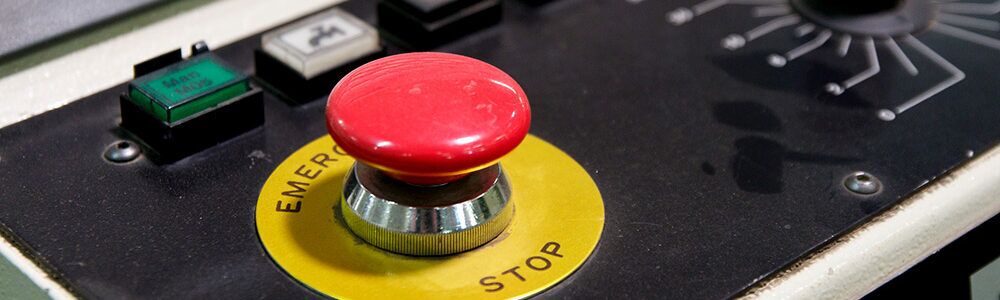
I’m a career Air Force pilot. I’ve retired about 15 years ago, but I realized since I went to pilot training in 69, I was always just taught that the button that you drop a bomb with is called the pickle button.
And it’s just one of those words I always accepted, and I never thought of why it was called something as strange as a pickle button.
And your program got me thinking about it, and I couldn’t come up with a really good answer.
And so I thought, well, maybe you could help me.
And I asked a couple people, and my son-in-law, who’s in the Air Force now as a pilot, had one possible explanation that, you know, maybe like in World War II or any time still, if you get in a pickle, you know, like in a problem, you often will drop your weapons or tanks to reduce the weight of the aircraft, or like you could jump from enemy aircraft to make yourself more maneuverable or reduce your weight if you’re having an engine problem, that type of thing.
So maybe, he said, you get in a pickle, you pickle it off.
Now, that had a certain logic to it, but I have no idea if that’s true.
You pickle it off, did you say?
Yeah, they always use that term. You pickle off the bombs or you pickle off your fuel tanks.
Oh, wow.
Yeah.
Wow.
Well, now help me picture this, Mike. Where is the pickled button exactly? And what did you fly?
Well, I flew many airplanes. I started way back in Vietnam in an A-1 Sky Raider, which was an old prop World War II almost airplane, and ended up in F-111s, which were kind of a fighter-bomber, and a few other ones in between.
But they almost all have the same Air Force stick, and there’s a button on the side. And usually one towards the top, too. There’s two different buttons, but depending on which stations you’re dropping off of and so forth.
But there’s just a little red button on the side and on the top of the stick that you fly the aircraft with.
Oh, wow. This is like a toggle switch or a lever switch?
No, it’s just a red button that you push. You just push straight down.
Huh. I thought for sure you were going to say it was green.
No, nope. It’s red. And it’s more or less flush with the console or just a little bit above the console?
Yeah, it sticks up a little bit off your control stick that you’re flying the airplane with.
Okay. And you can just hit it, and it’s basically the button for releasing your bombs from the airplane.
Okay. Wow.
This is all really interesting. And I like your son-in-law’s theory, but I think he’s close, but he’s not quite there.
There’s a little more to this story. And let me tell you a little back story on how I know this.
When I worked for the, I used to edit the Historical Dictionary of American Slang.
And I actually had the pleasure of working on the letter P, which is yet to be published.
And one of the entries for that is pickle.
And there’s just a ton of language that’s in the military that’s related to pickle,
Including what you talked about, which is to pickle can mean to drop your bombs or to drop your equipment.
But older than that still are two uses in the United States Navy where a torpedo as early as the 1930s was called a pickle.
And they also used it to mean to bomb, to bomb or to fire your torpedo.
And I believe what happened is that it originated with the United States Navy because of the shape of the torpedoes, because they look vaguely like a pickle.
Oh, okay.
So you are, again, 1931, I have a definite usage for, and maybe as early as 1917.
It’s hard to say because the sources are kind of unclear.
But maybe as early as 1960.
Because remember, underwater warfare, it’s got a good long history.
In any case, so the torpedoes look kind of like pickles.
Therefore, if you are firing that, you are pickling,
And the button that would fire it is called the pickle button or the pickle switch.
And I believe that button was borrowed into aircraft, which came after the submarines.
The Navy actually originally had a lot of the earliest expertise in aerial warfare.
And so a lot of the language came over from the Navy into what later became the Air Force and so on.
Other people who know more about the history of our armed services can talk a lot more about that.
And then the term kind of spread off from there.
And then by the 1960s, by the time you showed up in Vietnam, the pickle switch or the pickle button, it was called both things,
Or sometimes it was just called the pickle, became to be used not only to drop bombs,
Sometimes to activate cameras on the underbelly of the aircraft, sometimes to use just to open the bay doors, or sometimes just to get your sighting gear in order.
That was the pickle button.
You press the button to get your sighting gear in order, and then somebody else behind you would do the act of pushing out the cargo or pushing out the bombs or releasing it or doing whatever needed to be done.
And to pickle, meaning to torpedo or to bomb, has always been a part of that.
You can read news stories from the 1960s where pilots talk about having to pickle a whole region and talk about dropping napalm as pickling.
Oh, my gosh. Wow.
Yeah, it’s the standard term.
I don’t know if I – I hate to give the Navy credit for it, but as an old Air Force guy.
Well, the Navy’s older than the Air Force.
That’s true. I have to give them credit there.
And I just thought I’ll have to give my wife a little credit because, not to be sexist,
But I always called this the female feminine answer because I asked my wife about this several years ago,
And that was her idea.
She said, well, what’s the shape of a bomb?
And I said, well, yeah, it could look kind of like a pickle.
But I said, I don’t know, I just didn’t buy that.
But she was actually, you know, I had closer to correct than I thought, so I’ll have to give her credit.
Oh, that’s great.
Well, that’s wonderful.
I will make sure and tell my son-in-law, and I appreciate your help and answer on this.
All right, super, Mike.
Terrific, Mike.
Okay, well, thank you very much.
Have a great day.
Okay, you too.
Yep, bye-bye.
Bye-bye.
Wow, that was fascinating.
I mean, and it makes perfect sense that it would be a euphemism for that sort of ejacular reference.
Well, the simple story is most often the right one.
Yeah.
Right?
Yeah.
Yeah.
And for hour two of our pickle conversation.
Call us about the language you use in your job, whether you’re flying bombers or not, 1-877-929-9673, or send email to words@waywordradio.org.
I feel like we’ve done this riddle before, but let me share it with you anyway.
Okay. Deja riddle. Okay.
Deja Riddle. It’s the beginning of eternity, the end of time and space, the beginning of every end and the end of every place.
Oh, Grant, that’s easy peasy, which also starts with that letter. It starts with the letter E.
Yes, it’s the letter E, but it’s a beautiful riddle nonetheless, right?
I liked it the first time I heard it in first grade.
Oh, ow, oh, a big punch in the eye. Stop it.
Call us with your tired riddles, 1-877-929-9673, or send them to me at words@waywordradio.org.
Hello, you have A Way with Words.
Hi, this is Gina from Dallas, Texas.
Well, hi, Gina. How are you doing?
I’m great. How are you?
All righty.
We’re good. What’s up?
Yeah, thank you for having me.
I’m calling because I’m a student, and when I went home a few weeks ago,
I was playing Scrabble with my family and my sister, who’s really wonderful,
And an English teacher made a joke about me coming home from school stupider.
And I said, no, stupid.
It’s more stupid.
And so then just a big debate started.
And we decided that you were the only reliable authority.
We’re the authorities on stupid.
I love this.
We’re the most stupid authorities you’ll ever know.
Oh, dear.
So the debate was whether you should say stupider or more stupid.
Well, yes.
And so my sister is an English teacher, and so she said, well, there’s this rule,
And if you have an adjective, the comparative and superlative forms are made by adding or ESP.
And I said, well, you would never say stupidest.
And so then, you know, we had to look it up in the Scrabble Dictionary and then other dictionaries,
And then we were wondering what was more correct.
Or what was less stupid.
Exactly.
What did the Scrabble Dictionary say?
Well, in the Scrabble Dictionary, it’s a word.
But we decided there are lots of things in the Scrabble Dictionary that, you know, you wouldn’t necessarily say.
So then we went to Merriam-Webster’s, and we looked in Oxford, and we just got lots of conflicting information.
Okay, so you’re voting for more stupid.
More stupid, absolutely.
Okay, and what’s wrong with stupider, in your opinion?
I think, to me, it just sounds strange.
It’d be great in a limerick about the biggest planet, wouldn’t it?
Yeah, isn’t there a schoolyard rhyme like that?
I don’t know. Is there? Candy is dandy.
Girls go to college to get more knowledge. Boys go to Jupiter to get more stupider.
You haven’t ever heard that one?
Oh, that’s right. You tweeted about that.
Yeah, well, more stupider we can rule out right away.
Okay, good.
But in terms of stupid, the comparative there, the usage guides that I’ve seen have said that you can go either way with it.
Generally, if you have a word that’s more than two syllables, like, say, interesting or fascinating,
You wouldn’t say this is interestinger than any other radio show you’ve heard or fascinatinger.
But with words that are two-syllable, it’s kind of on the fence sometimes.
And stupid is specifically a word that I see used as an example in one of my favorite usage guides, Brian Garner’s modern American usage.
You can say stupider or more stupid.
And just to kind of give a reference there, Garner is very conservative when it comes to language issues.
He’s the guy who’s always going to refrain from himself or encourage you not to do the thing that is innovative or exceptional.
Or stupider.
Or stupider.
So if he says stupider and stupidest are okay, then you know that even the most conservative authorities in the country agree that stupider and stupidest are okay.
Well, there you go.
I guess we both have to be right.
Yeah.
Yeah, and it’s not a bad place to be, right?
No, it’s not.
Well, thank you very much.
Okay.
It’s our pleasure.
Thanks for calling.
Thanks, Gina. Bye-bye.
Bye-bye.
All right. Bye.
If you’re having a debate with fellow Scrabble players or a family member, call us 1-877-929-9673.
Or you can send an email to words@waywordradio.org.
Support for A Way with Words comes from National University.
Change your future today.
Find out how at nu.edu.
That’s our show for this week.
If you didn’t get on the air today, you can leave us a message anytime.
The number’s 1-877-929-9673.
Or email us.
The address is words@waywordradio.org.
And you can stay in touch with us all week by following us on Twitter.
We’re there under the username Wayword.
Stefanie Levine is our senior producer.
Our technical director and editor is Tim Felten.
We’ve had production help this week from Josette Herdell and Jennifer Powell.
From Studio West in San Diego, I’m Martha Barnette.
And from San Francisco, I’m Grant Barrett.
Thanks to Howard Gelman for engineering our show from the studios of KQED Radio.
Abyssinia.
Au revoir.
And for all you moms out there, happy Mother’s Day.
Let’s call the whole thing on.
Thank you for your donations to A Way with Words.
If you haven’t donated yet, please do so at waywordradio.org/donate.
Descriptive Criminal Names
 A news story about the Ho-Hum Bandit has Grant musing about the odd names that law enforcement officers give to criminals at large, usually based on their appearance or behavior, like the Barefoot Bandit, the Mummy Bandit. Or how about the Bad Breath Bandit?
Be There or Be Square
Where do we get the phrase “be there or be square”?
Slang Term “Seditty”
What’s seditty? Many African-Americans use this term, also spelled saddidy, to mean “stuck-up.” A caller’s heard it all his life, and is curious about the word.
“I Never Was” Riddle
Grant has a riddle: “I never was, am always to be, no one ever saw me or ever will, and yet I am the confidence of all to live and breathe on this terrestrial ball. What am I?”
Odd Man Out Puzzle
Quiz Guy Greg Pliska offers a colorful variation on his ever-popular “Odd Man Out” puzzle. In this series, for example, which one doesn’t belong: Imperial, Shasta, Kings, and Orange.
Sunglade
A caller from the coastal town of La Jolla, California, is sure he’s heard a word for bright pools of silver light that form on the surface of the ocean when sunbeams poke down through cloud cover. Albedo, maybe? Coruscation? How about sunglade?
Abyssinia! Ethiopia!
Why in the world would two people part from each other saying, “Abyssinia!” “Ethiopia!”? The hosts clear up the mystery.
Listener Longest Word Riddle
Martha shares a puzzle sent in by a listener: “What’s the longest word typed on the left hand’s half of the keyboard?” Hint: It’s the plural of a now-outmoded occupational term.
Lagniappe
A lagniappe is a little something extra that a merchant might toss in for a customer, like a complimentary ball-point pen. What’s the origin of that word?
Commercial Categories for Literature
Grant argues that new commercial categories of literature, which include poop fiction, chick lit, K-mart realism, and tart noir resemble the kind of fracturing that already occurred in the music world. Here’s the blog entry that got him started.
Couple, Few, and Several
What exactly do you mean when you use the words couple, few, and several? Do they conjure specific numbers? The hosts disagree.
Pickle Off
A retired Air Force officer says he’s never wondered until recently why the button that pilots push to drop bombs is called the pickle button, and to “pickle off” the bomb means to drop it.
Beginning and End Riddle
Grant reveals another riddle: It’s the beginning of eternity, the end of time and space, the beginning of every end, and the end of every place. What is it?
Stupider vs. More Stupid
A Scrabble game sparks a debate between a college student and her English-teacher sister. Which is correct: stupider or more stupid?
This episode is hosted by Martha Barnette and Grant Barrett, and produced by Stefanie Levine.
Photo by Maik Meid. Used under a Creative Commons license.
