

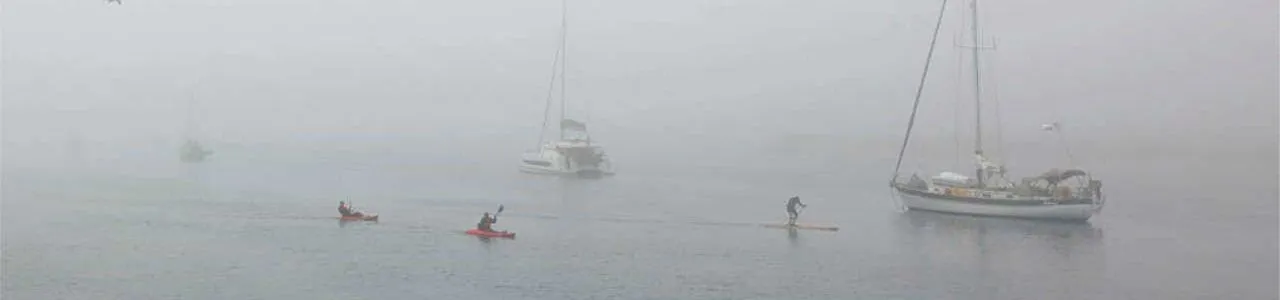
If someone tells you it’s flisky or flobby outside, do you need to take an umbrella? A new book about England’s soggy climate includes 188 terms for rainy weather. Americans have their own joking names for local weather, from June Gloom in Southern California to Snowvember on the East Coast. And: Does it seem like automobiles are getting bigger lately? They are indeed, and there’s a new word for that: carspreading. Plus, no soldiering, drisk, kelsher, a musical puzzle, Fogust, esophagastroduodenoscopy, my boo, gorgeous, ballicater, prog, and Has your mother sold her mangle?
This episode first aired August 1, 2026.
Transcript of “Wired for Sound (episode #1685)”
You’re listening to A Way with Words, this show about language and how we use it.
I’m Grant Barrett.
And I’m Martha Barnette, and Grant, I have three words for you, and I wonder if you can guess what they pertain.
I love you.
No, I don’t know.
What is it?
I love you too, miss.
I mean, are the three words that anyone wants to hear.
What are your three Well, words, I want you to hear the words Kelcher, Drisk, and Cow Quaker.
What?
Kelcher, Drisk, and Cow Quaker.
That was my law firm and my…
They got me a good payday.
Sounds like they could.
What, what are we talking about here?
Are these like farming terms?
Sort of.
You’re in the, you’re in the realm here.
Oh, is this from that article about thatched roofs?
No.
No.
Okay.
I don’t know.
What is it?
It vaguely has to do with thatched roofs.
A kelcher in the West Country of England is a heavy rain brought on by a strong wind.
Okay.
A drisk is a misty drizzle that makes everything seem to shimmer.
Oh, nice.
Isn’t that nice?
And a cow quaker in the Midlands Of England is defined as a cold spring shower that interrupts a mild morning and leaves newly pastured cattle shivering.
Oh, those are outstanding, Martha.
You must have plucked these from a source.
I did.
They’re from a lovely book by Alan Connor.
It’s called 188 Words for Rain, and that title’s a bit tongue in cheek because, as he notes in the book, the claim that the Inuit and Yup’ik people have a 100 words for snow is misleading.
Oh, yeah.
Absolutely misleading.
I’m looking forward to this.
Do love good weather language because it’s this constant topic of conversation, and we do want to know the subtleties.
We want to, do want to be able to mark and describe the intricacies of weather for our colleagues and family, right?
That’s right.
If you can talk about nothing else, you can talk about the weather.
So we’re going to do that later in the show.
Well, can talk us about your weather words and weather language.
There’s something really special about that toll free number.
A, it’s toll free.
B, it works in The United States and Canada.
And C, you can call or text that number again.
Hello.
You have A Way with Words.
Hi, Grant.
Hi, Martha.
This is Jeremy Cooley calling from Long Beach, California.
Long Beach.
Love Long How are you doing?
I’m doing great.
How are you all?
All right.
What’s on your mind?
So I wanted to chat about the weather, specifically the Southern California phenomenon called June gloom.
Story is about a month ago in May, I was talking to a coworker of mine, and he was talking about the weather and saying, oh, yeah, June Gloom this.
And so I was just thinking about it.
I’ve lived in Southern California my whole life, and I know what June Gloom is.
And I wanted to know if there’s other places in the world that have things like June Gloom and what they’re called and what they are.
Oh, yeah.
Oh, boy.
Oh, yeah.
There’s so much show on there.
People never stop talking about the weather, Jeremy.
Yeah.
Yeah.
Well, we should probably explain what June gloom is.
Yeah, yeah.
So, so it’s the marine layer, right?
That’s this, these clouds and fog that are offshore, and because of differentials in air pressure for parts of the day, mostly during the day, it’s offshore.
But at night, when the air pressure changes, the temperature drops, it moves inland.
And sometimes it manifests as cloud cover, but sometimes it manifests as fog.
Right.
And I remember moving out here from Kentucky and wondering what in the heck was going on with the weather.
I thought California was sunny all the time.
Nobody told me.
Well, not only that, if you’re not used to it, when you see what looks like a cliff of fog a mile or two off of the coast, you’re like, what Stephen King novel am I in?
This is bizarre.
And the, and the, the mo what people usually say, Jeremy, and you know, this is May, gray, June, gloom, which means both of these months are a little overcast.
Yeah.
Right.
And I I googled a little bit, and I actually found two others that I’d never heard before.
Yeah.
That’s here.
Let’s hear them.
No Sky July.
Yeah.
Mhmm.
And then Faugust, which I love.
Oh, yeah.
Yeah.
Well, there’s also and one and one book, they were somebody was talking about the weather in La Jolla, which is here in San Diego County.
Mhmm.
And they had a longer version.
May gray, June gloom, July fry, August die.
Wow.
Joy and all the cups are hot.
Yeah.
And if it starts early, it’s grape roll.
Yeah.
You know, the last of April.
That’d very good.
Yeah.
And, you know, alright, some more of these.
This is another California thing.
Have you heard of smogust and smoketember and smoketober?
I have never heard of those.
These are when the fires get bad and, the weather is only part of the problem.
The smoke from the wildfires, contributes.
In Buffalo, in the Great Lakes towns, they talk about Snowvember.
Okay.
Yeah, lots of snow November.
And in ski towns in The United States and a bunch of them where they want the snow because it’s good for the skiing business.
They talk about miracle March.
When you get these spring snowfalls, will bring the customers to, you know, the lifts and the, and the hills, to the runs.
They want that.
But also it gives you that snowpack that you need in the mountains.
You have year round water in your streams.
Right.
You don’t want January.
Yeah.
Well, there’s January works two ways.
It’s when January feels like June because it’s too hot, or June feels like January because it’s too cold.
Right.
I think we could do a whole show on localized weather terms.
I’m thinking about when you go to Portland and you say the mountain is out.
Oh, first time I met that I thought, what?
There’s a mountain out?
Or, you know, the Hawk in Chicago, which is a really strong wind.
Or you were talking about Northern California.
We can’t leave out Carl.
Oh, yeah.
Carl the fog in San Francisco.
I have a lot more of these month blends too, but we’ll just leave those for a minute.
I did want to mention a British botanist named Tim Entwistle, who did popularize kind of in a more formal way these in between seasons, sprinter for spring winter blending, and sprummer for spring summer blending.
Because he is saying that in large parts of the world, this is more accurate than saying we have four seasons in the year.
Yeah.
I love that.
That’s incredible.
Thank you so much for all the fun new vocabulary words I’ve learned.
Now I know going to the next time I’m I’m up in Oregon, can talk about the mountain is out.
Yeah.
And you can talk about November and October.
February.
Jeremy, see what you started.
I’m excited.
If if Grant is making puns, I’ve made a successful day.
I’m not I’m just repeating what other people have said.
But he’s appreciating them, Jeremy.
Jeremy.
Well played.
Thanks so much for your call.
Alright.
Thank you so much.
I’ve been a listener for over ten years.
Love your show.
Appreciate it.
Wow.
So happy to be on the show.
Be well.
Us again sometime, Jeremy.
Bye bye.
Will do.
Alright.
Bye bye.
Bye bye.
Grant, I am sure there are people all over the place with more localized weather terms, which I would love to Oh, absolutely.
There are a lot of ways to reach us.
You can find all of our contact information, and there’s a dozen ways to do it on our website at waywordradio.org.
Or toll free, you can call or text in The United States and Canada, (877-929-9673.
We asked you for your favorite words, and Dave Spencer left us a voicemail with one.
He used to work in the healthcare industry, and he said he always loved coming across the word esophagastroduodenoscopy.
Esophogastroduodenoscopy?
Yes.
Yes.
I hear esophagus, I hear duodenum.
What surgery is this?
Yep.
This is when an endoscope is passed through the mouth and down the throat into the esophagus, estomach, and duodenum, or duodenum.
You can say it either way.
But it just goes to show that, you know, a word can be beautiful even if it describes something unpleasant – esophagastroduodonoscopy.
Well, a beautiful word that I know is toll free, and that’s our toll free number (877-929-9673.
Hello, you have A Way with Words!
Hi, how are you?
I’m super duper.
How?
And who are you?
Okay, my name is Kim.
I’m from Pennsylvania.
Hi, Kim.
Welcome to the program.
What’s up?
Thank you.
Hi.
My mother was from the Deep South in what’s called the Black Belt Of Alabama.
Mhmm.
And she would always say, you’re proging or where are you proging today?
And to me, it meant rambling.
Mhmm.
And my niece says dilly dally.
And we were talking about this word, and we’re wondering how to spell it and what it means.
Sure.
Yeah.
I’d love to hear you use it in a sentence or two.
How would you talk about it?
Thank you.
I like to go out a lot just explore different areas or even a kid in the house that’s always getting into something.
So you say you’re proging.
-huh.
Where are you proging today?
Mhmm.
Mhmm.
And how would you spell that?
Oh, I’m not sure.
So I would try maybe and I have looked, tried to Google it, I couldn’t find anything.
I tried p r o g u e Mhmm.
Or p r o a g.
Mhmm.
Mhmm.
But between her southern accent and my lack of seeing the word in print to know it, I couldn’t find anything.
Okay.
Yeah.
Well, one of those spellings is fairly common, p r o g u e.
And the other one is p r o g, prog.
And it comes from a very old Germanic root that means to poke or prod or stab or probe, and in The UK came to mean to forage or scrounge or go looking for food or supplies.
Then immigrants to this country brought that food sense, and around the South, the American South and the Chesapeake Bay Area and Ocracoke Island off the coast of North Carolina, the word progue came to mean poking around in marshes or mud holes, you know, looking for whatever might turn up, and that sense got extended to just kind of poking around like you’re talking about, you know, going out to look for something.
So it has a very, very long history.
Okay.
And it’s PROG.
And my mom was probably the only person I heard say it.
Is that right?
Love that as a data point, though, that she used it where she was.
Yeah.
In Alabama, right?
In Alabama.
She was from Alabama.
She moved to Pittsburgh when she was around 19 or 20 years old.
And I’ve never heard anybody else say, you’re progen or you’re rambling.
So I think we were pretty much spot on with it.
We just didn’t know how to spell it.
This is fabulous.
Yeah.
And you will still hear the kind of hunting uses of it.
We heard from Horace in North Carolina who described it as when you’re on a boat following the calendar seasons or the hunting seasons and just kind of Mhmm.
Chapping or fishing or hunting off by yourself, just doing doing whatever’s allowed and whatever’s available.
Okay.
That feels good.
I like that.
She was a pioneer in that.
Okay.
Very good.
All right.
Thank you so much.
Kim, take care.
Thank you.
Have a good day.
You too.
All right.
Bye bye.
Bye bye.
If you’re wondering about a word, Grant and I love to go proguing about for information.
Send us an email, wordswaywardradio dot org.
Here’s another word that I’d never heard involving RAIN.
The term is stotting, s t o t t I n g.
That describes rain that’s coming down heavily, hard enough to bounce.
And in fact, in Northern England, a stotting ball or a stotty ball is a rubber ball used in children’s games.
So it’s as if a bunch of hard rubber balls are falling.
Yeah, and bouncing around.
You can find all of our past episodes and more than a dozen ways to reach us on our website at waywordradio.org.
You’re listening to A Way with Words, the show about language and how we use it.
I’m Martha Barnette.
And I’m Grant Barrett, and we’re joined by the newly appointed minister of crazy walks in North America, our quiz guy, John Chaneski.
Hi, John.
Hello.
Excuse me.
I never know what I’m gonna be doing when I walk into a room.
Let me somehow make my way to a chair.
There we go.
And let’s begin this quiz.
Guys, a few years ago, I tried a theater quiz on you, and I forgot that most of the plays and musicals where I am here in New York have yet to go on tour and become well known around the country.
Critics called it a flop.
Therefore, let’s try a quiz based on more classic theater works.
I’ll change a single letter in the title of a popular musical, making a new valid word and a new title.
Now, to clue you into the new title, I’ll give you a few songs from the New Musicals cast album that have been changed a little bit.
Okay?
Oh, boy.
Okay.
Wow.
Sounds like you put a lot of work into this.
So here sure.
Here’s an example.
If I said, how do you solve a circle like Maria?
My favorite rings.
And 16 going on zero, the answer would be SoundOfMusic.
Well, just never change the letter in the sound of music to make The round of music.
The round of music.
Yes.
Very good.
Okay.
When you got the sample, that’s a good sign.
Here’s the first one.
Here’s here’s the songs from the cast album.
Hello, young monkeys.
Shall we climb?
Getting to know Feyre.
Getting to know Feyre.
These are all about primates or apes or gorillas or something.
Right.
If you can identify the musical yeah.
Okay.
Sounds like Martha might have it.
Yeah?
Yeah.
How about the Kong and I?
The Kong and I.
Oh, nice.
Instead of the King and I, yes.
Very nice.
Here’s another.
Something’s perfect.
G Officer Supreme.
I feel primo.
I feel pretty.
Oh, so pretty.
Is this Oh.
This Bye Bye Birdie?
Or I think it’s Best Side Story.
Best Side Story is correct.
Yes.
Well done instead of west side story.
Something’s perfect.
G officer supreme, and I feel primo.
Here’s another one.
We iron together, laundry school dropout, starch lightning.
So the movie that it’s…
Or show that it’s based on is Grease, but I’m not…
All you got to do is change a letter.
Oh.
Grease.
Grease.
Yes.
Very good.
If I were skink of the forest, if I only had iguana over the gecko.
Oh, I want an iguana.
This is terrible.
These are terrible puns.
They are not terrible.
Well, this has to be.
We’re off to see the lizard of The lizard of Oz, yes, Martha.
That is the quiz.
You did fantastic.
Well done.
Bravo, bravo.
Encore.
Well, encore for you guys.
Alright.
There he goes with his new silly walk that’s gonna catch on and be the fat of the ages.
Thanks, John.
We’ll see there.
Beside, I take large steps.
Bye bye.
Bye, guys.
Bye, John.
Thanks.
We do a quiz once per episode, but we always like to get your jokes, puns, stories, and tales that have a funny punchline.
You can call or text toll free, (877-929-9673, or tell the whole sort of thing in email wordswaywardradio dot org.
Hi, you have A Way with Words.
Hi, Martha.
Hi, Grant.
My name’s Roderick.
I’m calling from Jacksonville, Cold.
What’s up, Roger?
Yeah.
So I’m a I I work in a a cardiac electrophysiology practice.
So, electrophysiology, that’s, the management of heart rhythm, disorders.
And obviously a big part of that is doing EKGs or ECGs, electrocardiograms.
That’s sort of like the gold standard for detecting heart arrhythmias.
And so an EKG is, I put these electrode stickers all over your chest and your belly, and then I hook you up to all these wires.
And so I do that about 25 to 30 times a day.
So I see about 25, 30 patients a day.
And a phrase that I get a lot is, now I’m wired for sound or, oop, I’m wired for sound.
And I am just wondering where that came from and what that means.
The patients say that really?
Yes, the patients say that.
They look down at their chest, their belly.
They see all these wires running across some, you know, the spider web of wires, of colorful wires, and, you know, they go, oh, you know, I’m wired for sounds.
This is another whole call that we should do another time, Martha, about all these common responses that somebody like Roger hears all the time, but the person saying it thinks it’s original or or first time used.
Yeah.
That’s a great idea.
I’m thinking all I’ve ever said is, that’s cold.
Right.
Yep.
That’s another one.
Yep.
Well, alright.
So there are two kind of high points of what I’m about to tell you.
And then one of them is the telegraph and another one is the movie business.
But let’s go back a little further in that.
Wire as a, you know, an extruded metal strand has existed for a very long time.
It was used before electricity.
It was even mastered by humans to make jewelry or as a fastener and for other purposes.
But when the telegraph came along by the eighteen fifties, we get the verb to wire, w I e r, meaning to send someone a message.
Or you could send A-wire as the noun, meaning you’re sending them a message over the over the telegraph.
Basically, the signal is transmits over the wire, somebody writes it down on paper, and turns into a telegram.
That’s when it goes from telegraph to telegram, and ta da!
There you have it.
And then by the eighteen nineties, you start to get people talking about something being wired as an adjective, meaning it’s connected by electrical lines or wires of any kind or maybe to a power source or any any kind of electrical apparatus really.
But then our phrase here that you’re asking about, Rajit, this wired for sound phrase emerges in the late nineteen twenties or so as a term of art because cinemas, movie theatres were being fitted with electrical sound equipment so they could present the new talking pictures.
It was this huge transition moment from silent pictures to talking pictures.
And in a lot of business writing in the 1920s, where they’re talking about, you know, basically how to run a cinema and also in advertising, promoting these newfangled developments to the customers, they use that expression wired for sound and it becomes something, almost a cliche, but not quite a cliche, but definitely something that stands out at you.
Sometimes even put in quotation marks because they recognize whoever was authoring whatever it was, the advertisement or the business journal article, they recognize that it was this term that had some special outside significance that needed to be set off so that you knew that there was something unusual or important about it.
And if your theater wasn’t wired for sound, you couldn’t show talking pictures, which meant you might go out of business.
But the meaning quickly broadened to describe any space that you might add microphones or loudspeakers.
You could have auditoriums, studios, churches, buses, trains, political rallies.
And so very quickly, wired for sound starts to be used anytime wires and valves for anything, whether or not there’s sound, whether or not there are movies.
And you find people using a, B.
G.
Woodhouse in the 1940s uses, describes somebody using an ear trumpet, you know, to help her because she was hard of hearing.
He describes she was being wired for sounds.
Interesting.
Roderick, you’ve given people who are getting EKGs something to think about the next time they do.
You know?
Wired for sound.
So much history.
Alright.
Well, thanks, Roderick.
Appreciate it.
Thanks for doing the hard work out there on the All amount of right.
Thanks.
Bye, Adam.
Bye bye.
Well, we’re hoping you’re wired for sound and can talk to us.
The number is (877-929-9673.
Here’s a new term I want to keep an eye on: car spreading.
Have you run across this one?
It’s kind of like manspreading for cars, right?
Yes.
Where they, they just take up more and more space and don’t give away to anything else.
Yes, you’re exactly right.
Apparently, this term is starting to be used more and more in urban planning circles, particularly in Europe, because studies show that new cars are growing a little bit bigger every year, and supposedly London and Berlin are set to lose over 100,000 parking spaces due to swelling car size.
Know, you go to some of those European countries and the roads are really narrow.
There’s also concern that bigger cars mean more pedestrians and bicyclists can be injured by them.
So car spreading is a term that people are using, popularizing to, to try to reverse the trend.
Yeah.
To point out the car premise, the idea that cars somehow are the first decision point when it comes to urban planning, which just doesn’t have to be the case.
Hello, you have A Way with Words.
Hi, this is Jasmine, calling from Miami.
Hey, Jasmine.
We’re glad to have you on the show.
What’s on your mind today?
I had a word that I wanted to know more about, and it’s the word boo.
Which kind of boo?
Like, boo.
Like, more…
Like it’s a term of endearment or, a, you know, a a you call someone your boo.
It’s it’s it’s heavily used, like and it’s a pretty popular term, but it’s more, like, in the, like, you know, African American community.
Mhmm.
You say, like, hey, boo or that’s my boo.
I’m sure Alicia Keys made a number one hit song called My Boo.
And they tore it up.
That was a great song.
Yeah.
Yeah.
So I I know that it’s popular in, like, you know, in my community, but I also know, like, the nineteen hundreds or so, like, the turn what is it?
Beau?
Yeah.
Yeah.
From the French for Beautiful or or attractive.
Yeah.
Mhmm.
Yeah.
So I don’t know.
I just wanted to know maybe if you guys had some some insight on that word.
Yeah.
There are there are a couple of different inflection points here that I wanna emphasize.
But like a lot of words, you know, the the path isn’t linear, and it’s not altogether clear.
But I want to confirm for you, yes, it is more common in the black English world, at least since the 1980s.
And although there have been very popular songs like you mentioned, use boo and it pops up here and there, and white people talking to white people.
It’s still very African American, still very much black English.
And so it hasn’t lost that sense.
To mean, you know, your honey, kind of the same linguistic space as honey or baby when you’re talking to your sweetie or your shorty or whoever.
But older than that is booboo.
The word twice used as an affectionate term, which goes back to the very early nineteen hundreds in a bunch of songs.
Much used exactly the same way.
We would talk about my booboo.
It’s possible, and it’s not sure that it might come from me an intentional mispronunciation of beautiful.
So which leads us back to bo.
So you’d say bootyful instead of beautiful.
So instead of that BYOO sound, you would just do a B O O sound.
Bootyful.
And so it’s a kind of thing that you’d use in lovey dovey language when you’re talking to your sweetie.
My boo boo.
Yeah.
You kind of, like, add some flair to it or…
Yeah.
Yeah.
Like you do with your sweetie, right?
You’re always, you’re always coming up with new stuff for your sweetie.
They, they cause you to be eloquent, I think, when there’s real love there.
Right.
But do you know, Jasmine, there’s another thing here that I want to toss in as a possible inflection point, which is the suffix poo, p o o.
And not the naughty word that has to do with bodily functions, but, a suffix that kind of indicates affection.
So if you liked me, you might call me granty poo.
Granty poo.
Oh, oh my god.
Oh my god.
I do that.
I do that without even thinking about it.
These diminutives as they’re known or create what are known as hypochoristics, these affectionate terms for people.
But the P in poo and the B in boo are easily replaceable with each other because they represent more or less the same mouth and lip position.
But the only difference is whether or not you use your vocal cords when you say them.
So they’re it’s very easy for for a word to switch back and forth between that pronunciation over over time.
And, you know, and that French parallel you brought up earlier is definitely worth mentioning.
This boo is such a simple one syllable word that it has absolutely been reinvented several times in English and sounds like it occur in other languages besides the bo in French, which you use to describe a man who is attractive.
In Yiddish, we have bubbi and bubula, right?
Which originally meant grandmother but later became generalized to mean a term of endearment for anyone.
And in Indonesian, there’s bu, bu, which is an affectionate term of address for your mother.
It’s such a basic fundamental sound that that b sound coming off the lip, vowel vowel, vowel is, also very similar to the first sounds that babies make.
Ba ba.
Right?
Nice.
Nice.
Babbling.
Yes.
Okay.
Okay.
I like that.
So, I just I was just I love terms of endearment.
So, you know, I called 20 different people boo, you know, friends.
You’re so much a very caring person.
But but but, Jasmine, the main thing I want you to take away is that probably the modern boo is descended from the earlier boo boo, which is over a 120 years old.
Okay.
I love that.
All right.
Well, I’m gonna keep on watching this or listening to the show, and, maybe I’ll come back with another word.
Jasmine, take care of yourself, and we appreciate your time and your fans over Thanks for a really sweet conversation.
Yes.
Yes.
Thank you so much.
You guys are fun.
You too.
Bye.
Bye bye.
Hello.
You have A Way with Words.
Hey, Grant.
Hey, Martha.
This is George Zahn from Maple Grove, Minnesota.
A while back, I was driving through West Virginia on my way back from my parents’ house in Virginia.
And I stopped at Grand View outside Beckley, and there you get literally a Grand View of, the New River Gorge, which if you’ve never been, it’s truly a spectacular sight.
And I took a picture and I was I was leaving.
I texted the picture to friends and family and said, what a gorgeous view of a gorge.
And it hit me that I needed to call you guys about a gorgeous gorge.
You thought of the two most gorgeous people you knew, and you had to call us.
That’s right.
Yeah.
That’s something like that.
So the question is, does gorge, g o r g e, in a, you know, geographical sense, have anything to do with gorgeous, g o r g e o u s, meaning beautiful or very attractive?
Sure.
Yeah, there is a connection between those two words, but it’s not what you might think.
It’s actually really surprising.
The word gorge, as in a narrow canyon, comes from an old French word that means throat.
And if you think about it, that makes sense because a gorge is essentially a throat in the landscape.
And it goes back to a Latin root, gurgis, which means throat or gullet or jaws, and it can also mean golf or whirlpool.
And actually, the same root gives us the word regurgitate, which has nothing – to do with being What’s really interesting is that modern French retains that throat meaning.
La gorge means the throat.
If you have mal de gorge, you have a sore throat.
Now, the word gorgeous itself may be related, but here’s the connection with the idea of the throat.
In the late middle ages, fashionable women wore an elaborate headdress that in English we call a wimple.
And the part that covered the throat and the shoulders had its own name in French, from gorge meaning throat.
And over time, a beautiful wimple became a mark of an elegant woman, you know, very, very fashionable.
Then that term expanded to mean fond of dress or simply elegant.
And from that, we get the word gorgeous.
So these words are likely related, but it has to do with a throat.
Isn’t that wild?
Wow.
There are a couple other places where gorge still means throat in English.
One of them is if you make someone’s gorge rise by doing something nauseating, you make them vomit.
And also has the verb to gorge yourself on food.
Yeah, there’s that one too, right?
Oh, sure, sure.
Oh my goodness.
This goes much further than I thought.
Always does.
What we do, George.
That’s what we do.
All right.
Take care of yourself.
Call us again sometime, all right?
Yeah, this has been great.
Thank you so much.
Sure.
Bye bye.
Thank you, George.
Take care.
Bye bye.
All right.
Bye bye.
(877-929-9673 is this gorgeous phone number that you can call or text toll free in The United States and Canada.
Listening to A Way with Words, this show about language and how we use it.
I’m Grant Barrett.
And I’m Martha Barnette.
We talked earlier in the show about the book 188 Words for Rain by Alan Connor.
He’s the crossword puzzle editor for The Guardian newspaper, and he’s also a screenwriter who’s worked on several movies, including Borat II.
Oh, so he’s a high thinking writer.
Exactly.
He’s elevated.
He’s up there at the top.
Well, I think you’ll love his book.
It’s really a word lover’s delight.
It’s witty and whimsical and smart, which is right up your alley, of course.
And it opens this way.
You’re in the sky, 7,000 feet above the bottom bit of the British Isles.
In other words, he starts you out up in the clouds, drifting over Southern England, and you’re gazing down at the locals who are discussing the weather.
And you get to eavesdrop on those conversations, which are filled with dialectal terms for different kinds of rain and the experience of getting rained on.
And then he takes you around the rest of The UK just drifting along with the weather and learning lots of local dialect and weather folklore and science.
And you also learn some history too, like the person who invented Gore Tex and the first man in London to carry an umbrella.
And that’s an interesting little story.
In the eighteenth century, a proper English gentleman would never carry an umbrella because that was considered feminine and frenchified.
And the first guy to do so, a man named Jonas Hanway, was mocked and pelted with rotten fruit and harassed by cab drivers who had good reason to resent him because, of course, rainy days were good for their business and umbrellas threatened their trade.
And you also learn words from this book about rain around The UK, like the words flisky and flobby.
Flisky in Southern England describes a day covered in mist but with tiny individual raindrops as well.
And flobby describes clouds that are swollen up and hanging loose.
They’re large and heavy with rain.
So this book is it’s a love letter to all those places and a rain itself.
And speaking of love, he points out that rain can be incredibly romantic.
I mean, think of all those rain soaked kisses and movies like Four Weddings and a Funeral.
And as he writes, in A Thousand Bollywood Pictures Where a Downpour Can Make Any Clothing Look Like Very Little Clothing At All.
And then he points out that the great cinematic kisses in the baking heat come less easily to mine.
So it’s this wonderful tongue in cheek book, but you can learn a lot from it.
It’s called 188 Words for A Delightfully Damp Tour of the British Isles Led by Natural Forces.
And the author?
The author is Alan Connor.
We’ll have Alan Connor’s book on our website at waywordradio.org.
And we mean it when we say that Martha and I love to hear about the books that you’re reading.
Send them along, email wordswaywardradio dot org.
Try us on social media.
You can find all those handles on our website.
Or call or text toll free in The US and Canada.
Hello, you have A Way with Words!
Yes, hi, this is Katherine.
I’m calling about a word, that I used all growing up, called Bally Catters, and I know what it is.
It’s basically a wall of ice that’s built up by pans of ice catching up on the shore and on the rocks.
And then the sea freezes over that and the slush ice comes in.
And basically, it just makes a wall of jagged pans of ice and slush.
And we were always warned not to go near it, And we always call them bally catters, but I don’t know where that word came from.
It seems such a strange word.
Catherine, where are you that you’re encountering all this ice?
So that was in Newfoundland.
-huh.
And you’re there still?
No, I’m in Ontario.
Okay.
Gotcha.
So these big walls of ice, ice, Martha.
This is…
This is…
I don’t know how to say this.
It’s evocative.
It really is.
It’s so picturesque.
I’m picturing ice that’s formed along the shore there by freezing spray and waves, like, rough and jagged and clingy.
Is that your experience of it?
Yes.
And also, like, when the ice is broken up and it floats into the shore in big pans of ice, and they catch on the rock, and then more slush comes in over that.
So it’s quite dramatic.
So before we get into BoliCatter, a pan of ice is, just a big piece of ice almost big enough to stand on or actually big enough to stand on?
Yes.
Actually big enough to stand on, and sometimes, like, big enough to hold up a polar bear.
Mean, it it all depends.
Right?
And, also, something else we weren’t allowed to go near.
Polar bears.
Yeah.
You know, any any size of of a piece of ice, basically, but large enough to stand on to anything really big.
It’s spelled a few different ways.
B a l l I c a t e r or b a l l y c a t e r, balicater or balicater.
What’s super interesting about this word is that it may be an alteration of the word barricade or the Spanish word baricado, which means the same thing.
Which makes sense, doesn’t it?
Because it forms this kind of frozen barricade along the shoreline and Oh, absolutely.
Yeah, yeah.
The word barricade itself has a fascinating story.
It may come from the French word barrique, which means barrel because early street barricades were made from barrels.
Like, in Paris, you know, you would you would set up a barricade by filling barrels with earth or stones or sand and setting them up, and that was a good way to keep people, away from whatever you were trying to keep them away from.
And balacetters do the same thing, don’t they?
Oh, absolutely.
Yeah.
So we’re not totally sure of that connection, but, but it’s a pretty cool possibility.
Yeah.
We’d have to talk about how the R in barricado becomes a double L in baricater.
And that double…
That’s because the Rs and the Ls are often pronounced in pretty much the same physical form of the mouth and the tongue.
There’s just a difference, a slight difference.
So they, they easily, the mouth easily moves from one to the other.
Oh, interesting.
Thank you so much for that.
I really appreciate it.
Thanks, Katherine.
Take care.
Thanks for calling, Katherine.
Bye bye.
Bye.
We’re not going to ice you out if you give us a call toll free in Canada and The United States.
Text or call (877-929-9673.
I just came across this saying that was briefly popular in nineteenth century London, and it’s, Has your mother sold her mangle?
Is this just one of those non-secretive phrases?
Yeah, it’s, I mean, a mangle was a device for squeezing water from laundry.
I’ve seen it.
I’ve used one.
Yeah.
Ankle got one well into the eighties, yeah, in the yard.
Oh, the OED describes has your mother sold her mangle as a discourteous catchphrase.
And it suggests that the person you’re talking to has to make ends meet by selling their mother’s mangle.
And it’s something that kids especially would run up to strangers and say on the street, apparently just to be annoying.
It’s sort of the six, seven of the nineteenth century, I think.
I wonder if there’s another layer to that, and that is the assumption that not only did she have to sell her mango, but she had to take in laundry to make ends of meat in the Yeah, first yeah, it really is about not having much in the way of financial resources.
But a surprising saying, but apparently it was quite widespread in London in the nineteenth century for a while, and then fortunately it left.
We know from your calls, texts, and emails that you read a lot, and we love when you share those little passages or expressions that you come across that just delight you.
Call or text us with them toll free, (877-929-9673.
Hello, you have A Way with Words!
Hello, hi, it’s Cynthia Barrett calling from Austin, Texas.
Cynthia Barrett from Austin, Texas.
Well, to have you.
What’s up?
Well, thank you.
I’m a recent transplant to Texas.
I grew up in New York and lived there most of my life.
But Mhmm.
I have a question.
I grew up in a big family, five kids, and my dad would often stand when we were doing the dishes.
We all had our kitchen duties, you know, loading the dishwasher or whatever.
And he would often stand there looking at us, and anybody was sort of slacking off, not really doing what they’re supposed to be.
He would use this expression, no soldiering.
So I never really thought about it or questioned it, but he said it often enough that it stuck in my mind.
And I figured the only sort of, guess I had about it was it was probably somewhat, nautical or navy oriented kids.
He was in the, he was in the Normandy invasion of naval officer in World War two, and, my ancestors were whalers in, Cold Spring Harbor, Long Island, and and New Bedford, Massachusetts.
So that’s kind of as far as I got with this.
And, Cynthia, what did he mean by it?
Were you supposed to jump to, Yes.
I was…
We were supposed to jump to.
I think he was like, come on.
I see you’re slacking off and snap too.
Got it.
Pull your weight kind of thing.
What he said was no soldiering, s o l d I e r I n g.
Yeah.
Okay.
Yeah.
I was biking in Austin this spring, and I saw a bumper sticker that said no sojuring, but it was spelled s o j e r I n g.
So, anyway, so what are what’s your what are your thoughts?
My thoughts are that s o j e r is the same word intentionally misspelled to reflect the way that some people say the word soldier, more like a g than a d.
Sometimes you’ll see it spelled s o g e r.
And all three of those, soldiering and sogering and sogering with a G, are all listed in a variety of different reference works and dictionaries.
But they all boil down to exactly what you said, shirking, malingering, being a layabout or a slug of bed, you know, just not doing what you’re supposed to do.
Right.
And the meaning dates to at least the eighteen forties, and that naval connection is probably the source of it because it seems to come out of this interservice arrivalry between sailors and soldiers, where the sailors look at the soldiers and think, I can do everything you do, plus I can sail a ship.
You know, the the sailors typically and traditionally see soldiers as as lazy or no better than cattle because the the sailing ships are always hauling the soldiers from place to place, you know, just like they’re baggage or or cargo or something like that.
So, because it’s particularly galling when you’re in a navy and you see Yes.
Working hard.
You see these army troops basically behaving like noisy, messy animals as far as you’re concerned, and you’re here running the ship.
You know?
You’re making a boat go, so to speak.
And so it comes from that general, this idea that you were behaving like a soldier when a soldier is at its his worst or her worst.
I see.
So, yes.
So we were at our worst, we were getting Yeah.
But but but then it really it really does come down to just this rivalry that’s existed as far back as I can see in The US and British, military traditions between the navy and and the army.
Right.
Right.
And is it a word that’s, used frequently today?
This or, I mean, when I saw the bumper sticker, it kinda made me wonder.
I don’t hear it, but there was that bumper sticker.
It’s still out there.
I I can’t say it’s the most popular language, but you will find it pretty regularly in, amateur collections of slang where somebody has put together what they themselves here experienced in the services.
And for me, that’s enough of a testament that it’s it’s valid and still being used.
It also pops up in these risking and ribbled songs that soldiers sometimes sing or sailors sometimes sing, where they talk about, you know, different sexual escapades or work escapades, the kind of stuff they sing in the bars after after their duty’s over, you know?
Cynthia, I love that somebody put it onto a bumper sticker.
That’s hilarious.
I know.
That was almost fell off my bike.
Yeah.
All right.
You take care and soldier on, which is a completely different meaning.
We should work We’re that on.
Right.
That’d be all soldiering.
Take care, Cynthia.
Bye bye.
Okay.
Thank you so much.
Bye bye.
Well, quit your soldiering and call us.
(877-929-9673 or email us.
The address is wordswaywardradio dot org.
Hey there, you have A Way with Words.
Hi, my name is Chris Dunn, and I’m calling from, East Coast Of Central Florida.
Okay.
So are you literally calling from the coast?
I am.
I’m literally I’m working right now.
I’m on a break, but I’m I’m working in my lifeguard station.
Oh, a lifeguard.
Wait.
You’re actually in a lifeguard station?
I’m in a I’m in a little lifeguard tower now next to my partner.
I’m imagining a a beefcake guy and red speedos just like on the TV shows.
Well, I’m about the Speedo.
That was this morning on my workout.
No.
Was kidding.
Gotcha.
Alright.
Beefcake then.
What’s on your mind language wise, though, Chris?
I’ll take it.
Okay.
So the reason I’m calling is that it has to do with work, actually.
Actually.
So we do all of our, communications, most of our communications, you know, using radios.
And so we’ll talk from tower to tower or from tower to vehicle using our handheld radios or the radios in the trucks.
And, so, you know, like, a a common, radio call will go something like if I’m stationed in Tower 1, I’ll call Tower 2.
And so a real, like, a real common radio call would be, Tower 2.
This is Tower 1.
I’ll be down in a rip current rescue.
And then tower two would respond tower two copy.
Got that?
Mhmm.
So it’s the, hey, you, it’s me.
And then they’ll copy.
So what people I’ve noticed in the last few months, they’ll say tower two copies.
And I don’t know.
It just sounds wrong to my ear, and I’ve been able to find nothing about this if that’s correct or not.
Copy versus copies.
It just sounds so wrong.
So it it’s It’s like they’re using it as a plural.
You know what I’m saying?
Well, I think they’re using it as a conjugated verb.
Okay.
So they’re saying they’re they’re leaving some words out, which is allowed in English in in, you know, short circuited situations.
But they’re saying the tower copies, this tower, tower two copies or whoever it is that we are currently copying what you’re saying.
But I think if I explain a little bit about the origin, it’ll make some sense to you because this comes from telegraph days, as a surprising number of things do, when you literally had to copy down the message that was being transferred to you over the wire, that you would literally take a writing utensil and put it to paper to put the words down because it was coming in via Morse code, which is slow.
And there’s no way that you’re just going to remember the whole message in your head because, it just takes too long.
So you’re copying it down.
And basically, what you would say at the time was you would message back using the little key here and say, I have basically saying copy, meaning I did copy what you said, therefore we’re good.
Or you might say repeat, did not copy and ask him to say it again, you know, to text, to send it again.
Right.
Gotcha.
And so once, all this electronic communication went from just the dot dash and Morse code to voice, the language of, to say that you copied something just continued.
And then it expanded even further when radios kind of became standard configurations in military vehicles and morph time and among police.
And of course, as you know, with, any kind of EMT type service where you need radios for instant quick communication, person to person communication.
Right.
So copies is fine.
Yeah, it is.
It’s totally fine.
And, and I think it kind of throws back to the early days where you’re literally saying, you know, tower two copies means, yeah, we we did.
We more or less wrote that down.
If we didn’t, we we might as well.
Right.
So they’re using it as a as a verb essentially.
Yeah.
Exactly.
Copy.
Mhmm.
Gotcha.
Gotcha.
Okay.
Well, thanks for clearing that out.
Yeah.
Sorry.
Anything else.
So figured I’d call the experts.
Yeah.
Yep.
We’ll we’ll call.
As they say, we will comply if you call.
Well, I’m impressed that you’re thinking about grammar while you’re sitting there watching the waves.
Yeah.
That’s really cool.
Well, you know, it’s the radio or, you know, whatever else podcast.
Dolphins, Take care.
There’s a lot of them around.
Yeah.
Lots of dolphins in Florida.
Alright.
Thank you, sir.
Take care of yourself, and be safe out there.
Okay.
Bye.
Bye, Chris.
Bye bye.
You can call or text us.
A Way with Words senior producer is Stefanie Levine.
Tim Felten is our engineer and editor, and John Chaneski is our quiz master.
Go to waywordradio.org for all of our past episodes, podcast links, and ways to reach us.
If you have a language, thought, or question, the toll free line is always open in The US and Canada.
702-0673.
A Way with Words is an independent nonprofit production of Wayword Inc.
It’s supported by listeners and organizations who are changing the way the world talks about language.
Although we’re not a part of NPR, we thank NPR stations throughout The United States that carry the show.
And special thanks to our nonprofits volunteer board, Michael Bressler, Josh Eckels, Clare Grotting, Merrill Perlman, Bruce Rogow, Rick Seidenorm, and Betty Willis.
Thanks for listening.
I’m Grant Barrett.
And I’m Martha Barnette.
Until next time, goodbye.
So long.
From “Kelsher” to “Cow-Quaker,” Regional British Words for Rain
 A heavy, wind-driven rain in England’s West Country is a kelsher. A misty drizzle that makes everything shimmer is a drisk, and a cow-quaker is a cold spring shower in the Midlands that leaves pastured cattle shivering. These are among the many words for rain collected by Alan Connor in his delightful new book 188 Words for Rain: A Delightfully Damp Tour of the British Isles Led by Natural Forces (Amazon). The title teasingly refers to the myth of dozens of Inuit words for “snow.”
“June Gloom” and Other Regional Nicknames for Seasonal Weather
In Southern California, June gloom is the familiar marine layer that rolls in with overcast skies. Jeremy from Long Beach wonders if other places have similarly named weather patterns. Indeed, Southern California also has May gray, no sky July, and Fogust. An extended rhyming version goes May gray, June gloom, July fry, August die. Other jocular names for months inspired by weather are Juneuary (or Junuary) and Graypril, Snowvember in places like Buffalo, New York, and miracle March in ski towns. And you know someone’s a local if they’re talking about Karl the Fog in San Francisco, California, or saying The mountain is out in Portland, Oregon.
“Esophagastroduodenoscopy”: Fun to Say, Not to Experience
A former healthcare worker shares his favorite word: esophagastroduodenoscopy. That’s a procedure where an endoscope is passed through the mouth and down the throat into the esophagus, stomach, and duodenum. It may be a mouthful, but even a word describing an unpleasant procedure has a certain musicality.
“Progue” Means “to Poke Around” or “to Ramble”
Kim from Pittsburgh, Pennsylvania, remembers her Alabama-born mother asking, Where are you proging today? The word progue, also spelled prog, is a bit of dialect meaning “to poke around” or “to ramble.” In the UK, this word, from a Germanic root meaning “to poke” or “to prod,” came to mean “forage for food.” In the American South and Chesapeake Bay area, it came to refer to poking around marshes and later extended to rambling in general. A North Carolina listener shared his definition: going out alone on the water to fish or hunt according to the season and doing whatever nature allows.
“Stotting” Means Bouncing Rain in Northern England
Stotting describes rain so heavy that it bounces on the sidewalk. In Northern England, a stotting ball or stotty ball is a rubber ball.
A Word Puzzle Using Altered Song Titles to Reveal a Musical
In this week’s puzzle, Quiz Guy John Chaneski changes a single letter in the title of a popular musical to create a new word and a new show, then lists altered songs from the new cast album and challenges you to guess the name of the musical. For example, what new musical title is suggested by the titles “Hello, Young Monkeys” and “Shall We Climb”?
Movie Theaters Gave Us the Phrase “Wired for Sound”
Roderick in Jacksonville, Florida, says patients in his cardiac electrophysiology practice often look at the tangle of EKG wires on their chests and joke that now they’re wired for sound. What’s the origin of this phrase? Although to wire meaning add wiring to something is much older, wired for sound emerged as a colloquial phrase in the late 1920s when movie theaters were being fitted with sound systems for talking pictures. The phrase soon was used to describe any space with microphones or loudspeakers. P.G. Wodehouse used it in the 1940s to describe someone using an ear trumpet.
The Rise of “Carspreading,” “Manspreading” in Urban Planning
Have you heard of carspreading? It’s like manspreading but for vehicles, cars that take up more and more space and refuse to yield. The term is gaining traction in urban planning circles, particularly in Europe, where studies show new cars are growing slightly bigger each year. London and Berlin are projected to lose over 100,000 parking spaces as cars swell in size, and there’s concern because larger vehicles lead to more pedestrian and bicyclist injuries.
“Boo” as a Pet Name for Your Byootiful Beau or Babe
Jasmine from Miami, Florida, asks about the word boo as a term of endearment, as in Alicia Keys’ song “My Boo.” This use of boo has been especially common in Black English since the 1980s, occupying the same affectionate space as honey or baby. The modern boo likely descends from the older booboo, found in love songs from the very early 1900s, which may itself come from a playful mispronunciation of beautiful as “bootyful.” Similar terms of endearment with that initial B sound include French beau, Yiddish bubbe and bubbeleh, and Indonesian bu.
The Throat Connecting “Gorge” and “Gorgeous”
George from Maple Grove, Minnesota, was driving through West Virginia and stopped at Grandview outside Beckley. The view of the New River Gorge was indeed so grand that he texted a picture to friends and family with the message, What a gorgeous view of a gorge. Then he wondered, is the gorge in a landscape related to gorgeous? Yes, but in a roundabout way. Gorge comes from an Old French word for “throat” deriving from the Latin gurges, meaning “throat,” “gullet,” or “jaws.” In the late Middle Ages, the elegant part of a French woman’s wimple was a gorgias, which ultimately became gorgeous in English. These throat-related words are the linguistic kin of expressions like make someone’s gorge rise, gorge yourself, and regurgitate.
“Flisky” to “Flobby,” More Regional British Words for Rain
Alan Connor serves as crossword puzzle editor for The Guardian, and his new book is a word lover’s delight. It’s called 188 Words for Rain: A Delightfully Damp Tour of the British Isles Led by Natural Forces (Amazon). The book opens 7,000 feet above southern England, drifting among clouds to eavesdrop on terms for rain in various dialects. A day marked by mist and individual droplets is flisky, while flobby describes swollen, rain-heavy clouds. The book also contains lots of history, like the story of the first Londoner to carry an umbrella, Jonas Hanway, who was pelted with rotten fruit by cab drivers who resented his threat to their rainy-day trade. Witty, whimsical, and smart, the book also makes the case that rain can be incredibly romantic. Just think of those rain-soaked kisses in movies like Four Weddings and a Funeral. Would they have been nearly as sexy in the dusty heat?
“Ballicater,” a Newfoundland Word for a Jagged Ice Wall
A ballicater is a jagged wall of ice that forms on a frigid shore when pans of ice catch on rocks and slush freezes over them. A Canadian woman who grew up in Newfoundland says she’s warned never to go near one. Ballicater, spelled several ways, including ballycatter, is found in the Dictionary of Newfoundland English, and may be an alteration of barricade or the Spanish barricado. The word barricade likely comes from the French barrique, meaning “barrel,” because early street barricades were made from barrels. The shift from an R to an L is plausible since the mouth produces the sounds of those consonants in similar positions.
“Has Your Mother Sold Her Mangle?”: a 19th-Century Insult That Suggests Poverty
A mangle is an old device for squeezing water from laundry. In 19th-century England, this word figured in the discourteous catchphrase Has your mother sold her mangle? The question implies that the person addressed has to make ends meet by selling their mother’s mangle. For a while, youngsters would run up to strangers and shout this phrase just to be annoying, but this not-so-clever taunt was short-lived.
“Soldiering,” “Sojering,” or “Sogering” Military Slang for Shirking Work
Cynthia in Austin, Texas, grew up hearing her father say, No soldiering! when the kids weren’t pulling their weight in the kitchen. She was recently reminded of his admonition when she saw a bumper sticker that read no sojering. Both soldiering and its variants sojering and sogering mean “shirking” or “malingering.” This expression dates back to at least the 1840 and likely springs from an old interservice rivalry, in which sailors considered soldiers lazy. The term still turns up in military slang collections and some ribald songs.
Why We Say “Copy” When Using Person-to-Person Radio
A lifeguard in Central Florida is perplexed when his fellow lifeguards indicate they’ve heard a radio transmission by responding with a phrase like Tower Two copies rather than Tower Two, copy. Which is correct? They both are. The word copy in radio parlance goes back to telegraph operators literally copying Morse code messages onto paper. The copies in Tower Two copies is perfectly acceptable as a conjugated verb, suggesting that the lifeguard in that tower is metaphorically copying the message.
This episode is hosted by Martha Barnette and Grant Barrett, and produced by Stefanie Levine.
Books Mentioned in the Episode
| 188 Words for Rain: A Delightfully Damp Tour of the British Isles Led by Natural Forces (Amazon) |
| Dictionary of Newfoundland English (heritage.nf.ca) |
Music Used in the Episode
| Title | Artist | Album | Label |
|---|---|---|---|
| Can't Stop Lovin’ You | Soul Dog | Movin’ On | Amherst Records |
| Pity The Child | Teina | Touched By The Sun | Perception Records |
| The Cylinder | Milt Jackson | The Ballad Artistry Of Milt Jackson | Atlantic |
| Now You've Taken Your Love | The Reflections | Love On Delivery | Capitol Records |
| Makin’ Whoopee | Milt Jackson | The Ballad Artistry Of Milt Jackson | Atlantic |
| Manhã De Sol Florida | Tim Maia | Tim Maia | Polydor |
| The Other Side | Sure Fire Soul Ensemble | Step Down | Colemine |
