

Ever wonder what medieval England looked and sounded like? In Old English, the word hord meant “treasure” and your wordhord was the treasure of words locked up inside you. A delightful new book uses the language of that period to create...
The word filibuster has a long and colorful history, going back to the days when pirates roamed the high seas. Today it refers to hijacking a piece of legislation. Plus, the language of yoga teachers: When doing a guided meditation, you may hear...

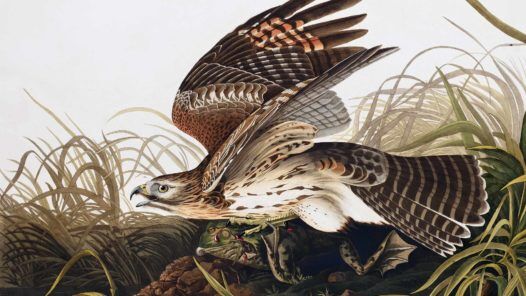
During introductory class at Sky Falconry in the mountains outside San Diego, California, Martha learned the term feaking, the action of a hawk wiping its bill on something to sharpen or clean it. Feak may derive from an old German word meaning “to...
Jenny from Portland, Oregon, is fascinated by the language of falconers. In falconry, the word bate means “to flap the wings impatiently.” A similarly spelled verb, which has nothing to do with falconry, figures in the expression to wait...
Black-hearted buzzard isn’t a standard expression, but its parts have long histories. Black-hearted has meant having ill will or bad intentions since the 1600s, and buzzard has been an insult since the 1300s, likely a polite substitute for...
In the 17th century, the verb to bate and the likely related verb, to bat, were used in falconry to mean “to flap wildly.” By the 19th century, to bat was also part of the phrase to bat one’s eyelashes. This is part of a complete...