Baseball has a language all its own: On the diamond, a snow cone isn’t what you think it is, and three blind mice has nothing to do with nursery rhymes. And how do you describe someone who works at home while employed by a company in another city? Are they telecommuters? Remote workers? One writer wants to popularize a new term for this modern phenomenon: working in place. Also, a powerful essay on white privilege includes a vivid new metaphor for the pain of accumulated slights over a lifetime: chandelier pain. Plus, sunny side up eggs, count nouns, bluebird weather, harp on, think tank, thought box, and how to remember to spell Mississippi.
This episode first aired October 22, 2016. It was rebroadcast the weekend of June 12, 2017.
Transcript of “Sunny-Side Up (episode #1455)”
You’re listening to A Way with Words, the show about language and how we use it.
I’m Grant Barrett.
And I’m Martha Barnette.
And it’s time for baseball slang.
What’s a snow cone?
That’s a ball that gets caught on the fingertips of the glove.
Yes.
Did you know that or were you just guessing?
I knew it.
You did, really?
Instead of in the basket, right?
Or in the pocket.
Exactly.
Exactly.
Or it sort of works its way up so that it’s just barely sticking out.
But it still counts as a catch.
Yes, it does.
It does indeed.
Well, let me try this one on you then.
When is Dreamers Month?
Ooh, Dreamers Month.
Is this when the free agents start thinking about moving to a better team?
That’s an excellent guess.
It really is an excellent guess.
Okay.
But let me give you a hint.
The baseball season usually starts in April.
Okay, so Dreamers Month.
Yes.
Everybody’s thinking about, like, I’m going to break the 300 home run and mark.
You got it.
And I’m going to.
You got it.
Yes, yes.
No injuries this year.
Right.
That’s exactly it.
This is from the definitive dictionary on baseball by Paul Dixon.
Paul Dixon’s baseball dictionary.
Yes, indeed.
Amazing work.
Yes.
And in it, he says, of Dreamers Month, at this point in the year, anything seems possible for any team.
Anything seems possible for any team.
Baseball is poetry, isn’t it?
It really is.
That’s nice.
It made me think about, for me, Dreamers Hour is about 6 a.m.
You know, I look out the window and I think, oh, there’s a little baby day out there.
What’s it going to grow up to be?
Right.
Sometimes it grows up to be an ogre.
Coffee pot doesn’t work.
Cat vomit on the floor again.
Going back to bed.
Exactly.
But I’m going to share some more baseball lingo later in the show because, as you said, it is poetry.
Oh, it’s so good.
Well, we’d love to hear your sports language.
What’s your favorite sports term?
Or ask us any question about language at all.
Send us an email to words@waywordradio.org or hit us up on Twitter @wayword.
Hello, you have A Way with Words.
Hi, this is Adam.
I’m calling from Menominee, Wisconsin.
Well, I’m originally from Menominee, Wisconsin, but now I live in Madison, Wisconsin.
Welcome to the show, Adam.
Nice to talk to you.
Well, thank you so much for having me.
The reason I was so specific about where I’m from originally is because I think my question might be very specific, very specific region there in Wisconsin, west central Wisconsin, not far from Minneapolis, St. Paul.
Growing up, my family would always order eggs at a restaurant, or if we were talking about having eggs at home, we preferred sunny side up, but we called them looking at you eggs.
And now when I travel, or if I’m even in a restaurant in the Madison, Wisconsin area, and I order my eggs without thinking, I’ll say, oh, I was looking at you.
Everyone else at my table and the server usually gives me a very weird look.
And it takes people a moment before either they realize or I realize that we’re speaking the same language.
And then I have to either clarify sunny side up or someone will say, oh, you mean sunny side up.
That’s outstanding.
Yeah, I think it’s an interesting way to order eggs.
And I swear it’s a thing, but nobody I’ve ever met outside of Menominee, Wisconsin can confirm this for me.
And I Google for it.
I can’t seem to find any information about it online.
So I’m hoping that you folks can maybe help.
It’s really charming.
I almost never see it.
But, Grant, you’ve done some digging.
Yeah, I’ve seen it as far back as the 1920s.
You can find it searching various complicated ways on Google Books.
You’ll find plenty of uses of it over the decades.
It’s not common, but it is out there.
And apparently it’s a thing.
The earliest use that I can find actually has it in quote marks, which means that the author thought that it was worth setting off in quotes for special attention as being an unusual phrase.
Oh, great.
What book is that, can you say?
Actually, I don’t have it in front of me.
I have the quote.
I can find the quote.
The quote is, the one thing that sets off a plate of nice Berkshire ham more than any other thing is a nice plate of giant white Plymouth rock eggs looking at you.
Oh, I love it.
Thank you so much.
That really vindicates me with my friends, and also I really enjoy the story.
And it’s literally breakfast, so it’s ham and eggs for breakfast, right?
Exactly, exactly.
You know, it’s interesting, too, all the Germanic heritage there in Wisconsin, because in German the term for this translates as mirror eggs.
Oh, that’s interesting.
Mirror eggs.
Yeah, like they’re looking right back at you.
And you see the same thing in Hebrew, too, the name for it.
Translates as I-egg.
In fact, in Japanese, the term for it is madama-yaki, which means cooked like eyeball.
Oh, this is great.
This is so good. I am so glad I called you folks.
My question for you is when the server finally understands what you say, and then they bring the eggs back to you, but they bring your order, do they say, here’s eggs looking at you, kid? No, they don’t do that, right?
They don’t, no. You missed the opportunity.
I will say, some of the more witty servers will, you know, have a lot of fun with that.
Yeah. Yeah. I bet.
All right. Well, here’s to eggs looking at you.
Thanks so much for the call, dude. Thank you so much. Take care. Thanks, Adam. Bye-bye.
Bye-bye. Mirror eggs is good.
Yeah, mirror eggs is good. It’s you looking into yourself in the mirror and seeing your own eyeballs back at you.
Yeah, that’s what I think.
And that notion of those kinds of eggs looking like eyes appears again and again in languages around the world, like in Latvian.
It translates as ox eyes.
Ox eyes.
Big whites, right?
Yeah, yeah.
The name for it in Indonesian translates as cow eyes.
Cow eyes.
Nice.
That’s cool.
Humans are humans. We see things the same, right?
Yeah, I know.
Kind of creepy to think if you haven’t had your coffee yet and these eyes are looking up at you and saying, why are you cooking me?
Email words@waywordradio.org and talk to us on Twitter @wayword.
Grant, you know what a two o’clock hitter is?
In baseball?
In baseball.
A two o’clock hitter?
Don’t know.
I have no idea what it is.
Yeah, I was going to guess that a two o’clock hitter would be like out to right field or something.
You know, thinking about the face of a clock, but that’s not it at all.
No.
No, it dates back to the time when most games started at three o’clock.
And batting practice started at 2 o’clock.
So if you’re a 2 o’clock hitter, you hit really well in batting practice, and then you get to the game.
And you’re a dud.
Yeah.
Oh, that sucks.
Yeah, I know.
I can identify.
Once the pressure is on in the realities, and they’re not lobbing softballs across the plate.
Yes, exactly.
And that’s one of the things that I really like about baseball lingo is it’s so applicable to real life.
You know, you have a rehearsal that goes really, really well, and then you get to the performance.
Give us a call about anything, 877-929-9673.
Hello, you have A Way with Words.
Hi, this is Helen Lopez from El Centro, California.
Hi, Helen. How are you doing?
Fine, thanks. How are you?
All right. Welcome to the show. What’s up?
My question is about the two words and their usage, amount and number.
It’s sort of a pet peeve of mine that I’ve wondered about for years.
And I’ve always been of a mind that when you use the word amount, you’re talking about things that cannot be counted, things that are sort of fungible like grains of sand or something like that.
And when you use number as an adjective, that that’s for things that can be counted like people or cows or things such as that.
So when people say it’s a large amount of people, it sounds wrong to me.
And I’ve always wondered if I’m correct or incorrect.
May I just say how much I enjoy hearing the word fungible?
Thank you for using that.
I went to law school. That’s why I used that.
I was going to ask if you were an accountant.
It’s one of those words I’ve had to look up time and time and time again.
It’s got a good sound in the mouth too, right?
Good mouthfeel.
Good mouthfeel.
Like a nice glass of wine.
So thank you for that, Helen.
This is a really interesting one.
And so your dispute is whether or not some amount and number are exactly equal and could be treated the same when it comes to counting things or referring to things as a mass unit, right?
Correct.
Well, things that are counted should be a number of things and things that can’t should be an amount of stuff.
And that is generally the accepted wisdom in most style and usage guides.
A number is usually for count nouns.
We have a, there are a number of cars in the lot, right?
Right, right.
An amount is usually for mass.
Number of people in the room.
Amount is usually for mass nouns.
There’s an unusual amount of sand in the drain pipe, right?
So it’s something where we can’t be counted.
But notice my word usually.
We have some exceptions.
If you get a bonus at work, your boss might say, bonus in the amount of $1,000 would be paid to you on Friday. Your boss wouldn’t say, and that’s $1,000, actually discrete dollars that are being counted up to the amount of $1,000.
So it’s not really a mass at all. And we have a few other places where we typically do this.
So there are some exceptions, but I’m going to basically say I’m agreeing with you that there’s no reason that a number and amount should be considered exactly equal.
Okay. Where I hear it a lot is, unfortunately, with the newscasters who talk about large amounts of people here and there, and it really bothers me.
That sounds like very large people.
Right.
If you break it down, if you really overanalyze it.
I can get behind that, but I can get my mind to where they are if we think about people as this large, undefined number.
We’re not saying persons, right?
People is a mass of persons.
People is a, like I could have, you know, there are many people in the room.
It could be three or it could be three million.
You know, it’s hard.
I can get behind that.
And I understand also as radio people, Martha and I totally get that sometimes you’re speaking off the cuff and it just can’t be helped.
You say a solacism comes out and that’s just the way it is.
Yeah, I’m not buying it.
You expect perfection from your radio hosts and your newscasters?
All right, we’ll work on that.
We’ll do better.
All right.
Well, thank you very much.
You’ve now cleared up something that’s been bugging me for about 30 years.
So I will rest easier tonight.
Yeah.
Hey, glad to help.
Thanks, Helen.
Really appreciate it.
Stay cool there in El Centro, all right?
Thank you so much.
All righty.
Take care now.
All right.
Bye-bye.
The style guides are actually a little in a disagreement over this, like Fowler’s Usage Guide and Brian Garner’s Modern American Usage.
Garner takes the hard line, very much says a mount should never refer to people.
Fowler says it often refers to people that’s just the way that it is.
You know, it’s a style thing, though.
We should be clear on this one more than it’s a grammar thing.
The grammar of English doesn’t much care either way because it doesn’t have feelings.
Call us with your language questions, 877-929-9673, or you can send them to us in email.
That address is words@waywordradio.org.
So Grant, when it comes to baseball, do you know what three blind mice means?
Oh, it’s the umpires.
Yes.
Yes.
I did not realize that that was a term for umpires and that at some baseball stadiums, when umpires take the field, they play the song on the organ.
Do they?
It also has the nice Three Stooges connotation as well, right?
Hadn’t thought about that.
As you know, I’m not a baseball fan at all, but it sounds like a lot of the appeal is just rooting for your own team and dissing the umpires.
And everyone else, pretty much, except your own team and maybe even some of them.
Share your baseball lingo with us, 877-929-9673, or send it to us in email.
That address is words@waywordradio.org.
More conversation about what we say and how we say it.
Stay tuned.
You’re listening to A Way with Words, a show about language and how we use it.
I’m Grant Barrett.
And I’m Martha Barnette.
And joining us now from an undisclosed location in New York City is our quiz guy, John Chaneski.
Hi, John.
Hi, Martha.
Hi, Grant.
You know, this location is undisclosed, but nevertheless, there’s still a Pokemon here.
So hang on one second.
Oh, good. I caught them all. There we go.
My first turn was a Charmander, and I felt great.
I had a Bulbasaur. It was just so good.
It was on my bed. It was right on my lap. It was terrific.
Well, let’s put the Pokemon Go aside for just a second.
You know, we’ve done a lot of quizzes on famous books and plays and poems.
This is about famous paintings.
I know. How can we do that?
Well, I’m going to change a word in the title of a famous painting and then describe what the new painting looks like.
For example, if I said, I’ve removed two letters from the end of this painting’s title, and now it looks like the couple has been replaced by a pale young man outside a farmhouse wearing a black t-shirt and eye shadow and several piercings and a crucifix.
American goth.
That would be the painting of American goth, yes.
Fun, okay.
Very good, yeah.
Now, I’ll let you know the wordplay that we’re working with before I give you the title.
All right, here we go.
I’ve taken this two-word painting title and changed the first letter of the second word.
Now it depicts a pretty, smiling woman holding a credit card.
Mona Lisa.
Mona Lisa.
Mona Lisa, yes.
That’s right.
That was the Mona Lisa by Da Vinci.
I’ve taken this two-word painting title and changed the second word into a homophone of itself.
Now it depicts a pretty, young woman in a field who is spinning and really, really dizzy.
Christina’s World.
Right.
Christina’s World, as opposed to Christina’s World, W-O-R-L-D, by Wyeth.
I’ve taken this two-word painting title and deleted the last two letters of the second word.
Now it depicts an insect of the order Lepidoptera.
Whistler’s Moth.
Whistler’s Moth, yeah.
Right, Whistler’s Mother by James McNeil Whistler.
I’ve taken this two-word painting title and removed the last letter of the first word.
Now it depicts one of the Beatles enjoying a nice pleasant evening on his porch.
Star night?
Star night, yes.
It’s star night.
Cut it.
Starry night, of course, by Van Gogh.
I’ve taken this three-word painting.
The first word is the.
I changed the first letter of the second word.
Now it depicts all the actors in a Broadway play having a nice meal together.
All the actors.
Oh, the cast supper.
Yes, the cast supper. Very good.
Which probably happens all the time.
Right? Yeah.
Thanks, John, for the quiz. Really appreciate it. Super fun stuff.
Well, thank you, guys. This was great.
And if you want to talk about any aspect of language whatsoever, give us a call, 877-929-9673, or send your questions in email to words@waywordradio.org.
Hi, you have A Way with Words.
Hi, this is Rasim from Dallas, Texas.
Hi, welcome to the show. What can we do for you?
Thank you. So my question actually isn’t about English, it’s about Arabic.
So I noticed this the other day when I was sitting with my mom and we had some friends over, Indian friends, and I brought up the sort of concept how in Arabic we have this thing where mothers, fathers, uncles, aunts, just any relatives they’ll call younger relatives, like I guess their niece, nephew, son, daughter, they’ll call them by their title.
So, for example, my mother will call, my sisters and I will call us mama, or dad will call us baba, which is the Arabic word for dad.
And it’s the same concept for aunts and uncles.
So I was wondering, you know, where this sort of came about, because when we were talking with our Indian friends, they didn’t have anything like that.
And I know for a fact that other Arabic speakers, they have the same sort of concept.
So when you say Indian friends, do you mean subcontinental Indians or Native American Indians?
Subcontinental.
It’s interesting because I had heard that in some parts of the subcontinent that they do also do that.
Really?
Yeah.
But, you know, India is a massive country with hundreds of dialects and lots of subcultures and very strong different identities depending where you are.
So I’m not surprised that it’s not universal.
So what you’re saying, just to recap here, in Arabic, it sounds like the parents are calling the children by the name that the parents themselves are known as.
So father calls the boys by the name that means father.
Mother calls the girls by the name that means mother, so forth.
I know that a lot of our listeners are jumping up and down in their seats right now.
And Martha looks eager with anticipation as well because the same thing happens in Spanish.
You will find this again and again throughout Latin America.
I believe also in Spain where the little kids may be called mommy and puppy, right?
And it’s very similar.
So what happens linguistically is that the word stops meaning one thing and it starts taking on additional meanings.
It basically kind of generalizes as a term of affection and stops being like a gender-based term of affection.
So the same way that I might call my wife honey and I call my son honey or sweetie or whatever, something like that.
Or you might call cutie is, you know, gender unaware.
A man or a woman can be cutie or sugar or all these terms.
And it kind of basically just joins this other group of terms of endearment that don’t have a gender.
Did your family have any explanation for it?
No, I had asked my mom and she kind of just, what she said was, this is just like how, what her parents did, what her uncles, what her aunts, what her grandparents did.
It was just sort of a learned thing that she took on from her parents.
-huh. It’s interesting because I have a friend from Turkey who says that in a way it sort of reminds you of your ancestors as well.
It’s sort of a way of keeping them alive.
Oh, interesting. So the children will become a father and a mother one day.
And so by calling them that you are kind of basically making small wishes for the future?
Yeah, yeah. And I think that’s a lovely idea, a lovely tradition.
I sure haven’t seen it in this country among…
I have seen it in small ways in this country.
We have family friends from North Carolina, and the mother refers to her little girl as mama.
Is that right?
Yeah, and I have seen it elsewhere, but I’ve never seen it for the little boys.
And as I understand it, it sometimes happens in the American South.
I don’t know how widespread, but I’m sure our Southern listeners will call quickly and let us know.
But I do understand that sometimes it happens.
For the little boys, sometimes I think Bubba and Mama are paired together.
So Bubba takes the place of what otherwise would be Papa or Daddy.
And then I see reports of it possibly happening in Jamaica.
African-Americans sometimes will do this as well.
The little kids are known as Mama or Daddy.
And India, of course, a Filipino culture from the Philippines possibly.
And I wouldn’t be surprised if we get reports of it happening elsewhere.
It is very widespread in Spanish-speaking cultures and Arabic-speaking cultures.
It’s ringing a vague Yiddish bell for me, too.
Oh, is it?
Yeah.
It’s called the kids of Bobola, little girls Bobola, right?
Yeah.
Interesting.
Yeah.
Yeah, I thought it was weird also because it’s the same thing for aunts and uncles.
So my uncle, which the Arabic word for uncle on your mom’s side is chalo, he’ll also call me chalo.
And same thing with my grandparents.
My grandma will call me tata, which is sort of like the Arabic term of endearment for grandmother.
And same thing for my grandpa.
He’ll call me the Arabic word for grandpa.
Well, that seems like a lovely tradition.
Yeah.
One last question before we go.
What variety of Arabic does your family speak?
They speak Palestinian Arabic.
Palestinian.
Okay, very good.
Thank you very much for your call.
This is super interesting.
I know we’re going to get a ton of email on this.
Thank you so much.
Our pleasure.
Okay, thanks.
Bye-bye.
Bye-bye.
Bye-bye.
Connect with us, 877-929-9673.
One of my favorite quotations about writing comes from the great writer Isabel Allende,
Who wrote, show up, show up, show up, and after a while, the muse shows up too.
Oh, it’s perfect.
The stick-to-itiveness required in order to complete anything.
Yes, glue your bottom to that chair.
Just keep showing up.
Or whatever your tool is, right?
Keep the hammer in your hand and the work will get done, right?
Just keep at it.
And one of these days, the muse will show up.
That’s a hard thing to impress upon kids in particular, right?
That persistence of effort equals results eventually.
Oh, yeah.
Because you want it to be done miraculously in a minute.
Yeah.
Show up, show up, show up.
And it’s funny how often a completed work looks like there was a muse and you’re like, no, that’s all sweat.
There’s no muse.
I wasn’t inspired at all.
I just worked my work.
99% perspiration.
Hello, you have A Way with Words.
Hello there.
This is Fawn calling from Honolulu, Hawaii.
Oh.
Hi, Fawn.
Welcome to the show.
Thank you.
So I have an expression from my husband’s grandmother, Jessie.
So Jessie, she was arundering away from Hazard, Kentucky.
My husband said that she had a lot of very interesting expressions.
And this expression, and she used to use it to describe people living very fast.
And she would say, oh, he just left it so fast that he could have a plate marbles on his coattails.
And my husband and I love this expression very, very much.
We think it creates a very vivid image.
So I just want to learn anything and everything about it.
Boy, that’s fascinating.
I mean, Hazard’s right there in Appalachia, in eastern Kentucky.
That’s a good color there, right?
Yeah, very colorful, colorful expression.
It reminds me of when I was a kid growing up in another part of Kentucky,
We would talk about how if you could sprinkle salt on a bird’s tail, you could catch it.
Oh, that’s funny.
Yeah.
In this case, though, Fionn, we’re talking about, imagine somebody wearing a long coat that has coattails, flaps of fabric below the waist.
And if you run wearing one of those, they will fly out behind you in the breeze that you’re making with your speed.
Imagine a flag, for example, on a car doing the same thing.
It’s limp when you’re still, but it’s stiff and straight in the breeze.
And so that’s the joke, is that they’re running so fast, their coattails are horizontal, and it’s a flat surface perfect for playing marble.
And you can find references to coattails being flat like that because of somebody being fast as far back as the 1850s.
Wow.
And I don’t find the marbles so fast that you can play marbles until early 1900s.
But again, that’s 100 years of people using that expression.
Obviously not very common anymore because who has coattails outside of a fancy wedding?
Right.
And because, speaking of coattails, because it’s coattails, so she only used it to describe males.
So I wonder if there is some equivalent phrases, expressions to say females.
That’s a really good question.
I have only seen it referred to for men.
I don’t know.
I don’t know of a female one for that.
She’s going so fast that her, I don’t know.
Her scarf is, you could play marbles on her scarf?
I don’t know.
Good question.
Anyway, so that’s most of what we know here,
But it’s very tied to a time when coattails were common
And marbles were common.
Kids don’t play marbles much anymore either.
Amy, thank you for your call, Fan.
Really happy to talk to you.
Thank you.
All right.
Take care.
All right.
Bye-bye.
Bye-bye.
We know that your parents and grandparents use language
That seems odd, archaic, or amusing to you.
We’d love to hear about it and share it with the world.
Grant, what do you think of when you think of the term think tank?
Boy, it sounds like the end destination for an academic who’s just done with academia.
I don’t know.
That’s the resting place of bright minds who’ve just been depleted.
Well, I don’t know.
Think tanks might disagree with you.
But I mean, basically, the definition of a think tank is…
Yeah, a bunch of smart people examining certain issues that are relevant to their focus.
Yeah, yeah, a research institute, for example.
So you might have one that’s about education or one about political reform, that sort of thing.
Yeah, exactly.
And this term has been with us since the 1950s, meaning that kind of institution.
But did you know that the term think tank actually goes back to at least the 1880s?
I did not know that.
When think tank meant your brain or your mind.
Isn’t that good?
Yeah.
Kind of like your brain case?
Yeah.
Or another term used during that time was thought box.
Thought box.
Yeah.
I like it.
It’s this unknown piece of machinery atop your shoulders.
Yeah.
Yeah.
Your think tank.
There’s where my thoughts happen in there.
Yeah.
The reservoir where all your thoughts happen.
Your think tank.
But now it’s an organization or a board, but a think tank.
Yeah.
Hello, you have A Way with Words.
Hi, Martha. This is James Callan in Meshugel, Washington.
Hey, James. Welcome to the show.
What’s up? What can we help with?
Thanks. Well, I have a question.
You know how when, or at least when I was a kid, and you didn’t have anything that was like a real timer, but you wanted to know how fast something was that was, you know, relatively quick, like running or whatever, you’d kind of do the counting, you know, 1001, 1002, or, you know, one Mississippi, two Mississippi to estimate the second.
And why is it Mississippi as opposed to any other state or if it’s after the river?
I don’t know if there were a lot of other.
I mean, obviously, that’s the most famous river in the U.S.
But when did that start? Why did that start?
What is it about Mississippi that made it the default second timing?
Because we have plenty of other states that are, you know, just as many syllables or longer.
Do we? I’m trying to think here.
Colorado.
Oh, one Colorado too.
Louisiana is a little longer.
I wonder if Mississippi is just tied up in all those double letters and it being also difficult to spell.
And it seems longer.
It might be the same syllables as Colorado, but it’s harder to spell.
I do know someone who grew up saying one Nevada, two Nevada.
Oh, really?
Yeah.
Oh, there you go.
Yeah.
But Mississippi, yeah, it does seem longer.
You’re right.
So you hit on some stuff.
I think it’s a well-known river.
I think it’s hard to spell.
It’s got a lot of letters, even though it may be the same number of syllables.
And it’s kind of fun to say.
Mississippi is a really fun word to say.
It does remind me that there’s that little rhyme or chant or whatever it was with how you spell Mississippi, kind of like you mentioned, like the humpback, humpback, I.
Cookletter, cookletter, I.
I can’t remember how it goes, but there was that little.
Wait.
You know this one, Martha?
No, no.
You didn’t know this one?
No, I was going to say the way I learned to spell Mississippi was from some old Looney Tunes cartoon that had the bouncing ball.
Remember when you had the bouncing ball going and falling?
And it went M-I-S-S-I-S-S-I-P-P-I.
That used to be so hard to spell.
It used to make me cry.
And so to this day, that’s how I spell Mississippi.
I learned it like…
S-I-S-S-I-P-P-I.
I learned it like James lettered.
It’s in my crickle letter, crickle letter I, humpback, humpback, humpback I.
What?
Oh, wait, humpback, humpback I.
Only two humpbacks.
I have never, ever heard that.
In my crickle letter, crickle letter I, crickle letter, crickle letter I, humpback, humpback I.
Yeah.
That is exactly the chant or whatever it was that we used.
Here are a couple of others for you, by the way.
Apparently in the United Kingdom, because they don’t have the Mississippi River, they’re more likely to say hippopotamus.
One Tims, two Tims.
I know some people say banana.
And in a variety of other countries, they’ll do, just like we can do in English, they’ll do 1001.
But they’ll do it in their own language.
Right, in Scandinavia.
And Norwegian and Sweden.
Yeah.
Norway and Sweden.
Right, Iceland too.
Denmark, I have been told on the highest authority that they say one case of beer, two cases of beer.
So anyway, that’s our best guess for you, plus a few extra things thrown in.
Cool. That’s really cool. Do we know how far back that goes?
I mean, is it really, really old, or is it one of those things that seems old, but turns out to have been 10 years before I was born?
I haven’t found it earlier than the 1900s, but I wouldn’t be surprised.
Okay.
I mean, you said something very early.
It seems like it could definitely have been.
I mean, Mississippi’s obviously been there forever.
Yeah, and you nailed something like widespread timepieces.
Like we’re probably looking at timepieces.
The Casio wristwatch is kind of putting a cockpaw on the one Mississippi, right?
Those $8 things you got out of the gumball machine at Walmart.
That’s kind of putting the end to that mostly.
I don’t know.
Anyway, thanks for your call, dude.
Thank you so much.
Take care.
Bye.
Bye.
Email words@waywordradio.org.
And talk to us on Twitter @wayword.
Grant, have you ever heard the term bluebird weather?
No, but I know about the bluebird of happiness and a variety of things related to happiness and sunny dispositions related to bluebirds.
Is it something connected?
Well, I suppose it is connected.
Chiefly in Maryland and eastern Virginia, bluebird weather refers to a brief period of warm weather in autumn.
That’s nice.
Isn’t that nice?
Bluebird weather.
Yeah.
Hit us up on Twitter @wayword.
More conversation about what we say and how we say it.
Stay tuned.
You’re listening to A Way with Words, the show about language and how we use it.
I’m Grant Barrett.
And I’m Martha Barnette.
There was a time when I worked in a hospital years ago that I literally punched a time clock.
And then later, when I was a newspaper reporter in this big cube of a building, I would go there every day.
And I was expected to be in the building when I wasn’t out reporting.
And then later, I did the same kind of work for magazines, only from the office in my house.
And at that point, I called myself a freelancer.
And I really liked that term because it connotes the idea of a medieval knight who’s not particularly beholden to one king.
He’s more of a mercenary kind of agent.
But there’s another growing work style that I think is in need of a term.
What do you call it, Grant, when you work for a company and then they let you move across the country and work someplace else, but you’re still working for the same company?
It’s just remote work.
Remote work.
Or telecommuting.
Yeah, telecommuting.
There’s other couple names for that.
Yeah.
Yeah, virtual worker.
So you’re saying the home office is still, say, in Delaware, but your home is in California and they don’t have an office near you.
Right.
The writer Michael Erard has written about this as well, and he finds problems with the terms virtual and telecommuting.
They just sound either insubstantial or antiquated.
And he’s been suggesting working in place.
Working in place?
Yeah.
What do you think about that?
People who work in place.
I work in place.
I think it automatically requires an explanation.
I mean, maybe we’ll get to the day that it doesn’t.
But right now, literally every time you use it, you’re going to have to explain it.
There’s nothing transparent about it.
I mean, I know you’re working, but what does in place mean?
Yeah.
It’s sort of like the idea of sheltering in place or aging in place, working in place.
You’re working wherever you are.
If I’m traveling in Thailand, I’m still working.
If I’m at home, I’m still working.
If I’m at a conference, I’m still working.
I like that.
I get that now, but it did require an explanation.
-huh, see.
But it kind of reminds me of being out of pocket.
Like you’re on your own dime for now, and then the company will kind of take care of you later to settle expenses.
Yeah.
I’m not totally convinced about that word.
I kind of like working remotely.
Working remotely works.
And that’s transparent.
Yeah.
The two words are pretty clear, right?
But I think the larger point is that more and more people are doing this, and I’m wondering what our listeners call this.
So if you work outside the office for a company that’s not near you, or maybe it is near you, but for some reason you’re just not in the office, what do you call that?
The jobs that you can take your laptop anywhere and get everything done. As long as you have your phone and your laptop, you’re good to go, whether or not you’re in the Arctic or the desert or the jungle or wherever.
Yeah, does working in place work for you? Yeah, does it? Or is there something new or a term that you use? 877-929-9673. Email words@waywordradio.org.
Hello, you have A Way with Words. Hi, I’m Ben calling from New York City, and I’m 18. Welcome, Ben. What can we do for you?
Thank you. So I was listening to your segment about paying attention to the way in which our older family members speak. And I was kind of thinking about, you know, what are some ways that my grandparents speak? And I was trying to think of something. And this thought popped into my mind, which is that whenever my grandmother retells something that happened to her in the past and uses dialogue, she uses says, the present tense, instead of said, the past tense.
And I thought that was really strange, because for the most part, she uses says when she’s talking about herself, such as, I walked into the store and I says X, Y, Z. And I was a little confused, you know, why she said something like that. And I was wondering if this is just a strange little irregularity that she has, or if it’s something more widespread and well-known of older generations using the present tense when telling stories instead of the past tense.
Great question. And you’ve given us a really great example of how that kind of speech works. She’s American? Yes. And how old would you say she is? She’s early 70s. Early 70s. Well, it’s nothing to have to do with her in particular. Is she from New York also? Yeah, she lived in Brooklyn for a long time and now lives in New Jersey.
Yeah, there’s nothing particularly regional about it. It’s a form of probably best described as the historical present tense. Now, usually we only encounter this in English in two extremes of formality, either in very informal language, like the stuff that your grandmother is saying, or very formal language, like scientist recounting a historical event of some great importance.
And that word recount is the key here because that’s what your grandmother is doing as well. She’s recounting previous speech. It’s called reported speech in linguistics. And we tend to use this, what sounds like the present tense, in order to give it immediacy and make it seem vivid and like it’s actually re-happening as we’re telling the story. It actually makes it feel more real to the hearer.
Yeah, I would agree with that. I think when she tells stories, it doesn’t matter if it’s very far in the past or something that happened earlier that day. But it does make you feel that it is it’s happening to you or you’re very much engrossed in that story that she’s telling.
Yeah. And there’s a cool thing about that. I do feel like you kind of nailed one part of it. I think it’s passing away, at least in these informal, very informal uses. It does seem to be marked as something from a previous generation. I’m actually surprised that your grandmother is as young as she is and still using it, because that’s how archaic it seems to be becoming. But perhaps my information is wrong, and perhaps it’s still far more widespread than I believe.
For some reason, it reminds me of younger people using the term like to introduce a similar kind of scene, something that’s similarly present tense. I was like, did it? Yeah, because they’re both reporting on speech. Right. So the like is a quotative and the says isn’t a quotative exactly. But certainly they’re definitely talking about a previous situation in a really informal way.
Yeah, it’s kind of this performance-y kind of thing. Well, that’s good. That’s a good word for it. Then we do a lot of speech that we talk about. So we recraft it as if it is a narrative and tell it like a story and act it out. Our hands are going and our faces are making grimaces and smiles and so forth. And, yeah, it’s cool.
Just for a historical perspective, there are records of this kind of speech going back hundreds and hundreds of years. So it has existed in English for quite a while. That’s very interesting. I never have heard of something like this. Yeah, very observant. Yeah. The last time I encountered it was with an 80-year-old woman in the Lower East Side of New York. There was a woman named Helen who was homeless there who would sit on my front steps. And she was originally from Boston, but she’d lived in New York for like 50 years.
And she would just tell me stories. I lived on 2nd Street between Avenues B and C and the Lower East Side. And she always had that same exact construction. She’d be like, so I says to him, you can join the Navy, but I ain’t waiting for you. It was really good. Ben, thank you so much for the question. Thanks for taking it. I really appreciate it. I love the show. Take care now. Thank you. Bye-bye.
So I says to myself, give us a call, 877-929-9673. Email words@waywordradio.org. I read a fantastic essay the other day. It was by Lori Lakin-Hutcherson, who’s the founder of a website called Good Black News. And the essay is what I think should be required reading on white privilege. It was just a beautifully, beautifully argued piece of writing. And I picked up an interesting term from that, which is chandelier pain. Do you know this term? I don’t know that. It’s a chandelier pain. Yes.
Chandelier pain describes the kind of pain that you have when a doctor touches an extremely sensitive area. That doctors talk about having to pull the patient off the chandelier or they reach up to the ceiling because the pain is so terrible. And she was talking about the cumulative effect of small hurts over time and how that can result in chandelier pain.
Oh, I imagine cartoon cats doing that when they’re surprised, like leaping up and hanging by their claws in the ceiling or something like that. Yeah, where the slightest little thing can provoke a huge—chandelier pain. That’s interesting. I love that one. Add that to my list. Thanks for that one. 877-929-9673.
Hello, you have A Way with Words. Hi, this is Jack Vanderbeek from Olympia, Washington. I’ve got a question for you. All right, shoot. I was doing a little writing the other day, and I came up on the verb harp. It was a common word when I was growing up, meaning to kind of nag, like harping on something, to harp on somebody or something. It was kind of returning to the same subject over and over. I was wondering where that came from.
Yeah, did you say the same thing over and over and over again, huh? Do you have any theories? You know, for some reason I kind of thought it came from the church somehow. It was like the harp of an angel or something like that. I was thinking about this morning, and it occurred to me that maybe it had to do with a harpy, but I don’t even understand where that came from or why it would be a verb. You know, I always pictured a harp as being a stringed instrument.
Yeah, you’re on the right track with the harp as a stringed instrument. It’s actually, the original version of this is to harp on the same string or to harp on one string. You can go all the way back to the 16th century and find references to somebody who harpeth all of one string. Or I’m looking at another one that says, harp no more upon that string. Or he harps much upon that jarring string. So the idea is it’s almost like a little kid who’s driving you nuts by holding a harp and just plucking that one string again and again and again and again and again.
Okay. So it’s kind of the monotony. Yeah. Yeah, exactly. The monotony. Oh, okay. Well, I suppose that makes a lot more sense. I don’t think that the people I was hearing it from understood its derivation either, but they got their point across. Yeah, yeah. It’s a very picturesque phrase if you think about it.
And a long way from its origins now.
Yeah, back to the 16th century, you said.
Yes, indeed. How about that?
Well, hey, that explained a lot.
Okay, well, we’re glad to help, Jack. Thank you so much for calling.
All right, well, thank you very much.
Bye-bye.
Thanks for your program.
Okay, take care, Jack. Bye-bye.
Bye-bye.
877-929-9673. Email words@waywordradio.org
And talk to us on Twitter @wayword.
The other day I was talking with a friend about our plans for going to a play,
And I was saying, should we have dinner beforehand or…
And then I immediately wanted to say afterhand.
But we don’t, do we?
We don’t.
But, you know, I looked it up.
I mean, why in the world don’t we say afterhand if we say beforehand?
Wait, would you say afterword?
Yeah, afterword or just after is what I ended up saying.
But it turns out that, of course, if you look in the Oxford English Dictionary,
The word afterhand came into English about the same time as beforehand, and it’s a word.
It just didn’t thrive.
Yeah, it didn’t thrive like beforehand.
Isn’t that weird?
Afterhand, it is weird, yeah.
But there’s no law that says or no rule that says English has to be balanced in that way.
Well, goodness knows.
Goodness knows.
What rules are there?
Well, quite a few, but not this one.
No, but I might just start using afterhand just to be contrary.
That would fit.
That would be you.
That would be me.
Hello, you have A Way with Words.
Hello, this is John.
I’m in New Hampshire.
Hey, John, welcome.
What’s up?
How can we help?
Let’s see.
I have an odd phrase that my mother used, and I think she got from her mother.
And it has to do with when you’re sitting in a room, let’s say, when we were kids,
We would be sitting around and we might say, while mom is there, we might say,
Oh, she’s going to get us in trouble.
She would say she being the cat’s mother, meaning that don’t call me she, call me by my name.
It’s kind of an admonishment.
And I’m not really sure where she being or she is the cat’s mother comes from.
It’s an odd, really kind of an odd expression.
It sure is.
Did you Google around and look into it?
I did a little bit, and I found that it kind of originated maybe 150 years ago or something,
But it didn’t really give me much information on what the background of it was or where it came from.
There’s a couple things here linguistically that we can talk about.
Let’s get rid of the one, unfortunately, that we can’t help you with much.
We don’t know why it’s the cat’s mother.
We don’t know.
But we do, like you said, find it back at least 100, maybe, I don’t know, about 150 years, but quite a ways back.
Some sources suggest, some authoritative reference work suggests that the cat’s mother is an anonymous creature.
You know the cat has a mother, but you don’t know her name, and that’s why she’s chosen.
And we’re thinking about when cats weren’t these coddled indoor creatures,
But they were basically wild all over the place and kind of half feral, half domestic, that sort of thing.
Okay.
So I’m sorry we don’t know the origin of that.
But the other thing that’s interesting here is that injunction against using a pronoun for a person who is present
Is very widespread and is widely considered rude.
And yet, and yet, there are so many people who’ve never heard of it.
They’re shocked to find that calling somebody she when she’s in the room, particularly a woman,
Is insulting. They’re really just, it never occurred to them that somebody might be offended
By that. My mother had that. My mother hated it. It might be more with a woman than a man.
Yeah, it’s almost, at least in the English speaking world, it’s almost always a woman.
And this probably dates back to more prim notions of showing deference and respect to women as these
Sensitive creatures who need coddling because they’re made out of fine china and never.
Of course. Right.
But these days, my mother would get upset if she heard us talking about her, even when she wasn’t present,
As she said that we have to do wax or she doesn’t want us to do Y.
Yeah, she would just, I have a name, she’d say.
She never used the cat’s name, but I have a name. Use my name.
Yeah, I got that one too.
But she always referred to this particular phrase, but she didn’t know where it came from either.
She just used it.
But I do know, I do, there are plenty of people that to refer to somebody as she when she’s present or when you could have otherwise easily used their name is considered rude.
Okay.
John, thanks so much for calling.
Okay.
Well, thank you.
Take care.
Bye.
Have a great day.
Yep.
Bye.
Bye-bye.
I’ve been spending some time with the poetry of Antonio Machado,
The great Spanish poet who was born in Seville in 1875.
And one of his most famous poems is really short.
I wanted to share it.
This is a translation by Maria Jose Jimenez and Anna Rosen Wong.
And the poem is sort of an answer to an implicit question of what path should I choose?
Wanderer, it’s your steps the road and nothing more.
Wanderer, there is no road.
You make the road as you go.
As you go, you make the road.
And when you turn, you’ll see the path you leave behind never to walk again.
Wanderer, there is no road.
Only wakes upon the sea.
And what I love about this poem is that it’s about making life up as you go along.
That often you don’t really see the path until you turn around and look at where you’ve been.
That’s right.
And there’s the standard template for life isn’t a thing, right?
Yeah.
The standard path.
We’re always thinking, what path should I take?
And it’s easy to follow the crowd, too.
I think I sense some of that there about being an individual.
Yeah.
Want more A Way with Words?
Listen to years of past episodes at waywordradio.org or find the show in any podcast app or on iTunes.
Our toll-free line is always open, so leave us a message at 877-929-9673 and we’ll take a listen.
We’d love to get your messages at words@waywordradio.org or hit us up on Twitter @wayword and look for us on Facebook.
This program would not be possible without you.
Grant and I are out to change the way we listen and think about language, and you’re making it happen.
Thanks also to senior producer Stefanie Levine, director and editor Tim Felten,
Director Colin Tedeschi, and production assistant Emma Kelman in San Diego.
In New York, we thank quiz guy John Chaneski, and that master of keeping it real, Paul Ruist at Argo Studios.
A Way with Words is an independent production of Wayword, Inc.
From the Recording Arts Center at Studio West in San Diego, I’m Martha Barnette.
And I’m Grant Barrett.
So long.
Bye-bye.
Thank you.
The Dickson Baseball Dictionary
 Baseball is a rich source of slang, and the Dickson Baseball Dictionary by Paul Dickson is a trove of such language. A snow cone, in baseball lingo, is a ball caught so that it’s sticking up out of the fielder’s glove. And which month of the year is called dreamer’s month? It’s March, when loyal fans believe that anything is possible for their team in the coming season.
Sunny-Side Up Eggs
Sunny-side up eggs sometime go by the name looking at you eggs, an apparent reference to how the yolk in the middle of the egg white makes them resemble eyes. A similar idea appears in the German name, which translates as “mirror egg,” and in Hebrew, where such eggs go by a name that translates as “eye egg.” The Japanese term, medama yaki, translates as “fried eyeball.” In Latvia, they’re “ox eyes,” and in Indonesia, “cow eyes.”
Two-O’Clock Hitter
In baseball, a two-o’clock hitter is one who hits well in batting practice, but not during the game. It used to be that games traditionally started at 3 p.m., with batting practice an hour before.
“Amount” For People
An attorney in El Centro, California, is bothered by the phrase a large amount of people, because the word amount is usually applied to mass nouns, not count nouns. There are exceptions, however.
Three Blind Mice in Baseball
In baseball slang, three blind mice denotes the three umpires on the field.
Art Wordplay
Quiz Guy John Chaneski has an artful quiz about, well, art. For example, remove two letters from the end of this painting’s title, and now the couple in it has been replaced by a pale young man outside a farmhouse sporting a black T-shirt, eyeshadow, and several piercings. What’s the name of this new painting?
Calling the Kids “Mama” and “Papa”
In Arabic-speaking families, it’s not uncommon for mothers to address their children with the Arabic word for “mama” or for fathers to use the word for “father” when addressing their offspring. These words are used in this way as a term of endearment — they’re not actually thinking of them as parents! Some other languages do the same.
Isabel Allende’s Advice
Writer Isabel Allende offers this writing advice: “Show up, show up, show up, and after a while, the Muse shows up, too.”
Play Marbles on Coattails
A listener in Honolulu, Hawaii, wonders about an expression used by her husband’s grandmother, who was from eastern Kentucky: “He left so fast, that you could have played marbles on his coattails.” The notion that a person is running so fast his coattails are stretched out perfectly flat goes back at least to the 1850’s.
Think Tank
Since the 1950’s, the term think tank has meant “a research institute.” But even earlier than that, going as far back as the 1880’s, think tank referred “a person’s mind.” Another slang term for one’s mind is thought box.
Counting Time with One Mississippi
A Seattle, Washington, listener wants to know why, when marking time, we say “one Mississippi, two Mississippi,” as opposed to other states or rivers. In the United Kingdom, they’re more likely to say hippopotamus. Some people count instead with the word banana, or Nevada, or one thousand one. Also, a mnemonic for spelling the pesky name Mississippi: :M-I-crooked letter-crooked letter-I-crooked letter-crooked-letter-I-humpback-humpback-I.”
Bluebird Weather
In Maryland and Virginia, bluebird weather is a brief period of warm weather in autumn.
Working Out of the Office
What do you call it when you work for a corporation but aren’t based in the same place as its headquarters. Writer Michael Erard believes that the term working remotely doesn’t really characterize it, and instead has suggested working in place.
“Says” Instead of “Said”
A caller from New York City wonders about his grandmother’s use of the word says rather than said when she’s telling a story about something that happened in the past. It’s a form of the historical present tense that helps describe recounted or reported speech.
Chandelier Pain
In a powerful essay on white privilege, Good Black News editor Lori Lakin Hutcherson includes the term chandelier pain to describe how painful accumulated slights can be. Medical professionals use the term chandelier pain to refer to the result of touching an exquisitely painful spot — so painful that patients involuntarily rise from the examining table or reach toward the ceiling.
To Harp on Something
Does the expression to harp on, as in “to nag,” have anything to do with the stringed instrument one plays by plucking? Yes! As early as the 16th century to harp all of one string meant to keep playing the same single note monotonously.
Why Not “Afterhand”?
We talk about something occurring beforehand, so why don’t we talk about something happening afterhand? Actually, afterhand goes all the way back to 15th-century English, even though it’s not that commonly used today.
She, the Cat’s Mother
A New Hampshire listener recalls that as a boy, when he talked friends within earshot of his mother and said referred to her as she, his mother would pipe up with “she, being the cat’s mother.” It’s an old expression suggesting that it’s insulting to refer to people in the third person if they’re present.
Antonio Machado Poem
The early 20th-century Spanish poet Antonio Machado has a beautiful poem about finding one’s way. The translation in this segment is by Anna Rosenwong and María José Giménez.
This episode is hosted by Martha Barnette and Grant Barrett, and produced by Stefanie Levine.
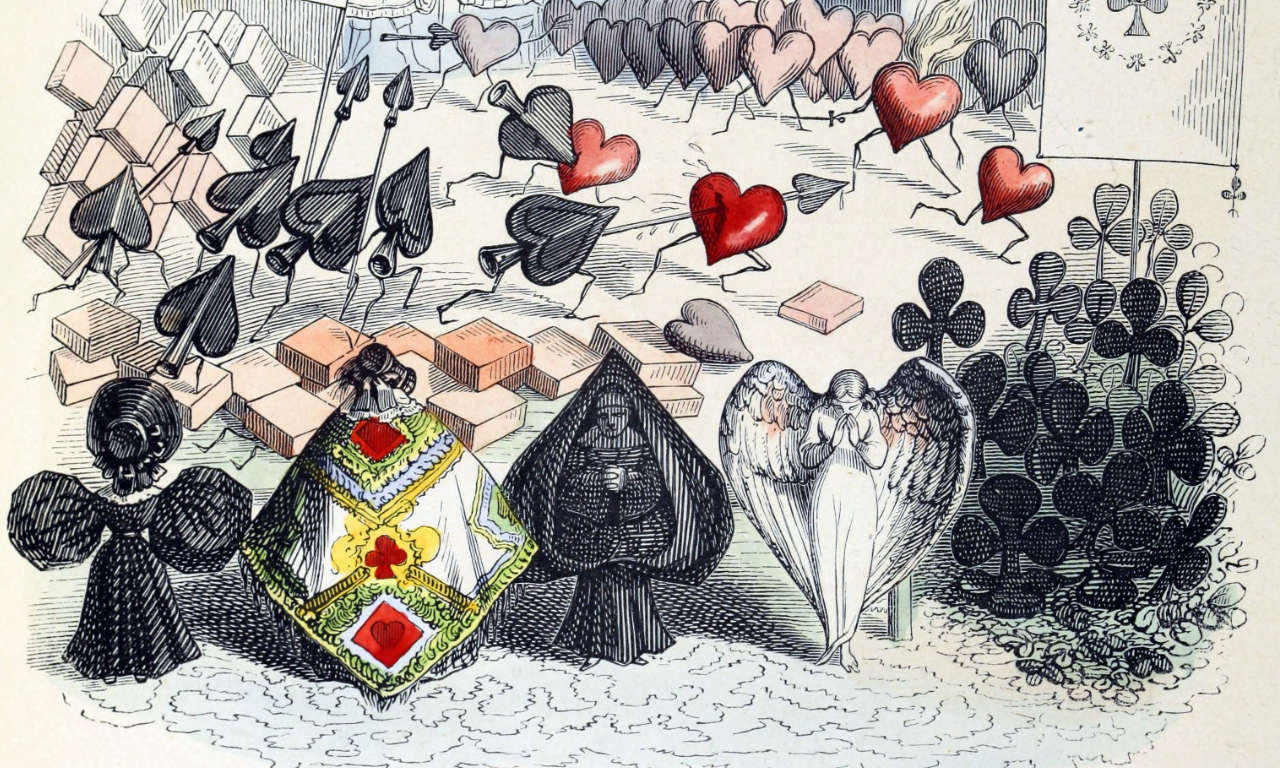
Photo by Japanexperterna.se. Used under a Creative Commons license.
Book Mentioned in the Episode
Music Used in the Episode
| Title | Artist | Album | Label |
|---|---|---|---|
| Bikes! | The M-Tet | Hot Buttered Rum | Lugnut Brand |
| Make It For The Door | The M-Tet | Hot Buttered Rum | Lugnut Brand |
| Check Please | The M-Tet | Hot Buttered Rum | Lugnut Brand |
| Layin Low | Sure Fire Soul Ensemble | Sure Fire Soul Ensemble | Colemine Records |
| The Yo-Yo | The M-Tet | Hot Buttered Rum | Lugnut Brand |
| She’s Looking Good | The M-Tet | Finger Poppin’ Time | Lugnut Brand |
| Light and Sweet, Baby | The M-Tet | Hot Buttered Rum | Lugnut Brand |
| Cook It Down | The M-Tet | Hot Buttered Rum | Lugnut Brand |
| IB Struttin | Sure Fire Soul Ensemble | Sure Fire Soul Ensemble | Colemine Records |
| Mike’s New Adidas | The M-Tet | Finger Poppin’ Time | Lugnut Brand |
| So Boss | The M-Tet | Finger Poppin’ Time | Lugnut Brand |
| Stranger To My Happiness | The M-Tet | Finger Poppin’ Time | Lugnut Brand |
| Volcano Vapes | Sure Fire Soul Ensemble | Out On The Coast | Colemine Records |