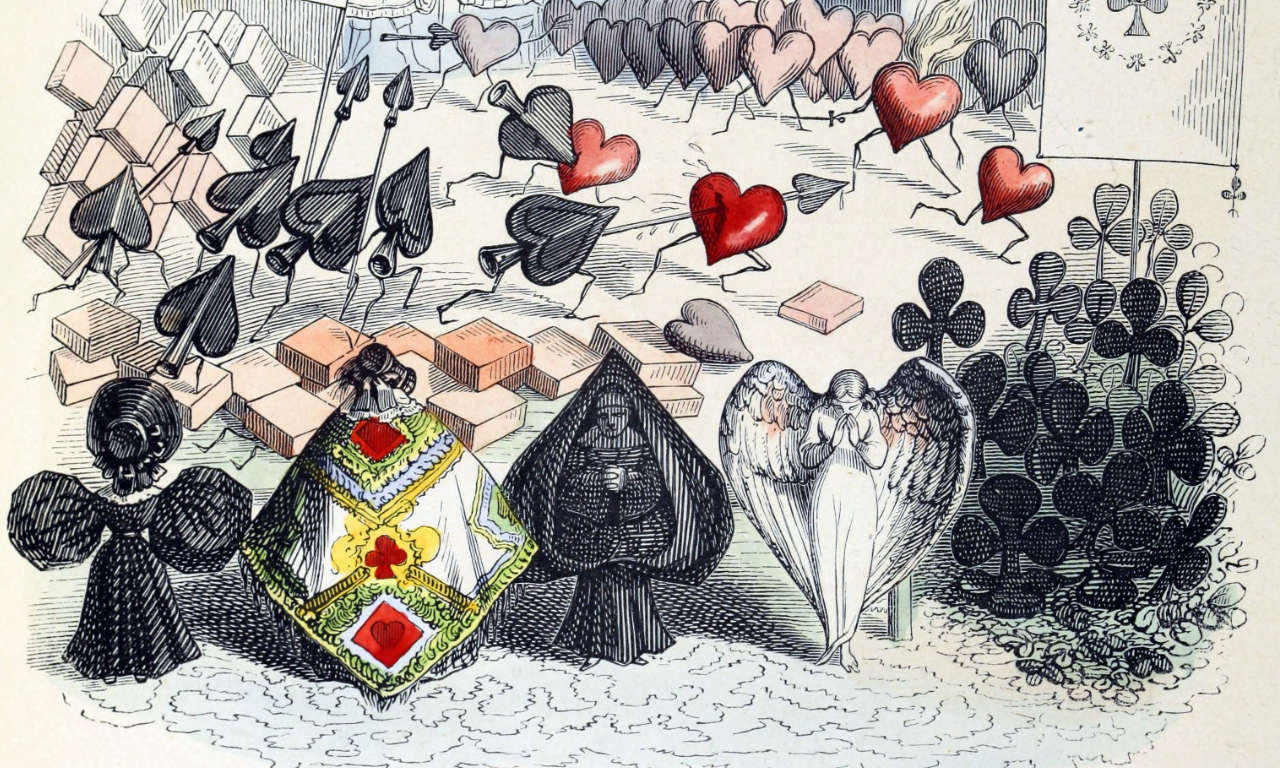
What’s the right way to pronounce gyros? Have you ever heard of feeling poozley? Called something great a blinger? Use the expression one-off to mean a “one-time thing”? This episode first aired October 3, 2009.
Transcript of “Gyros and Sheath Cakes”
You’re listening to A Way with Words. I’m Grant Barrett.
And I’m Martha Barnette.
Recently, a friend asked me for a recommendation. He wanted to know what kind of dictionary to buy for his son, who’s a college freshman. And he asked me, what’s the best dictionary for my son to keep on his desk? And, you know, the funny thing is that I hesitated for a second. And he said, well, what dictionary do you keep on your desk? And I had to think for a second and then admit, I don’t have any dictionary on my desk. I have sort of a vague muscle memory of opening a heavy dictionary on my desk and turning the pages or pulling a big one down off the shelf. But, Grant, I really don’t do that anymore. I don’t have a dictionary on my desk. I guarantee you his son doesn’t have a dictionary on his desk either and won’t, even if his father buys it. He’s like you and me, and most people these days who have a reason to call on a dictionary every day, we go online, don’t we?
Right.
But I had to explain that if I want to look up a word, I go to onelook.com and look at the dictionaries there, the American Heritage or maybe Merriam-Webster. Or I go to the Oxford English Dictionary online. But, of course, that costs a lot of money for a lot of people. So I was sort of at a loss for what to tell him. What would you have said?
Well, you’re headed for the territory that requires some kind of teasing out and explaining, kind of like setting up your criteria. He’s talking about a college student here. The father’s willing to spend some money, right? And so he could go ahead and buy the paper dictionary. Sometimes they come with CD-ROMs, which is kind of close to online. But really, I would actually recommend spending the money to get the kid access to an online dictionary that’s not free because they’re better. For example, Merriam-Webster’s Unabridged. You could buy it, but it’s also online, relatively recently updated. I think it’s 2002, 2003. It’s something like $30 a year.
Yeah, it’s not much.
And it’s a better dictionary than Merriam-Webster’s Collegiate. It has etymologies, for example. It has more meanings to words, more senses, more information, more notes in general. It’s a great dictionary. But if you do want print, and I know you’re out there, right? Three of you? Four of you? Both of you. You know the one that I usually recommend, right, Martha?
Yes.
It’s the two-volume, shorter Oxford English Dictionary. It can be had for about $110, Amazon.com and a few other places. It’s not the full Oxford English Dictionary. They basically cut out most of the citations and a lot of the nonce words, that is, words that were used once ever, you know, Chaucer used it once, so they decided to record it. But it’s a great dictionary. It’s very complete. The 6th edition is very Americanized. It’s nice to look at. It’s easy to read. It’s a great print dictionary. And, again, if you’re willing to spend the money, it’s the one to have. If you’re not willing to spend more than $100 on a dictionary, then I would recommend the Merriam-Webster’s Collegiate. This is one that’s going to work for most of your puzzling and most of your gaming. It’s going to work for any kind of ordinary book that you’re reading. But if you’re reading Tolkien or Dorothy Dunnett, you’ve got to have a better dictionary, you know, because they have very highly specialized vocabulary that just the collegiate dictionary is just not going to be complete enough to do.
Yeah. Well, if you have a question about dictionaries or language or buzzwords or grammar or word origins or slang, dial us up. The number is 1-877-929-9673. That’s 1-877-W-A-Y-W-O-R-D. Or shoot us an email. The address is words@waywordradio.org.
Hi, you have A Way with Words.
Hi, how are you doing?
Hi, doing well. Who’s this?
This is Jeremy Greenberg, and I am calling from San Diego, California.
Well, welcome to the program, Jeremy. What’s on your mind?
The word poosley is on my mind. My in-laws… Wait a second, we have a seven-second dumper on this line. The way they use it is to mean that they don’t feel well.
Never heard of it.
Can’t find it in a dictionary. They swear it’s a real word.
These are your in-laws, did you say?
Yeah, they’re of Welsh stock.
Huh.
And they say they feel poosily, and I think it’s impossible to feel poosily because it’s not a thing. My wife says it, which is the main reason why I’m interested in potentially proving a wrong.
I see.
Yes. And my mother-in-law says it. And truthfully, I just want to know, is it a word?
Have you confronted them about this?
I have.
Is this a thing between you?
It is a word.
Okay.
And can they cite other people having said this word?
They have not given me any instances of other people saying it, but they swear it’s a word.
So, Jeremy, are there degrees of poosley? I mean, if you push back from Thanksgiving dinner and you’re really full, do you say, oh, I’m poosley? Or is it more when you were in bed with a fever?
I think it’s the in bed with a fever. They say that poosley is actually a combination of poor and queasy.
So, Jeremy, your theory is that this must be something that your family members made up.
I think my in-laws made it up, yeah. But it may have been so long ago that it’s just become a word.
I see.
I hope you don’t have very much on the line, Jeremy.
No, no, just wanting to know the truth more than anything.
The truth is, how should I put this plainly? You’re wrong.
I’m wrong?
You’re wrong, yes. It is indeed a word. It is a word. It is a word. And it has a variety of spellings and a variety of different places that I’ve seen it. I can give you 20 or 30 different discrete users of it online. It’s not a common word. It’s not in any dictionary that I’ve checked. And I don’t know that you’ll ever get anybody to agree on exactly where it comes from. But there are many people who use it. They spell it P-O-O-S-L-E-Y, P-O-O-Z-L-E-Y, P-O-O-Z-L-Y, even without the L, P-O-O-Z-Y.
Well, they’re going to be delighted.
And you’ll find it using it exactly in the way that you described it. If you feel poosy or poosly, and it does seem to be how it’s pronounced, it means you feel poorly. And I’d never heard the poorly plus queasy derivation. I tend to doubt it, but it really does encapsulate the exact meaning. It’s a combination of just feeling ill plus maybe a little nauseated.
Wow.
Jeremy, you’re saying that this is making you feel poosley?
This answer has made me feel quite poosley.
And, you know, in the United States it’s not common at all, but when I do see it, it tends to appear in New England, like Maine.
Oh, really?
And Vermont, yeah. And I don’t know about any Welsh descendancy there, and I don’t know anything about this word coming from Welsh, but that is a trail of evidence that I’m going to follow, just to see if I can figure this out.
Wow.
Well, Jeremy, we’re glad you called.
I’m not sure you’re glad you called.
No, but thanks for sharing this word with us in any case. And I bet a lot of our listeners will be delighted to find that, hey, I know that word. My granny used that. Or they’re going to start using it.
Oh, my God.
It’s going to be a poosly word.
Yeah, I’ll start using it. I mean, really, it’s just fun. And I’m glad to know it’s a real word.
Thank you for calling, Jeremy.
My pleasure.
Thank you.
All right.
Bye-bye.
Bye.
What’s really interesting from a lexical standpoint, the wide variety of spellings indicate that this word is transmitted largely orally in English.
Yeah.
So that means it’s no wonder this poor man who is about to be pummeled by all of his in-laws, they’re going to get him back. This poor man, there’s no wonder that he hasn’t encountered it before because if it’s transmitted orally, that means it’s pretty rare.
Poor Jeremy.
Bring to us your mysteries. The number to call is 1-877-929-9673 or send an email to words@waywordradio.org.
Hello, you have A Way with Words.
Hi, my name is Katie and I’m calling from Fort Worth, Texas.
Oh, okay. Welcome, Katie.
Thank you.
So my mom’s family is all from Texas and we have this cake that everyone makes all the time, holidays, birthdays, whatever.
And it’s called a chocolate sheath cake and it’s spelled S-H-E-A-T-H.
And we never thought anything of it.
We just always called it the sheath cake.
And then my sister is engaged to a guy who’s a chef.
And he one day heard us talking about it or we made it.
And he said, I’ve never heard of a sheath cake.
I think you guys are mispronouncing sheath cake, S-H-E-E-T.
Oh, I smell trouble.
So we have, you know, they’ve kind of been arguing about it, you know, playfully.
And he, as far as I know, maintains that there’s no such thing as a sheath cake.
So my mom did some digging, found out it came, she received a recipe as a wedding gift.
And so it came from a cousin who got it from a cafeteria lady at a high school in the 60s.
And we’re not sure where it came from other than that.
And so now we’re starting to wonder, is it really sheet cake or is sheet cake something real that, you know, we’re actually spelling right?
Huh.
The argument is S-H-E-A-T-H versus S-H-E-E-T.
Correct.
What kind of cake are we talking about here?
It’s a chocolate cake. I mean, it is a sheet cake. It’s just a single layer made in like a 9×13 pan.
And it’s a chocolate cake, but it has a lot of spices in it, primarily like cinnamon.
Pretty thin though, right? Usually just a couple inches high, it doesn’t rise much, kind of brownie or something.
Yeah, yeah. I mean, it’s just like a regular cake that, you know, just a regular sheet cake, but it has a lot of cinnamon and it’s made with buttermilk.
You would maintain that sheath, S-H-E-A-T-H, is the name of the cake, and he says no.
That’s correct.
One of my colleagues, Barry Poppick, lives in Austin, Texas now.
He has noticed and recorded some evidence that shows that sheath cake is particularly more common as the way to describe this in Texas than it is anywhere else.
I mean, it does occur in the south and southwest in general.
But sheath, S-H-E-A-T-H, does appear to be a little bit of a regionalism for sheet.
They are the same cake as far as I can tell.
And there’s something happening here with that pronunciation.
Barry Poppik’s theory, I think, is pretty sound.
His theory is that with a particular Texas accent, the word sheet can sound like the S word.
And so perhaps as a way of avoidance, which is a well-chronicled way that language changes.
And a good idea with chocolate cake.
People might have decided maybe the word was really sheath.
Because there’s nothing sheath-like happening here.
The cake isn’t covering anything.
I mean, it’s not enclosing or enveloping anything like, say, a sheath of a sword would, right?
Yeah.
Or a sheath of a knife.
No, no.
So there’s something happening.
The sheath is the newer form.
It dates to about the 1950s.
So it’s got a long history.
If nothing else, that gives you a little bit of weight in favor of using sheath.
But sheet cake is the older, more common, and more well-established form.
Okay.
But, again, as a regionalism, I think it’s about as harmless as they come.
Mm—
So in summary, Katie, you’re fine with sheet cake.
It might not be the oldest form or the most formal form or the one used everywhere by more people, but it’s totally fine.
Continue happily.
Absolutely.
Thank you very much.
Okay.
Well, thanks a lot for calling.
Thanks a lot, you guys.
Okay.
Bye-bye.
All right.
Bye-bye.
Oh, yum.
Do we love food calls?
We love food calls.
If you’ve got a question about food, and if you want to send us some, give us a call, 1-877-929-9673,
Or send an email to words@waywordradio.org.
If you think spelling doesn’t matter, think again.
A recent telephone survey of 100 senior Canadian executives showed that more than a fifth of them said one single typo on a resume or a cover letter could cost a potential employee that job.
And 28% of them said that two mistakes would kill that applicant’s chances.
And they listed in the report on this survey some of the common mistakes.
For example, dear sir or madman, I’m attacking my resume for you to review.
Following is a grief overview of my skills.
Oh, terrible.
And finally, have a keen eye for derail.
Oh, no.
I can see this happening.
I live in dread of doing that kind of thing.
But, of course, the moral of the story is, yes, run spellcheck, but do not rely on it.
Well, if you’ve got tricks for keeping your spelling intact so that you can get the job, send us an email to words@waywordradio.org.
Puzzle, puzzle, toil and trouble.
It’s our word quiz and more of your calls next on A Way with Words.
You’re listening to A Way with Words.
I’m Grant Barrett.
And I’m Martha Barnette.
And we are joined by our lovely and talented Mr. Quiz, Greg Pliska.
Lovely and talented.
Oh, gorgeous.
Just fabulous.
Oh, what a stunning gown he’s got on today as he comes up the carpet.
Nice shoes.
I don’t know what to say after that introduction.
The lovely and talented.
Yeah, I do feel like I’m at the Oscars.
Do you have a quiz there somewhere?
No, let’s just make jokes about my physique all day.
Yes, I do.
Today’s puzzle comes straight from the National Puzzlers League monthly publication called The Enigma.
Where can we find that?
Well, you can find out all about the National Puzzlers League at www.puzzlers.org.
In the Enigma, we have a type of verse puzzle that we call a flat.
And today’s examples all involve letter changes.
Each short verse that I’ll read you clues two words.
And each word is only one letter different from the other.
Like the words cough and rough where you change the C to an R.
Okay.
Except mine will be harder than that.
Oh.
All you have to do is fill in the blanks so that the verse makes sense.
For example, I never count blank when I’m going to blank.
That method does not work for me.
Right around fives when I burst into hives.
I’m allergic to wool, don’t you see?
So it’s sheep and sleep.
I never count sheep when I’m going to sleep.
Okay.
One letter to the other.
We can do this.
Right, Mark?
Oh, yeah.
And these are all in rhyme?
These are all little verse puzzles.
Excellent.
All right.
And remember, you’re changing just one letter in each word.
Okay.
All right.
Here we go.
I’m such a spaz.
I can’t play jazz.
Not Miles, Bird, or Ellington.
With take the blank, I fight and blank.
Like Napoleon facing Wellington.
So take the A train and attain.
No?
No.
What was that second blank?
I fight and blank.
With take the A train, I fight and strain.
Like Napoleon facing Wellington.
Nice. Wellington and Ellington. Very nice.
Holy orthodonture, Robin cried,
Beholding Joker’s blank and leering rictus.
We’ve tracked you to your blank, but now inside, the joke’s on us.
It seems, you fiend, you’ve tricked us.
So it’s not leer and lair because it’s two letters.
That’s correct.
It’s seven-letter words.
Can we hear it one more time?
Sure.
Holy orthodonture, Robin cried,
Beholding Joker’s blank and leering rictus.
We’ve tracked you to your blank,
But now inside, the joke’s on us.
It seems, you fiend, you’ve tricked us.
Wow.
Where have they tracked Joker to?
Where would you track any villain to?
His lair.
His hideout.
His hideout.
And Robin cries out, beholding Joker’s blank and leering rictus.
Hideous.
Oh, that’s brilliant.
Very nice.
Hideous and hideout.
That’s kind of a classic letter change example.
No kidding.
Yeah.
It’s so.
Amateurs over here.
It’s such a great pair of words.
The change of the letter changes the whole construction of the word.
I was all excited about rictus and trictus.
I think that’s great.
Rictus is one of my favorite words.
I love that word.
It’s on my website.
Don’t stress what you’re wearing for a radio airing.
Since no one can see they don’t care that the shirt worn by Barrett’s the color of carrots or that blank has a blank in her hair.
Barnette has a barrette in her hair.
Yes, exactly.
Very nice.
And I have to say, I don’t really know if she has a barrette in her hair, but I can imagine it.
But Grant’s shirt is certainly the color of carrots.
So I should tell you up front in the next one, you’ve got one two-word phrase and one word.
So the two answers was a word and one is a two-word phrase.
Okay.
When Mama calls blank, Papa runs to her flank to make sure there’s enough in the pot. She makes a great bisque, but there’s always the risk that a blank will be all that she’s got.
Wow.
One more time, please.
When Mama calls blank, Papa runs to her flank to make sure there’s enough in the pot. She makes a great bisque, but there’s always the risk that a blank will be all that she’s got.
Okay, it’s not dinner and winner.
No.
Yeah, what would you not want to have in the pot? What would you call to make Papa come and run to your flank?
Okay, well, you got the right idea. And I used bisque in there. So that’s a clue to the first phrase, when Mama calls blank.
Bisque is a clue to that?
Well, bisque.
Soup’s on.
There you go.
Soup’s on.
Soup’s on?
And soup’s on.
Exactly.
Change the S in the phrase soup’s on to a C to get soup’s on.
Soup’s on.
Nice.
It’s a little something.
A little something.
And that C has a little sedia. Cedilla coming off the bottom of it, right?
That was a hoot.
Great.
Well, if you enjoy these puzzles, you can find more of them and more about the National Puzzlers League at www.puzzlers.org.
Okay.
Thanks, Greg.
And if you’d like to talk about grammar, slang, punctuation, or words and how we use them, the number is 1-877-929-9673.
That’s 1-877-W-A-Y-W-O-R-D.
Or you can send an email to words@waywordradio.org.
Hello, you have A Way with Words.
Hi, my name is Susan. I’m normally in Madison, Wisconsin, but I’m calling from northern Wisconsin. I’m with my family on vacation, but I have a question for you.
I’m a nursing student in Madison, Wisconsin, and I’ve come across an acronym that’s GTTS, and it means strips. I’m wondering what the history is behind GTTS.
It means what?
You know how in medical terminology there’s PRN, which is like used for as needed, or NPO means nothing by mouth. Well, GTTS is used for drips when a medication is given as a drip.
Oh, okay. Okay, right. So you’re wondering if GTTS stands for Get That Titration Started?
There you go.
Very nice, Martha. Oh, la la.
All right. Thanks for calling.
Martha always likes to end on her being right.
Is that really what it is?
No, it’s not, Martha. I wanted to stop the call before I was proved wrong. And if I have to debunk this in the future, Martha, I’m going to show up on your doorstep with some dictionaries.
Grant hates debunking.
And the thing is, she should know better, Susan.
Yeah, it’s a derivative from Latin, right?
That’s exactly right.
Get that titration started.
No, it does derive from Latin, but not from titration.
Do you speak any French or Spanish?
No, I have some French.
All right, do you remember the word G-O-U-T-T-E?
Now that is Spanish for drop.
Well, it’s French for drop, but exactly. Gota, G-O-T-A is Spanish for drop. But these two words come from the same Latin word as the acronym that you gave us, the GTTS.
And the singular is gutta, G-U-T-T-A. Martha, correct my pronunciation if I’m getting it wrong. And then the plural form is gutta. And so what the GTTS is, it’s a combination of the Latin word plus an S for the English plural.
So the GTT is from the gutta and the S is the pluralized of it. And it just means exactly what you said. It means drips or drops. And occasionally it has been assigned the exact measurement of 0.05 milliliters, but I don’t think most places use that.
As a matter of fact, I’m seeing some evidence here that the GTTS acronym is kind of on the way out because I don’t know that it’s actually being formally taught.
It is informally passed along, but I don’t know that it’s a formal part of anyone’s education these days in the medical field.
So, Grant, in other words, it’s a Latin word with a couple of letters knocked out and an S stuck on the end?
Exactly right, yeah.
They’ve knocked the vowels out, and they put an English S on there to make it plural, and it means drops.
That’s pretty weird, isn’t it?
Yeah.
It’s also sometimes abbreviated as GT or just GTT.
But you need those acronyms.
Like the PRN that Susan mentioned means pro-renata, P-R-O-R-E-N-A-T-A, three words, and it means as the situation demands.
And I love the fact that the medical profession still harkens back through its language to the days when everyone learned Latin as part of their medical training.
And, of course, most doctors and nurses don’t today, do they?
No, it’s not part of the curriculum at all.
So, Susan, good for you for digging beneath the surface.
I wonder how many doctors know what that abbreviation means.
I don’t know.
I’ve asked around.
You have?
I’ve asked several people, yeah, and no one’s been able to explain to me where it came from.
Well, now you can tell them from the Latin word for drop.
Excellent. Very cool.
Thanks for calling, Susan.
Great. Thank you very much.
All right. Bye-bye.
The number to call is 1-877-929-9673, or send an email to words@waywordradio.org.
Hello. You have A Way with Words.
Hi. My name is Tui Bui. I’m calling from Fort Worth, Texas.
I wanted to ask how to pronounce the Greek word G-Y-R-O.
Oh, boy. You mean the sandwich.
Yes.
The meat on a pita with some yogurt sauce and cucumbers and tomatoes and onions, right?
Yes, that’s it.
And how do you say it?
Well, I used to say gyro, but I had a TA one time from Greece, and she said it was gyro.
And I’ve heard it’s been pronounced gyro and gyro, and I just really want to know.
So the sandwich, G-Y-R-O.
And there we start with the problems in the first place, Tui, which is not everyone agrees that that’s how you should spell it.
Well, everyone agrees that’s how you spell it.
That’s how you say it.
Well, no, in your world, they may agree how you spell it.
What I’m saying is that the people who are steadfast in believing that the singular form ends in an S.
And that to take that S off to make a singular is incorrect.
Because the word comes from Greek and it means turning.
And it’s iros to mean a turning.
That’s the Greek pronunciation and it does have an S.
And so you will get people, including some Greeks and of course many Americans who believe this to be true, that that’s the way to do it.
But the whole problem with this whole thing is that nobody, as you say, knows how to pronounce the thing.
Even Greek Americans, Greeks, Greeks themselves who I’ve talked to, people who work in restaurants and serve this food, they give me different answers.
I’ve been asking about this for years.
This is why I always order the spanakopita.
Just forget the sandwiches.
That totally works.
And so here’s the thing.
In 1971, the New York Times ran an article about this sandwich.
And notice I’m avoiding saying the word for the moment, right?
The sandwich, the G-Y-R-O.
And in there, they wrote a phonetic pronunciation of the word.
And they spelled it all lowercase letters, Y-E-A-R hyphen O-H, gyro.
And that’s how they said it was pronounced.
Now, the problem with that is, Twee, in 2009, the New York Times also wrote an article about the sandwiches.
And they had a different pronunciation.
And they spelled it capital Y, capital E, capital E, hyphen, lowercase R, lowercase O, lowercase S.
Gyros.
And so in this almost 40 years, in this 38 years between these two articles in the New York Times, something has happened.
And I think what’s happened here is that there’s been kind of a hyper-correction, as we call it.
People have decided to try to hearken back to the original Greek in order to say, oh, this must be the authentic way to pronounce this word.
And you know what about that?
I want to hear something about that.
It’s a load of hooey.
Seriously.
I’m going to get to your answer.
And you just want to know how to pronounce this, right?
There are four pronunciations given in the Oxford English Dictionary.
If you ask, as you’ve done, and you’ve reported exactly what I found to be true, if you say to people, how do you pronounce this word?
If they know that that’s what you’re after, they try to say it in the most authentic way they think it could possibly be real.
They try to make it very foreign sounding or what they imagine to be very Greek sounding.
Right, Martha? This is totally what they do.
Oh, sure.
But you know what?
If you listen to them order the food in the restaurants, it’s completely the same people. It’s a completely different word in their mouths. And I’ve called people on it, and they deny that they pronounced it differently. I’m like, no, you said something else the other day when we talked about this, and now when you’ve ordered the food, you say, you know, here’s the thing. Here’s the bottom line.
One, most people say gyro or gyro. Two, the singular is unquestionably G-Y-R-O. And the reason is because this is an American food. I know it’s no great feat to take meat and put it on bread, and it’s very much like a donut kebab, and people always bring that up. But this particular construction and this particular food by this particular name is American. So it’s an American word. And I know Americans have a tendency to brutalize, sometimes gently, but brutalize foreign words when they appear in our language. But this word is singular G-Y-R-O, gyro, however you want to say it. The plural, of course, is gyro, gyro, gyros or gyros, sorry to say it. And then the fourth thing is it’s yummy. I don’t really care. Just give me some more tzatziki sauce and I’ll take whatever you got there. So it’s good food.
Anyway, so that’s, well, you set me off here. So if I go to Greece, Grant, I’m not going to find these sandwiches?
No, you’ll find different sandwiches. Sometimes, even if you go down to the Palaka, if you go to one of the places in Athens where they serve a lot of food to tourists, you’re going to find food that looks like this, but it’s not going to have this name.
Thank you so much. Does that work for you?
I finally know how to say it.
Yes, yes. Next time somebody asks me, I will tell them that I was on A Way with Words, and they told me how to say it correctly.
That’s right.
Yes. Gyro or Giro, you’re okay.
All right. Thanks for calling.
Thank you.
Bye-bye.
Bye-bye.
Well, if you want to weigh in on the gyro versus Giro versus Giro, then give us a call, 1-877-929-9673, or send an email to words@waywordradio.org.
Have I ever said that you’re my… Never mind.
Hello, you have A Way with Words.
Hello, this is Mike. I’m calling from Odessa, Texas, and I’m doing pretty good today. Thank you. What are you thinking about?
Well, I had a question for you here that I’ve been wondering about for different versions of it over the years. But my question is, what does the letter D in the phrase D-Day stand for? As in the Normandy invasion?
Mm—
June 6, 1944 was D-Day. We invaded the beaches of Normandy to take back France and all of Europe from the Germans. And your question is why there’s a D in D-Day.
Martha, what do you got there?
Well, it’s pretty funny, isn’t it? Because you think about D-Day and you don’t really think about that D. Apparently, it simply means day. Is that the theory that you’d heard?
Yes, ma’am. That it was kind of like T minus, you know, as in a rocket countdown that originated as day minus 20 and so on, the countdown until the actual invasion.
Exactly. Until you finally arrived at day-day.
You got it, Michael. That’s exactly it.
It seems that it’s been used, oh, at least since World War I, and the D referred to the planned day of operation. So it was kind of a placeholder, I guess you’d say. Right, because you didn’t want to name the date in full. First, you didn’t want to do it every single time because that’s kind of onerous, but also because you don’t want to have the very important date in a thousand documents. So you just mark it with D, right?
Right. Yeah. So there’s D-Day and also H-Hour, which is the hour that an operation is supposed to take place. And as you said, the same idea is there in the countdowns for the rocket blast-offs when the T stands for time, T minus five seconds.
Yeah, the interesting thing about D-Day is that it became such a proper noun after the 1944 invasion, but there are many other D-Days in military history because it’s still used today, although I think with less frequency. You could call any kind of event that you’re marking down on the calendar the D-Day that you’re counting up to or counting back from. It’s kind of the same thing that happened with Ground Zero, right?
Ground Zero, we now think of being this place in lower Manhattan where the two towers fell, and yet Ground Zero has long been a specific place right above or below the site of an explosion, especially a nuclear one. So we still have the formal proper noun D-Day, but we also have the informal common noun D-Day.
Right. Well, I just heard so many different versions, and a veteran told me that he was actually at Normandy. And he explained it to me like that, and it made perfect sense. So I just wanted to confirm it.
Well, Michael, thanks for an interesting question. You bet. Thank you. All right. Thank you. Bye-bye. Okay. Bye-bye.
If you’ve got a question about any kind of jargon, slang, lingo, something you heard, something you read, give us a call, 1-877-929-9673, or send an email to words@waywordradio.org. Stick around for more insights about language and how we use it. That’s coming up next as A Way with Words continues.
You’re listening to A Way with Words. I’m Grant Barrett. And I’m Martha Barnette. I was in Barcelona for the first time recently. And one of the great delights of that city, besides the wonderful food and the tapas bars,
Is the fact that you can’t go very far in Barcelona without running into works by the great architect Antonio Gaudi.
And I went to several buildings that he designed, but I couldn’t visit more than one or two in a day because it’s just too heady an experience.
Grant, have you been there and seen them?
Barcelona, Spain? No, no.
High on the list, though.
It’s just amazing.
I mean, this guy’s buildings are extremely playful, and they seem to defy all architectural rules.
They even seem to defy gravity at times.
And I’d walk into one of them, and sometimes I’d feel like I’d been swallowed by a giant sea creature or something.
I mean, it gave you that much of a sense of hallucinating.
Now, Gaudi was born in 1852, and he was a very sickly child.
He had rheumatic fever.
And so he spent a lot of his childhood near his house in this small village in Catalonia all by himself.
And he would just closely study all the forms of nature, you know, flowers and shells and bugs and that kind of thing.
And you see the results of this in his work.
Well, when Gaudi graduated from architecture school, one of the officials there supposedly remarked, who knows if we’ve given this diploma to a nut or a genius.
Time will tell.
And trust me, Grant, this guy is a genius.
I mean, from the wavy exteriors of the buildings right down to the window latches.
Everything’s completely over the top.
It’s ornate.
It just screams genius.
It’s just like nothing I’ve ever seen.
And, of course, once I recovered from this incredibly heady visual experience, of course, Grant, I started thinking about language.
And I remembered an email that we’d received a while back from a listener who asks,
Does our word gaudy, that’s G-A-U-D-Y, come from the name of the architect Gaudy?
Of course, gaudy means extravagantly tasteless or showy, and you might think that there was a connection.
And I admit I had to go double check, and it turns out that the short answer is…
Ixnay.
Ixnay. They’re not connected.
Gaudy, meaning showy, goes all the way back to the late 15th century.
And it may come from an earlier word, gaud, G-A-U-D, which means a showy or purely ornamental object.
And both of those words may go all the way back to the Latin gaudere, which means to rejoice.
You know, like that song, gaudi, amusegator, which is, let’s rejoice, therefore.
So the bottom line is that the word gaudi was around for centuries before Antonio Gaudi ever came on the scene.
But it’s easy to see why somebody might guess a connection.
And the other thing I want to say about all this is that if you haven’t seen Gowdy’s work up close and personal, by all means, put it on your do-yourself-a-favor list.
All right.
To my bucket list of ghosts.
Thanks, Martha.
That’s right, your bucket list.
Well, if you have a question about language, call us 1-877-929-9673 or email us.
That address is words@waywordradio.org.
Hello.
You have A Way with Words.
This is Jan, and I’m calling from Carmel, Indiana.
Well, Jan, welcome to the program.
Hi, Jan.
Thank you.
I have a question about a word that I heard in the context of large storms when I was growing up.
My mother used to say, well, this one’s going to be a real blinger.
So the word is blinger.
-huh.
And what did she mean by that?
She meant that it was something out of the ordinary.
Usually it meant it was going to be a grand event, a lot of winds.
It usually came up quickly and unexpected.
And it was used very infrequently.
It was only, you know, for special weather conditions.
-huh.
Blinger.
And so it’s spelled like finger but with B-L?
Yeah, right.
Exactly.
And so what’s your question about it?
I just wondered if you knew if that word existed or the origin of it.
And I was wondering if it had a regional existence or something like that.
-huh. Or maybe just your family used it, huh?
Right.
When was your mother born? Do you know?
My mother was born in 1920, and her parents had emigrated from England.
And they lived, originally they lived in Canada near Hesler, and then they emigrated over to Detroit.
So that’s where I grew up was in Detroit.
Well, I love this word, don’t you?
It’s great.
It’s really, it’s been a curiosity with me for years, and my mother is gone now, so I can’t question her about it.
But it’s got a lot of descriptive quality to it.
Yeah, it’s a blinger of a word, right?
That’s right.
Yeah.
Well, you’d be happy to know that it is a word, and you’re right that you don’t see it in most dictionaries,
But you will find it every once in a while.
It’s in the Dictionary of American Regional English, for example.
Okay.
And it’s used mostly in the Northeast, according to that dictionary.
And it means, as you said, an extreme or outstanding example of its kind.
There’s one citation in this dictionary from 1949 that says it’s talking about people who caught colds.
And it says 179 of them developed real blingers.
Okay.
Okay.
So it’s something out of the ordinary then again.
Yeah, exactly.
Something that’s really outstanding.
It goes back much further than that.
I’ve seen it back as far as 1897, talking about a good-looking girl.
Wow.
Yeah, the quote there is, a blinger, a stunner, the handsomest girl I ever set eyes on.
She must be something, huh?
That’s really interesting.
I’m glad that you guys are able to identify this, because every time I try to search it on the Internet,
It gets muddled up with all the word that bling means now.
Right.
Right.
The newer meaning, and that pops up and I can’t find any reference to it.
Yeah, there’s no connection between bling-bling as in the hip-hop term and this blinger.
No, no, they’re totally different.
Okay, well, I’m just tickled to death that you guys knew.
I kind of thought you would be the source.
We are a blinger of a source, come on.
And when we’re not the source, we know where to check.
That’s right. That’s exactly right.
Thank you so much for giving us a call, Jan.
Okay, well, thank you for taking my call.
Sure, bye-bye.
Bye-bye.
Well, if you have a family word or phrase that you’re curious about,
Give us a call.
The number is 1-877-929-9673
Or send those emails to words@waywordradio.org.
Hello, you have A Way with Words.
Howdy, this is John in Bremerton, Washington.
Well, hiya, John. Welcome to the program.
Howdy.
Howdy, Martha.
Good to have you here. What’s up?
Well, I was wondering what the meaning of one-off is and where it came from.
Well, now, John, how would you use that in a sentence?
Well, let me give you my spiel of it.
Okay.
Okay.
When I turned 60 during the millennium, I purchased my first PC and went online for the first time.
And soon after, I was asked to help moderate a forum on Lord of the Rings website.
It originates out of Great Britain.
And one day a member violated our family-friendly policy, and the then owner banned him for life.
And I didn’t think that violation was flagrant enough to receive such a harsh penalty, and I questioned it.
And the owner said it was one-off and told me to drop the subject, which I did.
And I don’t remember hearing the term one-off before,
And at the time I thought maybe it was mispronounced or misspelled or shortened slang for one-of-a-kind.
But the word really was off.
Since then, I’ve heard it innumerable times on the radio and TV.
-huh. So, John, it’s always implying something like one of a kind, right?
Yeah.
Or something that happens just once?
Yeah, unique.
What was one of a kind here? Was it the banning that was one of a kind,
Or was it the original violation that was one of a kind?
I think it was the banning.
-huh. And you say that the person who was using that expression was British?
Yes.
That’s interesting, isn’t it, Grant?
Yeah, that makes some sense.
Yeah.
It’s apparently a term that originated in Britain, although we hear lots more nowadays in this country.
And, John, it appears to have come from manufacturing and from the idea that in manufacturing, at least since the 1930s or so, people would use off with a preceding number to represent a quantity of things to be produced.
So like I might say to you, John, here’s a mold.
I need you to produce 50 units off or I need you to recalibrate the machine after 500 units off.
But wouldn’t it be more like this is a 500 off unit or a 500 off run or a 500 off order, right?
The off is usually attached to the number, isn’t it?
Yeah, yeah.
600 off or 60 off, that kind of thing.
And the idea, I think, may go back to a mold, right?
Right.
And so…
It would be off the mold.
Right, right.
So if it’s a one-off, it’s sort of like they broke the mold.
That makes sense.
But, you know, the interesting thing here, I never knew this was British until people started asking about it.
I had no idea because this has been in my vocabulary for ages,
And I think it comes from reading a lot of British literature or listening to a lot of the BBC.
So, John, now you know.
Now I know.
I thank you.
Well, you’re certainly welcome.
And so this Lord of the Rings forum, are you still active in that?
Yeah.
Yeah?
That’s pretty interesting.
Still moderating it.
You’re still moderating.
Which one is it?
It’s planettolkien.com.
Planet Tolkien.
Oh, yeah.
So you’re a big Tolkien head then, huh?
Yep.
John, it was great to talk to you.
I’m going to look up that forum and have me some fun.
Thank you.
Bye-bye.
You know, Grant, I do get this question a lot.
In fact, I got this question just this morning in my email box.
A guy named Dave wrote to say that he started seeing the phrase one-off used in motorcycle magazines referring to a custom-made part.
So that makes a lot of sense.
That’s why the usage on the Tolkien forum was so weird.
It still usually refers to a thing that’s made rather than an event that happened.
Yeah.
But, I mean, you still can get that.
You know, this is a one-off, you know, YouTube played a secret show.
It was a one-off.
It wasn’t a part of a tour.
Well, if you’ve got a question about something you heard that didn’t sound normal to you,
Give us a call, 1-877-929-9673.
You can send us an email to words@waywordradio.org,
And you can find out all about us and the show at waywordradio.org, which is our website.
We were talking about reference books earlier in the program,
The ones that we would recommend to somebody to buy for a student or a child or for themselves, right?
And I was thinking sometimes we get a little stuck in our ways,
Meaning we like to think of ourselves as being currently up to date with all the latest language information.
And really what we’re doing kind of is seeking out information that already supports our points of view, right?
All right, busted.
Right, we do that. We do.
If somebody says, you know, what’s the deal with hopefully or what’s the deal with irregardless, we’ve got some pat-set answers.
And they tend to conform to the same kind of points of view every time.
So I was thinking one of the ways in which I try to balance this out, I buy multiple dictionaries.
I use multiple dictionaries for one thing.
So I’m getting different perspectives because they’re not the same.
Dictionaries are not interchangeable.
But the other way that I do this is to find some opposition.
I mean, you do that for me, right?
You and I kind of oppose each other and provide alternate points of view.
But the other way that I do that is with Brian Garner’s Modern American Usage.
And he has just released a third edition of this great book.
And now the reason that he’s my opposition is he’s a highly conservative usage expert.
That’s not a political opinion.
That’s a professional opinion.
He’s about keeping language more or less in a stable form so that it doesn’t change too rapidly and that communication is increased because we’re not taking liberties with the way we express ourselves.
And he, of course, in his book gives short shrift to slang and dialect and informal speech in general.
And I think that’s a mistake.
But you know what?
You’ve heard me cite him again and again on this program.
It’s because I know that I can trust Brian Garner to be consistent.
I know that I can trust him to back up what he’s talking about.
He’s not talking out of his hand.
I mean, here’s the man who is also the editor of Black’s Law Dictionary.
He understands subtlety.
He understands getting to the bottom of something with evidence and proving it.
And so when he has an opinion, even though maybe I think he’s considered the wrong evidence or maybe I think he’s ill considered the evidence, he at least has got some kind of substantiation behind it.
And so I’ve got this brand new pristine copy of the third edition of Brian Garner’s Modern American Usage, and it’s fantastic.
It really is stupendous.
And not because he agrees with me.
There’s something on every page I’m like, well, now that’s not true or that’s wrong.
But that’s beside the point.
He’s not a self-appointed expert.
He is an expert.
So in any case, I was just saying, thinking along those lines and thinking, when people ask me, what do I recommend as far as usage goes?
Brian Garner’s Modern American Usage is one of those books that I recommend.
It’s great.
And that’s the third edition, right?
That’s right.
I have to check it out.
Well, if you have a question about language, give us a call.
The number is 1-877-929-9673 or send us an email.
That address is words@waywordradio.org.
Hello, you have A Way with Words.
Hello, my name is David, and I live in Arcata, California.
Welcome, David.
My question relates to a peculiar use of the word lens.
Through the years working as an ophthalmologist, I’ve encountered maybe a handful of patients who use the word lens as if it’s plural, the singular of which is len.
For example, they might say, my limbs are scratched, but the right limb is not as scratched as the left limb.
That’s interesting.
These are usually patients over 60 years of age, often with strong Southern accents.
So I’m wondering, are there parts of the Southern U.S. where this usage is current today?
What an interesting question.
So they use LEN like they would say, I dropped my contact LEN?
Yes, they might say that.
I don’t think I’ve heard it in connection with the contact, but it’s usually a spectacle lens.
Okay, okay.
And so what is the plural?
The plural is lens.
Oh, lens.
So one lens, two lens?
Correct.
Okay, and they don’t order contact lenses?
No, they would order contact lens.
How interesting.
That’s pretty cool.
You’re encountering these southern speakers in Arcata, California?
Yes.
You know, it’s been a handful of patients in more than 30 years.
Oh, I see.
Okay.
Yeah, it’s a definite pattern in a certain population, apparently.
Yeah, we’ve encountered this in a few other words in English.
We’ve seen this, for example, in the word K-U-D-O-S, which many English speakers took to be a plural, but actually started out as a singular, and people decided that kudos was more than one kudo.
And actually, that is pretty much the standard usage these days anyway.
So that one has made the full transformation.
I don’t know that I’ve ever encountered the singular word lens being taken as a plural before, but that’s a very nice little data point there.
Where else have we seen that, Martha?
Well, I was going to say, David, you’re an ophthalmologist.
Is that right?
Right.
And so as a medical person, I mean, you must be familiar with bicep, right?
Oh, there we go.
David, feel my bicep.
Oh, yes.
And singularized.
Right, right.
The word is biceps, and it lost that S because it’s sort of misunderstood as a plural.
Yeah, same phenomenon.
So in reality, biceps is both plural and singular, right?
Yeah, I think so.
In the strictest usage.
So I have two biceps, and I have a biceps on my left arm.
Yeah, honestly, I haven’t heard that phenomenon before with that particular word lens.
I’m going to start listening for it, but you can see how it would happen.
Yeah, it’s called a back formation.
When people look at a word and decide to analyze it differently than is normal and decide, for example, that it’s a conjugated form or that it’s a plural form when it isn’t either of those things.
I see.
So they infer something that’s not true.
Yeah.
Well, thank you for sharing that with us.
It’s definitely a known phenomenon.
It’s interesting to hear it.
And if you come across some more examples, I’d love to know where exactly these folks are from and see if we can pin some kind of regional information to this.
Well, thank you for taking the call.
Okay, sure thing.
Thank you for calling.
Bye-bye.
Bye-bye.
If you’ve noticed something in the speech of other people and you’ve got questions about it, give us a call.
And you can send all your questions about slang and jargon, new words and old words to words@waywordradio.org.
That’s our show for this week.
If you didn’t get on the air today, you can leave us a message anytime.
The number is 1-877-929-9673.
Or email us.
The address is words@waywordradio.org.
Or drop by A Way with Words online.
You can chat with fellow word lovers by going to waywordradio.org/discussion.
Stefanie Levine is our senior producer.
Our technical director and editor is Tim Felten.
Tim also engineered our theme music.
Kurt Conan produced it.
We’ve had production help this week from Josette Herdell and Jennifer Powell.
From Studio West in San Diego, I’m Martha Barnette.
And from San Francisco, I’m Grant Barrett.
Thanks to Paul Lancor for engineering our show from the studios of KQED Radio.
Arrivederci.
Bye-bye.
You say oyster.
I’m not gonna stop eating oysters just cause you say oysters.
Let’s call the whole thing off.
Dictionary Recommendations
 Grant and Martha recommend dictionaries for college students, both online references (OneLook.com, The Oxford English Dictionary, and Merriam-Webster Dictionary) and the old-fashioned kind to keep at one’s elbow (Shorter Oxford English Dictionary and Merriam-Webster’s Collegiate Dictionary).
Poozley
If you get hold of some bad sushi for lunch, you’ll wind up feeling poozley. A caller whose in-laws use poozley insists they must have made it up.
“D” in D-Day
A caller from Texas wonders what the “D” stands for in D-Day.
Sheath Cake vs. Sheet Cake
A Texas family has a dispute with a prospective in-law who happens to be a chef. Is their favorite spicy chocolate cake properly known as a sheath cake or a sheet cake?
Job Application Spelling Errors
One place where spelling really counts: on a job application. Martha shares some painfully funny proof.
Word Puzzle in Verse
Quiz Guy Greg Pliska shares a puzzle in verse, challenging the hosts to fill in the blanks with words that differ by just one letter. Like this: “I never count ___ when I’m going to ___; that method does not work for me. Right around five’s when I burst into hives: I’m allergic to wool, don’t you see?”
GTTS
In medical terminology, the abbreviation GTTS means “drops” or “drips.” But why?
Pronouncing Gyros
The hosts debate the right way to pronounce the name of that meaty Greek sandwiches known as gyros. Is it JEE-roh? JYE-roh? YEE-roh? Something more Greek-sounding?
Origin of Gaudy
Martha says her recent trip to Barcelona brought to mind a listener’s question about whether the word gaudy has anything to do with the name of the great Catalan architect, Antoni Gaudi.
A Real Blinger
A woman who grew up in Detroit remembers her mother saying, “This one’s going to be a real blinger!” whenever a big storm was coming. What exactly is a blinger?
Etymology of One-Off
A one-off is something that is done or made or occurs just once. A Washington State caller who’s curious about the term learns that it derives from manufacturing lingo.
Modern American Usage, Third Edition
The third edition of Bryan Garner’s book, Modern American Usage is now out. Grant explains why it’s a wonderful reference to consult, even when you disagree with it.
A Single Len
An ophthalmologist in Arcata, California, is puzzled by the way some of his older patients refer to a single lens. Several of them call it a len, not a lens. This gives the hosts a chance to focus on what linguists call back-formations.
This episode is hosted by Martha Barnette and Grant Barrett, and produced by Stefanie Levine.
Photo by Jeffrey W. Used under a Creative Commons license.
Books Mentioned in the Episode
| Modern American Usage by Bryan Garner |
| Shorter Oxford English Dictionary by William R. Trumble |
| Merriam-Webster’s Collegiate Dictionary by Merriam-Webster |