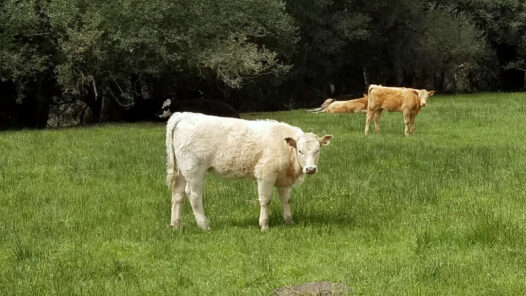
What’s a dittler? What’s a dit? A traveling preacher named Fred says he’s heard these strange terms in parts of Appalachia used to refer to “baby chicks” and “little ducklings.” We share some of our own research about these curious terms.
Transcript of “Dits and Dat (minicast)”
Welcome to another summer minicast of A Way with Words. I’m Martha Barnette.
You know how Grant and I treasure all of our dictionaries and reference works like the Dictionary of American Regional English.
But there’s nothing like hearing reports from listeners about their real-life experiences with words out there in the wild.
Take Fred, a traveling preacher.
He called us recently to talk about an odd word that he’d encountered in the hills of Appalachia.
I’m calling you about ditlers, baby chicks.
What?
When I moved to eastern Kentucky, I learned what I thought was a new word, and now I have discerned that it must be a regional word.
The word is dit or ditler.
I’m not sure which would be the primary word and which one would be the derivation, but it simply means baby chick.
Now, how are you spelling that, Fred?
It’s how I spell it. I’ve never seen it in print.
I spell D-I-T for dit and D-I-T-T-L-E-R for ditler.
D as in dog.
D as in dog, yeah.
D as in dog, yeah.
And this means baby chick. Is it only for chickens or what about baby geese or ducks?
I’ve never heard it applied to the wetland fowl, like geese and ducks, but they call turkeys, baby turkeys, they call them turkey dits, and baby guineas, they call them guinea dits.
So they’re mostly dryland fowl, but principally it’s for chickens.
So you know this word from eastern Kentucky.
Have you heard it anywhere else?
No, and I have been searching.
I moved here in 86 and met the word pretty soon.
I’ve been kind of testing the boundaries on it.
I’ve gone fairly well to the west.
It’s very strong, of course, in the section of Kentucky that Virginia V’s down in beside.
But when I start moving farther west, people don’t know the word as well.
Now, am I remembering correctly that eastern Kentucky is more of the Appalachian area?
Absolutely, yes.
Yeah, and so in the part that I call Appalachia, it seems to be pretty strong, but now I’ve tested it farther north, and it’s not well known in Clay County, but that’s too far north. It seems to have faded.
Well, what a wonderful word, dit and diddler, for a little chicken, a little chick.
Yeah, this is a delightful word.
Yeah, I’ve never heard it.
I’ll tell you, though.
Yes, that’s why I’d like to know more about it.
Let me tell you a little bit.
I’ve got something for you, Fred.
You’re going to love this.
I’m looking here at the Dictionary of American Regional English, and that’s no surprise because, as you said, this is a regional term.
Dittler is not used and are not used throughout the United States.
But the difference that I’m seeing here is that the spelling that they use in the Dictionary of American Regional English is diddle, D-I-D-D-L-E.
And it’s not diddler, but diddle.
And then there are some other variations.
There’s dib, D-I-B, and dip, D-I-P, and dibby, D-I-B-B-Y.
And all of these can mean a baby chick or a duckling.
Or the ducklings.
And the reason I asked about the mountains of eastern Kentucky is because according to the Dictionary of American Regional English, these terms are pretty much specific to southern Appalachia.
Southern. Okay.
So when I start getting too far north, it loses it.
Yep. It’s funny.
Your field work really is exactly how a dialect researcher would go about it.
That’s exactly what they would do.
They would travel around and do little samples here and there to see if words were known.
But what’s even more interesting is that there are a couple glossaries here online that I can see.
They were collected during the 1800s, and they were for East Anglia in England, that is Suffolk and Norfolk counties.
So it does have English roots, good.
Yep.
The word diddle appears there and means young ducks.
And so it looks like we can say for pretty sure that these words came from that part of England.
And we know that they go back at least a couple hundred years.
Well, when it comes to collecting words in the wild, you may not be as thorough as Fred.
But if you’ve come across an interesting one, by all means tell us about it.
Call us anytime at 1-877-929-9673 or write to us.
The address is words@waywordradio.org.
And if you just can’t wait to compare notes about a word you’ve encountered, stop by our discussion forum and talk it over with fellow word nerds.
You’ll find those conversations at waywordradio.org/discussion.
Hope you’re having a good summer, or if you’re listening from the Southern Hemisphere, hope you’re having a good winter.
For A Way with Words, I’m Martha Barnette.
Support for A Way with Words comes from WordSmart, the vocabulary building software.
Improving your vocabulary, reading comprehension, and critical thinking skills will increase your chances for success.
Learn more online at WordSmart.tv.
And from iUniverse, supported self-publishing.
Is there a book in you?
Find out how to publish it at 1-800-AUTHORS or learn more online at iUniverse.com.
To be notified automatically when downloadable audio is available, subscribe to the show via iTunes or another podcatching program.