

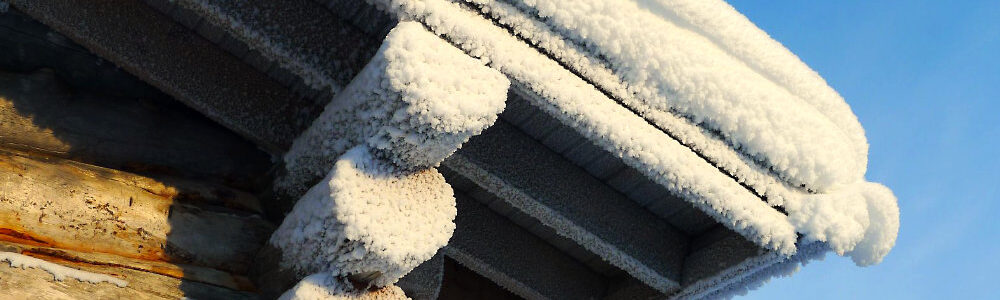
The adjectives canine and feline refer to dogs and cats. But how does English address other groups of animals? Plus, cabin fever has been around much longer than the current pandemic. That restless, antsy, stir-crazy feeling goes back to the days when you could find yourself literally cooped up all winter in a cabin on the wild frontier. And, in Hungarian, there’s a whole genre of silly jokes that involve a character called the aggressive piglet, with a punchline screamed in your most obnoxious voice. What did the aggressive piglet say when he fell into a well? Listen in for that answer, a brain teaser about names hidden inside phrases, and questions and answers about apple box, lie bump, possum vs. opossum, flat as a flitter vs. flat as a flivver, vespertilian, asinine, how to pronounce tinnitus, and more.
This episode first aired April 18, 2020. It was rebroadcast the weekend of September 7, 2024.
Transcript of “Cabin Fever (episode #1547)”
You’re listening to A Way with Words, the show about language and how we use it.
I’m Grant Barrett.
And I’m Martha Barnette.
We asked for your workplace jargon, and we got some from Aaron Failing.
He lives in Savannah, Georgia.
And he sent us these bits of jargon from his industry.
Apple box, full apple, half apple, quarter apple, and pancake.
But he doesn’t work in apple picking, I bet.
No, he doesn’t.
Not in the food industry.
Not in the food industry at all.
Some kind of, but he’s measuring things out.
Yep, yep.
Different gradations.
Different gradations.
Is it agriculture at all?
No.
No.
Is it some kind of metalworking?
No.
A construction business?
No.
A film business?
How did you, wait, how did you get from agriculture and construction to film?
Because I knew there’s something in the Apple box that gave it away, but I don’t remember exactly what it is.
Yeah.
I have a couple dictionaries of moviemaking terms.
Oh, that’s exactly where they were.
I’ve browsed them.
Oh, there you go.
I should have known.
I couldn’t bring you.
And I have friends in the moviemaking business.
Oh, well, yeah.
And now you know Aaron in Savannah.
He’s a special effects technician.
And an Apple box is a strong wooden box that’s enclosed on all sides.
And it’s got holes on opposite ends.
So you can’t put anything in it, but you can use it to let people stand on if they’re too short to be in the shot.
And they’re different, you know, different things can be propped up there.
So when your male lead is shorter than your female lead, you can make him look taller.
Yeah.
Yeah.
In fact, they’re sometimes known as a man maker.
And a full set of those boxes, the apple box and the full apple, is known as an orchard.
Isn’t that picturesque?
How about that?
Yeah.
What was the other term, the last term?
Pancake. What’s the pancake? Is this like a kookalurus? No, I think it’s a really, a really flat one.
Oh, really flat one. So you get a couple inches, but not much more. Okay.
Yeah. I got all excited about these terms and I did some browsing myself in a wonderful book called AVA to Z, an encyclopedic dictionary of media, entertainment, and other audio visual terms by Richard Kroon.
You may own this.
I might. There might be one of them. It’s super. I had, it’s so much fun digging down.
Yeah, so we’re talking more than 100 years of movie-making jargon and slang just piled on.
And it’s characteristic.
It’s got a lot of color and flavor, right?
A lot of color and flavor.
It’s not boring, this stuff.
And some of it is mysterious and nobody knows where it came from.
Exactly.
Exactly.
In fact, I’m going to talk about another one of those later in the show.
Exciting.
You know, we’d still like to hear the cool, colorful language from inside your business, your hobbies, or the things that you love to do.
Email words@waywordradio.org or tell us on Twitter @wayword.
Hi there. You have A Way with Words.
Hi. My name is Ash. I’m from Arlington, Texas.
And growing up, whenever we would get a painful bump on the side of our tongue, my great-aunt Vera would always call him lie bumps.
Oh.
And, of course, that would make me go through my mind and think, you know, what do I need to fess up about? And I think that was the point.
Right.
I never heard it anywhere else.
And so I just knew that y’all might, if anybody would know, it would be y’all.
Lie bumps.
So you get a red bump, just kind of too much abrasion on your tongue or some food made it raw, something like that, right?
Right.
Or you told a lie.
Or exactly, yeah.
If you were lying about something, you know what happened.
You don’t want to lie to Great Aunt Vera.
No, ma’am.
Did she ever convince you to really spill the beans?
No, I always tried to think of what else would cause this bump because I know that that can’t be true.
They are so common that you will find lie bumps mentioned in lots of medical textbooks.
You’ll find that term itself mentioned.
The medical term for it is papillitis.
They’re caused by sharper, crusty foods that just cause abrasion or rough.
They just debrate the skin of the tongue.
Yeah, and just basically cause some kind of redness.
Yeah, sometimes white bumps, but usually red, yeah.
What was it called?
Papillitis, P-A-P-I-L-L-I-T-I-S.
Yeah, the papillae are the taste buds, right?
So do you think the lye of papillae might be the real part of the…
No, probably not.
Probably not.
It’s probably just a convenient way to get kids.
There’s always all these adult tricks.
Yeah, that’s what it sounds like.
In some folklore books, they do mention that this is a really widespread bit of folklore about these bumps being related to a falsehood being told or lies or something else related to dishonesty.
Throughout the South and African-American culture, again and again and again it comes up.
So it’s not just your family and it’s not just Texas.
It’s throughout hundreds of years, actually.
That actually reminds me of a thing that some cultures do, though they lick a hot spoon and look on your tongue to see if you’re lying.
Oh, really?
Yeah.
Wow.
Who does that?
I can’t tell you what culture does it, but I’ve seen it.
Yeah.
I’ve never heard of that.
That’s cool.
Oh, really?
Wait a minute.
I want to have a look at your tongue now.
Really?
Look it up.
Is that right?
Okay.
How do you not know where it is, but you know the story?
Oh, I know bits and pieces of trivia from everywhere, but I really can’t fill in all the pieces all the time.
You know, there’s only so much space.
You should fill in for me the next time I can’t make it to the studio.
You’ve got a tongue as bumpy as an alligator purse, lady.
Oh, I’m honored.
I know.
I’ll lick the spoon.
I’ll lick the spoon.
All right.
Thank you for your call.
I really appreciate it.
Okay.
Thanks.
Love your show.
Cheers.
Bye-bye.
Thanks, Ash.
Bye-bye.
Bye-bye.
Well, and I bet lie bumps are just so common.
Right.
Everyone has them, right?
Right.
Yeah.
Hello.
You have A Way with Words.
Hi.
This is Grant.
This is Grant.
Who am I talking to?
We are talking to Lisa Fulkert from Bucolic, West Grove, Pennsylvania.
Bucolic.
Lovely word.
Isn’t it awesome?
And we’re going to be talking about animals.
Animals.
Animals from Bucolic.
Hey, Martha.
Hey.
Welcome to the show.
What can we do for you about animals?
I like to think a lot of people have words that they just like to say.
Words are fun.
And for some reason, this little group of words just tickles.
My sister and I, like canine, feline, bovine, porkine, ursine, all those that have to do with animals. And I’m sure there are more. And Martha, I think you actually recently mentioned pavanine.
Oh, yeah.
Having to do with peacocks. So thank you.
Oh, you’re welcome.
For adding to our collection.
You’re menagerie there.
It is, isn’t it? So we were just kind of wondering, I mean, I know they’re all adjectives, and we sometimes use some of them as nouns, but is there a word for these words?
Is there a word for words that describe different animals?
Like bovine, which means like a cow, right?
Mm—
Mm—
Yeah, they’re often called animal adjectives, and another term for it is collateral adjectives.
Those are adjectives that apply to a particular class of things.
Oh, interesting.
But for collateral adjectives, it’s not just for animals.
Can also refer to non-animal things like pluvial means related to rain, riparian means…
Rivers.
Riverbanks.
And literal means…
What do you say?
Literal?
Literal.
Oh, shores.
Shores, yeah.
But those are also collateral adjectives.
Yeah.
And the fun part about this for me is that usually it’s a matter of a Greek or Latin root, and I was having fun trying to guess the ones that Grant was talking about there.
There are probably some other ones that you know and don’t realize you know, like what about asinine?
Where does that come from?
It comes from the Latin word asinus, which means a donkey.
Oh, that’s funny because they also found anserine.
Oh, yeah, which means having to do with a goose, right?
Geese, which also means stupid or silly.
Yes, yes, it can mean silly.
Another one is lupine, the flower.
Yeah.
Oh, from wolves.
Right, right.
Lupine is a flower that’s erroneously named because people used to think it wolfed nutrients out of the soil, which actually it does not.
It’s a nitrogen-fixing plant.
So that’s one you already know.
I wonder if you can guess this one.
If you know that the Greek word for horse is hippos, what do you think a hippotigrine would be?
Oh, my goodness.
Hippotigrine animal.
Because that sounds like you’re combining two animals.
Well, you kind of are.
I’m not sure that that occurs naturally in nature.
Well, it does.
It’s black and white.
Yeah, right?
It’s black and white.
Zebrain?
Yes, yes.
Oh, look at that.
And I’ll give you just a couple more that I really like that don’t end in the I-N-E suffix.
Vespertilian.
Oh, very nice.
Isn’t that a gorgeous word?
It is.
I’m writing these down.
Oh, good.
Yeah, vespertilian means having to do with bats.
Because they come out in the evening.
Yes, yes, at the same time you sing your vespers.
Exactly.
It comes from the Latin for evening or evening star.
And one more that you won’t see very often, but I’m surprised we don’t hear it more, is struthonian.
S-T-R-U-T-H-O-N-I-A-N.
Struthonian.
Is that related to God’s truth?
No, but that’s a good one.
A Struthos homegos was a really big sparrow.
That was their term for ostrich.
And so if somebody is Struthonian, they’re sticking their head in the sand.
Oh, lovely.
Which is actually very funny because my sister often accuses me of sticking my head in the sand.
Oh, there you go.
So I am Struthonian.
Mm-Struthonian.
Very interesting.
There are lots of those.
If you just Google animal adjectives, you’ll find lists of them.
Another strategy is to take the five or six ones that you most likely know and Google them all together at once,
And you’ll come up with lists that have those five or six and tons more.
Okay, interesting.
Well, I did find one other thing when I was kind of looking up animals, barnyard animals specifically,
Because so many of the ones that I named tend to be from the barnyard animals.
And I looked up pigs, and the genus for pigs is SUS, S-U-S,
Which made me think, well, is that then where we come up with calling for pigs?
It is indeed. Absolutely. That is where we come up with a pig call.
That is so interesting, but that must go back quite a ways.
Yeah, many, many years. Yeah, many, many years.
Yeah, to Greek.
Great. That answers my questions and gives me more things to add to our list.
You must be fun on road trips.
Well, I’d like to think so.
Lisa, thank you for your call.
Thanks so much.
All right. Take care now. Bye-bye.
Bye-bye.
We had a conversation a few weeks ago about the Finnish term sisu, meaning intestinal fortitude.
That’s right. The Finns all have fantastic fortitude.
Yes, yes.
And we got further elucidation about that word from Benjamin Marne.
He’s a print artist in northern Wisconsin who actually operates under the name Sisu Press.
And he says, I’m from a Finnish immigrant community, and I’ve heard the word my whole life.
One thing worth mentioning is that what makes Sisu different than grit is that Sisu does not exist in a vacuum.
In order to invoke your Sisu, there must be resistance.
It doesn’t take Sisu to climb Mount Everest.
It takes Sisu to climb Mount Everest with a pack of hungry wolves on your tail and you have no weapon.
But you climb, you fight anyway.
I see.
So you have to have a challenge.
Yeah.
Not a challenge you made for yourself, but a challenge the world threw at you.
Yeah, just extra, extra.
Yeah, gotcha.
You’re listening to A Way with Words, the show about language and how we use it.
I’m Martha Barnette.
And I’m Grant Barrett, and we’re joined by our quiz guide, John Chaneski.
Hi, John.
Hi, Grant.
Hi, Martha.
You know, there’s a lot going on in today’s quiz, but we need to know who is doing it.
A common person’s first name is hidden within each of the following sentences I’m going to deliver to you.
So please tell me who is doing the doing.
Now, remember, the name will always be five letters or longer.
Here we go.
The pool I’ve recently drained.
The pool I’ve recently drained.
Wow.
Liver?
Actually, you’re closing in on it.
Oh, really?
Oliver.
Oliver.
Oliver.
Yes, very good.
Here’s the next one.
The crewman drew a fine picture.
Crewman?
Crewman, yes.
Andrew.
Andrew, there it is.
The crewman drew a fine picture.
Andrew.
How about this one?
She can always tell a lie from the truth.
Always tell a lie from the…
Stella.
Stella it is.
Stella!
Very good.
He has her files well organized.
Asher.
Asher, yes.
Very good, Grant.
Good.
He’d rather a banana than an apple.
Banana than Nathan?
Nathan it is.
Nice.
Very good.
Yeah, Nathan would rather a banana.
She loves a man that can solve puzzles.
Of course she does.
Yeah, of course.
Who doesn’t?
Is Samantha a word?
Close.
Love Samantha.
Samantha loves a man that can solve puzzles.
We know Samantha.
Samantha.
Samantha, call me.
Sammy.
Her recipe for lasagna omitted garlic.
That’s terrible.
I’ve got to include garlic.
No, you want the garlic in there.
Yeah, totally.
Omitted, is that the word?
Omitted, yes.
Naomi.
Naomi, yes.
Very good, Martha.
Though if there’s someone out there called Forla, we’ll take that too.
Sure, whatever.
Maybe we’ll start a new trend.
Forla.
His anger wreaks havoc on normal days.
Singer reeks.
Havoc.
Reeked.
Reeks or reeked?
Reeks.
But that’s not important right now.
How about Connor?
Connor it is, Martha.
We’ve got your wheelhouse, I think.
Here’s the last one.
He acts a bit showy at times.
He acts a bit showy at times.
Wyatt.
Wyatt it is.
Nicely done, Grant, to wrap us up there with who’s doing the doing.
These are the people who are doing the doing.
Nicely done.
That’s a new one.
I don’t think we’ve done this one before.
This is a new one for us.
Yeah.
Thanks, dude.
We’ll talk to you next week.
Thanks, John.
Talk to you then.
Bye-bye.
Well, we do a lot of goofing around on this show, and we talk about all aspects of language.
So if you want to talk with us on the air, give us a call, 877-929-9673,
Or send your questions and stories about language to words@waywordradio.org.
Hello, you have A Way with Words.
Hi, my name is Kathy Mache, and I’m from Jamestown, North Dakota.
Hello, Kathy. Welcome to the show.
Hi, Kathy. What’s going on?
The other day when we were driving along the road, we noticed a car with a flat tire,
And I said, oh, yeah, that one’s flat as a fliver.
And my husband said, yep.
And then he said, what is a fliver?
I said, I don’t know.
That’s something I’ve said for years and years and years.
And so we started thinking about it, and we have no idea where we got that saying.
So I’m a Googler, so I Googled, and I came up with several different references.
Some people saying, no, it’s fritter.
Some people saying, it’s flitter.
Only one person saying fliver.
But then I did talk to my husband, and he said, no, he remembers saying it when he was a kid,
And he’s from the West Coast.
And I remember hearing it when I was little, and I was actually from the East Coast, but my family was from the South.
So I did ask my mom, and she said she doesn’t remember saying it, but she does remember the saying, flatter than a fliver.
But we’re just curious where it came from and what it actually means and whether or not it is fliver or we’re making this up.
So this was a tire that was flat out of air, and you said it was flat as a fliver.
Am I thinking F-L-I-V-V-E-R?
Yes.
Okay.
That’s how I would have spelled it, yes.
Well, so Martha and I both have the answers to this.
One of the things I want to say about Googling is there’s a lot of stuff that’s not on Google, if you can believe that.
So Martha and I both have deep libraries of stuff that has never been digitized and doesn’t exist on the Internet.
So there’s two things happening here.
One is I’m going to answer the fliver part, and Martha’s going to answer the other part.
The fliver is an automobile.
It’s an old, junky automobile.
And a fliver dates back to around 1900s, and it originally meant something that failed, like a stage show, a theatrical show, or a bad athlete, or a failed business.
And we don’t really know where the term comes from.
And a little bit later, it came to mean a failed, a cheap automobile, with the idea being that they were likely to break down.
A lot of people think of Model Ts because they’re very cheaply manufactured, and people thought of them as likely to fall apart, although the parts were also easy to get.
So you might say a Model T was a fliver.
And even today, some people talk about, you know, your hoopty is your fliver.
Your hoopty is your fliver.
It’s a really dated term at this point.
But the expression flat as a fliver is more commonly known as, Martha?
Flat as a flitter.
Flat as a fritter.
Yeah.
Meaning a pancake.
So you’ve had a fliver, actually, probably.
Yeah.
For breakfast.
Yeah.
Pancake or something like that, right?
Yeah.
Yeah, it has to do with frying up.
The word fritter comes from an old word that means to fry.
And you get variants of that like flitter and fliver,
Which is something really flat, right?
Right, yes.
And that goes back all the way to the 1870s or so, right?
Yeah, by far in a way, flat as a fritter or flat as a flitter,
F-L-I-T-T-E-R, far more common than flat as a fliver.
Okay, well, you know, the Model T for Fliver makes sense because my husband actually rebuilt a Model T and worked with Model T when he was a kid.
So that’s probably where he got the term Fliver.
And then who knows where I got it.
I could have picked it up from him having heard it the other way, you know, flitter or fritter.
And then once I got with, I mean, I’ve been with him for 30 years.
So once I got with him, I may have changed it after having heard that word.
Yeah, we do influence each other’s language, don’t we?
Yes.
Yes, and when you come from completely across the country from each other,
That gets a little interesting.
Well, yeah, call us again sometime about another aspect of your common language.
Yeah.
Okay.
I will keep that in mind if we have another time when we’re like,
What does that mean?
I have no idea.
Where did we get that?
Kathy, I bet you will.
Kathy, it was a delight.
Thanks for your call.
We really appreciate it.
All right.
Thank you.
It’s been a lot of fun.
Bye-bye.
Thanks.
Bye-bye.
Bye.
Oh, that was wonderful, right?
Yeah.
Flat as a flipper, flat as a fritter, and flat as a flitter.
I bet we get a lot more calls from people saying, oh, I know that.
You’ve just reminded me that my parents used to say that or that I remember when.
And because that is just one of those things that you don’t quite realize is the inheritance from your parents and grandparents and the great aunts and great uncles and so forth, right?
Those linguistic heirlooms.
Call us with yours, 877-929-9673.
I’ve been looking into Hungarian humor recently,
And there is a variety of it that has to do with what they call aggressive kishmalats.
Aggressive what’s the last part?
Piglet.
Aggressive piglets.
Yes.
And there are all these goofy, goofy jokes about a piglet and the punchline you always scream in your rudest voice.
And I won’t do that.
Okay.
But, like, for example, a piglet walks into a bus station and says, I want a ticket.
And the clerk says, where to?
And the piglet says, none of your damn business.
Okay.
Okay.
Okay, let me try another one.
These are Hungarian jokes.
Yes, yes.
Gotcha.
A piglet falls into a pit.
A rabbit shows up and says, wait, piglet, I’ll get you a ladder.
Piglet says, I’m not waiting.
They’re just aggressive piglet jokes.
I mean, this is a thing.
If you Google it, if you Google Hungarian aggressive pig, you can see cartoons on YouTube
And all these different versions of aggressive piglet.
Well, it reminds me of the German Antivitza.
Right, yeah, the anti-jokes, yeah.
Right, right, like the two muffins in the oven, and one of them says,
She is hot in here, and the other one says, oh, my God, a talking muffin.
They’re just ridiculous.
Right.
But Hungarian aggressive piglet.
Oh, thanks for that, Martha.
I’ll have to share these with my tween.
877-929-9673, or share your aggressive piglet jokes with us on Twitter @wayword.
Hello, you have A Way with Words.
Hey, this is Juan. I’m calling from Dallas.
I had a question about the word or phrase cabin fever.
So I’m a Dallas native, Texas born and raised.
Here down south, we don’t necessarily stay in cabins for too long.
It’s really hot down here.
And I was wondering if that was just like, you know, Colorado thing, a rocky thing.
You know, people who stay in colder weather, you know, if they get stuck in a cabin for too long
Or where did that phrase originate from or what does it mean?
Cabin fever.
Well, it’s not just about cabins.
It’s about any place that you might stay indoors for too long.
So you could even get cabin fever in an air-conditioned hotel room.
We do know something about the origin of the term if you’re interested.
Yeah, for sure. I’d be interested in that.
Yeah, there was a book published in 1918 by a woman whose name was Bertha Muzzy Sinclair.
She was writing under this pen name, B.M. Bauer, and it was titled Cabin Fever
And is actually about cabin fever.
And in the beginning of the book, she describes the whole book
Is about this notion that you could become so bored with life
That you would kind of lash out and do insane things.
And she says, just as a body fed too long upon meat
Becomes a prey to that horror disease called scurvy,
So the mind fed too long upon monotony succumbs
To the insidious mental ailment,
Which the West calls cabin fever.
So that West there, she capitalizes,
And she’s referring to people up in the mountains.
So she’s referring to prospectors and ranchers and trappers and frontiersmen
And people, lumberjacks, people cutting timber, that sort of thing.
And she’s referring to people who are trapped in the hills during the winter,
Sometimes too to a cabin.
So it’s just about the utter monotony in the seasons
Where you can’t do anything except stare your companions in the eyes.
There’s nothing to do except wait for the spring, you know?
Oh, okay.
But anyone could get cabin fever.
It’s just about being trapped in one space for too long.
Oh, okay.
That makes sense.
There are other names for it.
You ever heard of being stir-crazy?
No, I haven’t.
So stir is old slang for jail, sometimes known as jail fever,
And then shanty fever or being shack-wacky.
Shack-wacky.
I haven’t heard that one.
Shack-wacky, yeah.
And then there’s the opposite too, which is being going a little nutty for, well, hill nutty for being out in the outdoors too long.
Hill nutty or steaky or bushy or bushed.
These are all for just being out in the wilderness way too long.
So you’re too disconnected from civilization or the urban environment.
Huh.
Steaky.
How are you spelling that?
S-T-A-K-E-Y.
Steaky.
Yeah.
Or bushy, bushed, hill nutty.
Didn’t know this word.
Anyway, so there you go.
How about that one?
Awesome.
I learned a lot today.
I appreciate that.
Yeah, sure.
Thanks for your call.
Appreciate it.
All right.
Have a good one, guys.
Thank you.
You too.
Bye-bye.
Some people think that cabin fever means cabins on ships, but we don’t have any evidence of that at all.
Yeah, I’m not surprised.
So they think it’s about being aboard a ship for too long, which you certainly can get stir-crazy or cabin fever,
But we have no evidence that it comes from ships at all.
Sure, sure.
I can just see being laid up in a cabin for months, you know, in those harsh winters.
Oh, my gosh.
Some of the dictionaries of Ramon Adams of Words of the West, he talks about when two or more cowboys are snowed in at a line camp and forced to spend so much time in each other’s company that they become hostile to each other.
They are said to get cabin fever.
You just kind of like pick your corner and just give each other the evil eye.
No Wi-Fi.
No Wi-Fi.
Oh, what a horrible thought.
It’s whatever supplies you’ve laid in for the winter and each other’s company, and that’s it.
Hello, you have A Way with Words.
Hi, this is Kay Galgrave in Sparks, Nevada.
Hi, Kay. Welcome to the show.
Thanks. I’m delighted to be able to do this.
What can we help you with?
Over the years, I’ve had a dilemma about the pronunciation of tinnitus or tinnitus.
And recently, I bought hearing aids, and when I asked whether they could be set to mask my tinnitus, when Kim replied, he said tinnitus.
So I’ve had the condition since the mid-90s and have heard both pronunciations, but most of the time, tinnitus is from professionals.
And I remember years ago being in medical terminology class, and we were told that itis on the end of the word, like tonsillitis and appendicitis, meant that there was an inflammation.
Well, I knew that didn’t make sense with this.
And so anyway, I’ve never really looked into it.
And Tim, the gentleman I bought my hearing aids from, says, why don’t you call away with words?
And I thought, that’s a great idea.
And I thought you guys would probably clear it up for us.
It is a great idea.
We’re glad you called.
Your experience jibes with mine; usually hearing medical professionals say tinnitus rather than tinnitus.
I think the rest of us tend to say tinnitus just by analogy with arthritis and tonsillitis, gastritis and mastitis.
All those itises that have to do with inflammation or disease.
But, yeah, I suspect it goes back to the Latin origins of the word.
It comes from the Latin tinere, which means to ring or to tinkle.
Like a bell, not like in the bathroom.
Like a bell.
And, in fact, you know, the Edgar Allan Poe poem with the tin-tinabulation.
It’s a relative of that word because tin-tinabulum in Latin means bell.
Tinnitus or tinnitus tends to be a kind of ringing sound or buzzing sound, right?
True.
Mine’s kind of a high-fetched ringing, but I understand there’s all kinds of sounds that are far more annoying than what I have.
I’m wondering, too, if medical professionals tend to pronounce it differently because it’s spelled differently, right?
It ends in a U.S., tinnitus.
Yeah, I noticed that.
I never really looked it up before.
I just kept saying tinnitus.
I did the same thing growing up, and it was only recently when I heard a doctor talking about it that I started listening more closely.
And, indeed, I hear lots of medical professionals say tinnitus.
So either one’s correct.
I think the vast majority of us tend to say tinnitus.
And there are even style guides that will tell broadcast announcers to say tinnitus, right?
Yeah, that’s right. I found an NBC style guide from the 1950s.
That’s the pronunciation that they recommended even back then.
I’ll be darned. Okay. I thought maybe tinnitus was actually correct.
So either one is.
Well, I’d say you clarified it pretty good for me.
It’s not exactly wrong.
So I’ll just probably continue with tinnitus.
I think that’s a good decision. You’re not wrong.
Thank you so much for your call.
And thanks so much. I really enjoy your show.
Take care. Bye-bye.
Bye-bye.
Grant, can I tell you one more Hungarian aggressive pig joke?
You’re going to shout at me again.
No, no, I won’t. I’ll step away from the mic.
But here’s the joke.
Piglet runs a red light and gets pulled over by the police.
The officer says, Piglet, that’ll cost you $200.
And the piglet says, I’m not buying anything.
Okay.
These are ridiculous.
Look it up.
Hungarian aggressive piglet jokes online.
I’m not buying anything.
That was good.
For some reason, I’m imagining piglet from Winnie the Pooh, which kind of, I don’t imagine him angry because he’s such a sweet little thing.
But imagining him angry makes it even weirder.
Maybe that’s some of the appeal.
Yeah, but they’re real cute piglet cartoons online.
Yeah.
You’re listening to A Way with Words, the show about language and how we use it.
I’m Grant Barrett.
And I’m Martha Barnette.
The Harry Potter series has been translated into dozens of different languages now.
And there was a little bit of, I don’t know if you’d call it translation or not, between the British version and the version that was published here in the United States.
For example, Harry Potter and the Philosopher’s Stone in this country became Harry Potter and the Sorcerer’s Stone.
And there were a lot of other things that were Americanized in that version, like changing pudding to dessert and kippers to sausages and jumpers to sweaters and trainers to sneakers.
And we just had an interesting discussion on our Facebook group about whether or not that’s a good idea.
Do kids really need to have that kind of book translated for them?
And there were differing opinions.
You know, some people said you want to make it accessible to young people.
But on the other hand, Quidditch is a made-up word.
All the spells.
Yeah, all the spells.
All the names of all the people and all the places.
Yeah.
Right.
The world itself, the Potterdom itself, all of that stuff is new.
So what are a few Briticisms if you’re an American?
Right.
And speaking of spell, you know, the term Scotch tape in this country is cello tape.
Right.
Over there.
Rose and so forth.
Right, right.
And so the pun Spello tape, which is what wizards use, is lost on American readers.
But we had different opinions on our Facebook group about that.
Scott said, the whole point or one of the points of reading fantasy and science fiction is to stretch the mind beyond the normal work a day or school a day experience.
Being challenged by such broadened my vocabulary as well as my imagination.
Yeah, that’s how I feel.
If Tolkien had been somehow Americanized when I’d read it as a boy, it would have been horrible for me.
I would have missed some of the flavor of the book.
And actually, once I realized as an adult that I was reading the Americanized version of Harry Potter, I sought out the British versions for the later volumes.
I didn’t want to read the Americanized versions.
Well, I’m sure our listeners have opinions about that.
Yeah, absolutely.
And by the way, there’s a new Yiddish version of Harry Potter.
Oh, how about that?
How cool is that?
I don’t speak or read Yiddish, but that’s super interesting.
Yeah, there was an interesting article in Tablet Magazine about that and about the fact that Yiddish is a Germanic language, so the English sounds aren’t that foreign.
So, for example, Harry’s classmate, Neville Longbottom, didn’t have to be translated into Neville Longtukas.
Wait, he is Neville Longtukas?
No, he’s not.
Oh, okay.
He’s not.
What is he then?
He’s just Neville Longbottom.
Okay, gotcha.
In that book.
You can find all the episodes of this show on our website at waywordradio.org.
And call us. We’ll talk about language.
So have a good time.
Email us to words@waywordradio.org.
Or talk to us on Twitter @wayword.
Hi there.
You have A Way with Words.
Hi.
My name is Evelyn.
I am calling from Twin Hills, Alaska.
What’s going on, Evelyn?
What would you like to talk with us about?
Well, I remember hearing as growing up an expression, would you like an egg in your beer?
And I use it when somebody is acting like they’re a little bit discontented, like things aren’t going their way, and they want this and that and the other.
And somebody who is listening would say, well, how about an egg in your beer, too?
So let’s just make up a scenario.
They picture this.
Oh, so you’ve served them a meal.
You’ve given them biscuits.
You’ve given them bacon.
You’ve given them eggs, and they still seem unhappy, and you’re like, what do you want, an egg in your beer, too?
Something like that.
Exactly.
Yeah, something like that.
Or if they’re just having kind of a rough day, and they want things to go their way, and they want the bus to be on time, or they didn’t want their suitcase to be lost by the airlines, and somebody would say, well, how about an egg in your beer, too?
Gotcha.
Yeah, that makes sense.
This one goes back quite a ways.
You know, there used to be a thing to serve eggs in beer.
Ew.
Yeah.
Yeah, okay.
Apparently, it was the custom.
Some people might have thought it was a little bit of an aphrodisiac.
Some people just might have liked the taste or just thought of it as a meal.
Okay.
Justify it that way.
You paid a little extra for the privilege, although some establishments might throw it in for free.
The earliest use that I know is from 1933, but they really caught on during World War II.
In exactly the way that you’re saying, it’s a little bit like we might say today, not quite the same, but what do you want, a cookie?
So there’s a little bit of an edge to it.
Sometimes it’s sarcastic or, is that all your highness? What else do you want? Or you’re never happy. It’s kind of one way of saying you’re never happy. It’s never really kind, I should say. It’s almost always just kind of shut your yap. It is what it is. Let’s move forward. Quit your complaining. Let’s just deal with this, right? Usually that’s how it is.
In an old newspaper, there was one exchange. Actually, this is the earliest use that I know of. There’s two fans who are kind of talking after leaving the polo grounds in Brooklyn after the Giants beat the Dodgers. Of course, neither of those teams are still in Brooklyn. And one fan talking about the Giants’ second baseman, Burgess Whitey Whitehead, says, “Too bad he can’t hit.” Now, remember, the Giants have just beat the Dodgers. The other fan says, kind of with the typical Brooklyn sarcasm, “What do you want, an egg in your beer?” Because this guy is complaining, even though the Giants still beat them. He wants more. He wants the second baseman to still be good at hitting. So it’s very much the thing. I want everything. I want the cherry on top as well as the delicious cake.
Oh, okay. Yeah, really caught on during World War II. You’ll often find it mentioned in fiction works where people are trying to get this kind of the true nature of the way that soldiers talked during World War II. The fiction writers will kind of capture some of the way that they spoke or the way that they wrote their letters back by using phrases like that. So a little extra protein, but.
Yeah. What do you want? Eating your beer? Well, somebody suggested to me, I think my husband suggested maybe it was kind of a really extra special hair of the dog if you had too much to drink the night before. And so, as you say, sort of like breakfast maybe.
Yeah, I have seen that on some television shows where like the next morning somebody will crack an egg in their beer. Maybe even in a Sylvester Stallone movie where he does that with a little Tabasco. I think it was Rocky. He put about five eggs or something.
Yeah, I’m not sure there was beer in there. I think it was just a glass of eggs. I think you’re right.
Yeah, I mean, that’s what I’m thinking of. Anyway, thank you for your call, Evelyn. We really appreciate it. Bye. Have a good day.
World War II was just this storm of language. All these soldiers coming together, bringing language from all quarters of the world, all the English speakers from all the English-speaking countries getting together, mixing together. And the best phrases won and spread to all the other languages, and they took them back home, and language flourished.
Yeah. 877-929-9673. We heard from Brian Snyder, who lives in Harvest, Alabama, which is outside Huntsville. And he says, “I’m 60 now, but when I was a boy, I would love to go to my granddad’s house for humlabas.” I have no idea of the spelling, but he spells it H-O-O-M-L-A-B-B-A. That’s his attempt. And he says, “A humlaba was any kind of meat on a biscuit.” He would tell me that cowboys ate them on the trail, and he was very interested in horses. I’ve never heard that term from anyone but him. It could just be something he made up, I suppose.
Yeah, I don’t know that one. A humlabas. No, I’d love to find out more about that. That’s a new one for me.
Yeah, well, who knows about humlabas? So this is a kind of meat you’d eat on a biscuit or on bread.
Yeah. If you can help Brian out, give us a call or send us an email, 877-929-9673, or tell us about humlabas at words@waywordradio.org.
Hello, you have A Way with Words.
Hello, my name is C.A. Perry from Indianapolis, Indiana.
C.A., welcome. What can we do for you, sir?
Well, I was calling in about an expression that was used by my late mother. She was a workaholic. She worked around the house, dusting, mopping, sweeping, just constantly working. And oftentimes when I would call her and she was very tired, she would use the expression, “I am just dead on foot.” And I was wondering, where would such an expression like that come from?
Dead on foot. And you took it to mean that she was basically dead tired.
Yes.
Yeah. Well, the dead for tired to completely tired comes from about the early 1800s. Most people usually say dead on one’s feet or dead on my feet. And that comes from the late 1800s. The way your mother put it, dead on foot is an unusual construction, but very similar. And it reminds me of a line from an old Saturday evening post story. There’s a story by Kenneth Harris called Dancy’s Legacy about 100 years ago. And it’s about an old man who didn’t know he was dead yet and kept moving around out of force of habit.
You just get so that all the chores get to be so customary and just part of your daily ritual that the body keeps moving. And even though you’ve got nothing left in you. And I just I can understand. I’m one of five kids myself. I can just can see that. And recognize your mother and my mother and know what that was like to be so tired to take care of the kids in the house and just be so tired at the end of the day. You just keep going. You’re just going through the motions.
Just going through the motions, even though you’ve got nothing left in you. So that’s what we know about that expression, C.A.
Very interesting. I listen to you guys all the time, my wife and I, and we just love your show.
Well, thank you very much. We appreciate it. Thank you for reaching out. Thank you very much.
All right. Take care now. All right. Bye-bye.
Bye-bye. Boy, I can identify with that. I’ve never heard that version of it. I’m dead on foot. Dead on foot. But I’m thinking about other things you might do on foot. What else would you do on foot?
Well, I’m picturing a horse, you know, who’s pulling a cart and has just been pulling all day and just kind of one foot in front of the other.
Yeah. Not even thinking about where they’re going.
Well, I’m thinking about, well, traveling on foot as opposed to traveling on a human, traveling on foot as opposed to traveling in a car or traveling on a plane or something like that. Just the idea of trotting and plodding and the misery of it as opposed to everyone else zooming by.
Yeah.
Yeah. 877-929-9673. Email words@waywordradio.org.
Hello, you have A Way with Words.
Hi, this is Danielle. I’m calling from Wells, Vermont.
Hello, Danielle. Welcome to the show.
Thank you so much. I love it.
Oh, yay. What can we do for you?
My question is about the white furred animals that come out at night and eat lots of ticks. Is it possum or opossum? And is the O silent? And how do you write it out on the page and how do you say it?
So opossum or possum. So they have the pointy nose and lots of teeth and they carry their babies outside on their fur, right?
Yes.
And they have the whip-like tails.
Yeah, sort of bear, right?
Yeah, bear, furless tails.
Yeah.
Yeah. Well, what do you say, Daniel?
Only marsupial in North America.
There you go. Yes. Yes. Sounds like you’ve been doing some reading on it.
Yeah. They have lots of interesting anatomical features. But what do you say for it?
I have always said opossum. And I think that’s because of how I read it on the page. But my husband spent time in Georgia for his high school education, and he has only ever heard people say possum. It just came up this week that it turns out those may have been the same thing. But I need to find out, could the O really be silent? Or are they referring to a different animal? What’s going on here?
Yeah, no, the O is not silent. It’s two versions of the same word. And it’s a really cool word. It originated in a Native American language, Algonquian, where a similar sounding word to opossum meant the white animal or the white beast. It took a couple of different turns that are kind of interesting because that Native American term got applied in this country to the animal that you’re describing.
And explorers also went to Australia and applied it to a different animal in Australia that usually has a furry tail and it’s got a ring and it’s called a possum, just simply possum, P-O-S-S-U-M.
But so it’s not that the O is silent.
It’s really that there are two different versions of that word, opossum and possum.
And like your husband, I grew up saying possum.
Yeah, me too.
Yeah.
And, you know, grinning like a basket full of possum heads.
I never said that.
You know, because they kind of grin.
And I think mostly in the South, you would hear possum.
There’s a thing that happens when a word starts with a vowel like that, a vowel consonant, where it’s easy to lose that O because that first syllable is unstressed.
So that O defaults to a schwa or an O, and it just falls away, and it just turns into possum.
So that naturally happens for a lot of speakers.
And you will find almost from the very beginning the possum spellings where the O isn’t even there, or there’s no vowel at the beginning.
Like, as soon as we find versions of the word that have the O, almost immediately we find versions of the word.
And we’re talking the 1600s.
We find versions of the word that don’t have the O at the beginning.
So it started immediately.
Yeah, yeah.
That process is called aphesis.
And the same thing happens with alone and lone, for example.
You don’t have that syllables not accented and it’s and it’s easy to just fall away.
So I think your question also is, is it correct to say a possum as opposed to an opossum?
Is that is that right?
Yes.
I would say either one is correct.
I mean, an opossum sounds much more formal to me.
But it sounds like Danielle says a possum.
Is that are you saying the O is a schwa or are you saying are you saying.
Well, it sounds like it’s correct to say either a space possum or an space opossum.
Right. That is correct.
Okay.
Some people will say opossum.
I got to admit, I usually, when I hear people say opossum, it’s in either an ironic or very self-conscious way.
I rarely hear people say anything but possum when they’re just speaking casually and not actually talking about the word.
When people are trying to make a point about the word, then they kind of overtly and winkingly say, oh, possum.
Yeah, I’m thinking of the term play possum.
You know, if somebody’s pretending they’re dead or something, an animal is pretending it’s dead.
I have never heard anybody say, oh, they’re playing, oh, possum.
No, they don’t say that.
Playing possum.
Yeah, and I would say play possum too, but okay, so maybe, you know, only if you think about it too hard.
Yeah, yeah.
But either one works across the United States.
Both are used, and possum probably is used by most people.
Okay, thank you so much.
Sure, thanks for calling.
Take care.
You too.
Yeah.
But this is a great example of a Native American word borrowed into English that has a long life and still has heavy daily use.
And I love that it not only is used in American English, but is used in Australian English as well, right?
Yeah, it went a long way.
It went a long way.
And there is some debate in Australian English about the origins of the word.
Some of them don’t even know that it comes from a Native American language.
Yeah.
I heard a podcast recently where they were discussing it,
And there was some befuddlement about where does this word come from,
Which of the Aboriginal languages, and they didn’t know.
And it was charming because they have their own rich linguistic history
With their own local languages,
And so they were working hard at it but kind of missing the trick.
877-929-9673 is the number to call to talk with us,
Or send your questions and stories about language to words@waywordradio.org.
Thanks to senior producer Stefanie Levine, director Colin Tedeschi,
Editor Tim Felten, and production assistant Caitlin O’Connell.
You can send us a message, subscribe to the podcast, get the newsletter,
Or catch up on hundreds of past episodes at waywordradio.org.
Our toll-free line is always open in the U.S. and Canada, 877-929-9673.
Or send us your thoughts to words@waywordradio.org.
A Way with Words is an independent production of Wayword, Inc.,
A nonprofit supported by listeners and organizations
Who are changing the way the world talks about language.
We’re coming to you from the Recording Arts Center at Studio West in San Diego, California.
Thanks for listening. I’m Grant Barrett.
And I’m Martha Barnette. Until next time, goodbye.
Bye.
Apple Box and Other Movie-Making Terms
 Apple box, full apple, half apple, and pancake are all moviemaking terms that refer to height gradations of boxes used for actors to stand on to appear taller. These bits of Hollywood jargon and much more are compiled in Richard Kroon’s A/V a to Z: An Encyclopedic Dictionary of Media, Entertainment and Other Audiovisual Terms.
Tongue Lie Bumps
Ash from Arlington, Texas, says her great-aunt would refer to a red bump on one’s tongue as a lie bump. This expression is widespread enough to be used in medical textbooks, although papillitis is the official term, papillae being the anatomical name for “tastebuds.”
Bovine, Pavonine, and Other Animal Adjectives
Lisa calls from Wellsboro, Pennsylvania, to ask about adjectives involving various kinds of animals. She knows that pavonine describes something having to do with peacocks, bovine involves cows, anserine refers to geese, and lupine has to do with wolves. But there are many more such collateral adjectives, such as hippotigrine, which describes something involving zebras, from Greek hippos, meaning “horse.” In Greek, the word struthos means “sparrow” and struthos ho megas means “the big sparrow,” the name the Greeks applied to ostriches, and the source of English struthonian, meaning “having to do with ostriches.” Vespertilian refers to bats, from the Latin vesper, meaning “evening” or “evening star,” the source also of vespers, an evening prayer service. In general, these kind of words are known as collateral adjectives.
More About “Sisu”
After our conversation about sisu, the distinctively Finnish term for “intestinal fortitude,” a listener of Finnish heritage from northern Wisconsin emails to illustrate the Finns’ understanding the word. Sisu, he says, requires more than just endurance; it requires overcoming strong external resistance to your effort.
Proper Names in Phrases Word Game
Quiz Guy John Chaneski’s puzzle requires finding proper names hidden inside phrases. For example, find the masculine moniker is camouflaged within this phrase: the pool I’ve recently drained.
Flat as a Flivver
Kathy from Jamestown, North Dakota, has long used the phrase flat as a flivver to describe something flat. The term flivver dates back to the early 1900s; it originally referred to something that failed, such as a business or theatrical show. Flivver also came to refer to a junky automobile. The phrase flat as a fritter describes something as flat as a pancake, fritter deriving from an old word that means “to fry.” Flat as a flitter appears to be a variant.
Aggressive Piglet Jokes
In Hungarian, there’s a whole genre of silly jokes that have to do with an agresszív kismalac, or “aggressive piglet.” Each joke ends with an absurd punchline shouted obnoxiously. There are collections of these jokes online, as well as brief aggressive piglet animated cartoons that don’t require much translation. These absurd jokes are reminiscent of German Antiwitze, or “anti-jokes,” which we’ve discussed before.
When the Term “Cabin Fever” First Became Popular
The title of the 1918 novel Cabin Fever, by B.M. Bower, references the term then widely used in the American West to denote the restless feeling of being cooped up too long in a cabin all winter. A synonym for cabin fever is shanty fever. On the other hand, the terms hill nutty and bushy refer to being out in the wilderness for long periods of isolation. As we’ve previously discussed, stir-crazy derives from stir, an old word that means “prison.”
The Best Pronunciation of “Tinnitus”
Kay in Sparks, Nevada, wonders how to pronounce the term for the ringing in one’s ears known as tinnitus. Some people rhyme it with arthritis, while others stress the first syllable instead. Either is acceptable. Tinnitus derives from Latin tinnire, “to ring,” the source also of tinnabulation, or “ringing.”
Another Aggressive Piglet Joke
One of many Hungarian jokes featuring an aggressive piglet ends with the porker’s nonsensical response to being stopped by a police officer.
Do Americans Need Briticisms Americanized in Books?
On our Facebook group, listeners are debating the pros and cons of adapting the British Harry Potter series for American audiences. Is it really necessary to change distinctly British terms like kippers, jumpers, and trainers to dessert, to kippers, sweaters, and sneakers — especially since young readers also have to make sense of unfamiliar, invented terms like Quidditch and golden snitch? The series has been translated from English into more than 80 languages, including Yiddish.
What Do You Want, an Egg in Your Beer?
As early as World War II, the retorts How about an egg in your beer? and What do you want, egg in your beer? have served as sarcastic retorts to people who complain about even the smallest of difficulties or hardships.
Ever Heard of “Hoomlabbas”?
Brian in Harvest, Alabama, says his grandfather used to offer him a meat-filled biscuit he called hoomlabbas, supposedly eaten by cowboys in the Old West. Did his grandpa make up the word?
Dead on Foot
C.A. from Indianapolis says that when his mother was exhausted from a long day of work, she’d describe herself as dead on foot.
Possum vs. Opposum
Danielle from Wells, Vermont, wonders if there’s a difference between a possum and an opossum. Scientifically speaking, they’re two different animals. The word opossum comes from a similar-sounding Algonquian term that translates as “the white animal.” It’s easy to leave off that initial, unstressed O in opossum, which often happened quite early in the word’s borrowing into English. So either opossum or possum is correct for the North American animal, although possum is probably more widespread. Western explorers later brought the term possum to Australia, and applied it to a different marsupial there.
This episode is hosted by Martha Barnette and Grant Barrett, and produced by Stefanie Levine.
Photo by Timo Newton-Syms. Used under a Creative Commons license.
Books Mentioned in the Episode
| A/V A to Z: An Encyclopedic Dictionary of Media, Entertainment and Other Audiovisual Terms by Richard Kroon |
| Cabin Fever by B.M. Bower |
Music Used in the Episode
| Title | Artist | Album | Label |
|---|---|---|---|
| Sing A Simple Song | White Blinds | Sing A Simple Song 45 | F Spot |
| Sing A Simple Song | White Blinds | Sing A Simple Song 45 | F Spot |
| Pushin’ Off | Magic in Threes | Magic in Threes | GED Soul |
| IB Struttin’ | Sure Fire Soul Ensemble | Sure Fire Soul Ensemble | Colemine Records |
| Klapp Back | White Blinds | Sing A Simple Song 45 | F Spot |
| Trinity Way | Magic in Threes | Magic in Threes | GED Soul |
| Your Love | Monk Montgomery | A Place In The Sun 45 | Chisa Records |
| Volcano Vapes | Sure Fire Soul Ensemble | Out On The Coast | Colemine Records |

