

Of all the letters in the alphabet, which two or three are your favorites? If your short list includes one or more of your initials, that’s no accident. Psychological research shows we’re drawn to the letters in our name. • If you doubt that people have always used coarse language, just check out the graffiti on the walls of ancient Pompeii. Cursing’s as old as humanity itself! • Just because a sound you utter isn’t in the dictionary doesn’t mean it has no linguistic function. • Also: verklempt, opaque vs. translucent, chorking, bruschetta, mothery vinegar, and a goose walked over your grave. This episode first aired October 28, 2017.
Transcript of “All Verklempt”
Welcome to A Way with Words, the show about language and how we use it. I’m Grant Barrett.
And I’m Martha Barnette. Grant, I have a question for you about letters.
Okay.
I’m going to give you three different letters, and I just wonder which is your favorite.
Letters of the alphabet.
Letters of the alphabet.
Got it.
Yes. V, as in Victor, L, and G.
Oh, G, of course.
G.
Naturally, that’s the first letter of my name and my son’s name.
Oh, it is, indeed. I didn’t even think about your son’s name.
Yeah.
And what about the letter R?
How do you feel about that letter?
That’s okay.
That’s fine.
I’ve always liked the shape of the R and the leg of it.
Okay.
Why?
I’m leading up to the name letter effect.
Oh, the name letter effect.
I did it, didn’t I?
You did indeed.
The name letter effect is the tendency of people to prefer letters that are in their name, especially initials.
Yeah.
Like in your case, G.
And I have to tell you that this is an actual thing.
Yeah, it’s been proven.
Yeah, a lot of psychological research on this going back to the 1980s when this Belgian researcher was looking into it.
But it works for me, too.
I mean, you know, my name is Martha, and I like the letter M so much that I cannot tell you the number of times when I’ve been filling out forms that give you only the options for male or female.
I’ve checked M.
I have.
I have been drawn to that letter and actually checked it and I still have to stop myself from checking M rather than F.
And I think it’s because I’m just drawn to that letter.
Yeah, it’s funny.
I have some rationalizations for why I like G, but I bet you’re right.
I bet it’s because it’s the first letter of my first name.
But also in some typefaces, the cursive G is gorgeous.
It’s this swirly, swoopy thing with descenders and loops and all kinds of things.
It’s gorgeous.
Well, hey, the M is really beautiful.
Yeah, it can be, right?
Yeah.
But, you know, I was wondering, too, if guys named Frank have the same problem that I have with the M and the F.
If they check the F.
Yep, my name begins with F, check.
This is really a thing.
You introduced me to the name letter effect.
And I started reading up on it.
And there’s all this fascinating research.
For example, they have found that when people are making donations to disaster relief, if their first initial is the same as the first initial of, say, a hurricane like Katrina or something like that, they’re more likely to give.
What?
We don’t know if that’s because they feel guilty somehow.
But psychologists think that it has to do with the fact that we tend to be invested in things we own.
And we feel ownership of our names and the letters.
Right.
And the truth is, when kids learn to write, their own name is often the first thing they learn to write.
And the first letter is the first thing in their name they learn to write.
Yes.
So it’s a deep lesson about that letter.
And I know this sounds ridiculous.
I was really, really skeptical.
But there’s all kinds of information online about the name letter effect.
It’s a thing.
So everybody can Google the name letter effect and find out more.
Email words@waywordradio.org or hit us up on Twitter @wayword.
Hello, welcome to A Way with Words.
Hi, this is Mary Koppelman calling from Sheboygan Falls, Wisconsin.
Beautiful little town, you must visit it.
Oh, welcome.
Good.
I called to ask about the word verklempt, and I’ll spell it as best as I know.
V-E-R-K-L-E-M-P-T, Verklempt.
Maybe the K is a C instead.
I’m not sure.
But many years ago on Saturday Night Live, I watched one of their skits.
And one of the gentlemen that was on the show at that time was very emotional about something and began crying.
And they said, oh, you’re all verklempt.
And so I’ve begun using that word with my children and their children because I often get happy tears, like at Christmas when I get a special gift or something.
Then I get happy tears.
And so now they all use the word verklempt.
Grandma, you’re all verklempt.
So I’m wondering what the origin of that word is.
Oh, Mary, that’s so wonderful. You’re using a Yiddishism.
Yeah.
Oh, awesome.
Yes, indeed. It comes from a Yiddish term, far-klempt.
Yeah, the klept part has to do with, like, seizing up or catching just kind of what you’re describing, you know, when you’re so emotional that you’re just, you can barely even talk.
Yep, that’s me.
Yeah, and the far or the ver in that Yiddish term means it’s kind of an intensifier.
So it’s even more clenched up.
I see. Okay.
This is a famous skit that you saw that was done multiple times in multiple variations with Mike Myers.
Right.
Yes, I thought it was Mike Myers.
Playing a character called Linda Richmond.
And this is a word that he reintroduced into mainstream American English and made far more popular.
It may be one of the most successful Yiddish terms of the last 50 years, just because of that show.
Well, my family hadn’t heard it, apparently.
Well, are they all really young? Are they all in their 20s? Because maybe they never saw it.
Well, my children are almost each 50 years old, and they hadn’t heard it either.
So, I don’t know, maybe they don’t watch Saturday Night anymore.
Well, it hasn’t been on in a while, but it was first on in 1991.
So we’re talking over 25 years ago, this started being said on national television.
You can see that on YouTube.
Yeah.
Okay.
Well, it really stuck with me.
And you said it was in 1991.
Yeah, through 94 with I think one or two, he came back to the show after he was no longer a regular player and guest host.
Well, thank you so much.
I will make sure and tell them about it.
Okay, cool.
Thank you, Mary.
Thanks, Mary.
Bye now.
Bye-bye.
So the spelling originally in English was verklempt, F-A-R-K-L-E-M-T.
But today, most people spell it V-E-R-K-L-E-M-P-T.
And there are a lot of those Yiddishisms that start with F-A-R, like vermiht, you know, which is sort of just, what, messed up, confused.
Yeah, exactly.
Yeah, I’m so vermiht, I’m so verklempt.
And if you want to find this on YouTube, just look for Coffee Talk with Linda Richman, starring Mike Myers, and you will find it if you’re under 30 and maybe never saw it.
Yeah, you’ll also find the phrase like butter.
Call us with your language questions, 877-929-9673, or send them an email to words@waywordradio.org.
I saw the online profile of someone the other day who used the word nullifidian to describe herself.
Was it someone who’s really negative?
You got the nullity right.
The nullifidian.
I’m not feeling that one.
Think about fidelity.
Oh, monogamous?
No.
Nullifidian means not subscribing to any religious belief whatsoever.
Okay, no faith, but that sounds wrong.
Nullifidian sounds better than tracking and faith.
Right.
I hadn’t seen that word before, but it’s been around for a long time, and I saw it, and it made perfect sense.
Yeah, so somebody who uses nullifidian in their profile, I want them as my friend.
I’ll be liking their page or whatever.
Yeah, I do too.
So thank you, Bibliophile.
Hello, you have A Way with Words.
Hi, this is Sophia Augusta calling from Omaha, Nebraska.
Hi, Sophia.
Welcome to the show. What can we do for you?
I have a question about the two words opaque and translucent.
In the car one day when me and my parents were driving, I don’t know how we got on the subject, but we started talking about the two words opaque and translucent.
And I said, well, I remember in fourth grade, our teacher told us we were studying these minerals in these rocks and there’s some translucent ones.
And we didn’t know what the word to describe them was.
And our teacher told us it was translucent so that you could light what could come through, but you couldn’t entirely see a clear picture through.
And then, again, in the fifth grade last year, we learned how light traveled, and we learned the word opaque, and that meant like a wooden door that was solid.
No light could come through.
You couldn’t see anything through.
And then translucent meant that it was kind of like a lampshade.
You know, light came through, but you couldn’t fully see a picture.
And so then I told that to my dad, and he was like, no.
I thought opaque meant that a little bit of light could come through, but you couldn’t see a full picture.
I was like, no, that’s translucent.
So I didn’t really know, and I decided to call you guys.
I got to say, you sound like a very bright young woman, Sophia, and you’ve got the definitions exactly right, as most of the world understands them.
Opaque means that you can’t see through it, no light passes through.
And translucent means that some light passes through, but you can’t make out what’s on the other side, really.
And then transparent, the third one that you didn’t mention, means you can see through it completely and make out a clear picture of what’s on the other side.
Yeah, the trans in translucent is a cross, like transfer.
And lucent means it comes from light, so light running across or passing across.
But the thing that I think we need to say here is that sometimes we all have these misunderstandings about language that don’t get cleared up until really late in life.
I was telling Martha earlier that I have a friend who thought asymmetrical, meaning not symmetrical, meant symmetrical.
Like for a long time, well into her 20s.
She would say, oh, that’s very asymmetrical.
I’m like, no, it isn’t.
That’s perfectly balanced.
But she thought it meant equal on each side.
Sophia, I think you live up to your name.
Do you know what your name means in ancient Greek?
I think, does it mean wisdom?
It does mean wisdom.
There we go.
And therefore, philosophy is the love of wisdom.
Oh.
Yeah.
Yeah.
I love that name, Sophia.
So you’re definitely living up to your name.
Thank you very much.
You’re welcome.
And thank you so much for calling.
We really appreciate it.
Yeah.
Take care.
Yeah, thank you.
Bye-bye.
All right.
Bye-bye.
Bye.
We welcome calls from everyone in the family.
Kids, you got a question, just ask mom and dad if you can use the phone.
Give us a ring.
We’ll try to sort it out.
Grant, do you know the word chork?
C-H-O-R-K.
Chork.
Is this a chubby fork?
Like a spork only.
Oh, it’s a fork made out of cheese.
I don’t know.
In Wisconsin, right.
It’s a fork for eating chalupas.
No, it’s a verb, actually, chork.
Let me read you this dictionary definition of what chork means.
To make the noise which the feet do when the shoes are full of water.
Oh, nice.
Chork.
You, for some reason, have gotten your feet wet.
You misjudged the size of the puddle.
Right.
And for the rest of the day, or at least until you can get those shoes off, you’re making a chork sound.
Yeah, yeah.
And it’s been around at least since 1721 when a Scottish writer said, oft I have wed through glens with chorking feet.
Beautiful.
All right.
We’re on Twitter.
Find us, W-A-Y-W-O-R-D, or join the group.
A Way with Words on Facebook.
This is a show about language examined through family, history, and culture.
Stay with us.
Support for A Way with Words comes from Jack and Caroline Raymond, proud sponsors of Wayword, Inc., the nonprofit that produces and distributes this program.
You’re listening to A Way with Words, the show about language and how we use it.
I’m Grant Barrett.
And I’m Martha Barnette.
And joining us on the line now from New York City is our quiz guy, Mr. John Chaneski.
Today, we are rhyming.
But just like Oreo cookies, we’re ramping it up with double stuff.
Instead of rhyme time, if the clue is food provided by God for your granny, the answer would be Nana Manna.
Oh, mo.
All right.
So two words, each two syllables, but only one vowel sound.
Okay.
Here we go.
The costume for a ballet about spiritual folkways practiced in parts of Louisiana.
Tutu voodoo.
Yes.
Voodoo tutu.
Tutu voodoo.
Slang for coffee that’s so hot it can melt rocks.
Lava java.
Java lava.
Yes.
One is fine.
Whatever.
Your mileage may vary, and your answer may vary, and that’s quite all right.
Lava Java.
The woman named Diki Tsering, whose son used to be known as Tenzin Gyatso, but who is now a high-ranking monk.
The llama’s mama.
Oh.
Yes, she is the llama mama.
There’s a whole series of the Mama Llama books, which is why it’s, yeah.
Very cool.
Diki Tsering, she’s the mama of the current Dalai Lama.
Now, if your spreadsheet contains no information whatsoever in Spain or Mexico.
Not a…
Sort of a pronunciation.
Not a data.
Not a data, yes.
Again, your pronunciation may vary.
That’s okay.
An epic, long, involved story about the singer of Poker Face.
Gaga saga.
That’s a Gaga saga, yeah.
That’s good.
A loose dress of Hawaiian origin worn by the largest ethnic group in South Africa.
Zulu-mumu?
A Zulu-mumu, yes.
Very good.
Now, this was actually a cautionary tale.
If you get too close to a German or Swiss clock as it strikes the hour, you might get hit in the eye by the little bird, and you’ll get one of these.
A cuckoo-boo-boo?
Yeah, a cuckoo-boo-boo.
Don’t watch yourself.
Just saying.
The U.S. Navy’s construction battalion is building a cone-shaped dwelling made of animal skins and wooden poles.
CBTP?
Yes, the CBTP. Very good.
How about this? How about a crazy new hot chocolate drink?
Loco Coco.
Loco Coco.
Loco Coco. I’ll take that. Very good.
This one’s a little trivia-esque. Let’s see how you do.
The graphic symbol of the West African country whose capital is Lome.
A logo.
Togo logo.
Yes, a Togo logo.
Nice.
Okay, finally, you’re milking a cow on a farm just outside of Boston, and your hands are so cold that the beast shivers.
Utter shudder.
Utter shudder.
It’s an utter shudder.
John, you are amazing.
That’s it.
Thank you so much.
John, that was a delight.
Bye, John.
Thank you, guys.
Thank you so much.
Really appreciate it.
Bye-bye.
See you next time.
Obviously, we goof around a lot about language on this show, but we also talk about other things.
So give us a call, 877-929-9673, or send us an email with your language story to words@waywordradio.org.
Hello.
You have A Way with Words.
Hi.
This is Monica from Encinitas, California.
Hi, Monica.
Welcome.
What can we do for you?
I just want verification, because I think I’m right, but I want you guys to make sure I am.
So I grew up, my family speaks Italian.
We always pronounce Vuschetta with a K.
And I’ve been, you know, everywhere I’ve seen people pronounce it Vuschetta with like a CH kind of sound.
And I even had a waiter correct me at a restaurant, an Italian restaurant.
But I always was taught that CH in Italian has the K sound, like zucchini and chianti.
So I just want to verify, am I right or was the waiter who corrected me right?
So we’re talking about this toast dish, B-R-U-S-C-H-E-T-T-A, right?
Yes.
Okay.
And you’re Italian.
I am.
I grew up speaking Italian, and that was the way I would always talk.
Okay.
And you have very firm feelings that it should be bruschetta.
Yes, I do.
Very firm.
Okay.
This is a good question, Martha.
And you want confirmation that is the way to say it in English.
Yes.
Okay.
And that’s kind of the crux right there.
We know it’s the way to say it in Italian, but the question is, is it the way to say it in English?
Is it fully Anglicized yet?
And that’s the question that we would have to answer.
Yeah, when you say you’re hearing it in restaurants all over, you mean all over the United States?
Yeah, I mean, pretty much every Italian restaurant nowadays has it on their menu.
Yeah.
Right.
And everybody pronounces, you know, a lot of people pronounce it Bucetta.
Mm—
And it just makes me crazy.
-huh.
But when you go to Italy, you hear it otherwise.
In Italy, it’s susceta.
It’s always been susceta.
And it comes from the CH.
Because we don’t say zucchini.
Right.
We don’t say zucchini.
No, we don’t.
And in English, we say macchiato.
We don’t say machiato.
We say gnocchi instead of nashi, right?
Gnocchi.
Yeah.
Most Americans don’t do the ñ.
But chiaroscuro is another one where we say the k sound, right?
With the CH in the vowel.
For some reason, though, people want to make this word bruschetta into bruschetta so it conforms to, say, the S-C-H in schlep or schmuck or schnoz or schlock.
I don’t think that they think it’s from Yiddish, but for some reason they want it to match that pronunciation pattern, which is really interesting.
I think I’m going to agree with you, Monica, that this word has not been fully anglicized yet and that retaining the Italian pronunciation is a good idea.
I mean, I wouldn’t personally come down hard on people for it, but I think with food words, there’s a certain conservation of history where we retain the roots and the nuance and the origins because it’s cooking, because we tend to go back to the original culture and re-import ideas, re-import language pertaining to food and cooking in the process.
So I think in this case, I could see bruschetta being a really good choice, probably the better choice.
It should be more like the SCH in school or scheme or the American pronunciation of schedule.
And I think if people think of those SCHs, then they won’t feel like they need to turn into the sh sound.
Yeah.
Monica, I am going to side with you on this.
And I would say in general, it’s better to side with the people who make the food than with the people who eat it or serve it.
Thank you.
Thanks for calling.
Thank you.
Take care now.
Bye-bye.
Bye.
Because if you watch cooking shows, everybody who makes this dish or has somebody on their show making this says bruschetta.
People in the cooking world say bruschetta, right?
But somewhere between the kitchen and the table, there’s a reinterpretation happening.
Yeah.
Yeah, it’s too bad, right?
I mean, bruschetta, when I hear it, it just takes me back to Italy.
It’s a nice feeling.
I think phonetically it is a nicer sounding word than bruschetta.
Bruschetta sounds like something you do when you’ve made a mistake on the floor, when you spilled something.
Bruschetta sounds like something I want to eat.
What? Bruschetta sounds like what you would say?
What you would sweep up.
Bring us your pronunciation disputes.
We’d love to talk about them.
Hello, you have A Way with Words.
Hi, yeah, this is John from Pasadena.
Hey, John.
Hi, John, welcome to the show.
Hi, thanks for taking my call.
Yes, sir.
I’m wondering about this quirk that my mom and her sister have.
It’s like this nonverbal sound, which they do, which sounds like, and I take it to mean sort of, well, there you go, or what else did you expect, or something like that.
My question is, is this kind of quirk a typical thing?
And second part to that question is, why am I seemingly able to assign a pretty specific meaning to what’s essentially just a tone?
Interesting. What’s their background?
Yeah, so they’re both native English speakers from the Northwest.
And can you recap that for us? So what’s happening before they make that noise?
Typically a precursor to that would be some sort of event, which is, I guess, either disappointing or exasperating.
And one of them would go, —
Interesting.
Really interesting.
And so you learned that means what?
That they’re disappointed or that the situation’s bad?
Yeah.
So that’s the general sense.
And I’ve never actually asked them to translate what that means.
But from what I gather, it kind of means something along the lines of, well, what else did you expect?
Or, you know, there you go.
Yeah.
That’s interesting.
Super interesting.
I wonder if I would have picked that up from context had you not described it to me.
I mean, if I met your mother and your aunt, would I have into it exactly what they were referring to?
But now I know and I can undo that knowledge.
Yeah.
So I actually have another friend who has a pretty similar one, too.
And he’s never described what his means either.
And from what I gather from both the tone and the context, his kind of means like, well, here we go again.
It’s kind of an exasperated one as well.
He’ll do when someone’s kind of going into kind of a common territory where they’re doing something typical that tends to be annoying or exasperating.
He’ll go,
Oh, well, that one sounds a little bit like the schoolyard one where somebody was getting into trouble, doesn’t it?
A little bit, yeah.
The one that your mother says to me sounds a little bit like somebody going, -huh.
Like they’re saying, yep, just as I predicted, this is a big mess.
Yeah, exactly.
And we find, so just to get to the linguistic core of this, what we’re really talking about here are these lexicalized and non-lexicalized utterances.
An utterance is anything that comes out of your mouth.
It doesn’t have to have meaning, but if you lexicalize it, you’re basically turning into something that can be used in the larger linguistic compositions that we speak.
And so when we look at the lexicalization of these utterances, we’re always looking at the company they keep.
What is around them?
You’ve done a really great job of describing the context and the situation here.
But there’s some really common ones that more people are going to know that I think will kind of give you this moment of like, okay.
One of them is O, OH.
And OH, we use that in a variety of contexts.
For example, if you said, I’m firing you, Grant, and I’m going to need the last two weeks of pay back from you.
And I go, oh, that’s an O of surprise.
But if you tell me the moon does circle around the earth and the earth doesn’t circle around the moon, and I go, oh, then it’s an O of understanding.
And so we have all these different ways to lexicalize that one utterance.
O on its own has no meaning whatsoever.
It only has meaning when it keeps company with other words.
O?
O.
Skeptical.
We could probably do a hundred different O’s and words like a and also, like when you see people kind of ripping into other folks for saying all the time, what’s really interesting is to go back to the original words.
If you can find them or even better hear them and you will find again and again and again that often has a meaning in those sentences.
If I say that’s a skeptical right?
I’m casting some doubt on what’s happening here.
I mean, obviously there’s an that means nothing.
We’re just using it as a placeholder or a filler.
But there are ums with meanings and us with meanings and so forth.
But, John, I’m not sure I’ve ever heard anybody say it exactly the way that your mother and aunt do.
No, I don’t think I know that one.
Yeah, I think they’ve kind of developed this just among themselves.
So we’re kind of just, the rest of us are kind of observers into their secret little world where they’ve developed some kind of secret language.
Yeah, I was going to ask if they were really close in age or twins.
Yeah, they’re very close. Two years apart.
Yeah, you’ll often find out.
They were very close growing up and remain so.
If anybody out there has this, we’ll get some emails, we’ll get some phone calls, and we’ll know whether or not it’s more widespread than your family.
So keep listening, John.
Yeah, thanks a lot, guys.
Yeah, take care now.
Okay, bye-bye.
Take care.
Tell us about your utterances, 877-929-9673.
Email words@waywordradio.org.
Talk to us on Twitter @wayword.
And look for us on Facebook.
Just search for A Way with Words.
I had a knockdown drag out fight with my spell check the other day.
I was trying to spell the word sacrilegious.
Can you spell it?
Ooh, now you’ve got me on the spot.
I know.
My fingers can do it, I think.
Really?
I want to say it’s S-A-C-R-I-L-I-G-I-O-U-S.
Oh, gosh, you’re so close. You’re closer than I was. I was spelling it S-A-C-R-E-L-I-G-I-O-U-S.
But that’s not it either. We’re both wrong.
What is it?
S-A-C-R-I-L-E-G-I-O-U-S.
Oh, so the E and the I are reversed as they would be in the word religious.
Yes, that’s what I thought. And I thought I am wrong and I found a bug in spellcheck.
But no, it is S-A-C-R-I-L-E-G-I-O-U-S.
And the reason is that, you know, you have the sacred part at the beginning.
But the earliest sense of sacrilege back in the early 14th century was the theft or misuse or desecration of holy things.
And the ligus in there comes from the Latin word legere, which means to pluck or take.
So it’s like you’re taking something that’s sacred away.
And so that’s why it’s not I-G-I-O-U-S.
So it’s not actually the word religious in there at all.
That’s what I’m trying to say.
Thank you, Grant.
That’s what I’m trying to say.
Originally from the French, I would guess.
Passed into English from the French.
No, from the Latin, actually. yeah
But I was so sure I was right and spellcheck was wrong.
The spellcheck is not that reliable.
So I would always fight with it, give it a chance.
But you check some other dictionaries and square it away.
Absolutely.
Yeah, but I’m still going to have trouble with that.
We all have words that we just keep going back to the dictionary and looking up.
I was even having a hard time finding it in the dictionary.
The worst thing happened to me recently.
I lost my custom dictionary on Microsoft Word.
Oh, that is the worst thing ever.
13 years of me adding things to the dictionary went poof.
How did that happen?
I did an update and cleared out a folder.
Oh, your own personal dictionary?
I think I might have it on an old backup.
We’ll see.
Oh, gosh, I hope so.
My sympathies.
Yeah.
Modern problems.
For us, that’s sad.
That’s a big deal.
Yeah.
That’s like losing your Christmas card list.
Hello, you have A Way with Words.
Hi there.
This is Maria Schwebert from San Diego.
Hi, Maria.
Hello, Maria.
Hi.
What’s up?
I wanted to know when and how and why physicians specializing in psychiatry have been labeled shrinks.
Where did that come from?
Yeah, I long wondered about that and just assumed that you called a psychotherapist a shrink because that person shrinks your problems.
Oh, interesting.
Oh.
But that’s not right.
Oh, it isn’t?
No, no, apparently it’s a right.
What’s that?
I said it sounds like a good idea.
Yeah, I thought it was a decent idea.
It’s a reference to the term head shrinker, which is the term that is sometimes applied to certain people in tribal societies who will literally shrink heads as some kind of ritual practice.
Oh, my goodness.
Yeah, and head shrinker in English and the term shrink applied to people who provide psychological care is really relatively recent, late 20th century.
Yeah, head shrinker meaning somebody who works in mental health in the early 1950s and then shrink comes along in the mid-1960s.
The people I know who work in psychotherapy aren’t really crazy about that term.
I know a lot of them.
No, I can imagine.
Yeah, I mean, I know a lot of their clients who use that term all the time, but I tend not to use it just because I know so many friends who are in that field who are kind of offended by it.
Oh, well, I guess I would be too.
But thank you so much for that.
Sure.
Take care, Maria.
I love it when the first citation that we know of for a word is somebody that we’ve heard of.
Someone famous.
Right. So 1966, Thomas Pension, crying of Lot 49 is the first use we know in print of shrink to mean somebody who works in mental health.
Yeah.
That’s cool, right?
And you got to wonder where he picked it up.
I did see in some notes here and there in a variety of publications that people believe the term was floating around Hollywood before he used it.
I could see that.
But I have not been able to find it in Variety or any of the other trade rags, which are where you might expect it to appear once in a while.
It might pop up.
There’s probably a term you’ve been wondering about, and maybe we can help you find out more about it.
Call us, 877-929-9673.
Why we say what we say.
Stay tuned.
Welcome to A Way with Words, the show about language and how we use it.
I’m Grant Barrett.
And I’m Martha Barnette.
We asked our listeners to send us stories about when they were young,
Picking up words and using them that maybe they didn’t know the meaning of completely.
And we heard from Maggie Joseph in San Antonio, Texas,
Who talked about having overheard a friend of her parents talking about a movie that had some nudity in it.
And this friend of her parents said, well, that’s just a little too sophisticated for my taste.
And Maggie writes, I like the sound of the word and I remembered it.
Early one summer morning, about a week later, my younger brother jumped out of bed and ran out into the front yard bare naked,
Likely from the pure joy of awakening to a summer’s day when you’ve neither school nor any specific plans or duties.
As an older sister, I was horrified and embarrassed and ran out on the front porch after him and yelled,
Don’t be such a sophisticated little brat!
She says, my mother heard this and laughed until she cried.
And then after getting my little brother back into the house and dressed,
Explained to me how to use the term sophisticated.
She didn’t make me feel bad about misusing it and made me feel brave for having tried to use a new word.
She was always curious about words and encouraged my curiosity.
That’s outstanding. A sophisticated little boy running around, pantsless in the yard.
It reminds me of when I’m told that when I was three years old, I used to go around and if some adult said something to me, I would just fold my arms and say, that sounds logical.
And I think I got that from a cartoon character, but can you imagine little Martha Ann just running around and saying, that sounds logical.
Did you do anything like that?
A three major, right?
A three major.
Exactly.
Trying to be big.
This is a show about all aspects of language.
We’d love to hear your funny stories about kids and the things that they say.
877-929-9673 or email us, words@waywordradio.org.
Hi there. You have A Way with Words.
Hi, this is Julie Hutt. I’m in Fort Worth, Texas.
Hey, Julie. Welcome.
What can we do for you, Julie?
Thanks.
Well, I have been curious for a long time, how far back in history does swearing go?
I ask because I love to watch movies.
And when I’m watching a period film, you know, like Gladiator or Braveheart or something,
And they start dropping the F-bomb or the S-word or whatever, I’m like, you know,
I immediately, it takes me out of the movie and I’m like, they wouldn’t say that.
And then, so it’s, you know, maybe if I knew they really would say that,
Then I could watch the movie with more comfort.
There’s like seven topics you’ve just introduced here.
Exactly.
Was there cursing? Yes, there was cursing.
There was cursing.
We have written examples of curse words at least 2,000 years old.
Wow.
We have in the ruins of Pompeii, what was that, 79, on the walls, curses in the graffiti.
Obscene language.
Like really, like, even for the time, stuff that was considered very naughty.
Wow.
Yeah, the stuff that you might find today written with a sharpie on the wall of a bathroom in a prison.
Like that level of really, yeah, far out there.
And so, and that’s not, it’s not one-offs.
It’s not accidental.
It’s not like, oh, this rare little example of, you know, it was really common.
People have pretty much always cursed as far as we know, as far as the written record and as far as the memory of humans goes.
We think they’ve always cursed.
Now, what’s in those curses and what’s considered a curse, now that changes from era to era and from culture to culture.
And it can be very different.
One of the questions we get still pretty regularly, even though it’s been off the air for a while, is about deadwood.
Did people in the Old West actually curse as much as they do in Deadwood?
Right.
And the thing is they did.
But what we have here is a change in the way that we reproduce the speech of other people and the availability of that speech to anybody.
So the Internet era, for example, has done a great deal to expose already existing very informal language that you used to only encounter in your conversations with other people or in, say, your letters that you were passing back and forth.
But now what was formerly basically a very closed group of people where I’d have a very informal conversation with my high school buddies or in my house, now I put that on the Internet.
It becomes a Facebook post, right, or a Reddit comment, that sort of thing, a Twitter remark.
And so what we have is this – some people have called it an increased informality of language where we are growing more informal.
I’m not 100% sure I completely agree with that.
I will partially say that, yes, there is an increased informality, but what we’re seeing is the change in the common perception of what coarse language is rather than people being more willing to share coarse language.
Does that make sense?
It does.
Yeah.
And coarse has meant different things over the years, right?
That’s right.
Whether it’s something that’s more involved with religion, you know, making fun of religion. Obviously, the sexual functions, the excretory functions. Body parts, that kind of thing. They’re different kinds.
Yes.
And even when we talk about religion, sometimes it was simply using the Lord’s name in vain.
That’s what I mean.
Sometimes it was just like really complicated talk about the devil. But God never came up at all.
Right.
In any case, yes.
So there’s always been cursing. But what we’re seeing is it’s more available to us now. It’s more visible to us now.
So it seems like there’s more of it.
But actually, that’s kind of mostly just an accident of being increasingly in touch with each other and having this text increasingly available to each other.
And it’s more acceptable.
Yeah.
I don’t know.
We say it more.
We listen to it more.
No, that’s the thing is like I don’t I think we what the consensus seems to be is that for the most part, people have always cursed and they have always cursed a lot.
But the difference is it wasn’t readily available in the common media because the middle to lower registers of language rarely made it into print.
Anyway, I can go on about this, but I should close to say one of the ways that you can open people’s eyes about whether or not there’s more or less cursing is to go back and read letters from the American Civil War.
And you’ll see this level of amazing informality.
And the cursing isn’t a lot of F-words and that sort of thing.
But you’ll see a lot coarser language than you will say in the newspapers of the day or the speeches of the day or the broadside notices of the day.
You will see this vast difference in the kind and tone of speech.
And this has always existed.
It’s only now, though, that we have the ability and means to share it amongst ourselves.
So more people can see and say, oh, yeah, yeah, people did really talk in a chorus way back then.
Wow. And just to follow up, of course, in movies, the favorite word is the F word.
I mean, do we know how far back that particular word goes?
Because they put it in every movie.
It’s pretty darn far back.
It’s at least the 1500s, and what’s interesting about the F word is that it hasn’t always had the potency that it has now.
Sometimes it was a little less potent.
So, Julie, will this enhance your movie watching now, do you think?
It will.
I think I can release some of my analytical side and my judgment and enjoy the film knowing that there’s some validity there.
Take care.
All right, Julie.
Thanks.
Bye-bye.
Thank you.
All right.
Bye-bye.
Bye.
Well, we talk about all different kinds of language, all different registers, all different levels,
And we’d love to talk with you.
So give us a call, 877-929-9673,
Or send your stories about language to us.
The address is words@waywordradio.org.
Hello, you have A Way with Words.
Yeah, this is Paula from Cheyenne, Wyoming.
Hi, Paula, welcome.
What can we do for you?
Thank you.
Well, I had a question.
My mother had a lot of funny expressions,
And one of the things I remember once,
You know, we did a lot of cooking in our house,
And I remember reaching into the cupboard
And pulling out the vinegar.
It was white vinegar, and she said something strange.
She said, the vinegar has mother.
And I thought that was really weird.
I mean, she used to accuse us of coming up with weird expressions that didn’t exist.
But I thought that was one that she made up.
What was different about the vinegar?
Well, it might have been a little bit cloudy.
You know, like I said, we didn’t use it very much, so it might have been in the cupboard for a long time.
And possibly, you know, but I don’t know.
I thought that was a really strange way to put it.
You know, the vinegar is cloudy.
The vinegar is old, but that was a funny expression that I could never forget.
So what your mother said was, the vinegar has mother? Mm-that’s how she described it.
Did you ask for more information?
I said, what does that mean?
And I think she just said, I think that’s how you say it.
I think that’s what you say when your vinegar looks like that.
So I think she was repeating something she’d heard.
Huh, that’s pretty interesting.
Did she do a lot of pickling or canning or have reason to have a particular knowledge about vinegar?
No, I just assumed she grew up in the Midwest.
And, you know, they had five kids.
They did a lot of cooking at home.
And she probably heard that expression from her mother.
I asked about the pickling and the canning because it is a really old term.
It’s got at least 500 years of history to call, what shall we say, the spoilage in vinegar, to call it mother as a noun, M-O-T-H-E-R, just like the mother that raised you or birthed you.
And typically it can refer to a scum on the top.
It can refer to a sediment in the bottom.
It can refer to what’s known as a wine flower in wine, which is where the bacteria kind of create a little colony floating on the surface.
Oh, is that what that’s called?
I’ve seen that.
So they still use the word mother for wine, too, that cloudiness in wine?
It’s less often, but yeah, well, some wine is vinegared.
You know, you turn the wine into vinegar.
So it’s not that long ago, I would say, within the memory of some of our older people who are currently out there cooking and baking and so forth and pickling things.
It was not that long ago that when you bought vinegar, you expected to have to filter it yourself.
But nowadays they add things like salt and they have more clarification techniques and take out some of the stuff that makes it hospitable for bacteria and other things.
In any case, yeah, so mother’s got 500 years of history.
There’s also the verb to mother, and there’s mothering, and you might say something is mothery if it has the aroma or the appearance of having somehow been spoiled or at least started to be colonized by bacteria.
Could it possibly be like a mispronunciation of the word matter or something like that?
That’s a really great question.
Actually, you have the mind of a historical linguist because that is exactly what historical linguists did when they looked into the…
Well, I am. I’m a linguist.
There we go.
Well, there we go.
When they looked into the history of this term, there’s a lot of suppositions that they then tried to prove wrong.
And it looks like the strongest theory about why it’s called mother is because they believed before people knew what bacteria were that it had something to do with the essence of the vinegar kind of coming to the surface.
Like, think about it as the progenitor of life or the creator of life.
Like, this was the… you wanted the vinegar.
You didn’t want the mother, but the mother was the source of the vinegar.
All right.
Thank you so much for your call.
You’re welcome.
Thank you very much for your answer.
All right.
Take care.
Thanks, Paula.
Bye-bye.
Bye-bye.
There is another term, if there are any chemists in the audience, they’re going, but, but, but, but, because there’s a mother in chemistry, which is the liquid that’s left over after you crystallize something.
Even in the making of salt, I’m sorry, in the crystallizing of salt or the crystallizing of sugar, the remainder behind is called the mother.
And people believe it’s probably related to the same mother that we used to describe the spoiled vinegar.
Like Matrix.
Yeah.
I came across this observation about life and language that I really liked.
Every encounter with another human being is like being able to read half a page from the middle of a novel, isn’t it?
And then someone grabs the book away.
Oh, that’s nice.
I thought that was so great.
That is literally it.
Isn’t it?
Yeah.
That feeling that you get of somebody that you loved so much because you went to school together or worked together.
And then one day you’re not together anymore.
Right?
It’s not a breakup.
It’s just…
Well, yeah.
The way I took it was like an encounter in the street or in a coffee shop.
You know, you get like this little window of somebody’s life, but then the book gets taken away.
I mean, it doesn’t necessarily have to be a romantic relationship.
Like they have stylish hair and a cute puppy and you like the book they’re reading and then they’re gone.
And yeah, yeah.
Just this little window on their life.
But the person I got that from is Michael Sims, who is the author of The Adventures of Henry Thoreau and Arthur and Sherlock and a number of other very well regarded books.
I don’t know him personally, but we have a mutual friend on Facebook and I saw him make that as a comment.
It was just a comment that he threw away on Facebook.
One of those people.
But I thought it was so gorgeous.
Brilliant even in passing.
Even on Facebook, every encounter with another human being is like being able to read half a page from the middle of a novel, isn’t it?
And then someone grabs the book away.
I thought that was just gorgeous.
Grab your phone.
Give us a call, 877-929-9673, or pull out the keyboard.
Hit us up at words@waywordradio.org.
Hello, you have A Way with Words.
Hi there.
This is James from Temecula, California.
Hi, James.
When I was younger, I used to say whenever I got a chill or when someone else got a chill,
Like either it was cold or just one of those random spasms,
I would say, did someone walk in your grave?
Or I guess someone walked in my grave, which got a lot of, you know, different reactions to it,
Until one person said to me before I could even say that, oh, did a goose walk in your grave?
And that kind of floored me, but then I heard from her, like, I thought that’s how it was always said.
I didn’t realize that you can say a person walked in your grave.
So that’s just been kind of sitting in the back of my head.
I kind of wanted to know which one came first, and I guess what’s the origin of them?
Which came first, the person or the goose?
Yeah, exactly.
Boy, those phrases have been around for hundreds of years.
They go way back.
Did you pick yours up in Temecula?
Yeah, I think so.
This is where I grew up, so I imagine I either heard from family or from a friend or something.
Yeah, these phrases go way, way back, hundreds of years back to the time when the boundary between life and death was not really what we think about it today.
And the folk belief that literally that’s what was happening.
If you’ve got to chill, then someplace, wherever your final resting place is going to be, someone or something is going across it.
And that has also been used when there’s a sudden lull in the conversation.
People will also say that, you know, like you’re at a party and everybody’s talking.
And then there’s that one moment where the noise just dies down completely.
Somebody might say, oh, a goose walked over my grave or a person walked over your grave.
The earliest, I think, written citation we have for this, if I’m not mistaken, is a piece by Jonathan Swift in the 18th century.
As to which went first, a person or a goose, I’m not sure because it’s so very old.
Yeah, the superstition predates modern history.
All of these variety of superstitions connected to your final resting place.
Oh, wow.
So 18th century is really late for the superstition.
I’m surprised it didn’t show up in print before then.
I’m surprised.
That’s a puzzle, right?
Yeah.
Yeah.
But I’ve also heard a rabbit just went over your grave, hopped over your grave or something like that.
But I don’t know of any other animals.
Do you, Grant?
No.
The goose one is interesting.
I have seen some suggestions that the goose in particular suggest a certain kind of disrespect for your final resting place,
Possibly because of the excrement they leave behind.
And they’re kind of mean, too.
They are mean.
It looked like speculation to me more than anything concrete.
It looked like something many years after the fact rather than the origin of it.
Yeah.
Yeah, I’ve heard that people make a reference to goosebumps whenever I brought it up.
It had something to do with getting goosebumps,
But nobody really could connect it besides saying that they both contain the word goose.
Right.
Right.
I’m not sure there’s a connection there.
But you’re using it correctly.
That’s for sure.
Yeah, I didn’t realize you could use it for a lull in conversation.
That’s pretty morbid.
Yeah, well, it’s better than blurting something, which I did recently at a party.
It was like something I didn’t want everybody to hear, but the conversation all around me just stopped,
And I just blurted this thing out that was only for this other person to hear.
So what I should have said is, oh, goose walked over my grave, but I failed to do that.
James, thank you for your call.
Thanks for your time.
All right.
Take care.
Bye, James.
Thanks.
Bye.
Call us with your language question, 877-929-9673.
Want more A Way with Words?
Listen to years of past episodes at waywordradio.org or find the show on any podcast app or on iTunes.
Our toll-free line is always open, so leave us a message at 877-929-9673 and we’ll take a listen.
We’d love to get your messages at words@waywordradio.org or hit us up on Twitter @wayword and look for us on Facebook.
This program would not be possible without you.
Grant and I are out to change the way we listen and think about language, and you’re making it happen.
Thanks also to senior producer Stefanie Levine, director and editor Tim Felten, director Colin Tedeschi, and production assistant Emma Kelman in San Diego.
In New York, we thank quiz guide John Chaneski and that master of keeping it real, Paul Ruist at Argo Studios.
A Way with Words is an independent production of Wayword, Inc.
From the Recording Arts Center at Studio West in San Diego, I’m Martha Barnette.
And I’m Grant Barrett.
So long.
Bye-bye.
Support for A Way with Words comes from Lizanne, Fokian, and Chloe Potamiano’s HomeMip,
Proud sponsors of Wayword, Inc., the nonprofit that produces and distributes this program.
Name-Letter Effect
 Psychological research shows that when it comes to letters of the alphabet, people tend to like their own initials, perhaps because of a sense of ownership. This phenomenon is called the name-letter effect.
Verklempt
A listener in Sheboygan Falls, Wisconsin, wonders about the origin of the word verklempt, which describes someone all seized up with emotion. This Yiddish term, also spelled farklempt, enjoyed a surge in popularity during the 1990s when it was used by Mike Myers playing talk show host Linda Richman on TV’s Saturday Night Live.
Nullifidian
A nullifidian is someone who subscribes to no particular faith or religion.
Opaque vs. Translucent
A girl in Omaha, Nebraska, has a dispute with her father about the meaning of the words opaque and translucent. Opaque describes something that blocks light completely. Something translucent lets some light pass through.
Chork
The verb to chork means to make the noise your feet make if your shoes are full of water.
Double Stuff Word Puzzle
Quiz Guy John Chaneski has a double stuff puzzle in which each answer consists of two rhyming words with two syllables each. For example, what would you call food provided by God for your grandmother?
Bruschetta Pronunciation
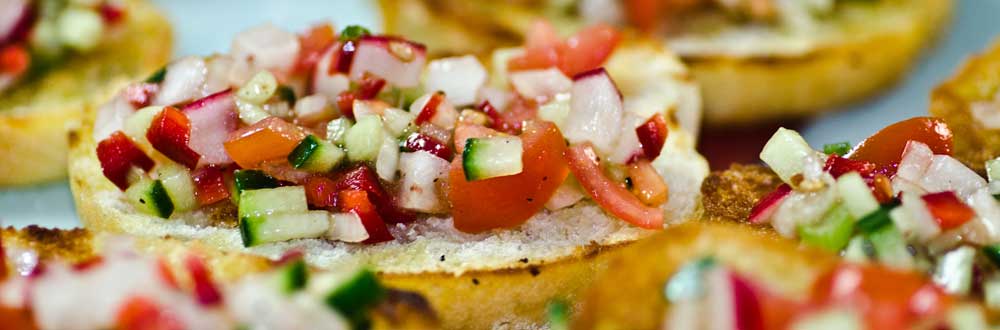
Bruschetta is the Italian bread soaked with olive oil and topped with savory ingredients. But how do you pronounce it? With a k sound or a sh sound? Although there are two widespread pronunciations, because it’s not fully anglicized, bruschetta is best pronounced as broo-SKETT-ah.
Non-Word Utterances Also Have Meaning
A Pasadena, California, man says some of his relatives make a noise that sounds like unh-Unh, and it’s clear to everyone in the family that it means “Well, what did you expect?” A lexical utterance like that does have meaning, even if it’s not in the dictionary.
Spelling Sacrilegious
The word sacrilegious, describing something that violates the sacred, is tricky to spell. It’s easy to assume that it contains the word religious, but it doesn’t. Sacrilegious derives from sacrilegus, a Latin word that means a stealer of sacred things.
Why Do We Call Psychiatrists and Psychologists Shrinks?
Why are psychiatrists and psychologists called shrinks? It’s a jocular reference to the ritual practice in certain tribal societies of literally shrinking the heads of one’s vanquished enemies. The term shrink was adopted as a joking reference to psychotherapists in the 1960s.
A Child’s Sophisticated Misunderstanding
Martha shares a letter from a San Antonio, Texas, listener about a child’s misunderstanding of the word sophisticated.
How Old are Cursing and Obscene Language?
How far back does cursing go? People have been using coarse language for thousands of years. Just check out the filthy graffiti on the walls of Pompeii. Although cursing has changed over time, the F-word and its ilk have been around for hundreds of years.
Vinegar Mother
A woman in Cheyenne, Wyoming, says her mom used to refer to the cloudy scum that sometimes forms atop vinegar as mother. The term has been around at least 500 years, and can refer to the scum on the top or sediment on the bottom. It’s also used as a verb, and a liquid with that kind of surface can be described with the adjective mothery. A similar cloudy substance that forms atop old wine is called a wineflower.
Author Michael Sims
An observation about life and language from author Michael Sims: Every encounter with another human being is like being able to read half a page from the middle of a novel, isn’t it? And then someone grabs the book away.
Something Walked Over Your Grave
A Temecula, California, man recalls that whenever he feels a chill, he says, “I guess someone walked on my grave.” If someone else feels a chill, he’ll say, “Did someone walk on your grave?” Then one day he shivered, and before he could get the words out, a friend asked, “Did a goose walk on your grave?” Which came first, the person or the goose? A similar expression may be used during a lull in a conversation. The earliest known reference to someone walking over one’s final resting place is in the writing of Jonathan Swift.
This episode is hosted by Martha Barnette and Grant Barrett, and produced by Stefanie Levine.
Photo by Stefan Muth. Used under a Creative Commons license.
Music Used in the Episode
| Title | Artist | Album | Label |
|---|---|---|---|
| Tiger Trot | Leroi Conroy | Tiger Trot 45 | Colemine Records |
| Supermoon | Ikebe Shakedown | The Way Home | Colemine Records |
| Enter | Leroi Conroy | Tiger Trot 45 | Colemine Records |
| Moon Cabbage | Polyrythmics | Libra Stripes | KEPT |
| Ain’t It A Groove | Dave Hamilton | Ain’t It A Groove 45 | Remined |
| Can You Dig It | Dave Hamilton | Ain’t It A Groove 45 | Remined |
| Chingador | Polyrhythmics | Libra Stripes | KEPT |
| Volcano Vapes | Sure Fire Soul Ensemble | Out On The Coast | Colemine Records |

