What would you serve a plumber who comes over for dinner? How about … leeks? The hosts play a word game called “What Would You Serve?” Also, can you correct someone’s grammar without ruining a new relationship? And is there an easy way to remember the difference between who and whom? This episode first aired January 15, 2011.
Transcript of “Word Up!”
Hey, podcast listener. Even though you’re hearing this recorded show, you can still call us whenever you want.
1-877-929-9673. Our voicemail will take your call. Later, we’ll listen to it just as we listen to all of them.
And then there’s always a chance that we’ll decide to have you on the show to ask your question or share your story.
On with the show.
Support for A Way with Words comes from National University, where flexible online classes let you earn your degree or credential on your schedule.
Learn more at nu.edu.
You’re listening to A Way with Words.
I’m Grant Barrett.
And I’m Martha Barnette.
Lately, I’ve been having a lot of fun with a game that involves two of our favorite things, words and food.
Oh, boy.
This is a word game sent to us by a listener in Tallahassee, Melanie Annis.
And she and her husband, Marty, play this game, and they call it What Would You Serve?
And here’s how it goes.
Think of someone you want to invite over for a bite to eat and then decide what would be on the menu.
And it has to be just one word, Grant.
So, for example, what would you serve if the plumber is coming over for dinner?
Leeks.
Leeks.
You serve leeks.
Or drip coffee.
A drip coffee.
Well, that’s two words.
Well.
How about if a jeweler is coming over?
Carrots.
Yes.
Very good.
Very good.
They don’t have to be appetizing or make any sense.
If you invite a chronic complainer over for dinner.
A crow?
Oh, maybe.
I don’t know what.
Maybe hot wine.
A wine.
Okay, nice.
Here’s another one for you.
What do you serve if you invite William Tell’s son over for dinner?
Surely not apples.
Duck!
Duck!
How great is that?
I’m going to share some more of those later in the show.
This is the show where we serve up answers to your questions about language.
You can call us at 1-877-929-9673 or send an email to words@waywordradio.org.
Howdy. You have A Way with Words.
Hi, this is Sean, and I’m calling from Little Rock, Arkansas.
How can we help you, Sean?
Well, I’m calling about my girlfriend.
Her name is Christy.
She is Chinese.
She’s been in America for five years, and English is her second language.
So we talk all the time on phone and in person.
We also chat online.
And occasionally she will make a grammar or vocabulary choice that doesn’t sound exactly natural.
And then I feel like maybe I should correct it.
And I’m calling to ask if you guys have a way that is the most polite way to correct a minor grammar mistake.
This is a great question.
Did you see what was making the rounds recently with Reese Witherspoon said that if a guy corrected her on the first date that she would just never date him again?
I did not hear about that.
But you’re a couple.
How long have you been a couple?
Four months.
Okay.
So you’re not quite in the zone yet where you’re safe, I think.
Would you say, Martha, that he needs to be still tread a little lightly?
Yeah, you’re not finishing each other’s sentences, for example.
Not yet, right?
Not quite yet.
But I think the interesting question here, Sean, is what does she want to do?
What’s her motivation and your motivation?
Does she want your help?
It seems like it, but I’ll give you an example.
Okay.
She once asked me, did you take badge?
We were going to an event where we both had to have our ID from the university we work at.
And she said, did you take badge?
And I said, did I bring my ID?
Yes, I did.
And so I think there’s two ways to say it.
Either I can repeat the sentence from her point of view, or I can change the question from my point of view.
I see.
So you’re trying to do it subtly rather than…
Correct.
Than, I see.
And then she will, and then, but she gets it.
She knows I’m correcting her.
So she’ll say, oh, yeah, did you bring your badge?
Oh, that’s good.
Did she take it well?
Yes.
Okay.
And do you do that only between the two of you, or when there are others around?
Because that could make the difference.
Oh, good question.
I hope I only do it when it’s us only.
I think I probably do it in private.
I see this as being another way that a couple can bond.
I’ve seen cross-cultural couples where language was the glue so many times
That I think that you helping her, and frankly, her teaching you Chinese for that matter,
Could, I think that can only make the two of you learn more about each other
And make the relationship stronger.
I mean, this is not a relationship show exactly, but there’s even a phrase for it.
You’re her living dictionary.
You are the person that she can turn to for answers.
And maybe you guys should just talk plainly about it and ask her if she’s okay with that.
Find your boundaries and make it a part of the great special thing that the two of you have.
Sure.
We do talk about language all the time.
Sean, she is teaching you Chinese?
Yes.
Very cool.
Which dialect?
Mandarin.
Okay, very good.
Oh, man, you are lucky.
I think I’m very lucky.
It’s an incredible language.
I think it’s very difficult.
-huh.
Yeah, that’s what I gather.
But when you have a romantic partner, it’s much easier than when you just have a teacher.
Yeah, now I have a great motivation.
Exactly, exactly.
You learn the sweet nothings first, right?
Yeah, pillow talk.
Yeah, that’s very handy.
Yeah, I think Grant has a great point that it’s really about how you do it rather than whether you do it.
And it sounds like you’re doing it with a sense of joy and also patience, which I think is really important when you’re learning a foreign language to be able to mess up like your girlfriend did.
Yeah.
And then have the person be patient enough to let you figure out the right way to say it.
Because, Sean, you don’t sound like a know-it-all type.
And that’s the one type of person who should not be taking our advice, the person who says, well, no, actually, what you should have said was a badge, not a badge.
You don’t want to be that guy.
Exactly.
I’ll try to be as patient as I can.
That sounds like a good tip.
Well, call us back later on and let us know how it’s going.
Yeah, yeah.
Send us the baby pictures.
Oh, wow.
You’ve moved us ahead really quickly there.
Congratulations.
I appreciate it very much.
Thanks for calling, Sean.
Thanks, Sean.
Best of luck to you both.
Bye-bye.
Bye-bye.
Bye.
Call us 1-877-929-9673 or send an email to words@waywordradio.org.
Hello, you have A Way with Words.
Hi.
Hi, who’s this?
This is Anne.
I’m from Dallas.
Hi, Anne.
Welcome.
Thank you.
What can we help you with?
I wanted to know the so-called hip but annoying phrase,
Word up, that was popular in the 90s.
Where did that come from?
Word up.
You find it annoying, huh?
Oh, very annoying because everyone would say it
And it would be in commercials and then the cameo song,
Which was actually…
Wave your hand to me and like, you know, kiss.
That’s the one with the video with the cod pieces.
Yeah, I think so.
I just remember him and said, yeah, exactly.
Word up.
Yeah, that’s where I first heard it, but it’s probably been around longer.
But that was the 80s, wasn’t it?
Oh, my God, it was the 80s.
Oh, wow.
Time does fly.
I know, embarrassingly so.
Let’s just talk for a second for those people who might have forgotten this term gracefully and thankfully.
Word up is used how?
If I’m talking to you and I say something you believe is true, then you might say word up.
Or you might just say word, which is more kind of right.
Yeah, exactly.
Really interesting stuff.
Interesting question.
It is kind of old and stale, though, isn’t it?
It is.
It’s kind of, I don’t know about tired.
I still hear it in songs.
I hear word.
I don’t hear word up.
Yeah.
I’m embarrassed.
Is it really stale?
I use it on Facebook all the time.
If somebody says something I agree with, I just say word.
Yeah.
Old and stale.
Okay.
Put that in the bee’s knees category.
We’re down.
Well, have you heard of the linguist and writer Geneva Smitherman?
No.
She specializes in writing about black American English, and she’s got this in one of her books called Black Talk.
And she’s got a little theory in there that I should think, I don’t know if I can support it.
I don’t know if I have data, but this is what she proposes, and I don’t know any reason that this isn’t true.
How about that for caveats and hedges, right?
Okay.
So Geneva writes in her book that word is a shortened form, more or less, of the African-American proverb, your word is your bond.
Oh, really?
Yeah.
And her theory is here is that the strength of a man’s word is directly indicative of his character.
That is, that you are going to do what you say you’re going to do, that when you say something, it can believe to be true, and that when you speak, your words are respectful.
And all of the things are bound up in these notions.
And she suggests that it was popularized by the 5% nation.
Do you remember who they were?
No.
This was more or less a splinter group from the nation of Islam in the 1960s.
And so these guys used this as part of their slogans kind of works.
So your word is your bond.
It was about your word.
And so word and word up are kind of shortened forms of the longer expression,
The longer idea that your word is your bond.
Wow.
So pretty interesting stuff.
So it goes back at least to the 1960s probably.
And there are a lot of different forms of this.
And one of them is really interesting.
Your word is your bond became a little corrupted and was turned into word is born.
Your word is born?
Yeah, or word is born.
Word is born.
Yeah, so it became so used, you know, such a verbal expression rather than a written one that had been passed from mouth to ear and so forth.
It became word is born instead of word is bond.
So interesting.
A lot of different paths for this.
Yeah.
And you said what I think the data support, which is that the word is pretty much the only one that’s left.
And it’s kind of almost a catch-all word in conversation now, right?
Right.
Well, you know what? I wouldn’t mind using it just because of the fact that’s what it meant.
That it went back?
Yeah, that’s pretty cool, right?
Pretty cool.
Yeah, because that’s what we all believe in this, that when somebody speaks, it better be true.
And he better mean it, and it better be respectful.
These are just the basic things that we require from dialogue with other people, right?
But that’s different from how I guess I use it, which is just what you just said is true.
Well, that’s the origin of it.
And, of course, it became a little shifted over time as it was abbreviated and it was passed over the decades, right?
Wow. Well, thank you.
Well, you’re welcome.
Yeah. If you want a little more information about that or about African-American English in general, I do recommend Geneva Smitherman’s books.
There’s a lot of information in there, and not much better has been written about it.
Yeah, maybe we can link to that on the website.
Yep, we’ll do.
Also, the video with the guys in the Word of Cod pieces.
What do you think?
It’s been a while since I’ve seen that.
That can be the new Rick Roll.
Hey, Anne, thanks for calling.
Thanks a lot, you guys.
All right, bye-bye.
Take care.
Bye-bye.
If you have a question about words, call us 877-929-9673
Or email us words@waywordradio.org.
Grant, are you ready for another round of What Would You Serve?
Oh, please.
Okay, this is a game where you invite somebody over for something to eat,
And you have to decide what would be on the menu in just one word.
Okay.
Okay, so what if you invite over a chronic procrastinator?
I don’t know.
Ketchup.
You’d serve them ketchup.
It doesn’t have to make sense.
How about a fertility specialist?
Eggs?
Eggplant.
Oh.
How great is that?
What would you serve if you had actors coming over for dinner?
Actors.
Actors.
Wine and cheese, right?
No, no, no.
Because they mooch off of the art gallery openings, right?
Right, wine and yellow cubes of cheese.
No, you’d serve actors rolls.
Oh.
Rolls.
Terrible.
You’re easy.
Terrible.
You pretend like you don’t like puns.
I am easy.
Tell my wife.
You’re easy.
What would you serve if Adam came over to dinner?
The Adam?
The Adam.
That Adam.
Apple, I guess.
How about spare rib?
Yes.
Is that one word or two?
It is one word now, I think.
Call us, 877-929-9673, or email us, words@waywordradio.org.
Get ready to test your puzzle power.
A quiz is coming up on A Way with Words.
You’re listening to A Way with Words.
I’m Martha Barnette.
And I’m Grant Barrett.
And we’re joined once again by John Chaneski, our quiz guy.
Hello, John.
Hi, Grant.
Hi, Martha.
How you doing?
Mr. Quiz.
Hello.
Super.
Listen, you know what time it is right now?
Tell us.
It’s time once again to look back at news stories in the news.
Oh, it is.
Big stories of the past few months brought to you through the magic of limericks.
I’ll deliver the limerick.
You deliver the last word or words.
Okay?
Okay.
Number one.
Before my grilled salmon filet, I pray, just a tiny delay, I can’t touch my plateful without being grateful that the miners are safe in…
Chile?
Chile?
Chile.
Chile.
Nice.
Very good, yes.
Do you know the name of the capsule they used to pull them out of the ground?
I’m sure Grant does.
No.
The Phoenix.
Oh, the Phoenix.
Oh, yes.
Yeah.
Here’s the next one.
Don’t accuse me of being too vocal.
I’m not just some primitive yokel.
I’m upset, I’m afraid, because my flight’s been delayed by the eruption of…
I can’t say it.
Oh, no.
The Icelandic mountain something something full.
I F.I.A.Y.O.K.L.
Thank you.
I had it mastered at one point, but it’s been too long.
A couple of months ago you probably had it.
It’s been a while.
One more time?
How do you say that?
I F.I.A.Y.O.K.L.
Thank you.
Even that’s an American guy in Brooklyn.
That’s an Icelandic.
Here’s the next one.
They say that I’m lacking maturity.
I’ll tell you with enormous surety that when I feel lonely,
My solution is only to check in with airport security.
Right.
You can get the physical contact you’ve been missing.
Very nice.
You’ve got to get it somewhere.
You know what I’m saying?
Here’s the next limerick.
Ronald Reagan and Menachem Begin, the pagans and astronomer Sagan, have added a rhyme.
Our thanks go this time to new justice.
Nice.
Elena Kagan.
Elena Cain, very good.
All the puzzle makers rejoice that they got one more rhyme.
That’s right.
That’s the only reason that I am that happy about it.
Not really.
United States diplomats freaked because someone had done, gone, and peaked at some things confidential with awkward potential and forwarded them on to be leaked.
Leaked by WikiLeaks, right.
Here’s the next one.
TV viewers, though afflicted with sleepiness, know O’Brien’s The Tonight Show’s previous, host, if you’re up and you’re able, to stay awake, turn on cable, and watch Coco, who is now on…
TBS.
TBS.
Conan O’Brien, now on cable.
Here’s the next one.
The protesters shouted enraged while Prince Charles sat huddled and caged in his roles,
But at least he could now rest at ease knowing that his eldest was…
Engaged.
Engaged.
Very nice.
In some sort of casual lingo, the dealmakers scored a real bingo.
The business tycoons have arranged for iTunes to sell…
All of the songs that were made by Ringo.
Paul, John, George, and Ringo
John, Paul, George, and Ringo
Very good.
Yes, the Beatles are on iTunes.
One more and here it is.
Dobbs, Limbaugh, O’Reilly, and Hannity
Like Beck, show us little but vanity.
But Olbermann, Maddow
Cast a partisan shadow.
Can we please rally once more for
Oh, I don’t know.
Where’s the rhyme in there?
Sanity.
Sanity.
That’s right.
Can we have another one?
I couldn’t make the first one.
Thanks very much.
That’s our quick trip through some news stories of 2010 through Librix.
I hope you liked it.
Yeah, it was wonderful.
It seems like a lot of work.
Yeah.
All we have to do is sit here and crack wise.
Nice.
That was a lovely stroll down memory lane.
Thanks very much.
I’ll see you next time.
2010, the year that it was.
Thank you, Mr. Chaneski.
Thank you.
Good night.
If you have a question about wordplay, language, slang, jargon, punctuation, grammar, speaking, and writing better,
Give us a call, 877-929-9673, or send it all an email to words@waywordradio.org.
Hello, you have A Way with Words.
Hi, my name is Brooke. I’m calling from Gainesville, Florida.
Hi, Brooke. Welcome to the program.
Hi, thank you. I have a question, not for me, but for my father.
Okay.
My father and his partner love to play Scrabble.
And it’s a big thing.
About two years ago, they got into a really heated Scrabble tournament with some friends.
And the first word that was spelled out was behead.
And then it was turned into beheaded.
Beheaded.
And then my father’s partner turned it into re-beheaded.
Nice.
Which, of course, no one accepted, and he didn’t get any points.
But it’s been about two years, and my father and his partner still bicker about it today,
Whether it’s the real word or not.
So I thought I’d try and help them out.
Okay, this is great.
So let’s set the parameters here.
This was a home game, right, not a tournament game?
Yes, no, it was at home.
It was a group of their friends playing.
And did you have a dictionary on hand?
I actually bought them a Scrabble dictionary just for this purpose.
Oh, how nice are you.
After the argument arose or before?
After the argument arose.
I don’t believe they had a dictionary at the time.
Okay, so it was about consensus at the table, right?
It was, yes.
If you’re outvoted, three out of the four players say that’s not a word, then it’s not a word.
Okay.
Yeah.
Okay.
And so you got the Scrabble dictionary.
And re-behead is not in there.
Right.
That’s right.
And re-behead is also not in there, right?
No, it’s not.
And so therein lies the dilemma.
Are you willing to accept the official Scrabble dictionary as the arbiter?
Because re-behead does not count in a tournament Scrabble game.
Yeah, re-behead.
I mean, it sounds like, I don’t know, I’m having memories of Barbie dolls and G.I. Joes, you know?
Like little things you would do with…
Popping the heads off of daisies?
Yeah, putting them back on.
Yeah, I do.
Right, right, right.
My dad’s partner’s example with a hydra that had the multiple heads.
You could cut off one head and another would grow back and you could re-eat it.
He’s looking hard for examples.
Yeah, he was.
He didn’t want to go with beheader?
Something is more beheaded than the other thing?
But you could do it with plants, right?
If you have to behead a plant.
I will recommend that.
Yeah, he’ll like that one.
With plants, you might behead it once a year or so, right?
A seasonal beheading?
Deadhead.
No.
Oh, gosh.
Thank you so much for clearing that up for me.
Hey, anytime.
It was our pleasure.
By the way, I play Word Feud on Android, which is a mobile phone operating system.
And so if anybody wants to take me on, look me up.
GrantBarritt at gmail.com.
Oh, her dad’s partner is going to be on there.
I’ll let him know.
I’ll let him know.
He’ll be good.
Thanks for calling.
Thank you.
All right, bye-bye.
Take care.
Bye.
Bye-bye.
Wow, that’s pretty desperate.
You know, when we get the calls where there’s a fight,
I kind of don’t want to settle it.
I kind of just want to let it go because clearly they’re having a lot of fun with this, right?
Oh, but we should be the arbiters.
When the family gets together for the holidays, they need something to fight about.
And this is very mild.
This is not about, like, who wrecked the car, you know?
That’s right.
That’s right.
It’s who put the R and the E on the Scrabble board.
Yeah.
Oh, boy.
Bring us your fights.
We, with Martha-like wisdom, will decide them.
We will be your mediators.
877-929-9673 or email us words@waywordradio.org.
Hello, you have A Way with Words.
Hi, my name is Dino and I’m from Manhattan, New York.
Hello, Dino. Welcome.
Hi, Dino.
Well, I had a question about the use of the word anymore.
I heard a couple of my friends from the D.C. area using the word anymore in a way that sounded kind of weird to me.
I can see where they’re coming from in the sense that it would be correct.
It just sounded funny, and I wanted to know maybe if that’s a regional thing.
Oh, yeah, sure. Do tell.
Well, he’ll say something like,
Now when you go get something professionally framed, it costs like $60, $70 anymore.
Mm—
And it just sounded odd to me. I don’t know.
Have you ever heard them start a sentence with that?
Like, anymore, these things cost a lot of money.
No, I have not.
But it usually ends up at the tail end of the sentence.
And I, you know, and it ends up in a, like, I don’t know why it sounds funny to me.
I just know that it sounds funny.
Like, I can’t put my finger on it.
Right.
It’s called a positive anymore as opposed to a negative anymore.
A negative anymore is when you say something like, we don’t go to that park anymore.
Yeah.
And so the positive anymore is just basically an extension of the negative.
It suggests a changing condition, an onset of something new that is going to continue.
It’s not universally used that way, but generally.
So anymore the weather is colder means that from here on out the weather has pretty much been colder.
And just the same, as you say, we don’t go to that park anymore is an ongoing condition of something new that’s negative.
There’s some stigma with that, though, isn’t there, Grant?
With the positive anymore?
Yeah, because it’s like all dialect features.
Tend to trigger something in your brain.
We’re ants, basically.
And when two different ant species come together, right, they recognize each other as outsiders.
And it works the same way with language.
I mean, this is the basic principle of why languages are cohesive, is because we try to speak like the people who are like us.
And when somebody doesn’t speak like us, then we therefore assume that they are not like us at all.
That’s right.
That’s something jarring.
Yeah, that’s something jarring.
So we can’t help but to feel a little triggered by that,
Right?
Pick up those linguistic pheromones.
Fortunately, I didn’t laugh at him or call him out on it.
I just kind of filed it away in the back of my brain.
It’s something less than fight or flight, but we do have a reaction where we hear language that we recognize as being something other than our own.
Nicely put.
So you didn’t call him out on it.
You just filed it away to call us?
Well, exactly.
I mean, who else would I call?
Who else?
Don’t call him out.
Just call you guys.
That’s right.
So this feature, the positive anymore, is pretty much spread throughout the United States, except in the very far northeast and in the south.
But throughout the rest of the country, it’s pretty standard.
Now, the south comes with a little bit of a caveat in the hedge there because you will find it there, just not with the frequency and intensity that you find it elsewhere.
For example, my father, who speaks a variety of southern English that’s related to Arkansas English, he uses it all the time.
I just recently had a trip back to see him, and I was amazed how often it came out of his mouth.
I don’t use it at all.
I never heard it because I grew up in Miami in South Florida.
Yeah, very interesting.
Miami’s got its own little language thing going, though.
But if you were in the panhandle, you might have encountered it more often,
But not as often as you would if you were in North Carolina.
Right.
Good point.
So it’s really interesting.
The positive anymore is a strong feature of the American dialect.
It is not a standard feature of it.
It does occasionally occur among the Scots and the Irish that are still in the old world,
But it’s not frequent there either.
I like it.
Who knew?
So, Dino, I hope I’ve helped and haven’t bored.
You, no, no, no.
Never boring, never boring.
At least one of the two I’ll take.
I would say that you’re fascinating anymore.
Whoa, fascinating anymore.
Nice, nice.
I’m kidding, I’m kidding.
So it’s not wrong.
It’s actually standard English.
No, but it’s not the kind of thing that you would use in a commencement speech that you were giving.
Or if you were speaking to the Pope, the Queen, or the President,
And probably not if you were applying for a bank loan.
Well done.
Thank you so much.
Thanks, Dino.
Thanks, Dino. Bye-bye.
Bye-bye.
Bye. Take care.
Well, Dino had a great question about something he noticed in someone else’s speech,
And he did what I always suggest, which he acted like a field researcher and said,
I’m not going to call it wrong. I’m going to find out more about it.
Right on.
If you want to find out more about something that someone else said, give us a call, 877-929-9673.
Or send in an email to words@waywordradio.org.
Grant, I have a couple more what-would-you-serve rounds for you.
Okay.
Okay, what would you serve to an electrician who comes to dinner?
Beats me.
One word.
Currents.
I didn’t say I was a good cook.
How about this one?
What would you serve to people who are separated by just six degrees?
I don’t know.
Six degrees of?
Separation?
You’d serve bacon.
Oh.
Six degrees of Kevin Bacon.
Call us with what you’d serve, 877-929-9673, or email us, words@waywordradio.org.
Hello, you have A Way with Words.
Hi, this is Alicia Morris calling from Rochester, New York.
Hi, Alicia. Welcome to the program.
Thank you.
Yay.
I have a question about the word, the duldrum, and its origin.
Okay.
Yeah. What got you thinking about that?
It actually happened at work.
I’m a sign language interpreter here at a local university in Rochester,
And I was sent to a marine biology class.
And I heard the professor use the word in a way that I had never heard before.
I’d always heard the doldrums being used as like a mood or a state of stagnation or nothing exciting is happening.
But we were talking about the earth and the winds and the tides,
And she started explaining about an area in the equator where there’s very little wind and it’s very calm.
And she called it the doldrums.
Right.
As I’m sitting there working, of course, I’m thinking to myself, I can ask A Way with Words.
Where it came from, did the area around the equator actually influence our speech and how we use it now to explain our moods, or was it the other way around?
Well, that’s a great question.
Do you have a hunch about it?
I don’t.
I know that you guys have said a lot that there’s a lot of nautical terms that make their way into our speech.
So I was thinking that was a possibility, but then I thought maybe it’s even older than that, because it is such a strange word to me.
Right, right.
I wasn’t really sure what the origin was.
Right.
Well, you are on track.
There is a connection between the two, but the one that came first is the general state of dullness.
Yeah.
In fact, doldrums might be related to the word dull.
And it’s been used at least since the early 1800s that way.
And then the word was applied to that part of the sea where…
The person came first and the sea came later.
The word, yeah.
Oh, wow.
Yeah.
Yeah.
So how do you sign that? Do you just look really dull?
Yeah, well, I look really dull anyway.
No, that wasn’t what I meant.
No, actually, since it is a university and its classroom level,
They kind of need to know the exact word because it’s probably going to show up on a test.
So I actually spelled it out and then explained, well, actually the teacher was explaining anyway,
That it’s just a very calm area.
I showed that there weren’t many waves, not a lot of wind, that kind of stuff.
That must be so interesting, signing for a marine biology class.
Absolutely.
It can be very challenging.
Yeah?
It’s not my normal gig.
No?
I was just actually sent there for a one-time thing.
I usually do all the computer stuff.
Oh, wow.
Now that would be really interesting, too, right?
Yeah, that is very interesting.
Wow, Alicia.
Well, I think we learned more from you than you learned from us.
We love these kinds of calls.
No, I don’t think that’s true.
I listen to you guys on podcasts all the time,
So you’ve taught me much more than you’ve learned from me in just this short time.
Oh, shucks.
Well, I hope you’ll call with other questions in the future.
Yeah, thanks for the great story.
Oh, no problem.
Thank you so much.
I appreciate the help.
Okay.
Bye-bye.
Bye-bye.
Did you have one of those moments at work when you were doing something
And then you thought, oh, I’m going to ask A Way with Words?
The way you can do that is to email us, words@waywordradio.org.
Or call us at 1-877-929-9673.
Grant, what would you serve if you had a bunch of musicians
And cardiologists coming over for dinner?
Jumpsticks.
Hadn’t thought about that one.
I was going to say…
For the musicians, anyway.
Musicians and cardiologists, you serve beats.
Beats. Oh, there we go. Nice.
Call us with what you’d serve, 1-877-929-9673,
Or send an email to words@waywordradio.org.
More of your thoughts about language.
That’s coming up on A Way with Words.
Stick around.
A Way with Words is sponsored in part by iUniverse, supported self-publishing.
Is there a book in you?
Information available at 1-800-AUTHORS or online at iUniverse.com.
You’re listening to A Way with Words. I’m Grant Barrett.
And I’m Martha Barnette.
A while back we talked about collective names for plants.
Remember that, Grant?
Yeah.
Why should animals have all the fun?
A bevy of quail and a gaggle of geese.
Well, we asked you to send us some more examples, and boy, we just have a whole bouquet of collective plant names, and I wanted to share just a few of them.
How about a churn of buttercups?
Nice.
I like that.
Dan Davis sent us a weep of willows, which I like.
I really like this one from Bob Cunningham, an embarrassment of weeds.
Well, yes, I can relate to that.
Stuart Clipper and Kathleen Reichert, both of Minneapolis, sent several.
Among them, a pride of dandelions.
Nice.
Very good.
A universe of cosmos.
I love this one.
A mouthful of salvia.
It’s like saliva.
Yeah.
It sort of works better on the page, I think.
And a sea of anemones.
A chime of four o’clocks.
I used to have four o’clocks in the yard.
Oh, I didn’t know those.
They open or close at four.
I think they close at four o’clock.
A pair of lady slippers.
And then over on our discussion forum at waywordradio.org, we got several great examples, one of which came from somebody there named Cheddar Melt.
I don’t think that’s the person’s real name.
But Cheddar Melt suggested that for holly, you could have a buddy of holly.
For mint, a Denver of mint.
For birches, I love this, a frost of birches.
Glenn Atkinson suggested a koi of wallflowers.
I love that.
And finally, Ron Draney suggested an something of forget-me-nots.
I love that.
So thanks to all of you for sending those in.
We got a big kick out of those.
If you have more collective nouns for plants, send them along to words@waywordradio.org
Or give us a call, 877-929-9673, or call or write with your questions about language.
Hello, you have A Way with Words.
Hello.
This is Terry calling from Chula Vista.
Hi, Terry, Chula Vista, California.
That’s correct.
Fantastic.
Welcome to the program.
Thank you.
How can we help you?
Well, I’m calling about the use, the way that the word nonplussed seems to have totally
Flipped around its meaning in the last few years.
I don’t know if it’s one of those words that’s going to end up flip-flopping completely in
Time, but when I grew up and it was used to mean perplexed at sea, completely not knowing
What to do. And now I see it more and more in all kinds of educated writings to mean
A non-flappable, unfazed, unperturbed, which seems to me it’s opposite.
Yep. Terry, you’re exactly right on both counts. I mean, I’m baffled and confused. I’m nonplussed
As well as how it could ever mean other than having nothing more to say, nothing more to do.
It’s like throwing up your hands in the air, right?
That’s correct. That’s how I always meant it to say.
Right. And to me, what jumps out at me…
You see it as kind of an active confusion.
Well, I think of the Latin.
It goes back to non, meaning non plus, which is no more.
You know, we went about as far as we can go, to quote the person in Oklahoma.
That’s what my Random House Dictionary says.
That’s what your Random House Dictionary says, right.
I imagine the correct meaning of non plus to be more just kind of like a blank stare.
Because there’s nothing happening in there.
Well, I first realized how widespread it was when I was reading the Patricia Cornwell novel several years ago.
And her heroine, who was in the middle of a lot of chaos, absolutely unslappable, knew exactly what she was doing, and was described as being nonplussed.
I said, what?
Oh, interesting.
Wait, I’m going to take this book back for a refund, right?
She used it in several other novels.
Her most recent one, she didn’t use it, so maybe somebody clued her in.
Yeah, I’ve got a new copy.
I don’t know.
Yeah.
Well, I am nonplussed, along with you, Terry.
Martha said, you’re right.
The original meaning is there.
It means confused, basically, or at a loss.
Right.
You can go no further.
Can’t go no further.
But the second thing is also true, which is people are using it differently now.
And there’s a theory out there about why this is so.
If you look, say, in the 1950s or so, before the meaning really started to change, you’ll see a lot of uses of nonplussed that are opaque.
It’s like it’s one of those words that belongs to the educated classes or used to and has slipped across the border into popular fiction, just like you’ve described, and into newspaper columns where in the original, you know, highly educated writing, the context isn’t clear.
I mean, you can find zillions of examples where people are using the word nonplussed or nonplussed and it’s just not clear what they meant.
And in so many of the cases, look, 1950s, it’s ambiguous as to whether the person was confused or clear-headed.
And the problem is, it’s a show-off word.
And it was then and it is now.
And when people show off their language, they tend to screw around with it and mess it up.
I suspect that’s correct.
I’m surprised now when I see it used correctly.
I have to tell you, this is the only conversation I’ve ever had in my whole life, in all my 21 years, kidding, where the word has been spoken aloud.
What?
Yes.
This is a word that is ordinarily written.
It is ordinarily written by the educated classes, and they do it to show off.
I’m not surprised that other people are confused by this.
Well, Grant, maybe you should get out more because I’ve certainly heard nonplussed.
It’s another word for me for flustered.
The snooty club.
Where I heard spoken is on NPR.
Oh, wait.
But Martha, you are hardly representative.
Neither are you, dear.
Well, that’s my point.
All right, Terry, you’re representative.
You’re in between the two extremes here.
So is this a word that you would ordinarily speak aloud?
No, I usually don’t, but I might write it possibly.
But certainly I read a lot, so I’ve seen it.
And I grew up knowing what it meant from context.
Right.
And then in the last 15 to 20 years, all of a sudden I realized, wait a minute, that’s not being used that way anymore.
Right.
Well, you sound cool as a cucumber.
You’re probably never nonplussed.
Yeah, all this carrying on over here.
I wouldn’t say that.
Yes.
Well, let me ask you a question.
Yes.
Do you think that this word is skunked?
That means do you think this word is ruined forever?
I hope not.
I think it’s an interesting word.
Okay.
I agree, Terry.
But I would hate to see it totally disappear or completely flip-flop, but I’m a little worried about it.
Well, I think what we have here is a self-referential word.
I mean, I’m just completely nonplussed.
About nonplussed.
Yeah.
Well, Terry, thank you so much for your call.
I hope we brought some clarity.
No.
Well, you share my condition of being nonplussed about this whole situation.
We certainly do.
We can agree on that.
Thanks so much.
Well, thank you very much.
I really enjoy your program.
Oh, nice.
Thank you, Terry.
Thank you.
Bye-bye.
Bye-bye.
Call and participate with this stuff, 877-929-9673, or send your stuff in email to words@waywordradio.org.
Hello, you have A Way with Words.
Good day to you.
Hi, who’s this?
This is Philip Trincetta in San Diego.
Hi, Philip.
How are you doing?
Hi.
Hi, Martha.
Hello.
I want to first thank you both for keeping the spirit and enthusiasm of language forefront in our minds.
I appreciate it.
Oh, well, thank you.
It’s our pleasure.
You’re a linguophile then?
Not really.
I’m a chiropractic physician, but I like to play with language and test my patients out on different words.
Now, wait.
How are you spelling patients?
Both ways.
Okay.
All right.
Okay.
You sound like one of us.
Well, how can we help you today?
Today, my question is, a few weeks ago, you did the show on when and whenever, and that provoked me to want to ask about who and whom yet again.
And I ask my patients about that, and nobody has an answer for it.
And my question is, is the word whom being eliminated from our language?
And then my second question is, don’t you have something like I before E except before V?
Like a little rhyme for who and whom.
That’s a good point.
Wouldn’t that be terrific if we did?
I know.
Oh, man.
Well, I could try to come up with one, but it would probably be as long as the charge of the light brigade or something.
I mean, it’s…
Who and whom?
What’s your elevator pitch on who and whom, Martha?
First of all, I would agree with Philip that whom is probably on the way out.
Maybe not in our lifetime, but I think it’s becoming sort of a vestigial kind of thing.
You know, I’m sure you studied vestigial things in the body, like the appendix.
Yeah, or our little toes, you know.
But right now, it’s still around in our language, but it’s very tricky.
And as far as I know, there is no clever little rhyme to tell us how to do this, partly because it’s really complicated.
So you just have to remember kind of some of the parts of speech to know the difference, right?
Exactly.
I mean, the short version is that in the history of the English language, it used to be that the language was inflected.
You know the term flexion, of course, because you’re a chiropractor, right?
Correct.
Yeah.
And the English language used to be more inflected.
That is, that nouns would bend at the end and have different endings.
And so we had who and whom and different versions, depending on how you’re using the word in the sentence.
But it is changing.
And I would give you three ideas to keep in mind, Philip.
One of which is that you’re always going to use whom when it’s the object of a preposition, right?
Correct.
Like for whom the bell tolls, to whom it may concern.
I’m going to lunch with my colleagues, one of whom, blah, blah, blah.
That’s always going to be whom, okay?
Good, good.
It’s also the object of a verb, the man whom I treated, or whom did you see yesterday in your office.
There it’s the object of the verb, right?
Meaning that the verb acted on that noun that came after it.
Yes.
And the other place is where it is the subject of the infinitive.
Are you on Twitter, Phil?
I am, but I’m really not.
Okay.
Well, I don’t blame you because when you fire up the Twitter program, it says right there who to follow.
And then it lists people to follow on Twitter.
You mean when you load the webpage?
Yeah.
Yeah, it says who to follow, and then it gives you a list of people who might be interesting to you on Twitter.
And that’s wrong.
It’s not who to follow.
It’s whom to follow because it goes with the infinitive there.
Did you write and tell them that?
You know, it’s painful for me.
Is it painful for you, Phil?
It is painful for me because they don’t get it right.
Exactly.
Right.
And that one’s sort of a no-brainer, don’t you think?
So you’ve got the three cases where I should use whom.
And then can we safely say that the other cases should use who?
You know, what I would say, Grant, is that this is a problem that vexes even the best, most careful writers.
And without going into a jingle or a poem that goes on for 100 lines, what I would say is, in other cases, go by instinct.
Go by what feels right.
Sometimes whom can sound very stilted, you know?
I have seen it misused where who should be used.
Right.
And it gets really tricky.
And, Philip, honestly, it messes me up too.
So I don’t know if I’ve been helpful, Philip.
What do you think?
I think that maybe you were helpful.
Yes, in a way you were because I know it’s an object of a verb.
The bottom line is that I’m going to continue asking my patients when we have word chat what they think.
And I’m positive none of them will have it right.
Well, you sound like a chiropractor whom I would like to visit.
Oh, if you ever come my way, you’re more than welcome to come by.
We’ll bring you flowers for your paws.
Thank you. Take care.
All right, bye-bye.
Call us about the struggles of language that you’re experiencing,
or email us with your questions to words@waywordradio.org.
Martha, I bet you know African-American proverbs, but don’t know that you know them.
Maybe.
Here’s why I say that.
We all know that black American English has had a great influence on slang, right?
And introduces new words through popular culture, sports, and literature, and so forth.
Music.
But it also shows up in our proverbs, the things that we say, kind of the aphorisms, the stuff that we say to kind of confirm that universal truths are understood to be true.
Does that make sense?
Sure.
And so I was looking through the book Proverbs, a handbook by Wolfgang Mieder, M-I-E-D-E-R.
And he has some lists in there of African-American proverbs.
And I am pretty interested to see how many of these proverbs are now part of mainstream English.
And he proposes that they came into mainstream English through black American culture.
Here’s one you probably know from the television show, Different Strokes for Different Folks.
Sure.
Yeah, that’s one.
And it makes sense, though, right?
Sure.
It’s a show about two black kids who are adopted into a white family, right?
Right, right.
What goes around comes around.
That’s from African-American?
He suggests that that’s the case.
It’s an interesting proposal, right?
Yeah.
Well, why shouldn’t the proverbs from black American English come into the mainstream English, just like any other useful part of language that came as people recognized it for its value?
Sure.
And borrowed it.
Sure.
I’m just curious how he knows that that’s the source.
What does any academic do?
He did his research.
You have to pay to play.
When they talk about pay-go and pay-as-you-go in Washington,
perhaps that’s a callback, right?
Yeah, pay to play, yeah.
It takes one to know one.
Really?
He suggests that that’s true.
Cool.
Call us with your proverbs or share them in email.
Send them to words@waywordradio.org
or call us on the telephone, 877-929-9673.
Hello, you have A Way with Words.
Hello, I’m Kate Rosenmeier, and I’m calling from Evansville, Indiana.
Hi, Kate. Welcome to the program.
Hi, Kate.
Well, hi. Thank you very much.
What can we do for you today?
Well, I have a favorite word, which I learned a long time ago when I was in graduate school.
I think I learned it in one of my classes.
But when I’ve tried to look it up or see it used, I’ve not been able to find it.
So I didn’t know if my professor made it up or if it really, really is a word.
And what were you studying in graduate school?
I was getting a master’s in social work.
Okay.
All right.
Well, what was the word?
The word is infraconinophile.
-huh.
Infraconinophile.
Right.
Which I thought beautifully described social work.
Absolutely.
Because it means what?
What I learned it meant was a lover of the underdog.
Exactly.
Is that right?
Yes.
Well, and how exciting.
So you have that on your business cards now?
No, but I think that’s a great use of it.
Chief infracaninophile.
Maybe I’ll put it there.
Yeah.
All right, let’s spell that word just so everyone’s on top of it.
I-N-F-R-A, infra, canino, C-A-N-I-N-O, and then P-H-I-L-E, which kind of breaks it down into its component parts.
Okay, that’s why I didn’t find it.
Oh, you were spelling it differently?
I think I was misspelling it, yeah.
Yeah, the file means lover, right?
And the infra means under, right?
Yeah.
And the canino is canine or dog.
Right.
And apparently, as far as we know, this was coined by Christopher Morley, who was one of the Baker Street Irregulars, a big Sherlock Holmes fan.
Big Buff, sure.
Yeah.
And it was in the intro of, what was it, the complete works of Sherlock Holmes in the 1930s.
I think so.
All of the stories were brought together.
Was that for the first time?
Well, they were all brought together.
All the different stories that appeared in The Strand and other serials and periodicals and so forth were brought together.
And Morley did this great intro where he uses this term to describe Conan Doyle himself.
He says, doctor, whaler, athlete, writer, speculator, dramatist, historian, war correspondent, spiritualist.
He was always also the infraconinophile, the helper of the underdog.
And a believer in fairies, if you can imagine that.
The mind that came up with Sherlock Holmes also believes in fairies.
I didn’t know that.
That is great.
Yeah.
Well, I’m a big Sherlock Holmes fan, so that pleases me even more.
Wonderful. Me too.
And do put it on your business cards. I think that’s a great idea.
It’s perfect for social work.
Thank you so much.
Okay.
Thanks, Kate.
Okay.
Bye-bye.
Take care.
Bye-bye.
Your questions about language, words, word origins, something funny that you heard someone say,
send them to words@waywordradio.org or call us 877-929-9673.
That’s our show for this week.
Don’t forget, you can leave us a message even when we’re not on the air.
Call us, 877-929-9673, or email us.
The address is words@waywordradio.org.
Stay in touch with us all week on Facebook.
Look for us there under Wayword Radio.
Stefanie Levine is our senior producer.
Our technical director and editor is Tim Felten.
Tim also chooses our music.
We’ve had production help this week from Josette Herdell and Jennifer Powell.
A Way with Words is independently produced and distributed by Wayword Inc., a nonprofit organization.
The show is recorded at Studio West in San Diego, California.
Thanks for listening. I’m Grant Barrett.
And I’m Martha Barnette. Bye-bye.
Take care.
Let’s call the whole thing off.
Oh, if we call the whole thing off, then we must part.
And oh, if we ever part that would break my heart.
Support for A Way with Words comes from National University,
where flexible online classes let you earn your degree or credential on your schedule.
Learn more at nu.edu.
Hi, it’s Martha.
Did you know that A Way with Words is independently produced by a small nonprofit?
To keep bringing you the show, we need your help.
We welcome your contributions of any size.
Go to waywordradio.org, click on membership.
Your donations do add up and they make this program possible.
Thanks.
Leeks and Carats
 What would you serve a plumber for dinner? How about leeks? (We didn’t say it had to be appetizing.) What would you serve a jeweler? Carats! Martha and Grant play the “What Would You Serve?” game.
Correcting Grammar Politely
A Little Rock, Arkansas, caller has been going out with a Chinese woman. Her English is pretty good, but he wonders about the most polite way to correct a minor grammar mistake without ruining a new relationship.
Etymology of “Word Up”
What’s the origin of the expressions “word!” and “word up!”? Grant shares a theory from the book Black Talk by Geneva Smitherman. Here’s that Eighties-era song “Word Up.”
Ketchup and Eggplant
What would you serve a chronic procrastinator? Ketchup. What would you serve a fertility specialist? Eggplant. Martha serves up those and others.
Limericks Quiz
Quiz Guy John Chaneski has a limericks news quiz.
Rebeheaded
A woman in Gainesville, Florida, says her father and his partner have an ongoing Scrabble feud over rebeheaded. Is it a word?
The Positive Anymore
“Anymore, I play golf instead of tennis.” Grant explains that this grammatical construction is known as the “positive anymore.”
Six Degrees of Separation
What would you serve to people separated by six degrees? Bacon!
Doldrums
A sign-language interpreter found herself translating the word doldrums. She wonders if it has to do the area of the ocean known by that name.
Serving Up Beets
What would you serve a group of musicians and cardiologists? How about beets?
Collective Plant Names
Martha shares some collective nouns sent in by listeners in response to a recent episode on the topic.
Nonplussed
What does nonplussed mean, exactly? Does it mean “unflappable” or “at a loss.” Martha and Grant disagree about its use.
Who and Whom Jingle
Is there some kind of snappy jingle for knowing when to use who and whom?
Dictionary of American Proverbs
Grant shares some familiar proverbs that supposedly arose from African-American English. The book he mentions is Dictionary of American Proverbs by Wolfgang Mieder.
Infracaninophile
Need a word for “lover of the underdog”? It’s infracaninophile.
This episode is hosted by Martha Barnette and Grant Barrett, and produced by Stefanie Levine.
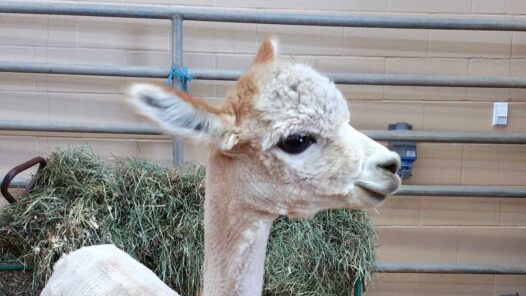
Photo by Robert Couse-Baker. Used under a Creative Commons license.
Books Mentioned in the Episode
| Black Talk by Geneva Smitherman |
| Dictionary of American Proverbs by Wolfgang Mieder |
Music Used in the Episode
| Title | Artist | Album | Label |
|---|---|---|---|
| Word Up! | Cameo | Word Up! | MCA |
| Where Are We Going? | Donald Byrd | Black Byrd | Blue Note |
| If You’ve Got It, Flaunt It | Ramsey Lewis | Another Voyage | Cadet |
| Letha | Charles Earland | Black Drops | Prestige Records, Inc |
| People Say | The Meters | Rejuvenation | Sundazed |
| Lansana’s Priestess | Donald Byrd | Street Lady | Blue Note |
| My Cherie Amour | Ramsey Lewis | Another Voyage | Cadet |
| Chicken Lickin’ | Funk Inc | Chicken Lickin’ | Prestige Records, Inc |
| Let’s Call The Whole Thing Off | Harry Connick Jr. | When Harry Met Sally: Music From The Motion Picture | Sony |