

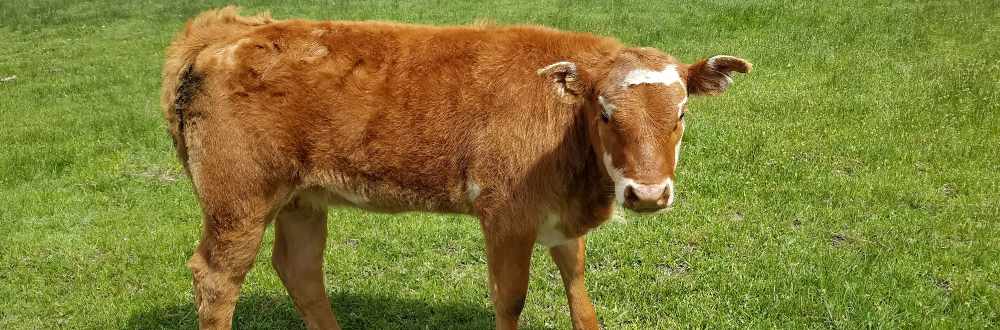
An anadrome is a word that forms a whole new word when you spell it backwards. For example, the word “stressed” spelled backwards is “desserts.” Some people’s first names are anadromes. There’s the girl named Noel in honor of her father Leon, and the woman named Edna who adopted the name Ande. Speaking of names, know anybody whose occupation fits their name? Maybe a college administrator named Dean, or a breadmaker named Baker? Well, there’s a name for that concept: nominative determinism. Plus, a conversation about how hard it can be to gracefully end… a conversation. Also: a puzzle about famous names, Wellerisms, kaffedags and fika, a kissing game, moco, greissel, twacking, the plural of computer mouse, and more.
Transcript of “Kiss the Cow (episode #1567)”
You’re listening to A Way with Words, the show about language and how we use it. I’m Grant Barrett.
And I’m Martha Barnette. On our Facebook group, Teresa Abney posted about her new baby granddaughter who was named after Teresa’s late mother. She writes, my mother’s first name was Edna, which she hated, and her middle name was Marie. In later years, my mother cleverly decided to go by Andy, which was her name spelled backwards. And Teresa says, I have five sons, two of whom had daughters after my mom’s passing and both wanted to name their daughter after her. Do reversals of name spellings happen regularly? Has it happened to you? And Grant, there’s a word for this kind of thing. It’s an anadrome. It’s a word that forms a different word when spelled backwards. It’s like the word palindrome, but it goes one way rather than both ways. Right. So when you talk about names spelled backward, Edna becomes Andy, A-N-D-E, and I think of Nevaeh, which was popular for a while, maybe it still is. That’s Heaven spelled backward. Oh, yeah. We used to joke as a kid spelling our names backward, and Grant is Tanarg, but nobody would use that. What else is out there? What else have people done? A lot of people chimed in and said that they do know somebody whose name is a word spelled backwards. D.D. Lloyd said, my niece Noel was born in the spring, not at Christmas, she was named after her dad, Leon.
Oh, that’s perfect.
Yeah, that’s a nice one.
And David Wright said, I have a second cousin who was named Terra Graham after her grandmother, Margaret.
Okay.
And Kyla Thompson said, I had a family member named Delora. That’s a D apostrophe L-O-R-A-H. They were planning on naming her Harold, so they went for the name backwards.
Oh, wow.
That’s clever.
Delora.
I like that.
Although I guess that, I bet that apostrophe causes all kind of chaos with computer systems.
Yeah, it probably does.
She has a twin sister who’s named Lenora. So Lenora and Delora.
I like those.
Oh, nice.
Yeah, I’ve always kind of been fond of matching names for siblings, as long as it’s not too cutesy.
Right.
But backwards names. Do you know the books in the movie about Enola Holmes?
You know, I’ve seen that advertised on Netflix, but I haven’t gotten into it.
Tell me about that.
Well, she makes something of her name, Anola, being the word alone when you reverse it. And I don’t know if she was named because of that. But she, of course, is raised more or less alone as an only child, even though she has older siblings, because they’re much older. And it’s just a little note about her character and personality that Anola is alone when reversed.
Good movie, by the way, and interesting books.
Okay.
I’ll check it out.
Well, if you know of an anadrome, somebody in your life who has a name that’s a word spelled backwards, we’d love to hear about it. 877-929-9673 or send it to us in email. The address is words@waywordradio.org or hit us up on Twitter at Wayword.
Hello, you have A Way with Words.
Hi, this is Vera.
Welcome to the show.
Hi, thank you.
Well, I had a discussion with my brothers and sisters the other day, and we were talking about mice, not like the animal, but mouse, like the computer mouse. And to me, I said, like, plural was mouses. And I know it sounded weird, but if I hear mice, I think of the animal. And then my sister said, no, it has to be mice. And my computer engineer brother, he said it’s like mouse, like just you say 20 mouse. And I’m like, that doesn’t sound right. So I decided to call you guys.
So you have three different candidates for the plural of the computer mouse on your desk. Is that what you’re saying?
Yes, that’s correct.
And you go with mouses.
You would go online shopping for computer mouses.
That’s what I would do. Or if I was talking to somebody, I would go like, oh, yeah, I have five mouses at home. I don’t know, something like that. I just say if I say I have five mice at home, it sounds like I have mice on my home. I don’t know.
Yeah, it sounds kind of like an infestation, huh?
Right. And not the good kind.
Well, Vera, interestingly enough, far and away the most common plural for the computer accessory that we use to move around the cursor, it is mice. Although you’re not wrong, because some dictionaries will say either mice or mouses is okay. The original patent application for this device called it a position indicator control, and I’m really glad that we don’t use that term anymore. Early on in the 1960s, tech workers came up with the term mouse because the little device is about the size of a mouse and is attached to the computer by a wire coming out of one end so that it does resemble a rodent. But Vera, the truth is that Grant has had tons of experience in the tech world, and I’m sure that he has some thoughts along these lines.
All right.
Sit back now. Just to put it into perspective, I was there when the Internet launched for the average person, and they’re training people how to use the Internet and how to use desktop computers. Like when people switched over from paper to computers, I trained people to do that. So they’re at a really crucial time. And one of the things I noticed among my colleagues in the tech world is that they really delighted in saying mouses just because it irritated other people so much. And so for a while in the 90s, people really tried to force that mouses plural down the throats of everyone else. But it didn’t really stick. And so mice has more or less replaced mouses. And mouses is kind of now this artifact. Mouses is this artifact of the 90s. But the Hackers Dictionary, which I think is coming up on its 30th anniversary, is this revered kind of repository of computer industry wisdom and history and folklore, has a lot of really great examples of these really fun examples of unnecessarily complicated words and unnecessary plurals. For example, hackers and computer people like to say that the plural of mongoose should be polygoose. Because mono should become poly.
That sounds right.
And anyway, the plural of mouse isn’t mice or mouses. It’s meces. M-E-C-E-S.
I’m beginning to like that better.
Yeah.
Really do.
And that’s one of the things I always loved about the tech world is that tech people, you know, they love to goof. And really that’s kind of, too, what trying to force the mouses, plural, was all about. It’s just goofing. Stoking around. People, we all love to goof with language. They’re just goofing. And that’s what’s fun about language.
That is exactly what’s fun about language.
Yeah.
And the diversity. I mean, I love that that mouses feels natural to you, and that’s what you use.
Yeah.
Well, thank you, guys. I love being here.
All right.
Be well.
Take care of yourself.
You too, guys.
Be safe.
Thank you.
Okay.
Take care.
Bye-bye.
Bye.
We’d love to hear from you. Just tell us your thoughts about anything related to language. Email us words@waywordradio.org or chat with us on Twitter @wayword.
Hello.
Welcome to Way With Words.
Hi.
This is Steve Lee from Wilmington, North Carolina.
Hi, Steve.
Welcome to the show.
Oh, thanks.
Happy to be here.
What can we do for you?
Well, I often heard my mother say an expression and no one else. I never heard anyone else say it. When she, when her style or taste or something was challenged, she would respond by saying, well, everybody to their own taste that the old lady is she kissed the cow. And yeah, I’m curious about that. Where that came from. I’ve never heard anybody else say it. And how did that land in the discussion? Did she feel justified and satisfied having said that?
Yeah, her hackles were up a little bit, but she smiled as she said it.
So give that to us again.
Everybody, to their own taste, said the old lady as she kissed the cow.
Yeah, Grant, this is a perfect example of the kind of jokey statement that we call a wellerism.
A wellerism, yes.
A wellerism.
Yeah, and a wellerism has three different elements. It has the familiar saying or phrase or proverb, as you said, in this case, everybody to their own taste. And then it has somebody who says the phrase, which is the lady. And then finally, another few words that give it a twist.
So it turns out to be funny.
Another example of that would be the phrase, “That’s one way to look at it,” said the mouse as she ran across the mirror.
So it’s one way to look.
But you take the familiar expression that you’re using in the conversation and you just add that jokey element there.
So these are all Wellerisms.
Yeah, they’re all Wellerisms.
They’ve been around for millennia.
They go all the way back to antiquity, and they’re used all over the world in different ways.
But the term Wellerism in English refers to Sam Weller, who was a popular character in the Charles Dickens novel, The Pickwick Papers.
He was a cockney guy who was always saying all these funny things like, “Hope our acquaintance may be a long one,” as the gentleman said to the five-pound note.
That is, you know, he’ll use that in a conversation.
You know, hope our acquaintance will be a long one.
But then he adds that little part that makes it funny.
So those are called Wellerisms, and that’s what your mom was using.
Well, now, she was an avid reader lifelong, and even though she came from a very rural community, and she did have cows.
They had cow after cow that she helped milk, and all the cows were named Nancy.
But do you suppose that actual same one that I heard was in the novel?
It’s not in the novel.
It actually predates the novel by a number of years.
It goes back to at least 1820.
It’s one of the classic Wellerisms, in fact.
And you’ll find it mentioned again and again when Wellerisms are discussed.
Well, listen, thank you so much.
You’ve shed some light on sayings from my childhood.
We really appreciate it, Steve.
Thank you for sharing your memories.
All right. You guys take care.
Okay. You too, Steve. Thanks. Bye-bye.
Martha, these remind me a lot of Russian anti-proverbs, which take a traditional proverb and put on a little twist ending.
There’s one, for example, which is, “One cannot earn all the money,” which you say to someone who seems to work all the time and tries to make as much money as possible.
But the anti-proverb version is, “One cannot earn all the money. Some will have to be stolen.”
Okay. Yeah.
Yeah. So the Russian anti-proverb tends to have like this, you know, very meaningful proverb that’s useful advice.
And at the end of it is something dark and, you know, a little underground and maybe a little disrespectful.
So one cannot earn all the money. Some will have to be stolen.
It sort of sounds like he who hesitates is lost. So look before you leap.
Yeah, exactly.
I don’t know if that’s an English anti-proverb. I just thought of that.
That’s a really good one, though.
This show is about language seen through family, history, and culture.
Stay tuned for more of A Way with Words.
You’re listening to A Way with Words, the show about language and how we use it.
I’m Martha Barnette.
And I’m Grant Barrett.
And there’s a strange man on the other side of the country who keeps calling.
And here he is again, our quiz guy, John Chaneski.
Hi, John.
Hi, Grant.
You keep calling me strange.
I’m not.
Okay, you’re right.
I’m strange.
I admit it.
You’re like eight feet tall, hilarious.
I’m eight feet tall.
You write for TV shows.
Yes.
And us.
And us.
I go crazy around dogs.
Maybe that’s not so strange.
But anyway, I have something very interesting for you today.
Are you guys familiar with the term nominative determinism?
Sure.
Yes.
Somebody has a name like baker, and then it turns out that they work in a bakery.
Right, exactly.
Their names as words.
The hypothesis that people tend to gravitate towards areas of work that fit their names.
Well, I’m going to give you a description of a famous person and the career they perhaps were destined or nominatively determined to enter.
You tell me who it is, all right?
Now, except for the first two, these are all phonetic.
For example, can you imagine if the handsome Oscar-winning actor who was People’s Sexiest Man Alive twice had followed his last name and become a gravedigger?
That would have been a strange choice.
Yes, it would have been a strange choice for Brad Pitt.
Oh, I thought it was going to be somebody named Doug.
Could have been someone named Doug.
Doug Pitt probably would have been a good job for him.
We’ll start in the past with some no longer living celebrities.
Again, the first two are straightforward, not phonetic.
What would cinema be like if one of the most famous movie comedians had decided to join the clergy?
Or more specifically, join the army and then take an order?
Charlie Chaplin, of course.
Yes, Charlie Chaplin in the army.
Way to go, Padre.
All right.
He only starred in three feature films, but I doubt he would have changed careers and become an administrator in a college or university.
Oh, James Dean.
James Dean.
What did you say, Martha?
Harry Burser?
Aaron Burser.
Burser.
I can’t wait for there to be a famous person named Burser.
All right, we’ll consider you up to speed.
Now, these are phonetic, though they’re still in the past.
Here we go.
Okay.
Maybe when this glamorous actor was being fitted for one of her many grand costumes, she pined for a time when she herself could have custom-fit clothes for customers.
Oh, Elizabeth Taylor.
Elizabeth Taylor, yes.
Okay, let’s explore what some living celebrities might have done if they’d followed their namesake.
What former president had many careers, but as far as I know, never transported goods on a horse-drawn vehicle?
Gerald Ford.
No, not Gerald Ford.
No, this is, by the way, a living person.
Oh, Jimmy.
Oh, living person.
Jimmy Carter.
Jimmy Carter, right.
A Carter.
He could have helped the Bushes with their landscaping business, right?
Finally, what movie and TV actor might have decided to become a jockey?
At 5’3″, she has the height, and I’ve seen Stranger Things.
Winona Ryder.
Winona Ryder is correct.
Anyway, you guys did really great.
I’m glad you guys decided to become radio hosts instead of Grant becoming a nude model and Martha becoming working on a very, very tiny farm.
I would be a great nude model.
You should see my rear.
I’m sure.
John, I don’t think you’re strange.
You do wonderful puzzles.
Thank you very much.
I’ll take your call anytime.
Very good.
As you can see, we do a lot of goofing around on this show, but we also talk about all aspects of language.
So give us a call, 877-929-9673, or send your questions and stories about language to words@waywordradio.org.
By the way, Grant, speaking of anadromes, those words that form different words if they’re spelled backwards, that is the story behind the town of Rajik in Oregon.
Actually, I think it’s just maybe a little post office or something.
But somebody named Rajik, this little area in Oregon, for, I guess, an interest in cigars.
Oh, Rajik is cigar backward.
Yeah, and apparently there’s someplace not that far from there called Ekums.
Or at least it was an attempt to get a post office named Ekums, which is smoke spelled backwards.
It’s a follow on the cigar, I see.
Yes.
Just a little further down the rail line.
Yeah, I mean, there are those places.
Hello, you have A Way with Words.
Hi, my name is Ruth, and I’m calling from the Upper Peninsula of Michigan.
When I grew up in South Carolina, I grew up close to my maternal grandparents.
My maternal grandparents, they were first-generation Americans.
They were children of Swedish immigrants.
In fact, they had both grown up in Minnesota around other Swedish immigrants.
One of my favorite things about childhood with them was they had a faithful observance of a 3 p.m. coffee break.
When they would gather at the kitchen table, they would drink a cup of coffee.
They would have some fresh baked goods that my grandma made, usually just cookies.
And they would just have this time every day.
They referred to this coffee break, at least as my American English childhood mind heard it, as coffee docs.
And when I asked them what they were saying, they would just repeat themselves and be like, coffee docs.
And then they’d, yeah, it’s Swedish.
And then they’d move on.
And so I never actually figured out what they were saying.
As I’ve Googled it and tried to research it, I see there is this 3 p.m. coffee break, potentially even 10 a.m.
But in Sweden, but it’s called Fika. And as I looked at it, I don’t know, it looks like the
Fika came into being like in the 1800s. And that would have been the late 1800s would have been the time that my great grandparents were immigrating over from Sweden. And I have wondered if there was another name for this coffee break before it was called Fika, or what exactly my grandparents were saying to call this coffee break.
Well, Ruth, you said it’s coffee docks. Is that what, how would you spell that?
Coffee docks is how I always heard it. And as far as it goes, like coffee, like the brown liquid in a cup, and then docks, like wooden piers out in water, which makes no sense. But that’s how I always heard it.
Yeah, the word is actually kaffedags, which is K-A-F-F-E-D-A-G-S. And the kaffee part is, of course, coffee. The dags part is what’s tripping you up, right?
Yes.
Yeah.
For sure.
Well, it makes a whole lot of sense if you know that the Swedish word dog, D-A-G, means day. And to make the genitive form of that, you just add an S to the end. So dox means of the day, and it’s sort of like o’clock, you know. Caffe dox is the time of the day when you have coffee.
Well, that makes a whole lot of sense. Did they actually use that as a term for the break before feca?
Sure, they use it now as well. And you can add that dox of the day to mat, which means food. So mat dox is time for food. And you can also say feca docs, which is time for feca. And I’m glad that you brought up feca because it’s a really fascinating social ritual that has a really interesting history.
I mean, as you said, it’s a scheduled pause in your day. And you don’t just have it at your desk, right? My grandparents, they gathered at the kitchen. If my grandfather was feeling especially social, he would go down to the local diner, the local donut shop, sit at the counter with the other men and take his coffee there. But yeah, it was a very social time.
Yes, yes, exactly. Socializing is key to Fika. And Sweden has this really interesting relationship with coffee. It was introduced in that country in the 1670s. And then within a few years, there were a lot of worries about coffee’s effect on people’s minds and health. And the fact that coffee houses became these social centers where people just might organize to overthrow the monarchy. And so coffee was heavily taxed in that country and people refused to pay it. And by the mid-1700s, the king actually banned it entirely.
But people found ways to get around this, of course, because it’s coffee. Early on, there was a slang version of the Swedish word for coffee that was spelled K-A-F-F-I, and that eventually became the fika that you were talking about, F-I-K-A, fika, which is just a reversal of those syllables. It’s a slang way of saying coffee. Not coffee, but fika. And then later, fika underwent another transition. You can now just say fika. You might say, vi tar et fika. We’re having a coffee. So this word has traveled many roads.
Oh, Ruth, well, thank you so much for this memory. So the Coffee Docs is just coffee of the day, the time of day that you have the coffee. Well, thank you so much. That sheds so much light onto what, you know, I was always mishearing. So thank you.
Well, thank you for your call. Really appreciate it. Bye-bye.
I will certainly try. Thank you. Bye-bye.
Speaking of conversation, we’d love to have one with you about language. So call us 877-929-9673 or send your thoughts in email. The address is words@waywordradio.org.
Lately I’ve been savoring some of the exquisite work of poet Jay Wright, and that sent me back to an interview that he gave in the 1980s to the literary magazine Kalaloo, a journal of African diaspora arts and letters. And he said, a young man hearing me read some of my poems said that I seem to be trying to weave together a lot of different things. My answer was that they are already woven. I’m just trying to uncover the weave. And Grant, I just love that image of it all being out there, but he’s trying to uncover the weave to see what is before him.
Yeah, that’s perfect. So much of life is about that, right? It’s uncovering the mind of the author. That’s what reading is. Or uncovering the secrets of a profession by learning its jargon. Or a lot of what you and I do on this show is uncovering the histories of migration patterns because the language traveled with them. Or the secrets of a family that somebody wants to share in their anecdotes when they talk about funny words that they’ve been passing from generation generation. Absolutely. All these different woven fabrics in all these different places. It’s a great metaphor. Love it. Yes. Trying to uncover the weave. Well, if there’s a passage in literature that’s really struck you lately, we’d love to hear about it. 877-929-9673 or send it to us an email. The address is words@waywordradio.org.
Hi, you have A Way with Words.
Hi, this is Clint from Dallas.
Hey, Clint. Welcome. What’s going on?
Thanks. Well, I have a question about a family tradition that is when somebody has a birthday, this is usually done with kids. The person giving the present puts a present on top of the other kid’s head or the birthday boy or girl and says a funny little phrase, heavy, heavy hangover, thy poor head, what do you wish this donor? So once after this little funny phrase and the present still sitting on top of the kid’s head, the birthday kid is supposed to wish the giver of the gift something. And it’s usually meant to be something amazing or spectacular. I don’t know, a unicorn, a bag of diamonds, your own airplane, something fanciful. Then it’s over. Then you hand the present to the kid and he tears through it and that’s it. But I have no idea where this tradition came from. And my mom thought my dad brought it from his growing up. And my dad thought my mom brought it from her growing up. So they’re both denying where they got this thing from. But I would like to know. You guys know lots of stuff. So any ideas?
Yes.
Yes, indeed. But let’s hear the phrase one more time.
Heavy, heavy hangover. Thy poor head. What do you wish this donor?
Donor at the end. Is that D-O-N-O-R, do you think?
Yes. I mean, like, you know, blood donor, that kind of donor. I think I Googled it, oh, I don’t know, a couple years ago, and I think somebody had a slightly different version. They were asking the same kind of question, but nobody seemed to have any answers. You know, we often cross over into folklore territory on the show, and this is one of those times. This started as a kissing game in the 1850s.
Okay.
So the way that it worked as a kissing game, there were a lot of variations. And as all folklore and kind of children’s games go, it’s changed and modified over the years and come down to us by many different paths. But in general, what would happen would be a group of kids, say teen or preteen, there would be a leader and there’d be a judge and there’d be a person who was it out of all the kids. And everyone would put something personal in a hat, say a bit of jewelry or a pin that they were wearing or something like that. And the person who is it sits down. The leader holds the hat over their head and draws something from the hat. And then the leader says to the judge, heavy, heavy, what hangs over you? And the judge says either fine or super fine. If it’s fine, it belongs to a boy or a man. If it’s super fine, it belongs to a girl or a woman. And then whoever it has to do, it’s what’s called a forfeit. Do you know this word, a forfeit? It’s when you have to pay a penalty. One of them is to go to Rome, which if it’s a boy, he’ll have to kiss every girl in the room. Another one, which I love this expression, measure yards of tape and cut it off. They’ll have to kiss each other with arms extended. And there’s a whole bunch more of these. So there’s complicated versions of this that get even more in-depth. In any case, so there’s a lot of different versions of this kissing game.
Over the years, this has come down to us as the present version, which you’re talking about, where people hold a present over a head, and people either have to guess what’s in it, or they have to make a wish for somebody in the room.
Some people say, what are you going to do with the bump on your head instead of what do you wish on this present? And I think where the what do you wish this donor that you say comes from an older version of this saying, which is heavy, heavy, what hangs over and what shall be down to the owner, which is also sometimes what shall be done to the owner.
So it sounds like what do you wish this donor is just a verbal corruption or transformation of what shall be down to the owner or what shall be done to the owner. It’s definitely not just your family that does this.
In fact, you can go on YouTube and watch other families doing it, and it’s kind of funny because some of the parents are having to encourage the kids to not bypass the good wishes for the donor because they want to go straight to the presents. That is really neat.
There’s a ton of history, obviously, that I— and obviously this was all before television, before radio, this was before, of course, the Internet. So I can understand why games might be complicated. Family and folks got together on a special occasion. They were going to be there for a while. Let’s play some games. That’s great. I love that.
Thanks, Clint. We really appreciate it. And let us know if you come up with any more of these family stories, these family traditions. We love hearing about them. I sure will. Thanks, Clint. Bye-bye.
877-929-9673. Grant, remember we had that call from the woman who had moved to Arkansas, and she was really struck by the use of her friend’s word proud, as in, I’m proud to see you. It didn’t mean that they were full of pride. It meant that they were really glad to see her. And we talked about how the word proud has lots of different meanings in it, and it often has to do with something that that’s outstanding, like proud flesh is like a bump on your skin or something like that. Or being journey proud means you’re really excited about an upcoming journey.
It has to do with something being outstanding rather than prideful. That prompted an email from Connie Charles in Santee, California, who says, my architect friend who’s been helping me with my home rehab uses that word to describe a surface or feature that is protruding slightly beyond its counterpart, so that a board that’s sticking out beyond the one next to it is proud. Isn’t that a great description?
Oh, yeah. I’ve heard that mentioned as well. Oh, have you? Yeah, I think there was some English writing that I read. I think it was some fiction set in the country, and they were talking about, oh, what was it? Like a proud rock in the road or something that caused a wagon to lose in wheels. Something like that, yeah. Interesting.
Yeah, I did some digging on that, and indeed, often carpenters use the term proud to describe something that’s sticking out. And if they’re even, then they’re flush. And if the thing is inset, it’s a little short of being flush. They call that being shy. Yeah. That’s excellent.
877-929-9673. You’re listening to A Way with Words, the show about language and how we use it. I’m Grant Barrett. And I’m Martha Barnette. Think about your last extended conversation with a stranger. Now, of course, this might have been a while ago. Maybe you were at a party. Maybe you took your kids to the playground where another parent struck up a conversation.
Did that conversation feel like it went on too long? Was it too short? Or did it end exactly where you wanted it to? And how do you think the other person would answer those same questions? Well, linguists have been studying this kind of thing for a long time, and now a Harvard psychologist has just weighed in with two new studies that found that conversations rarely end when both parties want them to end, and were terrible judges of when the other person wants to stop.
And asked to guess when the other person wanted the conversation to end, the participants in this study were off by about 64% of the total conversation length. This researcher paired more than 250 strangers and asked them to converse for anywhere from one to 45 minutes, and then he interviewed the participants afterward.
And only 2% of those conversations ended when both conversationalists thought that it should, and 30% of those conversations ended when just one of the participants was ready to quit. So, Grant, it sort of suggests that this conversational dance that we do sometimes winds down with a kind of awkward shuffle in the end where we can’t quite figure out how to end it. It’s kind of hard to stick that landing.
Yeah, yeah. And I’m sure that power dynamics must be at play, right? I wonder about the study being between strangers, whereas in a family dynamic or in a workplace, there are factors at play which would not be there between strangers. You talking to your boss versus you talking to a sibling or to a child, that’s different.
Yeah, I was thinking about how, you know, conversations around the house are a lot more predictable. A lot of times they’re just formulaic. Or a conversation with a clerk at a store, it’s not really the same thing. But in terms of talking with strangers or people you don’t know very well, I mean, maybe that’s why we like business lunches or meeting for coffee. Because you have that added help of the empty coffee cup or the check coming. And that kind of ends things up.
Right. The wait staff does the work for you. Yeah, that’s true. You get a little help. They’re kind of rushing you away from the table so they can turn it and bring somebody new in. But if you’re waiting in line, let’s say, for a sporting event and there’s a stranger in front of you and they strike up a conversation and you’re not really feeling it, what are the signals that you give to let them know that you don’t really want to talk?
There are different levels of on the politeness scale, right? And some of it’s body cues and not very much of it is obvious. Just I’m not really in the mood to talk. You probably wouldn’t even say that because even very politely put, that still sounds rude. Well, Grant, now I’m getting very self-conscious about how do we end this little segment of the show. I’d love to hear from our listeners about how they end conversations with people who just don’t want to go.
Let us know, 877-929-9673, or send your polite ways of just getting off the phone or ending a face-to-face conversation to us an email, words@waywordradio.org. Hello, you have A Way with Words. Hi, Martha. My name is Carly. I’m calling from Vista, California, North County, San Diego. Hi, Carly. Hi, Grant. Hi, Martha.
Well, I’m calling about the word moco. So when I was a kid, my dad used to refer to my sisters and myself as as Mocos, as in, all right, my little Mocos, let’s let’s get in the car. Here we go. Heading out. At the same time, he and I guess my mom also would also use the term Mocos to refer to like like boogers. Like if we had some snot on our face, they’d say like, oh, come here, let’s let’s wipe some of those Mocos.
So obviously two very disparate uses of the word in my childhood. But then also just recently I was out, I passed by a restaurant and they had like a takeout menu posted outside. And I saw that mocos was something that they were serving like as a dish. So it was coming up as food too. And I thought, well, that’s odd. And then I just got to thinking, I wonder where that word came from and how it creeped into my family vocabulary as a kid.
Oh, wow. Okay. So I’m guessing that your household was Spanish-speaking? Yeah, we did have a bit of that. I don’t have any Latin ancestry, but my grandma, her father actually moved their family to Peru when she was a child because they were Hungarian. And they fled Hungary during World War II to escape persecution from the Nazis because they were Jewish.
So while she wasn’t actually Peruvian, she grew up in Peru and therefore grew up speaking Spanish and is completely fluent, obviously, and passed some of that on to my father as well.
And when I was growing up in my household, we had a nanny who was very dear to me and my sisters, and she was from Mexico.
So we actually even spoke a bit of Spanish with her when we were all kids.
So, yeah, we do have some Spanish speaking in my family.
All right. Yeah. So this is all coming together.
It sounds like you’ve got all the important pieces here, and we just need to make a connection, one connection to make it work.
Moco can mean mucus in Spanish, and moco can refer to a child.
And the reason why is similar to the reason that you can call a child a little booger in English.
And it can be kind of affectionate, right?
Oh, you little booger.
Yeah, right, right.
Right? -huh.
But also it’s connected to how we might call somebody a snotty-nosed brat in English.
Because moco, depending on your dialect of Spanish, can either be a cute term for a kid or it can be kind of a derogatory term for a kid.
It just depends where you are in the Spanish-speaking world.
So also the longer word for mucus, mocoso, can mean child or mucus as well.
So it could be a cheeky or a bold child or an immature one or one that is poorly raised.
So there’s lots of variants here.
There’s even an even longer word too, which is mocosuelo or mocosuela.
All of these words all go back to the word mucus and, of course, comes from Latin, the word for mucus.
Yeah. Again, it’s like the English little booger, you know, which is pretty affectionate. You might you might hear somebody say that in in English. Right. Or the English snot nose brat or snotty nose brat.
Yeah. Perfect. So that makes perfect sense. And it occurs to me now I could have, you know, could have asked my dad. He probably could have shed some light on this too. But it was a fun excuse to talk to you guys. So I’ll have to get back to him. I’ll have to ask him.
I like that it’s passed now to the third generation.
And maybe if you have a family of your own, you would use it.
That’s lovely the way language works, isn’t it?
It could just keep going.
Moco just could keep going down the line.
But what about the food word?
I think the food word might be a Hawaiian dish called loco moco,
Which is a dish with like egg on top.
I could be wrong.
But it doesn’t mean crazy booger.
No.
Right.
Sounds like they’re completely unrelated.
I hope so.
Yeah, it’s got ground beef on rice with a fried egg on top.
That’s the loco moco that I know.
That makes perfect sense because I just saw the menu in passing,
But there were some eggs there, so I bet you’re on the right track.
Yeah, I suspect they just look alike.
Yeah, it’s possible.
Loco moco sounds Spanish.
Yeah, crazy mucus, right?
There you go.
It’s got a runny egg on top.
That’s funny.
That’s lovely.
Oh, Carly, thank you so much for sharing with us.
Oh, thank you guys.
It was such a pleasure to talk to you.
I really appreciate your call.
Okay, be well.
Thank you so much.
All right, you guys too.
Thank you both.
You too.
Bye-bye.
Yeah, why don’t you join us?
We’ll make a show together.
877-929-9673 or jump in on the fun and email words@waywordradio.org.
Hello, you have A Way with Words.
Well, hi there.
This is Barbara Rice.
Hi, Barbara.
Where are you calling from?
Huntsville, Alabama.
What’s on your mind, Barbara?
The word greisel.
I don’t know how you spell it.
I heard my grandmother use it, and she was born in 1886,
And her father was born in 1824, so this word might go back a ways.
And I think it originated, our usage of it, in Franklin County, Pennsylvania,
Very south-central county of Pennsylvania.
And there was a German background.
They were farmers, if that gives you any hints.
It does.
How would you use it?
The word is greisel?
Greisel.
You would use greisel if you were upset about something and it doesn’t sit well with you.
And I have a little example to demonstrate because there’s some hurt in there, too.
Suppose I and a friend are both expectant mothers, and I’ve picked out the perfect name for our child,
And I tell her that name, and she thinks that’s a wonderful name.
Lo and behold, her baby is born first, and she uses that name for her baby.
That would greisel me.
Oh.
Oh, yeah, definitely.
Me too.
I’m greiseled already just thinking about it, and it’s an imaginary circumstance.
This has not happened.
This is entirely fictitious.
Oh, good.
But you understand the hurt, and you can’t fix it.
You’re going to have to live with it.
And I’d stay greiseled a long time about that one.
I would, too.
I would just call that kid.
I would just say, hey, kid, never use their name.
Oh, Barbara, you’ve laid it out really well.
Yeah.
Greisel, Greisel, Greisel.
Greisel.
So maybe Pennsylvania.
Pennsylvania is the clue here, right, Martha?
It sure is.
It sure is.
Yes, it does go back to German.
Greisel, spelled G-R-E-I-S-S-E-L,
Or sometimes it’s spelled G-R-E-I-S-L-E.
It’s one of those words that comes from a family of German words that refer to things that are disgusting or irritating or otherwise creepy.
And they’re actually distantly related to English words like gruesome and grisly, this whole linguistic family.
So you have in German, you have gruselig, which means creepy, or kresslich, which means horrible or frightful.
As you imagined, it found its way into dialectal English in Pennsylvania as grisel.
And it’s such a wonderfully evocative word.
I mean, your example is perfect, really.
It grisels me.
It’s something that really irritates you and sticks around for a long time.
It wants to make you kotze, which is Pennsylvania German for vomit.
Oh, I didn’t hear that one.
Yeah, I don’t think it’s all that common now, but as you suggest, it’s a really useful term, huh?
Yes, and you’ve really got to be upset about something for it to grifle you, and if it grifles you, it doesn’t go away quickly.
It’s like it rubs you the wrong way, but it rubs you really hard the wrong way.
Yes, and there isn’t much you can do to fix it. That’s the other little part of it. You’re going to have to live with it.
Well, Barbara, we appreciate your sharing this with the larger community because I bet a lot of people don’t know this term.
It’s pretty limited to that part of the country.
But it’s so expressive.
It really is.
It’s a fading term, but it’s wonderful to be reminded of it and of how much more widespread it used to be.
So thanks, Barbara.
You’re most welcome. My pleasure.
Bye-bye.
Bye now.
Bye-bye.
877-929-9673 is the magic number to call with your strange words or the thing you have to remember or something you read just now and you want more information about.
Or you can email us, words@waywordradio.org, or hit us up on Twitter, see if we respond, @wayword.
Hello, you have A Way with Words.
Hi, this is Sandy Smith from LaBelle with Fancy Calling.
How are you and Grant doing today?
Well, I’m doing great. Grant, how are you doing today?
Super duper. Sandy, it’s nice to talk to you. What’s going on?
Well, I called my daughter, Lizzie, the other day and asked her what she was doing.
She said she was window shopping on Amazon.
So we thought that was kind of cool, but we were wondering if there is a word for that.
So we thought of YouTube.
Window shopping on Amazon.
So instead of just saying going online shopping, you want something a little more concise?
Well, yeah. You know, instead of window shopping.
Well, Sandy, was she doing it just for the fun of it, or was she on a mission to get something specific?
Just for the fun of it.
Well, in the early days of the Internet, people just said screen shopping.
It comes up in a couple early dictionaries that I have.
Browsing works.
You do browse stores, right?
You browse merchandise if you’re physically there, and you do browse the Internet.
But it’s still not quite right because if you say I was browsing the Internet, people don’t know if you were just reading news or social media or if you were shopping for cute onesies.
Well, we can borrow from some other languages.
One of my favorite ones is in French.
This is completely unusable in English, but I’m going to share it anyway.
They say faire du l’esprit, which means literally to lick the windows. That’s how they say to go window shopping.
The sense is that you’re staring longingly at things you will not or cannot buy.
Faire de la vitrine.
You don’t want to be licking your computer screen, though.
No.
Or lick your Windows 10 installation.
And then there’s an expression that Martha brought up on the show once, which in one meaning, it’s Mexican-Spanish slang.
In one meaning, it means to kind of scope out good-looking people, and it’s echar un taco de ojo, to throw a taco of the eye.
But in another meaning, it can mean to look but not buy.
Of course, window shopping itself in English can also mean to kind of cast an admiring glance at all the good-looking people around you without any intention of, you know, really going after them or asking them for dates or anything.
But Martha, we have to mention the Canadian one. That’s maybe, maybe we can just borrow that one.
What do you think?
Oh, that’s a fun one.
Yeah, I like that one.
Twacking.
Twacking.
That’s Newfoundland, right?
Yeah, yeah.
You hear it mostly in Newfoundland.
Let’s go twacking.
It’s a window shopping.
Dates back about 100 years, probably from a British dialect term, which originally meant to be indecisive or something along those lines, but for some reason just kind of landed in Newfoundland and stayed there.
So why don’t we, Sandy, why don’t we just coin a word right now, and we’re going to borrow that Newfoundland term and say that if you’re window shopping on the Internet, you’re twacking.
Okay, that sounds great.
I will let you know.
That works.
Yeah, that works for you.
Yeah, instead of computer hacks, you have computer twacks.
I like it.
Okay, sounds great.
Do you have a better idea?
Yeah, do I have a little reluctance in your voice, Sandy?
Yeah, she sounds like she’s ready to put us in a home, Martha.
Well, you know, I will definitely tell her about that one.
What do you say, though, Sandy, if you’re shopping and you want to tell somebody in your family that you were looking for baby clothes and you mean online, how would you just casually throw the sentence out there?
I’d probably use browsing.
Okay.
I’d be browsing online, yeah.
I think I might just say shop.
I don’t know.
I like twacking.
I like twacking.
I do, too.
Oh, Sandy, thank you for the call.
I know we’ll get a lot of response.
We’ll ask everyone to send their suggestions for a new word for shopping on the Internet, all right?
Okay, I appreciate it.
Thank you so much.
You guys have a great day.
Bye-bye.
Thanks, Sandy.
Thanks to senior producer Stefanie Levine, editor Tim Felten, and production assistant Rachel Elizabeth Weisler.
You can send us messages, subscribe to the podcast and newsletter, and catch up on hundreds of past episodes at waywordradio.org.
Our toll-free line is always open in the U.S. and Canada, 877-929-9673, or email us words@waywordradio.org.
A Way with Words is an independent production of Wayword, Inc., a nonprofit supported by listeners and organizations who are changing the way the world talks about language.
Many thanks to Wayword board member and our friend Bruce Rogow for his help and expertise.
Thanks for listening. I’m Grant Barrett.
And I’m Martha Barnette.
Until next time, goodbye.
Bye-bye.
Thank you.
This episode first aired April 17, 2021. It was rebroadcast the weekends of April 2, 2022, and March 1, 2025.
Anadromes, Words That Are Also Words Backwards
 On our Facebook group, listeners are discussing anadromes, words that form another word when spelled in reverse. Some people choose anadromes for names as well, such as Ande (a name adopted by someone originally called Edna), Noel (a girl named for her father Leon), and Nevaeh (a name popular a few years ago because it’s Heaven spelled backwards). The protagonist in the Enola Holmes mystery series (Bookshop|Amazon) has a name that’s an anadrome: Enola spelled backwards is Alone.
What’s the Plural for a Computer Mouse?
If you’re talking about the device used to control your computer’s cursor, is the plural computer mouse or computer mice? Either is correct, but the most common version is computer mice. In the early days of computers, engineers often said computer mouses just for fun. The Hacker’s Dictionary (Bookshop|Amazon) mentions other jocular plurals among techies, suggesting, for example that the plural of mongoose should be polygoose.
Said the Old Lady as She Kissed the Cow
Steve from Wilmington, North Carolina, wonders about a phrase his mother used: “Everybody to their taste,” said the old lady as she kissed the cow, meaning “Different things appeal to different individuals.” It’s an example of a Wellerism, a joking statement that consists of a familiar saying, a particular individual who says the phrase, and an additional twist at the end. Another example is “That’s one way to look at it,” said the mouse as she ran across the mirror. The term Wellerism was inspired by the beloved character Sam Weller from the Charles Dickens novel The Pickwick Papers (Bookshop|Amazon). Weller is forever saying things like “Hope our acquaintance may be a long one,” as the gentleman said to the five-pound note. Russian anti-proverbs have a similar twist. You might quote to a workaholic the Russian proverb that translates as One cannot earn all the money, but the anti-proverb is One cannot earn all the money — some of it will have to be stolen.
Nominative Determinism Quiz — When Names Match Professions
Quiz Guy John Chaneski’s puzzle involves nominative determinism, the hypothesis that people tend to gravitate toward occupations that fit their names. For example, which handsome movie actor, who was twice voted People magazine’s “Sexiest Man Alive,” might have more appropriately become gravedigger?
Backward Town Names
The Oregon town names Ragic and Ekoms are anadromes; backwards they spell Cigar and Smoke.
Kaffedags, Swedish Coffee Time
Ruth calls from Michigan’s Upper Peninsula to share warm memories of her family’s 3 p.m. coffee breaks. Her Swedish grandparents referred to those breaks as kaffedags, literally “coffee time of day.” (Similarly, matdags in Swedish is “meal time.”) Swedes often refer to that cherished break for coffee, socializing, and baked goods as fika or fikadags. The word fika is a slang version of the Swedish term for “coffee,” kaffe (also rendered as kaffi). The syllables were switched to form the name for this beloved Swedish tradition.
Jay Wright on Poetry
In an interview with the literary journal Callaloo, the poet Jay Wright tells a story about giving a poetry reading and then explaining his work in response to a question from a young member of the audience.
Heavy, Heavy Hangover
Clint from Dallas, Texas, recalls a peculiar family tradition for giving birthday presents to a child. A giver would hold a gift over the child’s head and recite: Heavy heavy hangover / Thy poor head / What do you wish this donor? The child was then supposed to name some sort of fanciful present for the giver, such as a unicorn or a bag of diamonds. At that point, the birthday child would be given the gift. This tradition seems to have originated in a kissing game from the 1850s. There are many versions of this rhyme, some of which appear in videos on YouTube.
Sticking Out Proudly
Following up on our conversation about the many meanings of the word proud, Connie from Santee, California, writes to say that architects use proud to describe something that’s sticking out past something else — not flush, in other words. Something that’s neither proud nor flush but instead inset can be described as shy.
How to End a Conversation
Think about your last extended conversation with a stranger. Did that conversation feel too long? Too short? Or did it end exactly when you wanted it to? Two new studies by a Harvard psychologist found that conversations rarely stop when both parties want them to end, and people are often bad judges of when the other person would prefer to take their leave.
“Moco” as An Affectionate Term for a Child
The Spanish word moco, or “mucus,” can be applied affectionately to a child, much like speakers of English may refer to a youngster as a little booger. In some dialects, moco has a more pejorative sense, suggesting a child is more along the lines of a snot-nosed brat.
To Greissel Someone
The verb greissel, also spelled greisle, means to “disgust,” “sicken” or “irritate,” as in That greissels me or I stayed greisseled about that for a long time. Greissel comes from a family of German words that describe things that are repellent, like gruselig, “creepy,” and grässlich, “horrible,” which are distantly related to such English words as gruesome and grisly.
Is There a Term for Window-Shopping Online?
Sandy from Wisconsin Dells, Wisconsin, wonders if there’s a specific word for “window shopping, but online.” One option is browsing. In French, “to go window shopping” is faire du lèche-vitrine, or literally, “to lick the windows.” In Mexican Spanish, echar un taco de ojo, literally “to throw a taco of the eye,” can mean something similar, whether it involves looking at someone attractive or something you’d like to buy but will never be able to get. In Newfoundland, people at one time might have used the word twack to mean “to window shop,” apparently from a dialectal term meaning “to be indecisive.” So internet shoppers could always go twacking online.
This episode is hosted by Martha Barnette and Grant Barrett, and produced by Stefanie Levine.
Books Mentioned in the Episode
| Enola Holmes mystery series by Nancy Springer (Bookshop|Amazon) |
| The Pickwick Papers by Charles Dickens (Bookshop|Amazon) |
Music Used in the Episode
| Title | Artist | Album | Label |
|---|---|---|---|
| Boogaloo in Room 802 | Willie Bobo | Uno Dos Tres 1 2 3 | Verve |
| A Day In The Life | Grant Green | Green Is Beautiful | Blue Note |
| Come A Little Bit Closer | Willie Bobo | Uno Dos Tres 1 2 3 | Verve |
| No Matter What Shape | Willie Bobo | Uno Dos Tres 1 2 3 | Verve |
| Dance Of The Vampires | Roots Radics | The Evil Curse of The Vampires | Greensleeves |
| High Heeled Sneakers | Grant Green | Iron City! | Muse |
| Volcano Vapes | Sure Fire Soul Ensemble | Out On The Coast | Colemine Records |
