

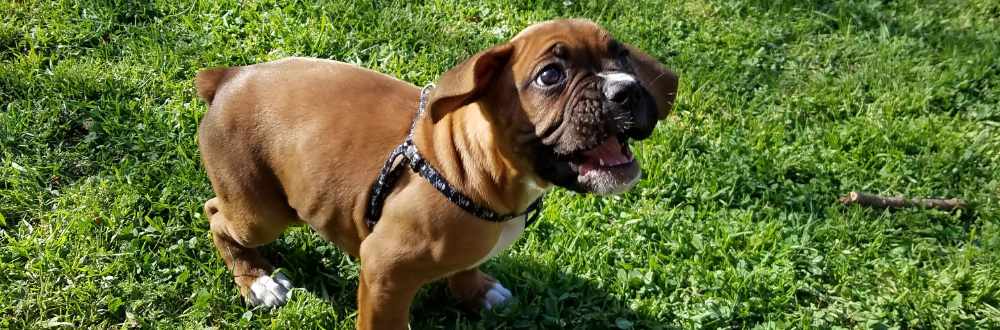
Asthenosphere, a geologist’s term for the molten layer beneath the earth’s crust, sparks a journey that stretches all the way from ancient Greece to the author of Uncle Tom’s Cabin. Plus: What the heck is a dogberg? It’s when a dog runs into you and knocks you over. This bit of slang was inspired by a professional wrestler who finished off his opponents in a similar fashion. And, if you’re vibing with someone, you’re getting along just great. The idea of vibing goes way back in history, and is well worth the effort to suss out. All that, pretty eggs, Rhode Island dressing, how to pronounce biopic, multiple modals, Mr. Can vs. Mr. Can’t, jawn, moded, a brain teaser for movie lovers, and more.
This episode first aired October 24, 2020. It was rebroadcast the weekend of November 27, 2021, and November 2, 2024.
Transcript of “Good Vibrations (episode #1556)”
You’re listening to A Way with Words, the show about language and how we use it. I’m Grant Barrett.
And I’m Martha Barnette. I’m always glad to learn a new word that I didn’t know I needed.
And Grant, I learned one from you the other day that I really appreciated.
Was it a four-letter word, a naughty word?
No, it wasn’t one of those this time.
Oh, I think I know the one. It was because a friend of ours had an accident.
Yeah, a friend of ours, unfortunately, got knocked over by a big dog at the dog park.
And you told me there’s a word for that.
I had no idea.
Dogburg.
Dogburg.
Yeah, to get knocked over by an animal is to be dogburg.
Apparently, it comes from the name of Bill Goldberg, a professional wrestler who had sort of a signature move where he would just do what they called a spear, like just run at somebody and knock them over, I guess.
Yeah, so the word is D-O-G-B-E-R-G after his last name.
And he’s a massive man, just built like a mountain.
And he kind of gets this look on his face.
You can find videos on YouTube where he kind of lurks in the corner of the ring.
And he does like a spear move at his opponent who, you know, because they’ve set it up so the opponent is kind of oblivious.
And just dives at this guy and his opponent and whips him off his feet.
I am so glad to have a word for that.
I’ve been wanting a big dog myself.
You know, we have a little one, but we wanted a big one as well.
But now I have a word for what I fear, you know, as much as I love big dogs.
Yeah, dog bird, because they are single-minded in pursuit of a squirrel or a gopher or whatever it is that they’re after.
And they ball frisbee.
They often don’t see what’s between them and their target.
Yeah, they’re wonderful, but being dog bird is not a good thing.
Well, obviously, we talk about all different kinds of language on this show, and we’d love to talk with you.
So give us a call, 877-929-9673, or send us an email.
The address is words@waywordradio.org.
Hello, you have A Way with Words.
Hi, my name is Cheryl.
I’m from Fort Worth, Texas.
And my and my boyfriend are curious about what it means when you say, I’m going to suss it out. We’re going to suss this out.
Ooh, what was happening that you needed to suss things out?
Well, so he learned this from a friend he was working with on a radio show, and any time they would have to figure something out, his friend would say, well, we need to suss this out. What does it mean?
Well, we think it means to figure it out, work it out, or get to the bottom of it.
Sounds about right, right, Martha?
Yeah, it sure does.
And how are you spelling it?
I guess, you know, we weren’t really, since we’ve never, I would say S-U-S-S.
-huh.
-huh. Yep, that’s how you usually see it.
And do you have any suspicions about where it might have come from?
I don’t. We have no idea.
That’s why we were like, let’s ask them, see what they say.
I was trying to give you a hint there when I asked about suspicions.
Oh, I totally missed that.
Yeah, because to suss out is slang shortening of the verb to suspect.
And it comes from British police jargon from about the middle of the last century.
In Britain, you might talk about picking somebody up on sus or talk about a suspect being a sus.
And to sus out is simply to, as you said, investigate or figure out.
But it comes from the verb to suspect.
Oh, my gosh. It’s British.
Originally, yeah.
And I never heard it very much until the last 10 or 15 years or so.
It’s interesting that you mentioned, was it a radio journalist who used that?
It was an engineer, an audio engineer, actually.
Okay, okay.
Because it was something that I came upon first in journalism.
You know, an editor would say, go suss out this question or something like that.
Oh, wow.
Yeah, I had never heard it before.
And then he used to say it, my boyfriend and I would just kind of make fun of him.
And then now we both do it, but kind of mockingly.
Well, now you can tell him you sussed out the answer.
Exactly.
Exactly, yes.
Well, that’s good to know.
Thank you.
Now I know that I’m actually saying something that really does come from somewhere.
Yes, you do indeed.
So there you go.
Well, good.
Thank you so much.
All right. We’re glad to help.
Thanks.
All right. Bye-bye.
Okay. Bye.
So the verb to sus goes back to the 1950s, but the noun sus is older.
Meaning is older, 1930s.
It can mean suspicion or suspect, right?
Yeah.
So you could be a sus.
Yes.
I’ve got a sus that he’s a sus.
I’ve got a suspicion that he’s a suspect.
Yeah. And that version is often S-U-S.
Rather than S-U-S-S.
But yeah, suss out.
Well, ring-a-ding-ding.
Hit us up on the telephone, 877-929-9673.
Remember our conversation about deviled eggs versus dressed eggs, Grant?
I do. I do. I was not able to persuade my wife to make some, though, so I’m going to make them myself.
I just want the little sprinkle of paprika on top, and I have this lovely smoked paprika that I’m going to use.
Oh, man. Smoked paprika sounds great.
Oh, it’s good. I put it on everything.
Well, our conversation about people calling deviled eggs dressed eggs because they didn’t want to mention the devil prompted an email from Kim Bulgren, who lives in Spooner, Wisconsin.
And she writes, I grew up with them being called pretty eggs.
It wasn’t until I was adult that I heard deviled eggs.
My mom said her mom called them pretty eggs because it wasn’t proper to say devil.
There we go.
So that kind of confirms the theory that was making the rounds, that you avoided saying deviled.
So you come up with all these other words instead of deviled.
Yeah.
And the idea behind deviled was that there was a little bit of bite or spice to it.
A little spice.
Like the heat of the devil.
Yeah, or smoke.
Smoke, yeah.
If you put smoked paprika on there.
Smoked paprika works good in burritos, works good in deviled eggs, works good on tacos.
You’re going to love it.
I’m going to have to dig some of that up.
Hello, you have A Way with Words.
Hi, hi.
This is Kate.
I’m calling from Arlington, Massachusetts.
Arlington, Massachusetts.
How are you doing?
Great.
And I was calling because I have a debate with my boyfriend about the pronunciation of a specific word. So I’m hoping you guys are going to prove me right, but I’m not sure. And there is a little bit more history to it, but essentially the word is spelled B-I-O-P-I-C. And I think that it should be pronounced biopic, whereas he thinks it’s biopic.
And Kate, Grant always likes to ask, what’s on the line here? Is it doing dishes for a week?
I think just like a lot of satisfaction.
Okay.
So the word B-I-O-P-I-C.
Yep.
Right.
Meaning what?
Meaning a movie about somebody’s life, basically.
Like maybe a biographical film?
Yes, exactly.
Yeah, yeah. Well, Kate, what we can tell you is that some people pronounce it the way you do biopic, but the vast majority of folks say biopic. And that’s because it is indeed a biographical film. It’s a combination of the bio from biographical and pic is in picture. It’s a Hollywood term that arose in the middle of the last century.
Okay. Well, so is there like an etymological reason that it would be pronounced that way, or is it just sort of what everybody decided to do?
Well, the tricky part about this and the thing that trips up a lot of people is that the OPIC at the end of that word looks like a suffix, but it’s not really.
So it’s kind of confusing.
It’s like the word microscopic or arthroscopic or myopic.
You think it’s a suffix, but it’s not because the PIC in there actually refers to the word picture, like a movie.
So it divides, the syllables divide between the O and the P.
So it’s biopic.
Yeah, it would be easier if they hyphenated it.
Yeah, it’s not divided between the I and the O.
It’s divided between the O and the P.
I estimate about 10% of people say it the way you do.
And as a matter of fact, Kate, the pronunciation is included in some dictionaries as a secondary pronunciation, meaning it’s not the one used by most people.
American Heritage Dictionary, for example, does include it as a secondary pronunciation.
Cambridge University Press gives biopic as the American pronunciation, but that gives the wrong impression and suggests that all Americans say that and we don’t.
Oh, okay. Well, it sounds like I’m not wrong, so I’ve got that going for me.
If you want to be devious, find the American Heritage Dictionary online. I believe it’s still online in full.
Go to the entry for biopic.
Send it to your boyfriend.
Say, look, my pronunciation is there.
And don’t tell him about any of the rest of this conversation.
That’s the first thing I’m going to do.
Kate, thanks so much for calling.
Take care of yourself.
Yeah, thanks for having me.
Yeah, you too.
Sure, bye-bye.
Have a good day.
Bye.
Bye-bye.
You know, we have a bunch more words like this where we take the first part of two words and combine them together.
And they almost always keep the pronunciation of the syllables that are joined together to form a new word, like fro-yo or pro-am or sitcom or slow-mo.
Yeah.
There is one exception, though.
Can you think of it?
Sci-fi.
Sci-fi.
Yeah, we don’t say sci-fi.
We say sci-fi.
Oh, I guess we do.
And that’s because it was modeled on hi-fi.
They intentionally coined it to sound like the word hi-fi.
But the truth is there’s actually two other things happening with hi-fi.
It’s a weird one.
Some people jokingly pronounce it as skiffy, especially if they’re talking about bad science fiction.
And other people just say SF to skip the sci-fi word altogether, which they love.
Oh, interesting.
I didn’t know that.
You know, I’m thinking, too, how similar biopic looks to bionic.
I never thought about that.
But it’s so close.
So I could see where bioanalogy.
Right.
And biopsy and myopic, as you said.
There are other words.
So biopic is a stranger.
Other words that are spelled and constructed this way, they’re not pronounced like that.
So bioanalogy, you want it to sound like these other words that you already know, this category of words that have the stress in a different place.
Following up on our conversation about clever and ingenious names for independent bookstores, we heard from Liz Cooksey in Portland, Oregon, who wrote to us about the novel experience.
That’s a store in San Luis Obispo where she spent her middle youth and early adult years.
And she added that in Portland, the Multnomah Public Library had a used bookstore called Tidal Wave.
Tidal Wave.
I love that.
Tidal Wave.
T-I-T-L-E.
Oh, good.
Good, good, good.
Book people are always so clever, aren’t they?
Yeah.
I was thinking maybe given the waterfalls there, it would be a pun on something with waterfalls.
I don’t know.
Truer Falls.
Truer Falls.
Yes.
See, you’re so good at this.
No.
You can email us anytime. The address is words@waywordradio.org or send us a tweet. We’re at Wayword.
You’re listening to A Way with Words, the show about language and how we use it.
I’m Martha Barnette.
And I’m Grant Barrett, and we’re joined by John Chaneski, our quiz guy direct from New York City.
Hi, John.
Hey, Grant. Hi, Martha. It’s so good to hear you guys again.
You know, I’ve been watching a lot of movies lately, as I think many of us are, since we have a lot of time to do that.
And I have a movie title quiz for you.
I’ve been keeping track of the movies that I watch on a spreadsheet, as usual.
I’m not the greatest typist.
Sometimes I’ll shock myself and find that a hilarious classic comedy that I saw sounds quite different.
For example, I changed but one letter in the title of a comedy, and suddenly it’s a film about a rebellious, spiky-haired animal that could be found in mosh pits.
It’s the punk panther.
So as you can see, all you have to do is change one letter, and the movie’s completely different.
One letter different in the movie title.
Okay.
That’s right.
We’re going to look at a few comedies that I accidentally changed by changing one letter.
Maybe for the better.
Who knows?
Now, you might think this was Forrest Gump.
It’s not.
A man travels the world playing table tennis at such blinding speed that his equipment gets red hot.
What movie is that?
Travels the world playing table tennis at such blinding speed, his equipment gets red hot.
Right.
Is this a tribute to Mel Brooks?
Oh, it is a little bit, yeah.
I would guess Blazing Paddles.
Blazing Paddles is right.
That is a movie I would watch.
Who would have thought that the evolution of citrus fruit would be interesting?
From ancient lemons to…
Wait, that’s the clue?
That’s the entire clue.
From modern…
Yeah.
Modern limes.
Yes, from ancient lemons to modern limes.
One change letter and suddenly it’s not a comedy about a Chicago band, but about siblings who solve crimes.
They’re on a mission from, what, Scotland Yard?
The Clues Brothers.
The Clues Brothers, yes.
We’re on a mission from God.
Now, every family road trip eventually comes to an end, and you have to worry about how you’re going to earn a living.
Change a letter for a movie about choosing a career.
A letter and a movie title about choosing a career.
And it’s a comedy. These are all comedies.
It’s a comedy, yeah. Remember, family road trip, but then, you know what?
You’ve got to come back and decide what you’re going to do.
Oh, something vocation.
That’s it.
National Lampoon’s vocation.
Vocation, right.
No longer set in a convenience store in New Jersey, this movie is now about namesakes of the lead actor in Gone with the Wind.
Clarks instead of clerks.
Which in the UK, I think it’s still called Clarks, no matter how you spell it.
Either way, yeah.
I was thinking, Butler, what?
No, yeah, Kevin Smith’s classic film.
I’m going to be shot on a low budget after work.
All right.
Obviously, I need to work on my typing.
Some spreadsheet.
Exactly.
If any of you have recommendations on movies, I am watching at least one movie a day.
Wow.
I’ve been doing that since January 1st.
Wow.
I’ve seen about 300 movies already.
It’s a lot of fun.
All right, John.
That’s cool.
Well, thanks, bud.
We’ll talk to you next week.
Really appreciate it.
Thank you, guys.
Talk to you then.
Bye-bye.
Bye-bye.
And we’d love to talk with you on the air.
So call us 877-929-9673 or send your stories and questions about language to words@waywordradio.org.
Hello, you have A Way with Words.
Hi, this is Audrey. I’m calling from Ithaca, New York, on a beautiful fall day.
Hi, Audrey. Welcome to the show.
Well, so I grew up in Philadelphia before moving to Ithaca for college and then staying here.
And I remember in about fourth grade, so about 1997, suddenly I realized that everyone around me in school was saying the word John all the time to replace every word.
And it boggled my mind.
And I remember, like, my parents saying that it was wrong and that it was ruining the English language because you could replace anything with this word.
And it was true. People would use the word John in a single sentence like three times.
Like, I took my John to the John, and we had a bunch of Johns.
And it was so surprising to me.
Will you spell that for us?
J-A-W-N.
So 1997 or so, you’re in the fourth grade, this word pops up, it’s new slang.
And you probably said it a lot, too.
I didn’t say it quite so much, honestly.
There was a bit of a racial divide, and I think I’ve done some research, and there still is.
I feel like the white kids kind of said it less in our segregated schools, and we said it a little bit, but it was very pervasive, especially among black students.
All right, so you’re white yourself then?
I am white myself, yeah.
Okay. In general, what happened with this word is, and a lot of people from Philly hate when this comes up, but it didn’t start in Philadelphia.
It started in New York City as the word joint, J-O-I-N-T.
Joint before that started in probably the 20s or 30s, coming from the idea of a place where two people met in the same way the idea where two bones connect.
So a joint would be a gin joint or a juke joint and so forth.
And then by the 1970s, joint had morphed to mean something that people do together, a business venture or an operation or a musical act.
You might remember Spike Lee films often have a line on the screen, a Spike Lee joint, not a joint production, but just a joint.
And that means it’s his thing, his operation.
That’s the same joint that turned into the John in Philadelphia.
And so it turns out that there was some linguistic fieldwork being done in the early 1980s in Philadelphia.
And so we have, I say we meaning the linguistic profession, has tape of a subject using the word John at about the time it was changing its meaning.
There was one young man who used it to mean a variety of different things, like he referred to different women.
He might say Puerto Rican joints or Irish joints to mean Puerto Rican women or Irish women.
He might use it to mean a physical place or a bag of chips or even his own genitals.
And then the dropping of the T from joint to get joint kind of conforms to some of the way that Philly speech differs from New York City speech.
Yeah.
And so then we have jaw.
And so slang is weird.
It’s ephemeral and it tends to fluctuate.
And so this is a really classic slang word.
It’s so wonderful that we can trace its history over the last 40 years or so.
If we take it back to joint, it’s much older than that.
But as John, it’s about 40 years old.
And we can see that it became kind of this point of linguistic pride for people in Philadelphia.
And it’s become what I call a chamber of commerce word where John is just kind of known that it belongs to Philly.
And if you use it and you’re not from Philly, people kind of cock an eyebrow at you and go, like, what are you pretending at, you know?
Right.
So do you still use it, Audrey?
I don’t.
I’ve never used it that much myself, but I actually know a couple of people living here in Ithaca from Philly who do use the word.
It really is like a secret language because you feel like you don’t know what someone’s talking about because it just replaces any noun.
Yeah, because you can use it as a placeholder or a collective noun to mean stuff, or you can refer to a situation or a circumstance.
Like you could say, I’m not dating him.
His whole John is like too much for me right now.
Or you can say it’s a plural.
It can like, what are all these Johns doing in this drawer?
Or you can do it as a zero plural.
I can’t open this drawer because of the John.
So it’s like, it’s just like multiple kind of things happening with John.
Give me the John from the table so I can fix this.
Could be anything.
Could be a screwdriver or the centerpiece.
We don’t know.
Totally.
Audrey, thanks so much for sharing that with us.
Yeah, this was really fun.
I appreciate it.
All right.
Have a good one.
Take care.
Bye-bye.
Bye-bye.
Here is one of my all-time favorite tweets ever.
It’s from Robert McNeese.
And he says, somehow I’ve lucked out and have an 8-year-old who thinks secretly reading under the covers past her bedtime is an act of rebellion.
And it hasn’t yet occurred to her that her flashlights never seem to run out of batteries.
Oh, how wonderful that is.
Were you an after-hours reader when you were a kid, Martha?
I always had a Saturday morning book.
I don’t think I ever was an after-hours reader.
Yeah, I totally was.
I would spend many hours just rigging up different kinds of light bulbs to different kinds of batteries so that I could read in the bunk beds.
Oh, that just melted my heart.
That’s lovely.
So he sneaks in there and replaces the batteries every once in a while.
Share your stories about language and reading with us, 877-929-9673.
Hello, you have A Way with Words.
Hello, this is Jim Gilmore calling from Ithaca, New York.
Hi, Jim, welcome to the show.
Hey, glad to be in the show.
My mother-in-law, Marveline Ricard, and I call her Marvelinius.
Well, her dad, Fred Humphrey, used to say to the kids when they kind of acted like they couldn’t get something done or maybe they just were too busy in the course of a day to finish something, he’d say, well, Kant died in the poorhouse a long time ago.
Oh, yeah.
Marveline would have heard that from her dad, Fred, around 1933-ish, 1932.
The phrase was when the kids would say, I can’t do this.
The phrase was, can’t died in the poor house a long time ago.
That’s a nice version of this phrase, isn’t it, Grant?
Yeah, it sure is.
Yeah.
Let me know about that one, Martha.
The cant there is sort of this imaginary figure who represents pessimism or laziness.
Sometimes it’s Mr. Cant.
People might talk about Mr. Cant and Mr. Cant.
In fact, there was a children’s magazine back in 1910 that had a poem about Mr. Cant and Mr. Can.
And part of it goes, Mr. Cant is a pitiful sight for he’s whipped before he’s begun to fight.
And he says that it puzzles him quite a lot why some can do it and some cannot.
Oh, poor Mr. Kant, for he never knew the secret I’m going to whisper you, that you jolly well can if you only try, and you certainly can’t if you only cry.
So Mr. Kant was this figure who was used to, as you said, tell kids that yes, they can.
You know, be more optimistic.
And he didn’t always die in the poorhouse, right?
Sometimes he died in the cornfield.
Sometimes in the cornfield, sometimes in the war.
And there was another version of this that went, Kant is dead, his brother is called try.
Right.
I’ve just seen Marveline get so much done in the course of her life.
And so this phrase just keeps me going, you know.
And anybody who knows me, I try to share that attitude with them.
You know, Kant died in the poorhouse a long time ago.
Well, Jim, give Marveline our best, will you?
I will.
Absolutely.
And thanks so much for your call.
We really appreciate it.
Helping me with that.
Okay.
Bye-bye.
Take care now.
Be well.
Will do.
You too.
Yeah, that poem is from a 1910 issue of St. Nicholas, which was a children’s magazine, and we will link to that on our website.
It’s, you know, inspiring.
Yeah, sure.
Can’t never could is another variant of that, right?
Oh, I like that.
Yeah.
But you can call us, 877-929-9673, and you can email us, words@waywordradio.org, and you can tweet at us, @wayword.
Hi there, you have A Way with Words.
Hi there, my name is Lily, and I’m from Madison, Wisconsin.
Hey, Lily, welcome.
Hi, Lily, what’s up?
Hi, so I had a question about the word vibe.
I’m a teenager who goes to high school and I hear people use the word all the time just to mean, you know, having a fun time doing something.
And I heard my coworker talking with me the other day about how vibe used to be a word for having feelings for people.
I was just wondering how the word has changed over time and like what it originated from.
So describe in more detail how you use it today.
What kind of what kind of situations would it come up in?
It’s more of a slang word now.
So, you know, when people just talk about, you know, it’s more of a party situation, I think.
So if you’re with a group of people and you just say, I’m vibing, it means you’re having a good time.
So I think it’s like casual.
Yeah, that sounds about right.
That’s definitely one of the uses of the slangy uses of vibe.
But let’s go back more than 100 years and actually even further back than that.
The vibrations, actual vibrations like things moving rapidly in a repetitive way, have long been seen as having a connection to spirituality, the universe, the body and the mind, even back to ancient times.
And so people have, in a kind of metaphysical or semi-spiritual way, thought about vibrations as a thing that they could perceive or control.
Vibrations have been out there as a thing, including vibrations from the stars, the cosmos, the planets, and so forth.
And then we get to vibrations being used in the way that we kind of use it today by the end of the 1800s.
Oscar Wilde wrote in The Importance of Being Earnest about the name Jack, J-A-C-K, producing absolutely no vibrations, meaning that the name didn’t really do anything for him.
And so that’s kind of what we’re talking about today, right? Vibrations are about something or someone or a situation working for you.
If you’re vibing at a party, that means this party is really working for you. You’re feeling good and everything’s pleasant or mellow.
And so in the century after Oscar Wilde used in that way, vibrations continued to be used in a way that for, you know, popped up in horoscopes and other works of astrology.
And it rose to new popularity in the hippie movements of the 1960s, which cherry picked from even more religious uses and philosophies and sciences and even more cosmology.
And then in 1966, the Beach Boys released their hit Good Vibrations, which was a huge hit.
And the reason I said it and then, vibrations were already a thing and the hippies were already talking about it.
But for the non-hippies and the people not in the know, for the squares, this kind of brought the idea of vibrations out of the hippie movement, out of the counterculture world to the squares and the people who weren’t a part of the movement.
And so by 1967, emotional vibrations had been shortened to vibes, although vibes had already been in use since the 1940s as an abbreviation for the musical vibraphone, which is kind of like a xylophone.
Anyway, so the verb meaning to produce vibrations or to feel vibrations appeared at about the same time.
And by the 1970s, to feel good or to be in the zone or to feel like something special happening, which is more or less how we use it today, was established.
And so you can say to someone, we’re really vibing together in the 2000s, and everyone knows what you mean.
That’s a great answer. Thank you so much. I poured it all out of my head.
And Lily, I want to thank you for that earworm. Now I have the Beach Boys in my head.
Yes. Yeah, it was my fault. Sorry.
Are you old enough to have listened to the Beach Boys, or is that familiar to you at all?
Yeah, my parents absolutely love the Beach Boys, so I’ve heard them a couple times.
Yeah, check out their song, Good Vibrations, if you don’t know it already. If you would love an earworm.
How weird is it to know that you’re using a slangy, you’re in high school, and using the slangy word that is derived from people more than 100 years ago thinking about their connection to the planets and the vibrations that they might be sensing from, say, the Jupiter?
You know, it’s kind of ironic. I feel like when kids use it these days, they’re almost talking about it in a psychedelic form. So it kind of makes sense. The connection is there.
There’s still a little bit of the sense of the hippiness of it, kind of this vague spirituality with no precise definition. Right, exactly.
Well, cool. Lily, you sound like a smart kid and I’m glad you called us and I want you to call us again, alright?
Alright, thank you so much. Alright, good luck, be well.
You too. Bye-bye. Alright, bye-bye.
877-929-9673. You’re listening to A Way with Words, the show about language and how we use it.
I’m Grant Barrett. And I’m Martha Barnette.
My spouse and I decided we really needed a change of scenery, so last month we took a long road trip to Montana to do some hiking, which of course was glorious.
We also visited Yellowstone National Park, and we took a couple of guidebooks with us, and I wanted to share a bit of writing from one of them.
It’s by Brian Kevin, and it’s called simply Yellowstone and Grand Teton National Parks. He’s describing the geological features that make Yellowstone so distinctive with its hot springs and spewing geysers.
And it’s a nice piece of writing that offers a big picture perspective, and it sent me down some cool etymological paths.
He writes, the first thing to remember is that we’re all floating, all of us, all the time.
We’re adrift on huge continental islands or plates that comprise the planet’s uppermost 50 to 80 miles, known to geologists as the lithosphere.
These lithospheric plates drift around on a gurgling sea of plasticized rock called the asthenosphere, bumping and grinding and occasionally sliding beneath one another at a rate of an inch or two every year.
Another 1,500 miles below the asthenosphere, much deeper into the layer known as the lower mantle, the rock goes from plasticized to out-and-out molten.
Gobs of this molten rock occasionally get so hot that they have to ascend, like the lava in a lava lamp, and they do so in long, narrow plumes running upward through the mantle.
When these molten plumes hit the bottom of a solid lithospheric plate, they flatten out into the wide molten pools we call hot spots.
And Grant, that’s a great explanation of this huge area that underlies Yellowstone National Park.
But a couple of words caught my ear, one of which, as you might imagine, is lithosphere, which means the rocky outer part of the earth.
That’s from Greek lithos, meaning stone or rock, just as a monolith is literally a single block of stone.
But the word that really stopped me short was asthenosphere. That’s A-S-T-H-E-N-O sphere.
And it comes from the Greek word asthenes, which means weak or feeble. And that means it’s related to words like myasthenia, which is muscle weakness, or neurasthenia, which is fatigue and malaise that originally was thought to be caused by weak nerves.
But I was thinking, could the part below the Earth’s rocky crust really be named from the Greek word for weakness? And it turns out, yes, the asthenosphere is literally the sphere of weakness.
It’s made up of, as one dictionary put it, material believed to yield readily to persistent stresses. It’s much hotter and more fluid than the hard, rocky lithosphere.
So I was all excited, of course, as you can imagine, to learn this new word, asthenosphere. And then I made another connection because in Greek, asthenes, or weakness, literally means without strength.
And the root word of that is sthenos, which means strength. And that got me to thinking about where we might find a derivative of sthenos, S-T-H-E-N-O-S, in English.
And we do have one. Can you guess what it is? Aesthetics? Or I don’t know.
The word strength itself. I don’t know. Well, it has to do with strength. It’s the word calisthenics, the word for exercise.
It comes from Greek words that mean literally beautiful strength. And as the OED puts it, calisthenics are light, systematic, rhythmic exercises designed to achieve physical fitness alongside grace of movement, especially intended for women or girls.
And that sent me to looking for the origin of why we use this word. And it turns out that calisthenics was popularized in the 19th century by Catherine Esther Beecher, an advocate of education for young women, along with her sister, Harriet Beecher Stowe.
So there you go, Grant. This is how my mind works all the time from the rocky crust of the earth to the author of Uncle Tom’s Cabin in five easy etymological steps.
So you are in Yellowstone, a beautiful place, reading a beautiful passage about this beautiful earth. And you’re reading about the layers of the earth and you find layers of language.
That is completely you, Martha. That’s wonderful. Thank you so much for this.
This is delightful. I’m so happy that you shared this with us. This is fantastic.
Thank you for indulging me, Grant. I think, yeah, my mind is kind of this fiery mountain mass.
You just let me know. I’ll turn on the mics for you. Oh, and I know that our listeners are big readers, particularly with the pandemic.
People have been pulling those must-read books that have been getting a little dusty off their shelves and off their bedside tables and giving them a chance.
Share your best passages with us. Share those connections that you made. Share those layers with us.
We’d love to hear them and share them with everyone else. 877-929-9673.
Email the passage to us at words@waywordradio.org or take a screenshot and send it to us on Twitter @wayword.
Hi there. You have A Way with Words. Hi, this is Patricia McNulty, and I’m speaking to you from Virginia Beach, Virginia.
Well, welcome, Patricia. What can we do for you? I have a question. I actually grew up in Michigan and then spent some time in Europe and then was in Massachusetts.
And then I moved down in the late 80s to Richmond, Virginia, and I started hearing a lot of things there that kind of stuck in my Midwestern ear the wrong way.
And there’s a couple of expressions I’ve been wondering about ever since then.
And one of them is the use of might could together or might should.
And it’s usually used in a setting like, well, we might could do that, or I might should go to the store today, or something along those lines.
And then I started thinking about the people that said that, and I sort of centered on this friend of mine named Jane.
And I was wondering if it was maybe a family thing of hers, or if that particular expression is more widely used in the area.
So it’s not something that you’ve heard in Massachusetts?
No, no, absolutely not.
And have you heard it anywhere else outside of Virginia?
No, only here.
And Patricia, does it mean the same thing as might or should?
Or does it have a nuance of meaning is what I’m wondering.
No, it just seems like an overuse of two words stuck together.
And either one of them would have been fine all by itself.
Is Jane’s family particularly Southern?
Yes.
Her father was born and raised in Richmond, and her mom actually grew up on a tobacco farm just south of Petersburg, Virginia.
Yeah, that makes a lot of sense, doesn’t it, Martha?
Oh, yes.
We’re thinking here.
I know what Martha’s thinking.
I can read her mind on this one.
One of her lobes of her brain is…
You can always read my mind.
Well, we’ve talked about this on the show.
It’s been a long time, hasn’t it?
There’s something about the settlement patterns of the American South that brought over from the north of England and Scotland a bunch of linguistic traits.
And this is one of them.
And it’s called multiple modals, M-O-D-A-L-S.
And modals are helping verbs that express things like possibility, capability, likelihood, permission, or obligation.
The effect of verbs grammatical moods.
So these are helping verbs like can or may or might or shall or should or will or would, things like that.
And what happens is you do pair them up exactly like you said.
So you’re very observant.
You notice that might could and might should are very common examples.
But there are others like might can or may used to or may should or should ought or used to could.
And all of these together are used usually to add a little more nuance.
That’s why Martha was asking that question.
Sometimes it’s hard to puzzle it out and maybe the nuance isn’t always there.
For example, if I said to you, we might go out for dinner tonight, it sounds a little less direct than we might go out for dinner tonight or we could go out for dinner tonight.
It’s perhaps more likely to receive by you as a suggestion rather than a direct request.
It’s just a little more graduated, a little more subtle, usually.
Does that make some sense, Tricia?
Yeah, it does.
It’s funny because I actually called Jane this morning and we were discussing this very thing.
And she wasn’t even aware that she was saying it.
And then later in our conversation, she said something about, oh, yeah, Mike could go to lunch next week.
And I said, Dane, do you realize you just said it?
Yeah.
So, yeah, if she said we could go to lunch next week, that sounds kind of vague and maybe she doesn’t really mean it.
But Mike could sounds a little more certain, doesn’t it?
Yeah.
I think it does anyway.
But you really won’t hear this much outside of the American South.
You will.
It’s sprinkled here and there.
Generally, it’s far more common in the American South, particularly where people from the north of England and Scotland settled many years ago.
That’s really interesting.
Well, Patricia, thanks for your call.
Yeah, thanks for having me. It was really fun.
Bye-bye.
Thanks.
Bye-bye.
Bye-bye.
Well, maybe you moved to a different part of the country and something caught your ear.
Let us know about it, 877-929-9673, or send the story to us in email.
That address is words@waywordradio.org.
In Latin, the word utinam introduces the optative subjunctive, and it means basically would that or if only.
It’s spelled U-T-I-N-A-M, utinam.
I was reminded of that when we got an email from Rebecca Harrison, who’s a professor emerita of classics at Truman State University there in Missouri.
Well, she was responding to our call with Dana in Reno, Nevada, who wanted a word for that moment when you’re playing cards or a board game and you draw what would have been the perfect card or the perfect tile for the previous turn that you just played.
She says, what about ootinam?
Oh, yeah, because you can stretch the vowel out, right?
As you pound the table.
Yeah, you know, it sounds learned.
That’s great. Ootinam.
And so it means if only.
So that’s another option, Dana.
Ooh, to nom.
Call us to talk about language.
Hello, you have A Way with Words.
Hi, this is Tony.
I’m calling from Fullerton, California.
Hey, Tony, welcome.
What’s up?
I had a question about the word moated.
Growing up in Orange County, California in the 70s, it was a word that we used in our neighborhood.
It meant sort of like in your face or you’re busted.
And I thought it was maybe just a word that was popular in our neighborhood.
But like 20 years later, I’m working in an office and someone said it to me in the office.
And I asked her where she heard the word from.
And she said it was just something she’d heard when she was a kid.
So I’m just super curious about this word.
Oh, that’s great.
What was happening?
I forget.
It was meant in jest, but I’d messed something up.
And she said, oh, moated.
And I was like, where’d you hear that word from?
We used to say that to each other when we were kids.
And I have no idea.
My sister thinks maybe it comes from the word demoted, but I always thought it would be spelled M-O-D-E-D.
I have no idea.
Was there a gesture associated with it?
Anything that you did with your hands?
I don’t recall.
I don’t think so.
Like maybe scratching your neck?
No, no, that doesn’t ring a bell at all.
No, okay, gotcha.
All right.
So, yeah, this was a widespread term specific to California, particularly Southern California, but not only Southern California, if that makes sense.
Throughout Los Angeles and Southern California, perhaps as far as San Diego, north up maybe as far as Monterey, you can find this showing up in little collections of slang and in yearbooks and people’s memories and so forth.
It shows up in a collection of slang that was done occasionally from UCLA.
And they have an entry for it where they have a bunch of different spellings, M-O-D-E or M-O-T-E, sometimes even M-O-L-D, like mold.
And it means to be humiliated or embarrassed or mistaken.
And then there was another thing that went with it where you might scratch your neck in reference to an old expression called scratch your dirty neck.
Again, it’s the kind of thing like you just kind of demonstrate that somebody has been beaten or been put down or somehow made a fool of.
Right.
So this was a thing.
It wasn’t just you and your coworker saying moated.
Yeah, didn’t we have a caller who talked about moated, corroded, your booty exploded?
Yeah, yeah, that was the rhyme.
You’re moated, corroded, your booty’s been exploded.
Yeah, that was like when you’ve really been beat down, when you’ve really just been embarrassed.
Like, this is like if your pants fall down in front of a school assembly.
That’s like the ultimate defeat, you know?
Right.
Well, I’m a junior high school teacher, so I’m going to bring that one back.
Oh, they’re going to love it.
They’re going to love it.
I don’t know that it comes from demoted.
Obviously, that’s the first thing that pops into people’s minds when they try to come up with an etymology.
There’s no way to know.
Slang is a mystery.
There’s a lot of different spellings for this.
But it could make some sense.
But demoted is kind of not really a slangy word, but I could see it being corrupted into slang.
Who knows?
Well, that’s brilliant.
Well, thank you for psalming such a big mystery.
The word disappeared just as quickly as it arrived, I think.
But like I said, maybe I’ll bring it back along with the…
Well, by the way, you may not have to bring it back.
I found evidence in my files of one report of it still being used in 2003 and a school collection of slang from San Francisco in 2005 that had it reported and submitted by a student.
So that’s relatively current.
At least it’s not the 1970s.
So it might still be out there.
Yeah, clearly, Tony, you’ll have to do some field research for us with your students.
Oh, yeah, find out if they know.
I do. I have some work to do.
Yeah, thank you very much.
Report back, sir.
We will.
Thank you.
Take care, Tony.
Take care.
Bye-bye.
Thank you. Bye-bye.
Call us to share your stories about language, 877-929-9673.
Grant, have you ever eaten Rhode Island dressing?
Have I ever eaten Rhode Island dressing?
Mm—
Is this R-H-O-D-E or R-O-A-D?
Because if it’s R-O-A-D, I’m wondering what you’re talking about.
No, it’s R-H-O-D-E.
And the reason I ask is that you’ve traveled in Sweden, as I recall.
I have, yeah, several times.
Well, apparently Rhode Island dressing is a thing in Sweden.
It’s not a thing here, but it’s Rhode Island sauce, the S-A-S with the little circle over the A.
Yeah, you can look it up on the Internet.
Some chef there invented Rhode Island dressing.
It sounds like one of those names that, you know, you want to make sound fancy, so you just name it after some faraway place.
Yeah, Rhode Island could sound absolutely exotic, right?
Right.
When you’re like, oh, all this.
And plus, because Sweden has this whole seafaring and fishing culture, and Rhode Island has this fishing culture, right?
They might actually think of Rhode Island as kind of a kindred place.
So maybe there’s something to that.
That’s very interesting.
Yeah, looking at the bottles of it online, it looks sort of like Thousand Island dressing.
But yeah, I guess Rhode Island sounds like this glorious place that you might visit someday.
Maybe they’re twin.
Do you know how they do twin cities or sister cities?
Maybe Rhode Island and one of the provinces of Sweden are twins.
Well, if you’re Swedish and you know about this, we’d love to know more.
Call us 877-929-9673 or explain it all to us in email.
The address is words@waywordradio.org.
Thanks to senior producer Stefanie Levine, editor Tim Felten, and production assistant Rachel Elizabeth Weisler.
You can send us messages, subscribe to the podcast and newsletter, and catch up on hundreds of past episodes at waywordradio.org.
Our toll-free line is always open in the U.S. and Canada, 877-929-9673, or email us words@waywordradio.org.
A Way with Words is an independent production of Wayword, Inc., a nonprofit supported by listeners and organizations who are changing the way the world talks about language.
Many thanks to Wayword board member and our friend Bruce Rogow for his help and expertise.
Thanks for listening. I’m Grant Barrett.
And I’m Martha Barnette.
Until next time, goodbye.
Bye-bye.
Thank you. you
Dogberg!
 If a big dog knocks you over, the joking term for that mishap is dogberg, a bit of slang inspired by the name of professional wrestler Bill Goldberg, who liked to finish off his opponents with his signature move called the spear, which involved charging at them and knocking them off their feet.
So Sus! Sussing Out Suss
The verb to suss out means “to investigate” or “to get to the bottom of” something. In British police jargon, a suss or sus is “a suspect.” This slang term is older than the video game “Among Us.” In fact, it’s older than all video games.
Pretty Eggs
Our conversation about dressed eggs serving as a euphemism for deviled eggs prompts Kim from Spooner, Wisconsin, to share that her mother and grandmother called them pretty eggs for the same reason.
How Do You Pronounce “Biopic”?
Kate from Arlington, Massachusetts, and her boyfriend disagree about how to pronounce biopic. The confusion arises in part because the -opic at the end looks like the ends of words like myopic and microscopic. It’s actually a shortening of the term biographical picture, so the accent goes on the first syllable. Biopic emerged from Hollywood jargon of the 1940s.
More Clever Bookstore Names
Liz Cooksey of Portland, Oregon, fondly remembers two bookstores with clever names: The Novel Experience of San Luis Obispo, California, and the Title Wave, which sold discounted materials retired from the Multnomah County Library.
Give New Plots to Movies By Changing One Letter in Their Titles
Quiz Guy John Chaneski is dreaming up new plots for movies by changing one letter in an existing movie title. For example, if you change one vowel, what hilarious classic comedy becomes the tale of a rebellious, spiky-haired animal found in mosh pits?
Origin and Meaning of “Jawn”
When Audrey was growing up in Philadelphia, Pennsylvania, in the late 1990s, it seemed that everyone around her used the word jawn as an all-purpose substitute for other words, as in I took my jawn to the jawn and we had a bunch of jawns. Philadelphians proudly claim jawn as a local product, but in fact this term originated in New York City in the 1920s as joint, as in “a place where two people come together.” By the 1970s this sense of joint had morphed into “something that people do together,” as in the way movies by Spike Lee are described as a Spike Lee joint. Joint took on a host of other meanings, and, influenced by the local dialect of Philadelphia, morphed into jawn there.
Abetting an Under-the-Cover Reader
A Twitter user shares a heart-melting observation about his eight-year-old’s habit of reading under the covers at night.
Can’t Died; His Brother is Try
The phrases Can’t died in the poorhouse, Can’t died in the war, and Can’t died in the cornfield are all jocular ways of encouraging someone to persevere despite difficulties or long odds. Sometimes this notion involves the metaphorical figures Mr. Can’t and Mr. Can, as in this poem from a 1910 children’s magazine. Another version: Can’t is dead; his brother is called Try.
Origins of Vibe and Vibing
Lily in Madison, Wisconsin, wonders about the use of the words vibe and vibing to mean “having a good time” with someone else. The sense of vibrations reflecting some kind of mystical connection goes centuries back and was famously celebrated in the Beach Boys’ 1966 hit, “Good Vibrations.”
The Asthenosphere
The asthenosphere, as described in Brian Kevin’s Yellowstone and Grand Tetons National Parks guide (Bookshop|Amazon) is a gurgling sea of plasticized rock beneath the earth’s rocky crust. Asthenosphere derives from Greek asthenes, meaning “weak” or “feeble,” and a relative of the English words for “muscle weakness,” myasthenia, and “nerve weakness,” neurasthenia. The Greek word for “strong,” sthenos, gives us the English word calisthenics, or “beautiful strength,” a form of exercise originally designed primarily to promote strength and fitness in girls. These rhythmic exercises were popularized in the 19th century by the sister of Harriet Beecher Stowe, author of Uncle Tom’s Cabin (Bookshop|Amazon).
Might Could, Might Should
Modals are helping verbs that affect a verb’s grammatical mood and express possibility, capability, likelihood, permission, or obligation. The use in the Southern United States of multiple modals, such as might could and might should reflect the settlement patterns of immigrants from Scotland and northern England.
Utinam!
A retired professor of classics in Missouri suggests the Latin word Utinam! as something to exclaim if you belatedly draw the right tile or card in a game. In Latin, utinam introduces the optative subjunctive and translates as “if only.”
Moded California Slang
Tony says when he was growing up in Orange County, California, he and his friends would use the exclamation Moded! meaning “In your face!” or “Busted!” This expression, and variations of it such as Molded! and Moted!, was said to someone who is humiliated, embarrassed, or mistaken. It was sometimes accompanied with the gesture of scratching one’s neck, a reference to the phrase scratch your dirty neck, suggesting someone who’d been beaten and otherwise bested. Another variation: Moded, corroded, your booty exploded!
Rhode Island Dressing
If you’ve never had the salad topping called Rhode Island dressing, it may be because you’ve never been to Sweden,where you can find it on grocery store shelves.
This episode is hosted by Martha Barnette and Grant Barrett, and produced by Stefanie Levine.
\nBooks Mentioned in the Episode
\n| Yellowstone and Grand Tetons National Parks by Brian Kevin (Bookshop|Amazon) |
| Uncle Tom’s Cabin by Harriet Beecher Stowe (Bookshop|Amazon) |
Music Used in the Episode
| Title | Artist | Album | Label |
|---|---|---|---|
| Falling In Love Again | Dojo Cuts | Tomorrow’s Gonna Come | DC Recordings |
| Omega | Black Market Brass | Omega | Colemine Records |
| Spear For Moondog Pt 1 | Jimmy McGriff | Electric Funk | Blue Note |
| Bad News | Aaron Frazer | Bad News Single | Colemine |
| Spear For Moondog Pt 2 | Jimmy McGriff | Electric Funk | Blue Note |
| Changes (Demo) | Neal Francis | Demo | Colemine Records |
| Queen Bee | Ghost Funk Orchestra | An Ode To Escapism | Colemine Records |
| Volcano Vapes | Sure Fire Soul Ensemble | Out On The Coast | Colemine Records |

