

If you catch your blue jeans on a nail, you may find yourself with a winklehawk. This term, adapted into English from Dutch, means “an L-shaped tear in a piece of fabric.” And: What’s your relationship with the books on your shelves? Do the ones you haven’t read yet make you feel guilty — or inspired? Plus, we’re all used to fairy tales that start with the words “Once upon a time.” Not so with Korean folktales, which sometimes begin with the beguiling phrase “In the old days, when tigers used to smoke…” Plus, excelsior, oxtercog, wharfinger, minuend, awesome vs. awful, googly moogly, and eating crackers in bed.
This episode first aired November 17, 2018. It was rebroadcast the weekend of September 16, 2023.
Transcript of “Bottled Sunshine (episode #1512)”
You’re listening to A Way with Words, the show about language and how we use it. I’m Grant Barrett.
And I’m Martha Barnette.
Jan Bettel Ellis of Chelan, Washington, teaches English as a second language.
And she also leads workshops for volunteer teachers of English as a second language.
And she was trying to come up with some unusual English words for common items because she thought it would be a good exercise for the volunteer teachers to be confronted with those English words that maybe don’t make sense, but sort of do in a sentence.
So she went to our Facebook group and asked for examples.
And our listeners there were so helpful.
They gave her a whole lot of words in that category.
For example, winklehawk.
Do you know this word, winklehawk?
No.
If you have a winklehawk in your pants, it’s an L-shaped rip.
Oh, yeah, yeah, yeah, yeah.
Yeah, doesn’t that ring a bell?
Well, I think we may have talked about that a long time ago.
It’s an old Dutch term that means a carpenter’s L-shaped tool.
So if you have an L-shaped rip in your pants, that’s a winklehawk.
And another one was diastema, which I feel like I knew at one point but forgot.
Diastema is a word for the gap between your teeth.
So think David Letterman.
It comes from a Latin word that means interval.
But it was just so cool the way all these people chimed in with words for things that you know of.
Don’t quite have the name for it.
Yeah.
And it was also interesting to follow the discussion on Facebook because other ESL teachers chimed in and talked about how they would teach new teachers by making them learn a conversation in Japanese, just a short conversation, so that they could have the experience of experiencing what you do when you learn a foreign language, which is you see that wall of words.
And every once in a while you can break out a brick here and a brick there.
But I’m going to share some more of those words that our listeners shared later in the show.
Outstanding.
If you’ve got an unusual word for an ordinary thing, share it with us, 877-929-9673,
Or email words@waywordradio.org.
One of my favorite quotations about etymology comes from Owen Barfield,
Who in 1926 wrote the book History in English Words.
And Barfield said,
Words may be made to disgorge the past that is bottled up inside them as coal and wine when we kindle or drink them yield up their bottled sunshine.
Ooh, bottled sunshine.
Isn’t that great?
Yeah, coal and wine.
To compare the two of those.
I know, I know.
Yet at the bottom of it, they both have to do with the sun on the leaves.
Yes, yes.
And just that image of words yielding up all that richness.
That’s true.
Yeah.
Hello, you have A Way with Words.
Hi, Grant.
Hi, who is this?
Yeah, this is Gila from Woodbridge, Connecticut.
Hi, Martha.
Hi, Gila.
Thanks for taking my call.
Our pleasure.
Welcome.
What can we do for you?
Well, the other day I was in my doctor’s office,
Sitting in the waiting room for, you know, too long, as we do.
And a question just came to me, and here it is.
Is there any connection between being patient and being a patient?
And I knew you were the two to ask.
So, I mean, the spell’s the same, right?
And the pronoun’s the same.
But the meanings are completely different.
There is indeed a connection.
They both go back to a Latin word that involves suffering.
Oh.
Yeah.
That makes sense.
Yeah, and so by the late 14th century, the word patientum in Latin meant a suffering or sick person.
And we get the word patient from that.
And those words are also part of a whole family of words that include the word passion.
Like when you talk about the passion of Christ, it has to do with suffering, that kind of passion.
Yeah, like the passion of Christ.
And I don’t know, are you familiar with passion flowers?
No.
Okay, well, it’s a really strange-looking flower.
I mean, if there were ever a flower that looked like it was put together by a committee, it would be the passion flower.
It looks like a sea anemone on land, kind of.
Yeah.
I’ll have to look it up.
Very colorful.
Yeah, with little extra things.
And it gets its name passion flower from a story that goes that it represents the passion of Christ.
Part of it looks like a crown of thorns.
Part of it looks like the nails that were driven into Jesus’s hands.
Yeah, and so they’re all related to this old Latin word that means suffering.
And there’s this notion in a lot of the older usages of enduring.
So you’re enduring pain or suffering or you’re enduring a long wait.
You’re enduring something.
Music and magazines that are out of date.
Yeah, and somebody else’s germs on the armrests.
So in the waiting room, I was suffering from a cold and suffering waiting.
Yeah, exactly.
You suffered yourself to wait.
That’s great.
You did.
So there is indeed a connection there.
Excellent.
I will remember that.
Now, this was so much fun.
It was so great to talk to you.
Well, thank you for calling, Gila.
Take care.
Well, if you’re sitting around wondering about a word or phrase, call us 877-929-9673 or send us an email.
That address is words@waywordradio.org.
In English, when we start a story from long ago or a fairy tale, we start it with once upon a time, right?
Yeah.
I was surprised to learn that in Korean folk tales, a lot of times they would start out with something like,
In the old, old days when tigers smoked tobacco pipes, or in the old days when tigers smoked long pipes,
Or in the old days when tigers used to smoke.
I love it.
Isn’t that wild?
This is very common.
Apparently so. I think it’s probably less and less common.
But apparently this is a thing.
I was surprised when I saw one example of it and I went on the Internet and found lots, lots more.
And do you know if there’s a folktale way back in history about a smoking tiger?
Well, that’s what I’m wondering.
Right. If you know the Korean folktale or the reason behind starting out Korean folktales with a smoking tiger, tell us.
877-929-9673 or send those answers to words@waywordradio.org.
Hello, welcome to Way With Words.
Hi, this is Giovanni Cruz from Dallas, Texas.
Hi, Giovanni. Welcome to the show.
Thanks. Thanks for having me. I’m a huge fan.
Oh, that’s awesome.
We’re glad to have you. What’s up?
Last year, my German exchange sister came to visit for the first time in, I think, 10 years.
And she really wanted to tour our town, our hometown that we had lived in when we were together as exchange sisters.
So we went home and we visited my parents.
And my dad has this tendency to over-exaggerate, as some people do.
And so we were driving around the town and he kept pointing to things and going, oh, look at that building over there.
That’s brand new.
Oh, look at that building over there.
That building’s brand new.
And in my mind, I’m like, dad, that building’s two, three years old.
That’s not brand new.
Brand new is like it just went up yesterday, right?
Yeah, and and so but it really got me to thinking what I know what a brand is, you know, and I know it’s, you know, we, I’m from Texas, we brand cattle.
We brand our animals.
I know when something is new, but I, it kind of occurred to me what we at what point did we start attaching brand to new and making it like something that is extra new, something that’s hot off the presses, something that just came up yesterday.
And so that was really my question.
When did we sort of attach this adjective to the word new to make it extra?
Yeah, well, there are words that involve the letters B-R-A-N-D, like brandish and firebrand,
That have to do with something that’s fresh out of the fire, like a piece of wood that’s fresh out of the fire,
Or something that’s fresh and glowing from the furnace.
It’s sort of like Shakespeare used the term fire new to mean sort of the same thing, something that’s still glowing.
It’s so hot.
Wow, it’s pretty old.
Yeah, yeah.
So brand new is not brand new.
But the path is pretty clear here.
Also in the mid-16th century, we have brand meaning a mark made with a hot iron.
And branding of animals of livestock predates Texas and the founding of the United States.
So that same mark went on to mean it belonged to a particular farmer or rancher.
And then that idea of this mark belonging to a company or an enterprise went on to mean the brand that we have today, where a company has a brand that’s usually a logo or something that’s easily recognizable.
So there’s a real path here between the fire brand, a hot burning stick, or a hot burning stick or a red hot piece of metal that can mark an animal, and then that mark taking on the idea of representing a company, and then going to the brands that we have today.
Right. And that I understood too. It was just, it baffled me.
I’m like, at what point did we attach this brand thing to the word new? And why is that something that we, you know, and like I said, my dad over exaggerates, like, you know, something can be 10 years old and in his mind is brand new.
I love that as you’re talking about your dad saying something’s new and it’s not really new, you’re also saying he over exaggerates.
He doesn’t just exaggerate, he over exaggerates.
He hyper over exaggerates.
We’re a hyperbolic people, English speakers and particularly Americans, but we tend to always talk about extremes, the most of something or the least of something or the best or the worst or the newest or the oldest.
We like the edges.
Well, we just want to make sure we’re really driving the point home.
Yeah.
Exactly.
Yeah, absolutely.
Giovanni, thank you so much for your call.
We really appreciate it.
Thanks so much for having me.
Thanks, guys.
Thanks for answering my question.
Sure thing.
Bye-bye.
Bye-bye.
Grant, I know when it comes to librarians, you are one of their biggest fans.
Good people, librarians.
Yes, indeed.
The caretakers of the books.
Indeed.
And so I thought you would appreciate this quote from Anne Lamott on librarians.
She wrote, they can tease out of an often inarticulate person enough information about what he or she is after and then lead him or her on the path of connection.
They’re trail guides through the forest of shelves and aisles.
You turn a person loose who has limited skills and they’re going to get walloped by the branches.
But librarians match up readers with the right books.
Hey, is this one too complicated? Then why don’t you give this one a try?
They do that.
And with little information, there are a couple discussion forums out there that are mostly with booksellers, but also librarians on them as well.
And they talk about people walking in going like, I’m trying to remember a book.
I don’t remember the author.
I don’t remember the title.
The cover was blue.
Yeah, the cover was blue.
And I think I was here in March.
And I was over here on the shelf.
And they can turn it up.
They can.
They can find it.
They can.
They’ll remember the book that was blue that was on the shelf in March.
I know.
I love that image of them as trail guides.
Yeah, very much so.
This show’s about language examined through family, history, and culture.
Stay with us.
You’re listening to A Way with Words, the show about language and how we use it.
I’m Martha Barnette.
And I’m Grant Barrett, and we’re joined by John Chaneski, our quiz guy.
Hi, John.
Hi, Grant.
Hi, Martha.
Hi.
What’s up?
If you’re not following A Way with Words on social media, you really should, because recently on the A Way with Words Facebook group, there was this fun discussion about TV shows.
Thanks to McPaul Smith, a very talented writer, producer, and singer, whom I’ve known for many years.
McPaul says that he and his family sometimes intentionally rephrase titles.
Now, I love these malapropisms.
I’ll give you the title of an intentionally misphrased movie or TV show.
You tell me the original, okay?
Sure.
For example, let’s do an example.
I love that creepy Netflix show set in the 80s, you know, more unusual objects.
You might know it better as…
Stranger Things.
Right, Stranger Things.
Yeah, let’s try some more.
Next time you’ve got about four hours to kill, I recommend a classic film set in the South, Blown Away.
Gone with the Wind.
Yeah, Gone with the Wind, yes.
Give the listeners a chance there, Grant.
Okay.
You like musicals?
My favorite is Crooning in the Precipitation.
Bring your umbrella.
You might know it better as…
Singing in the Rain.
Singing in the Rain, yes.
Let’s do a TV show.
The highest vocal ranges is not a music show.
It’s a gritty drama about New Jersey wise guys who do bad things to songbirds, if you get my drift.
You might know it better as…
The Sopranos.
The Sopranos, yes.
Now, don’t let the title of Plasma Spheroid Conflicts Throw You Off.
It’s a classic sci-fi film.
What’s the name of the movie you’re looking for?
Star Wars.
Yes, Star Wars.
Installment of the First, A Recent Ambition.
Just made that up.
If you enjoy watching people in cringeworthy situations, what I call the comedy of discomfort, you’re probably a fan of Check Your Gusto.
It’s pretty, pretty, pretty good, but you might know it better as…
Curb Your Enthusiasm.
Yes.
Now, Doomsday, presently, may just sound like the times we’re living in, but you’ll find it to be an epic war film based on a novel by Joseph Conrad.
You might know it better as…
Apocalypse Now.
Doomsday, presently.
What’s that?
Apocalypse Now.
It is Apocalypse Now.
Yes, very good.
Now, which version of The Workplace do you like better?
The original UK version or the US one?
You might know it better as…
The Office.
The Office, yes.
And, of course, there are classic comedies, classic movie comedies, like There Are Those Who Prefer It Spicy.
It sounds like a food documentary, but it’s a screwball comedy with Marilyn Monroe.
You might know it better.
Some like it hot.
Yes, some like it hot.
If you like your TV creepy, you’ll be delighted with Identical Pinnacles.
Appropriately, they rebooted this David Lynch series in 2017.
You might know it better as…
Twin Peaks.
Twin Peaks, yes.
Finally, Divertissement of Sovereignty gets its title from a quote in that HBO show.
When you play the Divertissement of Sovereignty, you win or you die.
Pretty harsh, but it’s a pretty violent series you might know better as Game of Thrones.
Game of Thrones, yes.
You guys were great. I’ll see you later.
All right, bye, John. Thank you very much.
We do lots of goofing around with language, and we also learn some stuff.
Call us, 877-929-9673.
Here’s another example of an odd word for a familiar thing that we were discussing on our Facebook group, Excelsior.
Well, I know it has the exclamation when something is great.
Well, it’s the New York State motto, Excelsior, which is the Latin word for higher.
It’s a comparative in Latin.
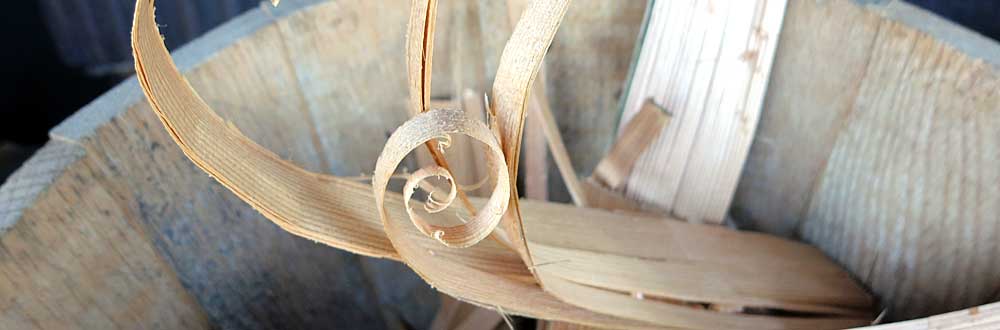
What I didn’t realize was that it is also the name for thin shavings of soft wood used for stuffing cushions.
Wow.
Isn’t that cool?
Yeah, that is great.
Yeah.
Yeah, the things we learn from our listeners, right?
Call us, 877-929-9673, or share your interesting words for common things by sending us an email.
That address is words@waywordradio.org.
Hello, you have A Way with Words.
Hi, this is Chris.
I’m calling from Catskill, New York.
Welcome, Chris. What can we do for you?
I’m calling because I wanted to know the etymology and the history of the phrase bum rush.
And the reason I’m asking is because I know that sometimes it means to push somebody out.
But then Public Enemy produced an album called Bum Rush the Show, which sounds more like storming the gates.
So the two opposite sort of meanings there.
I’m just wondering if you guys could shed some light on that.
Yeah, absolutely.
Yo, Bum Rush, the show was the 1987 debut album of Public Enemy, right?
Yes.
And it was a great album.
And there’s an interesting thing about that album is that really did make popular the idea of Bum Rush being a bunch of people trying to get into a place altogether, kind of overwhelming the bouncers or overwhelming the doorman.
There’s an interview that Chuck D. gave not all that long ago where he talks about the name of the album.
And he says it has something to do with their gigs.
But also the idea that all the guys in the band, I think there were five or six of them in Public Enemy,
Saw the group and the concert and the album as a chance for them all to get into the industry, to break in.
So kind of referring to themselves maybe as bums a little bit in a self-deprecating way.
But there’s the older Bum’s Rush, too, which is a little different there.
Notice Bum Rush.
Like Bum Rush, the show, is a verb without the possessive on bum.
And there’s Bum’s Rush.
And that goes back to when, supposedly, when saloons and pubs in New York City would offer free lunches.
So it would be like pickles and pretzels and other things that would make you drink.
And the Bum’s, the ne’-do-wells, would come into these places and get the free lunch, not buy the beer.
And so the manager, the bouncer, the bartender would throw them out.
And that’s the bums rush.
You just grab the belt, grab them by the neck, toss them right out the door.
I see.
Yeah, so there’s lots of evidence for that going back as far as 1910,
Although the term’s a little late.
Those lunches tended to be more popular before 1910.
In any case, so we have these two,
And Public Enemy gets credit for popularizing the new bum rush,
The idea that it’s a bunch of people,
Maybe you’re all trying to get into a gig and you don’t have tickets,
So you’re all trying to sneak in the back door or force your way across the rope line
Or do something as a group so some of you may get in,
Even though some of you might get caught and stopped by the management or the staff.
Okay, so if the older version is sort of throwing somebody out,
That would mean if they come for the free lunch and they’re on it like a hobo on a ham sandwich,
But they don’t buy beer, you give them the bums rush.
Yeah, you talk them out.
Yeah, the new version is interesting.
Both versions have bum in them.
Bum has a lot of different meanings.
So there’s the vagrant sense of bum.
There’s also the kind of schmuck or schmo sense of bum,
Which is a little more what Public Enemy is talking about,
The bums of the people who can’t afford tickets
Or don’t want to spend the money on tickets
Or trying to get a thing for free that everyone else paid for.
I see. Okay.
Well, thank you for that.
Hey, thanks for calling.
Take care.
Bye.
Bye-bye.
You know, I got a chance to interview Chuck D a number of years ago. This would be the late 1980s when Public Enemy was doing a tour. They did a small gig in the college town that I was living in at the time, Columbia, Missouri. And even then, Chuck D had this real sense that, as he said at the time, that they were the CNN of the black world, that they were reporting the news.
And even now, when you look at this album, Yo Bum Rush the Show, that’s 30 years old, and you kind of read through the lyrics of these songs, you’re like, this stuff is prescient.
It had an awareness of language and culture and how they were tied together.
It’s just really kind of incredible how they nailed some stuff.
And if it came out today, I’d like to think it would be just as big a hit.
Grant, you probably know, and many of our nerdier listeners know, that the word oxter, O-X-T-E-R, means armpit.
Yes.
I knew that, but I didn’t know the term oxtercog, which is a verb.
Oxtercog?
Oxtercog.
Does it mean to row, maybe? Or I don’t even know.
It’s a good guess, but no. To oxtercog someone means to carry them out by their armpits.
Oh.
Yeah, it’s a Northern Irish term, and it comes from the idea of a cog and locking one shoulder into the other person’s armpit like a cog fitting into a wheel.
Oh, oxtercog.
Oxtercog, yeah.
Yeah.
He was oxtercogged right out of the bar.
Exactly.
I love that word.
Well, you know, you probably came across something that you loved in your reading, a strange vocabulary word, something from a foreign language.
Well, we would love to share it with everyone.
Call us, 877-929-9673, or email us, words@waywordradio.org.
Hello, you have A Way with Words.
Hello, this is Cora Lederbach from Cleveland, Ohio.
Hi, Cora. Welcome to the show.
Hello, Cora.
Well, I’ve heard an expression lately that I think is kind of interesting,
And I just wondered if it’s becoming more part of our common parlance.
It’s when I go to a store often as I’m leaving, and this is typically in the afternoon, the cashier will say, have a good rest of your day.
When I first heard it, I thought, wow, that’s different, you know.
And it doesn’t sound exactly grammatical, but it sounds very friendly.
So I enjoy hearing it.
But I just wondered, is that just sort of local to our area?
I noticed recently I’d called someplace, and I’m not sure exactly where I spoke with the person.
It could have been out of town, and they also used that expression.
Interesting. So you’re wondering if it’s a local expression.
And you’re wondering if it’s new?
Yeah.
Yeah, it’s widespread. It strikes me kind of strangely.
The first time I heard it, I think there are two things going on there for me,
One of which is that the rest, that the noun rest can mean a couple of things.
And the first time somebody said that to me, have a good rest of your day, I thought, I heard the word rest and I was thinking, I would love to take a nap.
But then they finished and you realized it was rest meaning remainder.
Yeah, yeah.
So my mind had to do a little backup there.
But the other thing that’s going on that’s a little bit strange grammatically that you kind of hinted at is the fact that usually when we use the word rest, meaning the remainder of something, we use the word the rather than a.
And you would expect it to be the good rest or something like that.
Right.
Rather than a rest, a good rest.
We wouldn’t say things like a rest of the books.
We would say the rest of the books.
Right, right.
So it’s a little strange there.
And it’s sort of a combination of the rest of your day and have a good day, right?
Yes.
Yeah, but it’s quite well established.
It’s been around for quite a while, actually.
I found it as far back as 1982 in print, and I’m sure it’s older than that spoken aloud.
I think, but I don’t think I hear like have a good evening as much or have a good afternoon.
I think people say have a good day or have a good rest of your day.
And now we’re not necessarily breaking it down into the parts of the day.
Well, I’m interested that you like it.
It’s always struck me as just being a little odd, like, oh, the time’s ticking away.
I don’t have much left in the rest of my day.
Right, an awareness on both parts, for both parties, that we’re past noon and they don’t wish you a good afternoon.
Yeah.
Well, I take it in the spirit in which it was intended, which is, you know, hope you enjoy your time.
However much it’s left.
Yeah.
But anyway, Cora, to answer your question, it’s not localized at all.
It’s used all over the United States for sure.
Yeah, and Canada.
Yeah.
Well, thank you.
Thank you, Cora.
Take care now.
Okay, you too.
Bye-bye.
Bye-bye.
Email words@waywordradio.org or talk to us on Twitter @wayword.
Grant, we are still getting responses from listeners who want to tell us the words and phrases they use to describe a quick bath.
Oh, yeah.
We heard from Victoria Campbell, who lives in Tallahassee, Florida, and she remembers her great-great-grandmother from Poland using a particular phrase in English.
If she was asking Victoria, did you take a quick bath just now, what she would say is, did you spit in the air and jump through it?
I think I’ve heard versions of that before.
Yeah, other people wrote us with the same phrase, but I love that. Spit in the air and jump through it.
That was a quick bath.
Hit us up at WayWord on Twitter.
Hello, you have A Way with Words.
Hi, this is Mary Hilton.
Hi, Mary. Welcome to the show.
So my question for you is, one, a little disagreement between my husband and myself.
Ever since we got married, every time he pulls out a tape measure, when we’re doing projects around the house, he refers to that as a Billy, like a man’s name.
And he’s just sure that that is a real name for a tape measure.
And I’m just sure it’s not.
And so every time we hire a handyman to come by and look at the house, you know, he’ll say, oh, I’ll just get my Billy.
You’ve heard that phrase before?
And they’re always like, no, I have no idea what you’re saying to me, mister.
Oh my gosh, and the person’s afraid that it’s like a Billy Club or something?
What is it that he’s going for here? Yeah, exactly.
But poor thing, he’s just so sure that one of these gentlemen are going to say, oh, yes, of course, you know, a tape measure, that’s what I call it too, and they never do.
So I know that he learned that phrase from his father, and I loved my father-in-law a lot.
So, you know, I like making fun of my husband.
You know, I also love my father-in-law.
So we just thought maybe you guys could help us solve this.
And Mary, where did you grow up and where did your husband grow up?
We’re both Midwestern kids.
I grew up, I was born in Cleveland and raised in Fort Wayne, Indiana.
He was born and raised in Champaign-Urbana, Illinois, but his father grew up in Canton, Illinois, which I think is a little further west.
It’s a small town.
Okay.
Well, I have to confess I’ve never heard that.
I’ve never heard it either.
Martha hit on something earlier that I think we could explore, the idea of a Billy Club.
There are a lot of slangy uses of Billy that all aren’t necessarily what you might think of as the stereotypical policeman’s Billy Club.
There are lots of different uses of Billy to refer to long lengths of metal, to refer to different kinds of stolen metal.
Now, these are kind of arcane slang.
Metal, yeah.
Sometimes it’s been used to refer to crowbars or a type of knife called Billy knife.
Yeah, Billy knife.
But again, clubs and truncheons are bludgeons.
But I just think that’s kind of a long shot, just because the measuring tape might be made out of metal, that one of those might somehow seem the same.
Yeah, somehow he put that together.
His father before him, somebody put that together as a billy.
Do you know if a billy box comes into play here at all?
This is a brand name, I believe, for the kind of box you might have behind the cab and a pickup where you might store your tools.
Oh, is it? No, I’ve never heard that phrase before. So I don’t know. Billy Box?
Yeah, Billy Box. I don’t know how widespread it is, but I’ve come across it a time or two.
But I got to tell you, Mary, I’ve never heard it. It doesn’t mean that other people don’t use it.
Yeah, I was going to say we have one last resort, Mary.
Which is to turn on the sirens and fire up the flashing lights and ask our listeners if they know Billy to mean a measuring tape.
And they will tell us.
Okay.
Okay. Yeah, I’d love to hear what your listeners have to say.
And I’ll always be listening, of course, but I’ll check the website as well.
All right, thanks, Mary.
Thank you for your time. I appreciate it.
Bye-bye.
Bye-bye.
Bye.
If you know the term Billy to refer to a measuring tape, please call us, 877-929-9673, or email us, words@waywordradio.org.
Here’s another example from our Facebook group discussion about odd words for things we all know about, minuend.
I think I knew this word at one point, and then I totally forgot it.
It’s making me think of minuet, but it’s probably not related, is it?
Minuend?
I don’t know the etymology of minuend.
I can’t even figure out what that is. What is that?
A minuend is a number from which the subtrahend is to be subtracted.
So if you have 10 minus 7, 10 is the minuend.
Oh, very good.
Isn’t that cool?
Mm—
I think I was taught that word many, many, many, many years ago in elementary school, and I totally forgot about it, but somebody reminded me on our Facebook group.
Talk to us on Twitter @wayword.
You’re listening to A Way with Words, the show about language and how we use it.
I’m Grant Barrett.
And I’m Martha Barnette.
Last month, I took on a big task, which was to cull books from my personal library.
Cull books?
Cull books.
And you didn’t call me to take the ones that I wanted?
I figure you probably have all the reference books that I have.
My wife would barricade the door.
I know, right?
It’s such a big task for nerds and book lovers.
And it’s also an emotional one, too.
You know, I was looking at my shelves and thinking, oh, yes, I’ve read that book.
I’ve read that book.
And then there are the other books that you haven’t read.
Right.
That, you know.
Will I read it?
Do I just need to keep it around?
Right.
It’s really emotional, right?
And then I sometimes feel guilty that I haven’t read these books yet.
Although I’ve seen people argue that it’s a good thing to have books that you haven’t read yet.
That it reminds you of that great body of knowledge out there, and it’s somehow inspiring.
I don’t have that experience. Do you?
I do have that experience.
I have it for my son as well.
I kind of want him to know that he can always look things up or find somebody left their wisdom behind for him to pick up as if someone had left a trail of coins.
Right, right, even if you haven’t read the book.
Even if you haven’t read it.
But there’s also the value in not thinking that you have to commit to a book, read a little bit, put it on the shelf, come back later.
Certainly anthologies are all about that for me.
I love pulling down an anthology and just flipping to a page while I’m having tea or waiting for the kettle to boil, that sort of thing.
-huh, -huh.
And can we talk about what a beautiful word the word anthology is?
Yes.
From the Greek anthos, meaning flowers.
So it’s really a collection of flowers.
It’s a literary bouquet.
Every page is a pressed leaf or blossom.
Right.
But you’ve also brought up something that I was thinking about after reading an essay by Kevin Mims about the value of having books that are only partially read in your collection.
That that’s a whole other category of books.
And it’s not necessarily a bad thing.
What’s the value for you?
Of having the partially read books?
Partially read books.
I don’t know.
It’s kind of like taking a bite of something and putting it back in the fridge.
Maybe you’ll get to it, but maybe it’ll be one of those guilt-inducing books I never get back to.
Right. Yeah.
I have less and less guilt about that.
Do you?
I do.
I read the whole range of highfalutin stuff to kids’ stuff and everything in between and magazines and newspapers.
And, of course, the thousands of words a day we all read on the Internet at this point.
So my guilt is less and less as time goes by.
I just move on to the next good thing waiting for me.
Well, that’s a good attitude.
I guess I don’t have guilt about reference books, of course, because I’m constantly going to go back to those.
But the ones I haven’t finished, they kind of scowl at me from the shelves.
I would say that culling books is hardest for things that aren’t digitized and will never be digitized.
Letting go of it means I may never see that or its contents ever again.
The tiny fraction of books that are available in digital form is kind of horrifying, particularly classic reference works.
Nobody will digitize the Sicilian dictionary that I have.
It will never be digitized.
Right.
It was a one-off that some guy published in the 1960s.
Right.
It’ll never make it.
Right.
And then there’s the whole emotional baggage that comes with a book that somebody gave you.
Right.
Maybe you don’t care about the content.
And they wrote their name inside.
Yeah.
And they wrote a nice message to you.
How can you part with that?
I don’t.
I keep them if I can.
Yeah.
It’ll be my wife’s fault if they ever show up in the bookstore.
Or the little free library, right?
Yeah, the little free library.
You all drive all over town putting those in.
Well, we go to the mall, actually.
There’s a little free library at one of the malls.
It’s often empty.
I just did it a couple weeks ago.
I put like 20 or 30 books in there, and I’m sure they were gone within a few hours because of the foot traffic.
But that’s the audience you want to reach.
Yeah.
There’s no bookstore in so many malls anymore, so that little library has to do the job.
Right.
It’s a win-win, right?
It’s healthy for you and healthy for everybody else.
I got to say, I know that our listeners are just revving up right now to talk to us about culling their own books,
The feelings that they get, the emotions that come over the finished and the unfinished
And the read and the unread and the stuff they’ll never read but they’re going to keep.
Yeah, your relationship with your library.
With your library, yes, your relationship with your personal library.
We want to hear about it.
Send us an email to words@waywordradio.org or call us 877-929-9673.
Hi there. You have A Way with Words.
Hi, this is David from Trophy Club, Texas.
So I have an expression that my parents used pretty much my entire lifetime growing up,
And it’s called, I wouldn’t kick her out of my bed for eating crackers.
And I know what it means.
It basically means if you violate a very important rule, it’s okay.
We like it that much.
But my question is, what is the origin of that phrase?
I’m assuming you may have heard of it before.
And how was it used in your house?
Is this a funny thing that you might say?
Yeah, it’s a funny thing.
It basically means if I’m doing something that’s a violation of a major rule, like, you know, eating crackers in bed, which is a bad thing,
It means if you’re doing something bad like that, we like you so much we’re willing to waive it, to ignore it, and to like you anyway.
Origins for expressions like this are really hard to do, but I do have a few bullet points to share with you of some different places it’s popped up over the last hundred years or so that may shed some light on it.
Okay.
We’ll see how this goes.
The first use that I know of in print of anybody talking about, well, anybody using this version of this expression was from 1945 as a remedy for insomnia.
There’s also a little earlier than that, 1942, there’s a woman talking about meeting her husband for the first time.
So this is right after the start of World War II for the United States, right after we’d entered the war.
She’s talking about meeting a man and they’re kind of negotiating this new kind of friendship and trying to figure out whether or not it’s going to become something more.
She says, wouldn’t it be awful that if she ate crackers in bed?
And he says, oh, I don’t know.
I don’t think I’d throw you out of bed for eating crackers.
And so this is 1942.
And there’s a lot of innuendo in this piece.
I mean, this is in a newspaper.
And you can kind of read between the lines where they’re talking about family relations in bed as much as they’re talking about romantic relations outside of bed.
So there’s a there’s like a couple levels here.
And almost always when you see this pop up, there’s this second notion about you’re so amazing or would be amazing in the sack, so to speak, that I wouldn’t kick you out of bed for eating crack.
It’s not just sleeping next to someone. It’s doing the other things that happen in bed.
So there’s always this tension there between the kind of normal sounding phrase and this understanding it’s referring to.
It’s kind of like Netflix and chill.
It’s like the Netflix and chill of its day.
We’re not just talking about Netflix and chill, are we?
We’re talking about something else.
Well, I asked my parents about it and my dad, who was a child during the Great Depression and World War II,
Around the time that you mentioned you saw the origin,
He said that he would be in bed sick, and his mother would bring him a very common remedy, soup and crackers.
But she wouldn’t give him the crackers, because you’re not supposed to have crackers in bed.
And she would say, I wouldn’t kick you out of bed for eating crackers.
But I guess she didn’t trust him that much.
Yeah, interesting.
What’s amazing to me is how often eating crackers in bed pops up in the printed media.
This is pretty much how we track these expressions.
We don’t know what people said unless they also wrote it down.
And so in 1915, there’s a little kind of line filler at the end of a column that says,
No crumbs of comfort come from eating crackers in bed.
Oh, wow.
And then another one that comes up, and this is a well, in baseball circles, this is well
Known.
There was a Hall of Fame pitcher named Rube Waddell who played for the Philadelphia Athletics
In 1902 to 1907.
And he liked to eat crackers in bed.
But he had to share that bed on the road with a teammate.
The teammate’s name was Ozzy Shrek.
Spelled a little differently than the green troll.
And Ozzy required, before he would re-sign with the athletics,
He required that a clause be written into his contract that forbade Waddell from eating crackers in bed
Because he was tired of sleeping with crackers.
And there’s a couple of really hilarious lines.
We have the letter that he wrote.
He says, I have done all that I could.
I didn’t mind him bringing snakes, lizards, mockingbirds, and a pair of white mice in the room
To amuse himself at night.
But I do object to his eating crackers in bed.
Not a night passed that summer that he didn’t hit the hay
Carrying a half pound of crackers in his southpaw.
Most of them were in the shape of animals
Like those you see the kids playing with at home.
I found it.
Anyway, he goes on.
But the thing is, he’s talking about here animal crackers
And not necessarily like saltines or any kind of just unsweet, savory cracker.
Yeah, that wouldn’t bother me so much.
I think it’s the little salt crystals that are just so irritating.
Cracker crumbs are the worst, and what’s funny is my wife and I were talking a few weeks ago,
And we mentioned the phrase, and I thought, you know, I need to call in about that,
Because I bet they know, and she said, by the way, I would kick you out of our bed for eating crackers.
So I would probably, like our friends in Chicago years ago,
I would probably have to get divorced, even though I’m Catholic, for eating crackers in bed.
So I never have, and I now never, ever will eat crackers in bed.
All right. Well, that’s what we know. Thank you so much, David, for calling. We really appreciate it.
Thank you. I really appreciate it. It was a lot of fun and informative at the same time.
Take care. Bye-bye.
All right. Bye-bye.
Well, we know you’ve been talking about language in your household, and it’s time to call us and talk with us about it.
877-929-9673 or send your emails to words@waywordradio.org.
Here’s another word I learned from listeners on our Facebook group,
Worfinger.
W-H-A-R, and then finger, Worfinger.
Is this a person who hangs out on a wharf?
It’s the operator or manager of a commercial wharf.
Oh, Worfinger.
Worfinger.
Sure.
I don’t know.
That word just makes the hair on the back of my neck stand up.
I don’t know why.
Well, I’ve got a word for a thing you’ve probably done before.
There’s a word for separating a citrus fruit out into its segments.
Really?
It is to supreme it.
You can supreme an orange or supreme a grapefruit.
Common enough to appear in some cookbooks.
So I could supreme a clementine?
You could supreme a clementine.
Holy cow.
You have supramed it if you have broken it out into its own segments.
Call us with your language question, 877-929-9673.
Hello, you have A Way with Words.
Hi, this is Lawrence from San Antonio, Texas.
Hi, Lawrence.
Just an observation.
I’ve noticed that the word to be in awe seems like a pretty cool thing.
I was just awe or inspired or something was awesome.
But when you add full to the end of it, you got awful, which kind of puts a negative connotation on it.
And I don’t know if it’s because the awful is spelled without the E, whereas awesome has the E.
And I don’t understand what the difference is.
It’s a little complicated.
The spelling doesn’t really come into play.
It has no relationship to the meaning of it.
Awful actually used to be spelled pretty frequently with an E until it became regularized with the rest of English spelling.
But what we have here is something called semantic drift.
And semantic drift is when the meanings of words change over time.
And so when you take a word like awe and you add a suffix like some or add a suffix like full, each one of those new words, awesome and awful, become their own entities.
And they undergo their own semantic drift and they can go very far from the original.
Pretty much awe, A-W-E, means what it’s always meant, which is reverence for something amazing or great, maybe, is one way to define it.
But those other two words have gone through a lot of shifts.
Awful, for example, pretty relatively quickly started to be used for emphasis.
We might even today say that’s an awfully great thing of you to do for me, which isn’t really negative.
But at the same time, we might say that is an awful painting, right?
Right.
And so there’s two different kinds of semantic shift on that word alone, awful, awfully.
And then awesome did a similar thing where it kind of kept the positive value.
And it actually filled in this gap where once awful went from being meaningful of awe to being more negative generally, awesome shows up.
To kind of reinstate this meaning of having awe or having reverence or adoration for a thing.
So it’s really interesting.
This is like you can have five kids raised by the same parents,
And they’ll each become their own individuals, live their own lives and do their own things
And be unique and still have a little bit of the original about them.
Oh, I see.
Oh, that’s interesting.
Right? Yeah.
That’s interesting. Yeah.
Semantic drift.
And I’ve heard that term before, but…
Yeah.
I’ll leave you with something to think about.
Think about terrific and terror.
Or terrible.
And terrible, yeah.
And terrible, yeah.
So semantic drift is a real thing.
It’s how language changes.
And these words, frankly, they go back in some form or another to about the year 1000.
Really?
Yeah.
So they’ve got some history behind them, and that is long enough for them to do somersaults and cartwheels on their way to becoming something new.
That’s interesting. That’s interesting. Thank you.
Thank you so much for calling.
I appreciate your show, and I love you guys and listen to you every chance I get.
Thank you very much. We really appreciate it. Take care now.
All right. Bye-bye.
Bye-bye.
Is there a word or phrase on your mind that you’d like to talk with us about?
We’d like to talk with you, so call us, 877-929-9673.
Find us on Twitter at WayWord, and you can always email us.
That address is words@waywordradio.org.
Hello, you have A Way with Words.
Hi, Martha.
Hi, who’s this?
My name’s Lisa Coleman.
I’m calling from Chesapeake, Virginia.
Hi, Lisa.
So welcome.
What can I do for you?
I’m so interested in your show all the time, and I was thinking about my father and this
Crazy term that he used to use all the time, John Coleman, who’s known by the chief down
In Hatteras Harbor Marina, and he used to say, good googly moogly, all the time.
Really?
You’d wonder, what is that?
Is it a fishing term?
What was going on when he was saying that?
What was happening around him?
Oh, well, he would always say it if things were good, like it was a big fish, googly moogly,
Or it was a big sail at the marina, like googly moogly, a term of excitement, I guess.
So I don’t know.
It just had me wondering where on earth a term like that would have come from the last time I listened to you all.
Yeah, it’s an expression of surprise or delight or emphasis sometimes.
There are a lot of different forms of this because it’s mostly past orally.
It’s the kind of thing you hear and then you repeat because emphatic expressions often behave that way.
And that particular form of it, great googly moogly, we see for sure has affixed itself into American English by 1960.
And there’s some history of it in the 1950s.
But before it was googly moogly, we’ll just leave off the great for a second.
It was googa mooga.
And the Guga Mooga goes back to a whole bunch of R&B and bluesy songs that came out on a wide variety of records in the 1950s.
So there was a, for example, in 1953, there was a B-side by a group called the Magic Tones.
And the title of the song was Good Guga Mooga.
And it is super interesting.
And then not long after 1956, there was a song called Stranded in the Jungle.
Now, three versions of that song were recorded in that year.
But one of the versions of the song, they inserted the phrase, great googly moogly.
So the song is about somebody waking up and realizing that he’s in a pot and being cooked alive by cannibals who are going to eat him.
So he says when he realizes, great googly moogly, I got to get out of here.
And he gets out of there.
If we go back a little further than these songs, though, there are three black DJs who were on the air around the country,
Who are usually given credit, depending on who favors them, for popularizing the term.
And we don’t know with certainty who coined it.
But they are Maurice Hot Rod Holbert, who was in Memphis and Baltimore.
They were Jocko Henderson, who was in New York City.
And Ramon Bruce, who started in Newark, New Jersey, and then went to San Francisco.
I think that Hot Rod Holbert was probably the guy who used it.
And so you can actually find examples of their on-air patter,
Kind of repeated in a variety of industry newsletters from the era and industry magazines.
They had that whole, you’ve seen it in movies, like where they recreate the 1950s.
The last doggy guy is doing this and he’s like that.
They were doing that.
And this really kind of caught on.
Other people kind of, you know, nicked their lines or stole their gags
And took their jokes and their catchphrases and moved it around the country.
Nifty.
Right?
Well, he was the child of the 50s and born in 1940.
So that would fit.
Thank you so much for the discovery.
Yeah, thank you for your call.
We really appreciate it.
It’s always nice to have those linguistic heirlooms, huh?
Yes, it is.
Take care now.
Bye-bye.
Ciao.
Call us with your language question, 877-929-9673.
Want more A Way with Words?
Listen to years of past episodes at waywordradio.org
Or find the show in any podcast app or on iTunes.
Our toll-free line is always open,
So leave us a message at 877-929-9673 and we’ll take a listen.
We’d love to get your messages at words@waywordradio.org
Or hit us up on Twitter @wayword and look for us on Facebook.
This program would not be possible without you.
Grant and I are out to change the way we listen and think about language,
And you’re making it happen.
Thanks also to senior producer Stefanie Levine, director and editor Tim Felten,
Director Colin Tedeschi, and production assistant Emma Kelman in San Diego.
In New York, we thank quiz guide John Chaneski
And that master of keeping it real, Paul Ruist at Argo Studios.
A Way with Words is an independent production of Wayword, Inc.
From the Recording Arts Center at Studio West in San Diego, I’m Martha Barnette.
And I’m Grant Barrett.
So long.
Bye-bye.
Thank you.
Unusual Word for Ordinary Things
 A teacher of English as a second language asks our Facebook group to name some unusual words for ordinary things. The group’s suggestions include winklehawk, which means an L-shaped tear in cloth, and diastema, which means a gap between one’s teeth. In his 1926 book History in English Words, Owen Barfield offers this lyrical observation about etymology: “Words may be made to disgorge the past that is bottled up inside them, as coal and wine, when we kindle or drink them, yield up their bottled sunshine.”
“Patient” Noun vs. “Patient” Adjective
Gila in Woodridge, Connecticut, wonders if there’s a connection between the adjective patient, meaning able to withstand delay, pain, or problems, and the noun patient, meaning a person who is sick. Both derive from Latin adjective patientem, describing someone who suffers or tolerates. These words are related to the term passion meaning suffering, as in the Passion of Christ, and passionflower, the name of that odd-looking blossom that is said to symbolize the whips, nails, and other instruments used to torture Jesus.
When Tigers Smoked
In English, fairy tales often begin with the phrase “once upon a time.” In contrast, Korean folktales often begin with “In the old days, when tigers used to smoke,” or similar phrases, such as “In the old, old days when tigers smoked tobacco pipes” and “In the old days, when tigers smoked long pipes.”
“Brand” in “Brand New”
Is the brand in brand-new connected to the kind of brand left by a hot iron?
Librarians, Trail Guides
Writer Anne Lamott memorably compared librarians to trail guides, leading people through the forest of shelves and aisles.
Misunderstood TV Show Brain Game
Quiz Guy John Chaneski’s puzzle features intentional misunderstandings of the names of familiar movies and TV shows. For example, if John refers to a creepy Netflix show set in the 1980s called More Unusual Objects, what’s the program he really means? Also: The Latin comparative adjective excelsior means higher, and also happens to be the state motto for New York. But a member of our Facebook group notes that it’s also a term for fine wood shavings used as stuffing or packing material.
Bum Rush
Chris from Castro, New York, is curious about bum rush or bum’s rush, which refers to forcibly removing someone from an establishment. In 1987, Public Enemy’s debut album Yo! Bum Rush the Show popularized the use of bum rush to mean something different — not roughly escorting someone out, but rather a rowdy crowd pushing their way into an establishment or show without tickets or paying admission. Rapper Chuck D has said that this term also alludes to Public Enemy’s effort to push its way to the top of music business and into the national consciousness.
Oxter and Oxtercog
The English word oxter means armpit, and to oxtercog someone is to carry them by the armpits. The term derives from the image of each of two people locking one shoulder under an armpit of the person carried, like a cog fitting into a wheel.
Have a Nice Rest of Your Day
Cora from Cleveland, Ohio, notes that cashiers in stores often say good-bye to her with the phrase “Have a nice rest of your day.” She’s charmed by its use, and wonders if the phrase is on the rise and whether it’s confined to a particular geographic region.
Spit in Air and Jump Through It
Victoria from Tallahassee, Florida, weighs in on our discussion about terms for an extremely quick bath. When Victoria was young, her great-great grandmother from Poland, when checking if Victoria had indeed washed herself, would ask, “Did you spit in the air and jump through it?”
Billy Tape Measure
Mary says her Illinois-born husband and father-in-law refer to a measuring tape as a billy. The word billy is used in a slangy sense to refer long lengths of metal, such a billy knife, and a Billy Box is a kind of toolbox, but the use of billy to mean a measuring tape is extremely rare.
Minuend
A minuend is a quantity from which something is to be subtracted. The amount subtracted is called the subtrahend.
The Pleasure in Partially Read Books
What’s your relationship with the books in your personal library? Some people feel inspired by the books still have left to read, while others feel guilty seeing them staring down from the shelves. Writer Kevin Mims finds value in yet another category: books you’ve read only partially and may revisit.
Kick Out of Bed for Eating Crackers
David from Trophy Club, Texas, wonders about the phrase “I wouldn’t kick them out of bed for eating crackers.” This jocular expression has been around since the early 1940s, and indicates that someone is so lovable they could do something incredibly annoying and still be adored. In the early 20th century, baseball hall of fame pitcher Rube Waddell of the Philadelphia Athletics was notorious for eating animal crackers in bed, and his roommate on tour, Osse Schreck, hilariously insisted to his bosses that Waddell should refrain from doing so.
Wharfinger
In our Facebook discussion about unusual English words for ordinary things, a listener points out the term wharfinger, which means someone who manages a wharf.
Awesome, Awful, and Semantic Drift
Lawrence from San Antonio, Texas, wonders if spelling is a factor in the different meanings of awful, which describes something negative, and awesome, which describes something positive. Spelling doesn’t come into play here; in fact, for years the word awful was actually spelled with an e after the w. The difference in these words is the result of what linguists call semantic drift. Something similar happened with the words terror, terrific, and terrible.
Great Googly Moogly
Lisa from Chesapeake, Virginia, says her father used to say good googly moogly! to express surprise, delight, or emphasis. There are several versions of this exclamation, which derives from a catchphrase used by radio DJs in the 1940s and 1950s.
This episode is hosted by Martha Barnette and Grant Barrett, and produced by Stefanie Levine.
Photo by Ruth Hartnup. Used under a Creative Commons license.
Book Mentioned in the Episode
Music Used in the Episode
| Title | Artist | Album | Label |
|---|---|---|---|
| Mahdi The Unexpected One | Tower Of Power | Lights Out: San Francisco | Blue Thumb |
| Four Play | Fred Wesley and The Horny Horns | A Blow For Me A Toot For You | Atlantic |
| Knock Yourself Out | Tower Of Power | East Bay Grease | San Francisco Records |
| The Jaunt | Poets Of Rhythm | Discern / Define | Quannum Projects |
| Back On The Street Again | Tower Of Power | East Bay Grease | San Francisco Records |
| Volcano Vapes | Sure Fire Soul Ensemble | Out On The Coast | Colemine Records |

